Singing Tides Beneath the Long Light

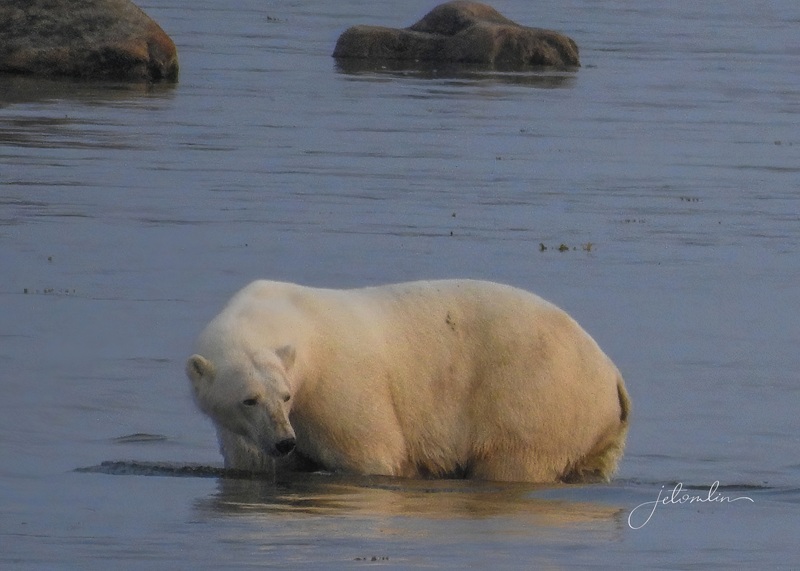
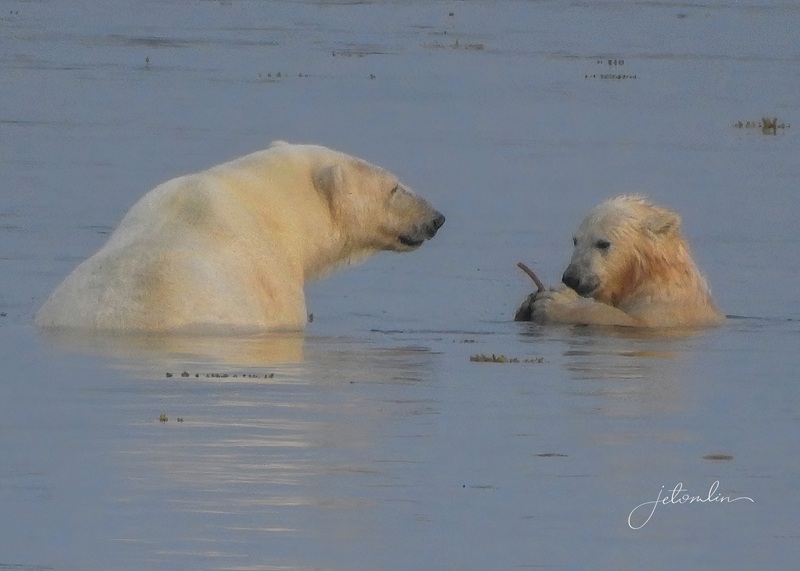
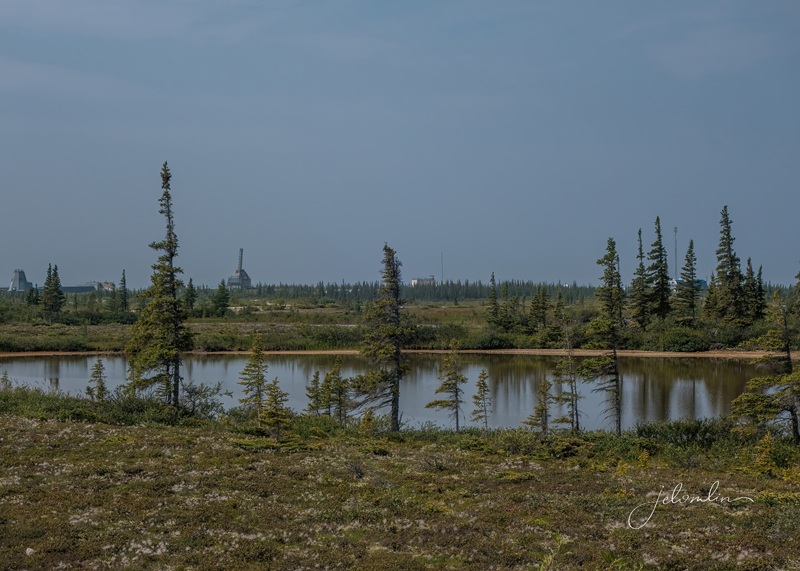
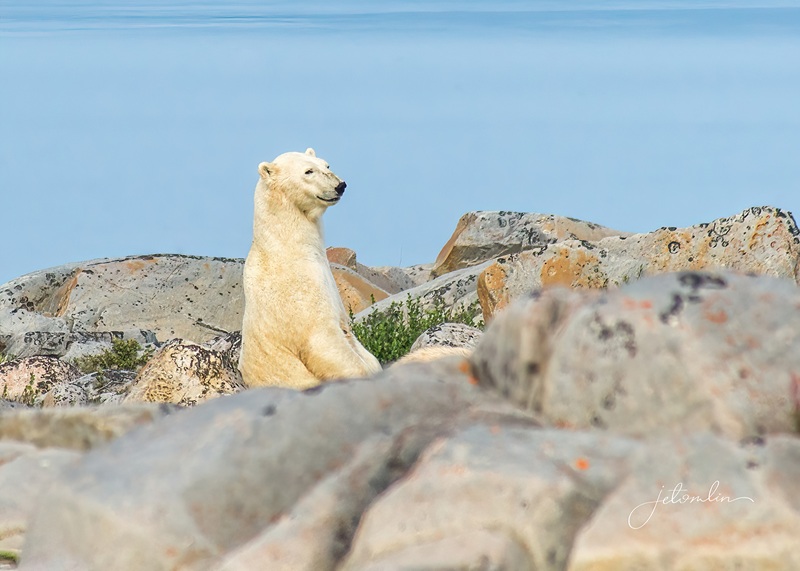
Churchill, Manitoba is known as the “Polar Bear Capitol of the World” and with good reason. Every autumn, when ice starts to form on Hudson Bay, some 650 polar bears congregate on the shoreline. In November of 2024, I spent a week at the Churchill Northern Studies Center, learning about and photographing these magnificent animals.

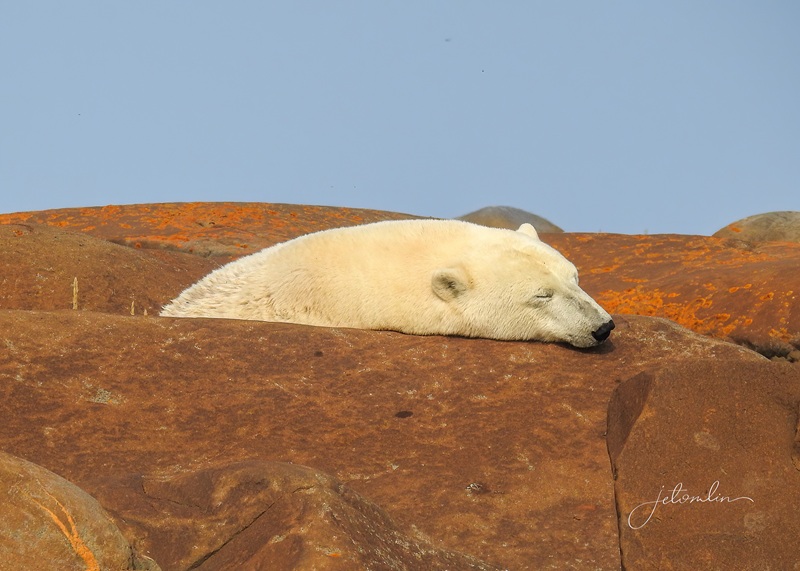
polar bear on the Hudson Bay shoreline, November 2024

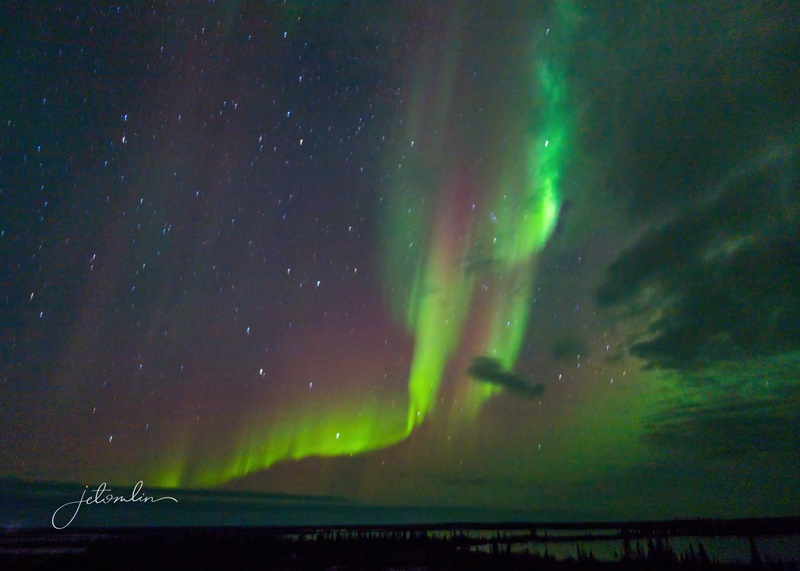
But there’s more to Churchill than polar bears. The town is right under the aurora oval, making it one of the best spots to see the Northern Lights. You can catch them almost 300 nights a year!
Northern Lights, November 2024

And it doesn’t stop there. Hudson Bay is home to nearly 60,000 beluga whales. For most of the year, they reside in inaccessible areas with extreme cold.  But for a short period each summer, they come into the shallow waters around Hudson Bay to breed, give birth, and socialize. 

Sea North Beluga Zodiac Tour, August 2026

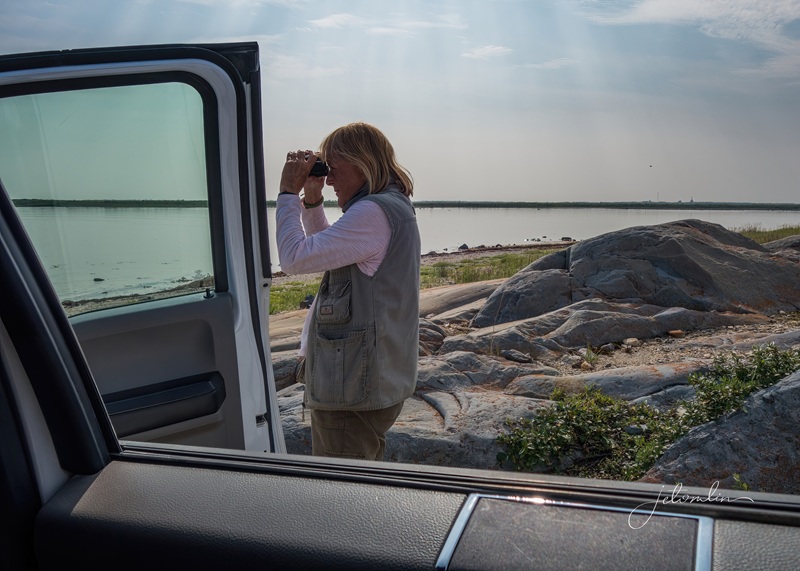
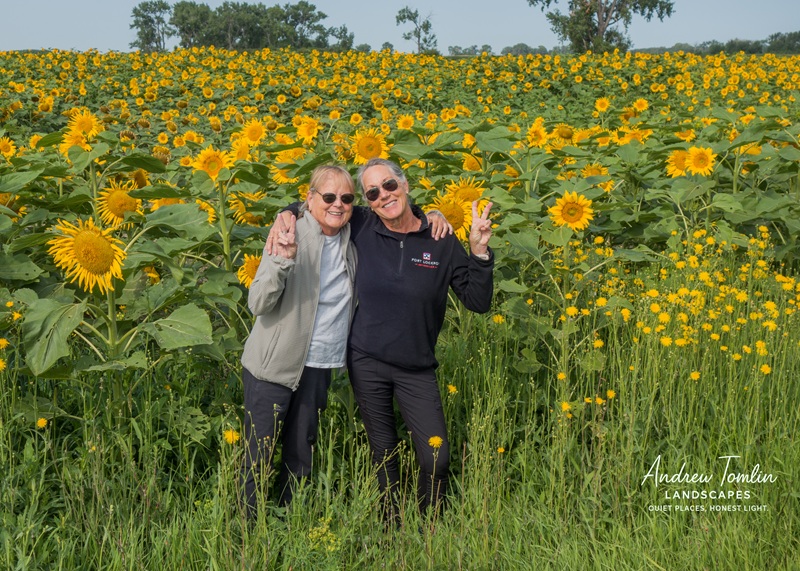
It was the opportunity to see these “canaries of the sea” that brought me back for a second visit in August 2026. Since TG wasn’t interested, I asked my friend Deb to join me.
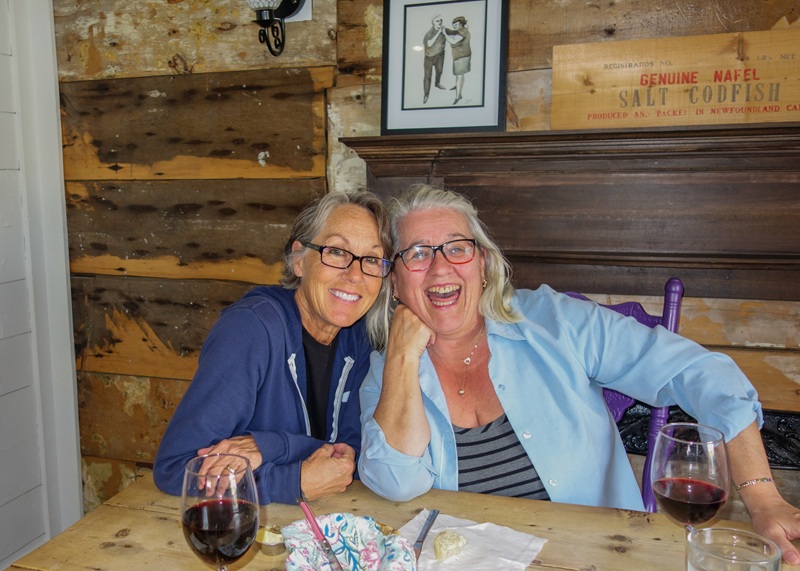
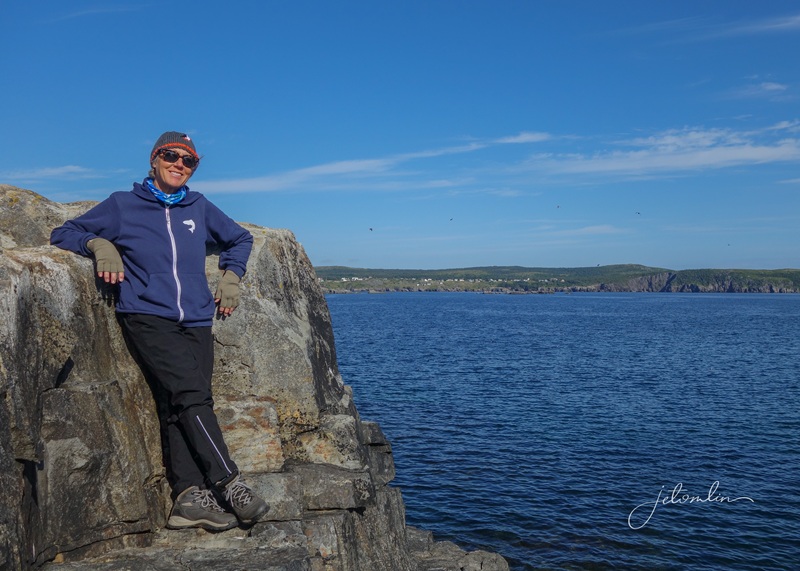
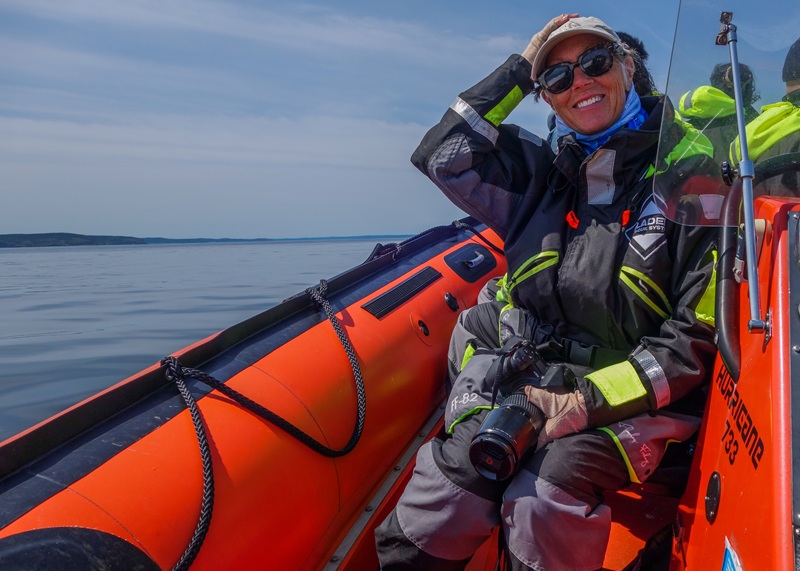
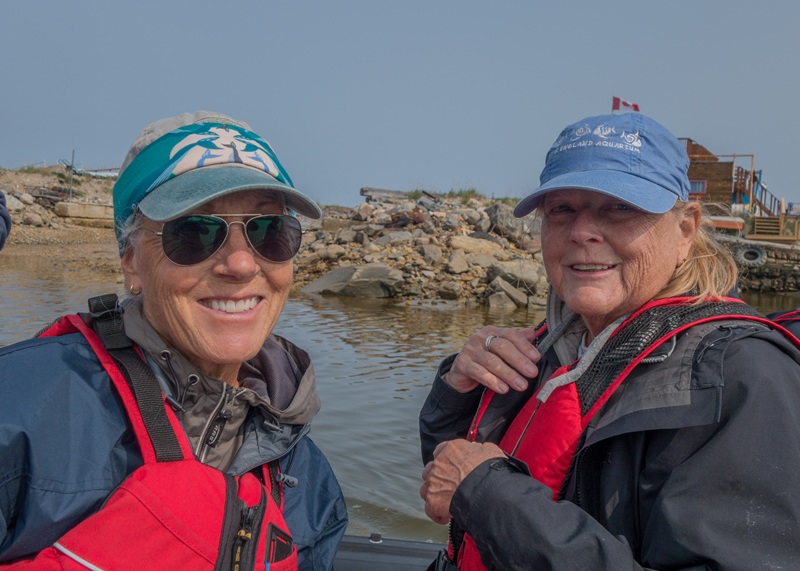
Deb & me, Napinka MB, August 2026

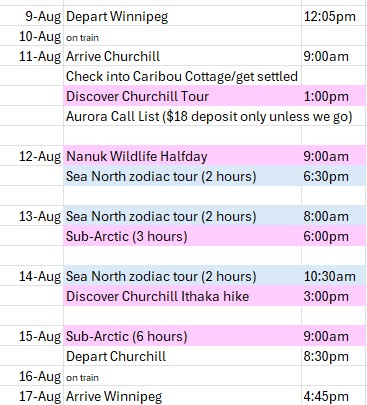
We planned our itinerary to get the most out of our trip while still having enough energy to enjoy each day. Since the beluga tours are tide dependent, we booked those first and then filled in our remaining time with land safaris to look for polar bears and other wildlife. We also hoped to see Northern Lights, so we joined the “Aurora Call List.” With a small deposit, we’d get a wake-up call if they showed up.
our itinerary

There is no easy way to get to Churchill. We could fly via Calm Air, the only airline serving Churchill, but tickets are pricey. Or we could take VIA Rail’s train, which departs from Winnipeg twice weekly and takes about 45 hours to arrive. To keep our costs low, we opted for the train.
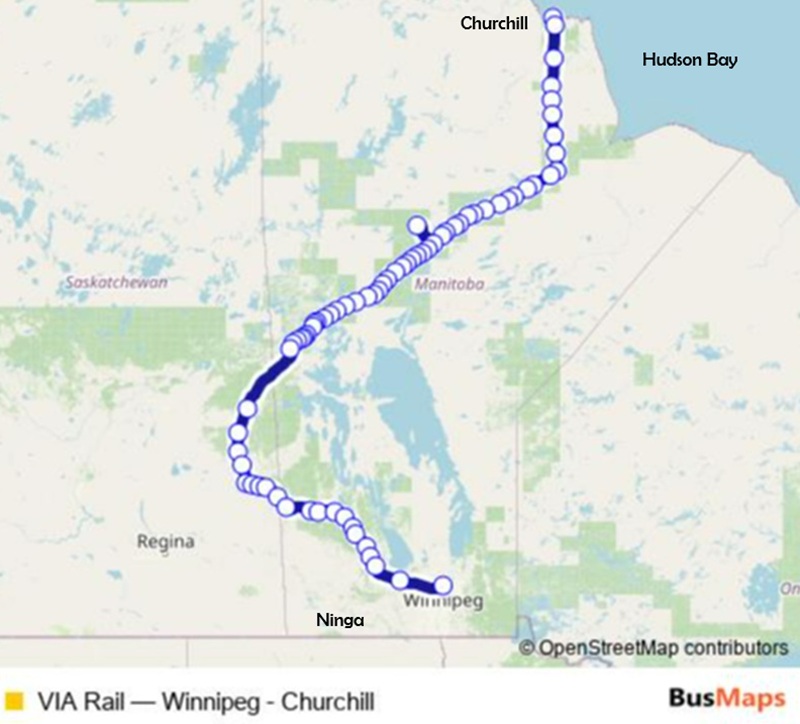
train route from Winnipeg to Churchill

And so, on the morning of Sunday, August 9, TG drove us from our Airbnb in Ninga to Union Station in Winnipeg to catch the 12:05 train to Churchill. This train would be our home for the next two days.
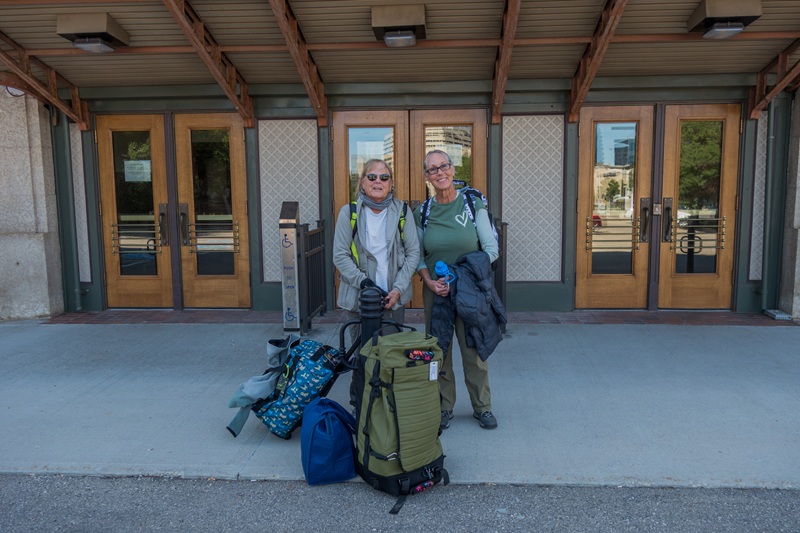
Union Station, August 9, 2026

A 45-hour train ride takes some planning, especially if you’re in economy seats the whole way. The food for sale was limited, so we brought our own meals. We also packed pillows, blankets, comfy clothes, and plenty of books and games. But the scenery was so engaging we spent most of our time looking out the window, sitting in the dome car, and chatting with fellow travelers.
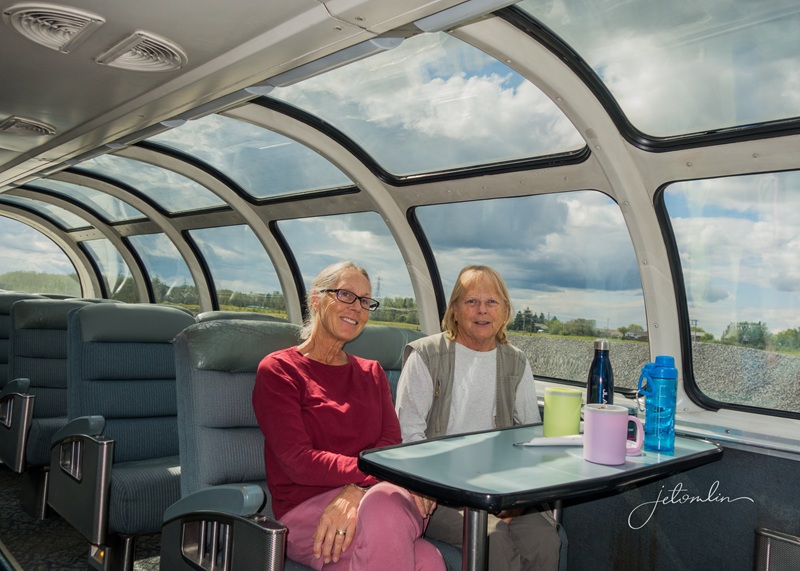
the dome car

Heavy rains had washed out tracks between Winnipeg and Thompson, so we detoured onto the main freight line. This delayed us a bit, but we still arrived in Churchill at 11:00am on Tuesday morning.

August 2026 washout, photo courtesy of CN Railway

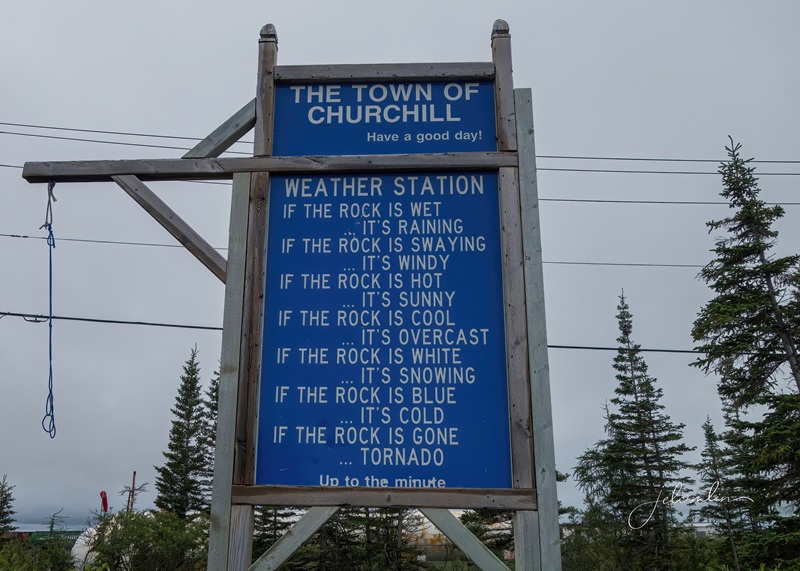
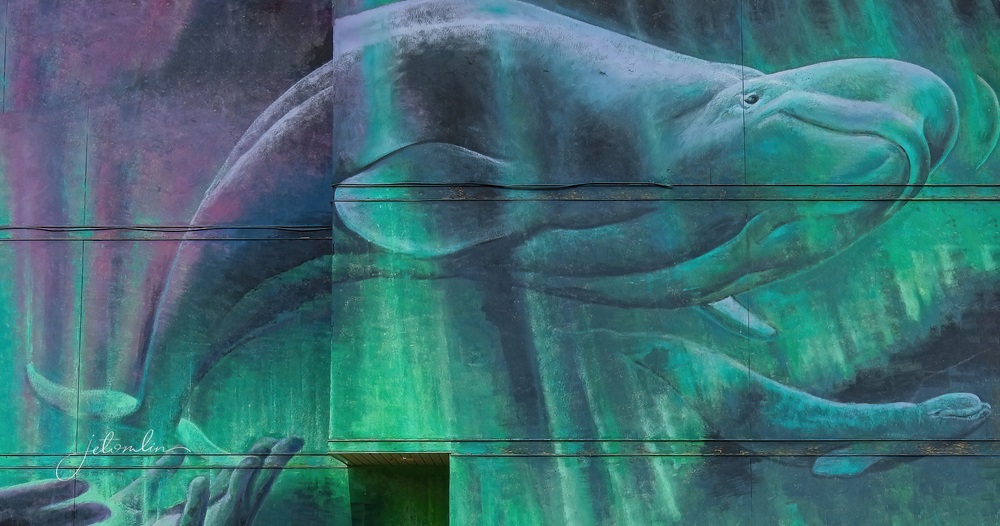
Churchill is home to many large murals, created during the 2017 Sea Walls project. Artists came from around the world to paint them, and each mural tells a story about climate change, ocean protection, or the town itself.
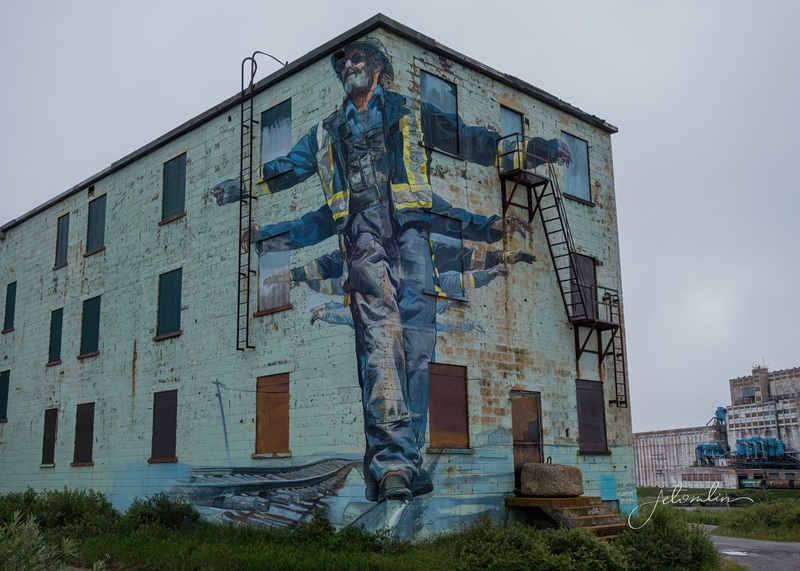
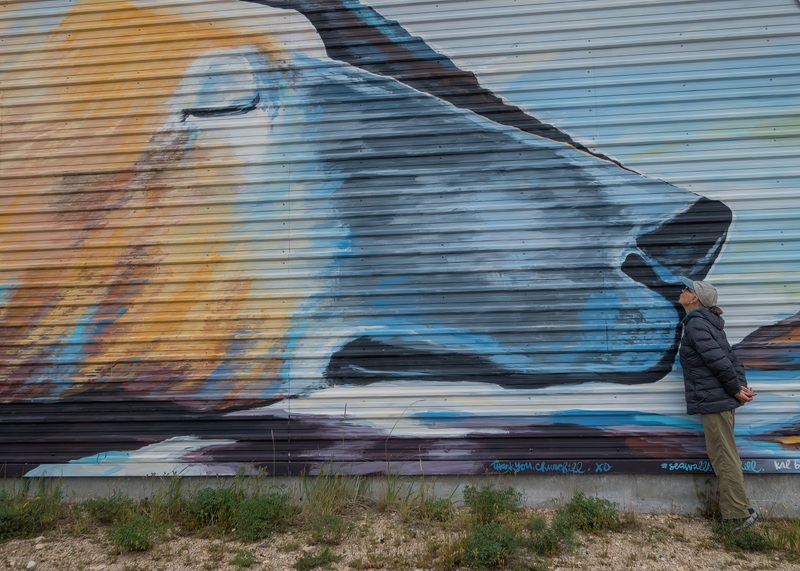
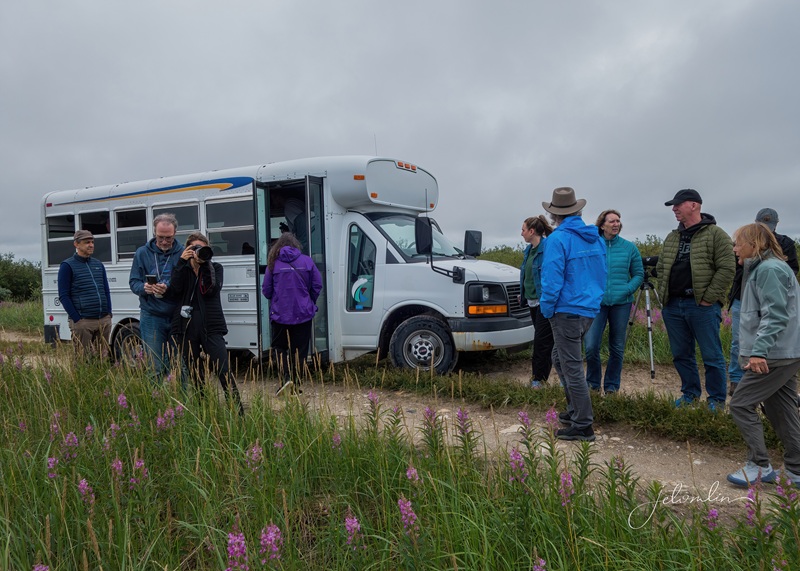
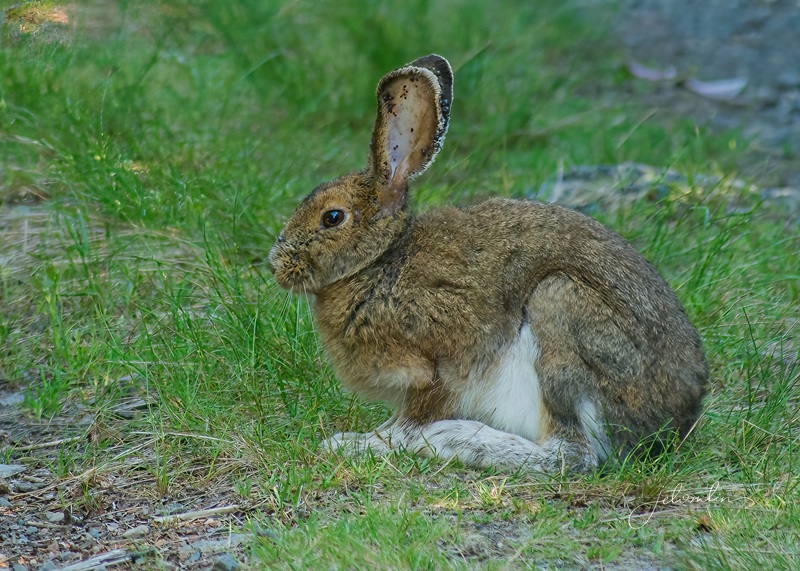
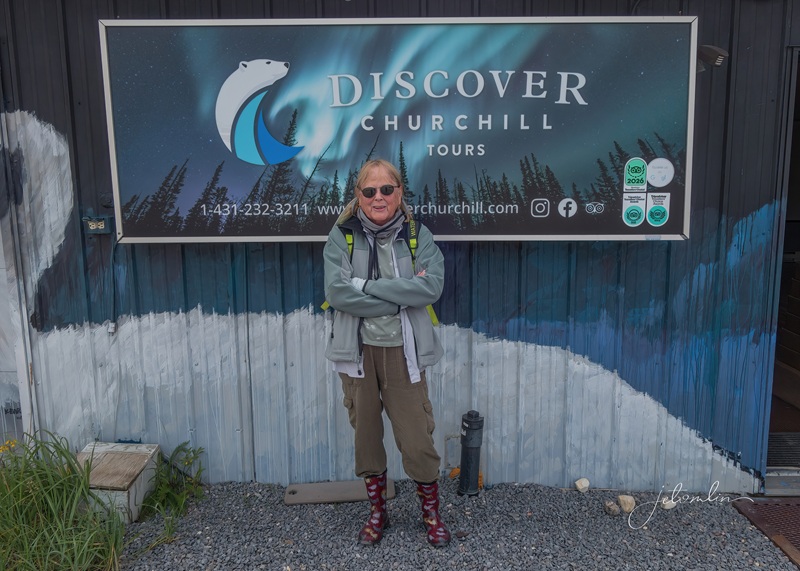
After checking into our cozy room at Caribou Cottage, we were on our way. We began with a Discover Churchill tour, expecting to see all the murals. But our guide, Alex, surprised us by telling us about polar bears just outside town. In the first hour, he spotted five: two adults and a mother with two cubs. We also saw sandhill cranes, a snowshoe hare, bald eagles, plus many of the murals and other landmarks. Our week was off to a great start!
We spent our second morning on another wildlife tour, this time with Nanuk Operations. We first watched a bear on the rocks near town, then headed east after our guide Caleb got a tip. There, we found another mother polar bear with her two COYs (cubs born this winter, called “cubs of the year”) on a beluga whale carcass. They were pretty far away—too far for my long lens—but I still managed to get a few shots with my old P900.
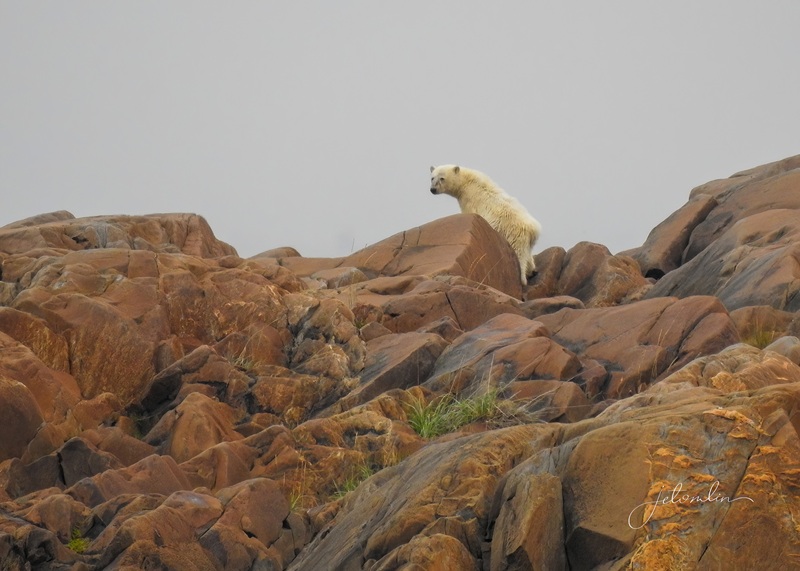
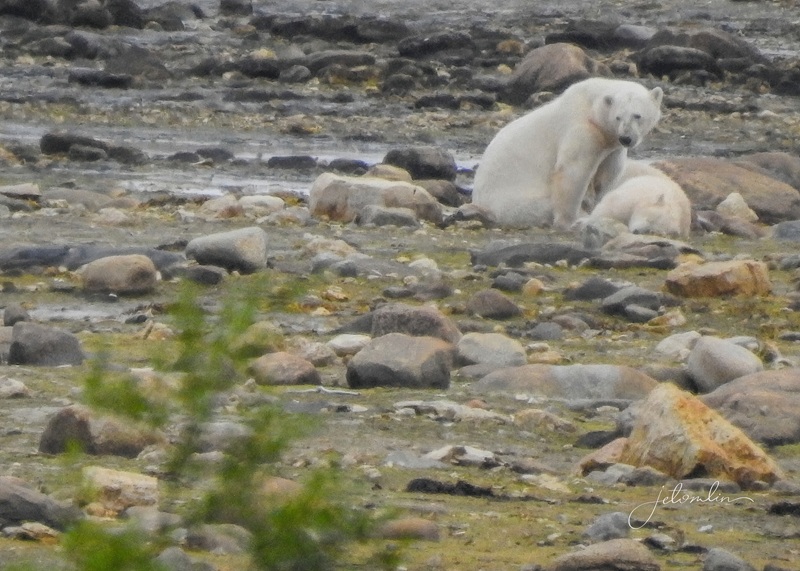
Wildlife tours are similar everywhere. Guides drive slowly, searching for animals and sometimes sharing tips with each other. This tour was no different. We saw six polar bears, bald eagles, some snow geese, and a family of beautiful Pacific loons.

On Wednesday, August 12, we received the following email: “The forecast for tonight is favorable to potentially see the aurora and it coincides with a meteor shower! This email is to confirm your spot on our northern lights call list. Please remember to turn your ringer on and make sure your phone is NOT set to “do not disturb.”

With high hopes, we readied our cameras and tripods. Sure enough, the “Go” call came at 10:45. Alex picked us up at 11:15 and drove us to the Miss Piggy plane wreck, an iconic Churchill landmark.
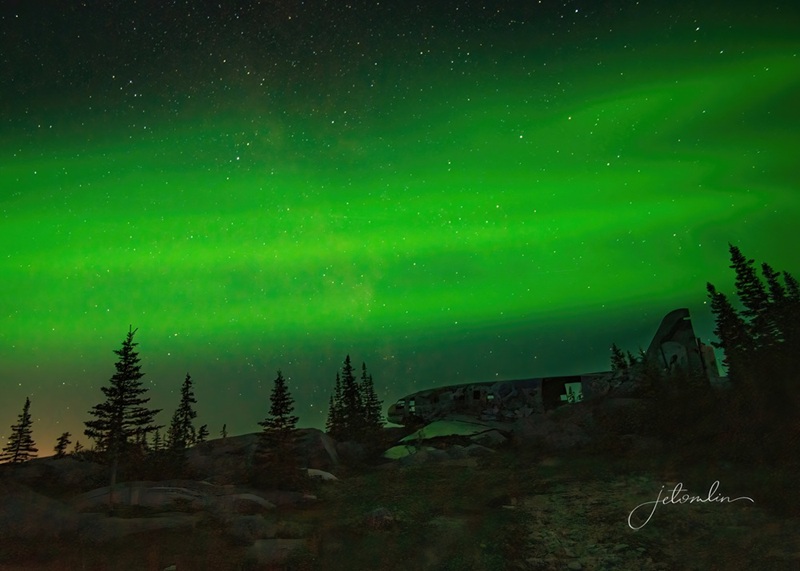
Aurora over Miss Piggy

We spent almost two hours watching the sky shimmer and dance. We oohed and aahed as green ribbons turned into arches, then into big tornado shapes before twisting back into ribbons. Meteors shot across the sky in every direction.
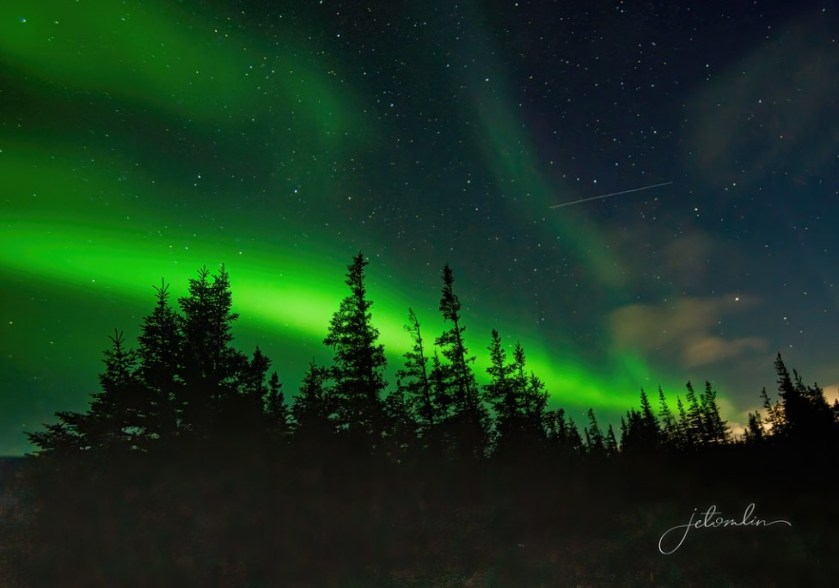
It was everything we had dreamed of.
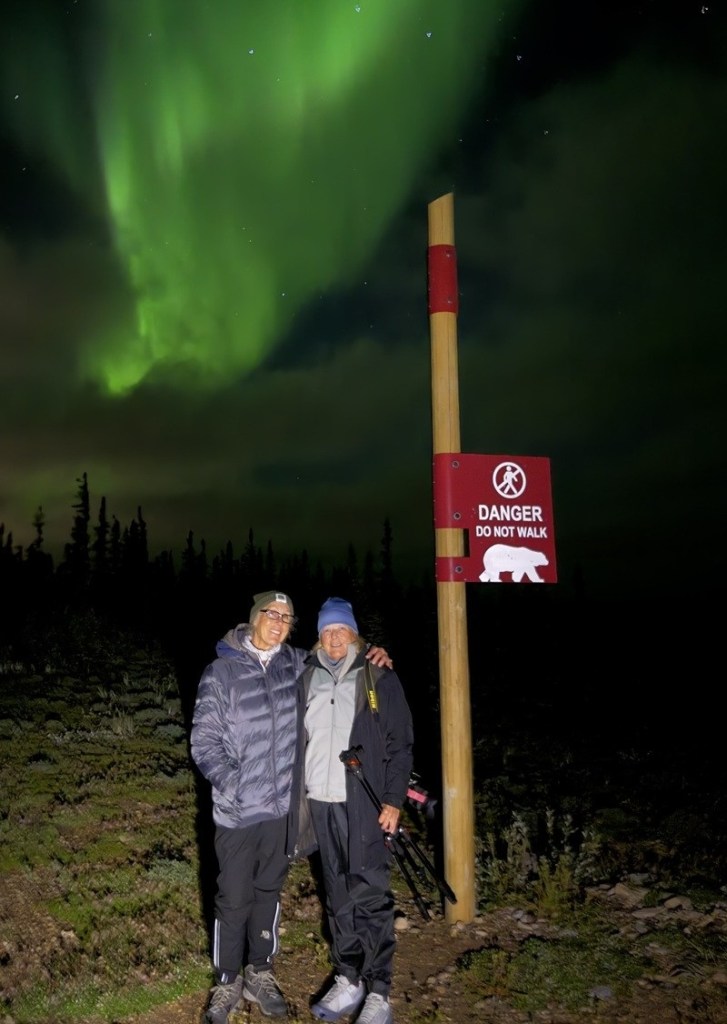
photo courtesy of David Sandford, Discover Churchill Tours

In mid-August, Churchill enjoys long days, with sunrise around 5:30 am and sunset near 9:00 pm. The extra daylight lets you take tours well into the evening. Our first zodiac tour started at 6:30 pm.

We booked three beluga tours over the week: one in the evening, one at 8 am, and another at 10:30 am. The changing tides let us take both above-water and underwater photos in different lighting. Still, photographing whales in green water from a moving zodiac was much harder than I expected!

Sea North Beluga Zodiac Tour August 2026 (GoPro screen grab)

Our guides taught us a lot about these amazing animals as we cruised along the Churchill River. For example, belugas communicate with a whole repertoire of sounds and even have names for each other!

canaries of the sea! (video by Deb, August 2026)

On our second tour, someone spotted a bear across the river, so we went to see it before returning to the whales.

August 2026

Our final tour was truly memorable. We left at 10:30 and right away saw another bear on the opposite shore. After watching him for a few minutes, we went back to the belugas. They were everywhere, but none came close to our boat.
August 2026

We’d heard that music might attract them, and Kathy, a fellow passenger, had brought along a small underwater microphone. She started with Beethoven, but the belugas didn’t react. Next, she tried ABBA’s “Dancing Queen,” then the Bee Gees, followed by a Vivaldi violin concerto, but still nothing.
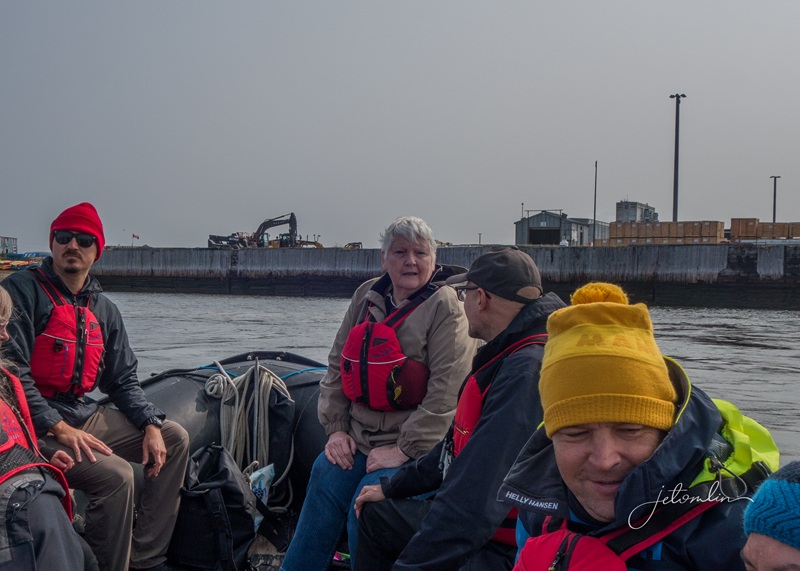
Thank you, Kathy! (center back)

Finally, she played Andean pan flute music, and suddenly the whales came in droves.

Sea North Beluga Zodiac tour, August 2026

A pod of 10 to 15 belugas followed us for over 45 minutes, giving everyone plenty of chances for both topside and underwater photos.
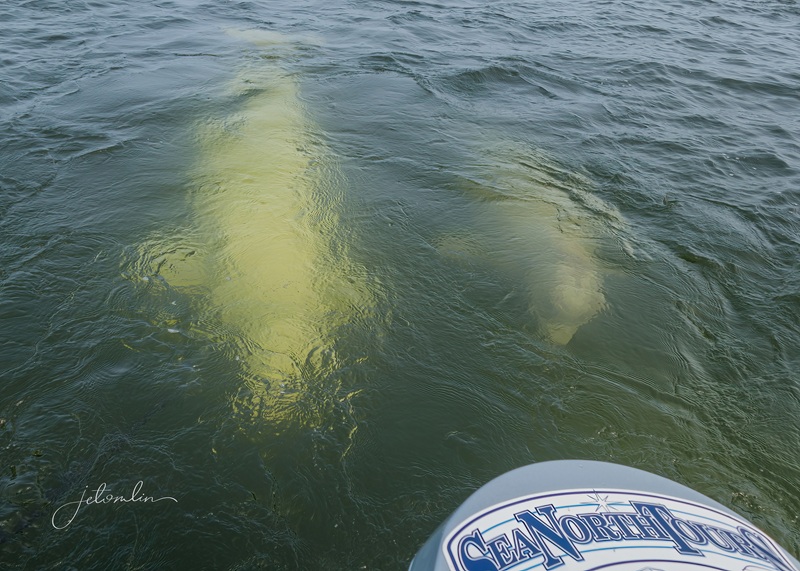
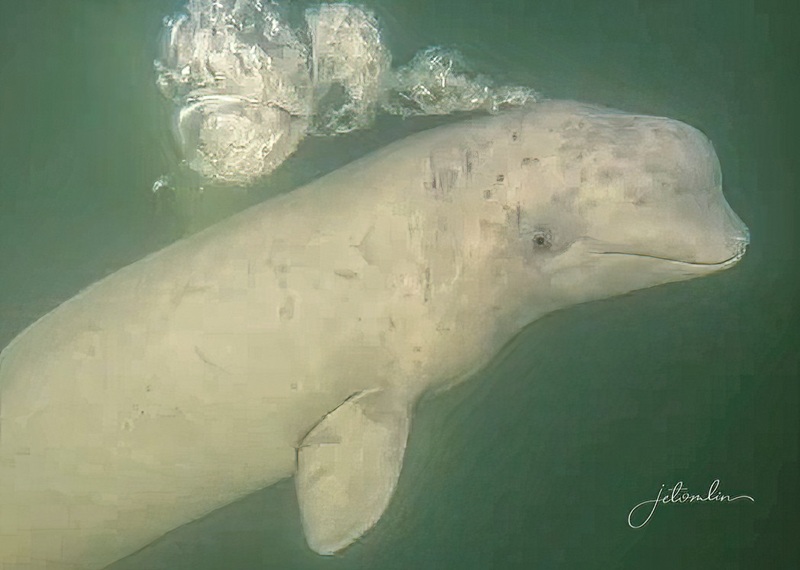
This is a remarkable time in the lives of these beautiful, wild creatures, and being allowed such an intimate view was mind-blowing.
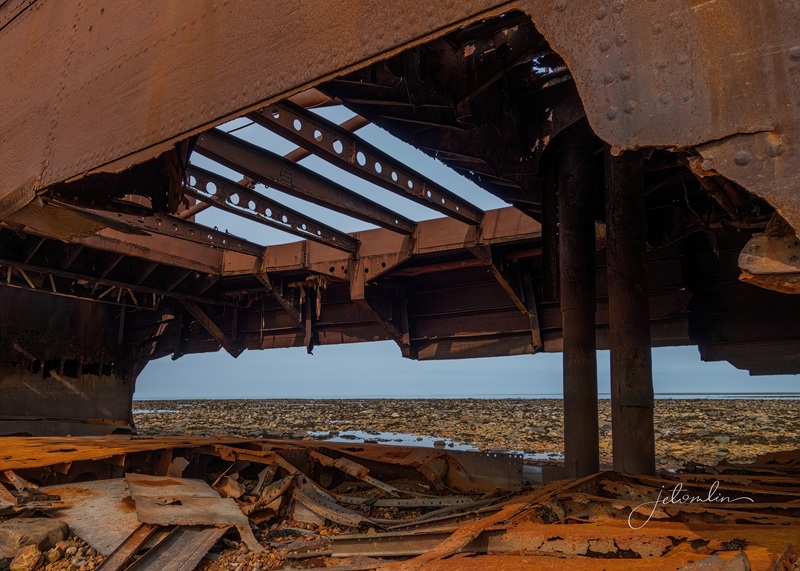
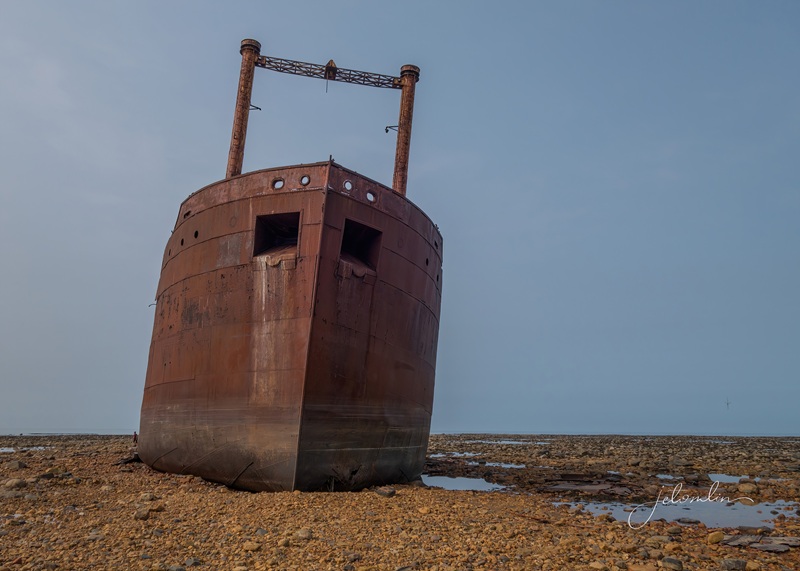
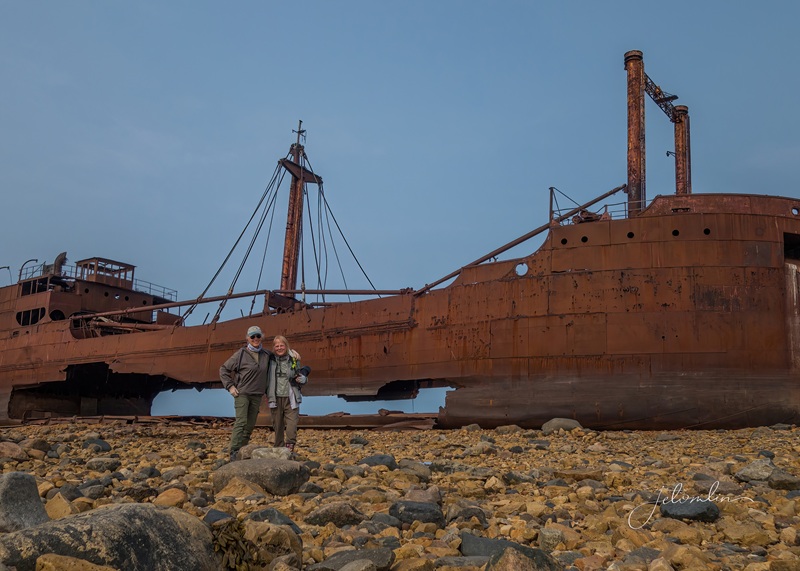
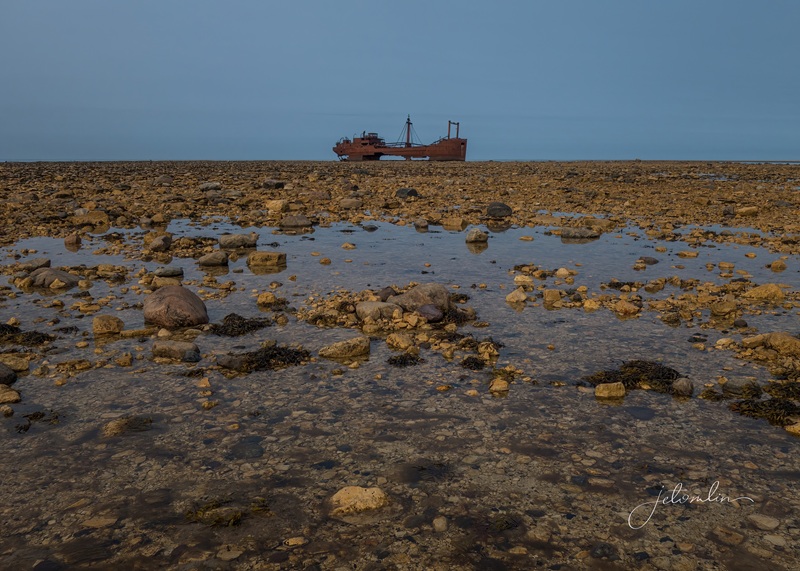
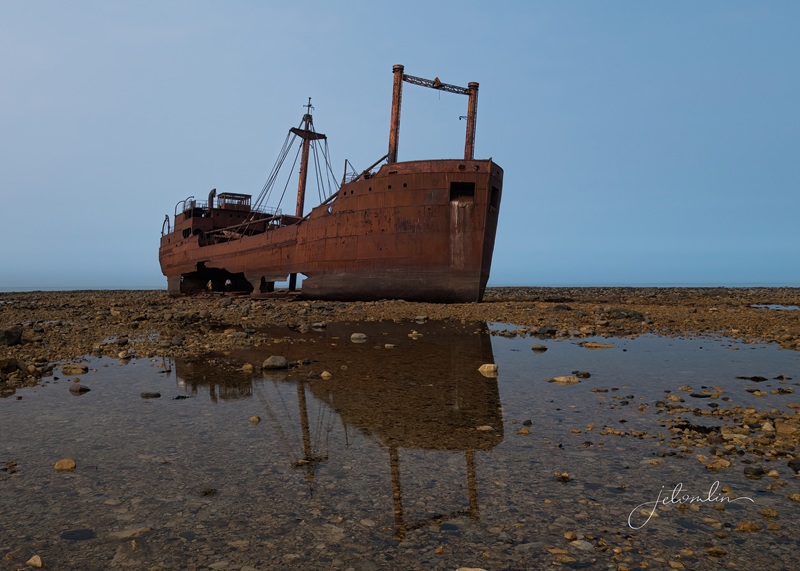
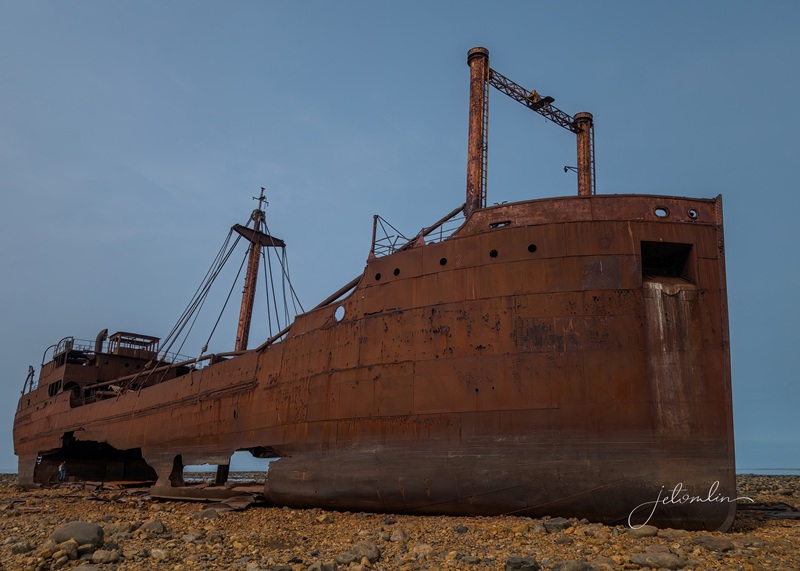
That afternoon, we changed things up and joined Discover Churchill for a hike to the SS Ithaka. This ship ran aground during a fierce storm in 1960. It sits about 600 meters offshore, and at low tide you can hike out to it.
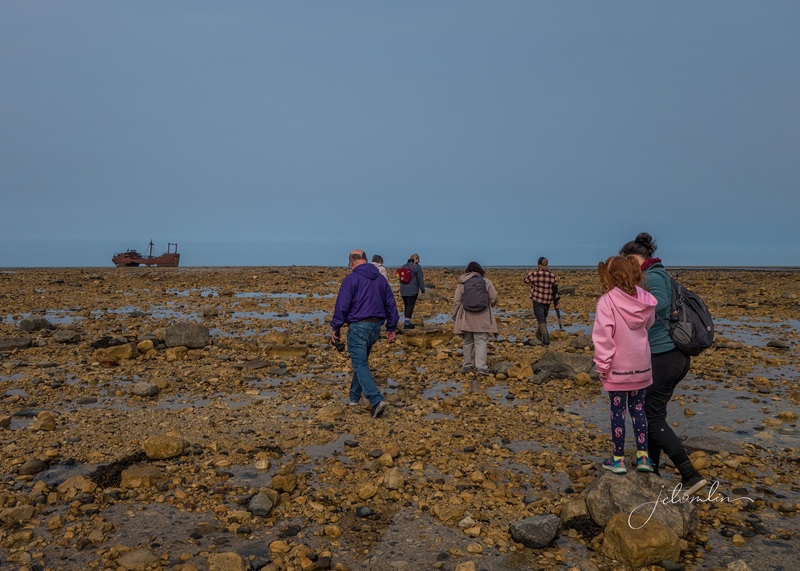
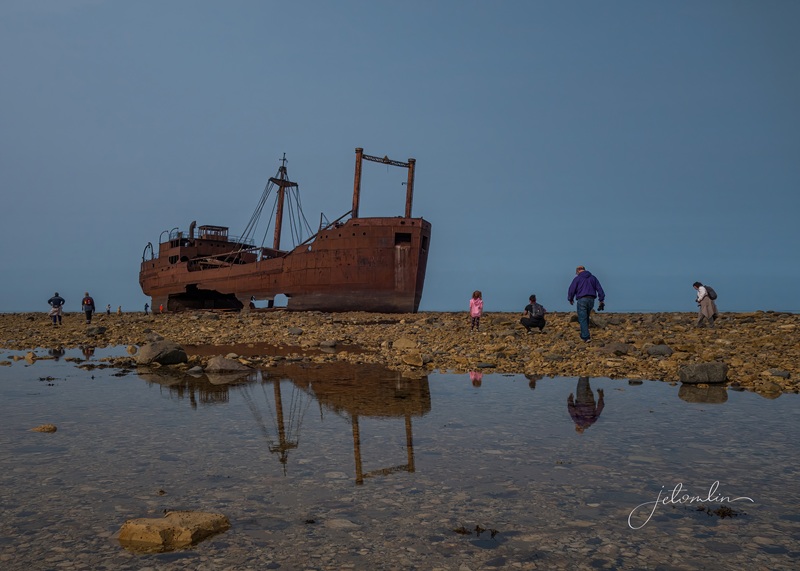
It took us about 45 minutes to pick our way across the tide pools and rocks littering the ocean floor, but standing under the impressive wreck made it all worthwhile.
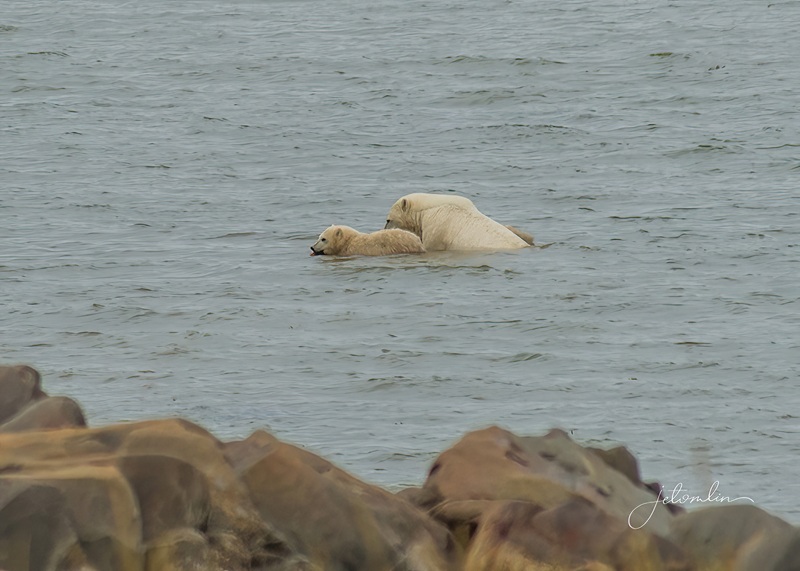
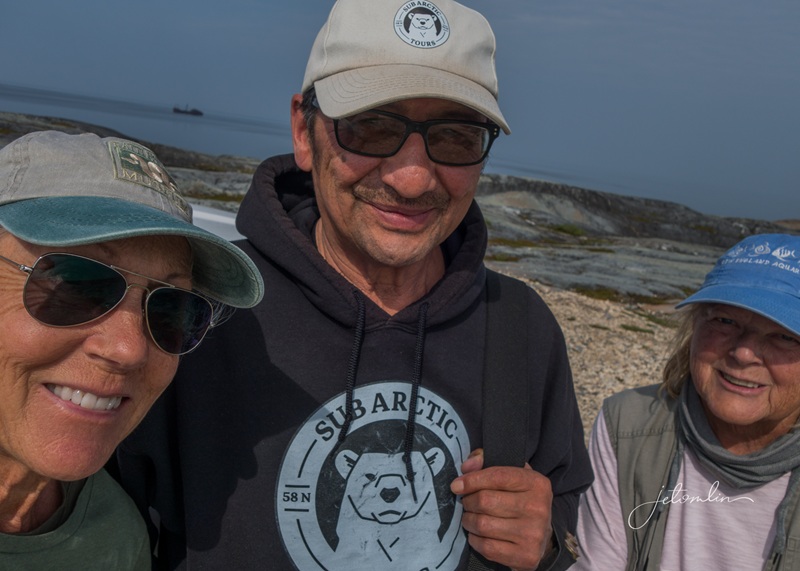
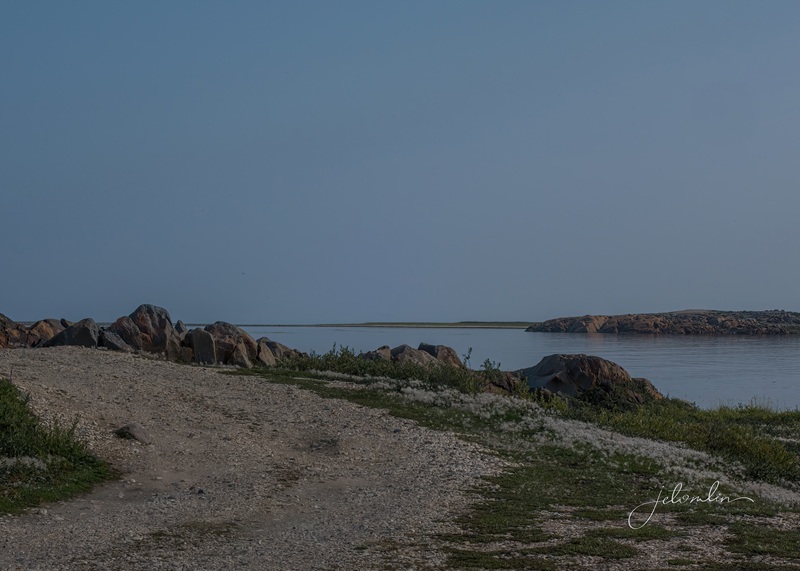
We booked our final two wildlife tours with Sub-Arctic. Thanks to the long days, we went out one evening, which turned out to be another highlight. As the sun set, the animals became more active, and we watched a mother and her two cubs swimming and playing in Hudson Bay.
We saw another mother and two cubs resting on the rocks above us. While we watched, a young male walked up from far down the beach.
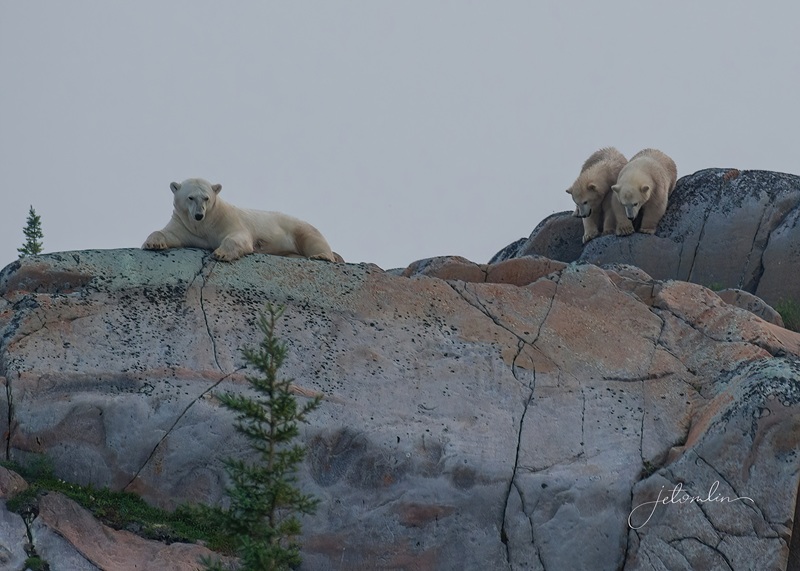
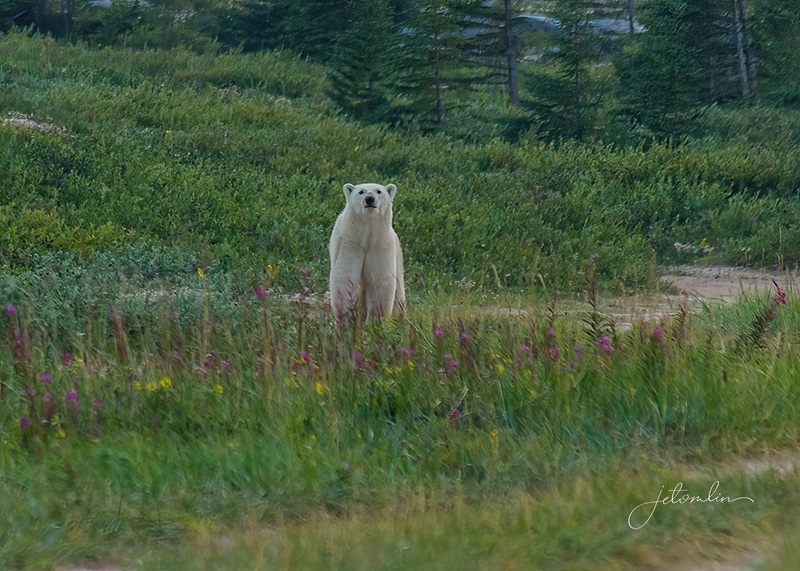
As he grew closer, our guide Stanley said, “The mom will chase him away,” but instead, she simply got up and moved her cubs. Later, when we looked at our photos, we noticed a fresh scratch on her nose and guessed she didn’t want another fight.
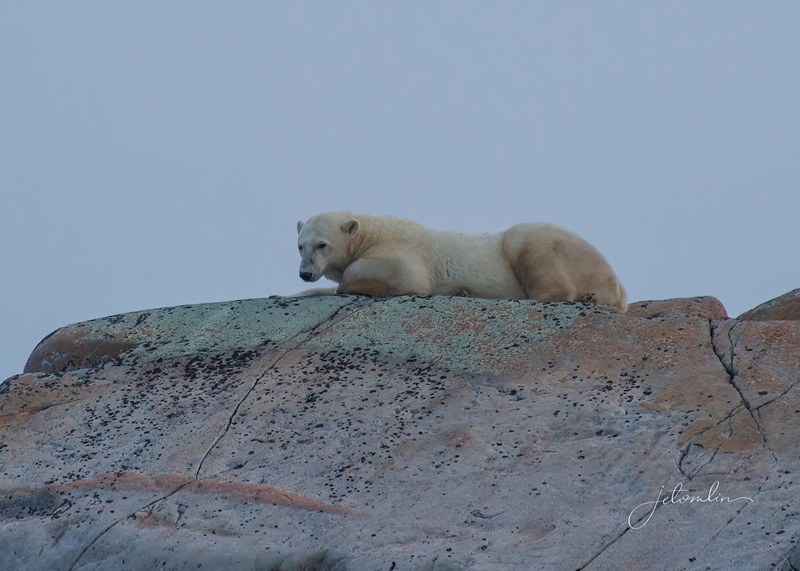
looking at our photos we noticed a fresh scratch on her nose

Our last tour was on Saturday, our departure day. In the first half-hour, we saw a mother with two cubs swim across the bay and then scramble up the rocky hillside, and bit further along, a single male polar bear.
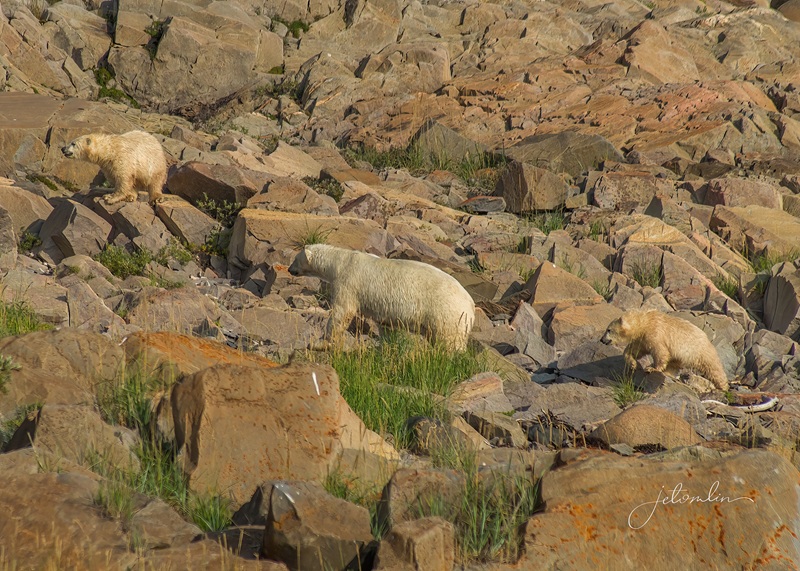
this mom and two cubs swam across the bay and then scrambled up the rocky hillside

After that, things got quiet. It was warm—temperatures reached 72 degrees, which is too hot for much activity on the tundra. Stanley took us deep into the boreal forest toward Twin Lakes.

Stanley took us deep into the boreal forest

We didn’t see any wildlife, but the scenery was beautiful,
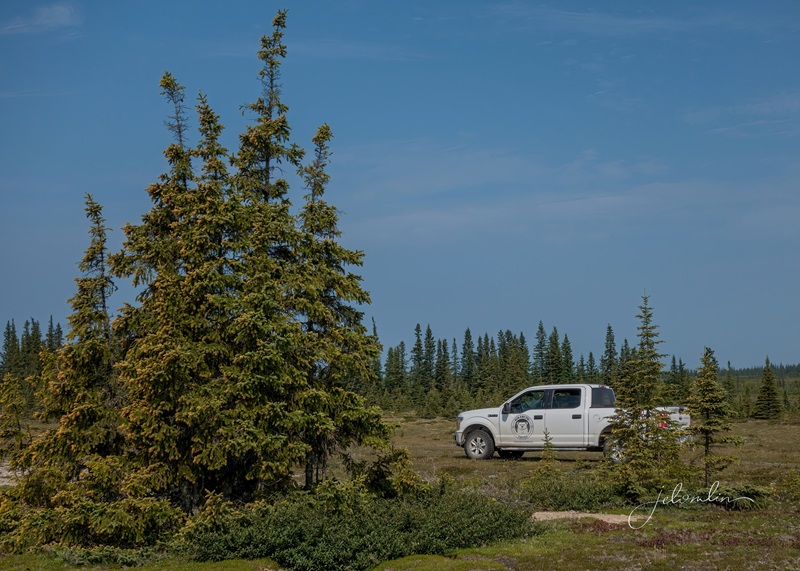
And we spotted several half-buried rockets left from the 1950s launch site.
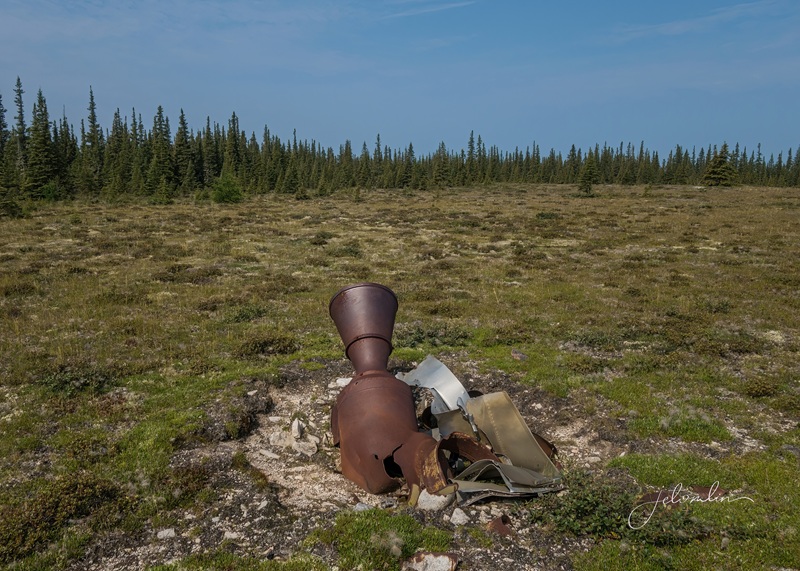
As we headed back towards town, we spotted a beautiful juvi bald eagle who posed for a few photos before flying away.
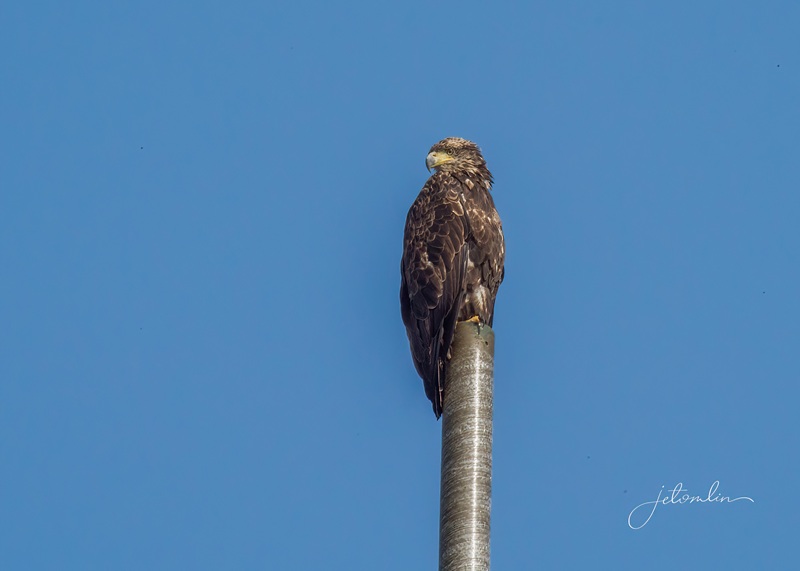
juvenile bald eagle

Just when we thought our trip was over, something caught my eye. As soon as I thought “bear,” Stanley noticed her, too. Another bear. With one—no, two cubs!
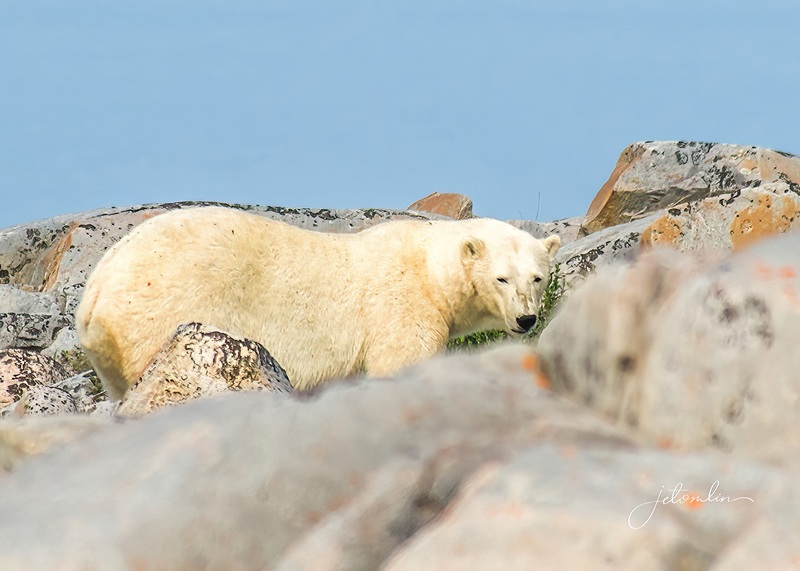
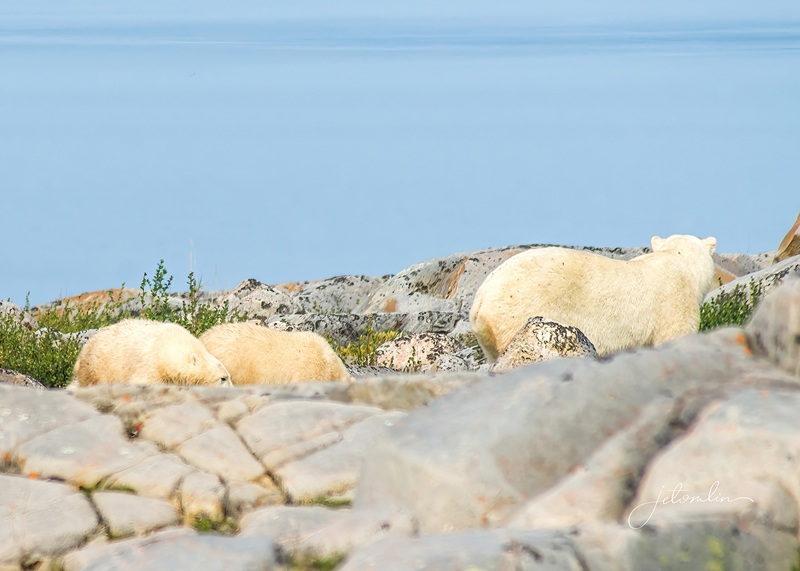
Across the ridge, another bear with two more cubs! And yet another coming towards the three on the ridge!

another mom and two cubs across the ridge!

Seven bears from the same spot, and for 20 minutes, the only sound was the clicking of our cameras.

what a great ending to our stay in Churchill!

Tired but happy, we went back to Caribou Cottage to pack up and get an early dinner before our journey home.
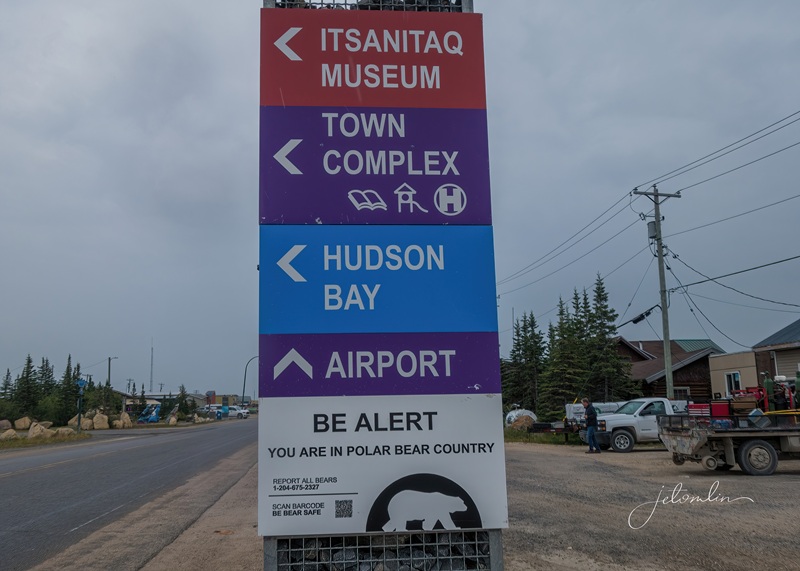
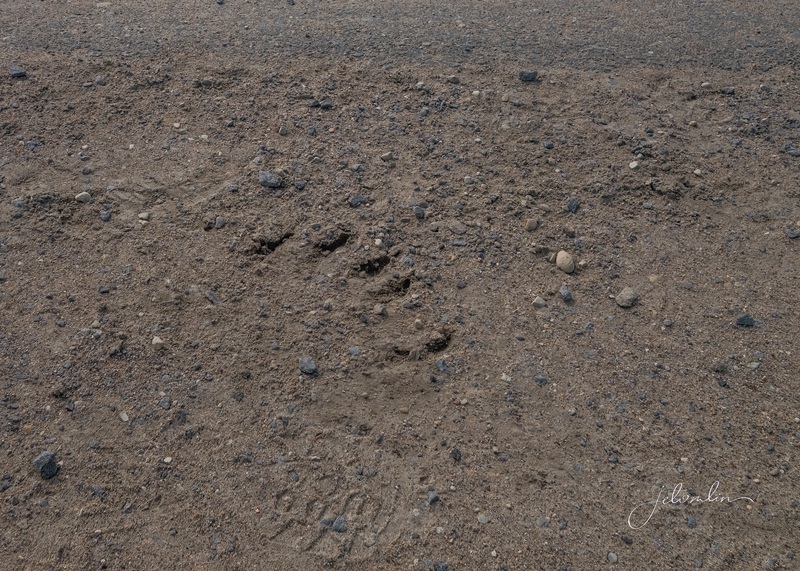
While waiting on the platform to board the train to Winnipeg, we saw several familiar faces. Michael and Lena, the honeymooners from Austria who traveled up with us, and we had run into several times during the week, were there. We also recognized other people from the train north or from our tours.

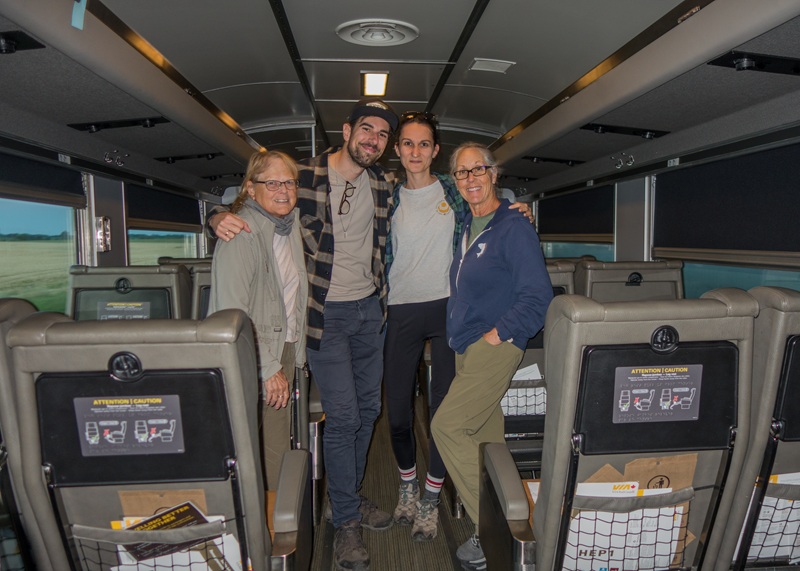
The idea of spending two days on the train each way seemed daunting, but the trip was enjoyable. I never even opened my Kindle because the scenery was so interesting. Sleeping in economy seats wasn’t comfortable, but it was worth it for the money we saved and the extra tours we could take in Churchill. I took photos from the train and made a short video: 47 hours condensed into 90 seconds.

If you’re thinking about taking the train, my advice is to build in an extra day or two. Our train to Churchill was only two hours late, but on the way back to Winnipeg, we were delayed by track repairs. We sat in one spot for six hours, and by the time we reached Union Station, it was close to midnight, and we were over eight hours late.
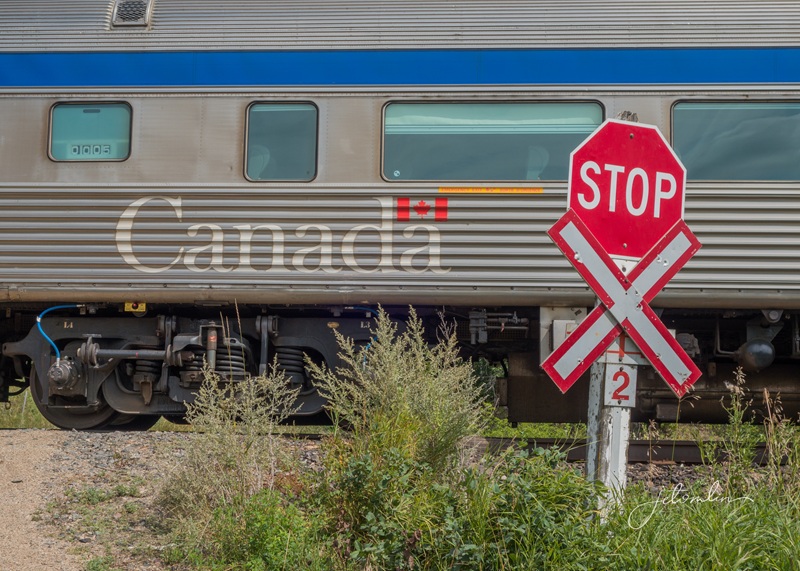
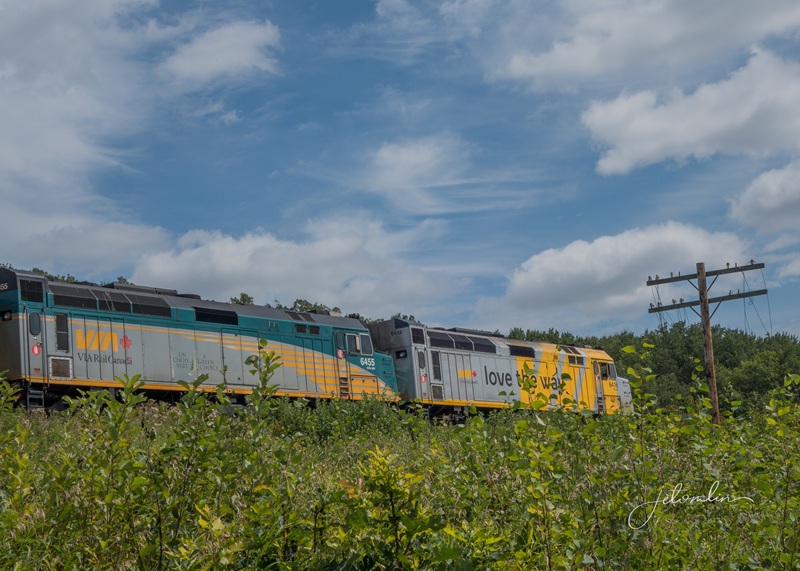
Still, the Via Rail staff did everything they could to make us comfortable. They provided a free dinner, more Oreo cookies than we could eat, left the doors open so we could step outside for fresh air, and kept us as updated as possible.
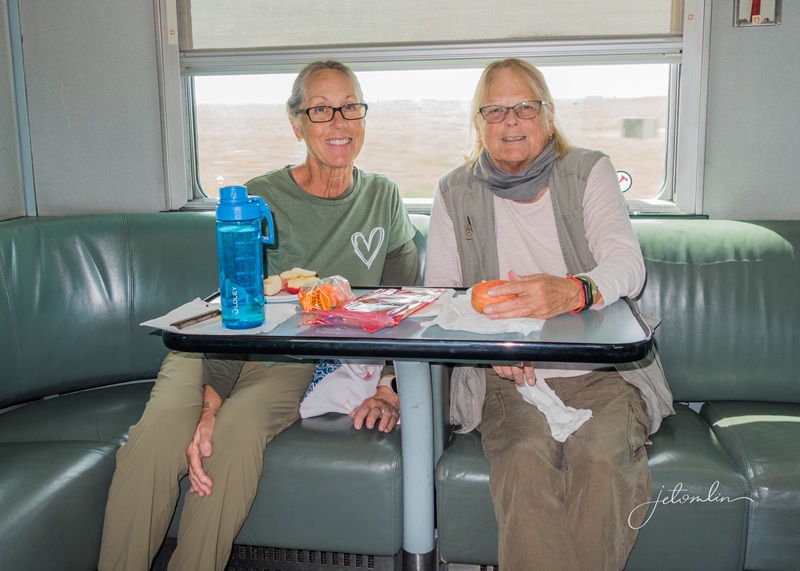
TG was following our progress online, so we decided he should head back to Ninga and pick us up the next morning, while Deb and I booked a hotel in Winnipeg. There were several people on our train with early morning flights and no choice but to head straight to the airport.

Humphry Inn & Suites, Winnipeg (internet photo)

Caribou Cottage was the perfect place for our stay. We shared a big kitchen, common area, and two bathrooms with four guest bedrooms. It was quiet but still close to the tour offices, restaurants, and grocery stores. Roy, our host, was easy-going and quick to respond. We spent the week with Thomas, Ruxandra & Sebastian, and Ramon & Getty—all friendly and courteous world travelers. You can find Caribou Cottage on Airbnb and Booking.com.
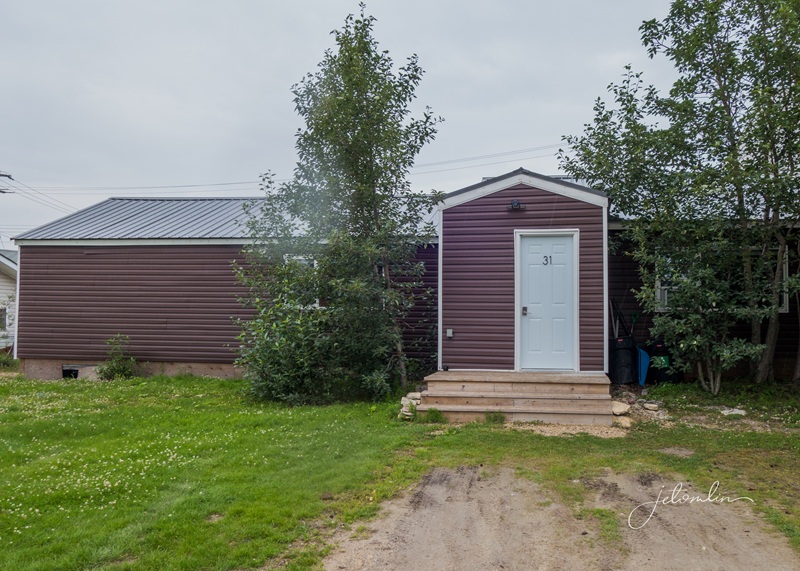
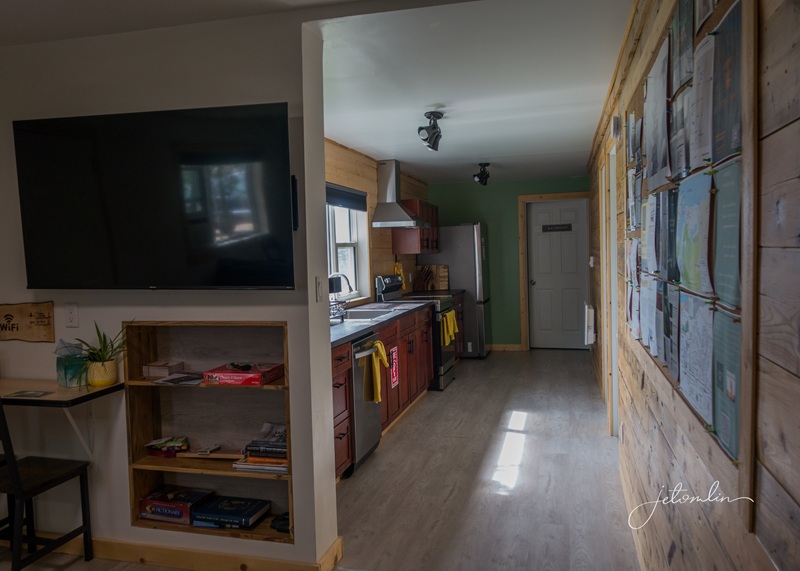
We went to Churchill for the belugas but got so much more. We saw hundreds of whales, spotted polar bears 41 times, and enjoyed one amazing night of aurora—the “Churchill Trifecta.”
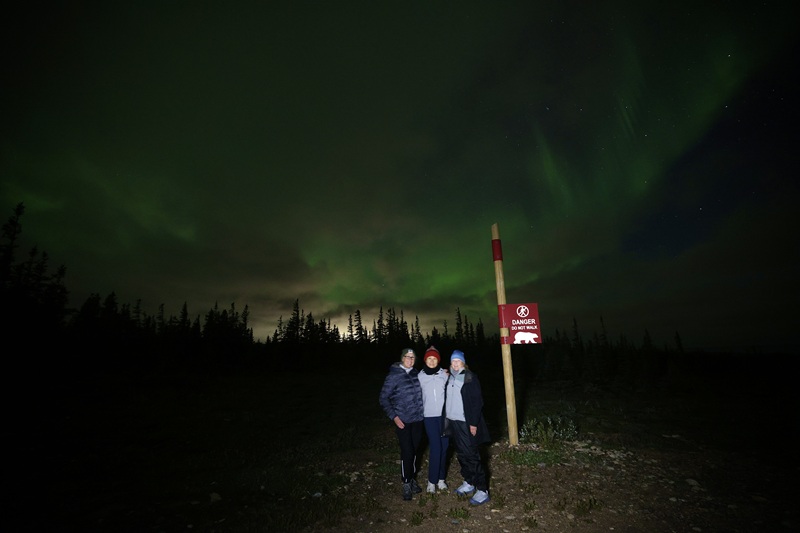
Deb, fellow traveler Ivy, and me

We also saw beautiful scenery and met wonderful people, both locals and fellow travelers.
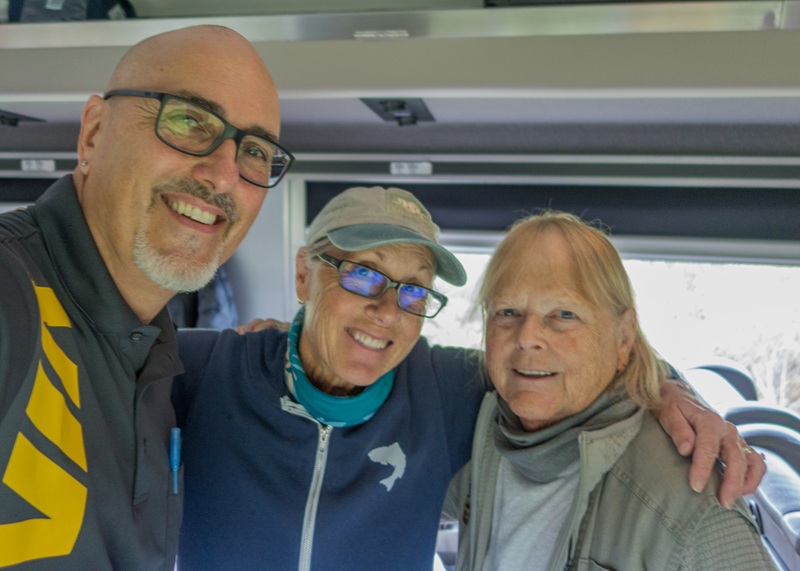
Via Rail service manager, Len

As we drove back to Ninga, I reflected on our week and everything we experienced. The belugas danced in the green water below us, and the aurora danced in the green sky above, making our time in Churchill truly magical.

Our time in Churchill was truly magical

You can see all my photos from our Churchill Trifeca on the Flickr link below:

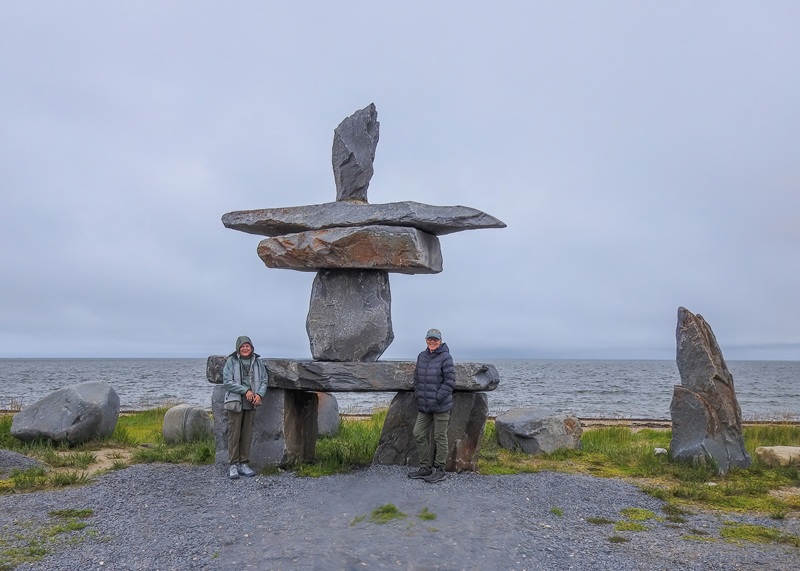
inukshuk
arrow through the set or click on any photo to open a new tab in Flickr

My Amazing Technicolor Dream Adventure

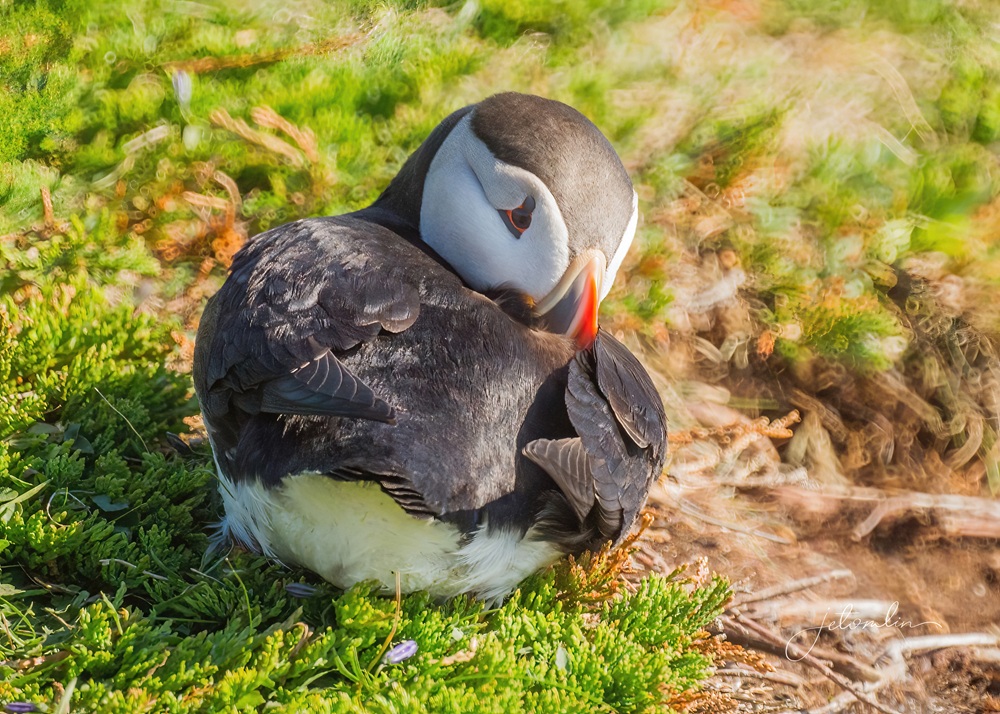
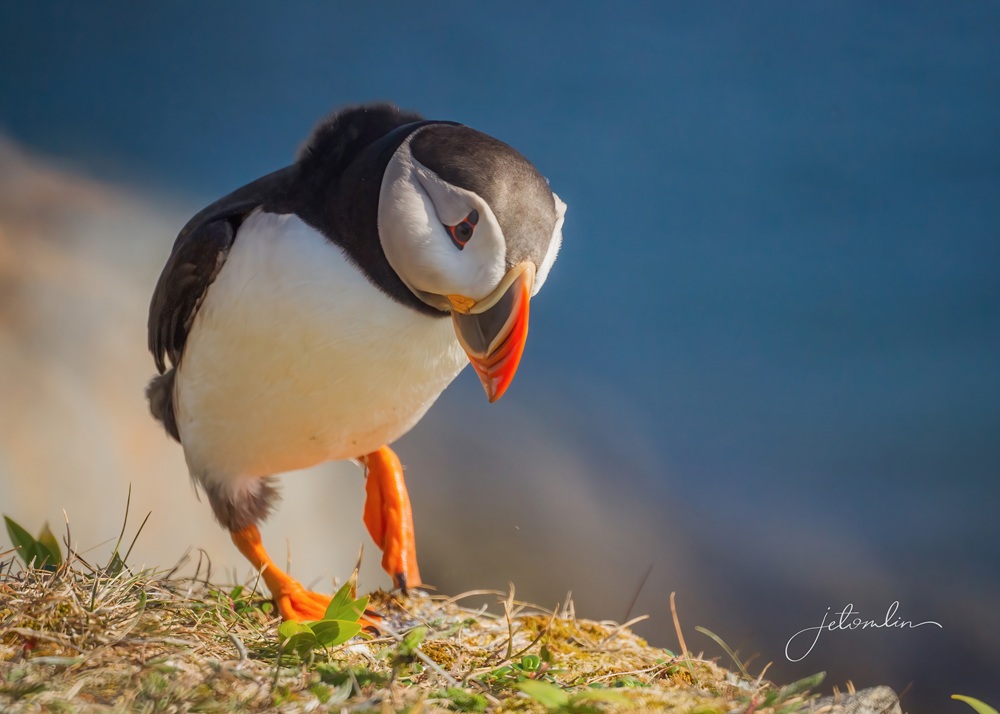
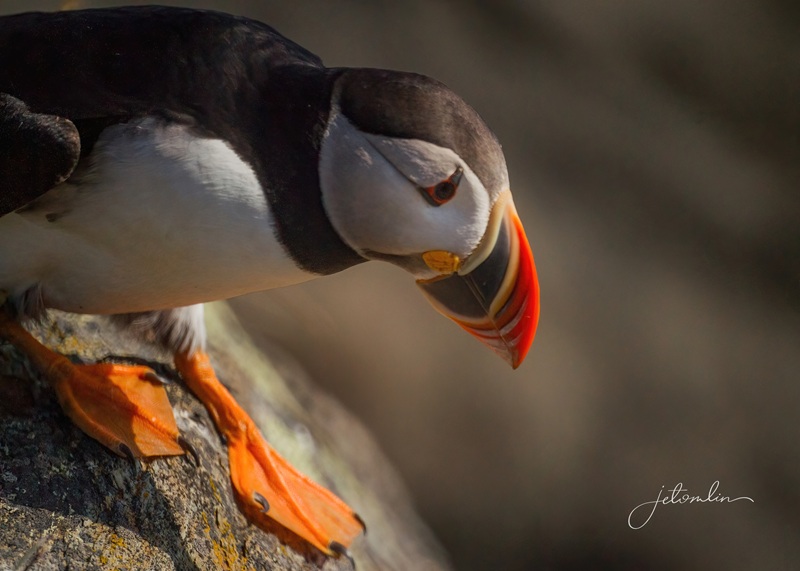
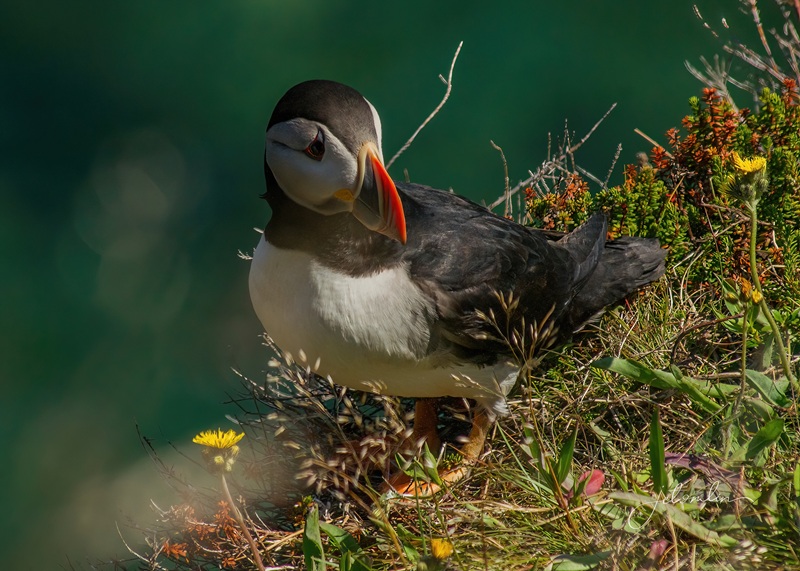
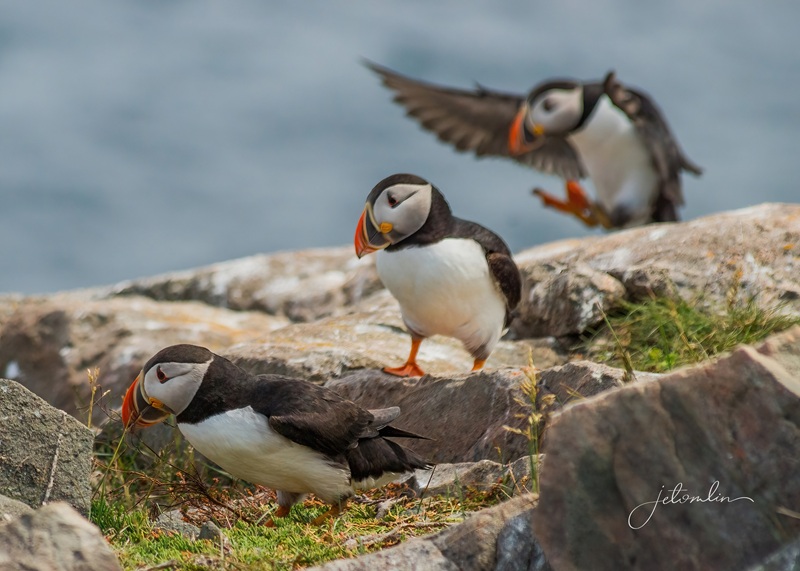
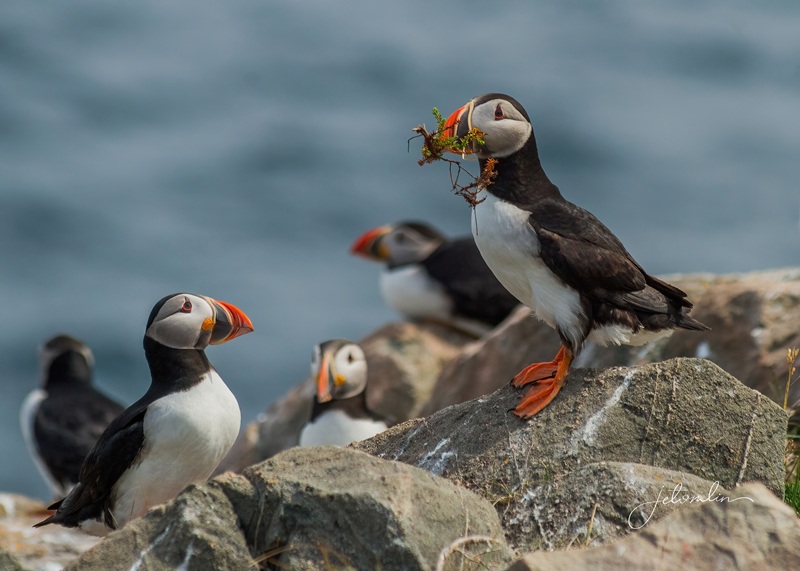
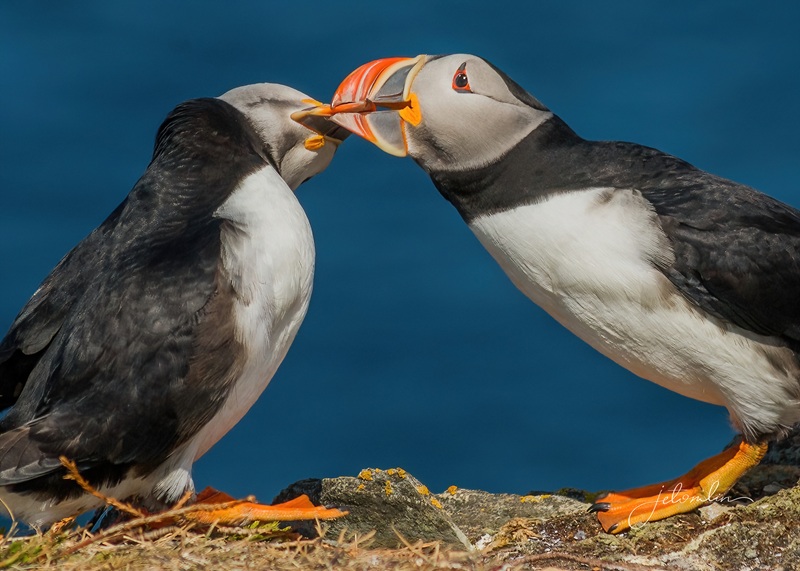
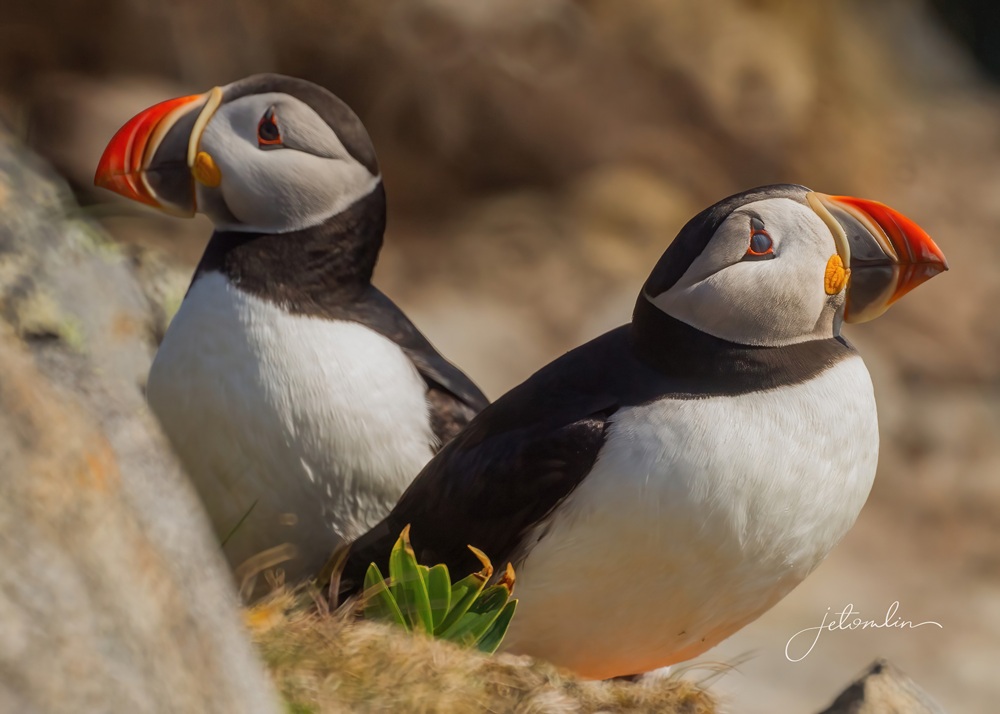
Puffins have always seemed nearly impossible creatures that look more like children’s toys than real birds. Their colorful beaks and triangular eyes stand out against sturdy black-and-white bodies, and their name perfectly captures their roly-poly look. As if that weren’t enough, their chicks are called “pufflings.”

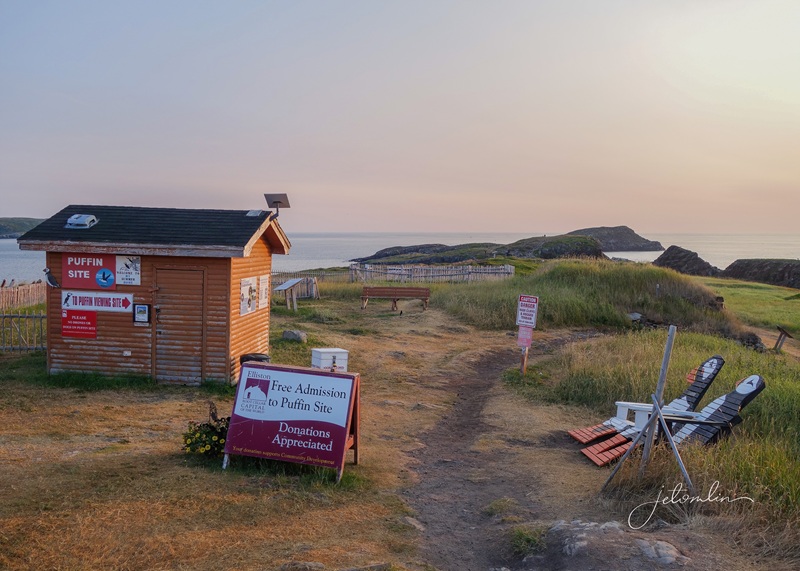
Elliston puffin site, July 2025

These pelagic birds are masters of the air, sea, and land,

Elliston puffin site, July 2025

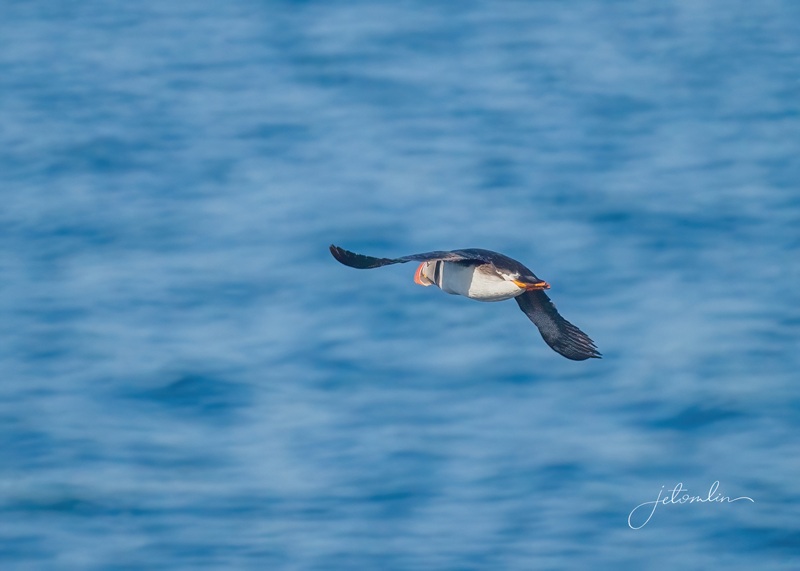
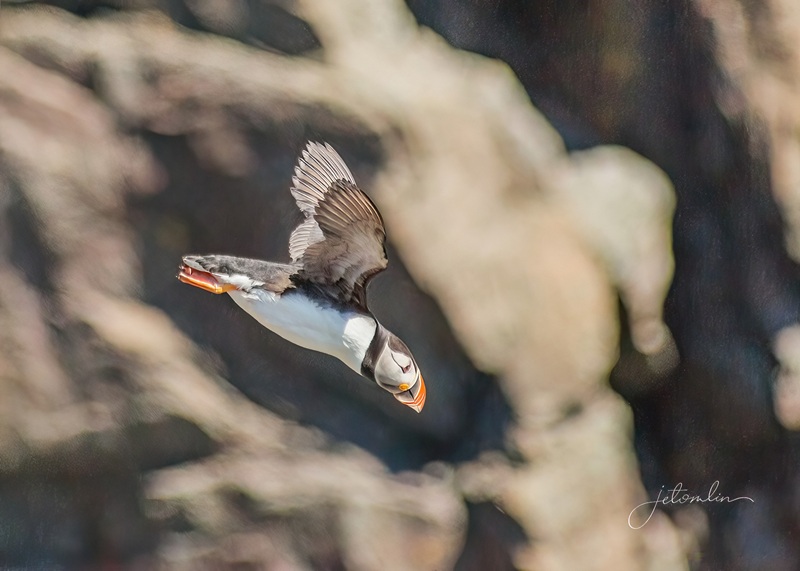
Flying thousands of miles over the ocean,

Elliston puffin site, July 2025

Diving to catch fish (click on photos to enlarge),

And burrowing to nest.

Spillars Cove, July 2025

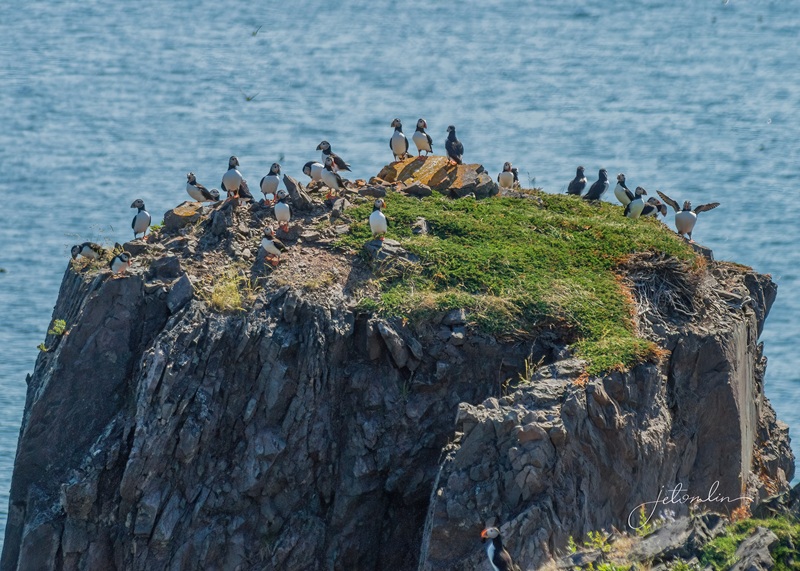
Despite the remote locations where puffins are typically found, I was determined to capture their beauty through my lens. The viewing site in Elliston, Newfoundland, is one of North America’s best places to observe puffins, especially from May to September when they breed on a rocky outcrop, allowing for close encounters.

Elliston puffin site, July 2025

Since the best times to photograph the puffins are early morning or late afternoon, I looked for other interesting ways to occupy my days. The surrounding area offers beautiful hikes and plenty of photo opportunities, so we booked a week at an Airbnb in Bonavista, just five miles from the Elliston site.

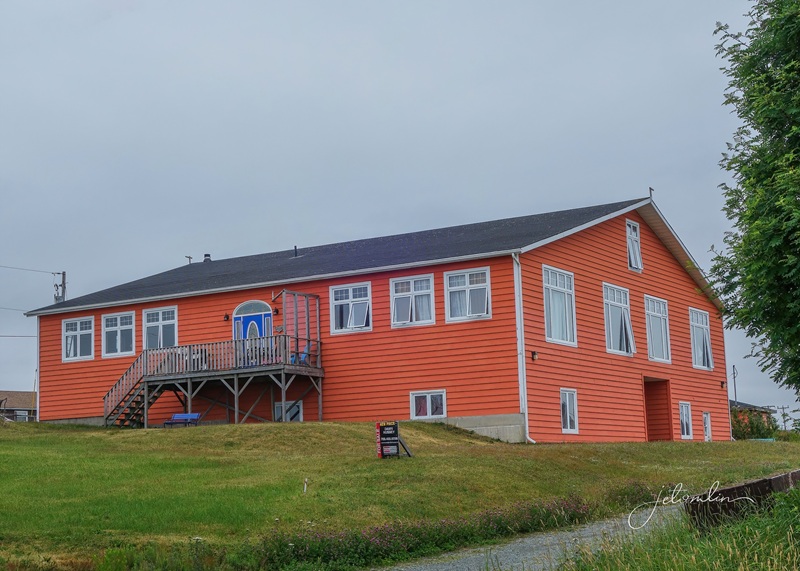
Johanna’s big red house BnB

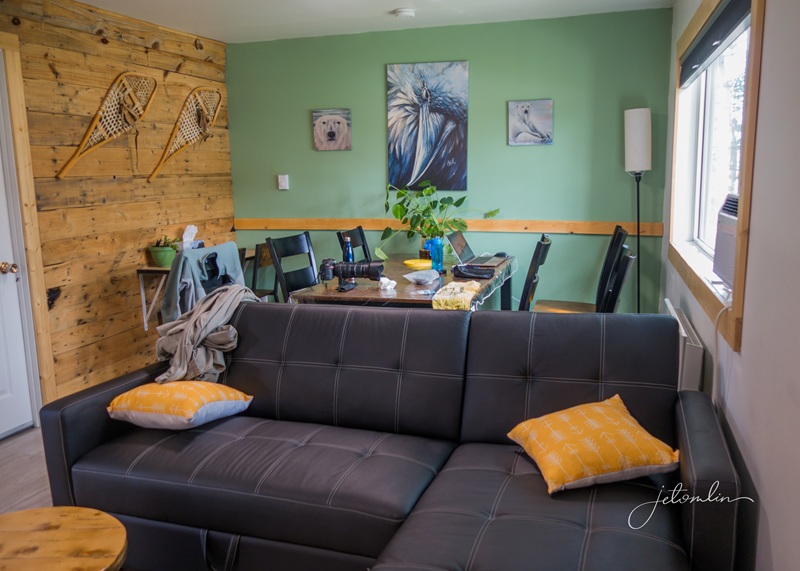
Johanna’s spacious BnB featured a private bedroom and bath, as well as a shared kitchen, and was conveniently located near restaurants and the harbor. Her mi-casa-es-tu-casa hospitality instantly made me feel like family. And the location was a perfect base for exploring all that the Bonavista Peninsula had to offer.

Johanna and me

You can find her listing here:
Bonavista BnB Blue Room Double & Single – Houses for Rent in Bonavista, Newfoundland and Labrador, Canada – Airbnb

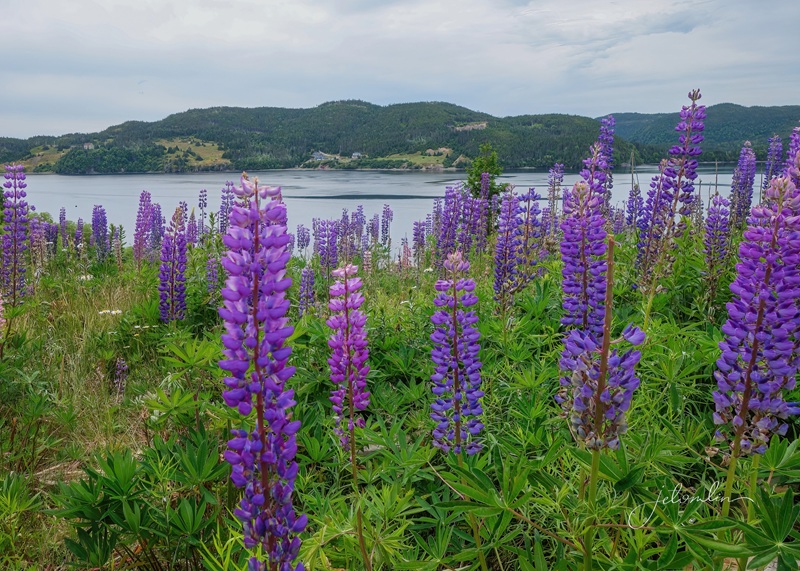
I flew WestJet’s direct morning flight from Orlando to St. John’s, picked up my rental car, and drove the 3 1/2 hours to Bonavista. The route was scenic and colorful — azure lakes nestled between lush green hills with bright yellow, pink, and purple flowers growing wild alongside the road.

lupines growing alongside the road

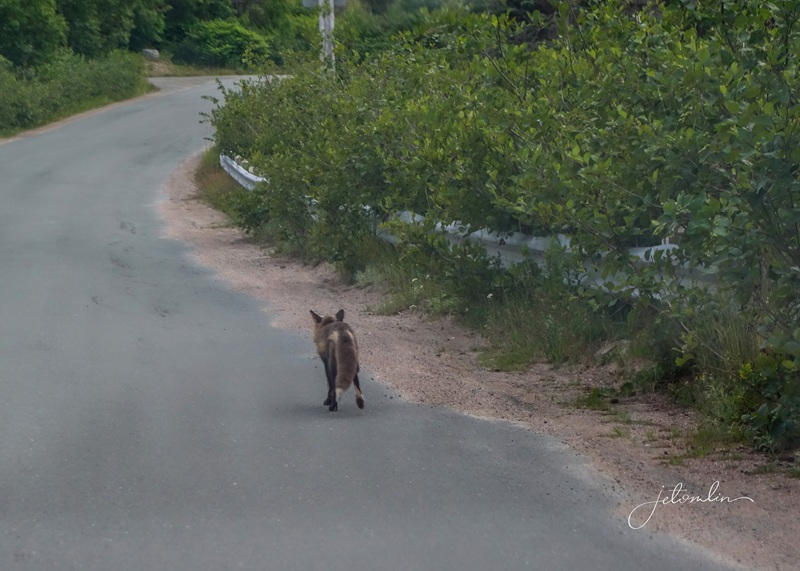
A red fox darted into the bushes as I drove by, and a bit further along, a second fox stayed long enough for me to snap a quick proof-of-life photo through the windshield as I zipped past.

a quick proof-of-life shot through the windshield!

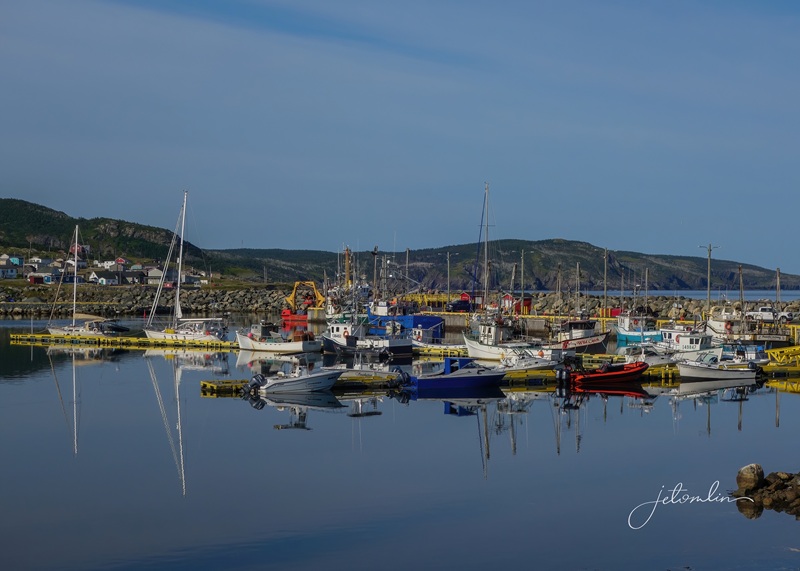
The coastline is filled with charming towns featuring brightly painted buildings that line blue harbors, where equally colorful boats bob in the waves.

Bonavista Harbor

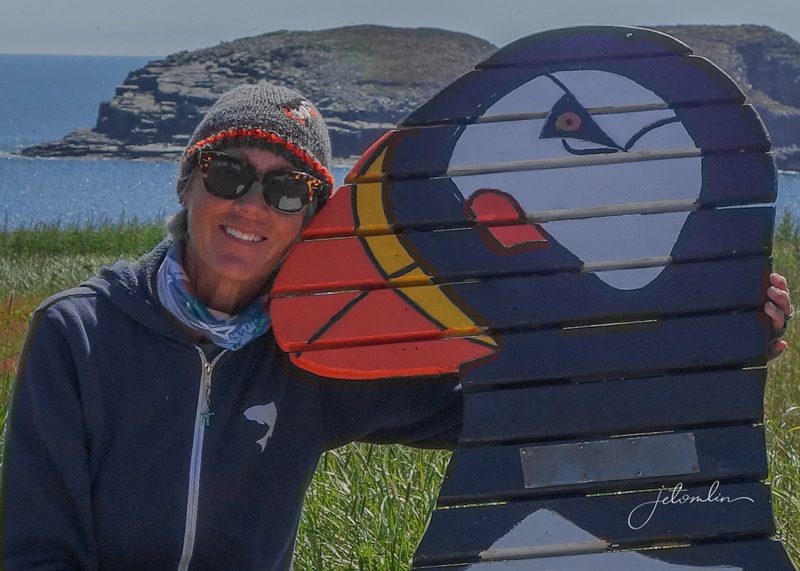
My first day was overcast, and after visiting the puffins in the morning, I spent the afternoon exploring. The Puffin Craft Shop in Maberly offers a selection of handmade items and photographs. I had a wonderful conversation with the owner, Bernice, while choosing a knit cap – embellished with a puffin, of course. I immediately put it on and wore it for the rest of my trip. (Arrow through gallery set)

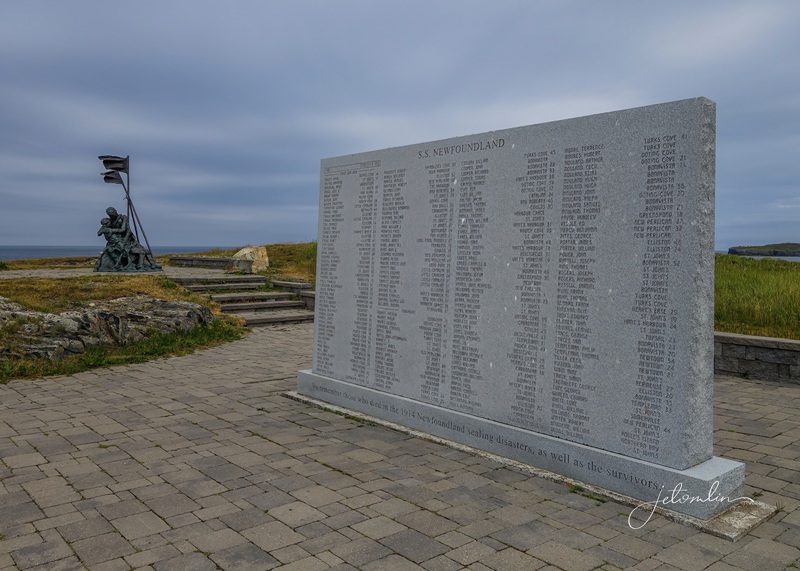
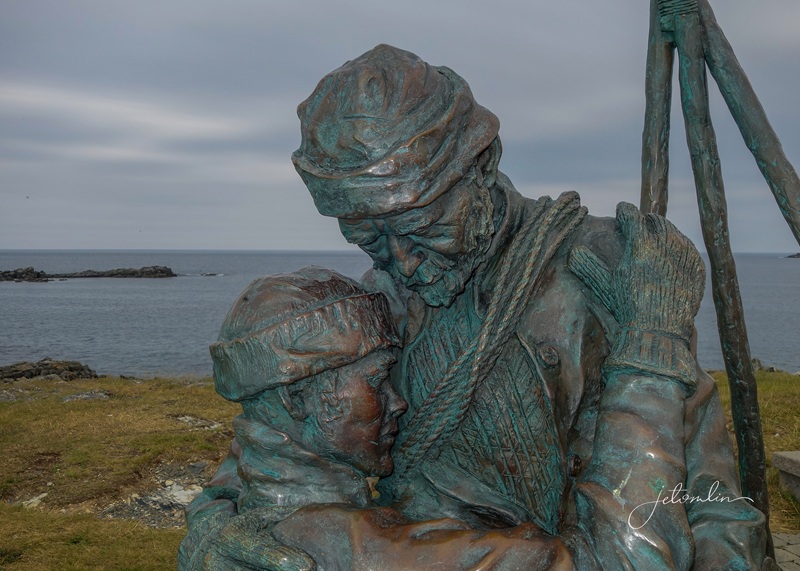
At one of my stops, I happened upon the Sealers Memorial, a powerful seaside statue and monument honoring those who died in the 1914 Newfoundland sealing disaster. (click on photos to enlarge)

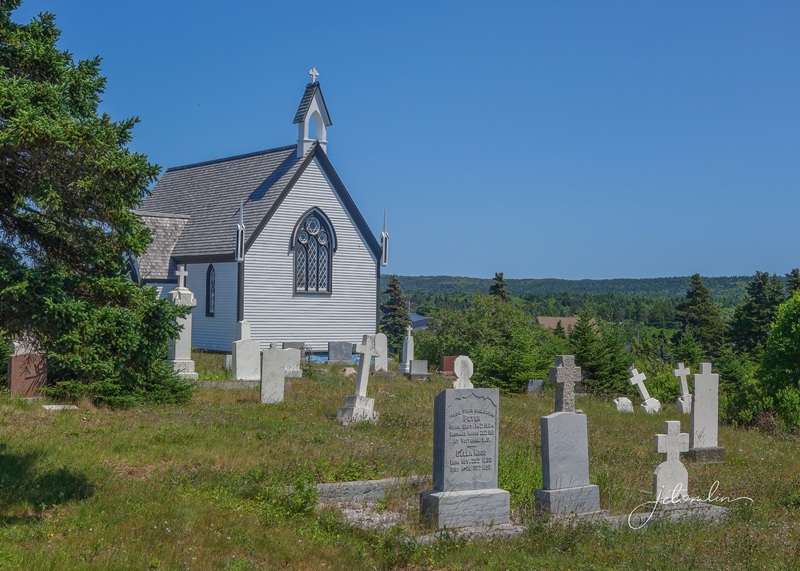
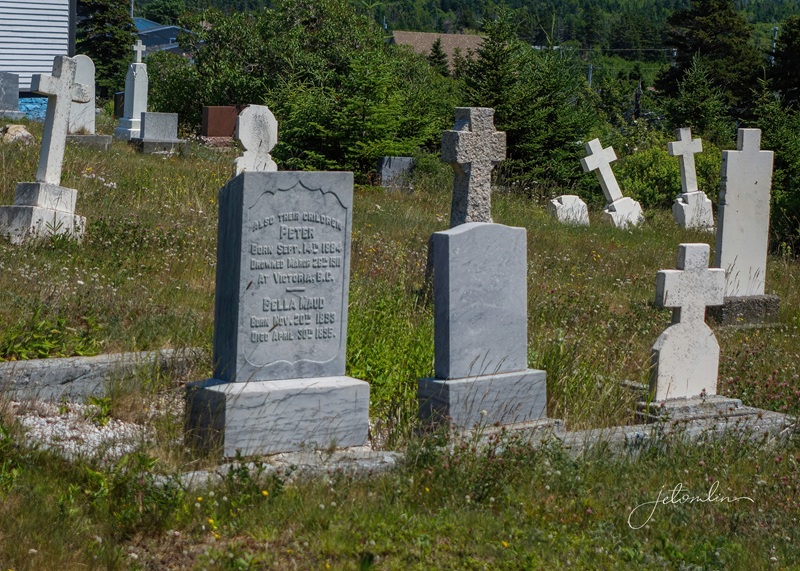
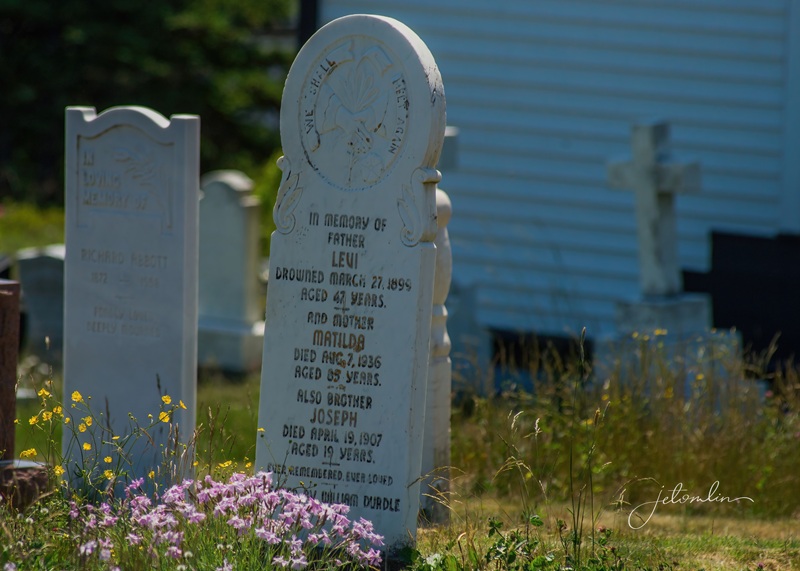
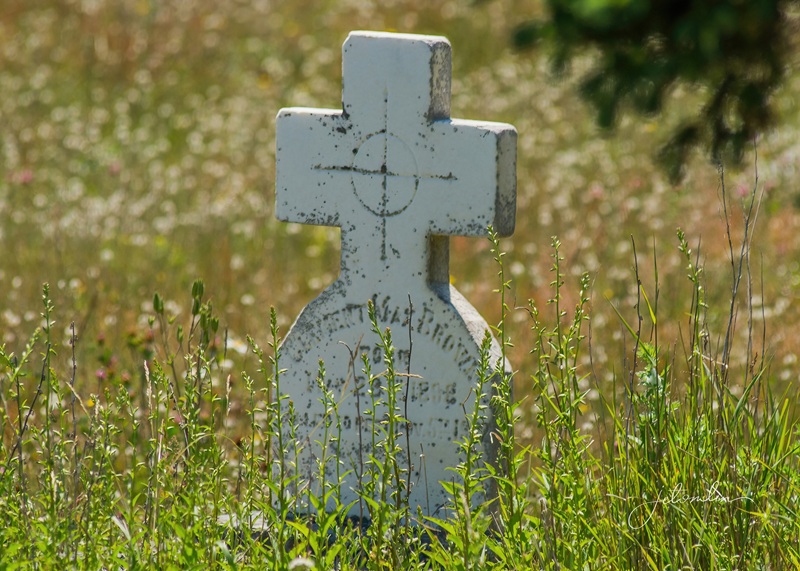
Every town has at least one cemetery with tombstones dating back to the 1800s. Many were overgrown, with ancient stone crosses tilted on their sides, and on the oldest, the writing had eroded from decades of wind and sea. (Arrow through gallery set)

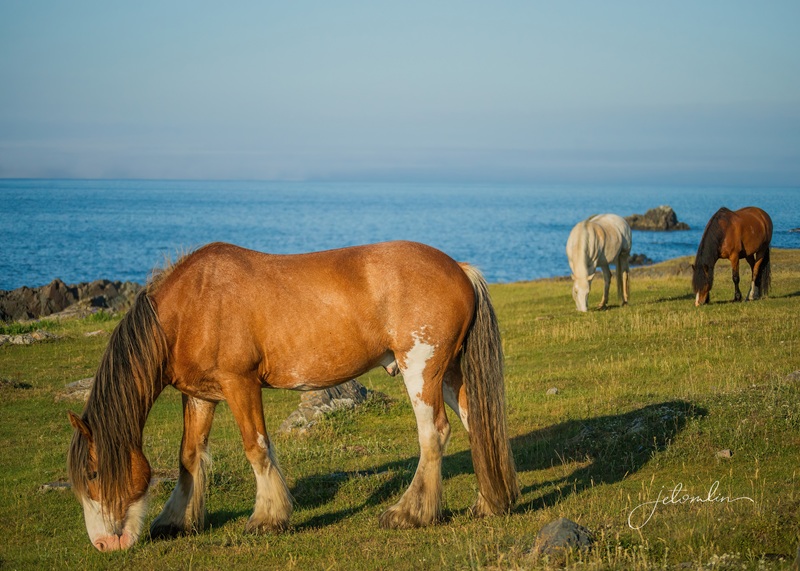
On a whim, I turned down Dungeon Road and came upon a herd of beautiful horses in the community pasture. I couldn’t help but snap a few photos as they grazed on the green hillsides against the blue ocean backdrop.

horses in Bonavista’s community pasture

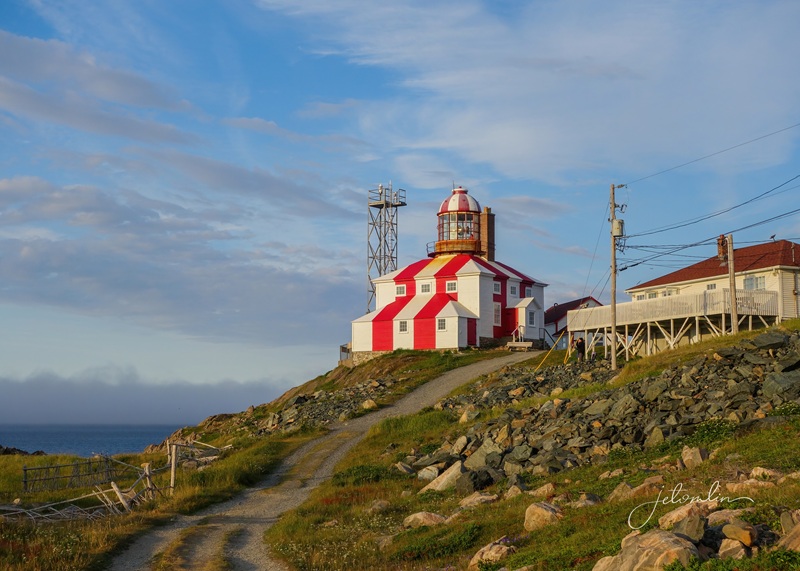
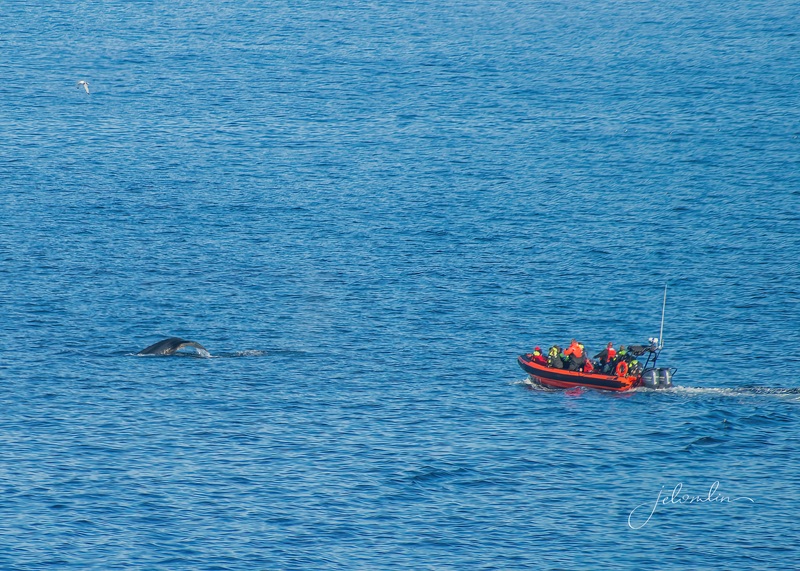
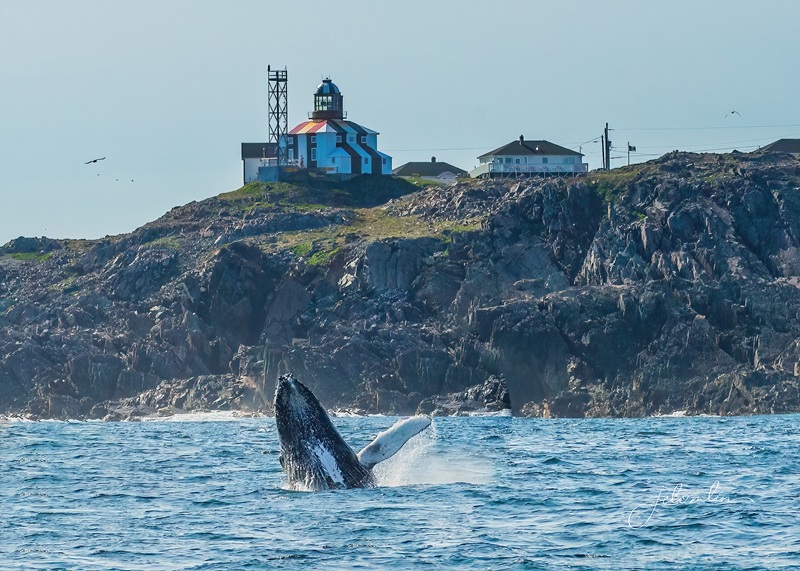
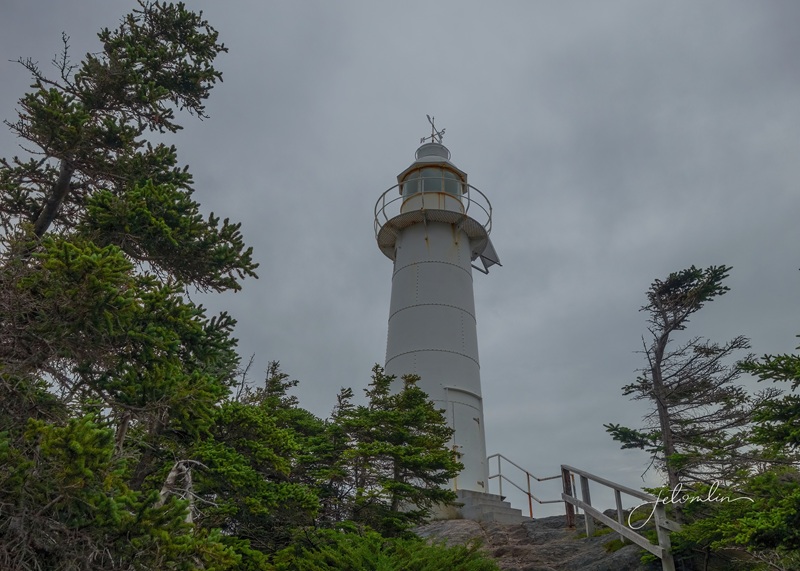
Later, I drove to Cape Bonavista and the lighthouse. From high up on the hill, I watched two humpback whales slowly meander in the bay below me as a bright orange tour boat followed behind. (click on photos to enlarge)

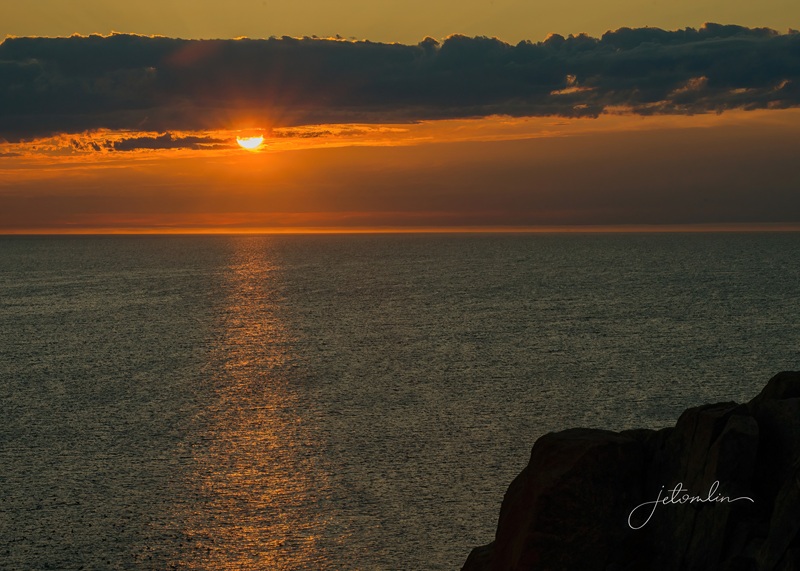
I returned to the lighthouse for the sunset. While I waited, whales entertained me, tails slapping as huge flocks of birds circled above.

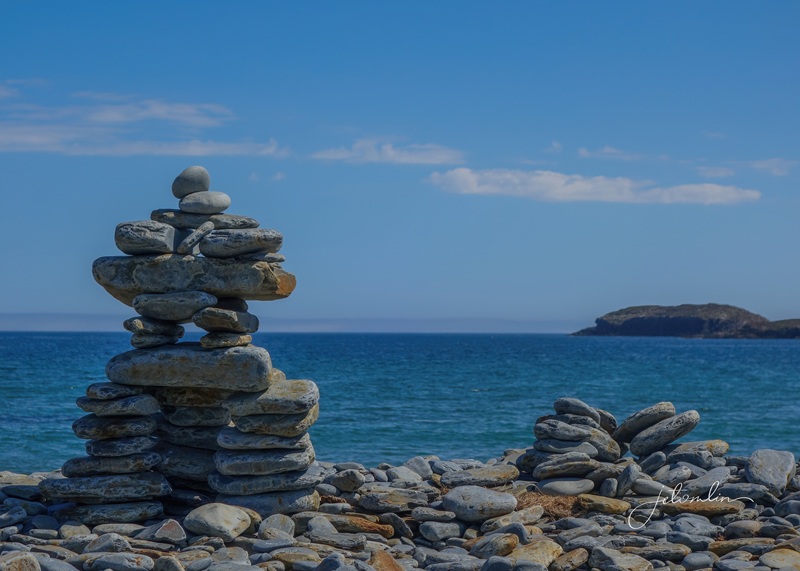
One morning, I stopped to photograph the inuksuks on Sandy Cove Beach. These traditional stone markers, which I first learned about during my visit to Churchill in November 2024, are a significant part of Indigenous culture. I was delighted to find them on a beach in Elliston, pointing the way to the puffin site!

inuksuk on Sandy Cove Beach with puffin site in the distance

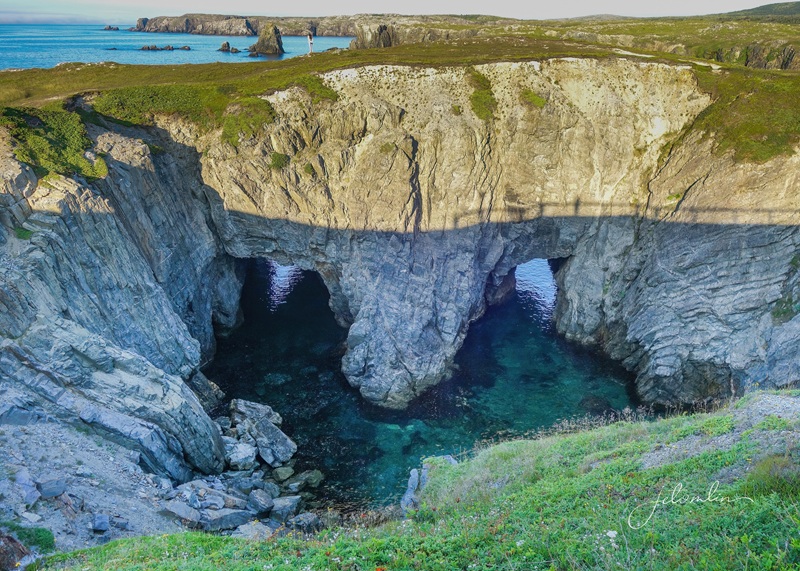
I returned to Dungeon Road and visited The Dungeon, a massive, heart-shaped crater with two separate openings to the sea. I enjoyed watching as the waves crashed in, the same waves that had carved out this breathtaking sea cave millions of years ago.

The Dungeon

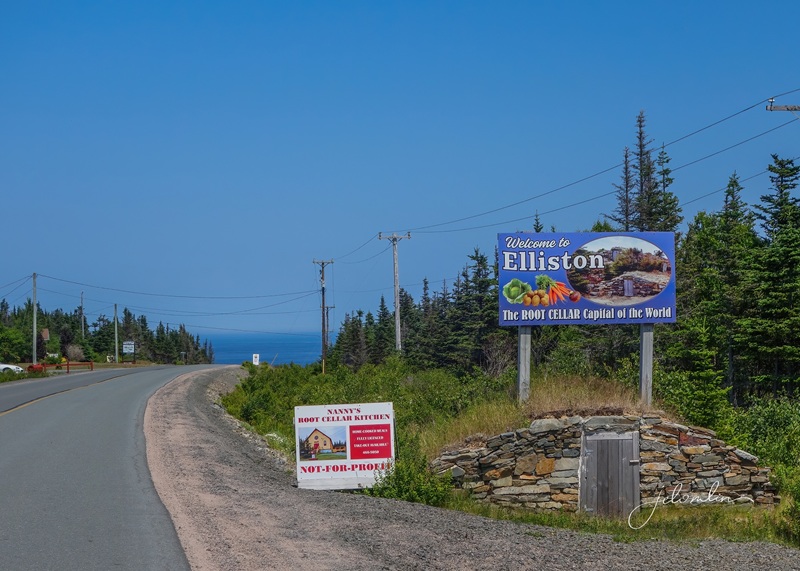
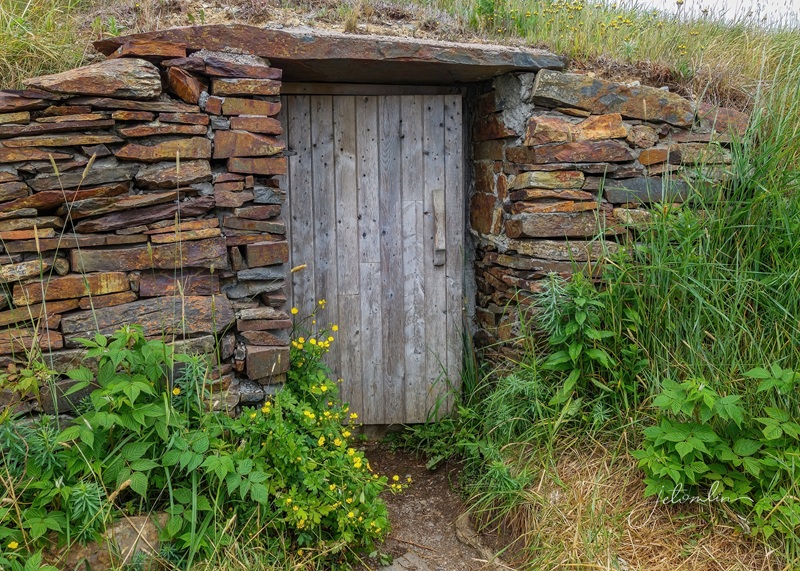
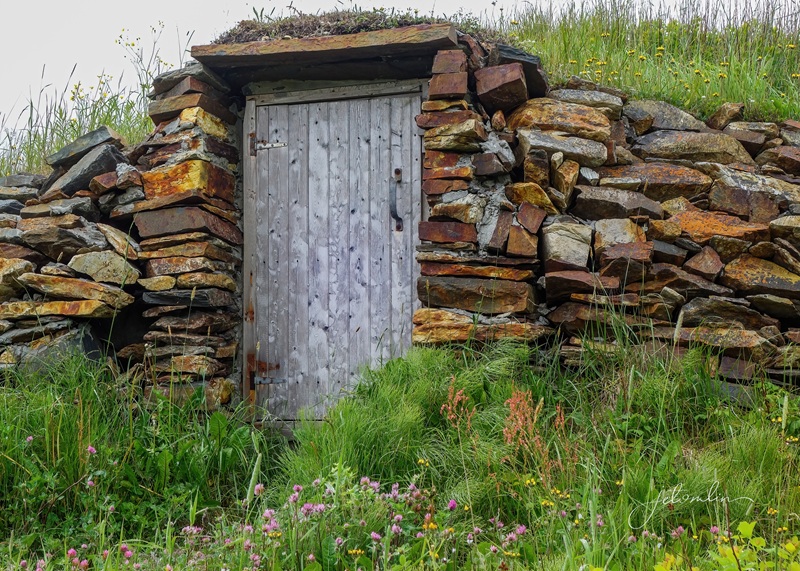
Besides being famous for its puffins, Elliston is also known as the Root Cellar Capitol of the World. So, of course, I had to snap a few obligatory root cellar pics! (Arrow through gallery set)

That’s all fine and good, but what about the puffins?” you ask. The puffin viewing site is located at the end of a short hike along a rocky, uneven path. Until I was up and over the last hill, I had no idea what to expect. (click on photos to enlarge)

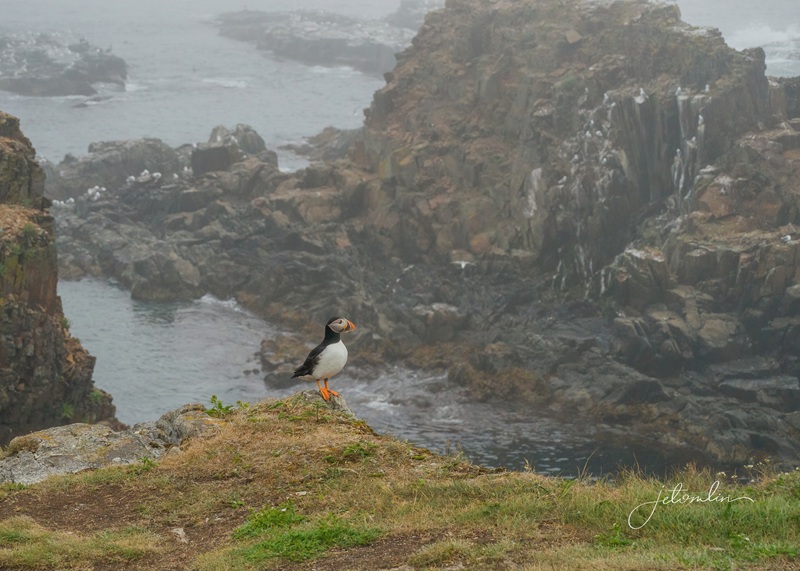
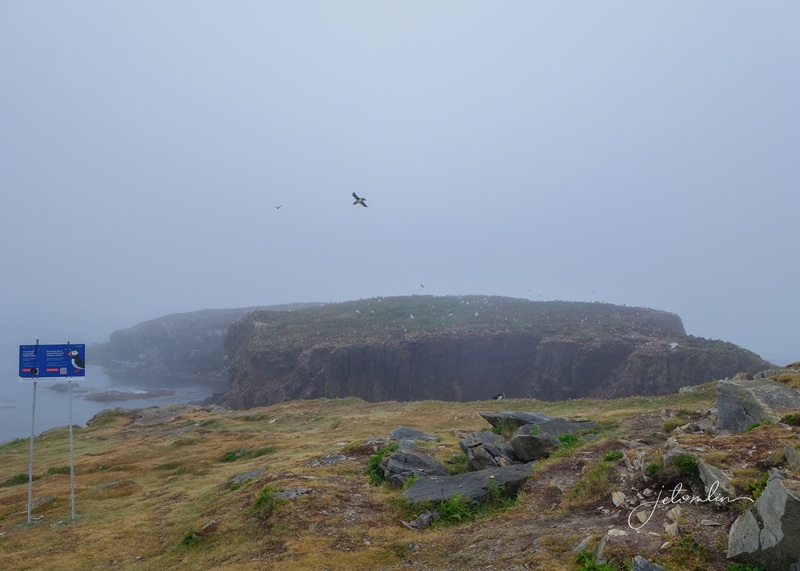
What I was given on my first foggy morning were more puffins than I could have hoped for! The rookery itself is located on an island offshore, at a reach of only the longest lens.

the offshore rookery, July 2025

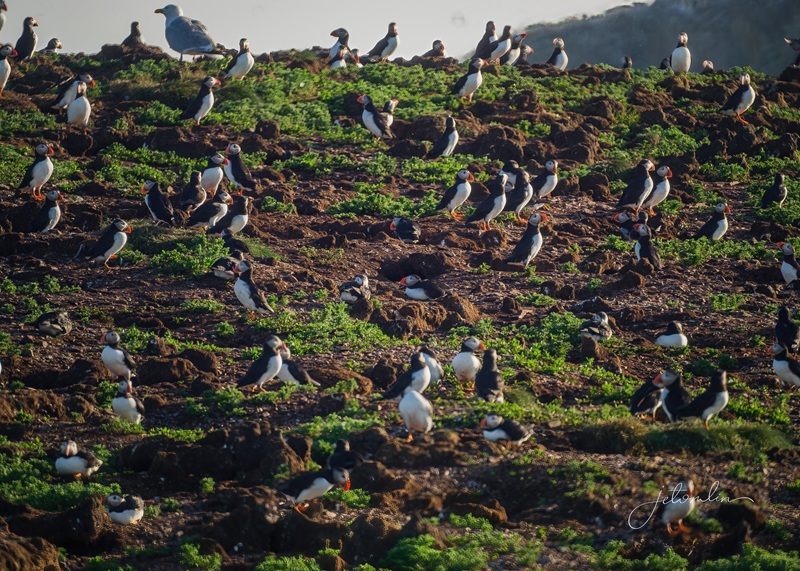
However, there were hundreds of puffins on the mainland, so close that I had to back up to capture them with my 100-400mm!

hundreds of puffins on the mainland! (July 2025)

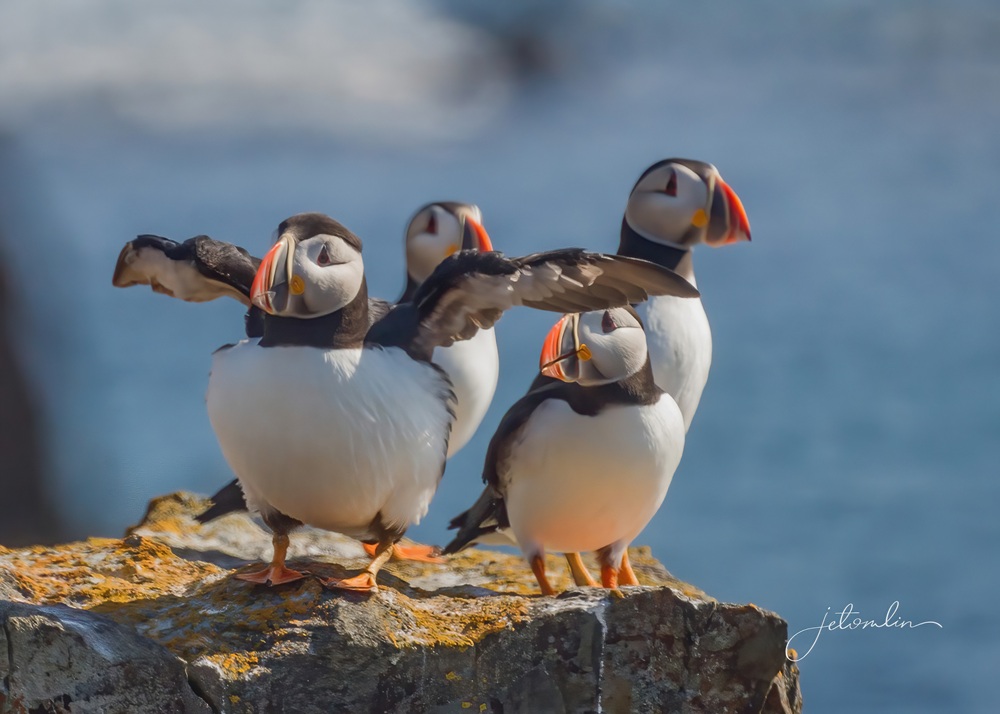
Although there were several photographers already milling around, there were more than enough puffins for everyone. I was in puffin heaven, enjoying their roly-poly, comical beauty.

puffin heaven! Elliston, July 2025

Wednesday morning dawned sunny and bright. I was back at the site by 6:45 and was greeted once again by hundreds of puffins on the mainland side. I had switched to my fixed 500mm lens this morning and needed to stay back even further to get my subjects in the frame! (click on photos to enlarge)

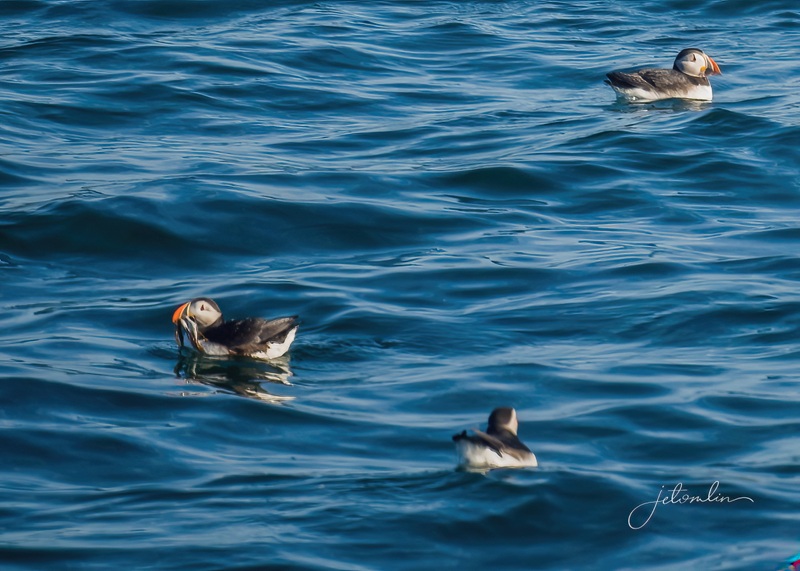
There were dozens of puffins floating in the bay, looking like miniature rubber duckies.

enjoy the beauty of the bay

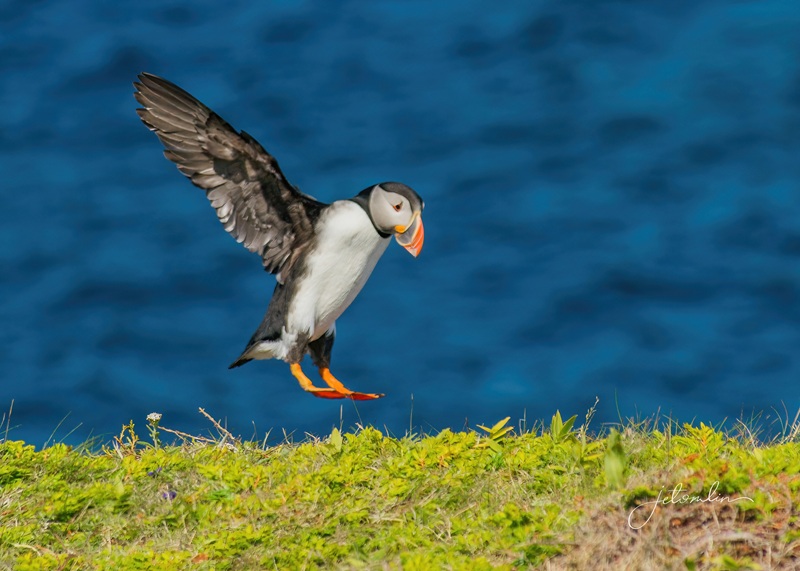
I watched them for the longest time, even attempting a few shots of birds in flight – but photographing puffins in flight is like trying to capture a speeding bullet! So, I sat back and enjoyed the beauty surrounding me.

my little rock perch

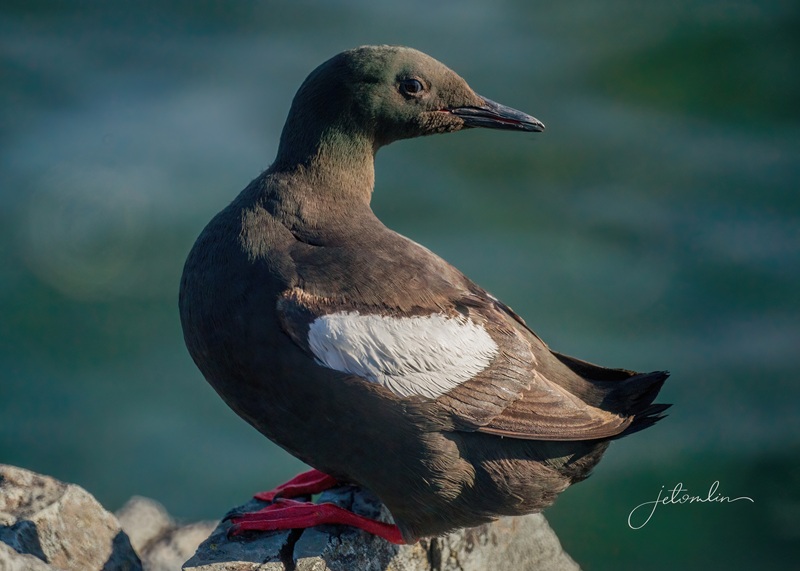
As I watched from my little rock perch, two beautiful black guillemots landed no more than ten feet away.

black guillemot

Finally, the sun was high enough that I could move back to the east side of the mainland to shoot a few more close-ups, as close-up as my lens would allow.

Elliston puffin site, July 2025

A circus (yes, “circus” and “improbability” are both collective names for a group of puffins) had gathered on the cliffside several yards from me, and I was at a good vantage point with the sun at my back. It was indeed a circus as I tried to video a bit of their antics.

Elliston puffin site, July 2025

Suddenly, one brave puffin hopped up on the rocky ledge and waddled so close I had to put my camera down – I could not get her in my frame!

this puffin came too close for me to capture with my lens! Elliston, July 2025

After two morning sessions with the puffins, I had filled two 32GB memory cards. Although I was, for now, puff-full, I was smitten with these birds and could hardly wait to visit them again.

I was totally smitten with these birds!

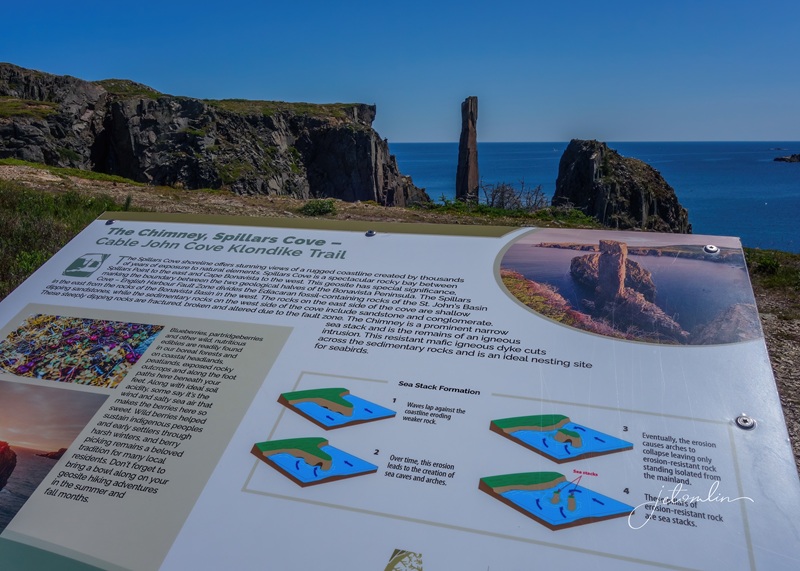
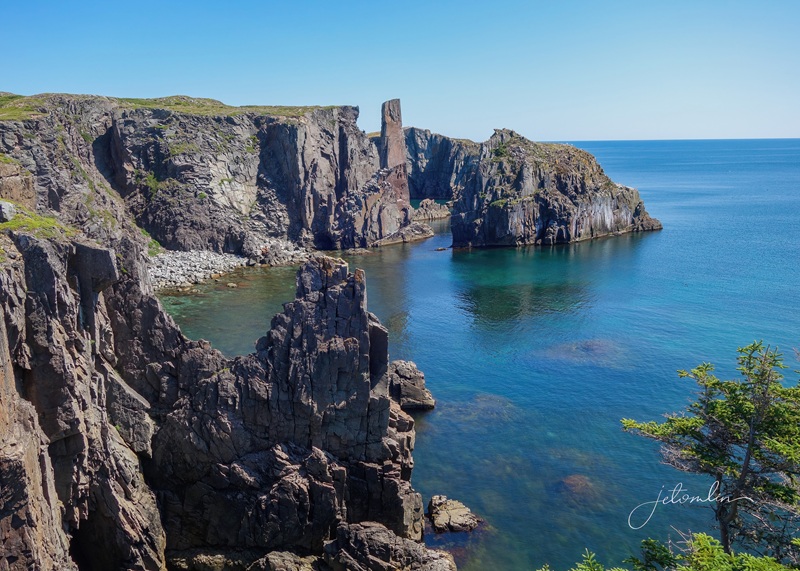
The Klondike Trail is an easy 3km out-and-back hike that runs from Spillars Cove to Elliston. The Spillars Cove trailhead begins at a famous rock formation called “The Chimney” and offers sweeping views of the cove, coastline, and a shorebird rookery. (click on photos to enlarge)

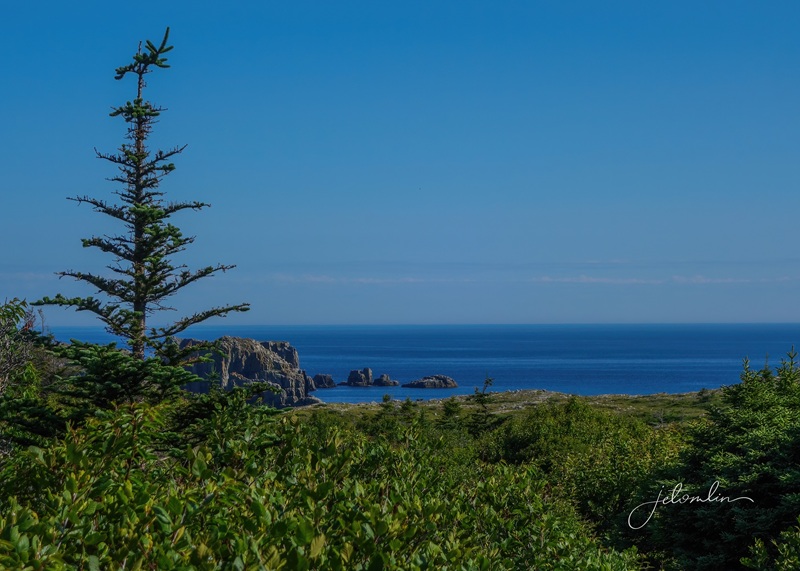
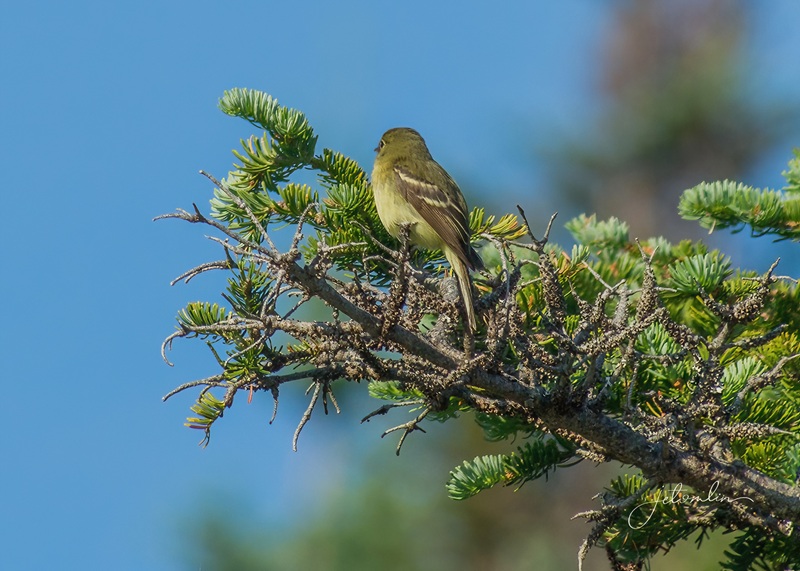
I chose to hike the trail to Elliston while the morning was still cool, as it promised to be a warm, sunny day. The trail led me inland, away from the rugged coastline, and I enjoyed the fresh, sweet air, as well as the many chirping birds, (click on photos to enlarge)

And a snowshoe hare modeling her summer coat.

snowshoe hare

Upon my return, I followed a well-worn path of flattened grass down to the edge of the cliffs directly across from the rookery.

Spillars Cove, July 2025

There were hundreds of puffins flitting around the island and swimming in the cove.

Spillars Cove, July 2025

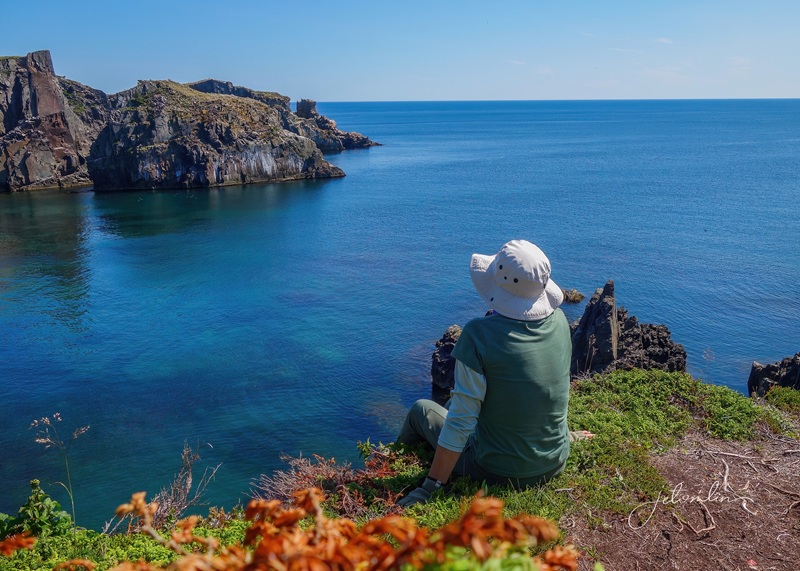
In 2017, we journeyed to Antarctica for our 35th wedding anniversary. I “penguined” for much of the time – I put down my camera and simply enjoyed the penguins and the beautiful scenery. This morning, I “puffined.” Unlike the sometimes-frenetic photographer activity at the Elliston site, I had Spillars Cove to myself.

this morning, I “puffined”

As I quietly watched, the puffins flew back and forth to burrows on the mainland, some even landing on a ledge directly beneath me.

as I quietly puffined, she landed on a ledge directly beneath me

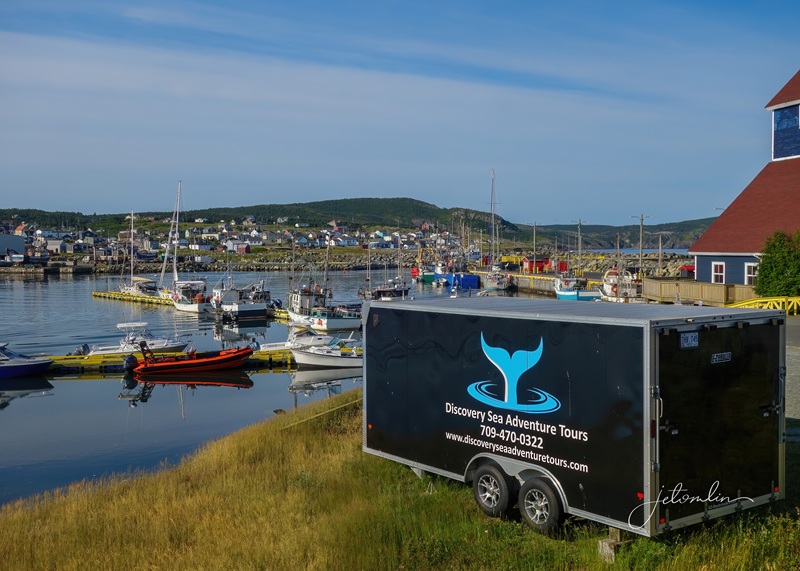
The world’s largest population of humpback whales returns to Newfoundland each year between May and September, and tour boats run daily trips to watch them frolic and feed near shore. I did not want to book a whale tour until I was certain I had all my puffin “money shots.”  But after that spectacular first session on Tuesday morning, I booked a Friday tour with Discovery Sea Adventures.

Discovery Sea Adventure Tours, Bonavista

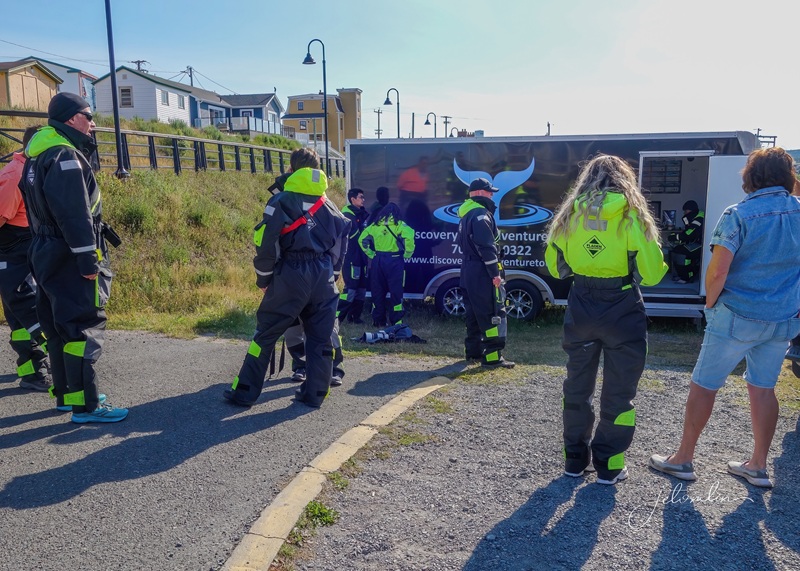
After everyone was dressed in a brightly colored survival suit, we boarded our zodiac and headed out to sea. 

gearing up in our survival suits

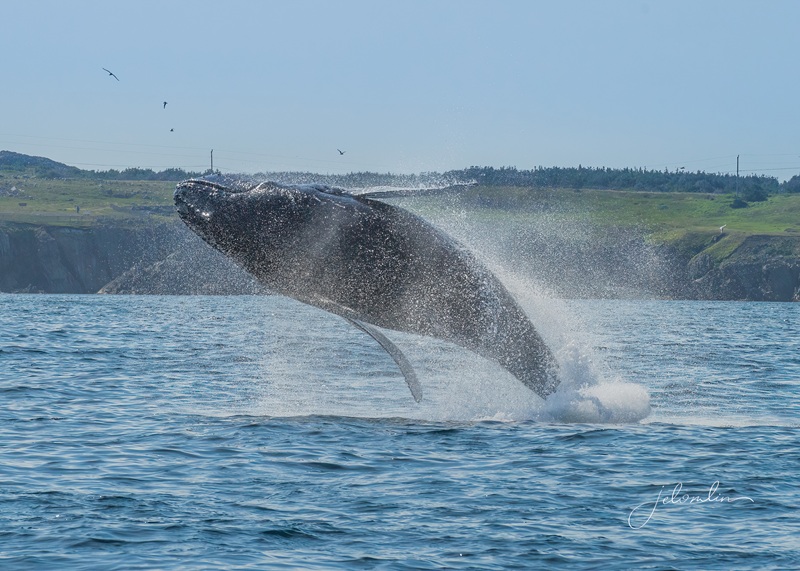
Within minutes, Captain Bob spotted a minke whale. These whales are very shy, and it was just a quick glimpse before she disappeared beneath the waves. Next up, a pod of Atlantic white-sided dolphins, but at the same time, a mother and baby humpback breached in the distance.

minke whale

Leaving the dolphins behind, we raced to the whales, as there is never a guarantee of how long they might continue this behavior. 

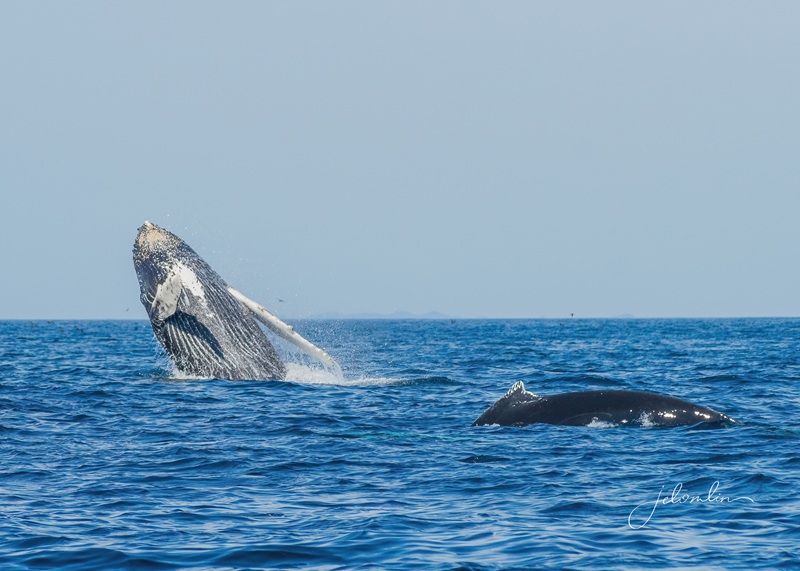
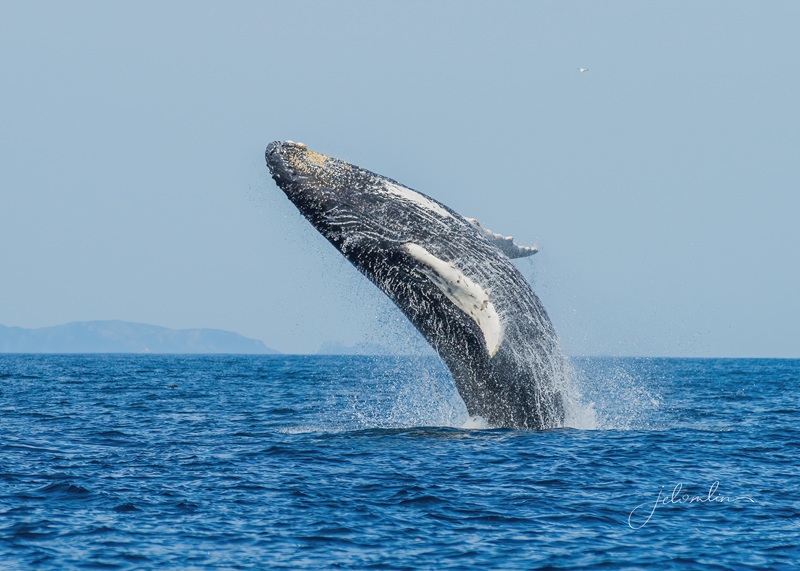
Mama jumped a few times, but the calf jumped over and over again. I missed a few breaches as I was distracted by more whales off in the distance, but in the end, everyone got their money shots. (click on photos to enlarge)

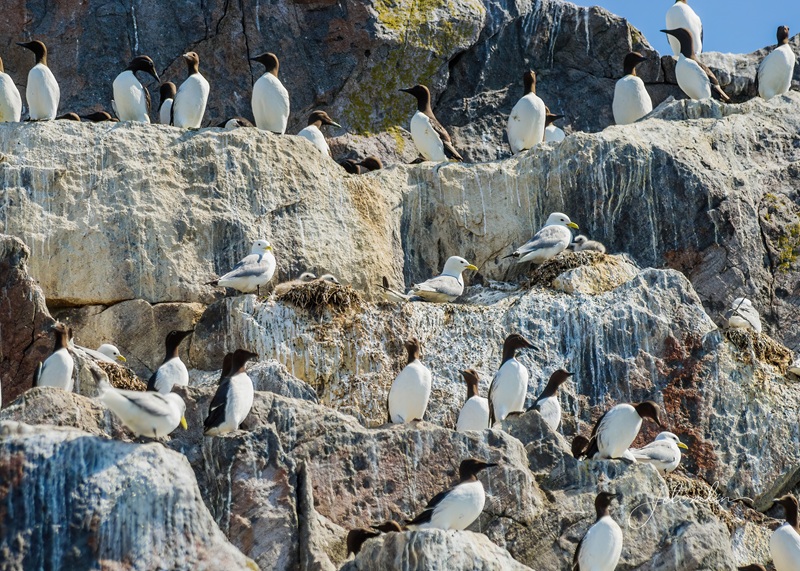
Finally, after more than an hour of continuous breaches, we left the whales. We headed to the seabird colony below the lighthouse, a bustling community of puffins, razorbills, and murres, among others.

the seabird colony below the lighthouse

Captain Bob wanted to find us more dolphins,

Captain Bob looking for dolphins

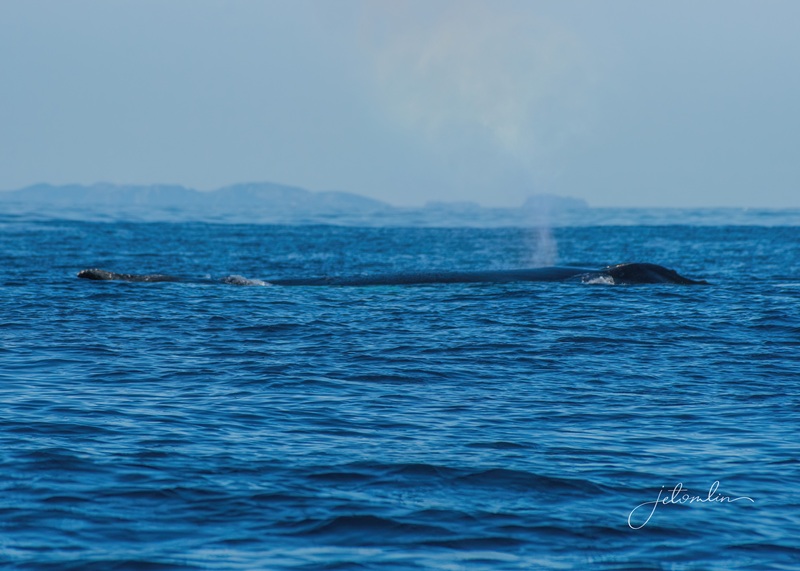
But we were diverted by three fin whales, the second-largest whale on the planet. These mighty whales rarely show their tails or breach, but they did show us their distinctive dorsal fins.

fin whale

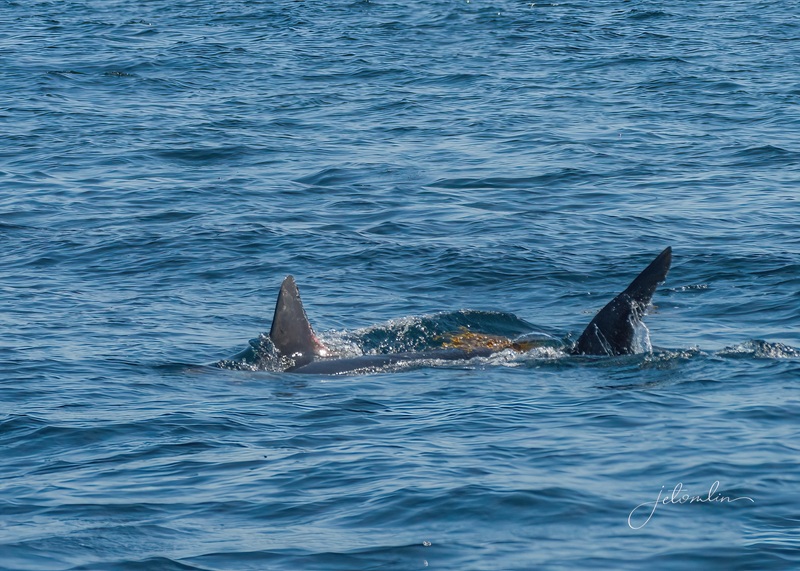
Suddenly, Patti, a fellow passenger, cried, “What is that fin?!?”  It turned out to be a porbeagle shark playing with a piece of kelp, adding even more excitement to an already fantastic day.

porbeagle shark playing with kelp

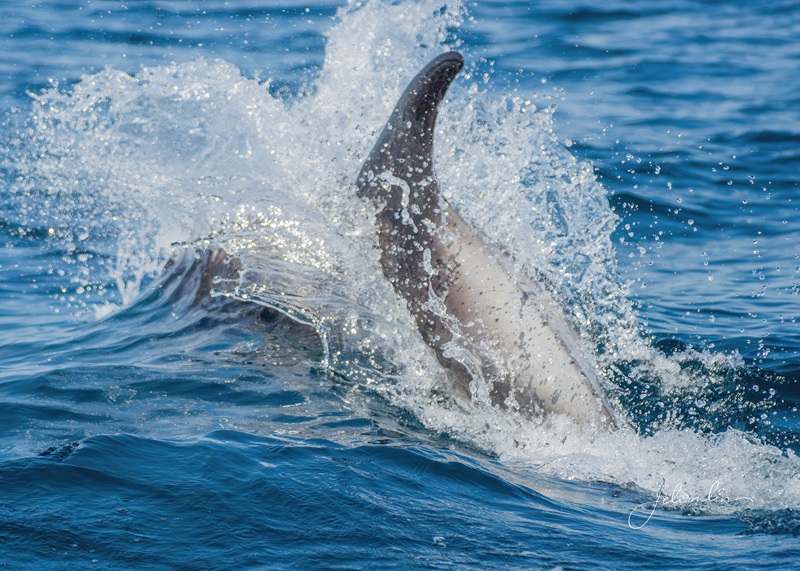
As we turned back towards Bonavista Harbor, we found our dolphins. They raced around the boat – almost too fast to photograph, but a thrill, nonetheless.

dolphins!

At the end of our adventure, Captain Bob instructed us to look up. A friend was flying a drone overhead and snapped a quick photo of our group – a special keepsake from our special day. (arrow through gallery set)

Later that afternoon, I returned to Cape Bonavista to search for a fox family that lives in the grassy meadow below the lighthouse. After 90 minutes of fox-less waiting, I walked up to the rookery. I was delighted to find a large group of puffins on the mainland, happily going about their evening business while cameras clicked away. (Arrow through gallery set)

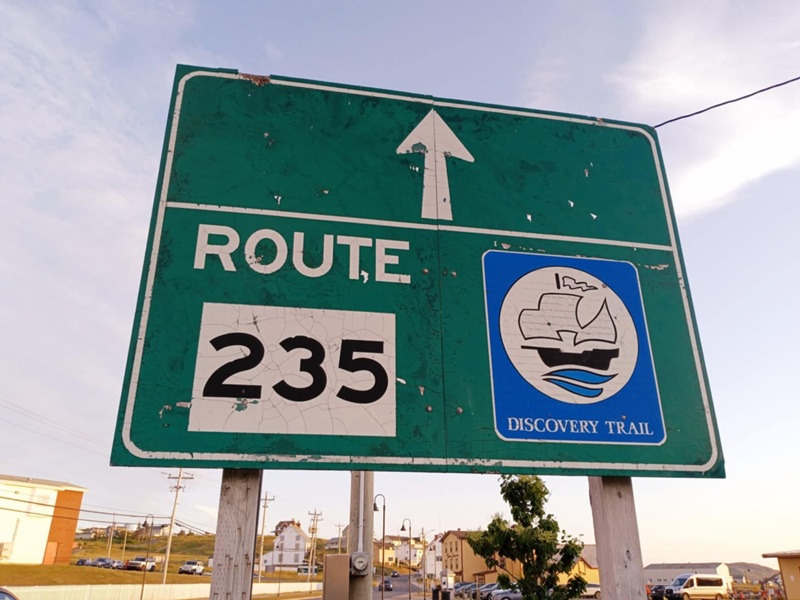
With the weekend upon me, I decided to explore more of the area. Johanna had given me a list of “must-sees,” and I planned routes that would cover most of them. As I drove along, I realized I was following part of the “Discovery Trail,” a 425km route that circles the Bonavista Peninsula.

I realized I was following part of the “Discovery Trail”

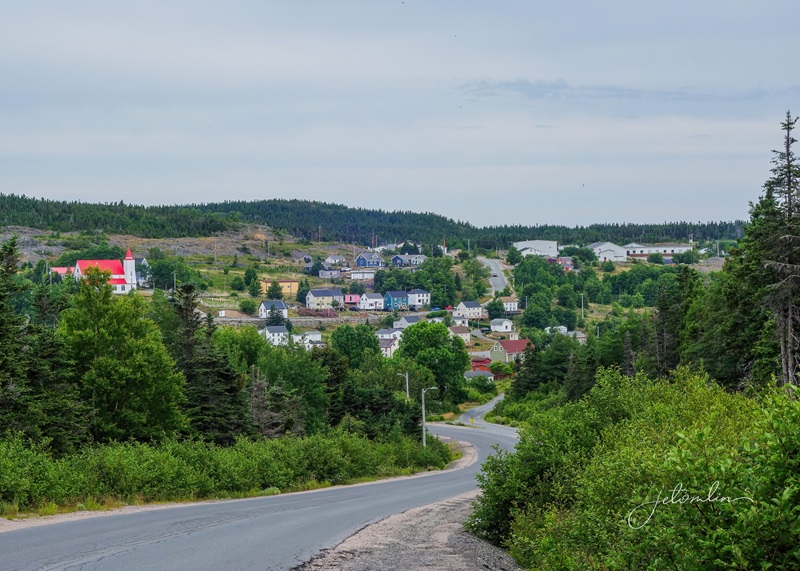
My first stop on Saturday was the charming town of Kings Cove and the Lighthouse Trail.

the charming town of Kings Cove

I chose the longer, 3.5km loop and was rewarded with a beautiful view from the lighthouse,

Kings Cove lighthouse

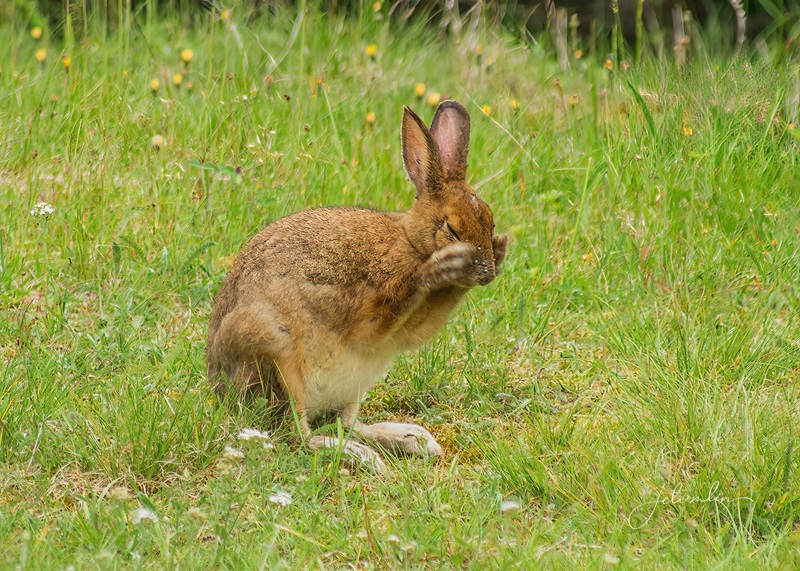
Another snowshoe hare,

the poor thing was trying to rub ticks off her nose

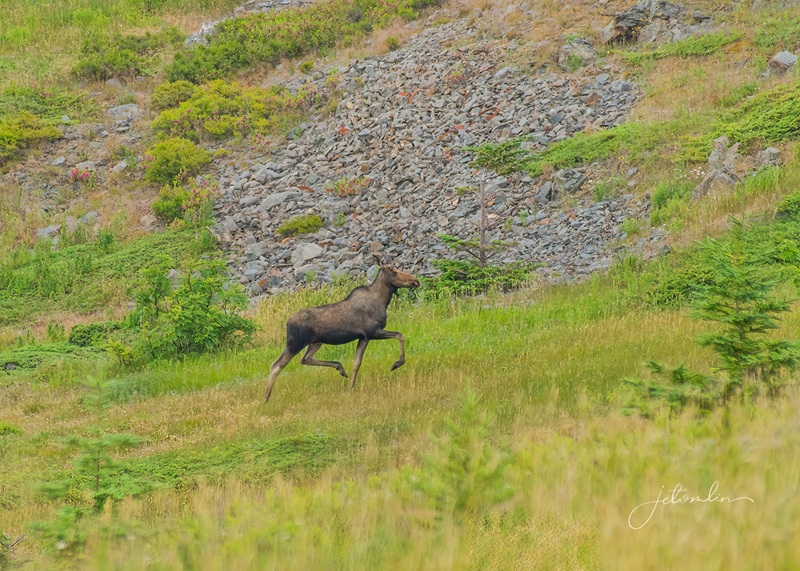
And a moose!

a moose

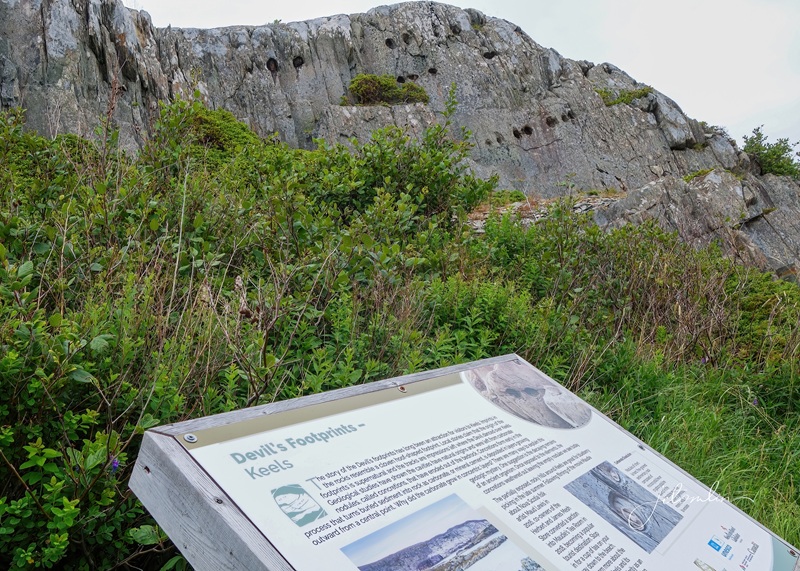
I had planned to stop at Maudie’s Tea Room in Keels for breakfast, but I was too early for their noon opening. I missed their sign on my way in and stumbled upon another interesting site: Devil’s Footprints.
Devil’s Footprints in Keels

While geological studies attribute these cloven, hoof-shaped indentations to natural causes, locals claim that the tracks were made by the Devil dancing over Keels. I found the local version a much better story!

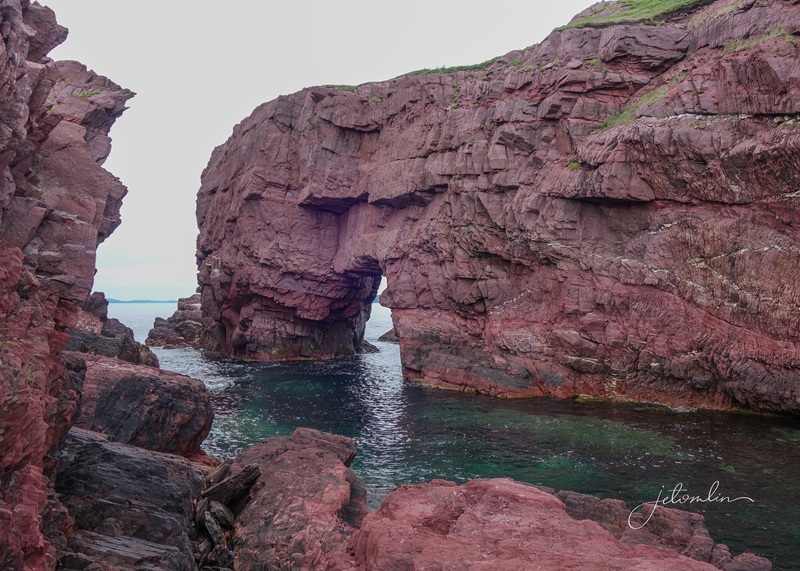
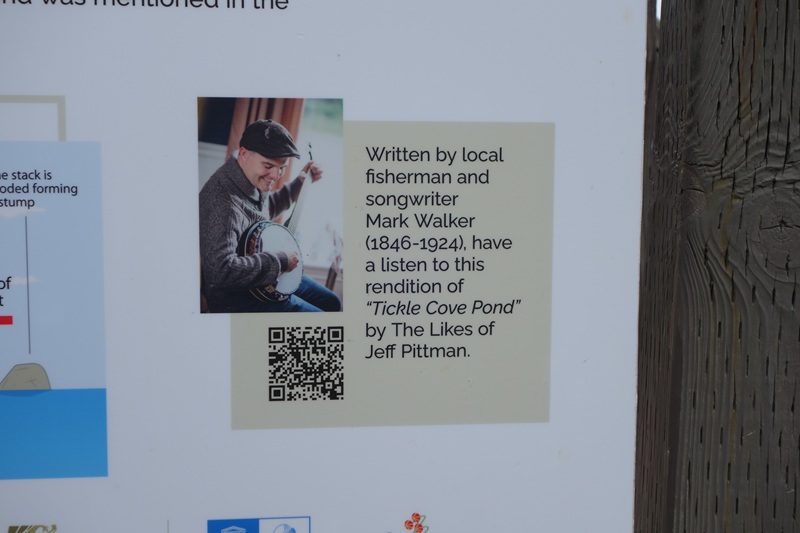
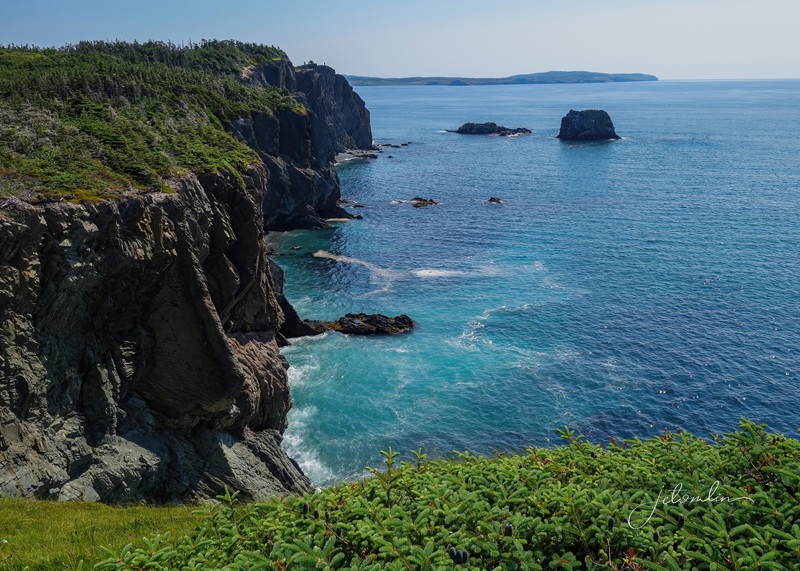
My journey then took me to Tickle Cove and the awe-inspiring Sea Arch, a magnificent rock formation.

Tickle Cove Sea Arch

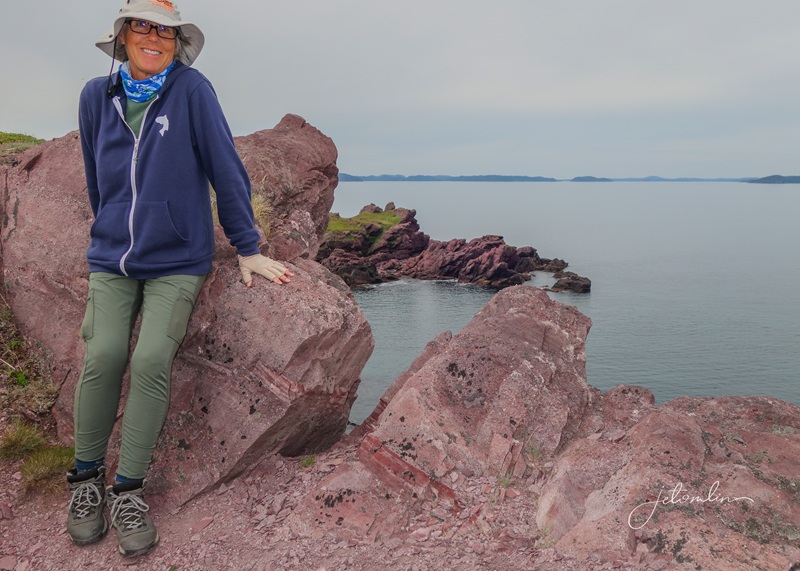
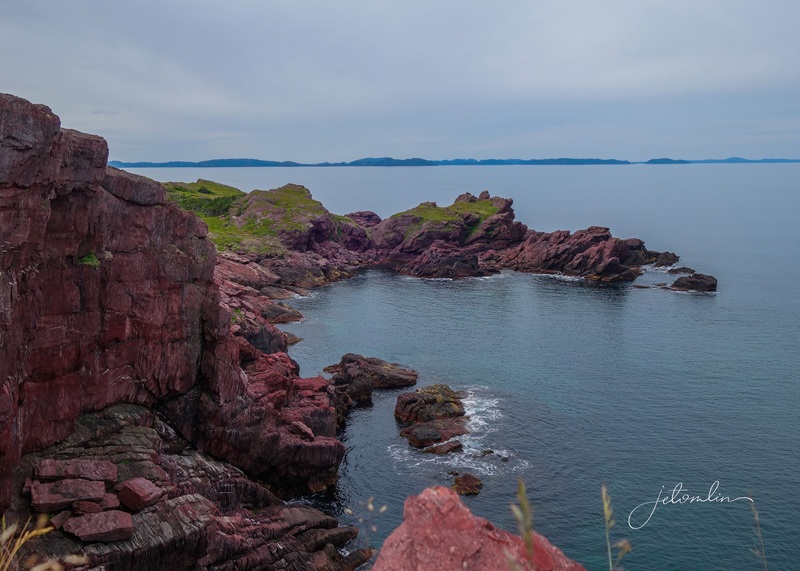
I scrambled to the top of the hill above the arch and, lying on my stomach, gazed straight down at the sheer drop! (click on photos to enlarge)

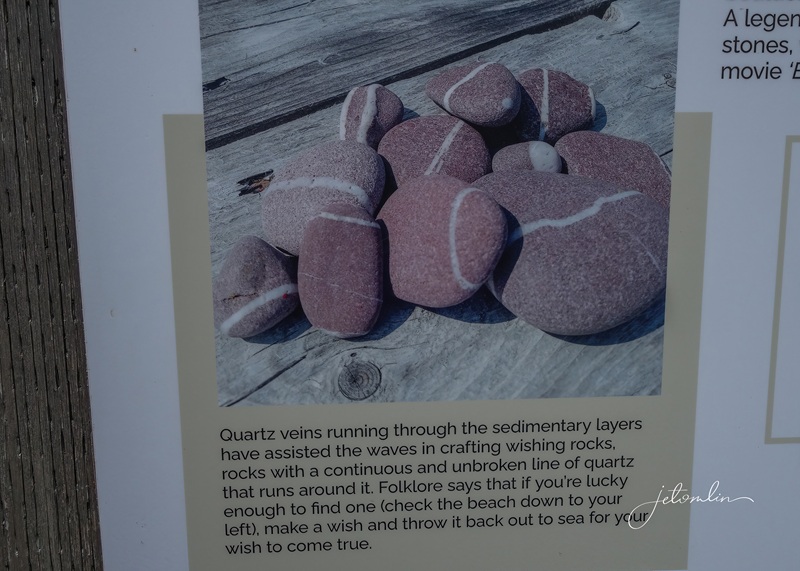
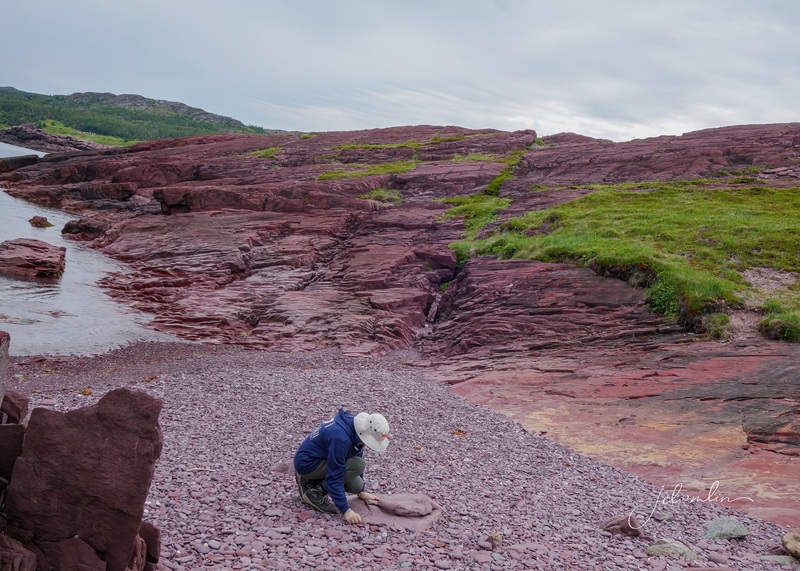
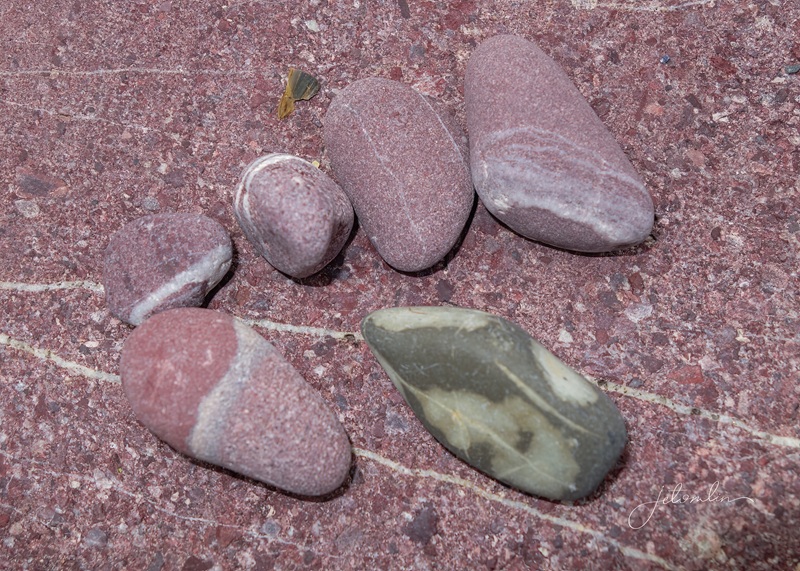
Below the Sea Arch was a small rocky beach filled with wishing stones – rocks with continuous lines of quartz running around them. Folklore says if you’re lucky enough to find one with unbroken lines and make a wish while throwing it into the ocean, your wish will come true.

the legend of the wishing stones

I spent an hour on the beach searching for a few stones that were just the right size to carry home. While I was there, I also threw one into the sea with a wish to return to Newfoundland someday. (click on photos to enlarge)

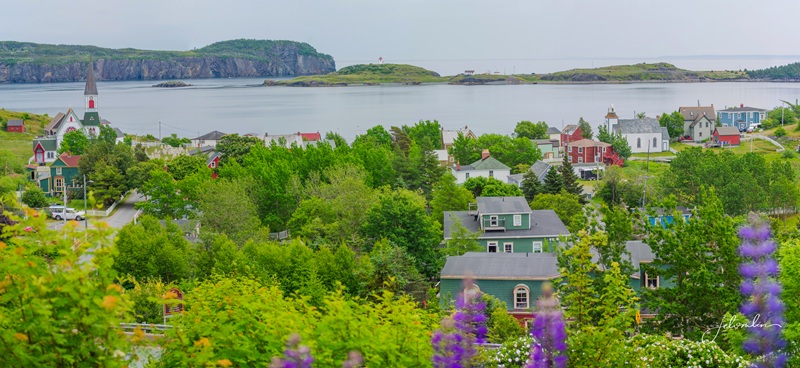
After a quick lunch in picturesque Trinity, I climbed the Gun Hill Trail for a panoramic view of the town.

the picturesque town of Trinity

And then, because I could not help myself, I returned to the Elliston puffin site. It was crowded this Saturday afternoon, and after snapping a few more photos of these captivating birds, I returned home to Bonavista. (Arrow through gallery set)

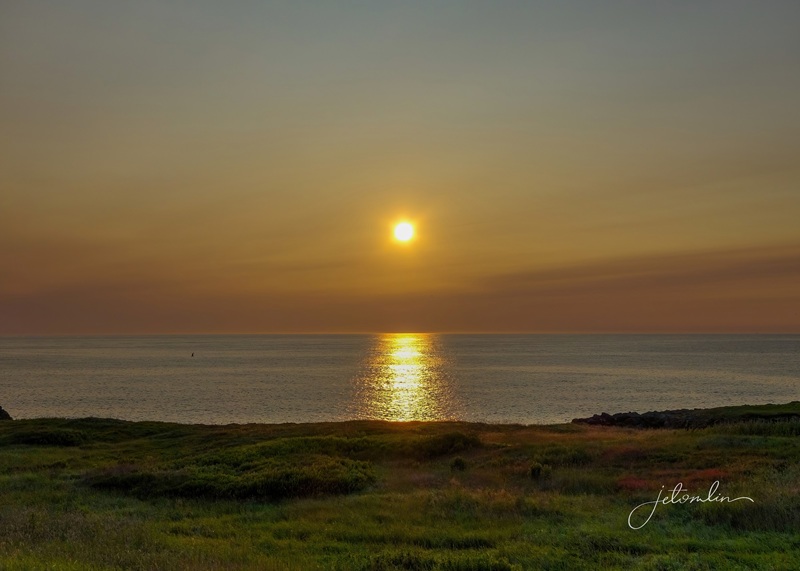
Sunday had me out the door before dawn, and I watched the sunrise over the ocean as I drove to Port Union and the Murphy’s Cove Trail.

sunrise over the ocean

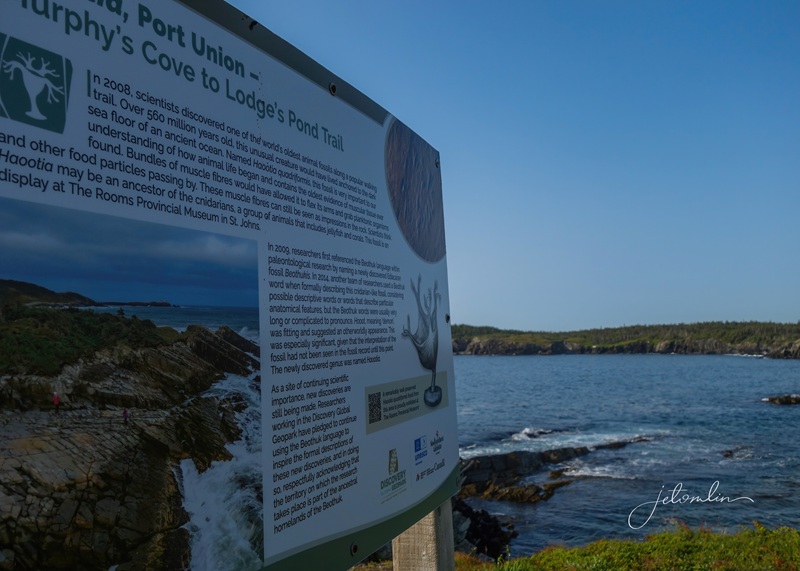
This 7.7km hike features multiple ocean views and an interesting fossil story.

Murphys Cove trail

In 2008, scientists discovered the fossil of one of the world’s oldest living animals: a 560-million-year-old sea creature called a Haootia quadriformis. This ancient cousin to jellyfish is significant in understanding the origins of life. The fossil is on display in a museum in St. John’s, but it was fascinating to learn about it on this remote trail! (click on photos to enlarge)

However, the most exciting part of my hike was the sudden appearance of a red fox darting across the path in front of me! I had given up on seeing another one on my trip, and this unexpected moment made my day.

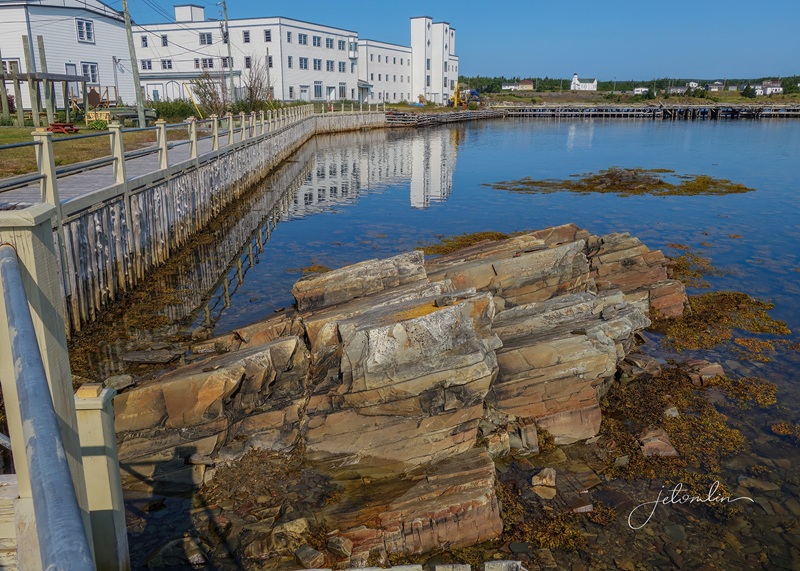
Port Union is North America’s first and, to this day, only union-built town. I checked out the historical Factory and Coaker Manor, and scrambled about on the rocks behind the Factory building, searching for (and failing to find) more fossils.

The Factory and Port Union fossil site

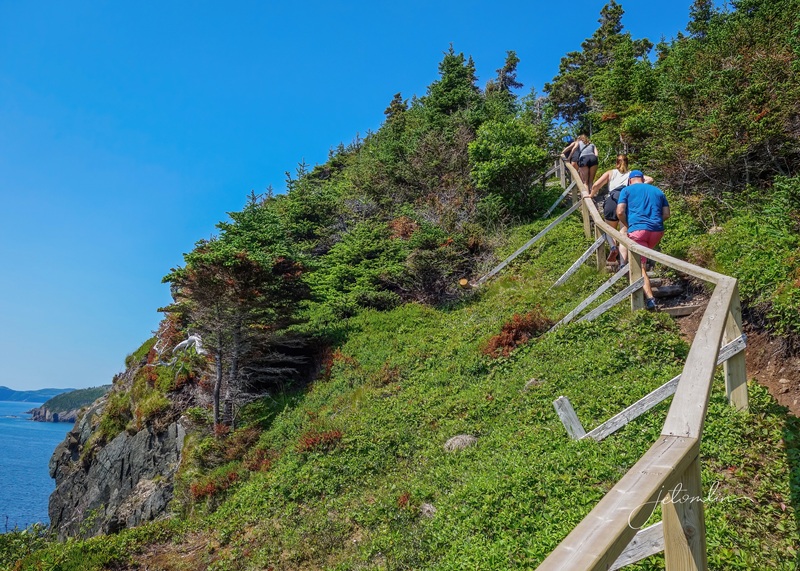
My next stop was the Skerwink Trail in Port Rexton. The Skerwink Trail is continually ranked in the top 35 trails in North America and Europe, and rightly so. As the founder of the trail, John Vivian, said, “This trail offers more scenery per linear foot than any other trail in Newfoundland.”

beautiful Skerwink Trail

I followed the 5.3km route up and down steep hills that hugged the rugged coastline, offering breathtaking views of the ocean that on this day was an impossible shade of blue.

the steep up & down trail followed the rugged coastline

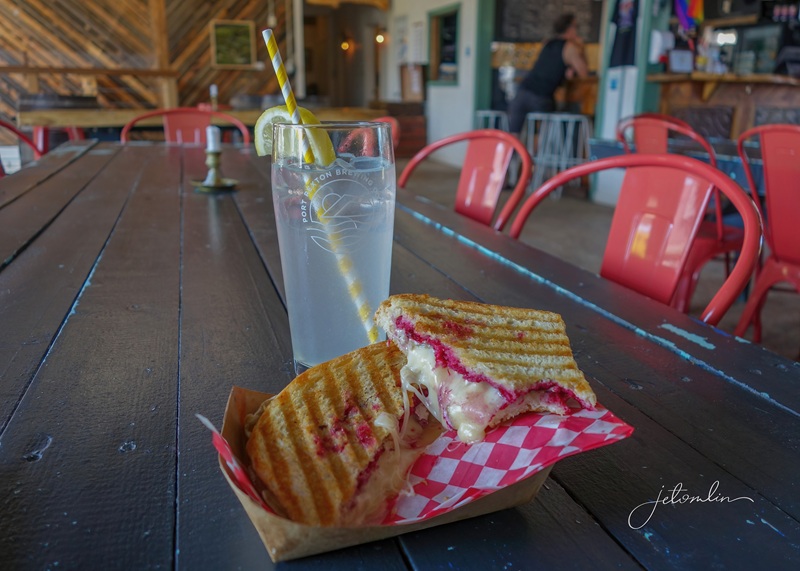
After two somewhat strenuous back-to-back hikes, I was ready for lunch! I stopped at the famous “Oh My Cheeses” food truck in Port Rexton and splurged on “The Gull” – grilled brie with Newfoundland partridge berry jam on toasted bread. Yum!!

grilled brie & partridge berry jam from Oh My Cheeses in Port Rexton

On my way back to Bonavista, I swung by the Elliston puffin site one last time. The puffins were not putting on a show like they had earlier in the week. But Newfoundland had one final surprise in store: an iceberg!

an iceberg! (July 13, 2025)

I traveled to Newfoundland for the puffins and went home with so much more: whales, dolphins, foxes, a moose, countless stunning landscapes, rewarding hikes, delicious seafood, picturesque towns, spectacular sunrises and sunsets, and an iceberg – the final icing(berg) on the cake!

Bonavista Peninsula landscapes (with “Up She Rises” sung by Jason Ryan during my dinner at Skipper’s Restaurant)

And although I didn’t have the opportunity to get properly “screeched in” on this trip, in my heart, I am an honorary “Newfie.”

To view all my puffin photos arrow through the set or click to open a new tab in Flickr:

Atlantic Puffins

To view my whale and other Newfoundland photos arrow through the set or click to open a new tab in Flickr:

Humpback whale

The Colorful Faces of Puerto Lopez: July 2011

Our first visit “Chasing Silver,” watching the humpback whale migration off the coast of Ecuador

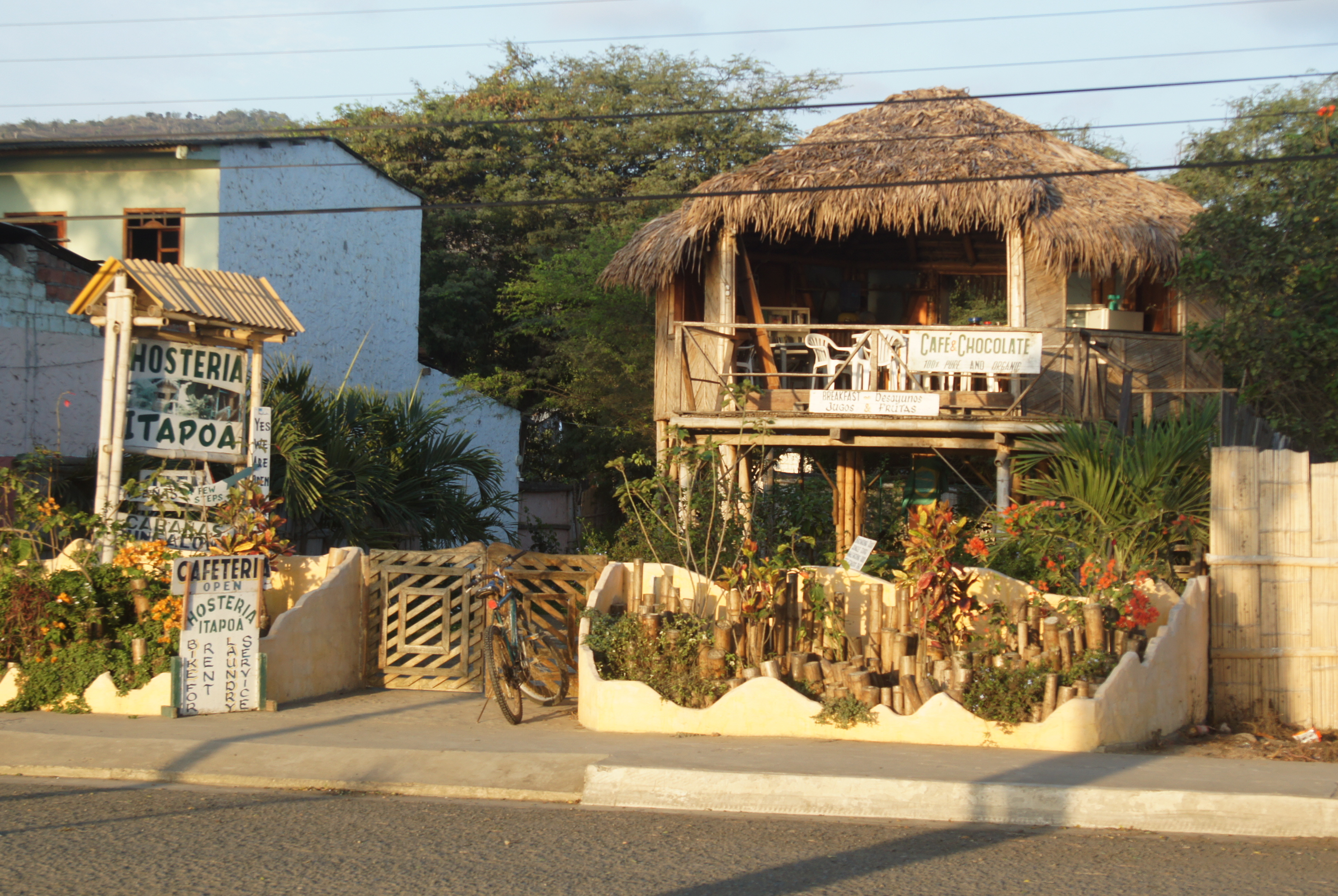
the garden at Hosteria Itapoa

It took a full day to get here:  two planes, a five hour layover in Quito, another flight to Manta, followed by a two hour drive south to Puerto Lopez.  Hosteria Itapoa is simple but clean and comfortable.  It sits at the north end of the malecon, directly across from the beach.  The rooms are small bungalows.  Ours comes with a tiny second floor and balcony.  Including full breakfast it is $13 per person per night. 

Hosteria Itapoa

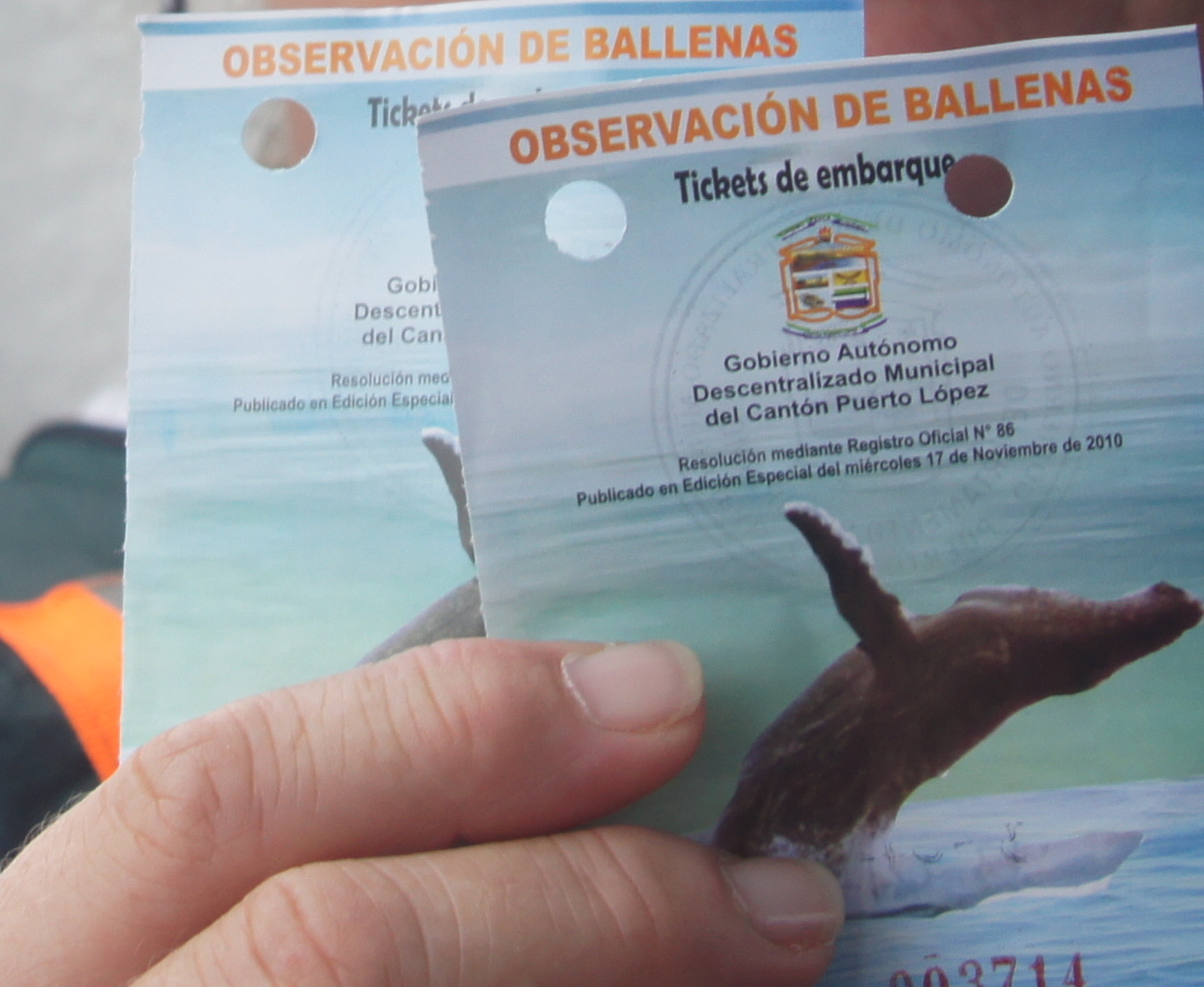
Situated within easy walking distance of restaurants and shops, we head to Exploramar Diving first thing Thursday morning.  I sign up for a two-tank dive to Isla de la Plata on Friday.  And then we go whale watching.

“Observación de ballenas”
the beach at Puerto Lopez

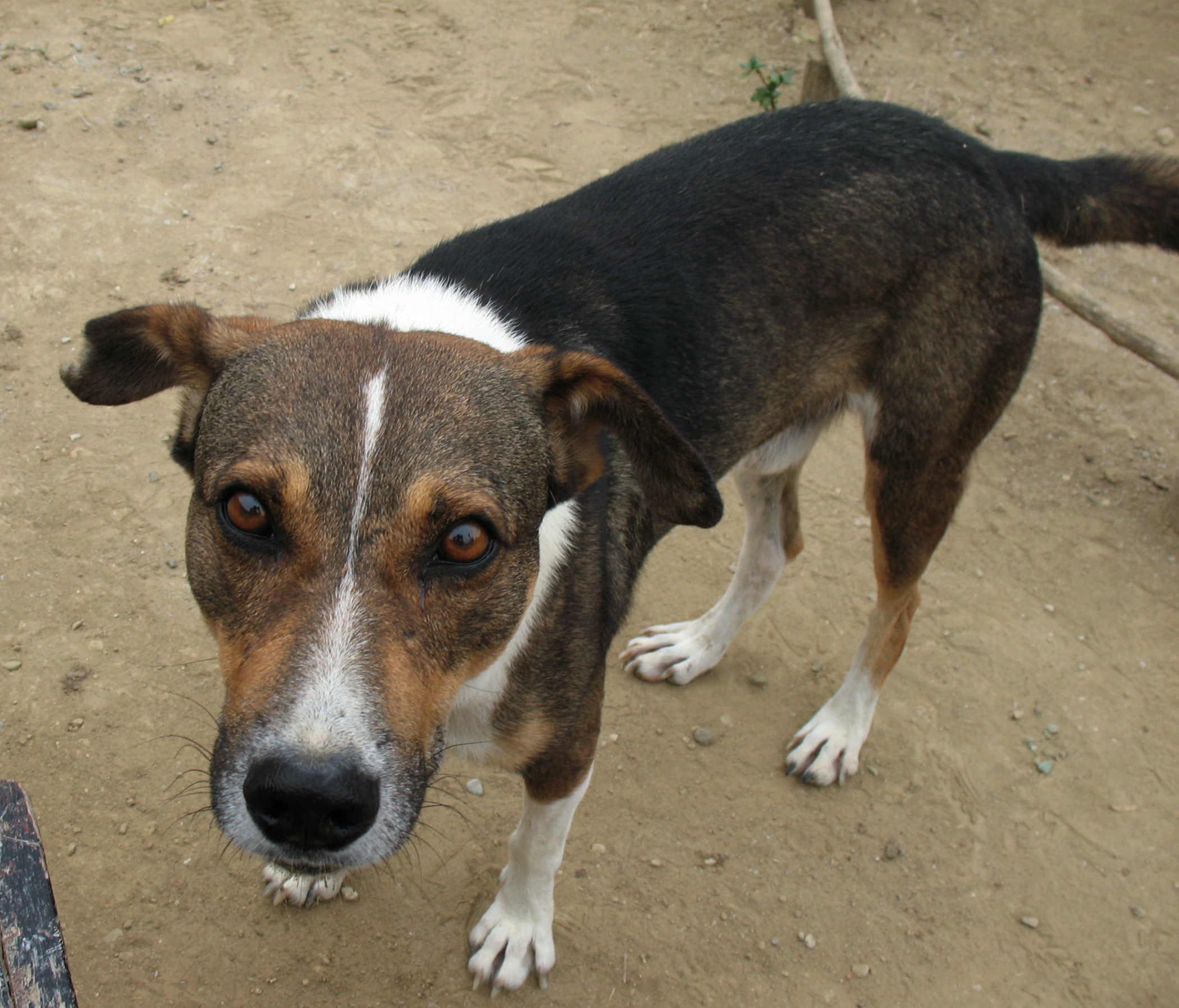
We surrender our shoes to a large rice sack and walk across the beach.  It is a cacophony of boats, fisherman still unpacking their gear, fish caught fresh that morning chopped and bleeding on blocks of ice, dogs chasing each other and birds swirling about.   

Puerto Lopez harbor
stray dogs everywhere

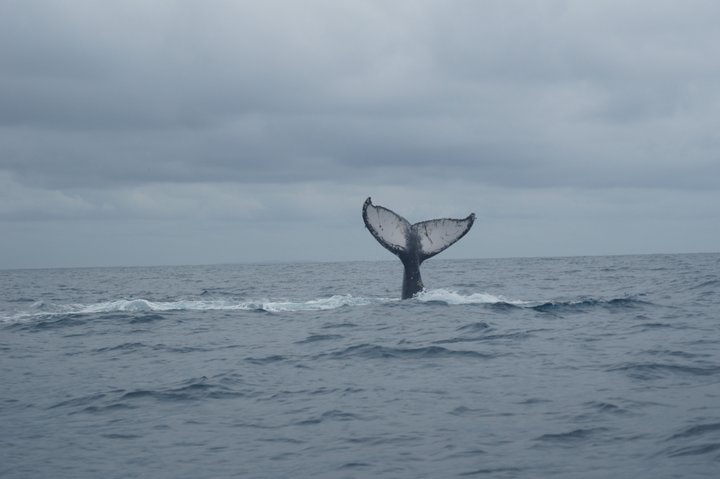
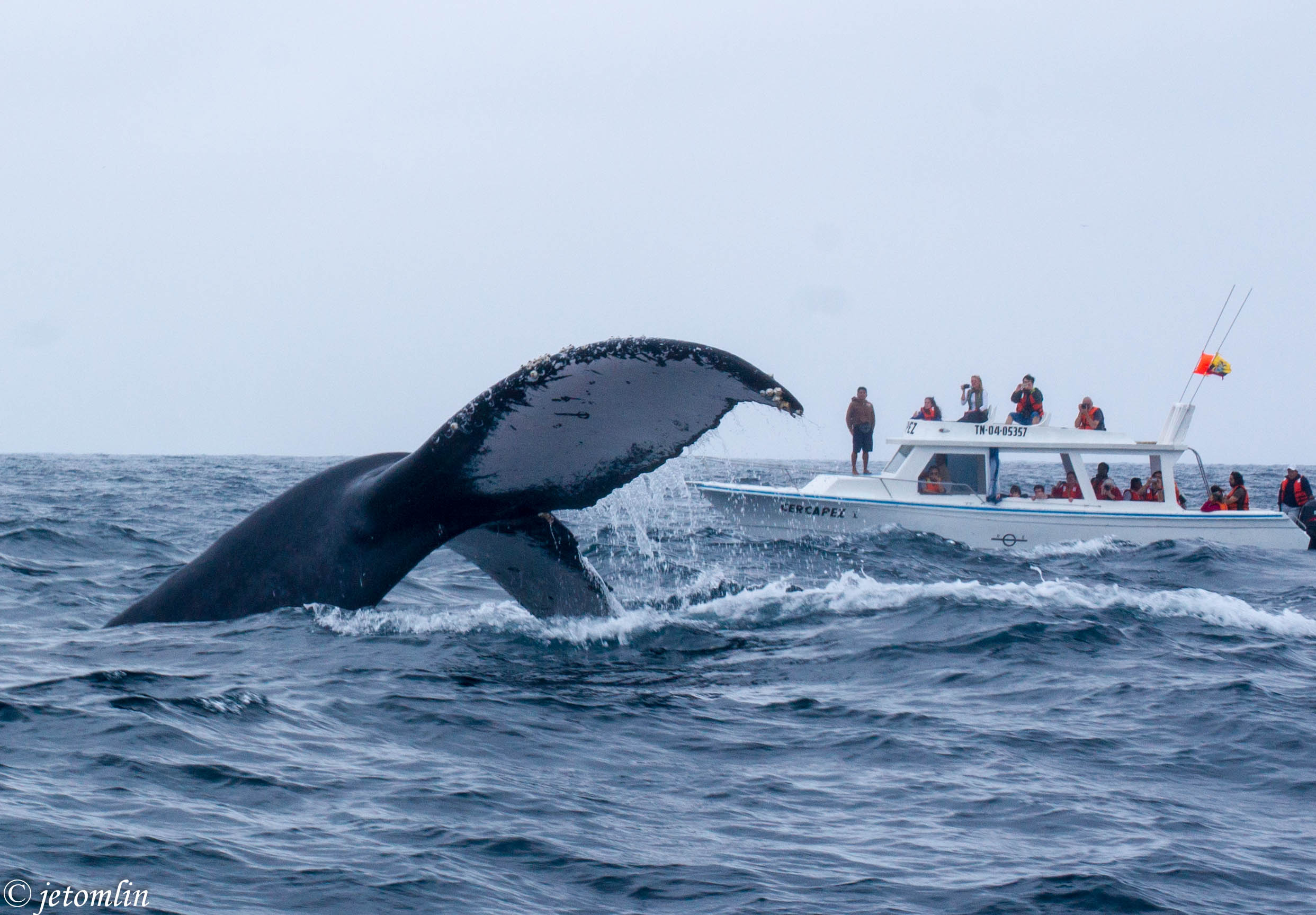
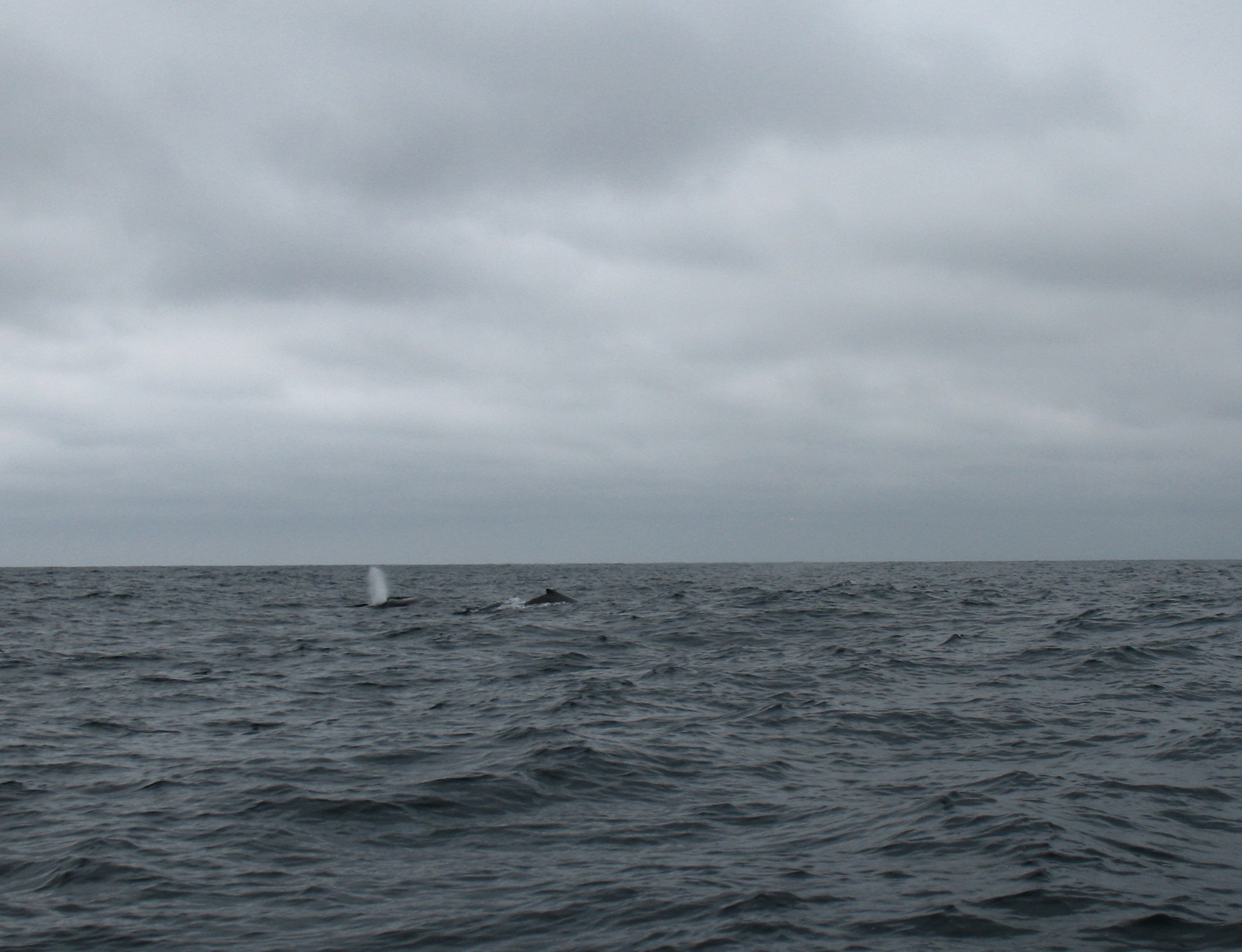
We spend close to an hour searching before we find our first pair of whales.  They stay close to the boat, surfacing to breathe and shoot water from their blowholes.  They show us only their large hump backs but even that is magnificent. They are every bit as long as our boat – maybe longer.  In the distance we see one breach.  The boat races but by the time we are close enough for photos it has stopped.  We do manage to capture a fluke, dripping with water.  We are hooked.

surfacing close to the boat
humpback whale tail

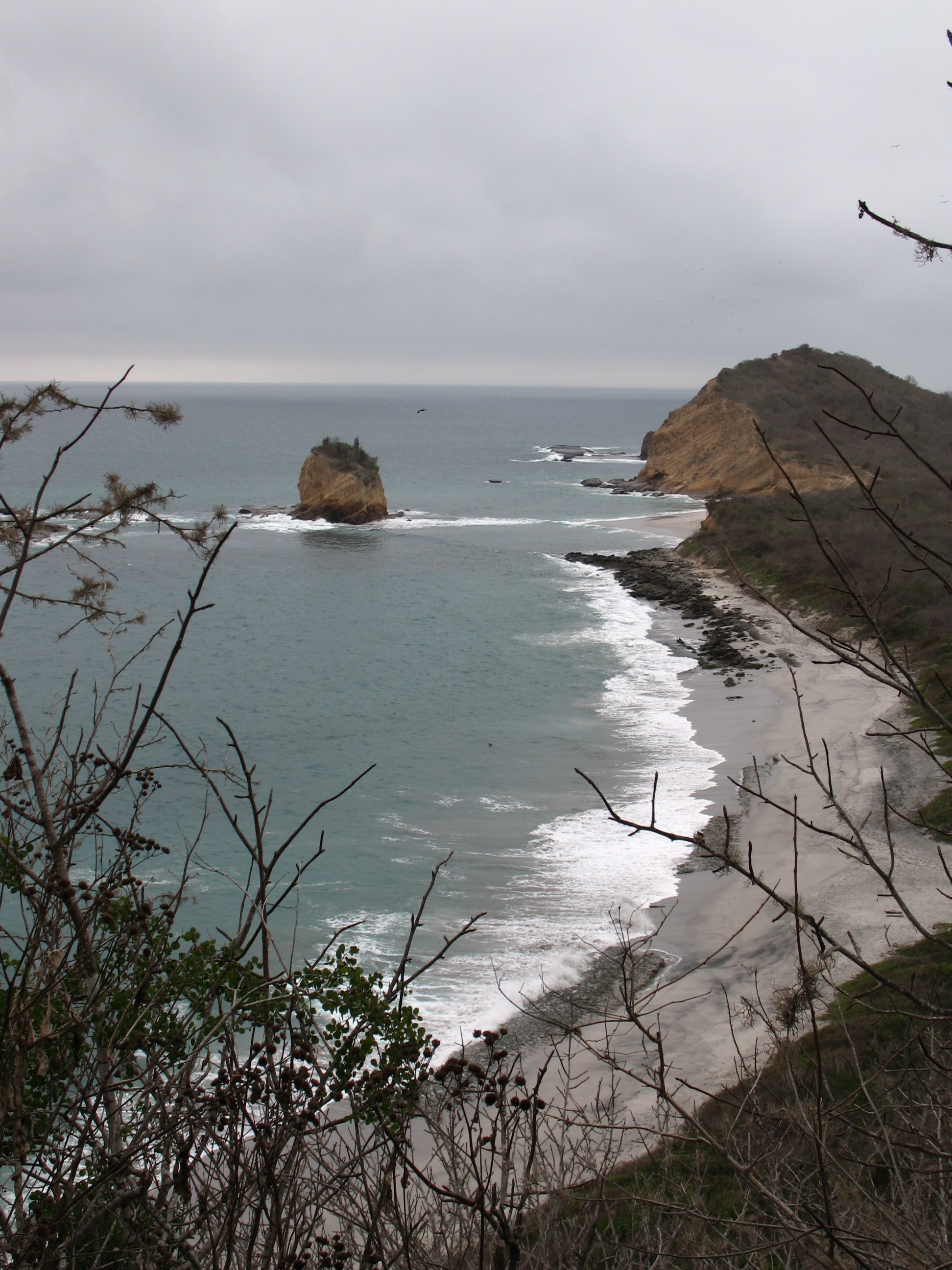
After waiting for an hour at the dive shop on Friday morning I am told that the boat was overbooked.  I cannot dive today day.  I return to Itapoa.  Not expecting me home until 5:00pm, TG is pleasantly surprised to see me.  We hire a moto-taxi to take us to Las Frailes, one of the most beautiful beaches in Ecuador.  It is almost deserted and we are not disappointed.  It is beautiful.  We walk for an hour along the beach, photographing the pelicans and tiny sand crabs.  In spite of the overcast sky it is a perfect day.  I may (or may not) dive this week.   The whales are calling.

Las Frailes

Later that evening a young man tracks me down at the hostel.  He is from Exploramar Diving.  Management just found out what happened and he has come to apologize.  They will have a space for me whenever I wish to dive.  Regardless of whether or not I accept their offer, I appreciate their follow up.

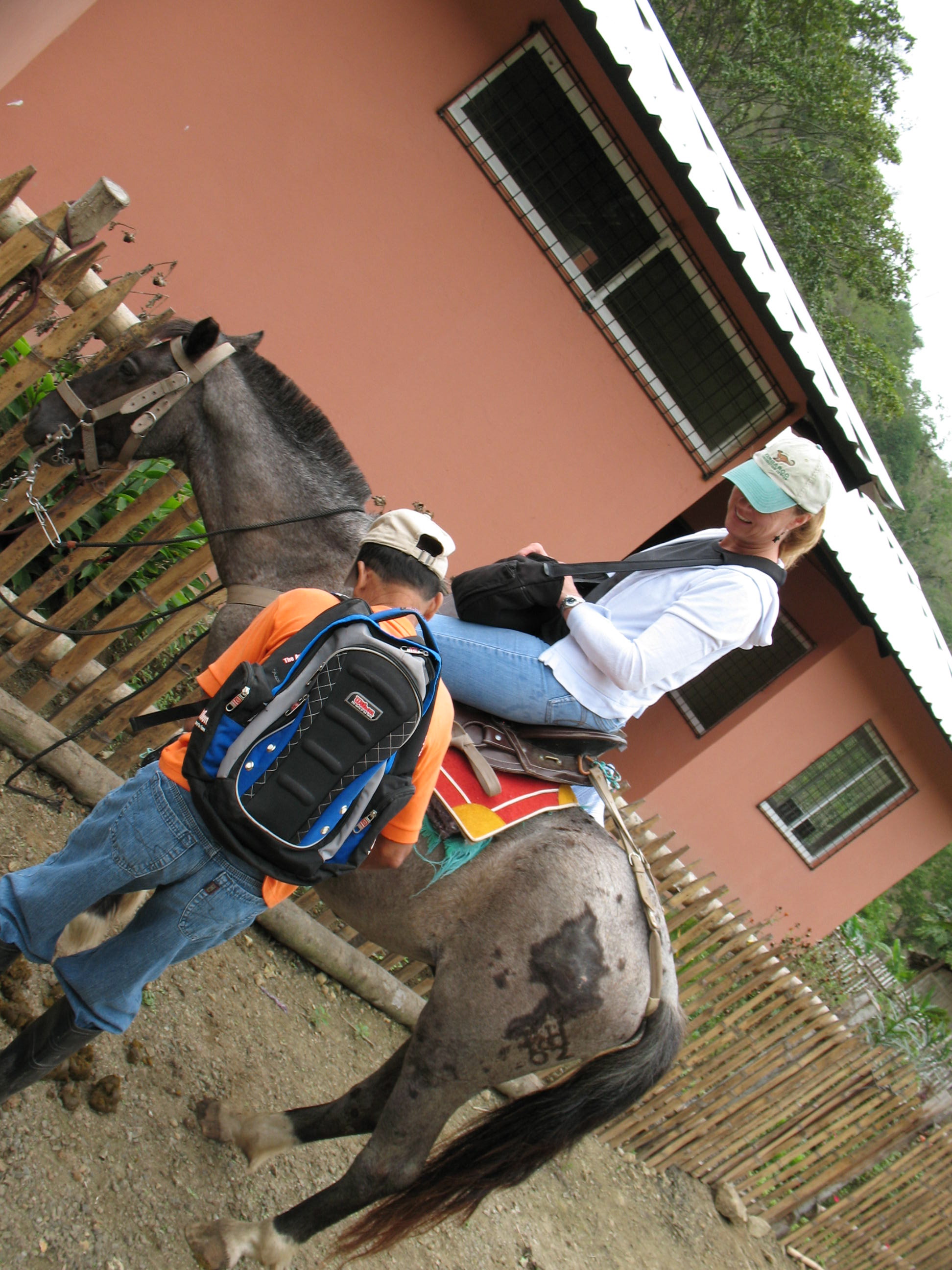
horseback tour through the jungle

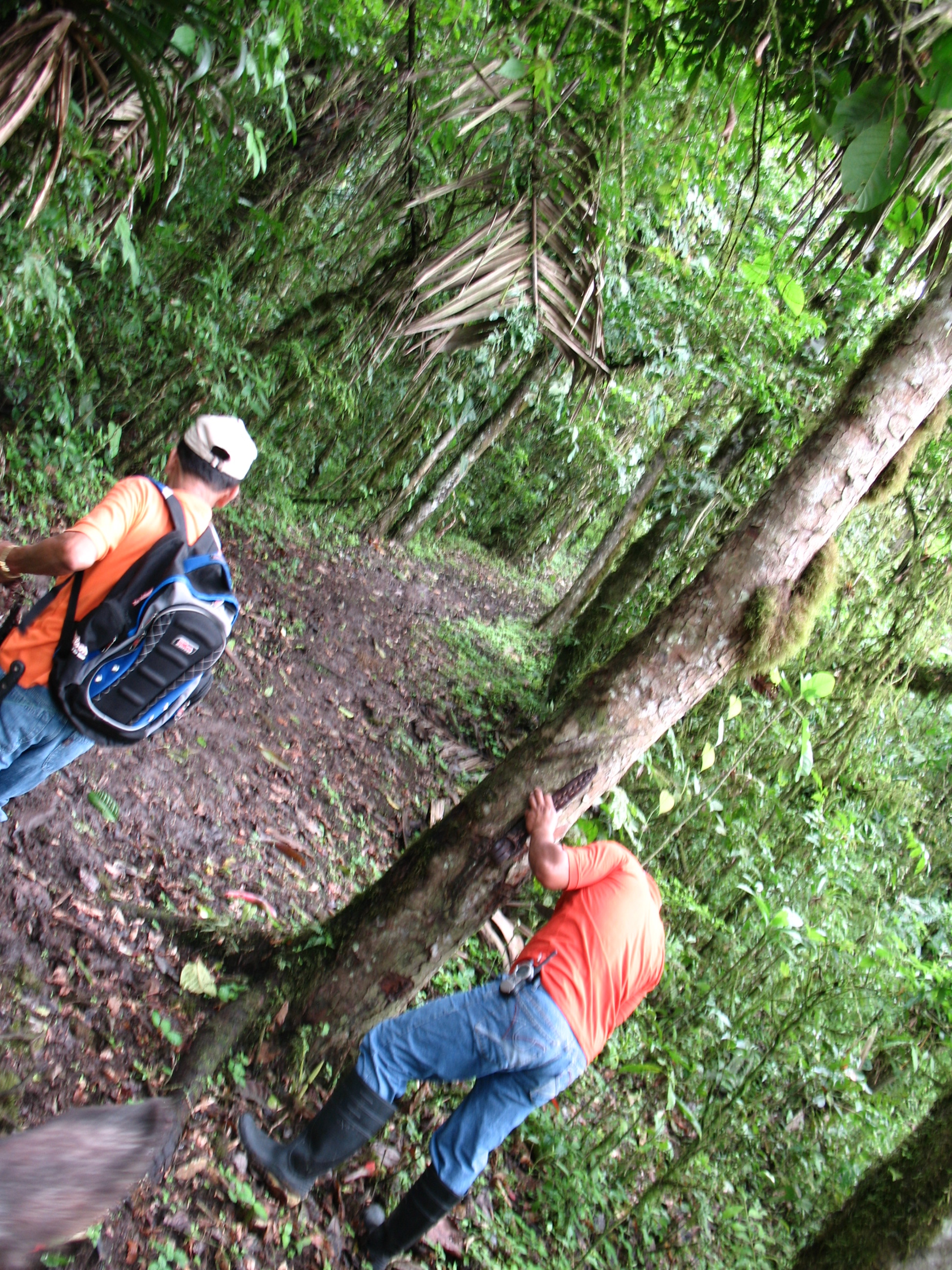
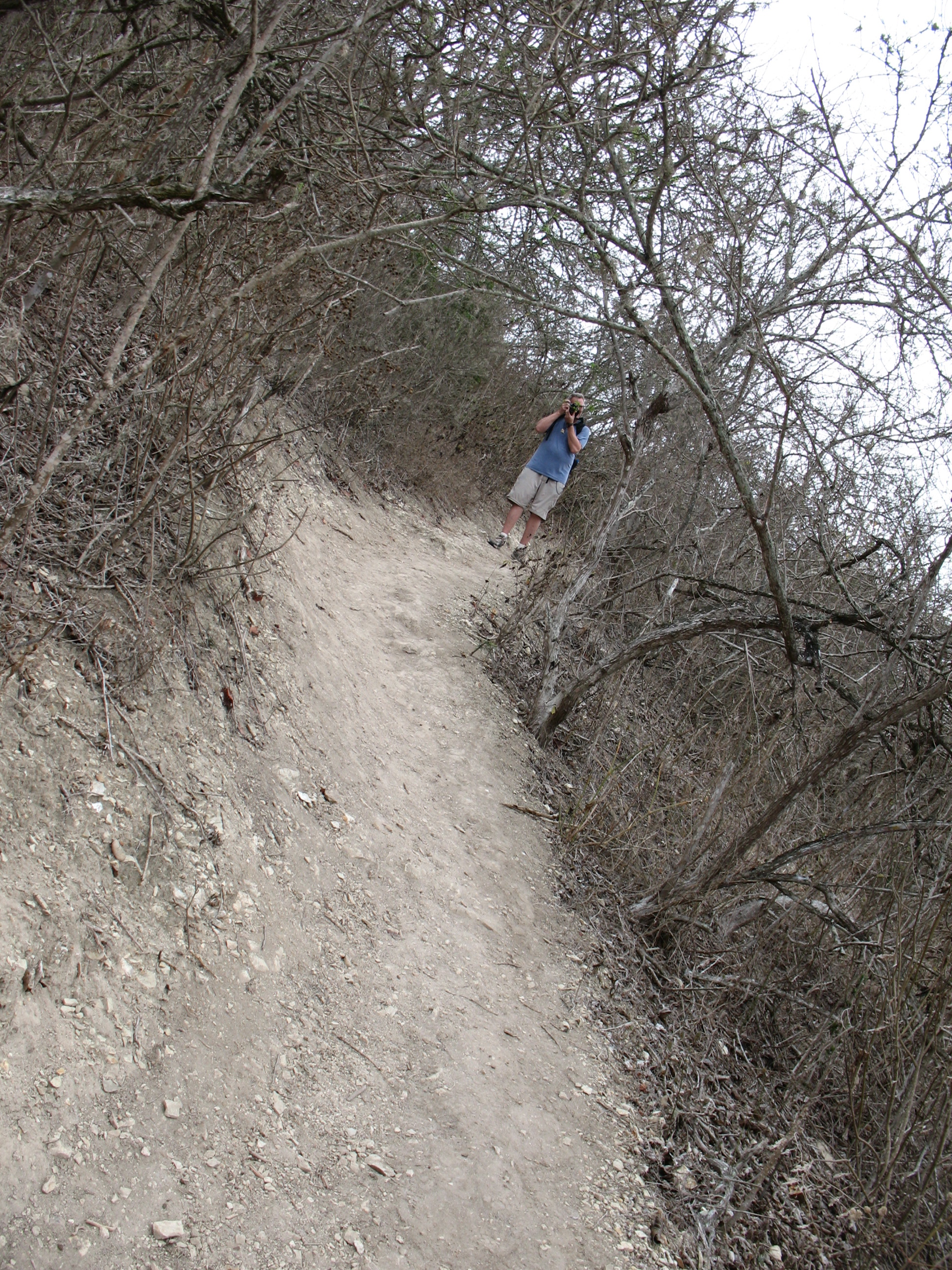
Saturday we have arranged for a horseback tour through the jungle.  No waivers are signed; no one even asks if we have any experience.  If they had asked, we would have answered we have ridden an elephant more recently.    At times it is absolutely terrifying.  I am certain my horse will slip on the narrow path and we will slide down the side of the steep, muddy mountain. Our guides whack a path ahead of us with machetes.  

whacking the way ahead with machetes

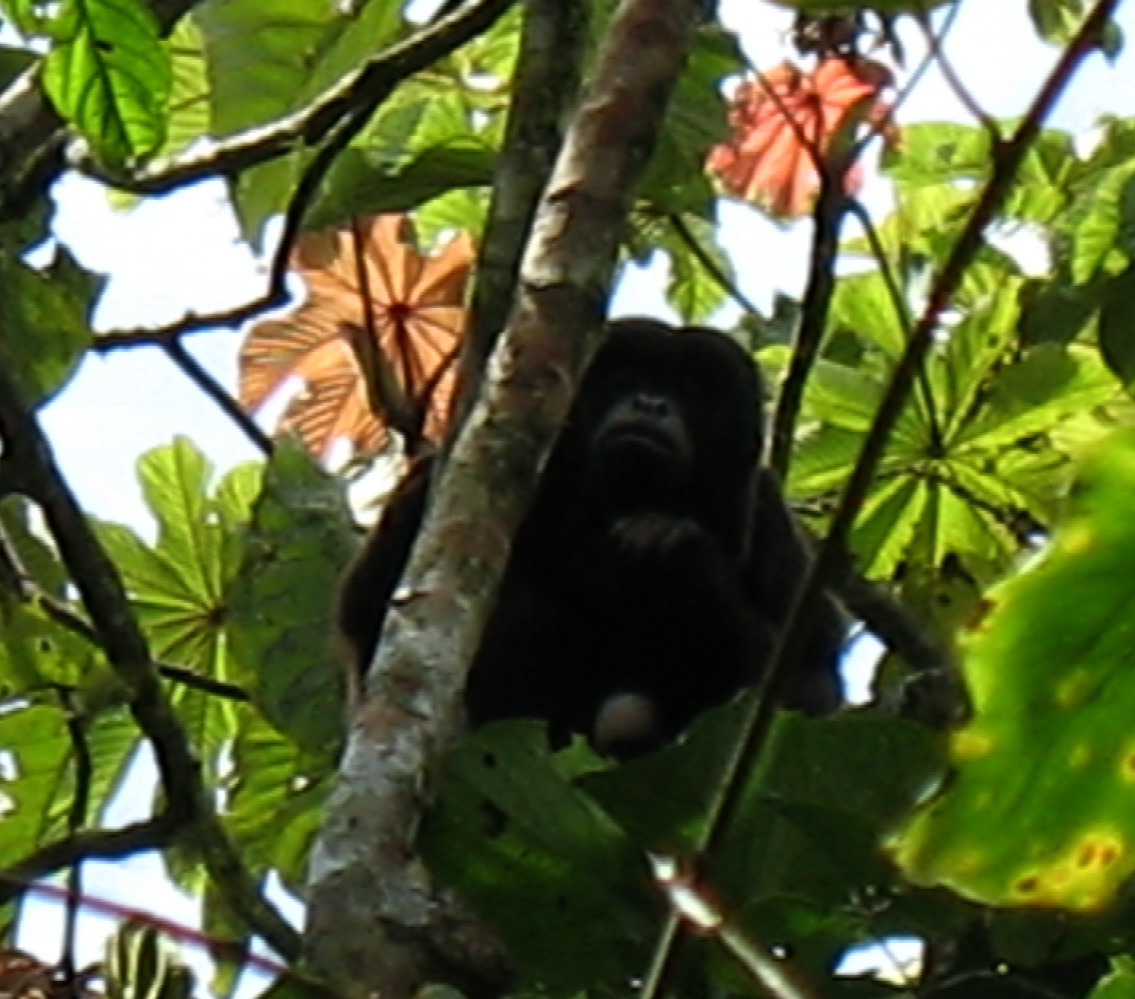
But we are treated to panoramic views every where we look; we see rare capuchino and the more common black howler monkeys.    

howler monkey

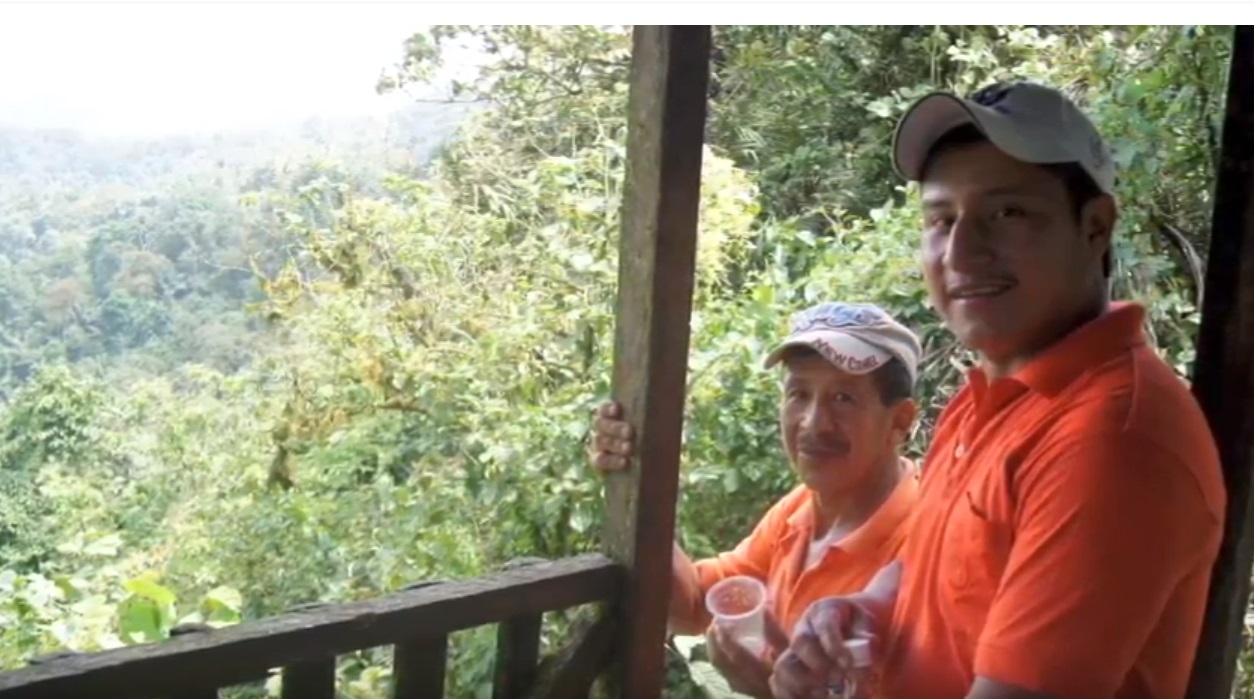
Roberto and Policarpo speak no English.  They point out various plants as we struggle to understand.  My pockets are full of tobacco leaves, coffee beans, and a tagua nut.   “This leaf is good for medicine.   The wood from this tree is used in constructing houses.”   By three o’clock we are back at the road to meet the moto-taxi.  We are exhausted but exhilarated.

TG
Roberto and Policarpo
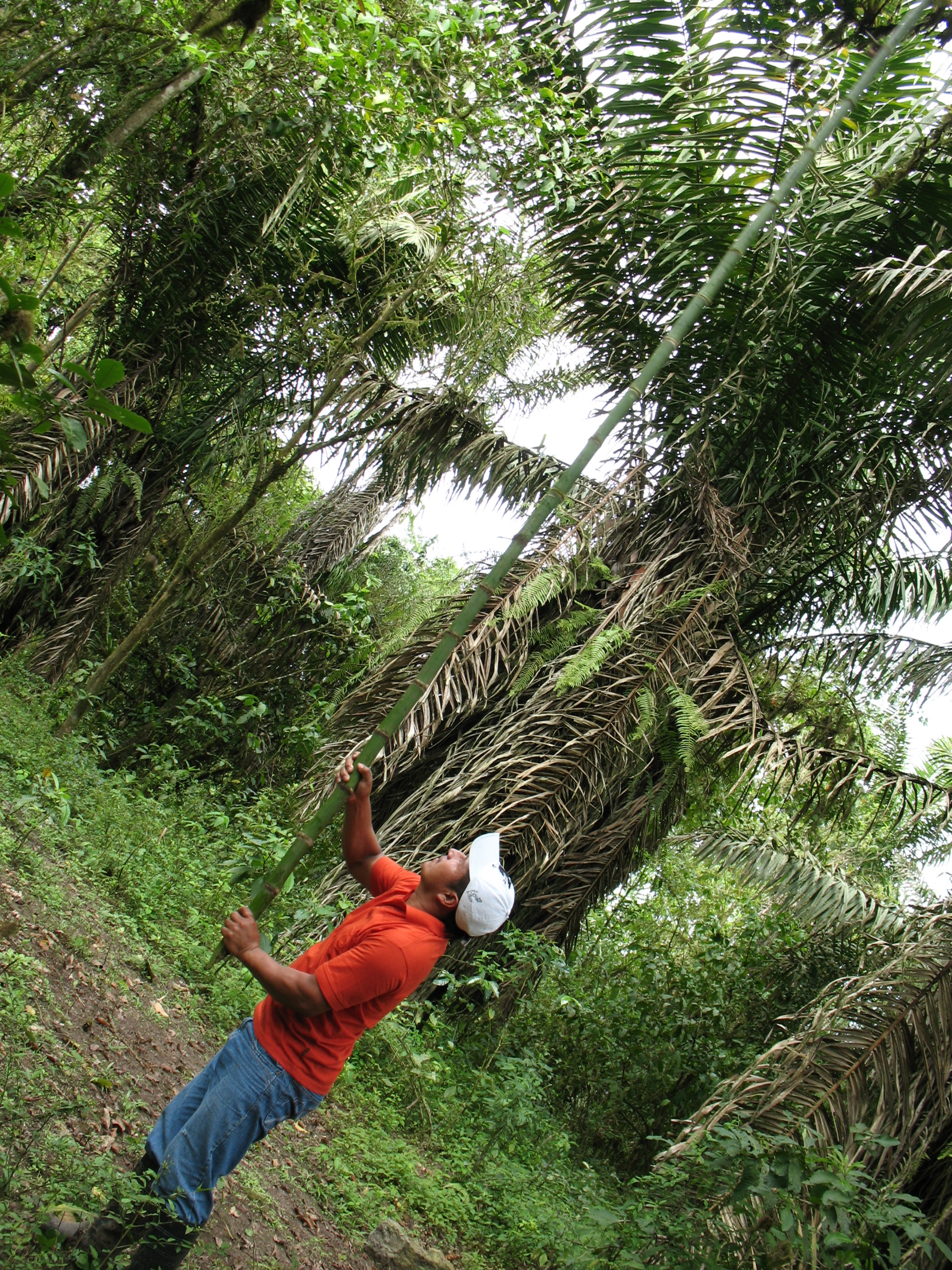
Roberto knocking down oranges

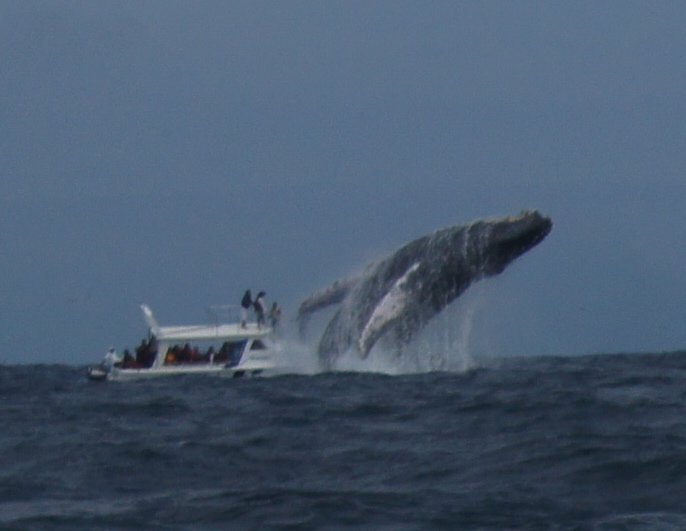
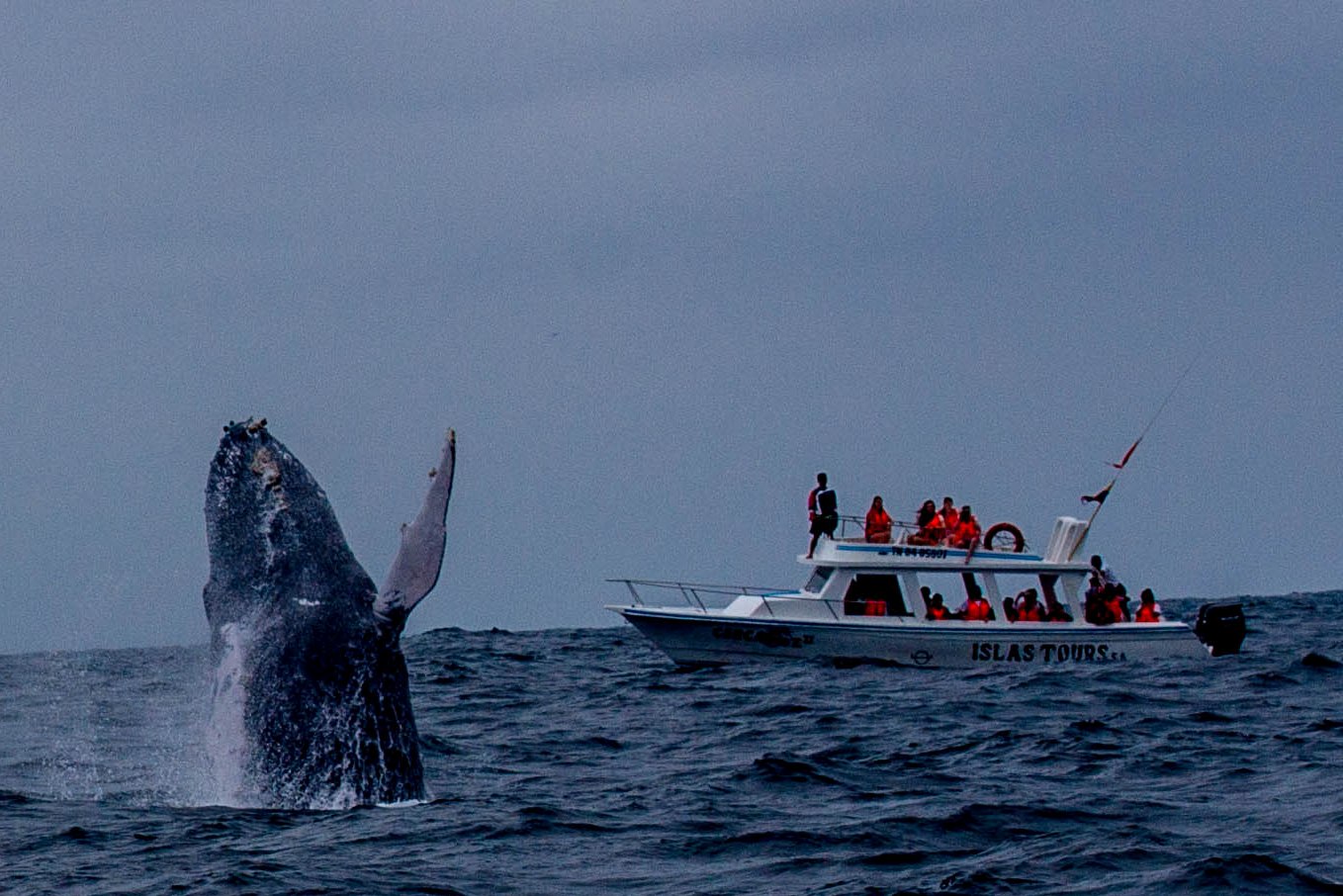
It is Sunday and we have booked an all-day trip to Isla de la Plata.  Barely twenty minutes out and we already find whales.  At first we see only their backs.  Suddenly one breaches.  It is so close to another boat!  We are at the perfect vantage point to photograph both the whale and the boat – giving perspective on how big these creatures really are.  We spend an hour with him as over and over he rises up out of the water, showing us his enormous size before splashing back down beneath the waves. 

humpback tail with boat
humpback breaching next to boat

It is time to move on to Isla de la Plata. “The Poor Man’s Galapagos.”  It is a wind-swept island in the middle of nowhere, covered with palosanto trees.  We recognize the sweet earthy fragrance.  We smell it even before Sandra, our guide, points it out. 

Isla de la Plata

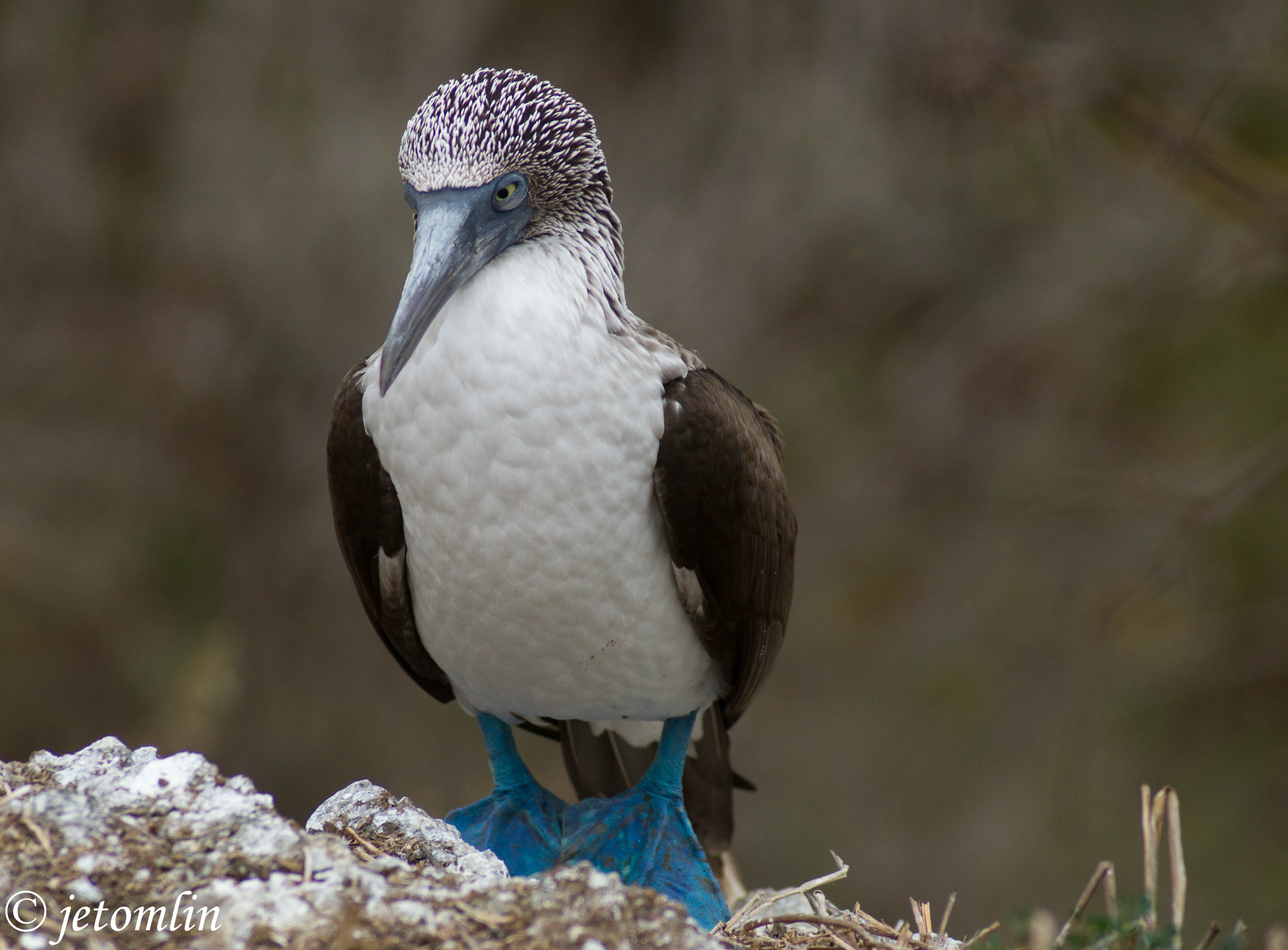
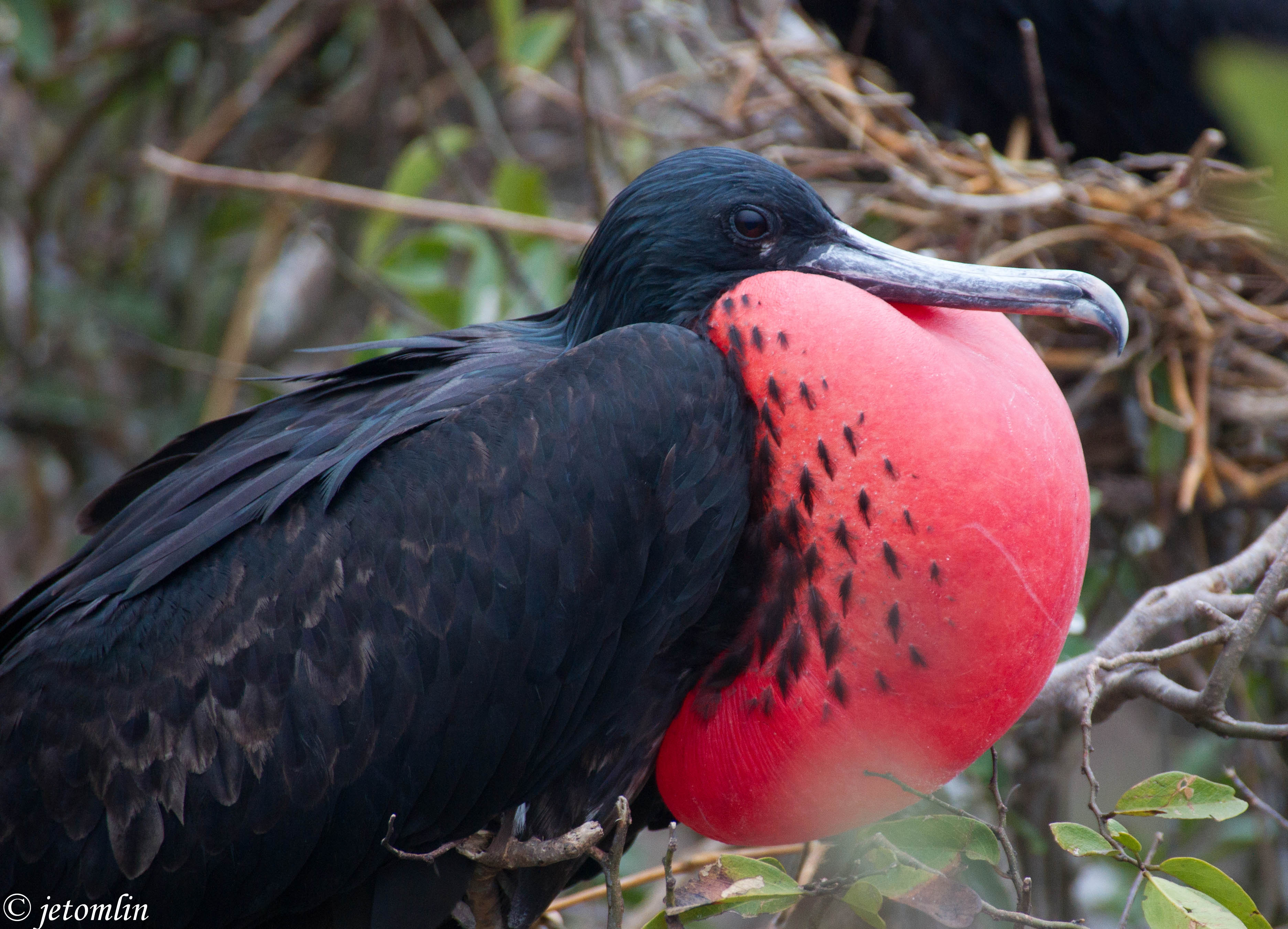
We see blue-footed boobys, their webbed feet dipped in bright blue “paint,” red-breasted and brown frigates, warbling finches, and albatross. 

blue footed booby
red-breasted frigate

The landscape is rugged and somewhat barren this time of year.  Sandra tells us that during rainy season everything is green and flowering.  Off shore in the distance we see whales breach.

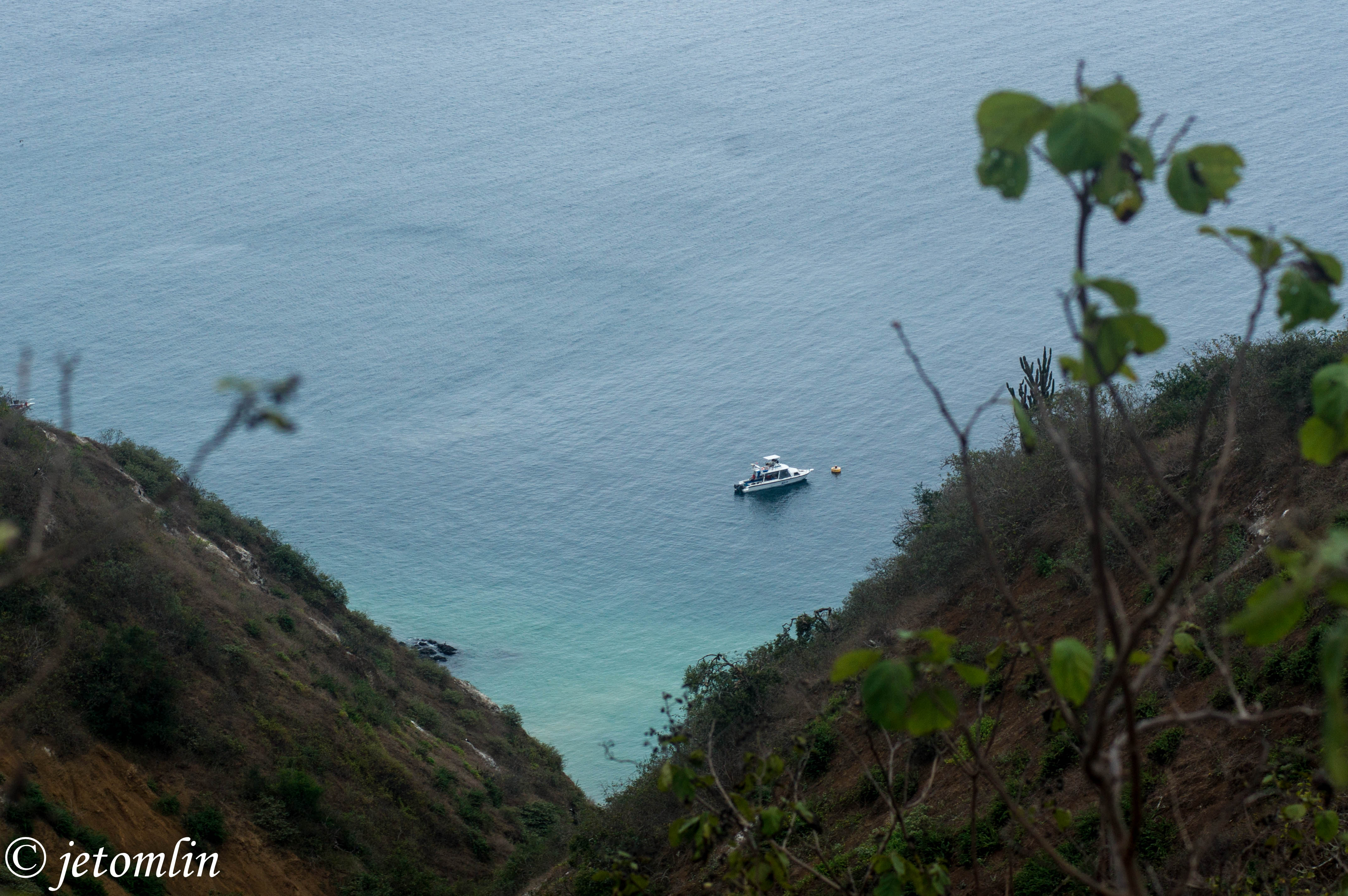
view from Isla de la Plata

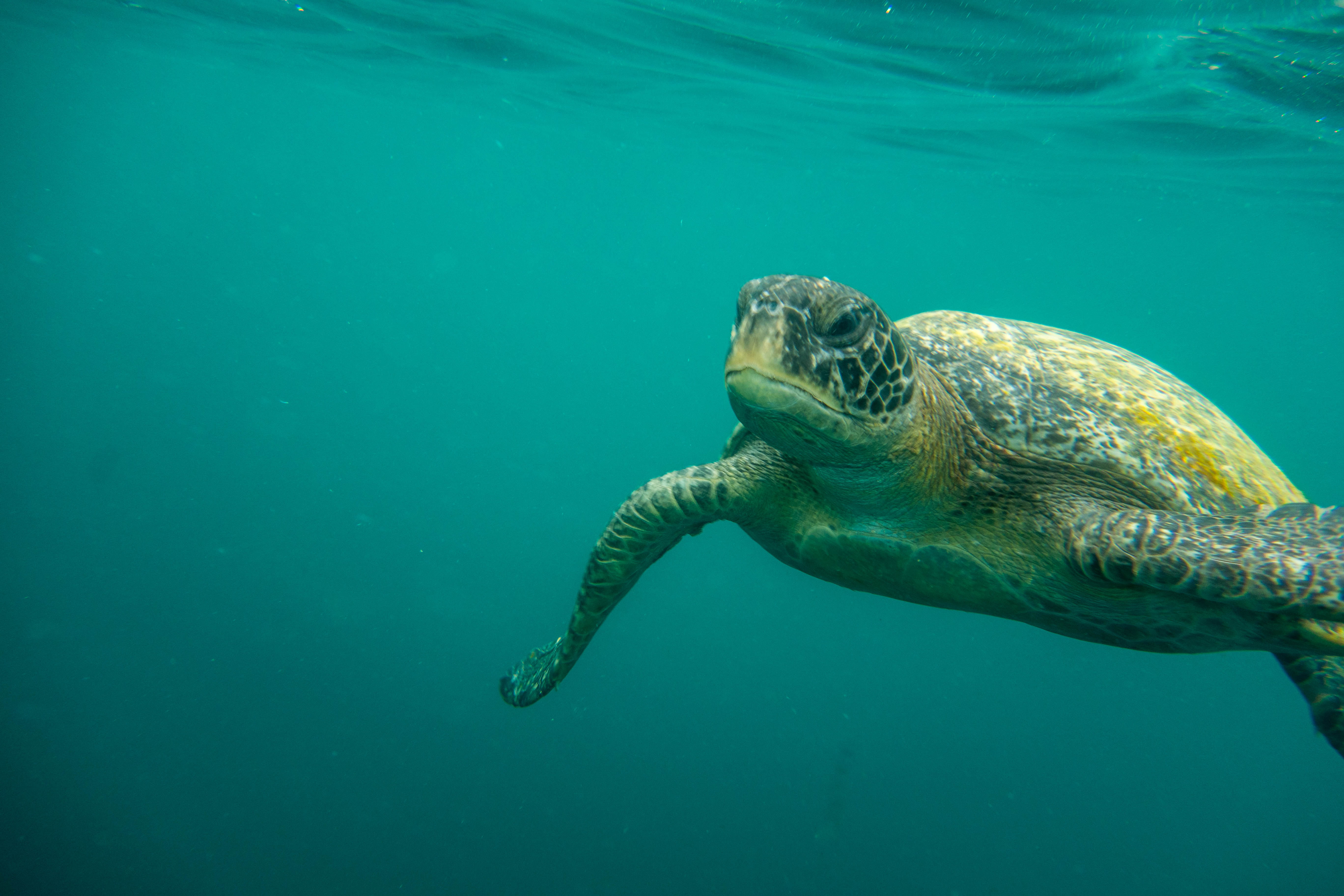
Back at the boat we are surrounded by huge green sea turtles.  They are drawn to the pineapple chunks our crew is tossing overboard.  We spend thirty minutes snorkeling in a quiet bay.  The corals are pretty and I see many unfamiliar fish.

green sea turtle

The boat heads back to Puerto Lopez.  It has been a long day and the crew is anxious to get us home.  We see whales breach and more water spouts during the hour-long ride back but it is full speed ahead.  If Saturday left us exhilarated, today we are giddy.  The camera is full of photos.

we are giddy

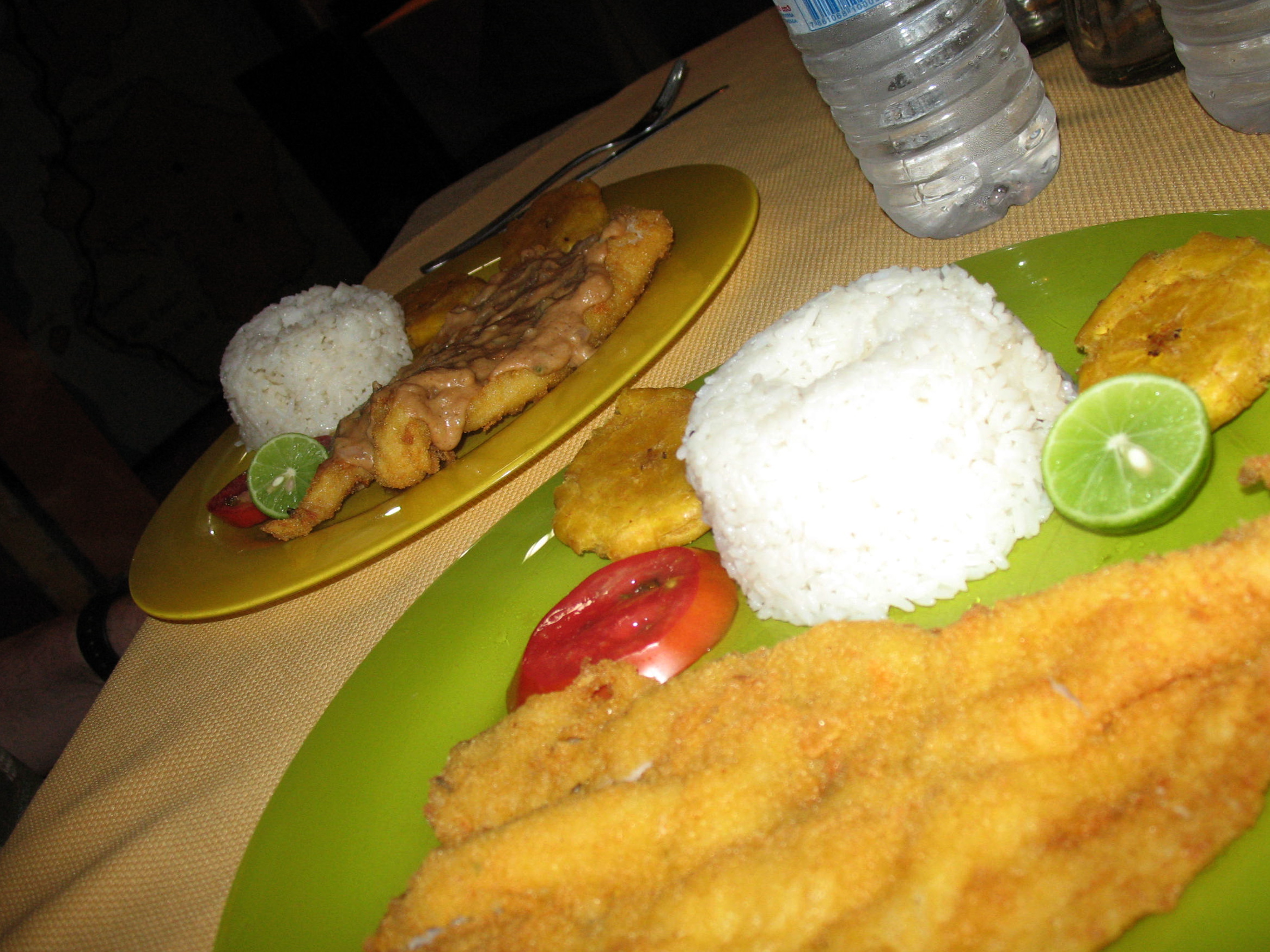
We  try a different restaurant every night.  Puerto Lopez is a fishing village.  We order fish; none prepared quite the same way. 

“pescado frito con arroz”
Pilsener: the only beer we ever drink

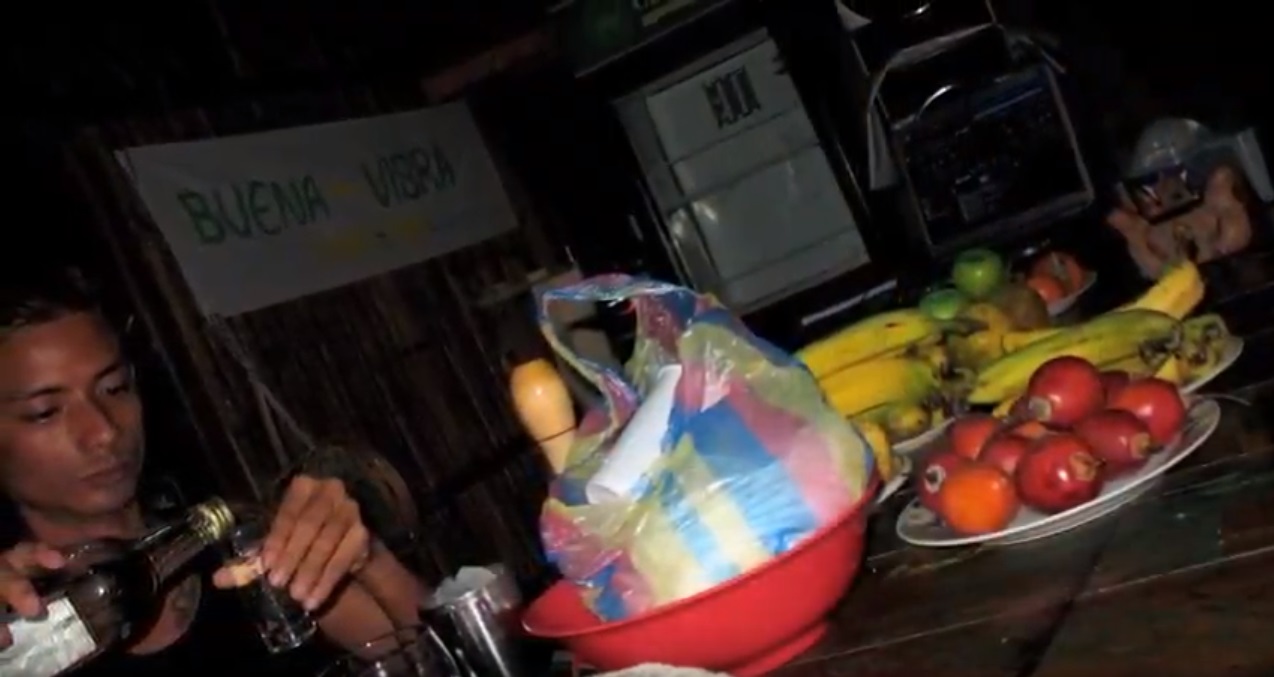
After dinner we have taken to stopping for a drink.  Last night we found a quiet bar called “Bambu.”  There is a sign on the wall:  “Buena Vibre” Good Vibes.   Tonight Jaime pours us home-made caña, a traditional Ecuadorian drink made fermented sugar cane.  We are living on the edge. 

caña at Bambu

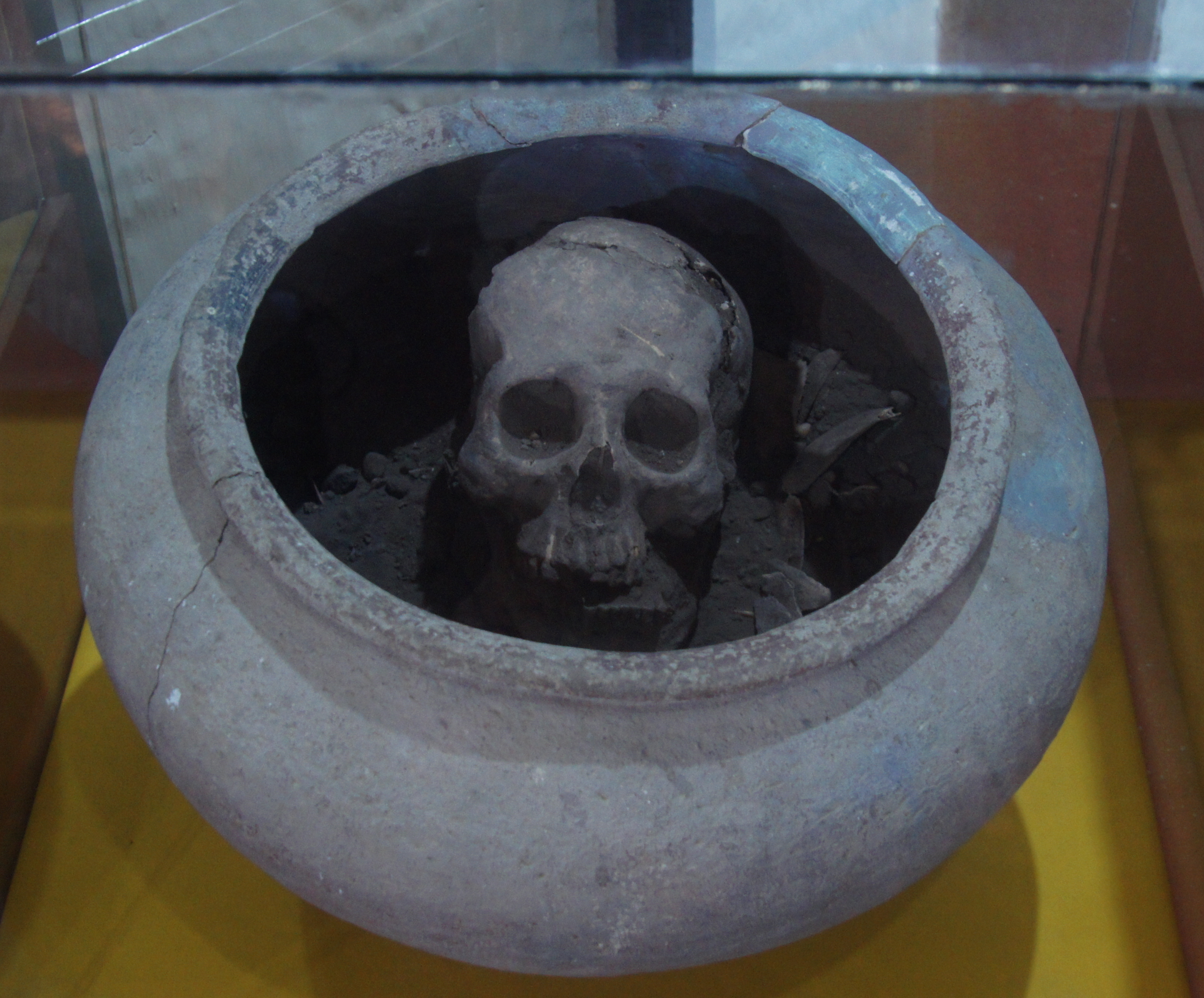
After another full day of whale watching, we have decided to stay on dry land today.  We hire a moto-taxi to take us to Agua Blanca, an archeological site dating back to pre-Columbian times.  We have no idea what we are in for.  There is a small museum filled with artifacts:  funeral urns with human bones still tucked in the fetal position in which they were cremated.  Alejo, our guide, patiently teaches as we struggle to understand his Spanish. 

Agua Blanca

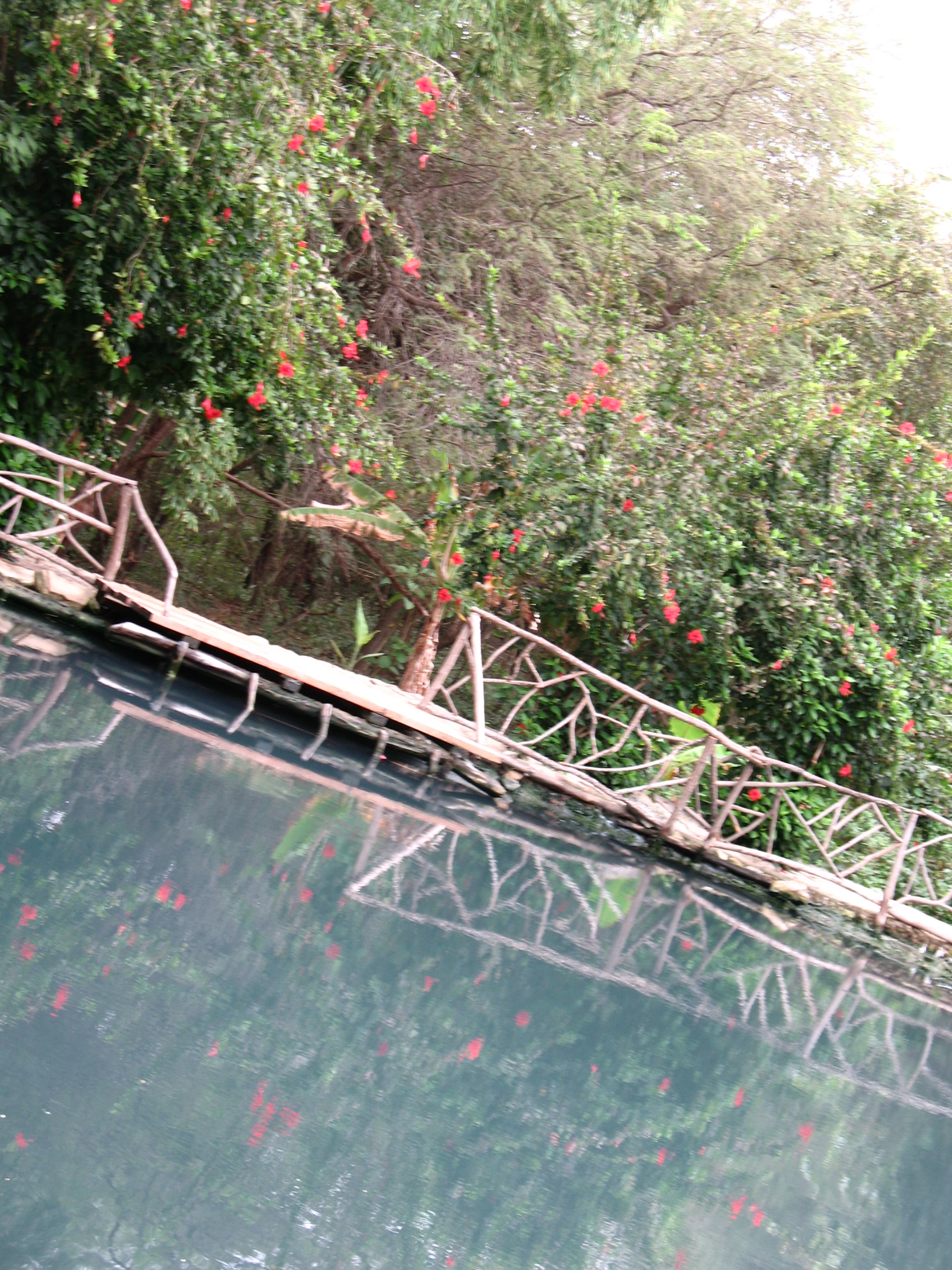
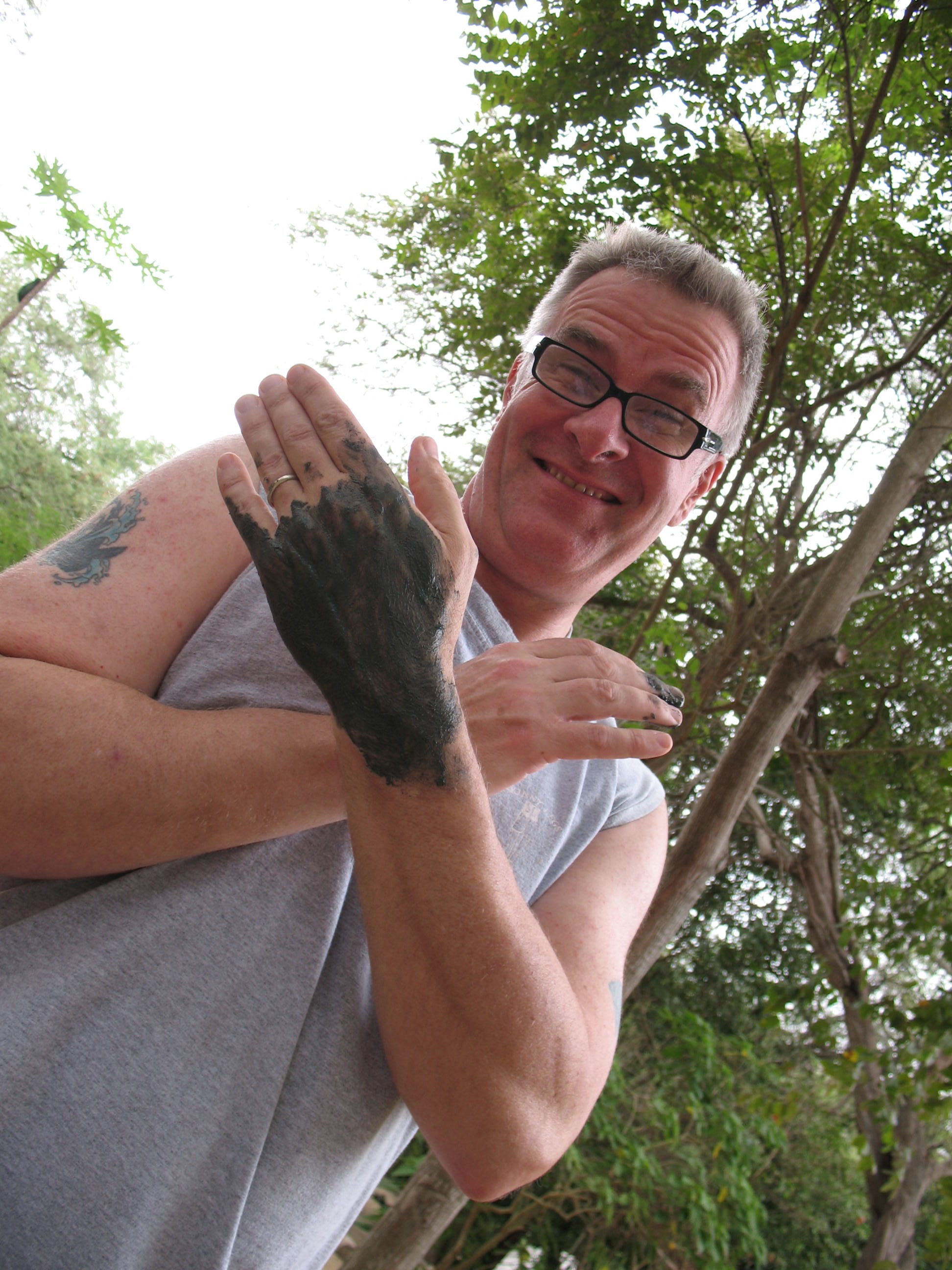
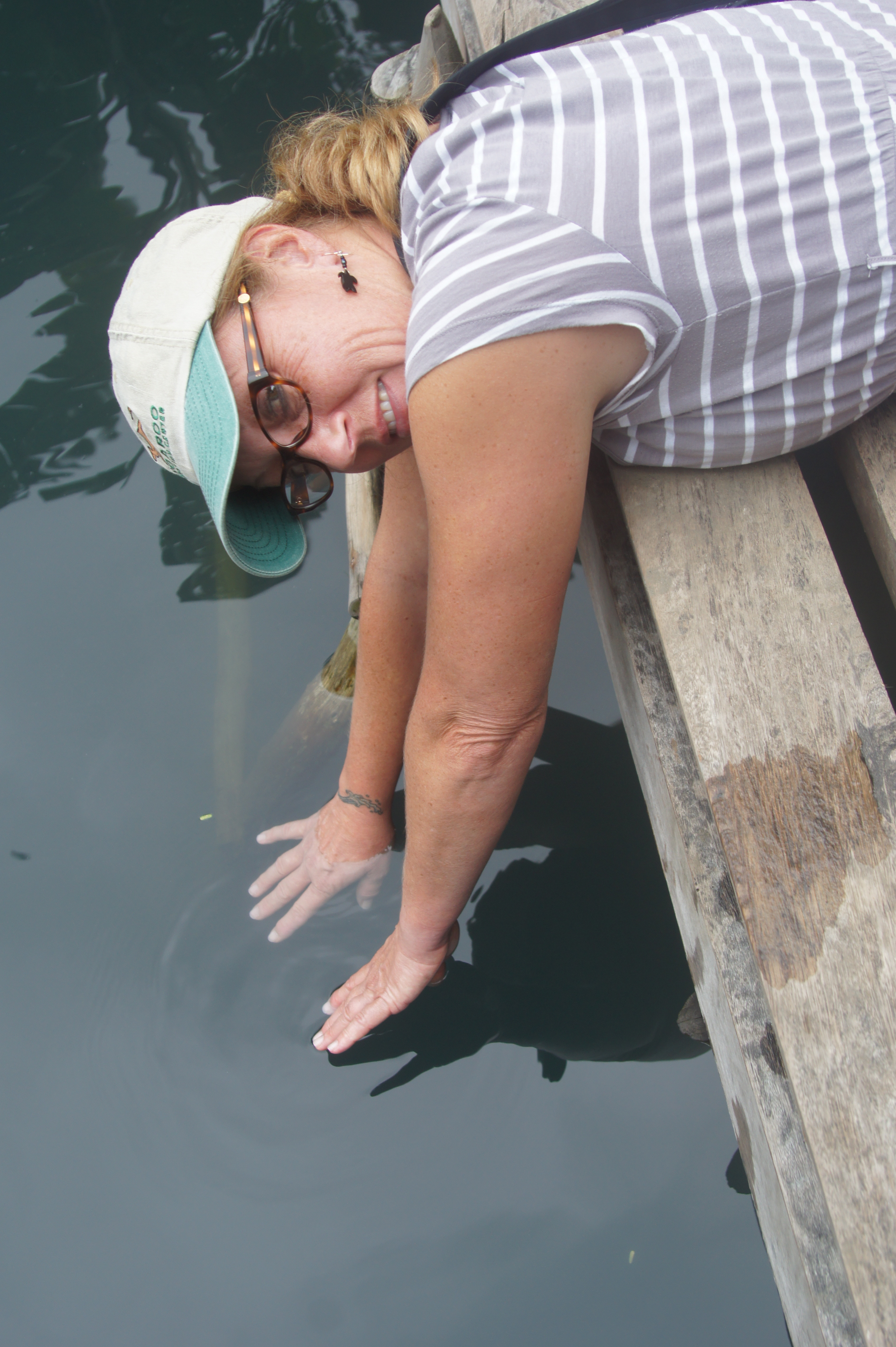
And then we set out on a two kilometer trek through the dry jungle, past a small banana plantation, over a river where women are hand washing clothes and on to a sacred pool.  It is healing sulfur water. We coat our hands and arms in thick black mud, let it dry for twenty minutes and then rinse off in the pool.  I lie on my stomach and let my arms dangle in the egg-smelling water.  It feels silky. There are two toads on the bank next to me.   Tall Guy  says his arms are as soft as a baby  but it does nothing for my dry hands.

the healing waters at Agua Blanca

After all the excitement earlier this week there is little whale activity on Wednesday.  We are disappointed.  We’ve been spoiled.  We see one whale breach but are not in the right position for a photo.  We see a few hump backs and one fluke.  We spend too much time drifting, the engine idling.   One person is sick, and then another and another.  It is the domino-effect.  TG and I sit towards the front of the boat, away from the diesel fumes, frustrated with our fellow passengers and the crew. 

not much activity

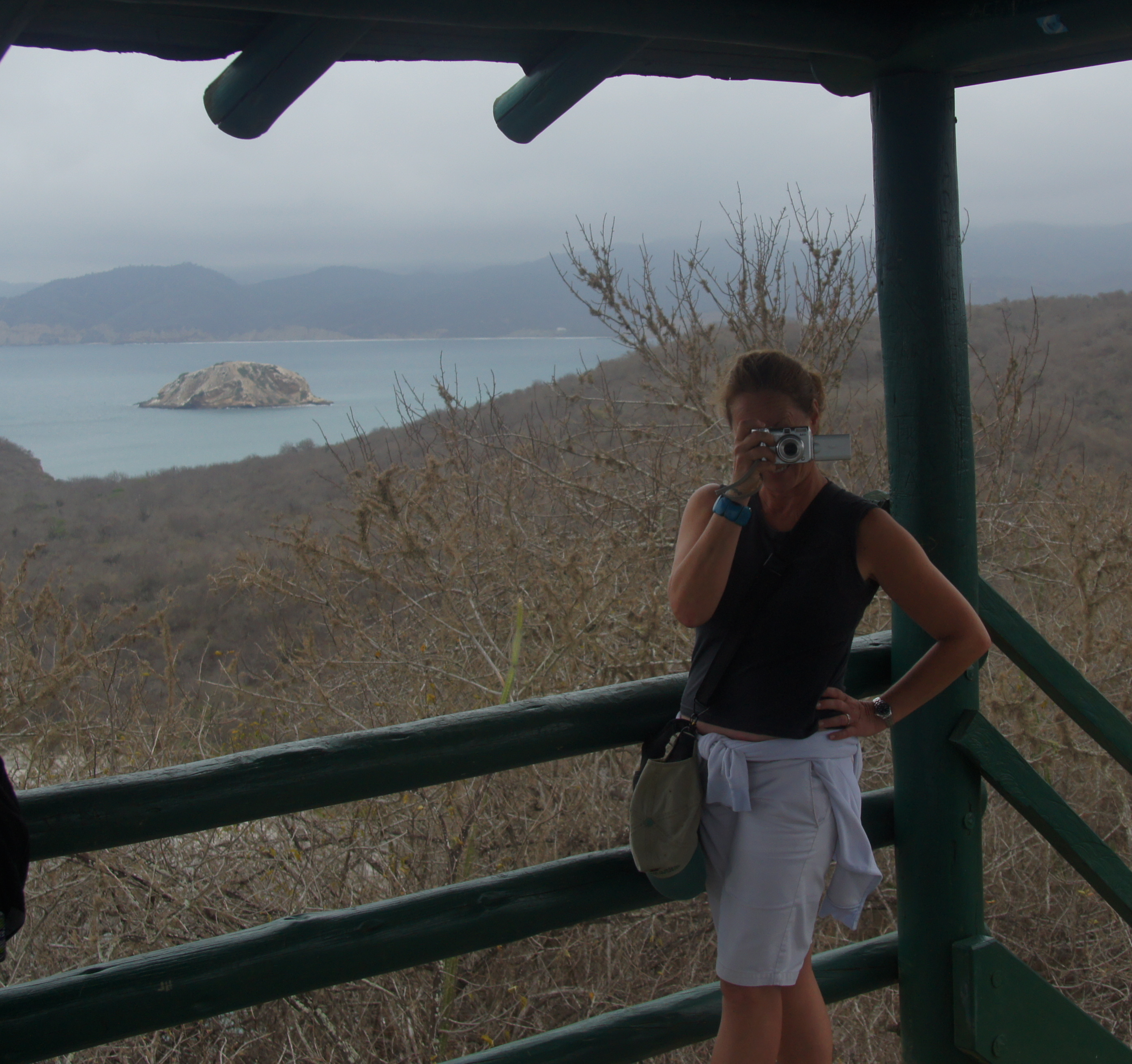
Once again back we head to Las Frailes.  There is a small hill we want to climb.  The view from the mirador at the top is breath-taking.

hike up to the mirador
TG 
view from the mirador at Las Frailes

Thursday is our last day in Puerto Lopez.  I have booked with a different boat.  The captain and crew take care to position us so that everyone has a perfect view.  They move the boat so that we are always at the best vantage point to see the whales. 

humpback whale breach

It is, in a word, spectacular.  Multiple breaches, a fluke (“cola”) so close I can almost touch it, and a pair that roll on their backs like overgrown puppies.    But I am not feeling well.  Not seasick, I have succumbed to Jaime’s fermented sugar cane drinks.  I go straight to bed. 

It is unfortunate as we have been invited to dine with a German couple also staying at Itapoa.  They were fishing early this morning and have caught enough to feed everyone.  The hostel kitchen is a beehive of activity:  Maria, her mother, and daughter bustle about filleting fish, dicing potatoes and chopping onions.  TG contributes two boxes of wine. I am sorry to miss the festivities.

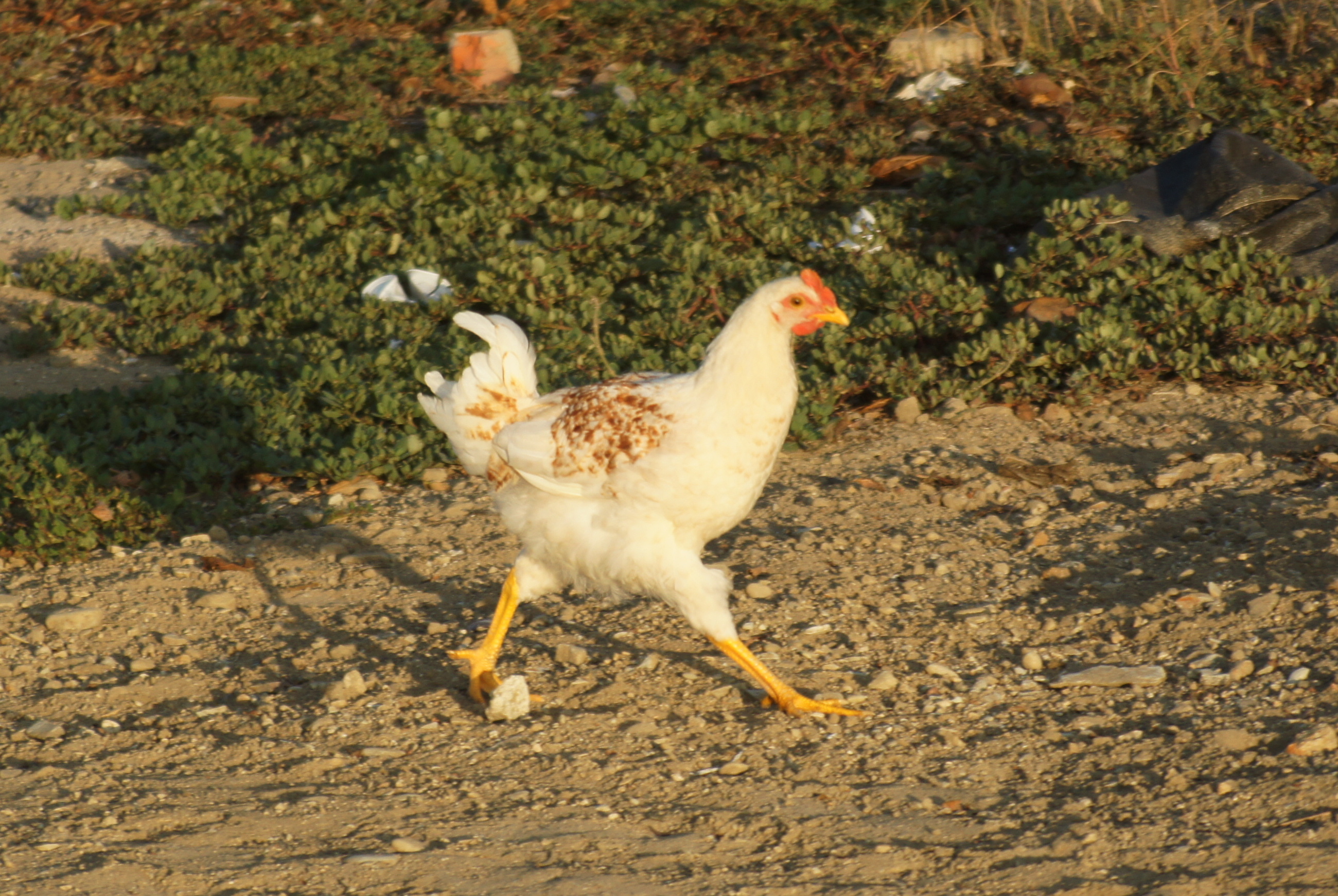
Puerto Lopez chicken

By Friday morning we are both sick.  We’re certain it was the caña. We will find out later there were bad batches of caña being served all throughout Ecuador. Many people died.  

the drive to Manta

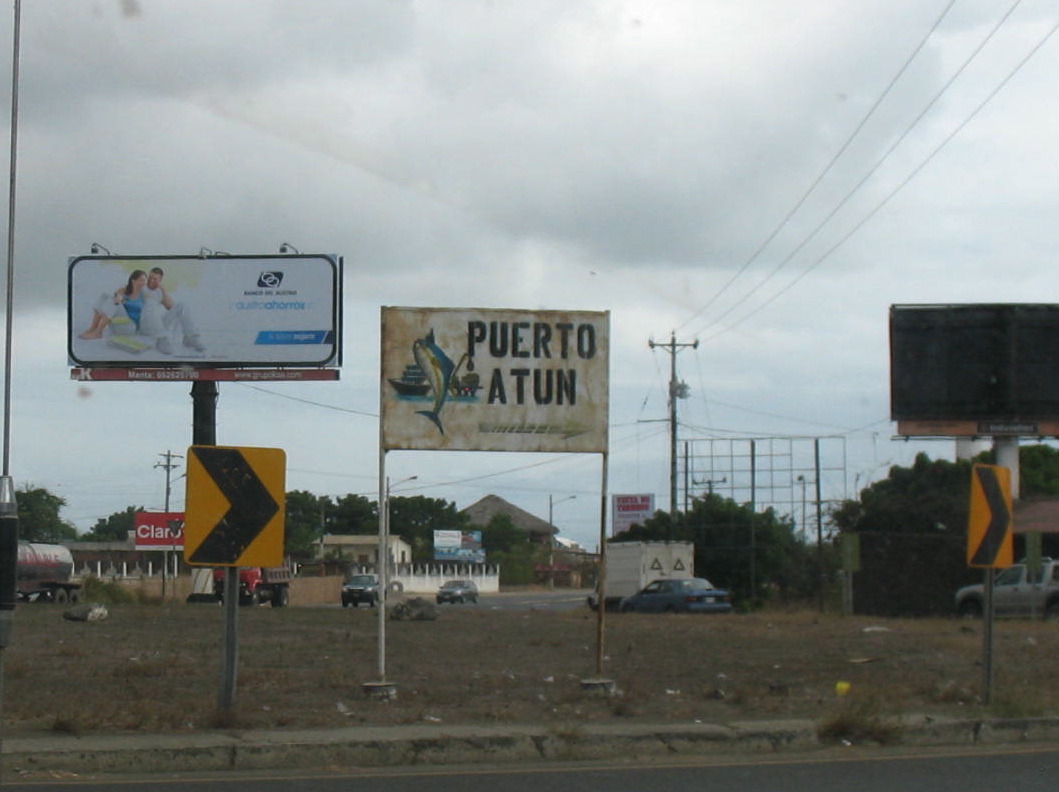
We manage to arrange a taxi to Manta.  In spite of everything, I am happy to see this drive in the daytime.  The coast of Ecuador is beautiful – nothing but rolling hills and unspoiled white beaches.  The landscape is dotted with palosanto and ceibo trees.  Between the magnificent views are tiny towns:  one after the other.  Machalilla.  Puerto Cayo.  Jipijapa.   The main street of each village is lined with vendors, all featuring the same specialty.  In one village it is beautiful wood carvings.  In the next it is small loaves of bread, the women waive handkerchiefs to flag down the cars.  In a third town all the shops sell grotesque ceramic piggy banks and urns.  In yet another it is stall after stall of honey.  They have recycled every conceivable glass container.  We see honey in pickle jars, ketchup and Snapple bottles.  All this flies by us at 70 kilometers per hour.  We are both slightly queasy and wonder if it is even real.  We are on to the next town before I can say for certain. 

the drive to Manta

We land safely in Quito.  The Mercure Hotel is a perfect way to end the trip:  a comfortable king-size bed and plenty of hot water.  We had plans for our last day.  Jaime told us about a magic lake, a holy waterfall, and a mystic tree just outside the city.  And we wanted to check out the thermal baths in Papallacta.  But tonight we are content to order soup from room service and fall gratefully into bed.

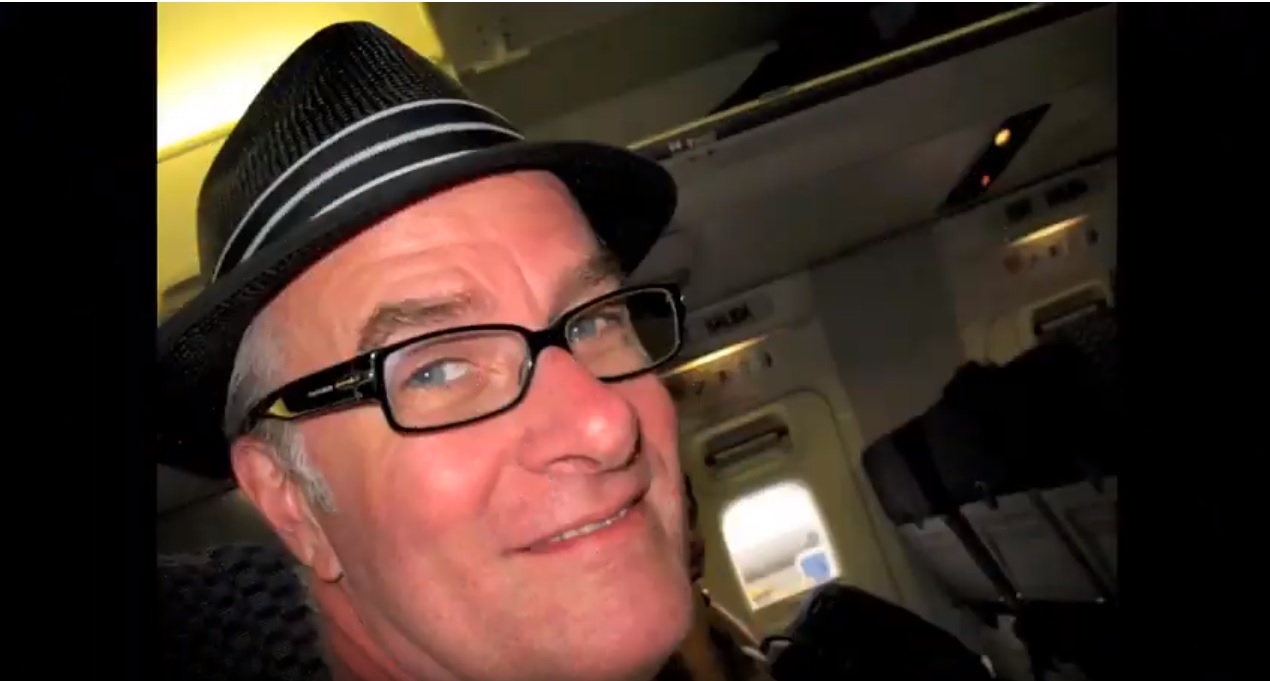
TG on the plane

Saturday is gloriously clear.  We can see to the top of the mountains that surround this city.  We had planned to take the cable car to the top of the volcano, Teleferico, at 13,000 ft.  Instead we walk to the market. We are feeling better but we have a long day of travel ahead.

Magic lakes, holy waterfalls, and mystic trees will be here – for next trip.

P.S. In March of 2012, we returned to Ecuador to spend a weekend at the Otavalo market. We also visited the Mojanda Lake, Peguche Cascade, the sacred waterfall, and El Lechero, the mystic tree. You can watch our video slide show here: https://www.youtube.com/watch?v=gLdcvrSMQ1o