Wooly Bully!

♪♪ Matty told Hatty / About a thing she saw / Had two big horns / And a wooly jaw / Wooly Bully / wooly bully ♪♪ (Sam the Sham and the Pharaohs, c1965)
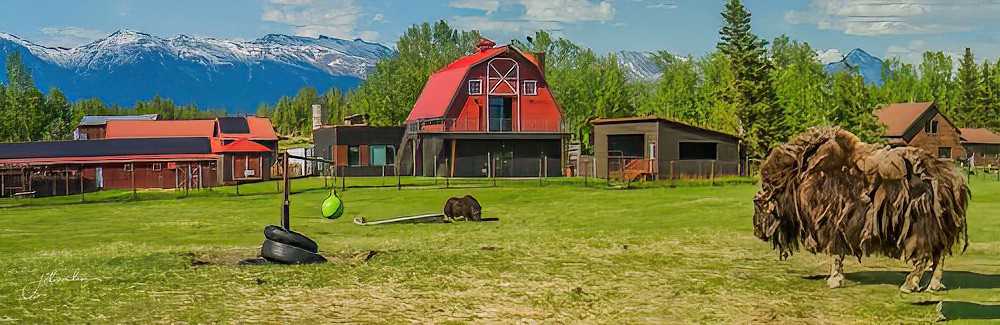
Musk Ox Farm, June 2026

Every so often, I find myself smitten by an animal I least expected. The mink was one of those surprises. During a 2024 trip to Northern Minnesota, I caught a quick glimpse of a little cinnamon-colored tail slipping under the ice, and suddenly I was obsessed with photographing a mink. I spent hours waiting at the same spot and was finally rewarded with 45 minutes of her scampering along a frozen stream.
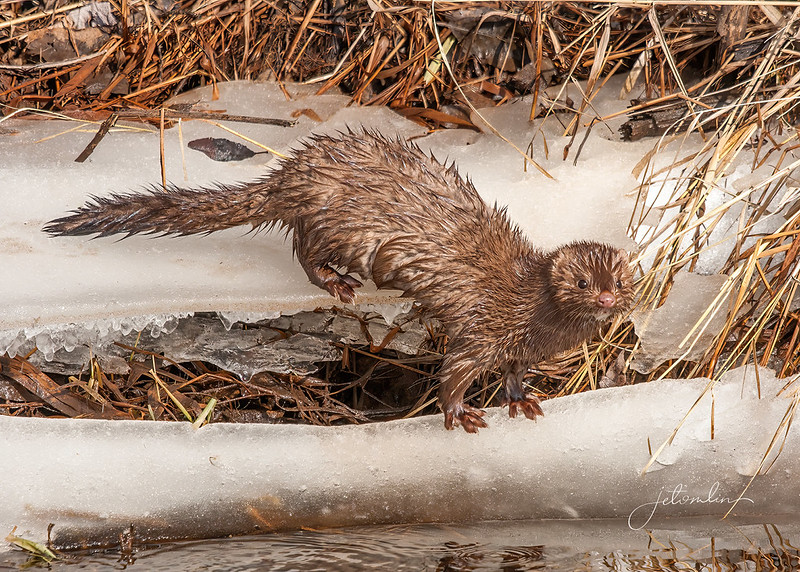
mink in Sax Zim Bog, March 2024

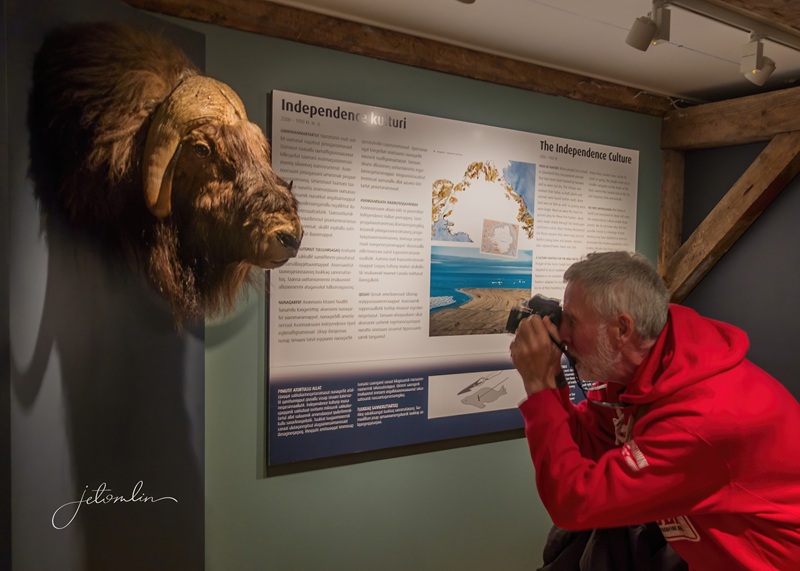
In November 2025, we traveled to Greenland to see the Northern Lights. Greenland is home to some unique animals, including musk oxen. They look like a cross between a woolly mammoth and a bison, and once again, I became obsessed with an animal I knew little about. Musk oxen are important in Greenland’s culture, symbolizing strength in the harsh Arctic climate.
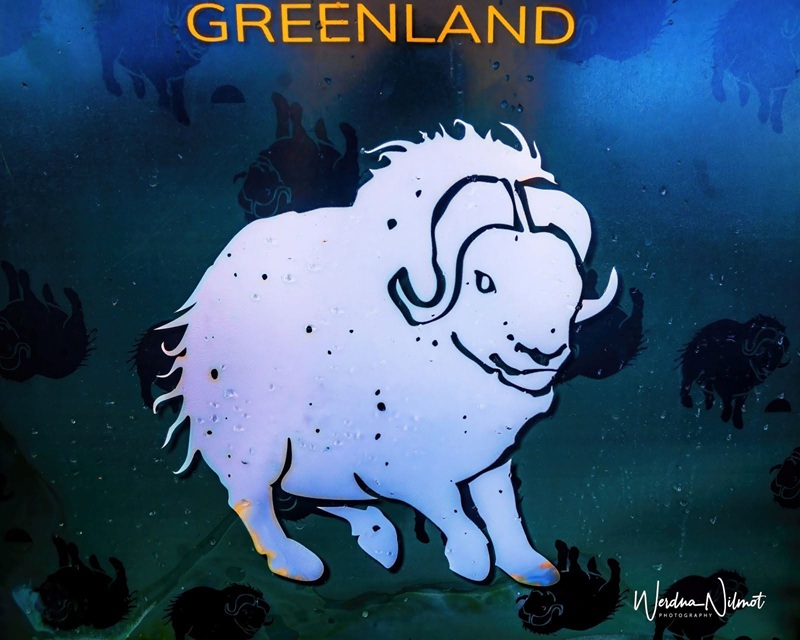
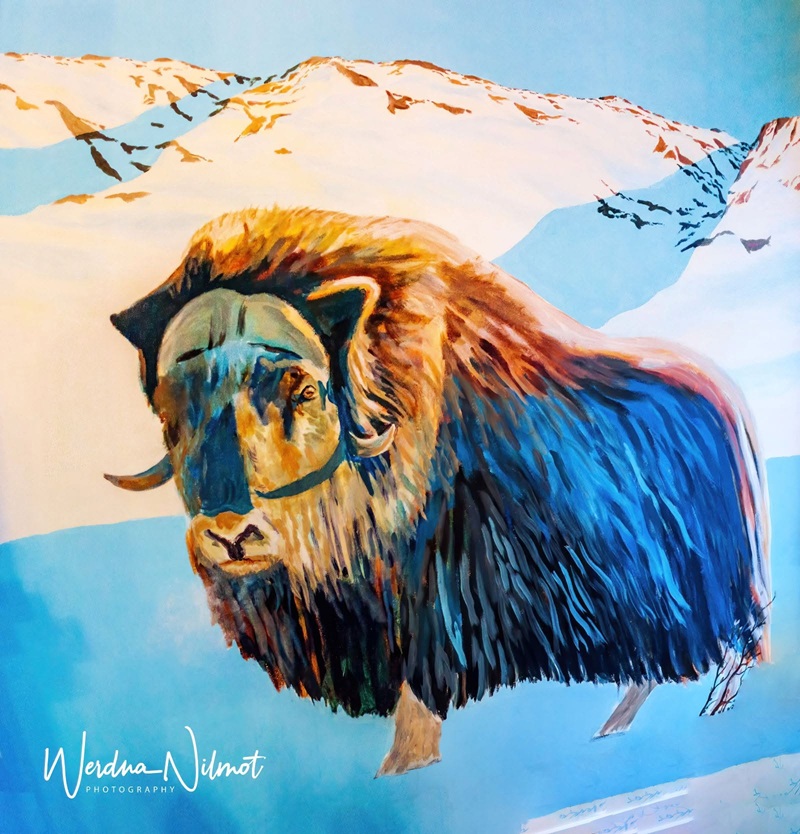
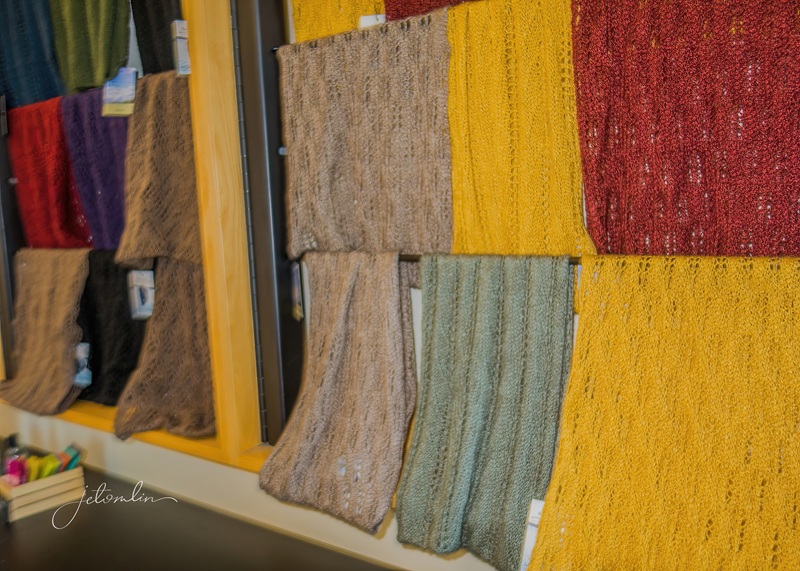
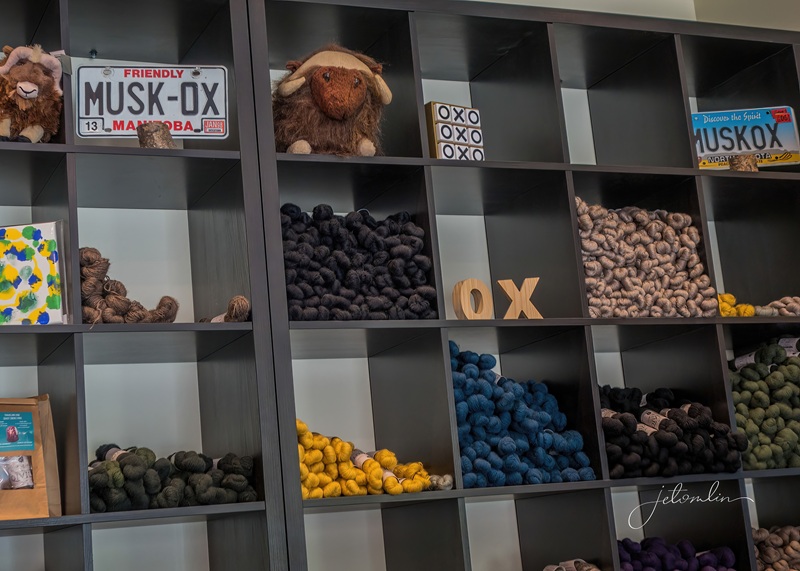
Their soft undercoat, called qiviut (kiv’-ee-yoot), is used to make clothing that is eight times warmer than lambswool.
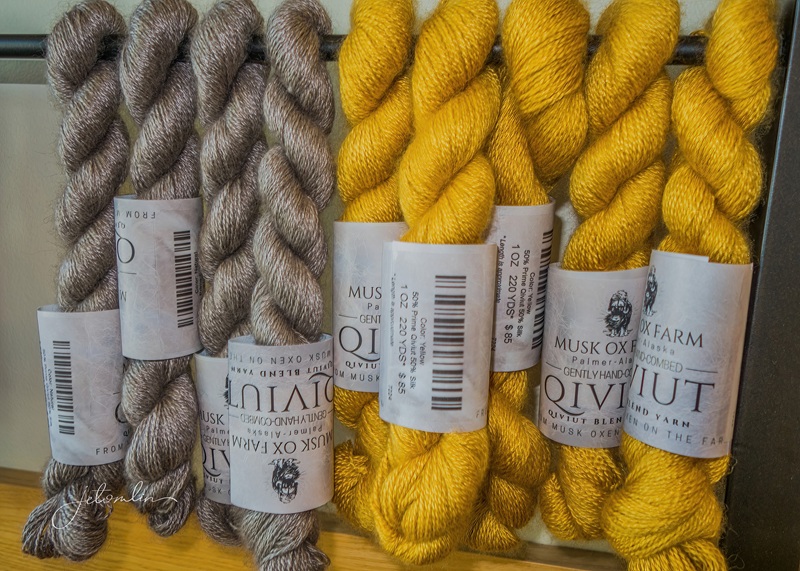
qiviut yarn

After returning home, we considered going back to Greenland to see the musk ox near Kangerlussuaq. But getting there is complicated and expensive, more than we wanted to spend on such a targeted subject.
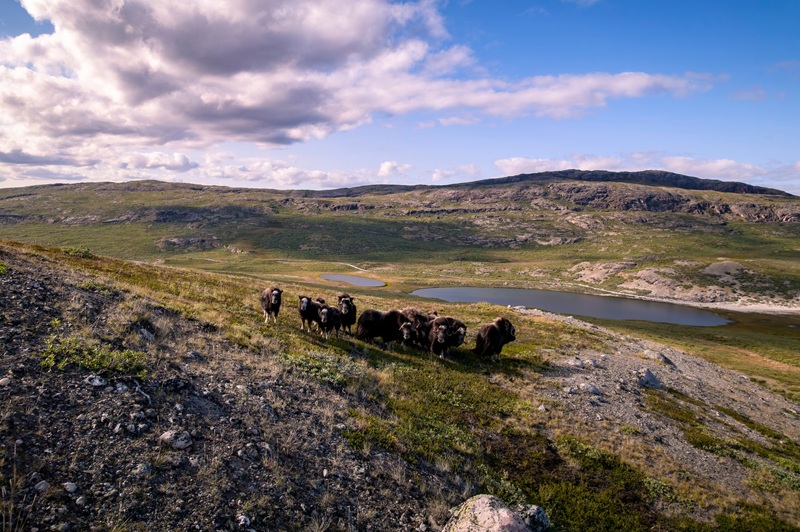
musk ox in Kangerlussuaq, photo courtesy of Visit Greenland FB page

Looking for alternatives, we discovered that musk ox also live in Alaska. The Alaska Department of Fish & Game advises, “Look for dark spots on a hillside. Carry binoculars and scan ridgetops and high meadows in summer.” That didn’t sound like quite the photo opp I was hoping for!
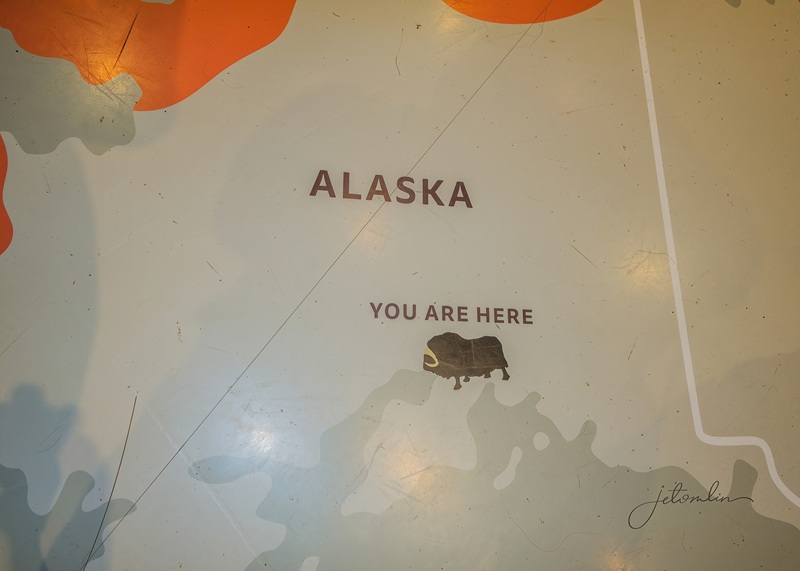
Musk Ox Farm, June 2026

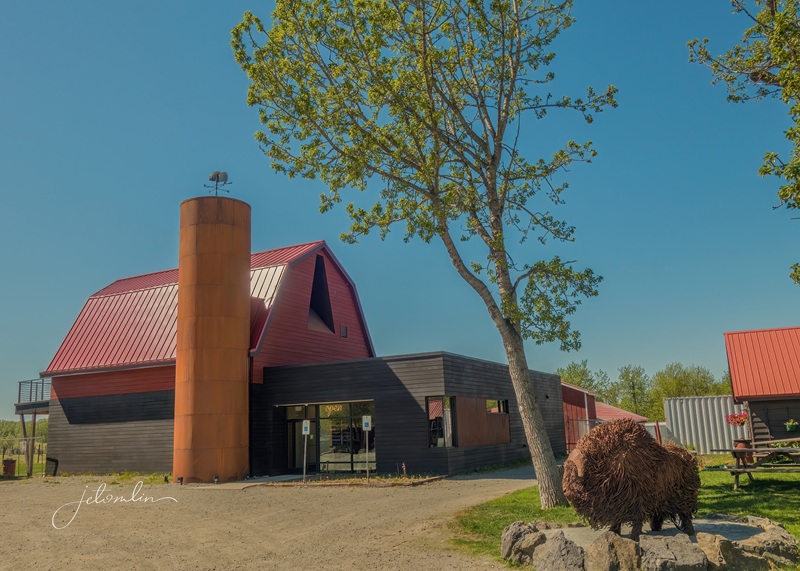
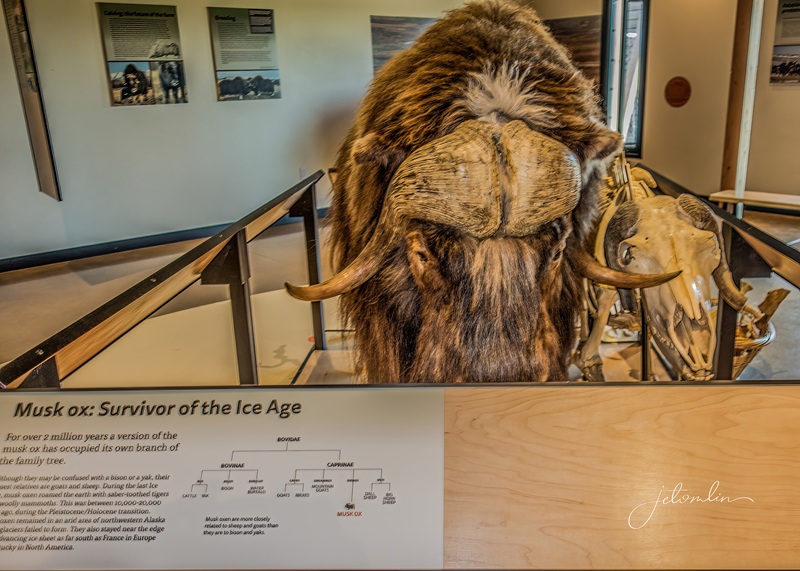
Our research led us to the non-profit Musk Ox Farm in Palmer. The farm focuses on caring for musk ox, responsibly harvesting their qiviut, and educating the public about these Ice Age animals. Visitors are welcome to come for close-up views and informative exhibits.
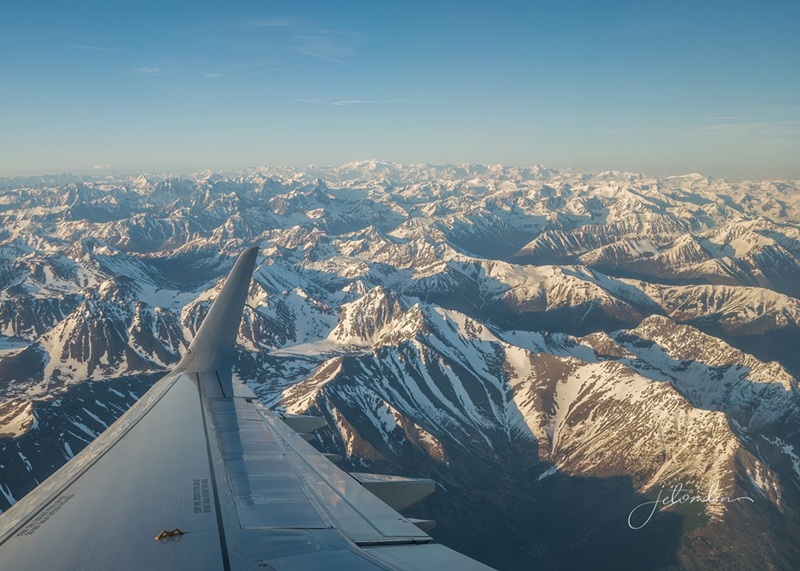
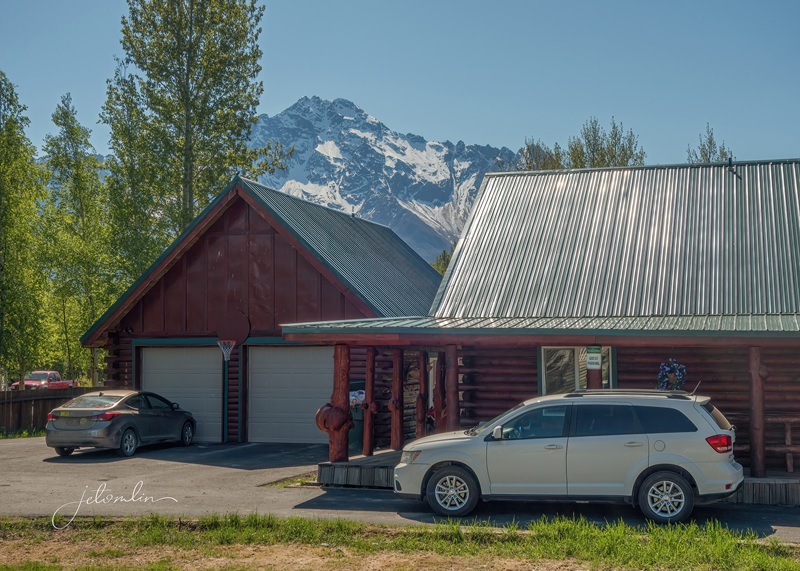
With our plans taking shape, we booked round-trip tickets from Pensacola to Anchorage and an Airbnb in Butte, just outside of Palmer.
To make the most of our visit, we reserved several oxperiences at the Musk Ox Farm. The farm has a Facebook page, so I started following their “Book Club” updates, the theme for calves born this spring. Novel, Story, Saga, Fable, and Sonnet were all born between April 29 and May 24. I was oxcited to have the chance to photograph these babies along with the adults!
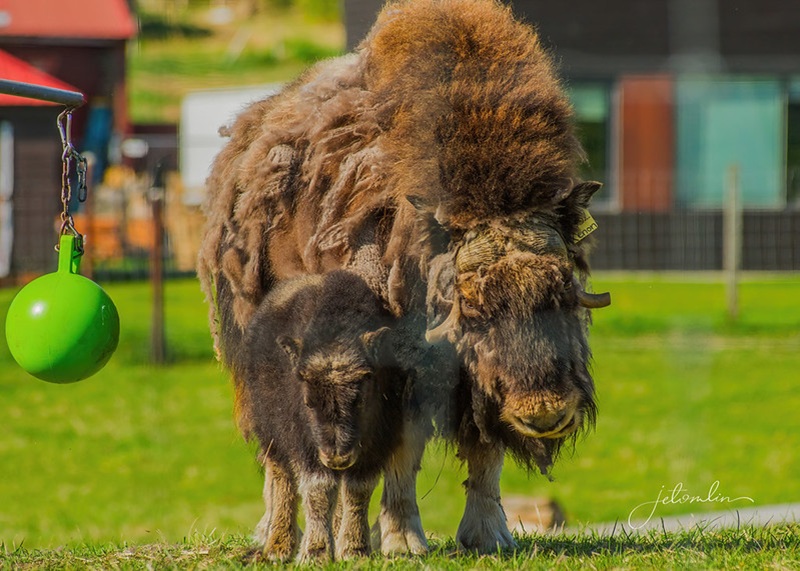
Xenon and her calf Novel (born April 29, 2026)

Our visits to the farm met my every oxpectation. The weather was perfect with blue skies and bright sunshine.
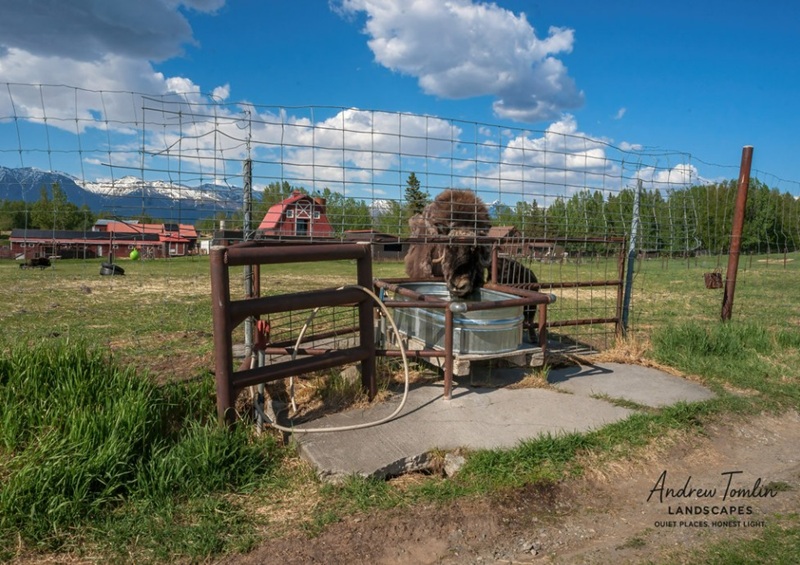
the weather was perfect!

Before each tour, we were given a set of protocols, starting with stepping through a disinfectant footbath. Not much is known about diseases in musk ox, but since they are part of the Bovidae family, they are susceptible to the same ailments as cattle, sheep, and goats. We were instructed to keep our hands away from the fence and stay with the group. These animals are accustomed to humans, but they are wild and can be dangerous!
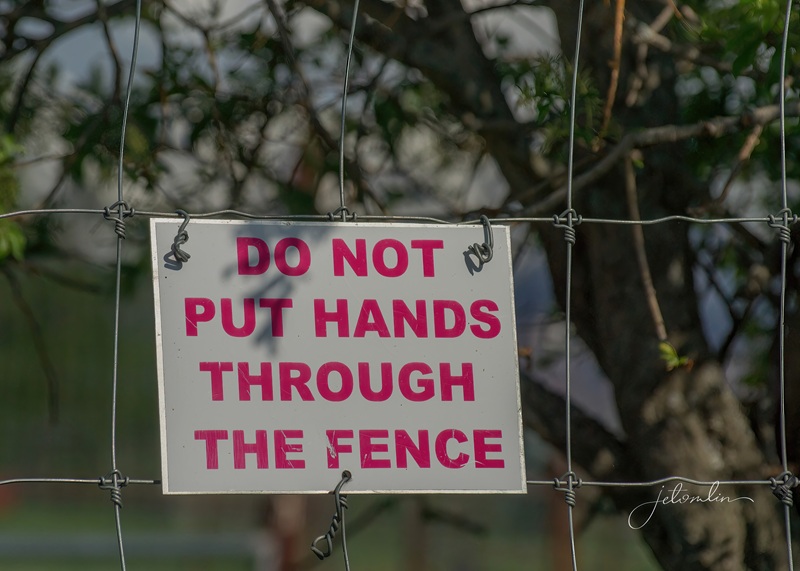
Musk Ox Farm, June 2026

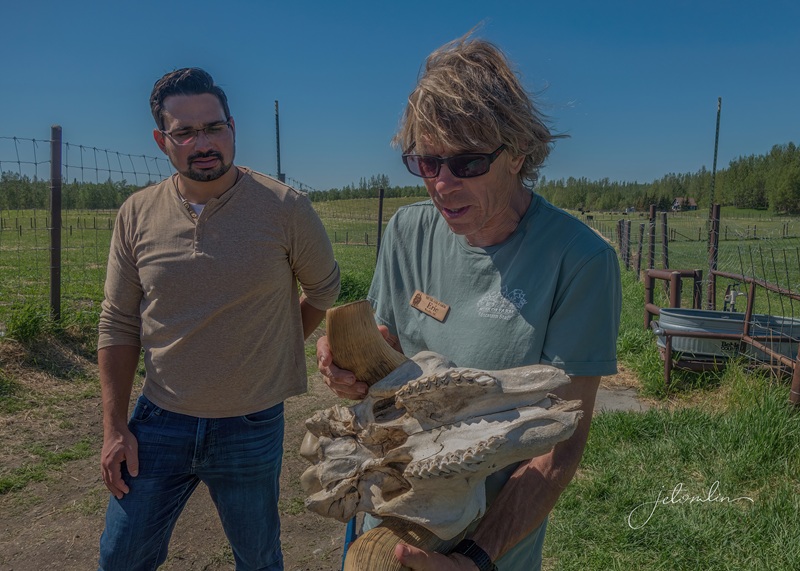
Our oxcellent guides provided interesting information about the farm and musk ox in general.
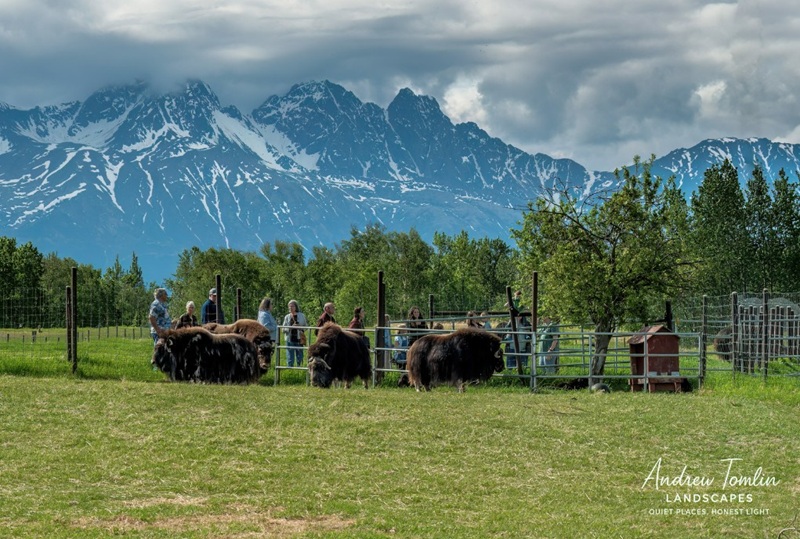
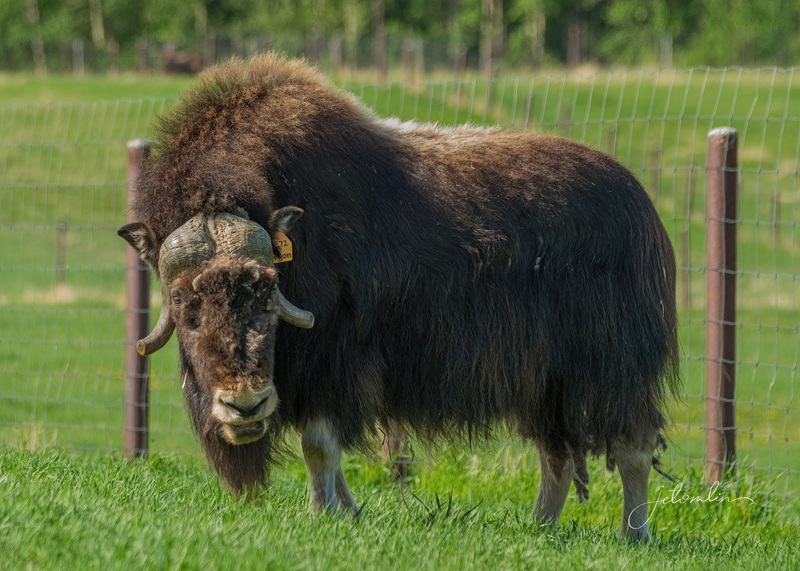
Over millions of years, these animals have adapted to thrive in freezing arctic winters. Their shaggy outer layer of “guard hair” sheds water away from their skin, while the incredibly soft, dense qiviut traps air and provides oxcellent insulation against oxtreme cold.
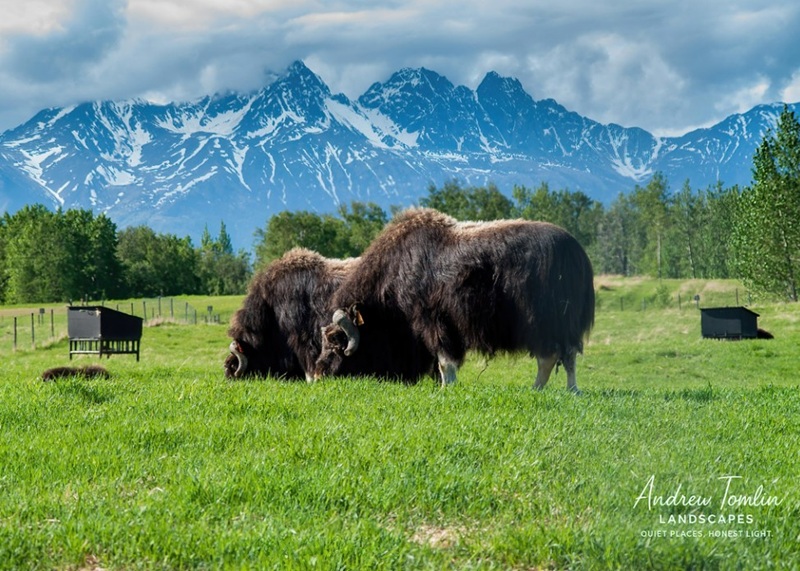
Musk Ox Farm, June 2026

The blond “saddle” across their backs helps to camouflage them in the tundra and might also reflect sunlight, keeping them cooler in warm weather. And their horizontal pupils are adapted to protect their eyes from intense Arctic glare.
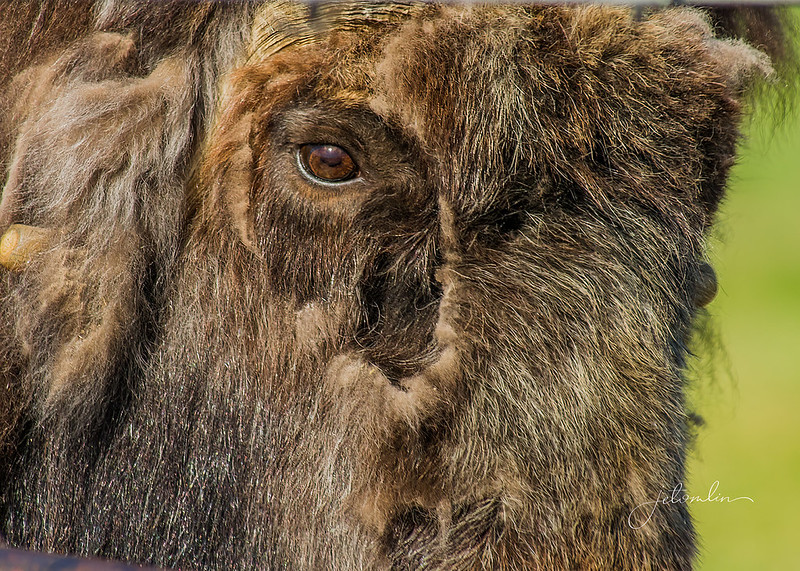
Musk Ox Farm, June 2026

Beginning in the spring, the farm combs the qiviut of each musk ox by guiding them into stanchions in the barn. These combing sessions vary depending on the individual’s tolerance level. Some treat it like a day-long spa visit, while others might last five minutes — if the comber is lucky!
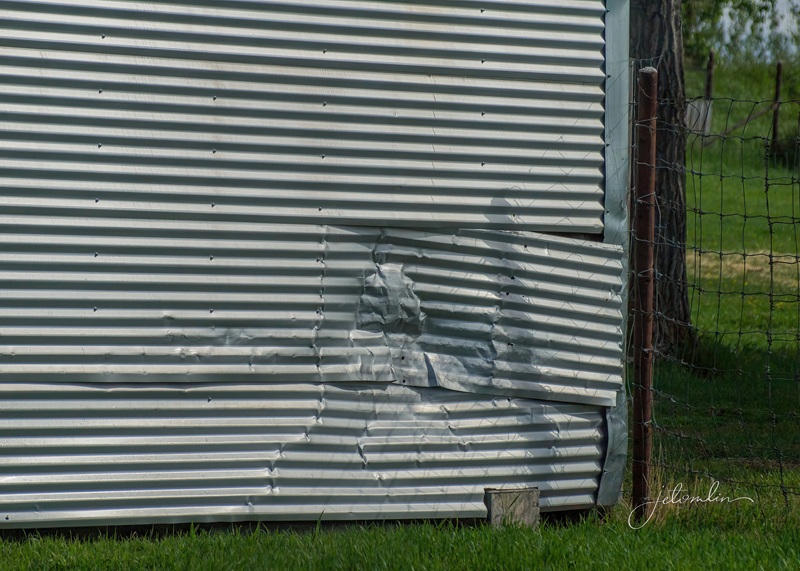
Loki’s indignation!

In the end, all but the nursing moms and calves get combed, and the qiviut collected from each can weigh anywhere from two to nine pounds.
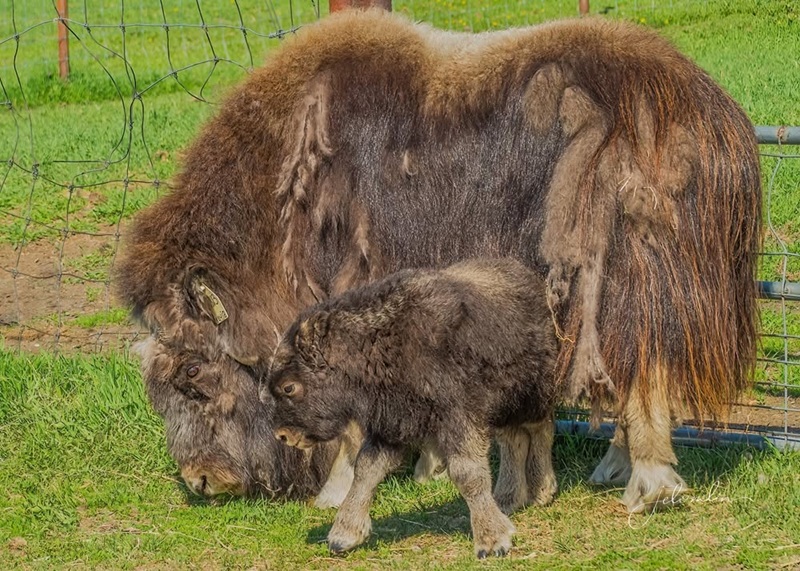
Freyja and her calf Saga (born May 11, 2026)

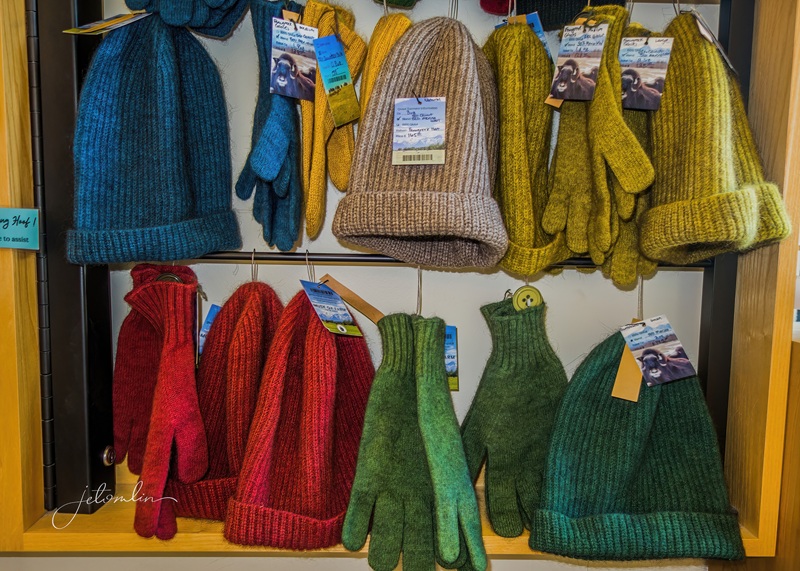
The collected qiviut is shipped to a mill in Peru, where it is spun into yarn, turned into scarves, gloves, and hats, and then returned to Palmer to sell at the farm’s gift shop.
Pregnancies last 8 months, and females give birth to a single calf in the spring. This gives the calves a chance to grow strong and ready for the harsh winter ahead. Twins are possible, but oxtremely rare. Jessica told us she had heard of only one set of twins, born over 20 years ago at the Large Animal Research Station in Fairbanks.
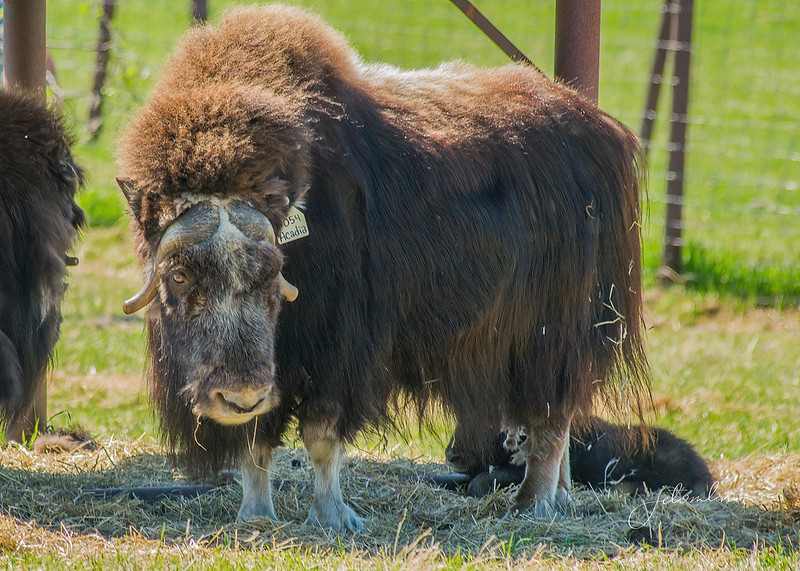
Acadia and her calf Fable (born May 20, 2026)

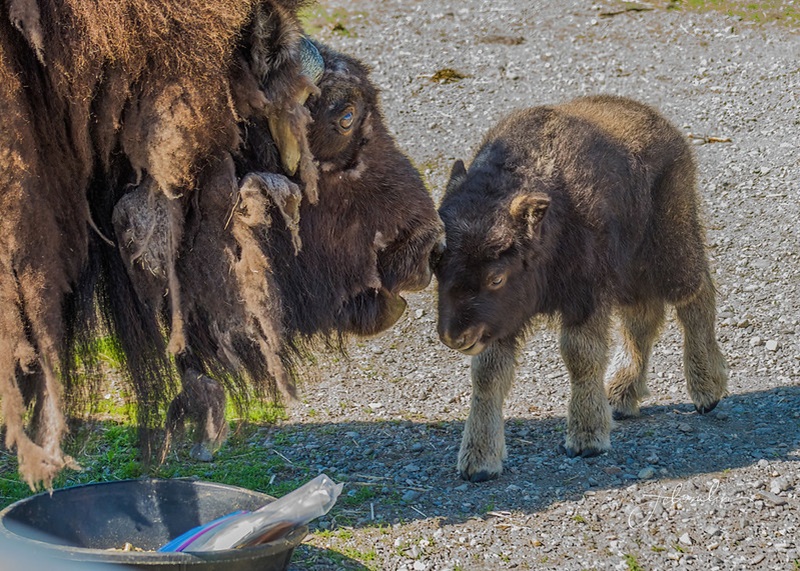
The moms were attentive to their babies, but we saw a lot of tough love. These little ones need to quickly learn how to survive, and that means no coddling!
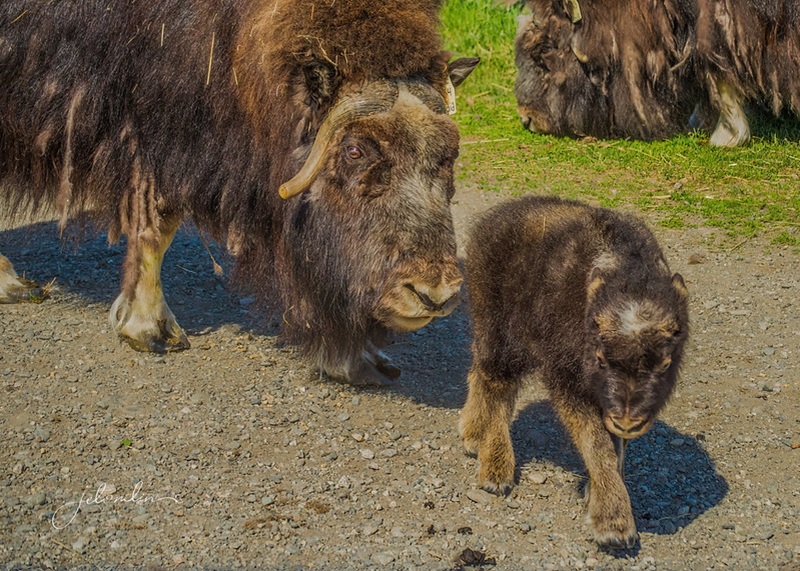
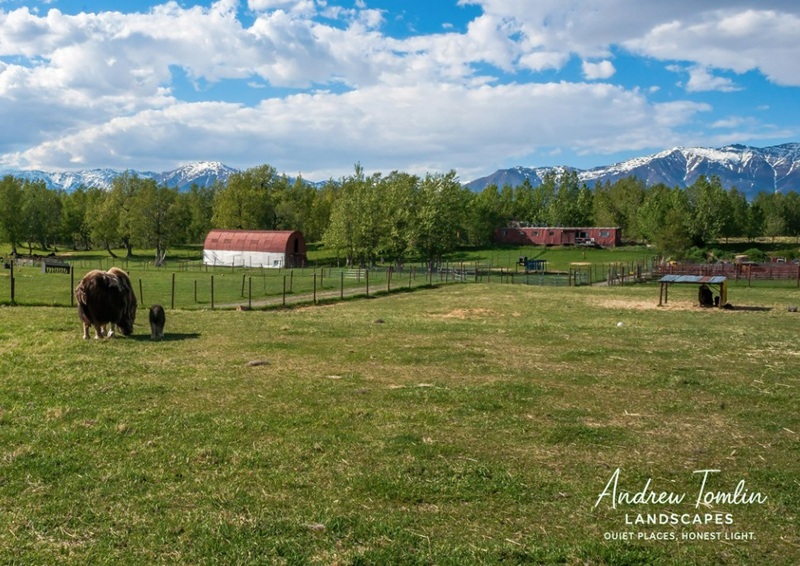
We also met many of the adults. Each one was unique: some were friendly and even posed for photos,
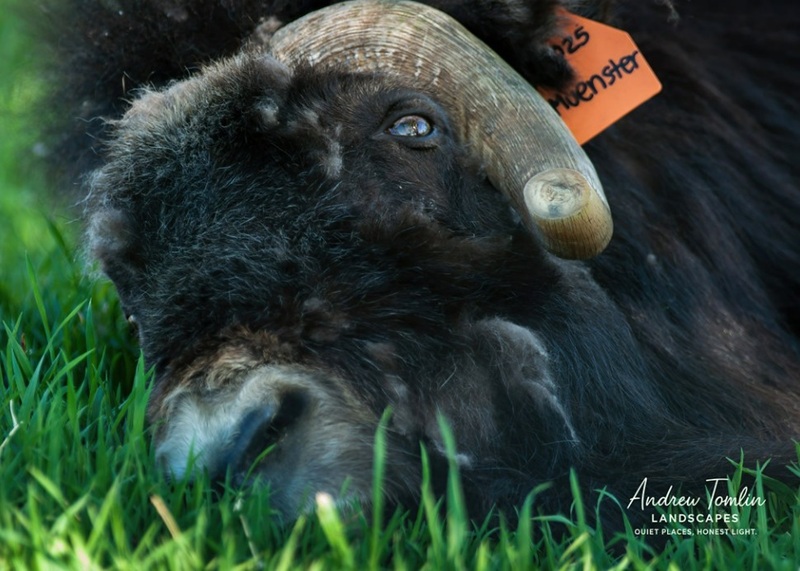
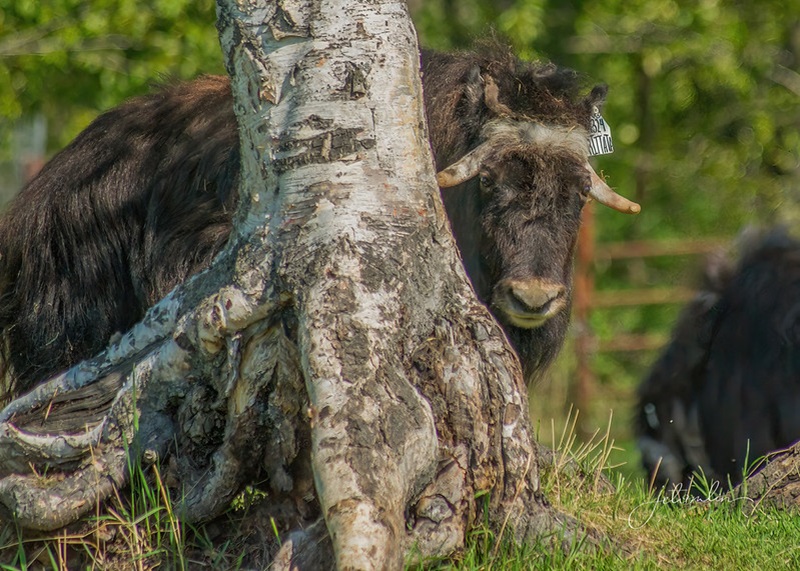
While others huffed and fake-charged the fence where we were standing.

fake charge!

Even though the weather was warm and summery, which is not ideal for these Ice Age animals, they were active in the pastures and even got into a few territorial disputes!

water trough fight!

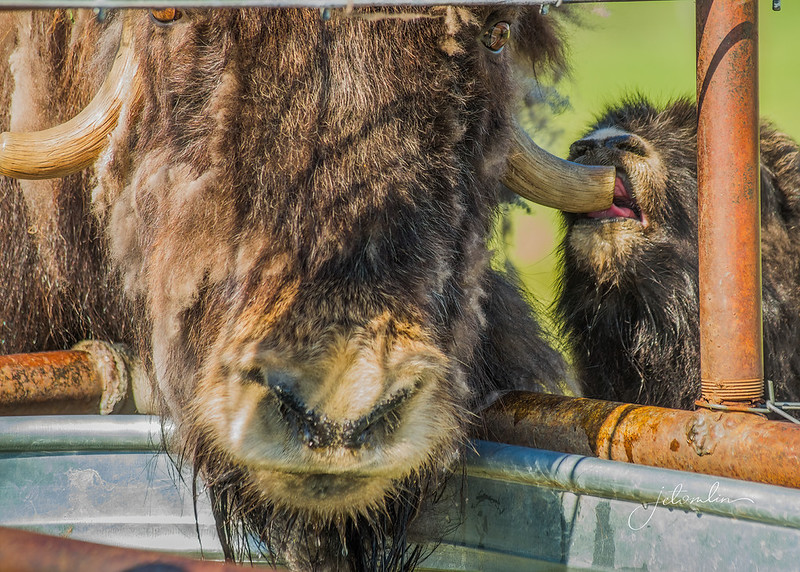
Musk ox have short, curling horns on each side of their head. The males’ horns form a brow band that crosses the forehead, called a “boss.”
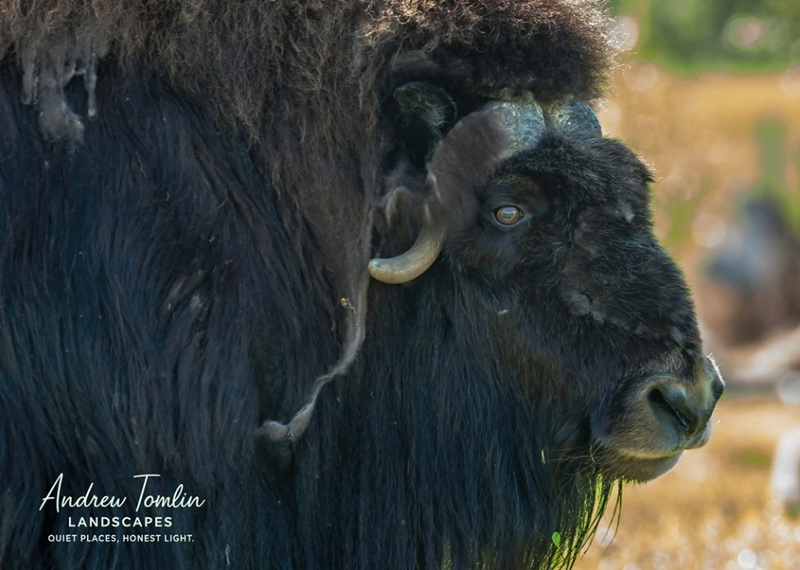
Males compete for the right to breed with the females by charging into each other head-on. These confrontations are referred to as “ruts”. On impact, the boss of each male collides with the other, and their horns can even break off, causing a great deal of pain.

Nettles lost half of his boss and horn on the left side because of such a rut. He is a 20-year-old retiree now and quietly lives with a group of ladies. But in his heyday, he was quite the stud and fathered many of the musk ox on the farm.
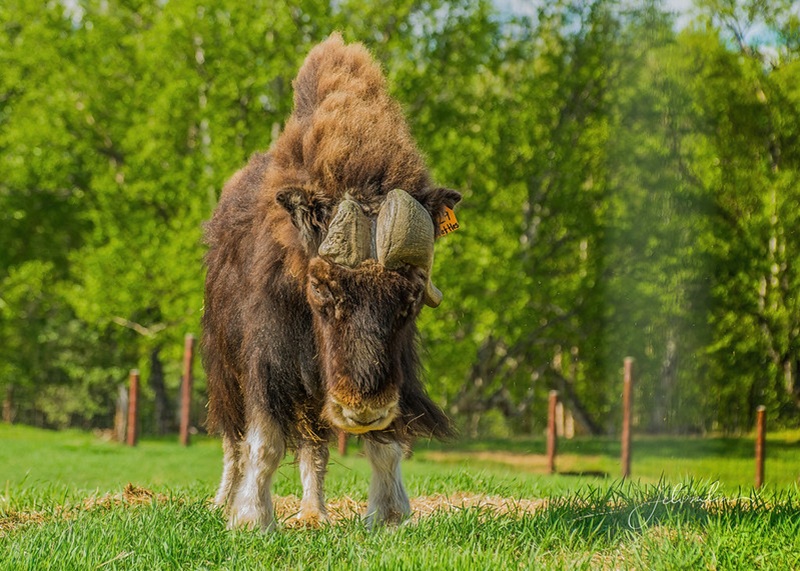
Nettles

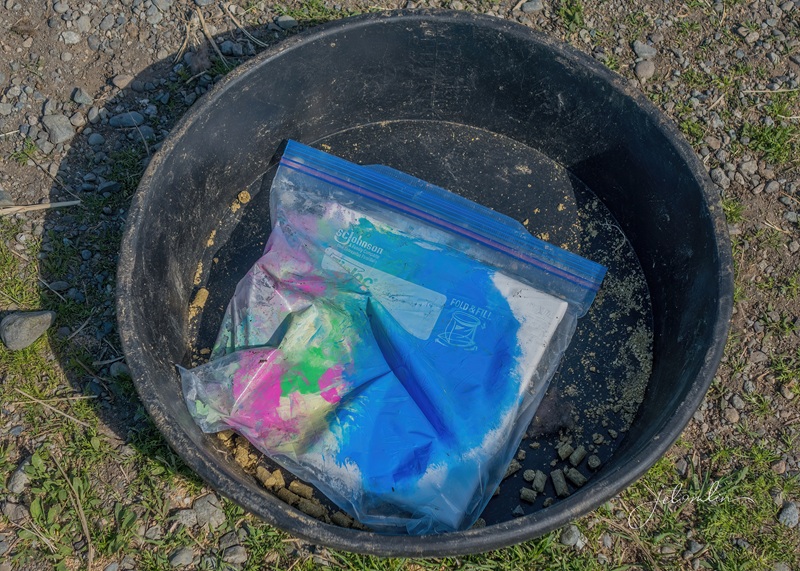
Friday morning was oxceptional. I signed up for a “Painting with the Musk Ox” session while TG went on a farm tour. In this enrichment program, you pick the paint colors and watch as your oxclusive piece comes to life.
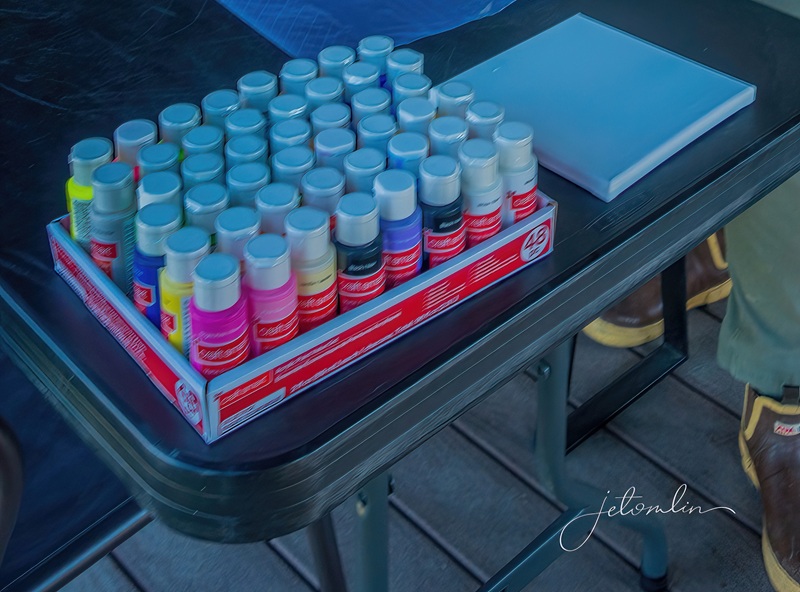
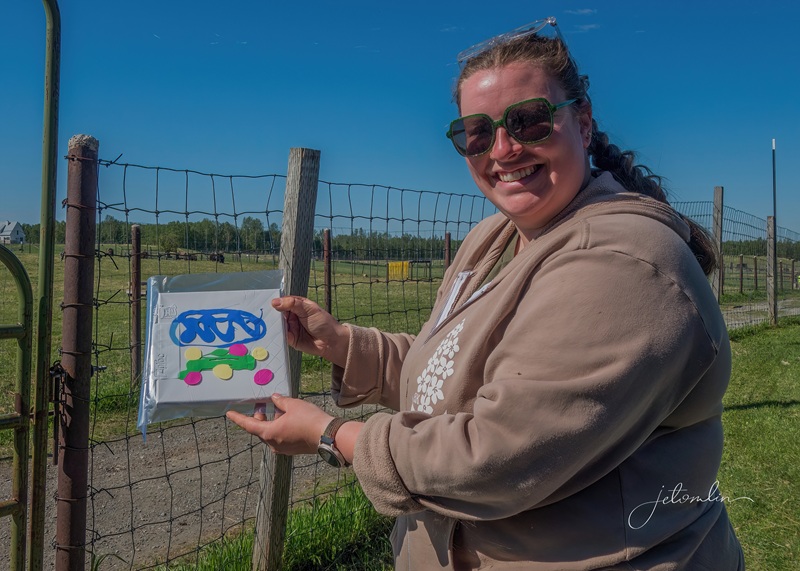
Alyssa, the herd manager, decided to let the new calves and their moms participate, unsure if any would want to take part. Mom Osprey jumped in right away, and her calf Story quickly joined her.
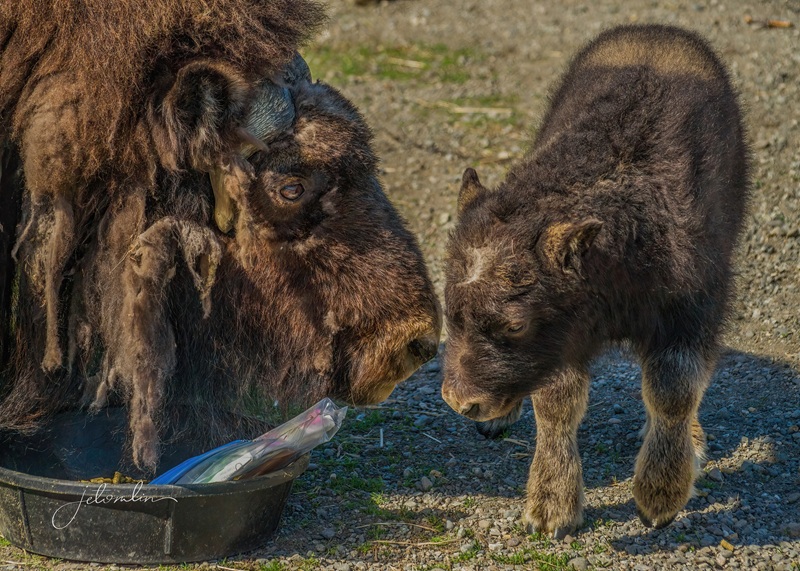
Artists Osprey and her calf Story (born May 16, 2026)

Soon, all five calves and their moms were in the corral, curious about what was happening. Being the only guest to sign up on that day, I had an oxclusive, front-row seat for all the action!

the Picoxxos at work!

I had envisioned a blue sky with green grass and spots of yellow and pink flowers. But the final painting was even better than I imagined: a big, blue musk ox standing in the green grass with yellow and pink flowers!
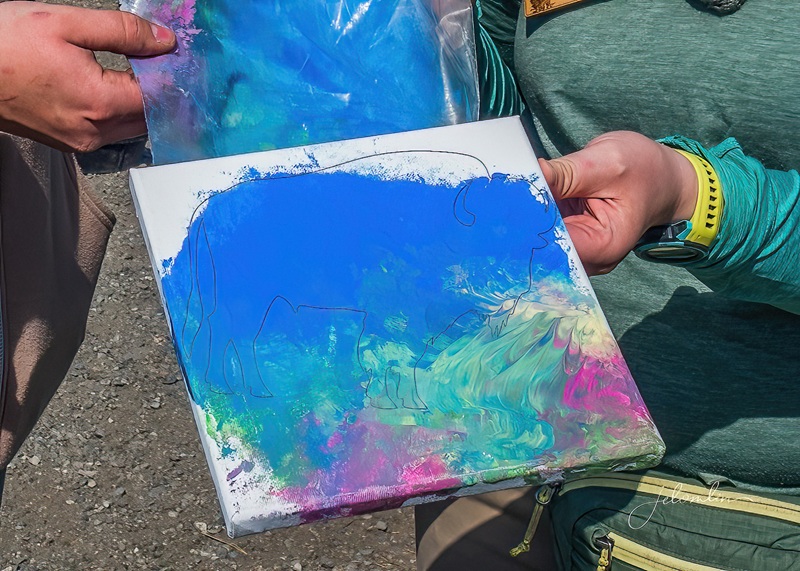
I see a musk ox standing in a field … what do YOU see?

What a masterpiece from these talented Picoxxos!
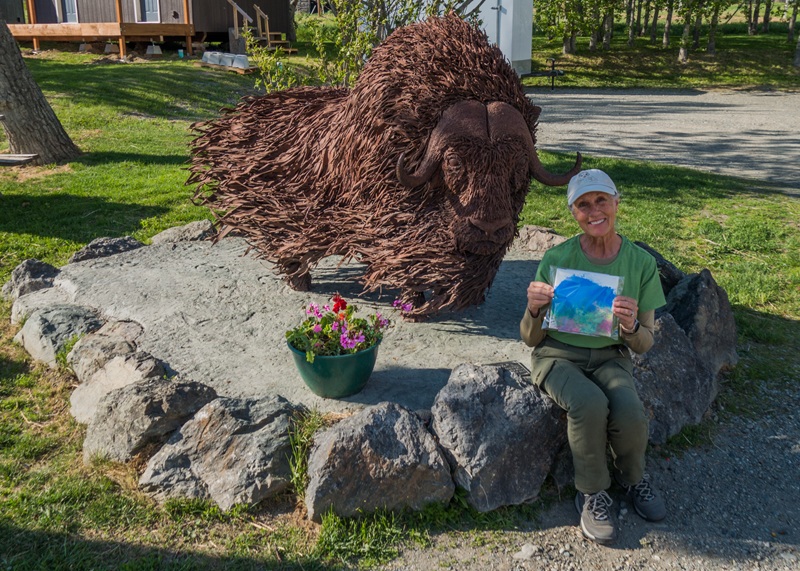
What a masterpiece!

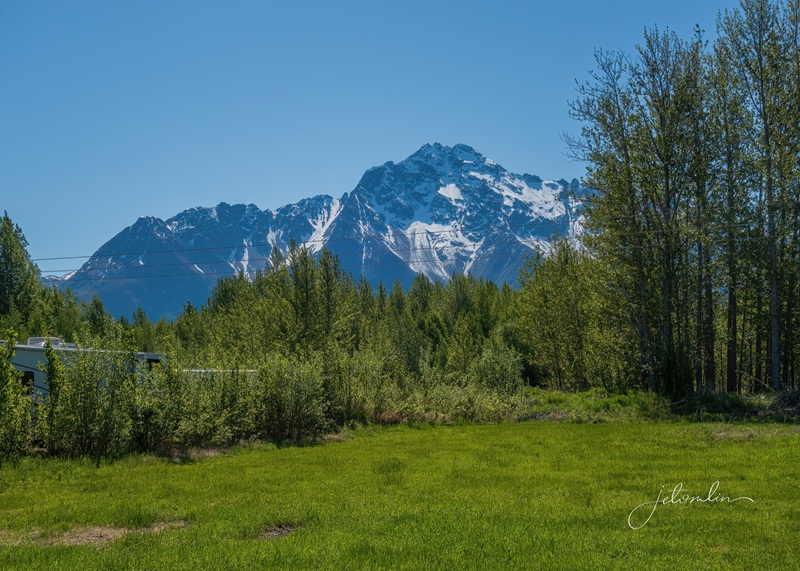
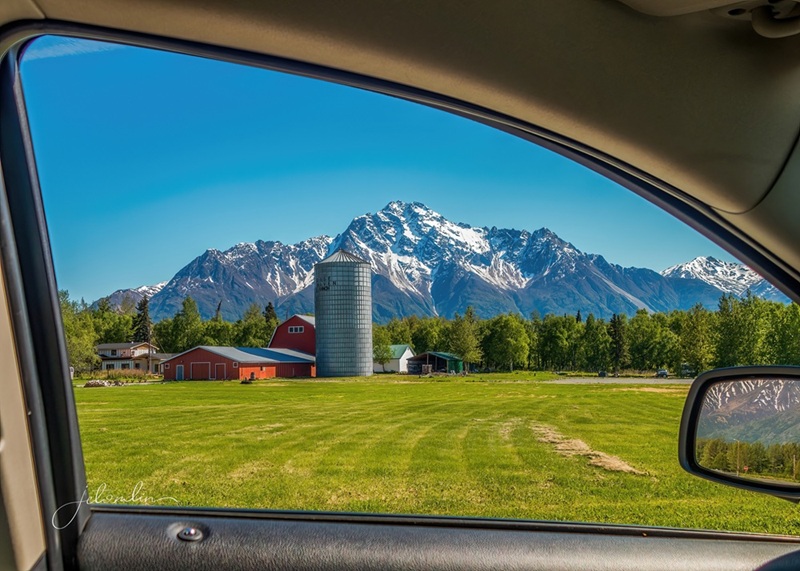
After four visits to the Musk Ox Farm, we had captured enough photos that we felt it was time to oxplore the surrounding area. Palmer is 42 miles northeast of Anchorage in the Matanuska Valley, surrounded by Pioneer and Twin Peaks and the Talkeetna mountains, which makes for breathtaking landscapes.
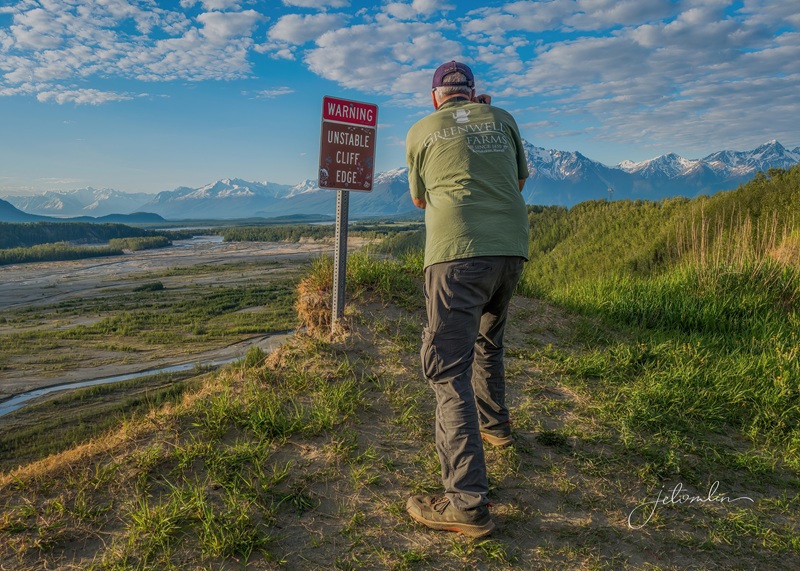
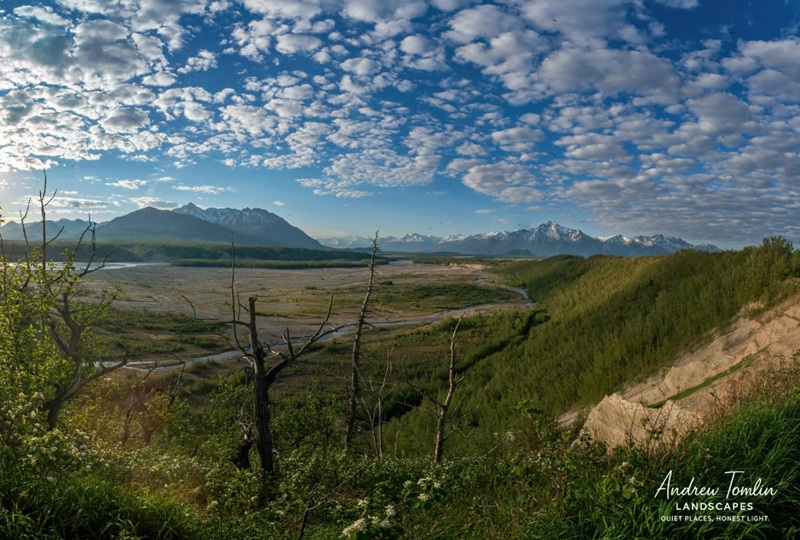
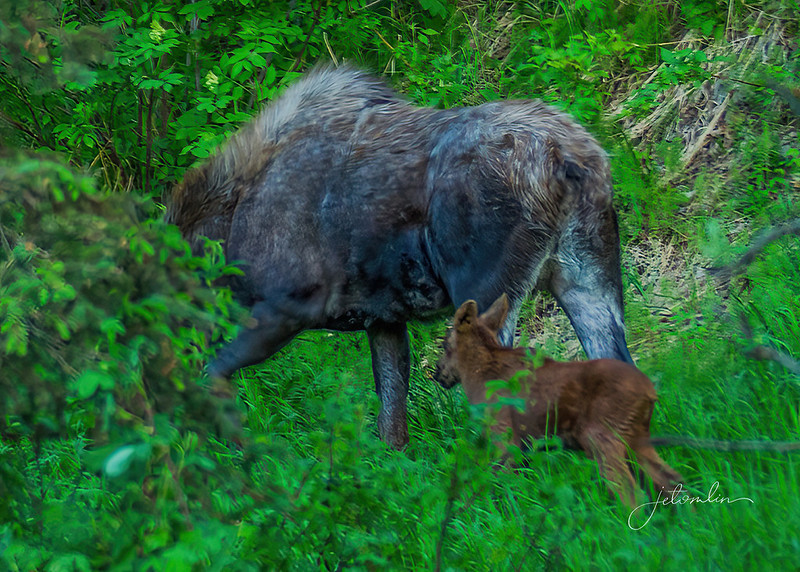
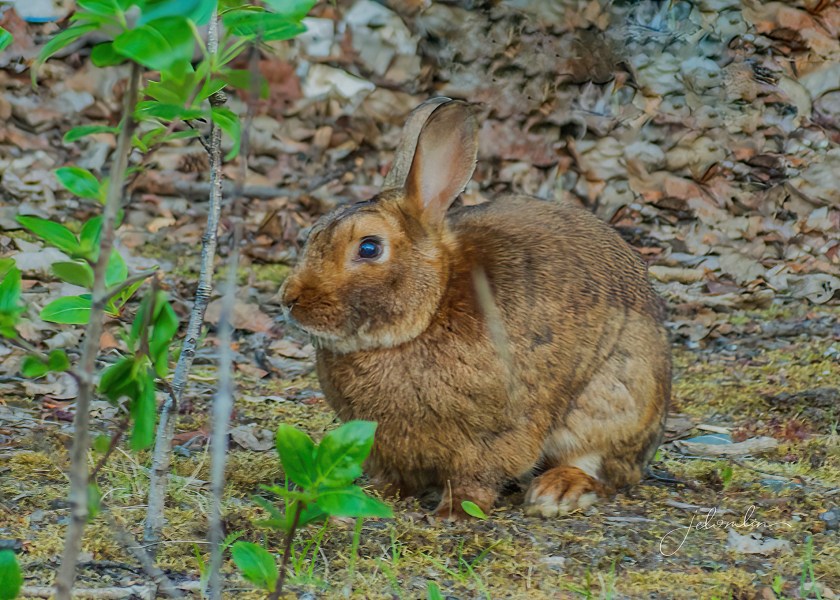
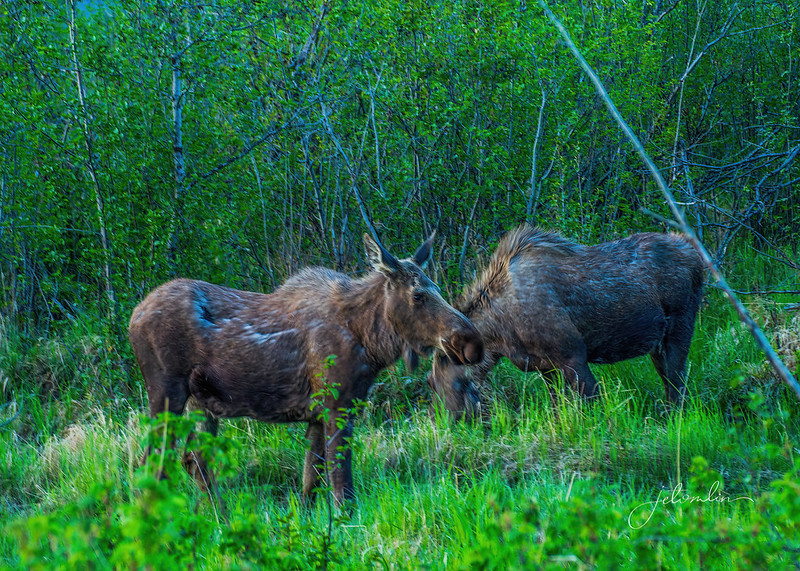
It never got completely dark while we were there and Eric, one of the farm guides, recommended we drive along the Knik River Road at 10:30pm to look for wildlife. This ended up being oxcellent advice! We spotted a dozen different moose, including a tiny young calf, porcupines, bald eagles, and cottontails.
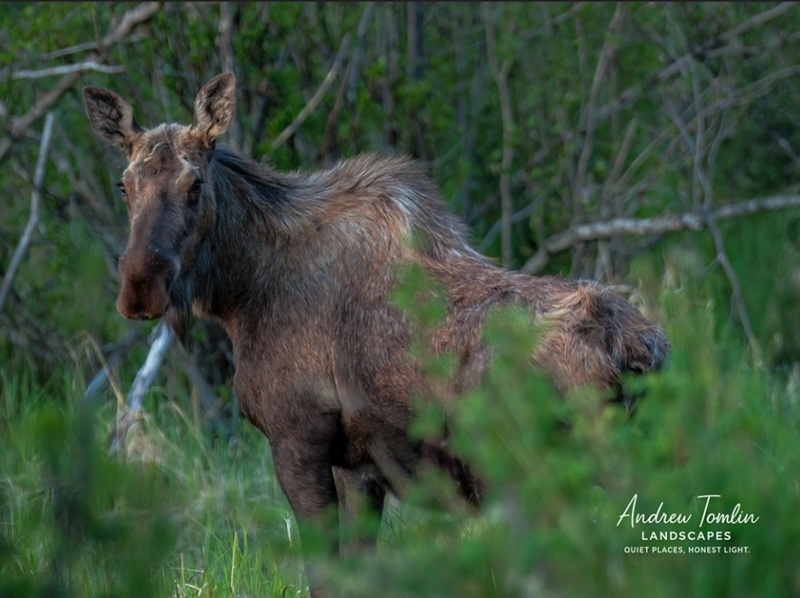
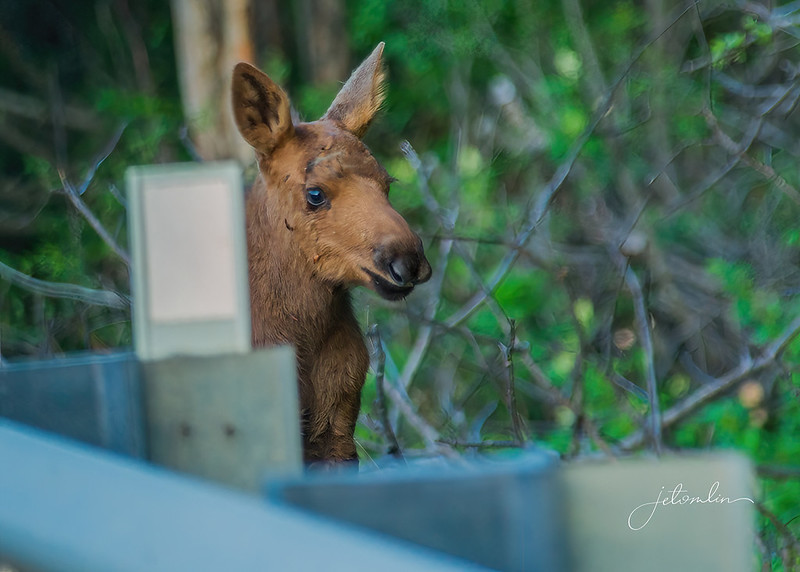
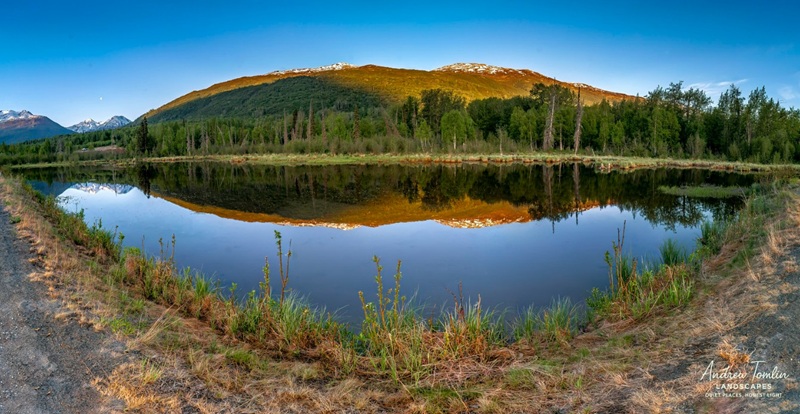
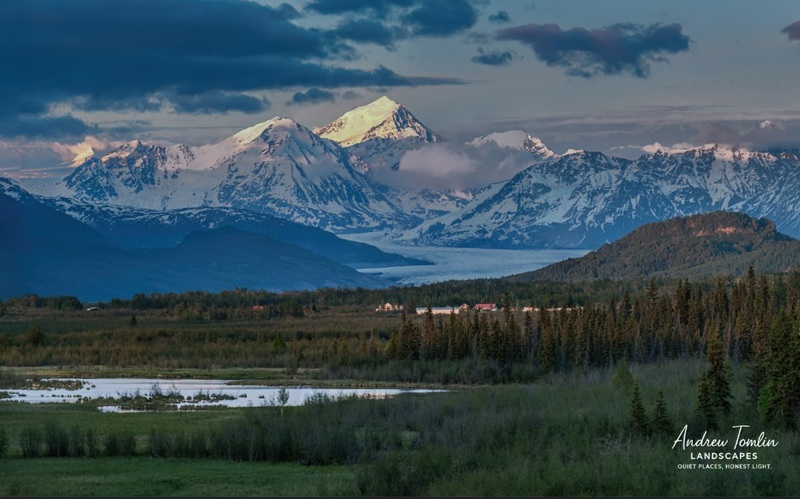
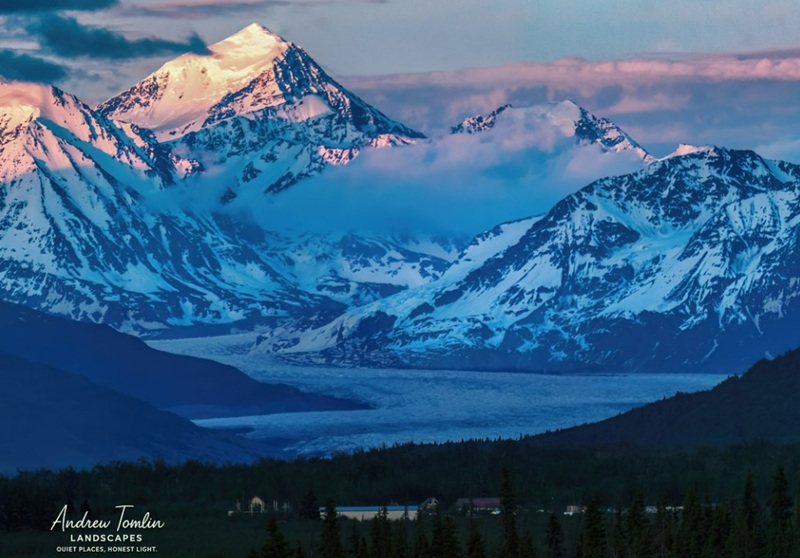
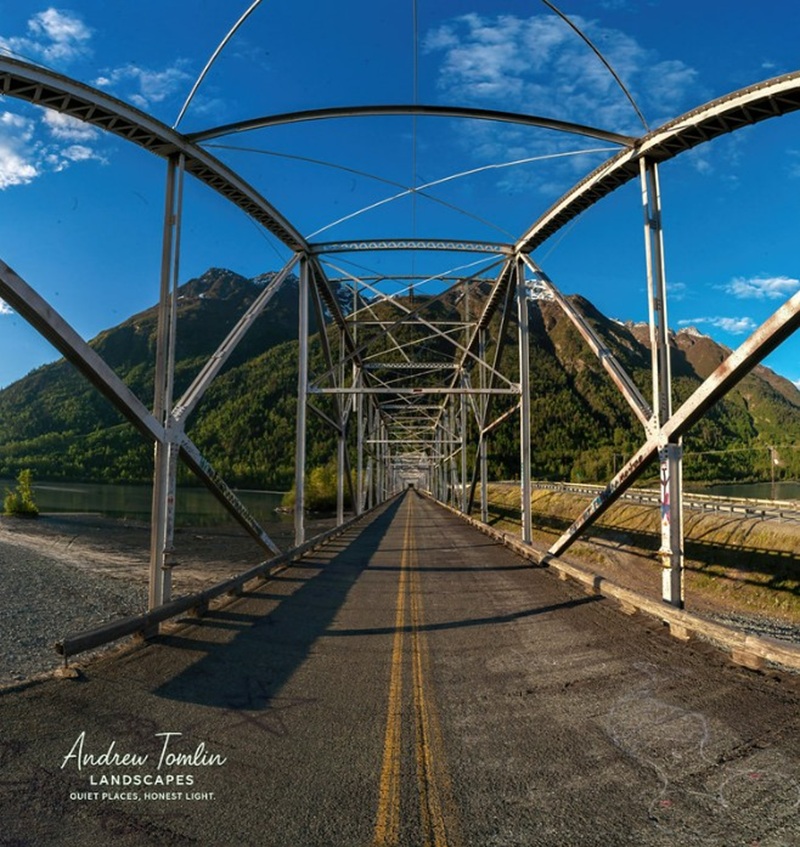
The road follows the river with stunning views of the mountains and Knik Glacier.
On our way, we drove past the Reindeer Farm. They offer guided tours if you want to pet or feed the reindeer. We chose not to pay the $17 entry fee, but we did snap a few photos from the road.
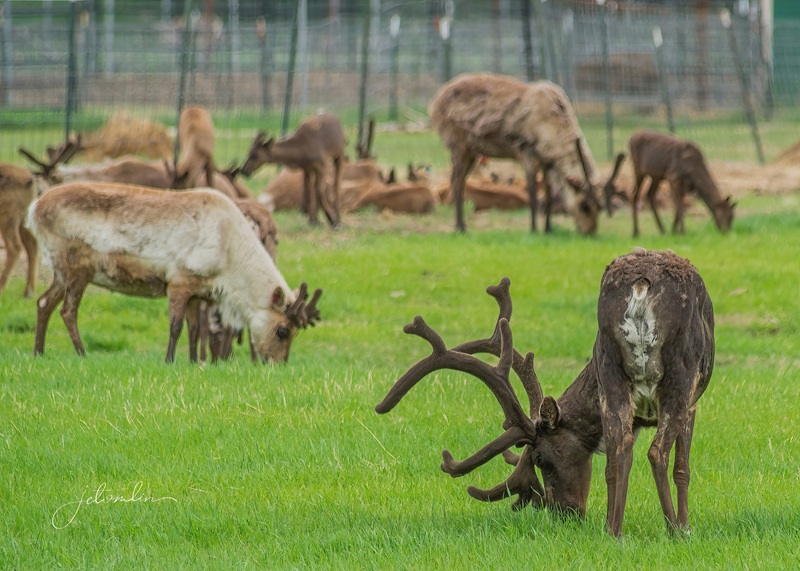
the Reindeer Farm

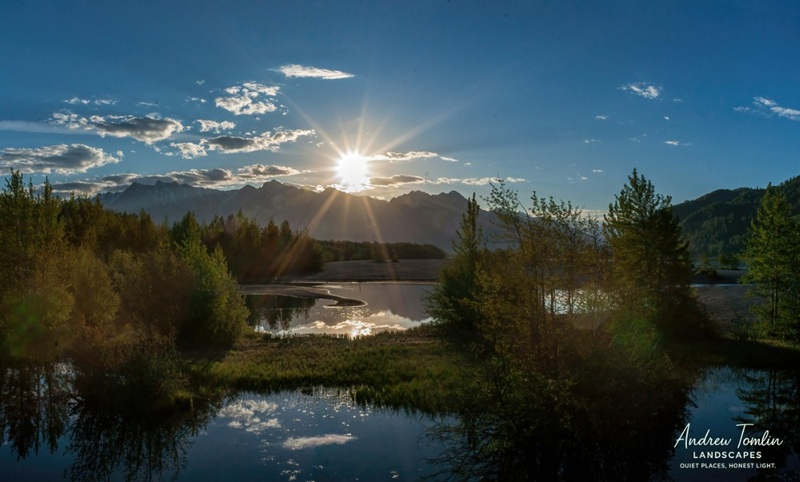
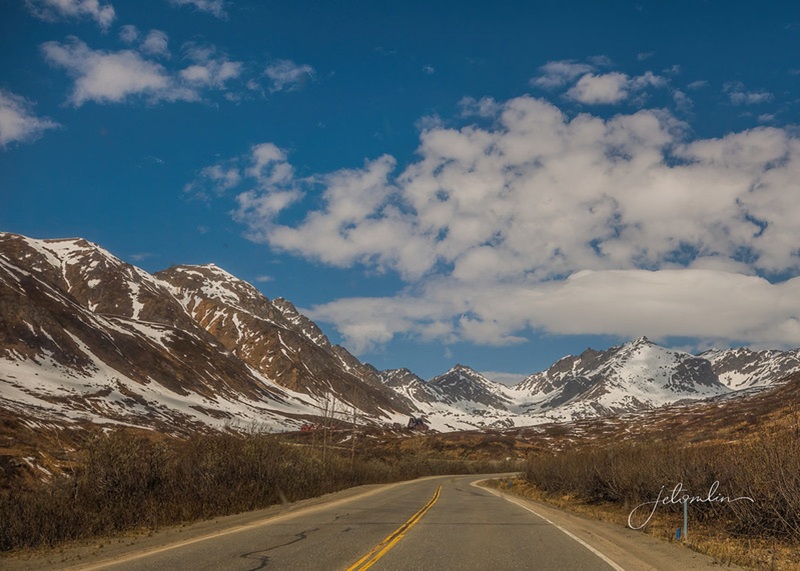
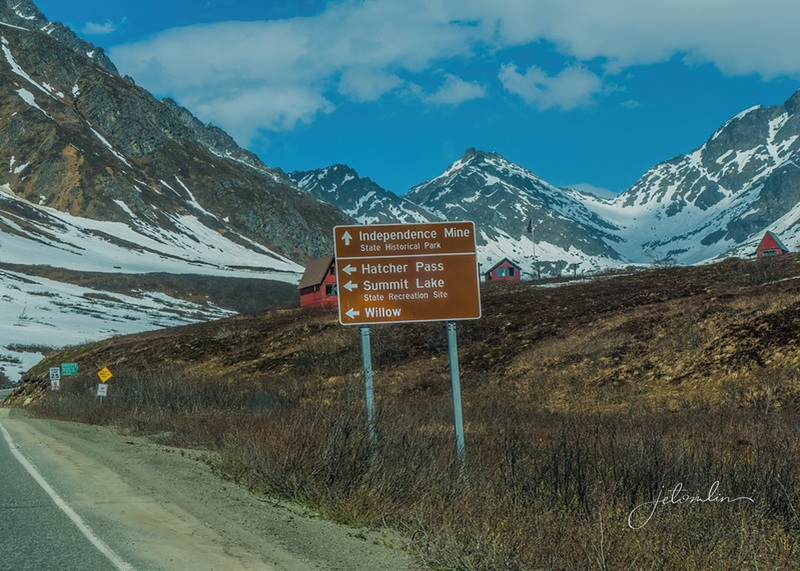
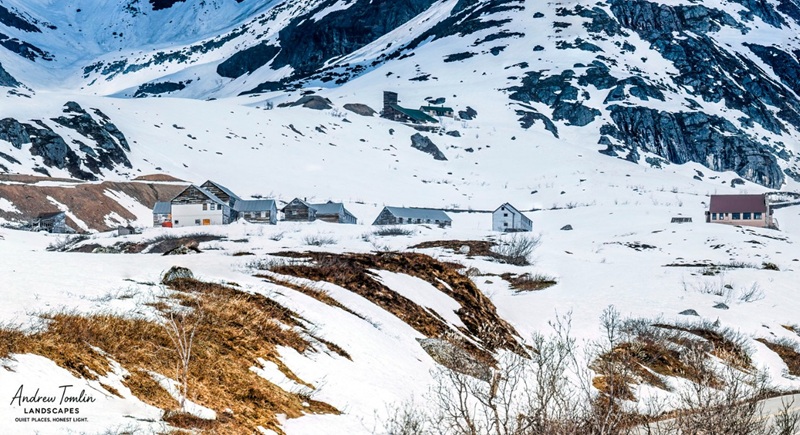
Alaska’s gold mining history goes back to the late 1800s, and the mining at Independence Mine started in 1934. Now a state park, the mine sits at the top of Hatcher Pass, a scenic drive with amazing views of snowy peaks around every curve of the road.
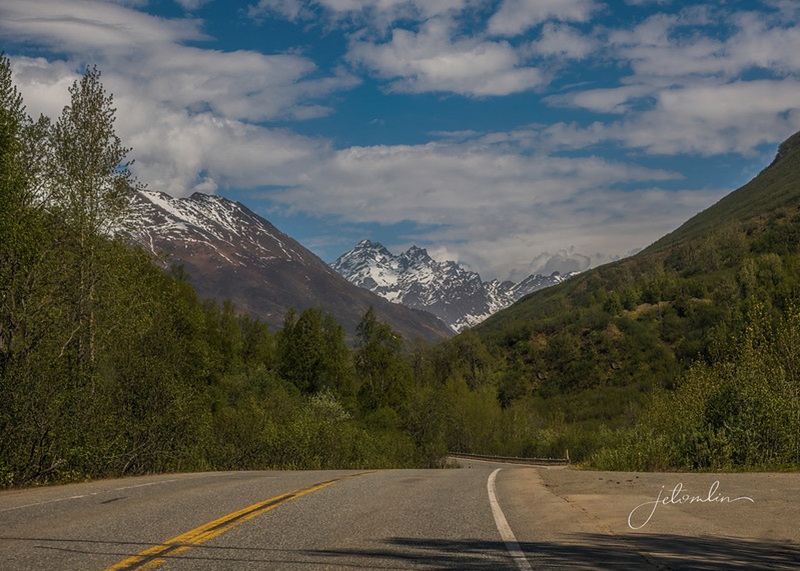
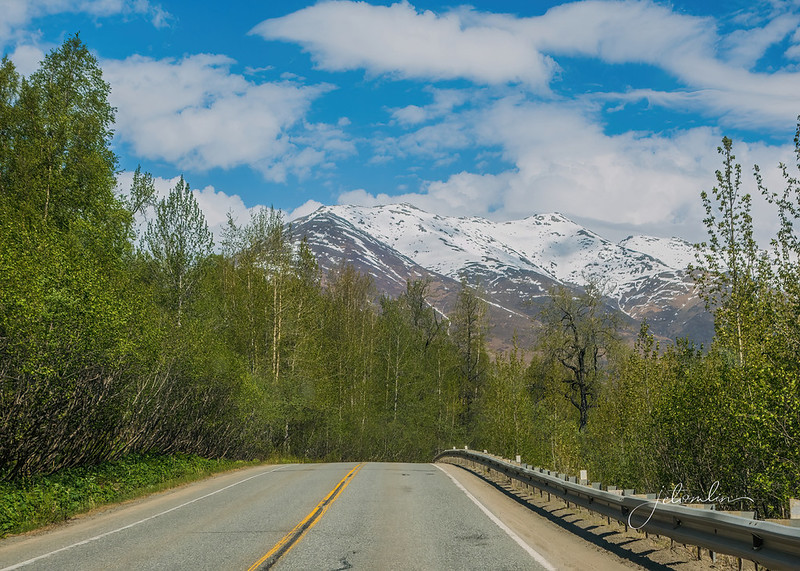
Although the mine closed in 1951, there is still some gold to be found. Visitors can even try panning for it in the park.
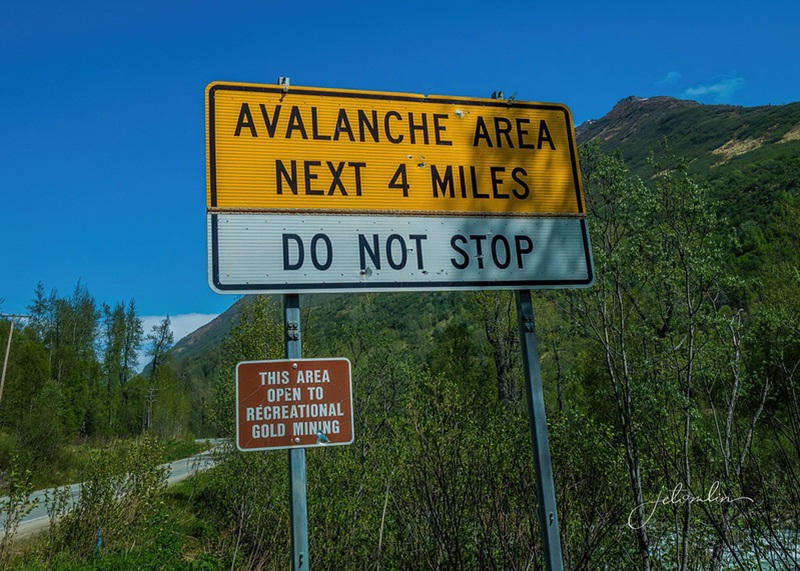
“This Area Open to Recreational Gold Mining”

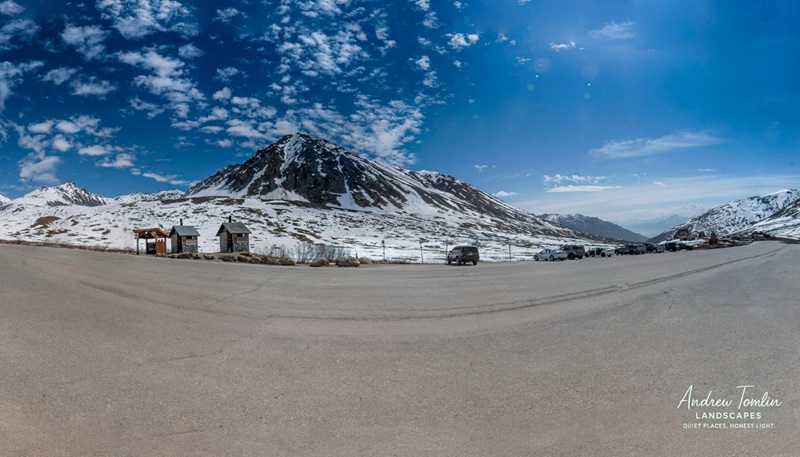
We didn’t want to hike through the snow all the way to the abandoned ruins. Instead, we were entertained by the friendly Alpine ground squirrels in the parking area.
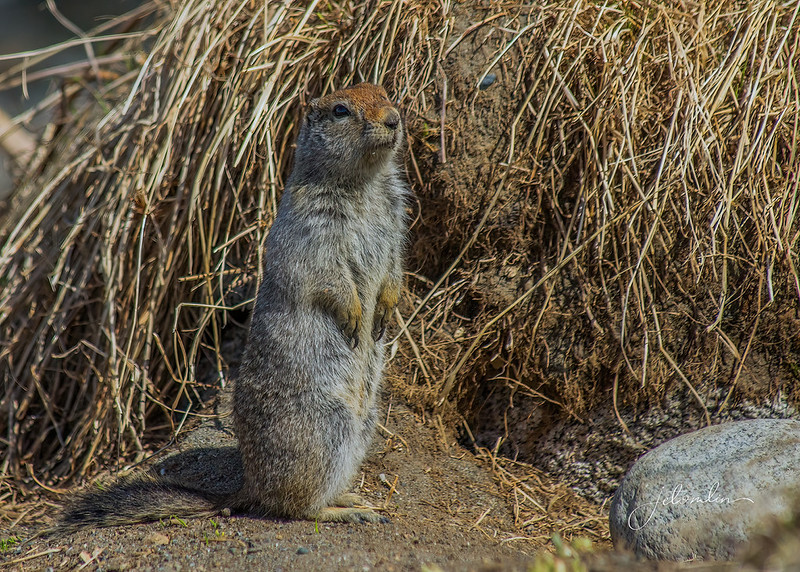
Alpine ground squirrel

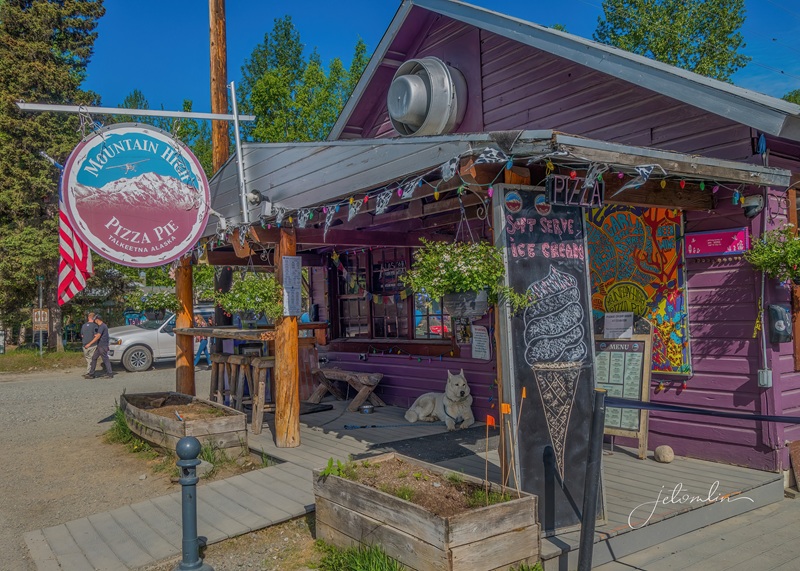
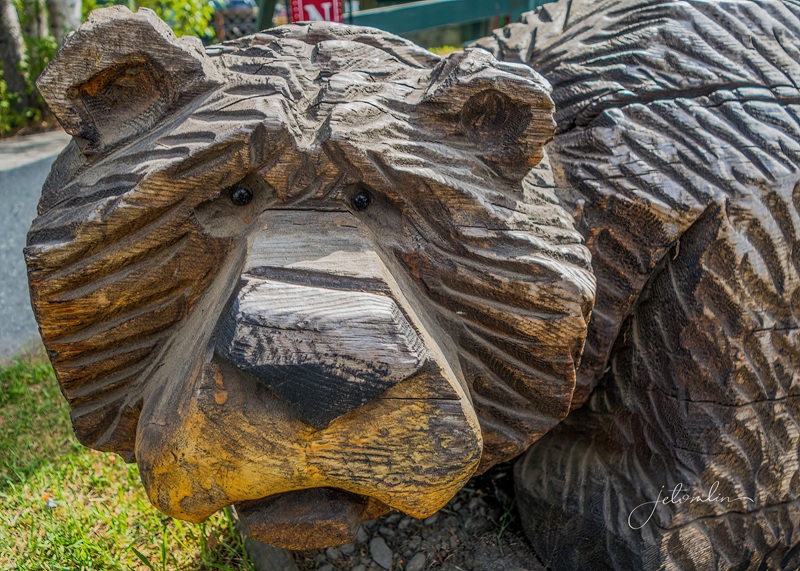
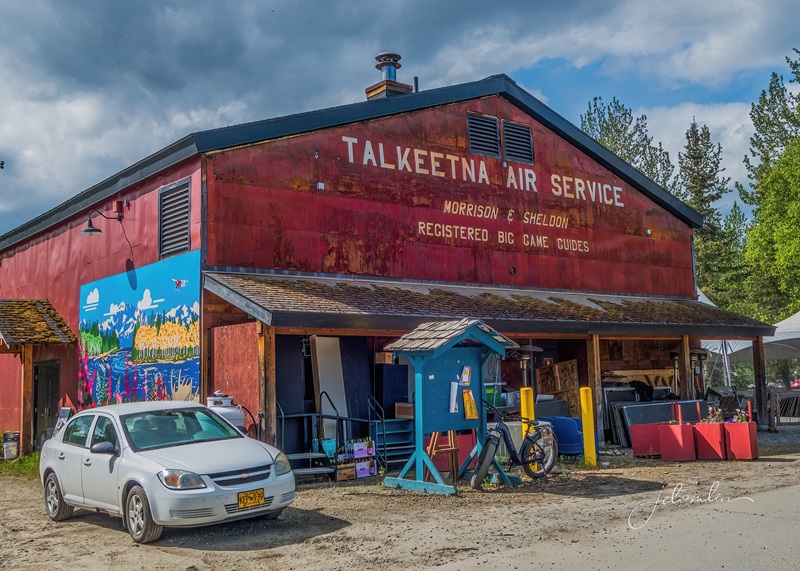
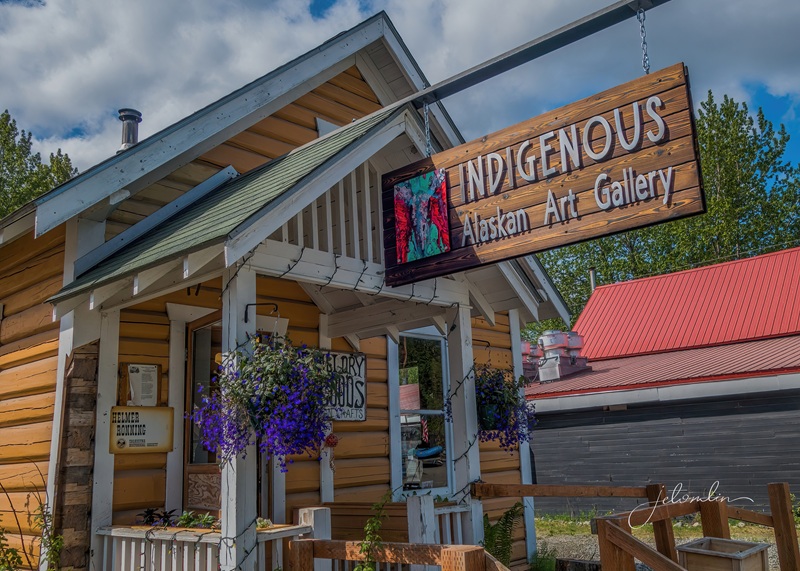
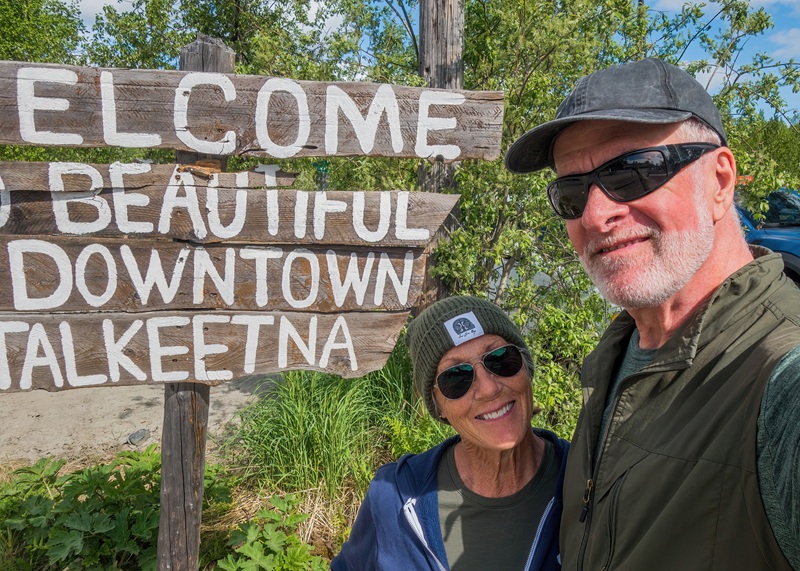
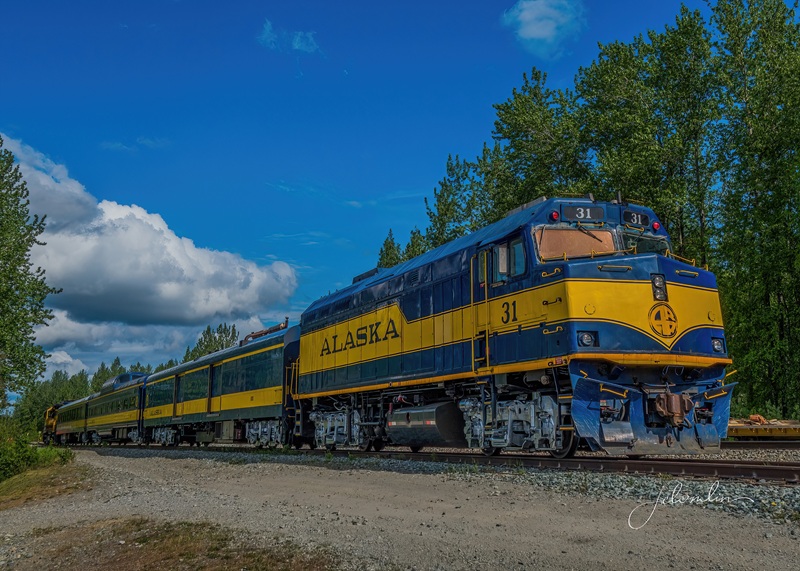
The TV show Northern Exposure based its fictional town of Cicely on the real town of Talkeetna. Once there, we found Talkeetna’s vibe more touristy than quirky. But it was a beautiful day, and we enjoyed wandering past the old wooden buildings converted into restaurants and shops,
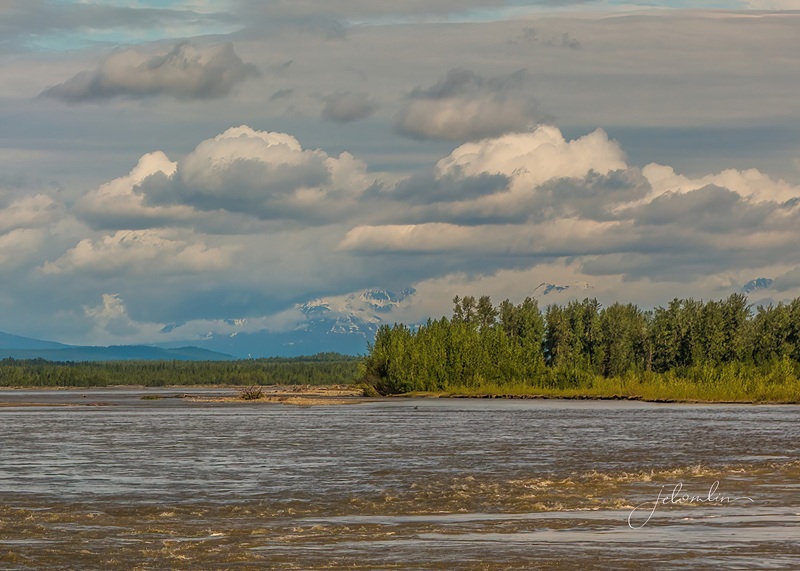
And walking down to the river for a view of Mt. Denali, mostly hidden by clouds.
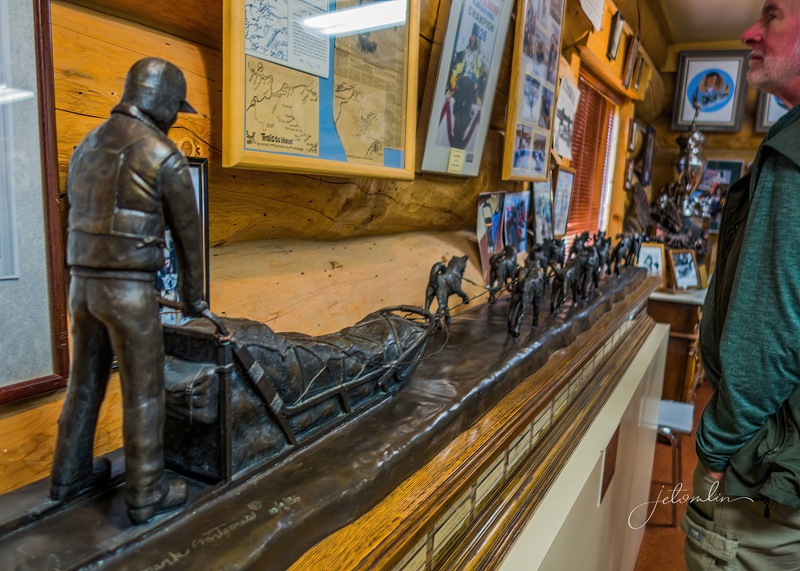
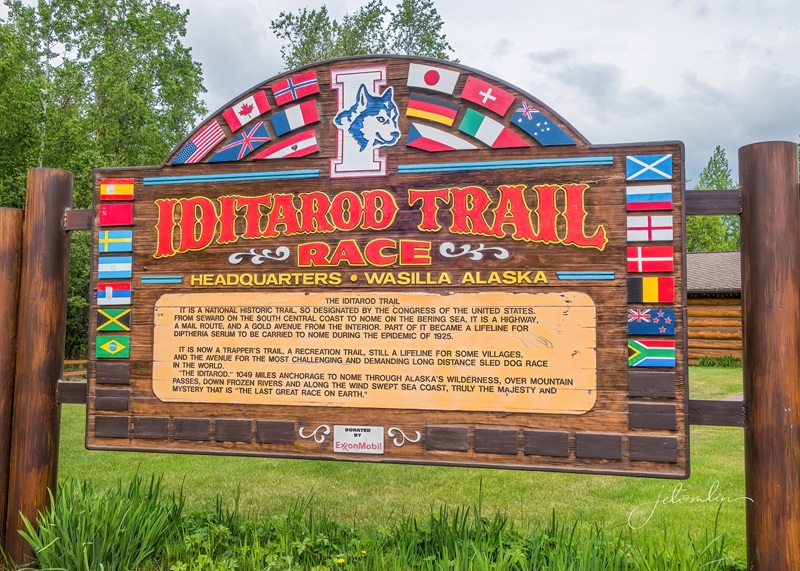
On our way back to Palmer, we stopped in Wasilla, home of the Iditarod Headquarters & Museum. The late Lance Mackey, 2007-2010 champion, was married to my friend’s cousin, and I promised her we would look him up if we happened to visit the museum.
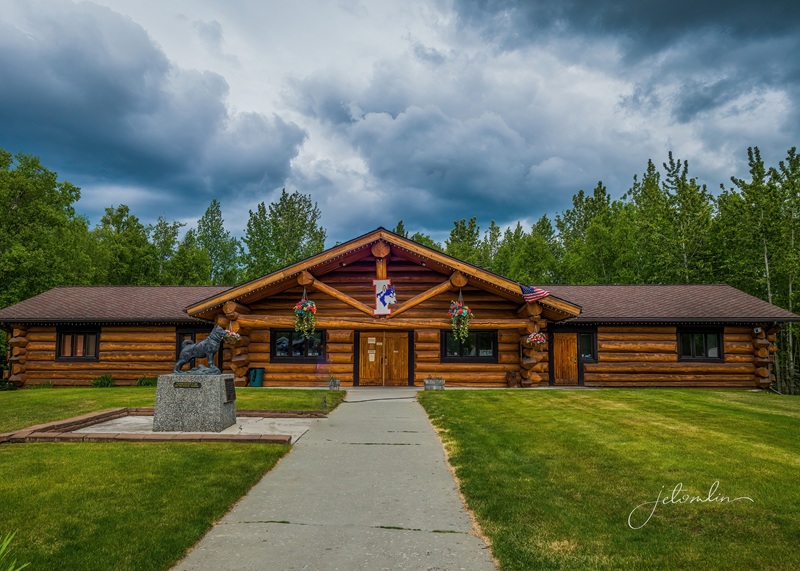
Iditarod HQ & Museum

We enjoyed poking around the exhibits and purchased a few souvenirs to bring home.
A team of champion dogs lives on the property, offering sled rides to visitors. We happened to catch them as they came racing back around the track.

the “Idita-minute” sled ride!

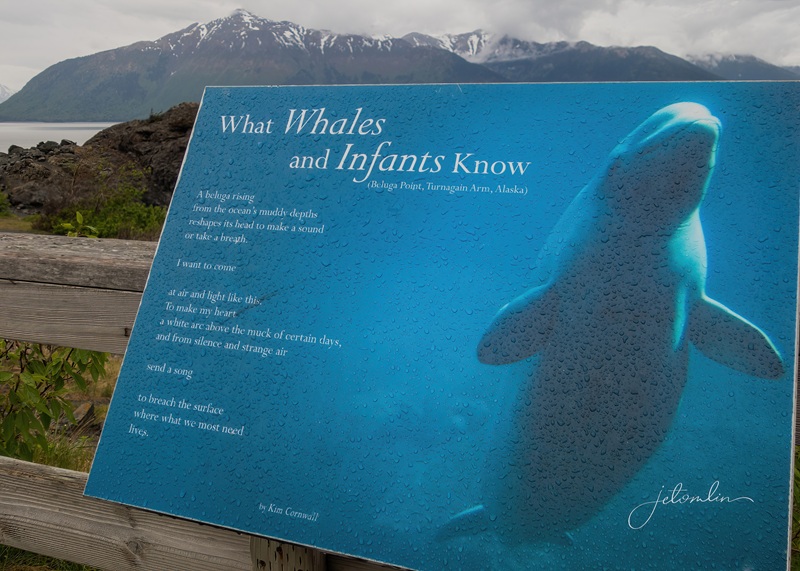
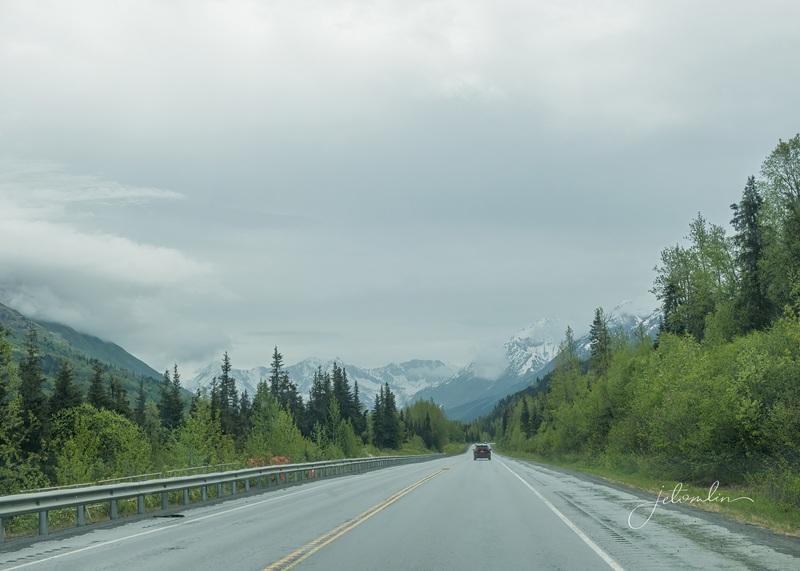
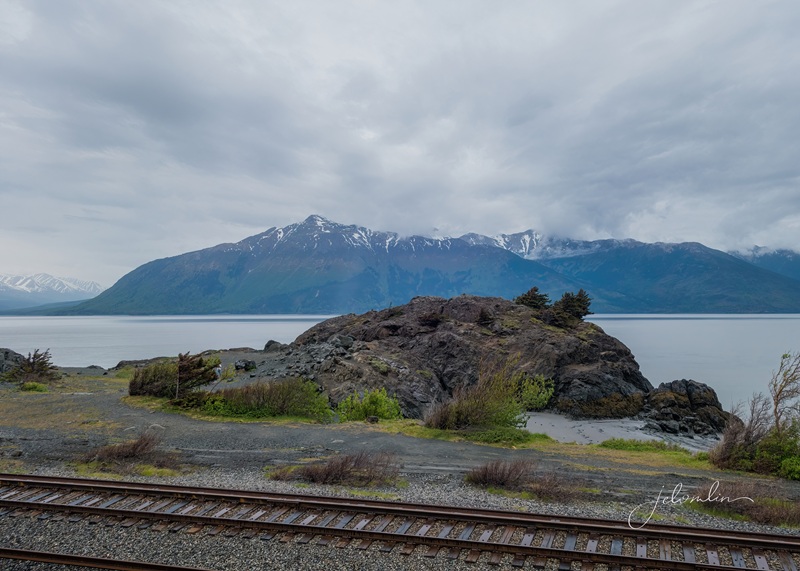
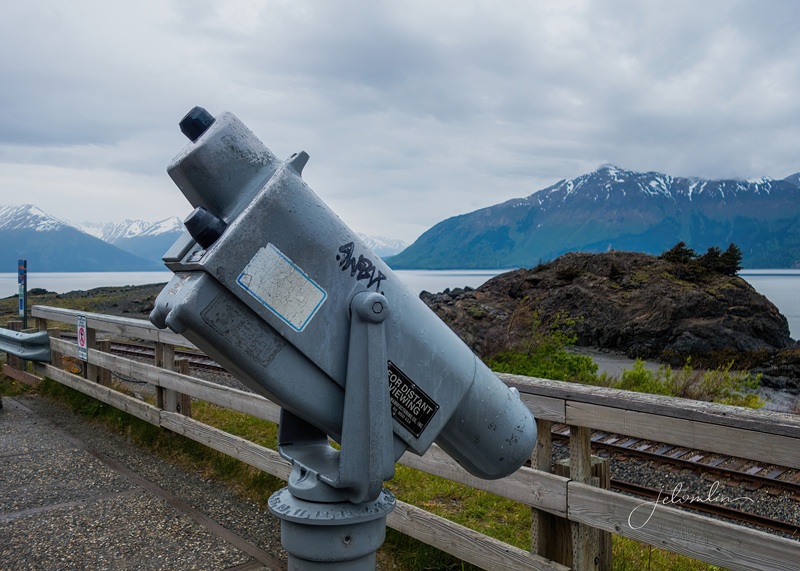
Our flight home did not take off until 8:30pm, so on our last day we drove south on the Seward Highway to the Kenai Peninsula. We stopped for a few photos at Beluga Point, but it was too early in the season to see any whales – you’ll have to check back in late August to find out why I wasn’t too terribly disappointed about that.
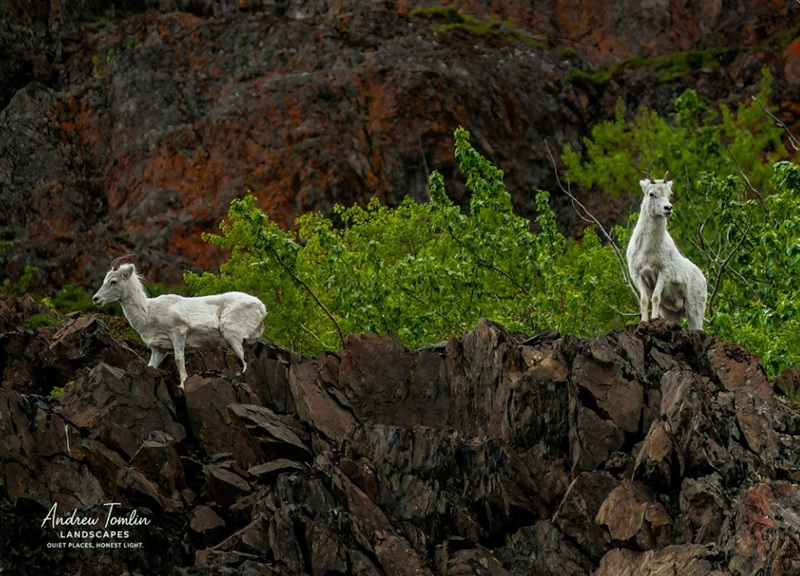
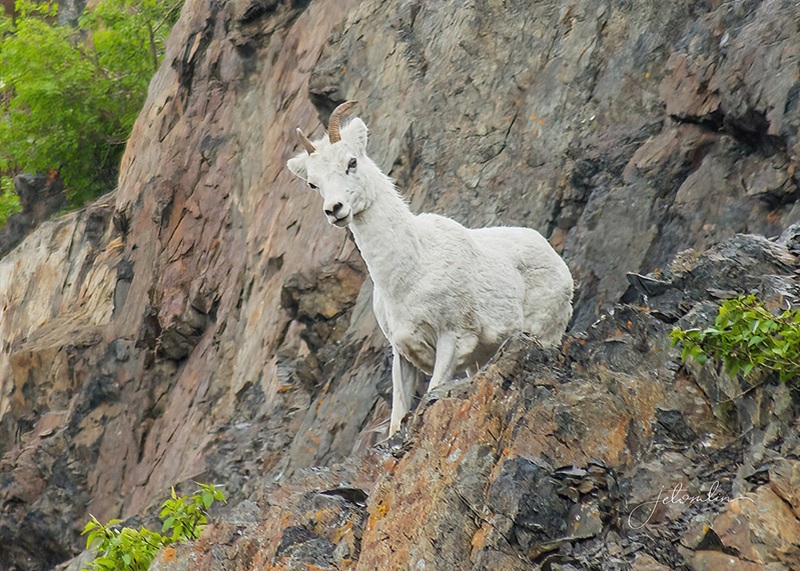
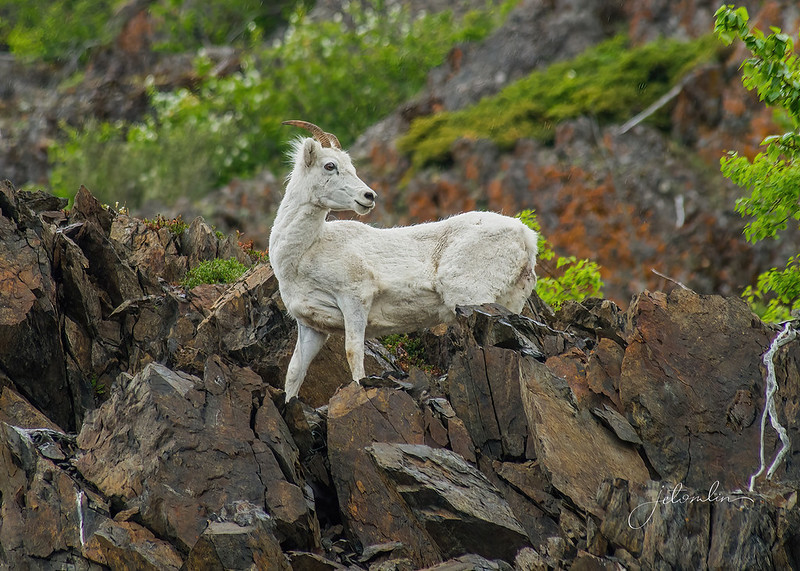
But we were very oxcited to find Dall sheep just a few miles further down the road.
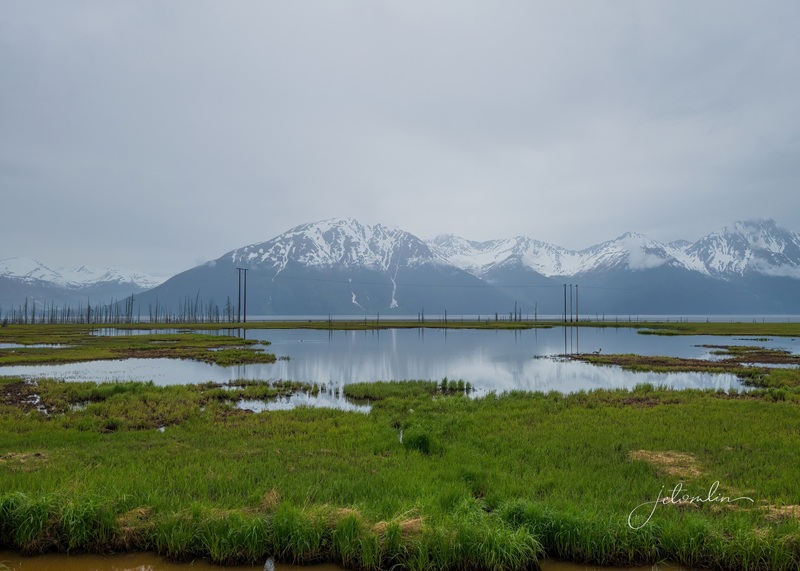
The highway follows Turnagain Arm, a narrow branch of the Cook Inlet, stretching 45 miles along the northern boundary of the Kenai Peninsula. The arm oxperiences some of the largest tides in North America, reaching up to 40 feet.
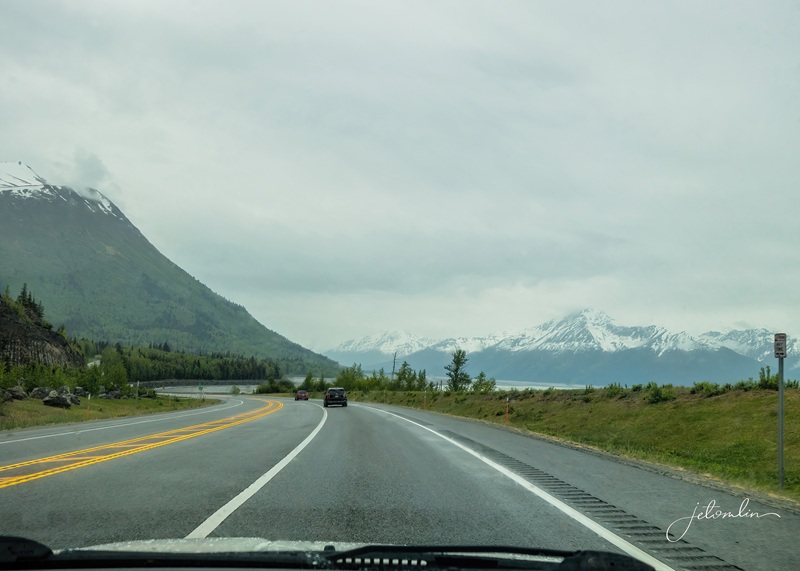
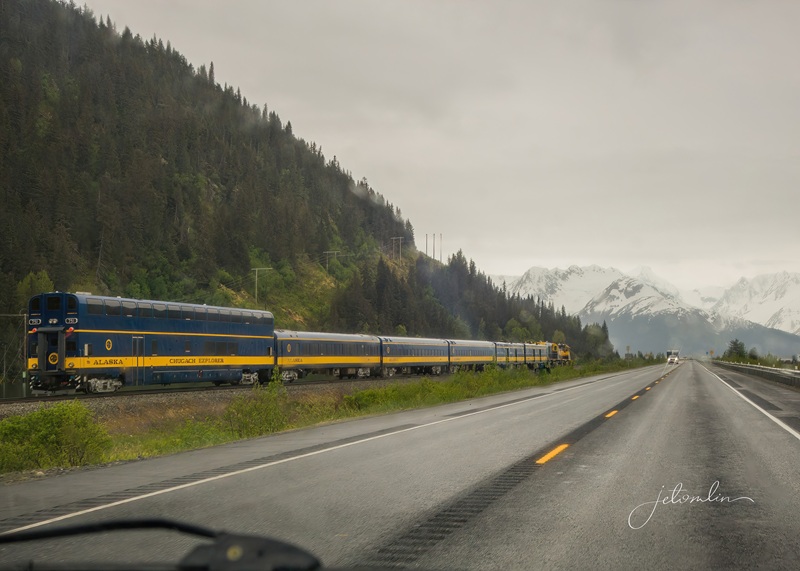
Our drive was at low tide, and dozens of bald eagles fished in the water and along the silty banks.
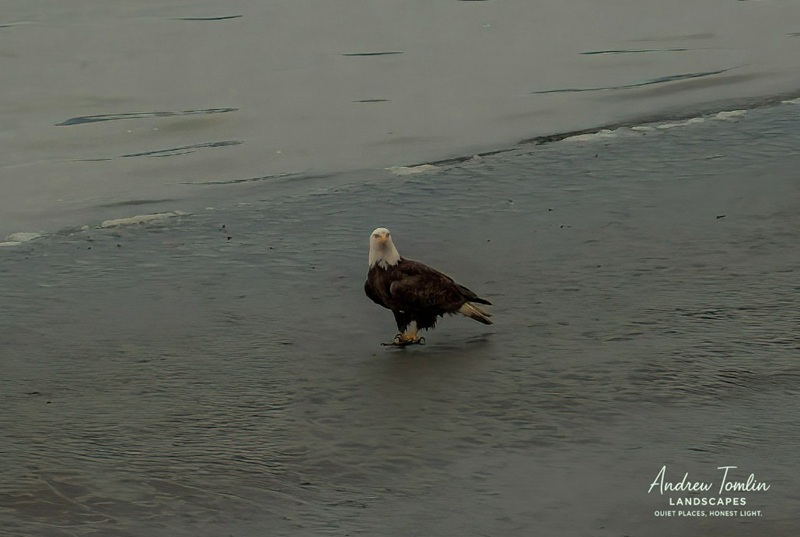
bald eagle fishing in Turnagain Arm

We practiced counting them in Spanish as we drove along: … dieciocho, diecinueve, veinte!
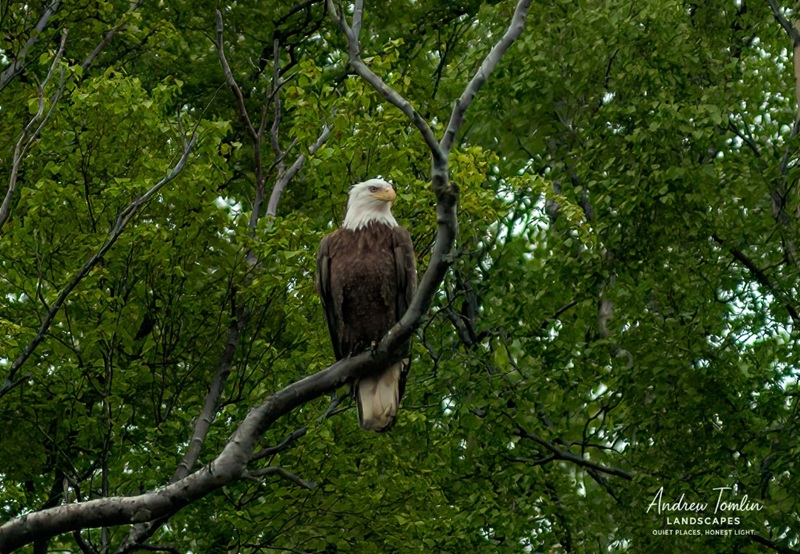
bald eagle on the Seward Highway

With time to kill before our flight, we stopped at Potter’s Marsh, part of the Anchorage Coastal Wildlife Refuge and home to some 130 bird species.
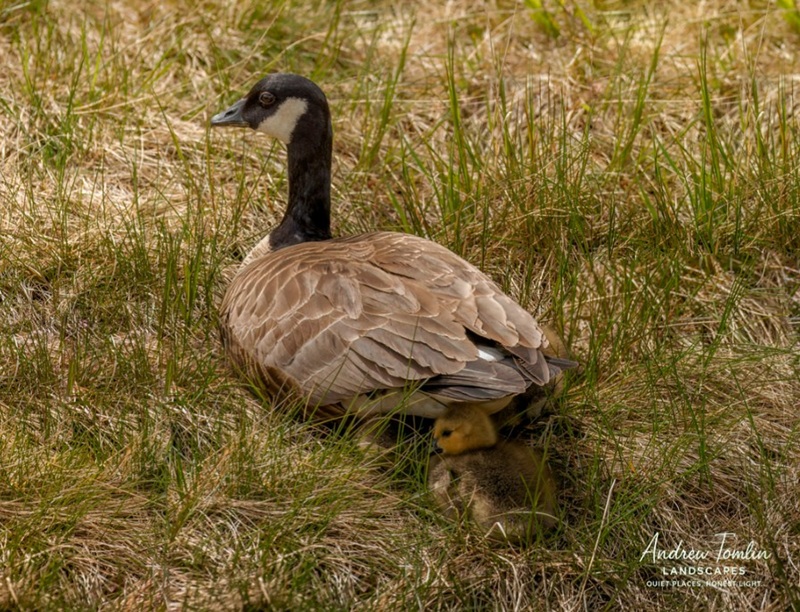
Canada goose and goslings at Potter’s Marsh

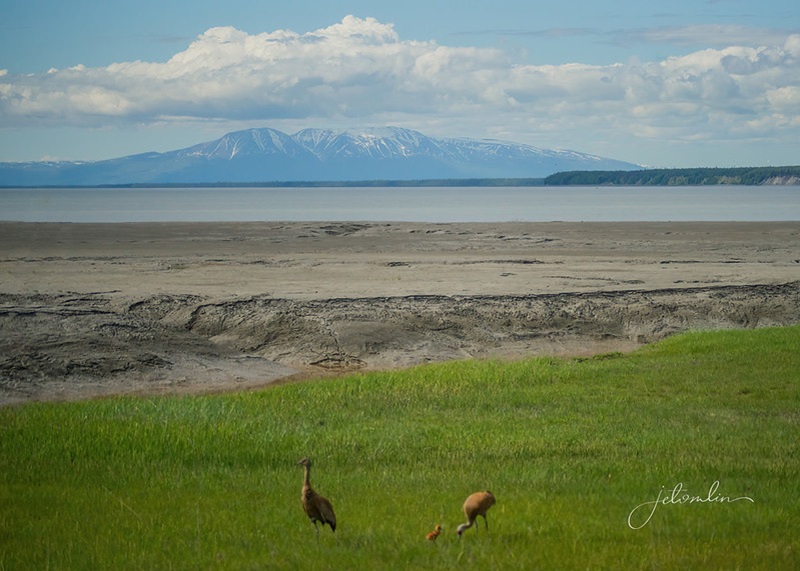
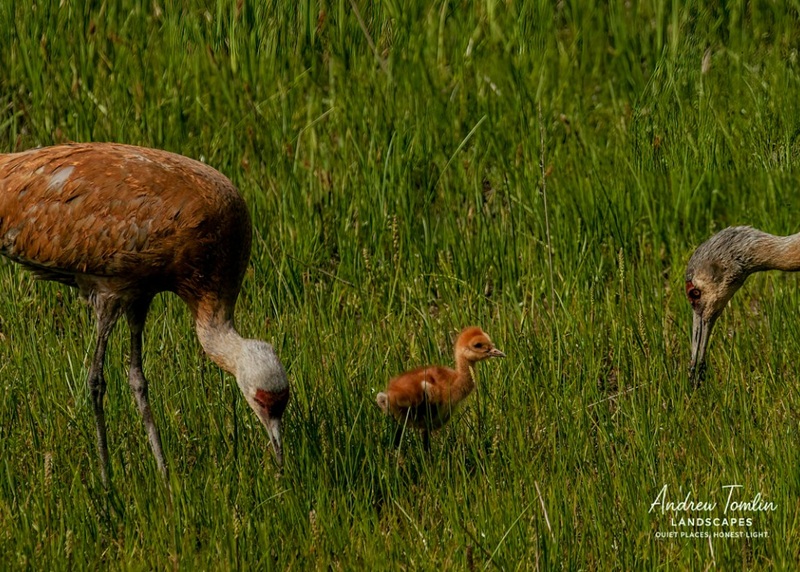
While there, a young woman mentioned sandhill crane colts at a nearby park, where we spent our final two hours before heading to the airport: a last unoxpected gift!
♪♪ Hatty told Matty / Let’s don’t take no chance / Let’s not be L-seven / Come and learn to dance / Wooly Bully / wooly bully ♪♪

The Wooly Bully song might have silly lyrics, but it’s about living in the moment, trying new things, and not caring if you fit in or not. That’s oxactly how we felt meeting the musk ox. We learned about an animal most people have never even heard of, and although some thought we were crazy for traveling so far just to see them, we enjoyed every second. We returned home with oxtraordinary memories and a deep respect for these beautiful, woolly creatures that have survived for millions of years.
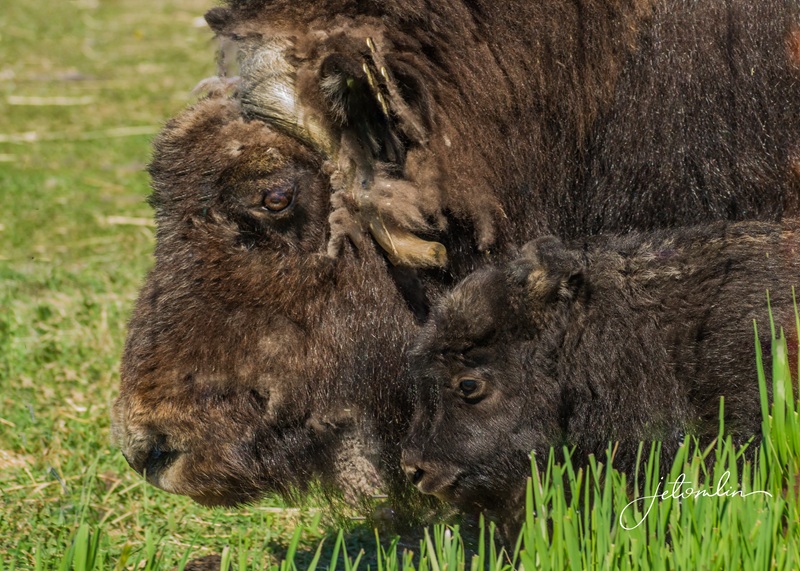
Amethyst & her calf Sonnet (born May 24, 2026)

If you haven’t moxed out on musk ox yet, you can view all of my photos from the Musk Ox Farm at the Flickr link below:

Musk Ox Farm
arrow through the set or click on any photo to open a new tab in Flickr

You can view TG’s fabulous panoramas and Alaska photos here:

swallow-6345-DeNoiseAI-low-light-SharpenAI-Focus
arrow through the set or click on any photo to open a new tab in Flickr

And finally, the rest of my photos from Alaska here:

Highway 1
arrow through set or click on any photo to open a new tab in Flickr

My Amazing Technicolor Dream Adventure

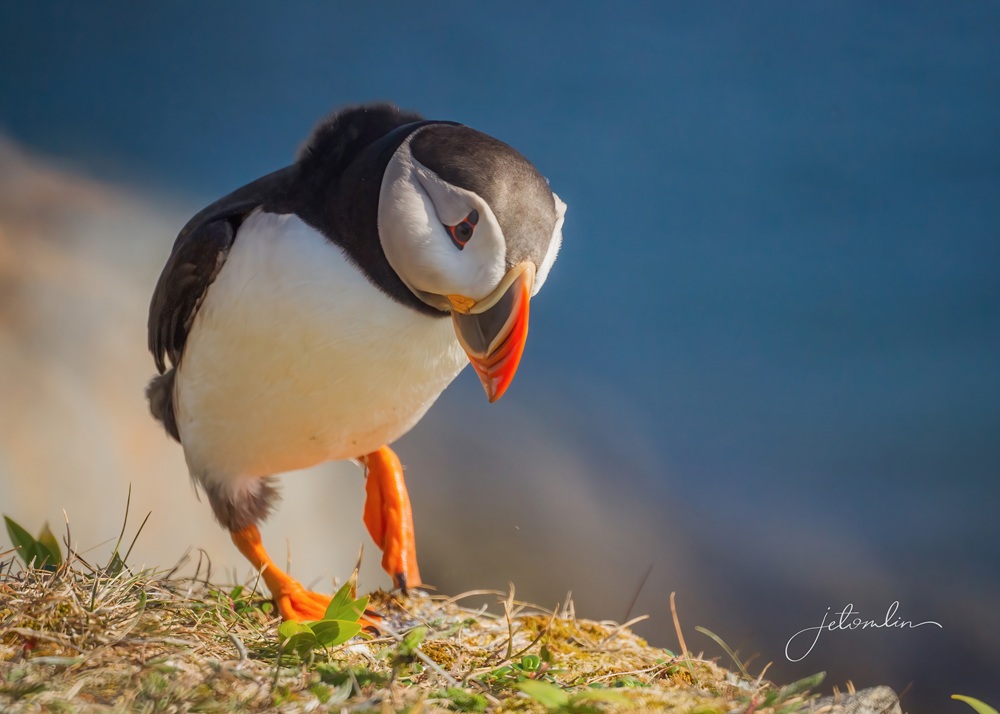
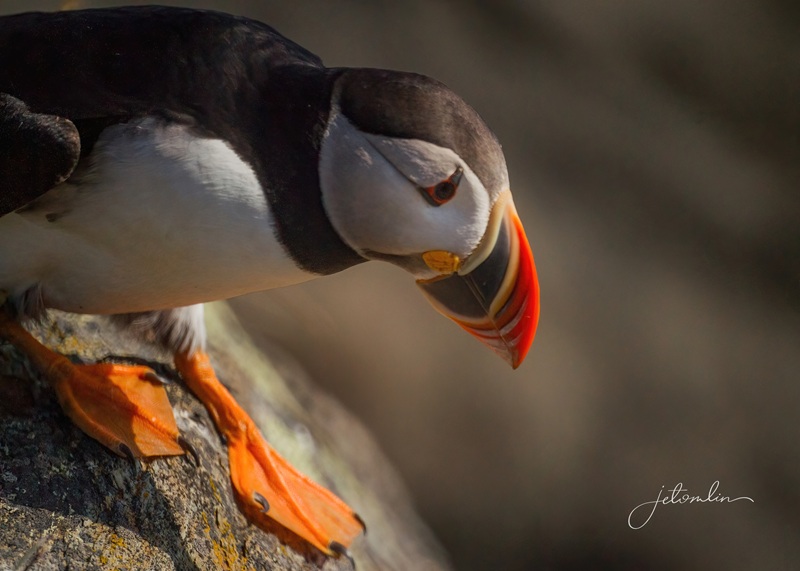
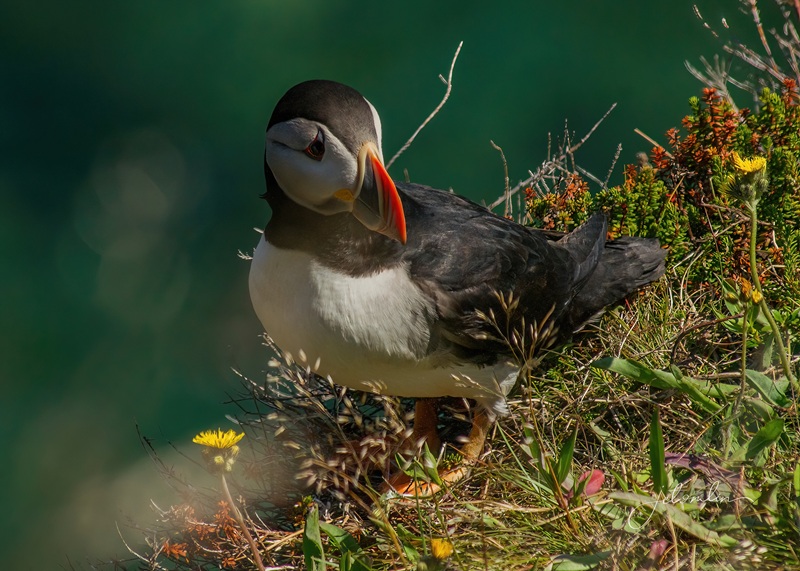
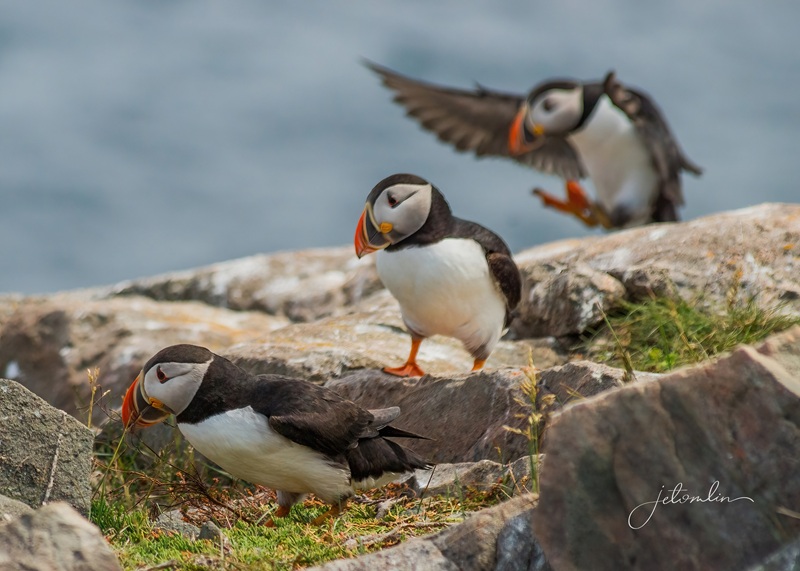
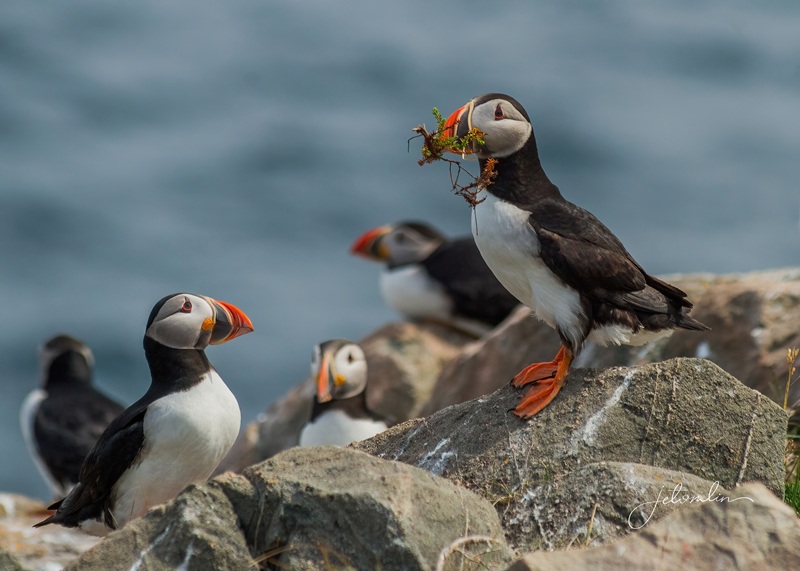
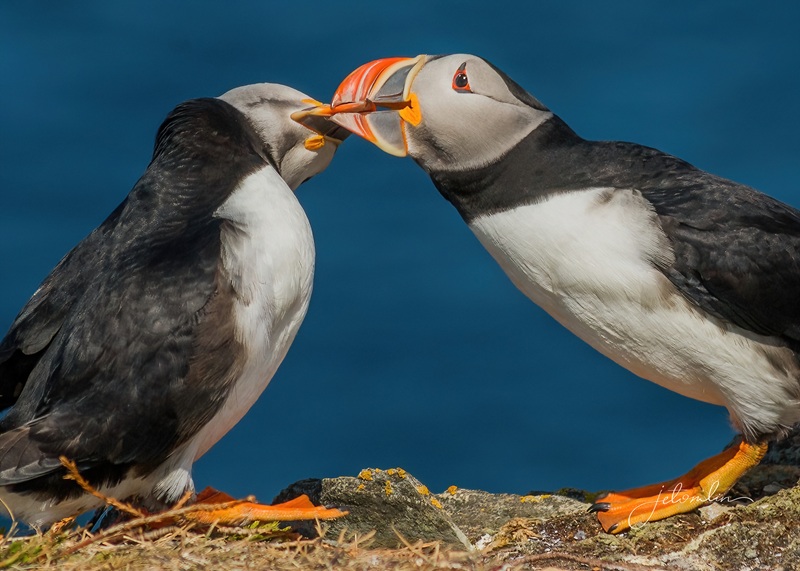
Puffins have always seemed nearly impossible creatures that look more like children’s toys than real birds. Their colorful beaks and triangular eyes stand out against sturdy black-and-white bodies, and their name perfectly captures their roly-poly look. As if that weren’t enough, their chicks are called “pufflings.”

Elliston puffin site, July 2025

These pelagic birds are masters of the air, sea, and land,

Elliston puffin site, July 2025

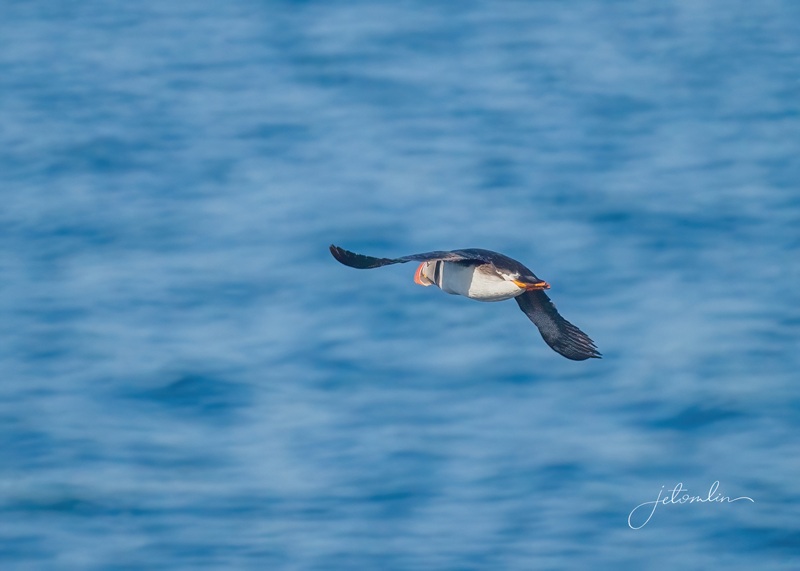
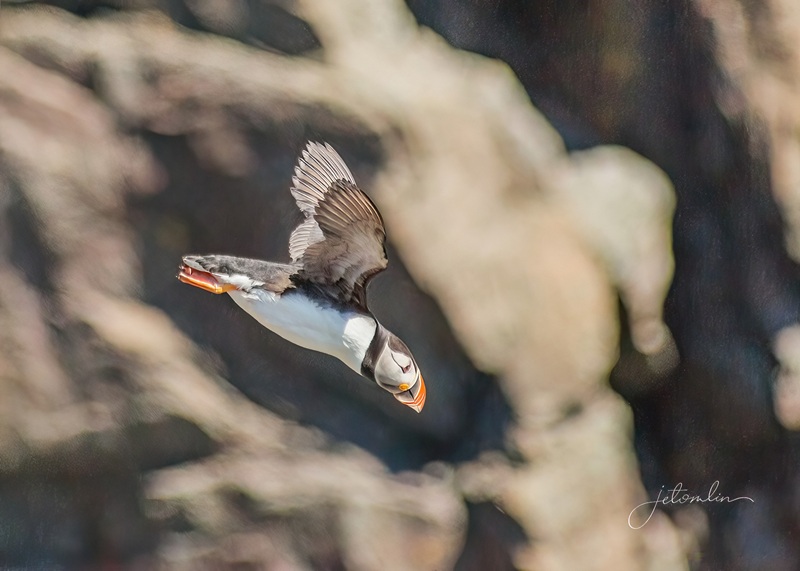
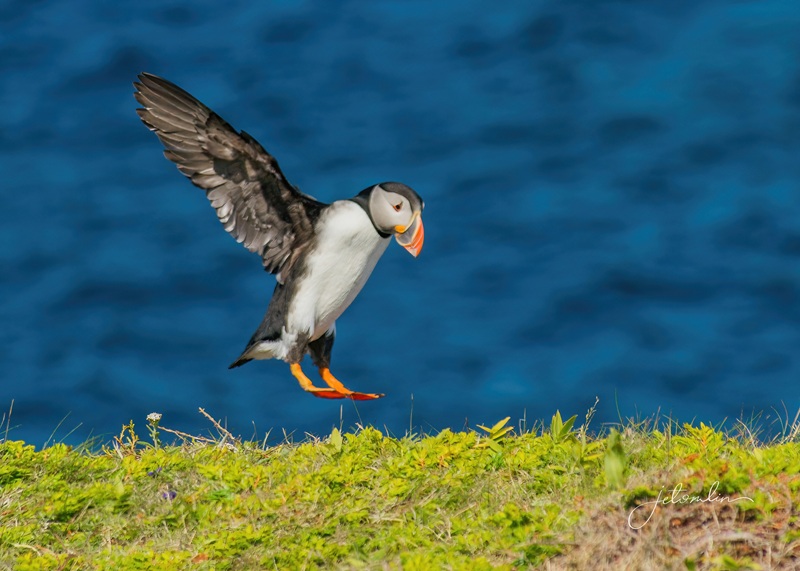
Flying thousands of miles over the ocean,

Elliston puffin site, July 2025

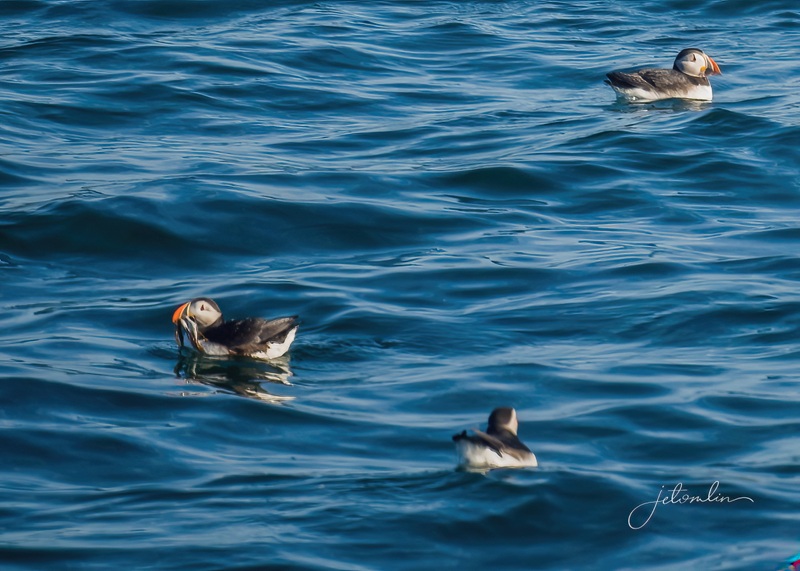
Diving to catch fish (click on photos to enlarge),

And burrowing to nest.

Spillars Cove, July 2025

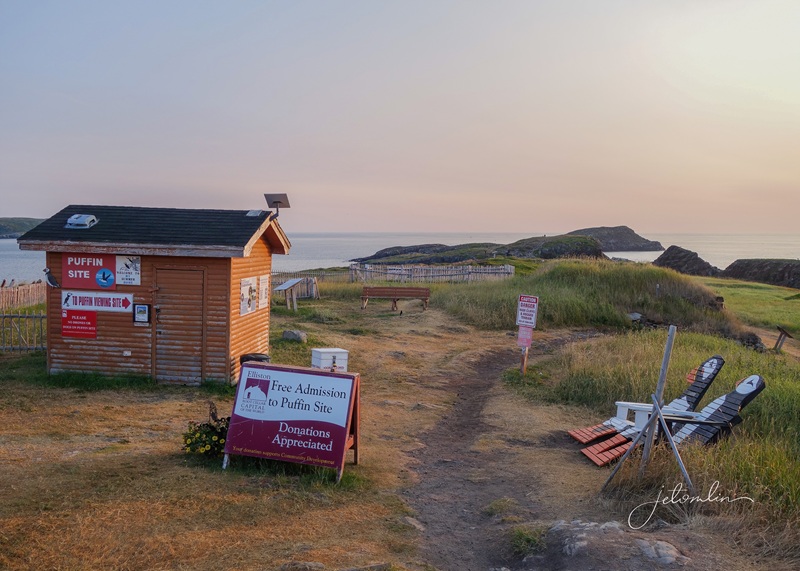
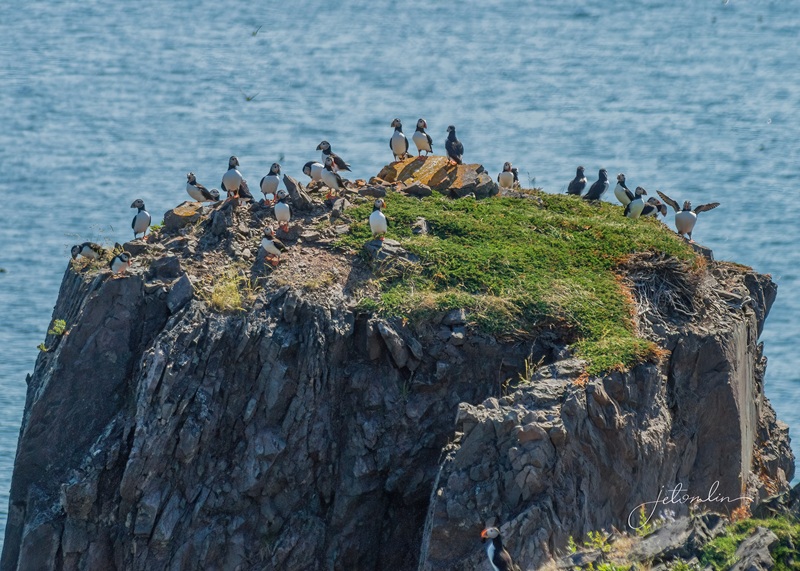
Despite the remote locations where puffins are typically found, I was determined to capture their beauty through my lens. The viewing site in Elliston, Newfoundland, is one of North America’s best places to observe puffins, especially from May to September when they breed on a rocky outcrop, allowing for close encounters.

Elliston puffin site, July 2025

Since the best times to photograph the puffins are early morning or late afternoon, I looked for other interesting ways to occupy my days. The surrounding area offers beautiful hikes and plenty of photo opportunities, so we booked a week at an Airbnb in Bonavista, just five miles from the Elliston site.

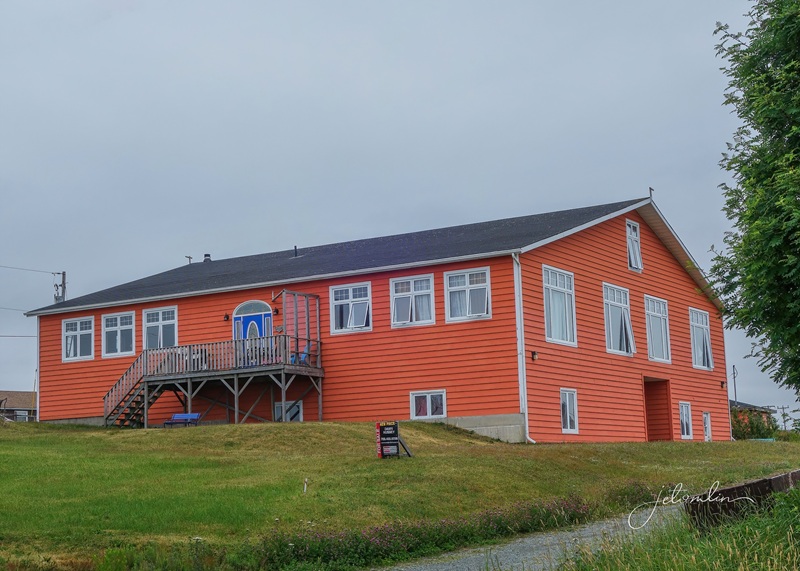
Johanna’s big red house BnB

Johanna’s spacious BnB featured a private bedroom and bath, as well as a shared kitchen, and was conveniently located near restaurants and the harbor. Her mi-casa-es-tu-casa hospitality instantly made me feel like family. And the location was a perfect base for exploring all that the Bonavista Peninsula had to offer.

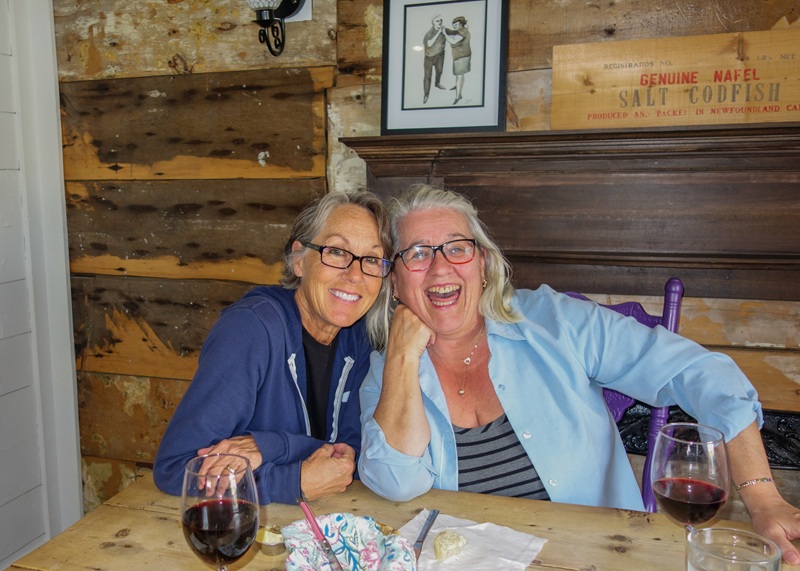
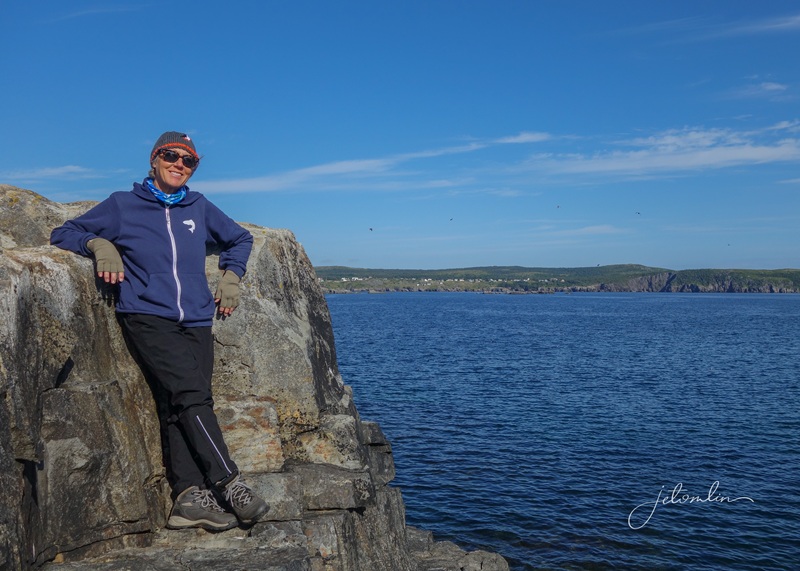
Johanna and me

You can find her listing here:
Bonavista BnB Blue Room Double & Single – Houses for Rent in Bonavista, Newfoundland and Labrador, Canada – Airbnb

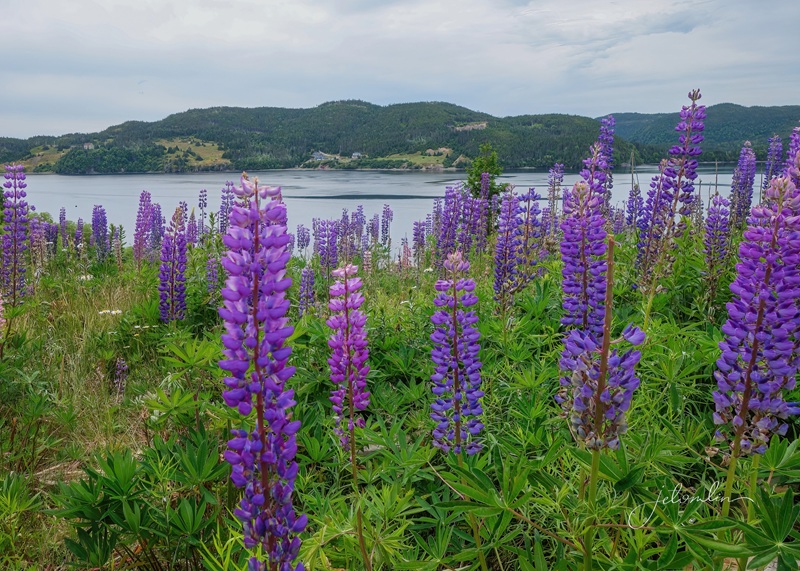
I flew WestJet’s direct morning flight from Orlando to St. John’s, picked up my rental car, and drove the 3 1/2 hours to Bonavista. The route was scenic and colorful — azure lakes nestled between lush green hills with bright yellow, pink, and purple flowers growing wild alongside the road.

lupines growing alongside the road

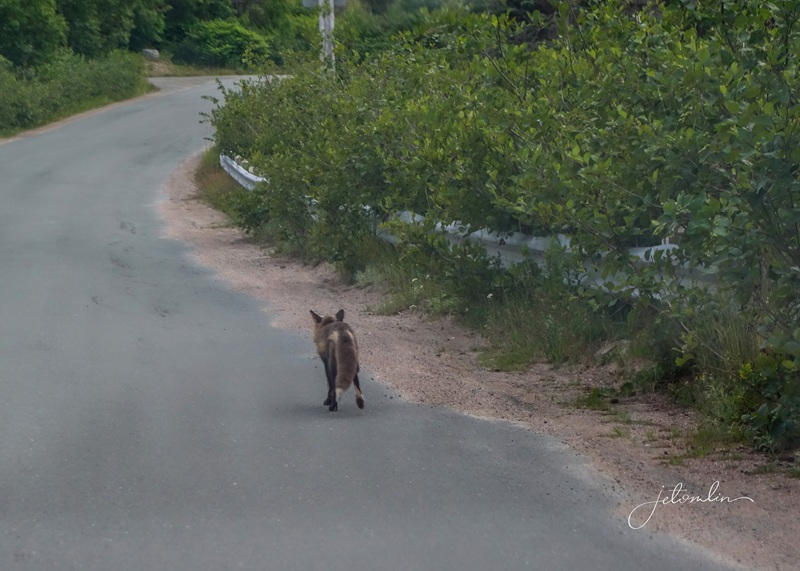
A red fox darted into the bushes as I drove by, and a bit further along, a second fox stayed long enough for me to snap a quick proof-of-life photo through the windshield as I zipped past.

a quick proof-of-life shot through the windshield!

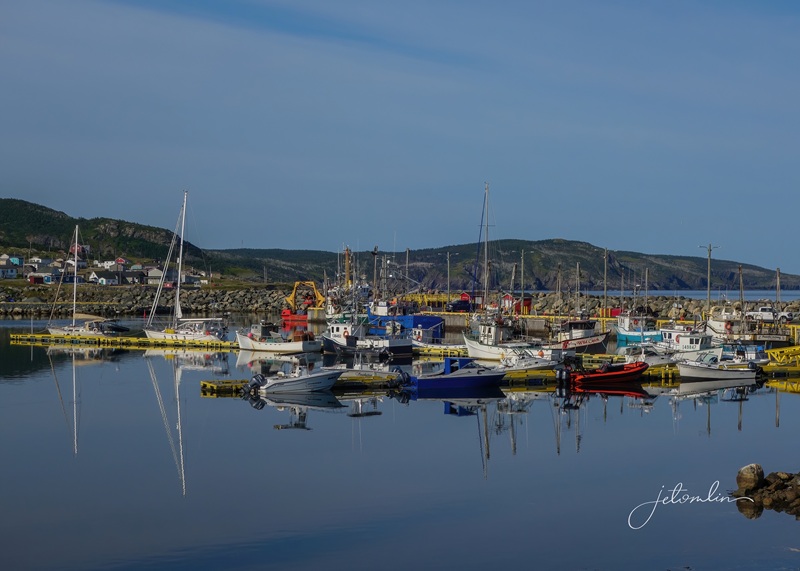
The coastline is filled with charming towns featuring brightly painted buildings that line blue harbors, where equally colorful boats bob in the waves.

Bonavista Harbor

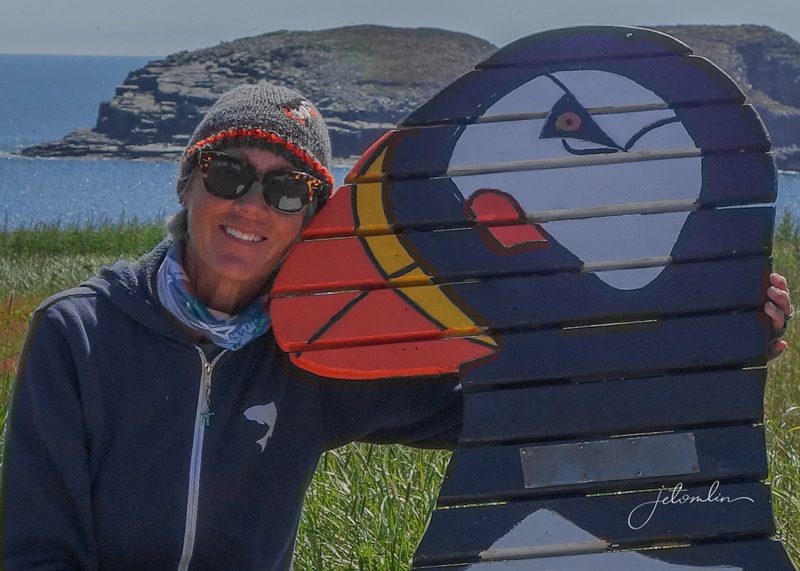
My first day was overcast, and after visiting the puffins in the morning, I spent the afternoon exploring. The Puffin Craft Shop in Maberly offers a selection of handmade items and photographs. I had a wonderful conversation with the owner, Bernice, while choosing a knit cap – embellished with a puffin, of course. I immediately put it on and wore it for the rest of my trip. (Arrow through gallery set)

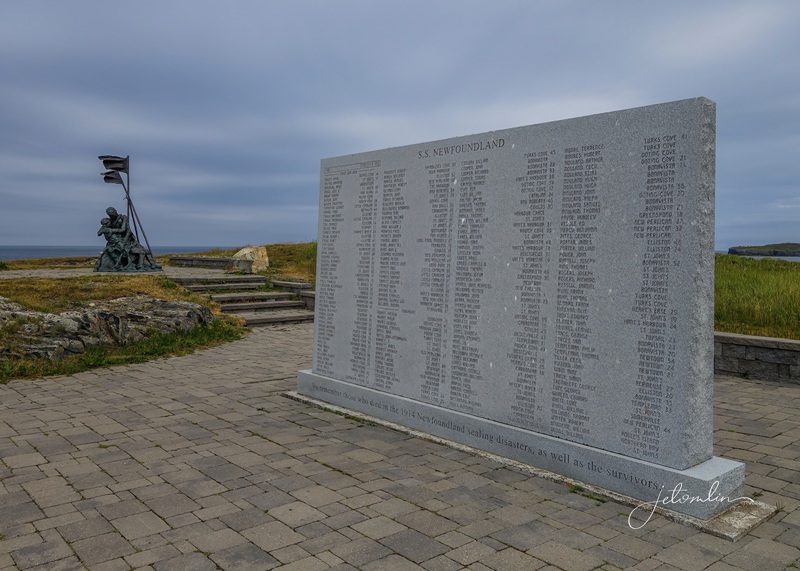
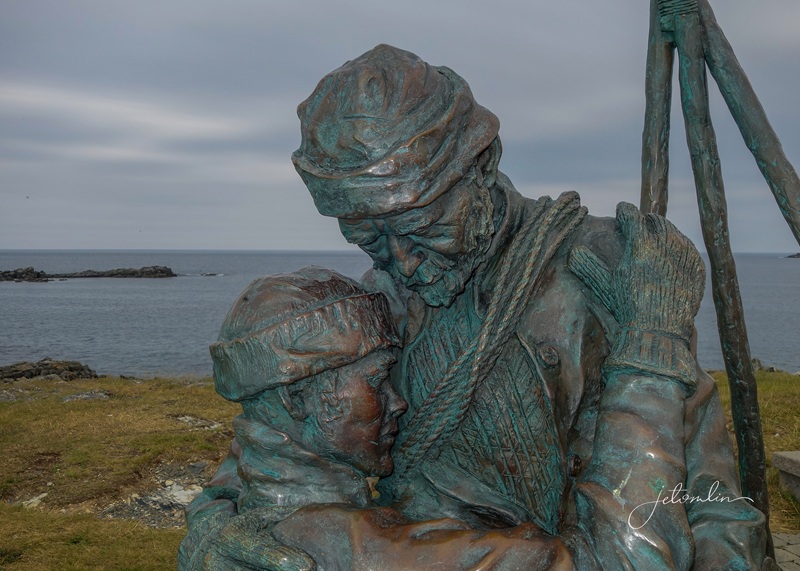
At one of my stops, I happened upon the Sealers Memorial, a powerful seaside statue and monument honoring those who died in the 1914 Newfoundland sealing disaster. (click on photos to enlarge)

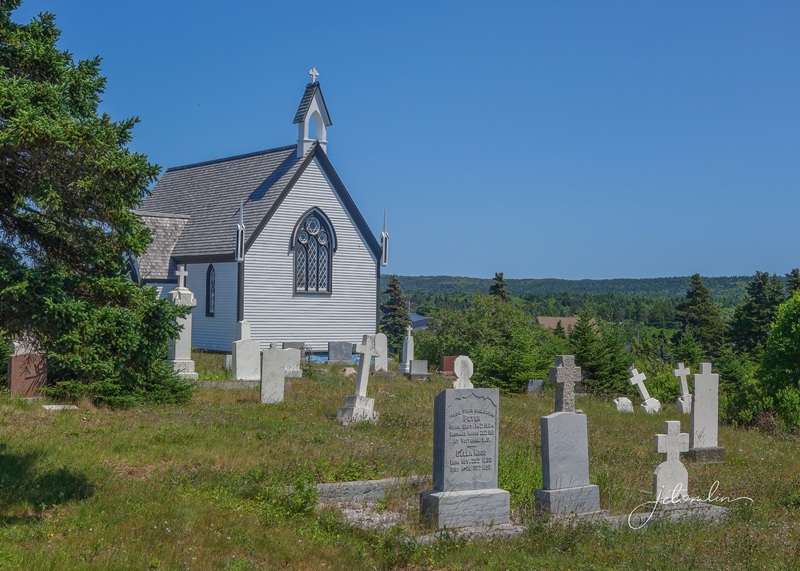
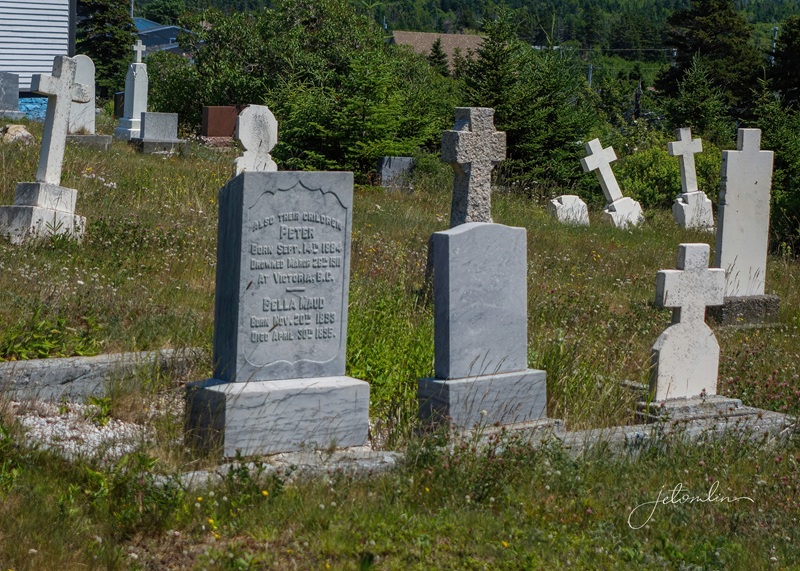
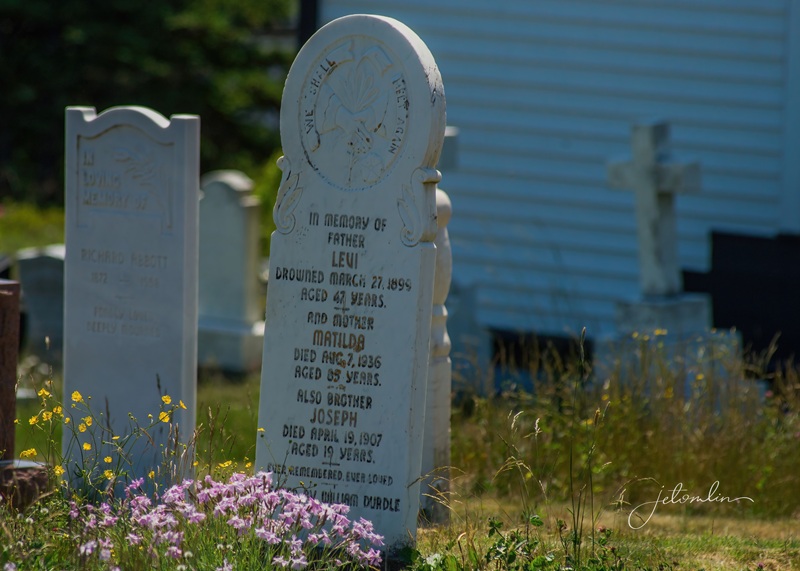
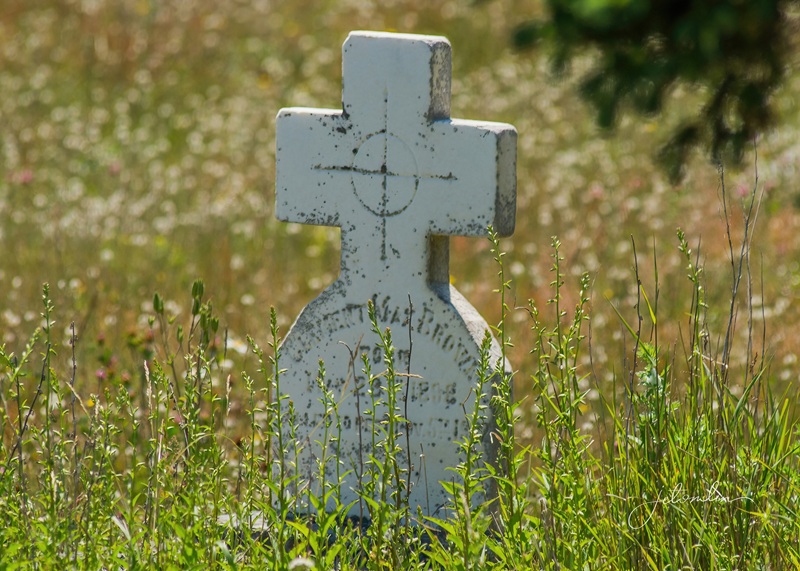
Every town has at least one cemetery with tombstones dating back to the 1800s. Many were overgrown, with ancient stone crosses tilted on their sides, and on the oldest, the writing had eroded from decades of wind and sea. (Arrow through gallery set)

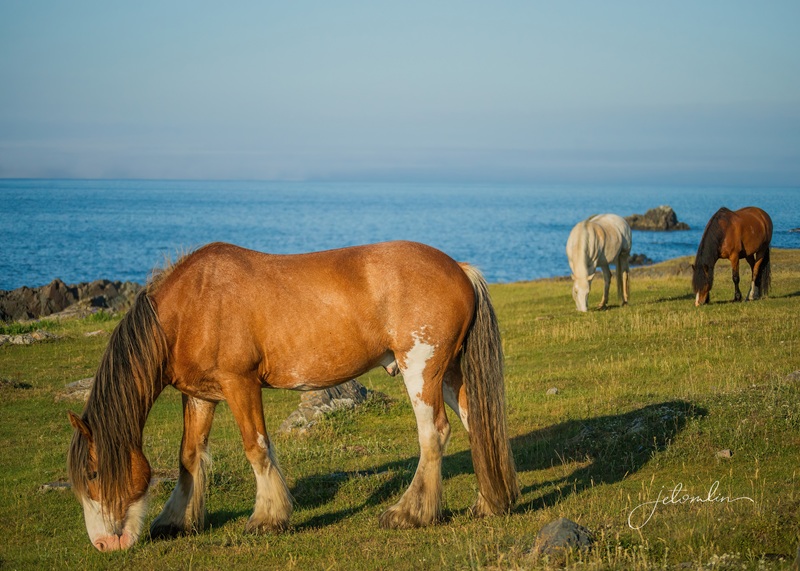
On a whim, I turned down Dungeon Road and came upon a herd of beautiful horses in the community pasture. I couldn’t help but snap a few photos as they grazed on the green hillsides against the blue ocean backdrop.

horses in Bonavista’s community pasture

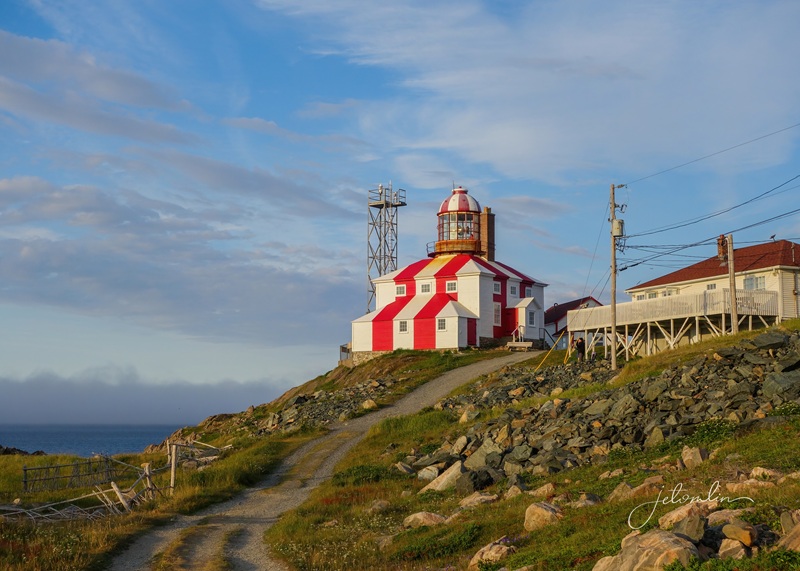
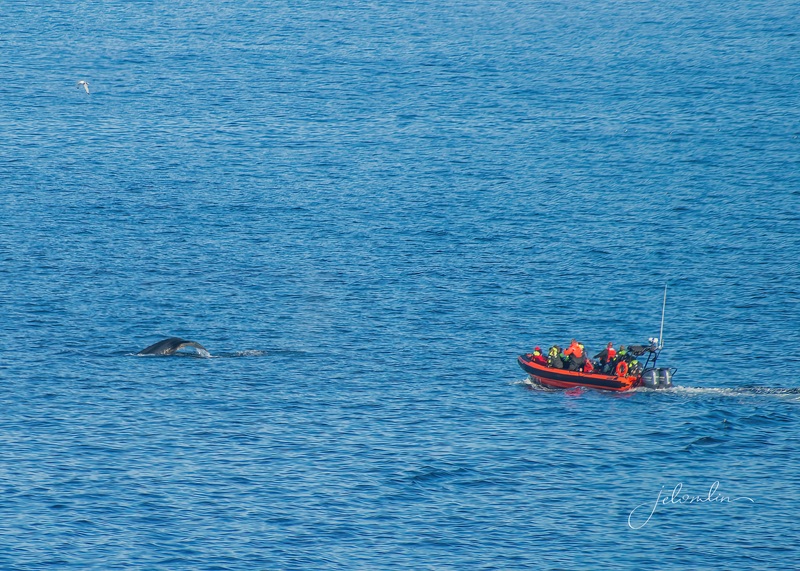
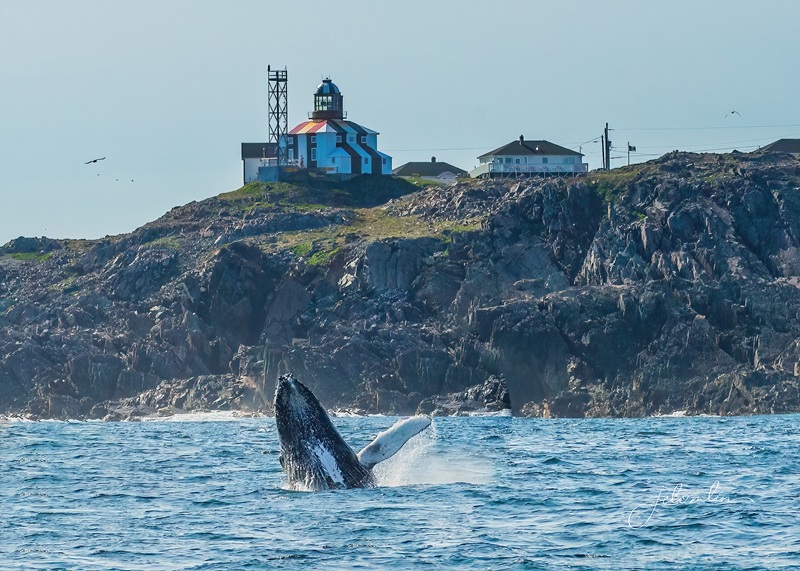
Later, I drove to Cape Bonavista and the lighthouse. From high up on the hill, I watched two humpback whales slowly meander in the bay below me as a bright orange tour boat followed behind. (click on photos to enlarge)

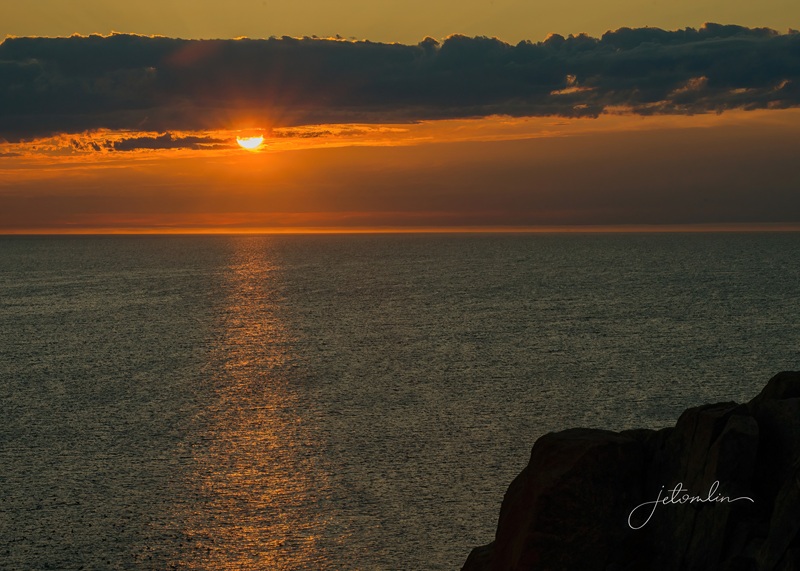
I returned to the lighthouse for the sunset. While I waited, whales entertained me, tails slapping as huge flocks of birds circled above.

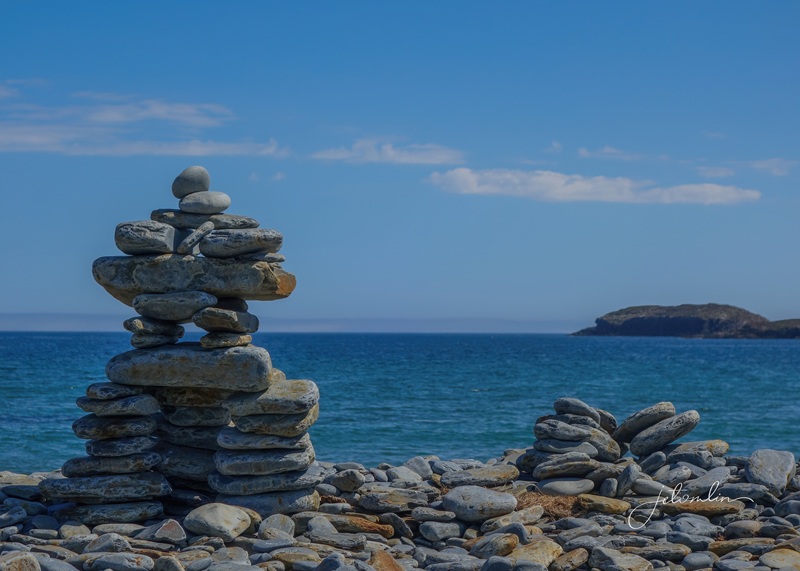
One morning, I stopped to photograph the inuksuks on Sandy Cove Beach. These traditional stone markers, which I first learned about during my visit to Churchill in November 2024, are a significant part of Indigenous culture. I was delighted to find them on a beach in Elliston, pointing the way to the puffin site!

inuksuk on Sandy Cove Beach with puffin site in the distance

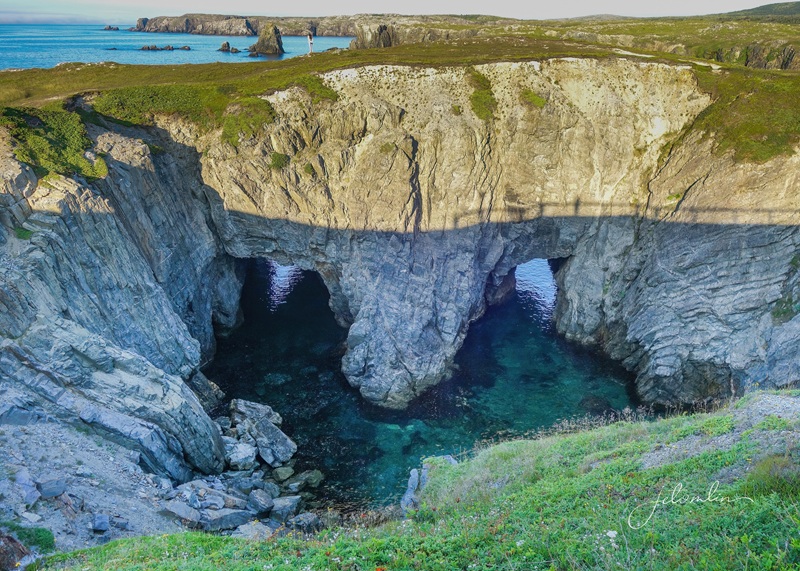
I returned to Dungeon Road and visited The Dungeon, a massive, heart-shaped crater with two separate openings to the sea. I enjoyed watching as the waves crashed in, the same waves that had carved out this breathtaking sea cave millions of years ago.

The Dungeon

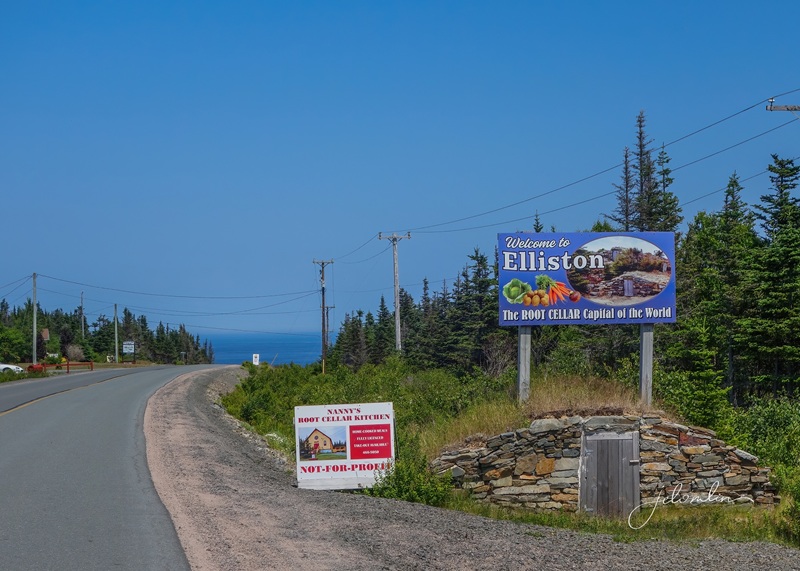
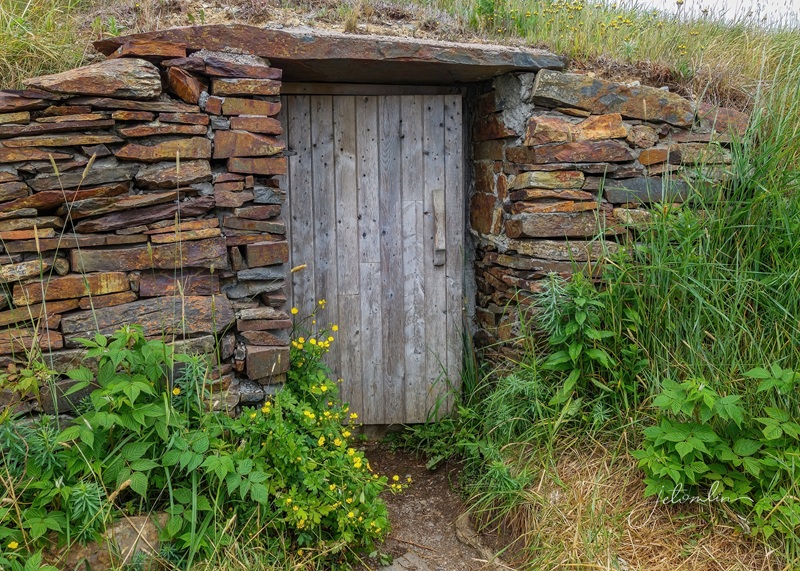
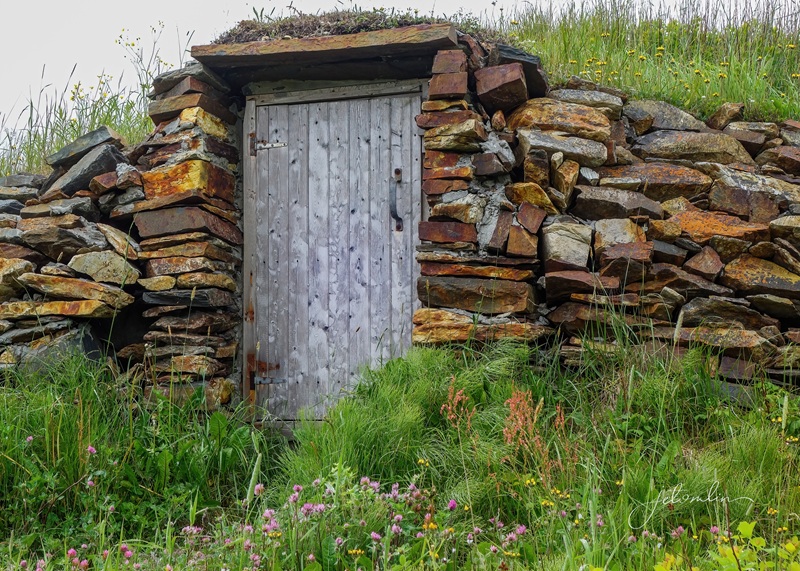
Besides being famous for its puffins, Elliston is also known as the Root Cellar Capitol of the World. So, of course, I had to snap a few obligatory root cellar pics! (Arrow through gallery set)

That’s all fine and good, but what about the puffins?” you ask. The puffin viewing site is located at the end of a short hike along a rocky, uneven path. Until I was up and over the last hill, I had no idea what to expect. (click on photos to enlarge)

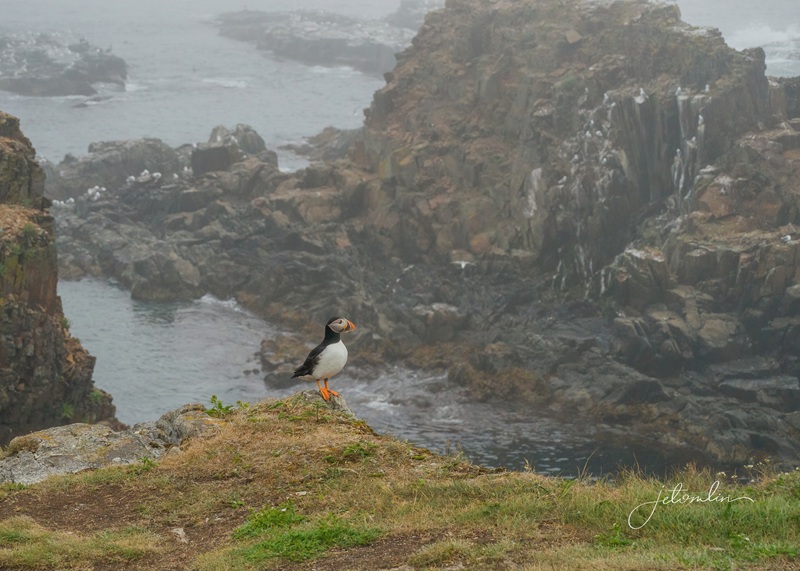
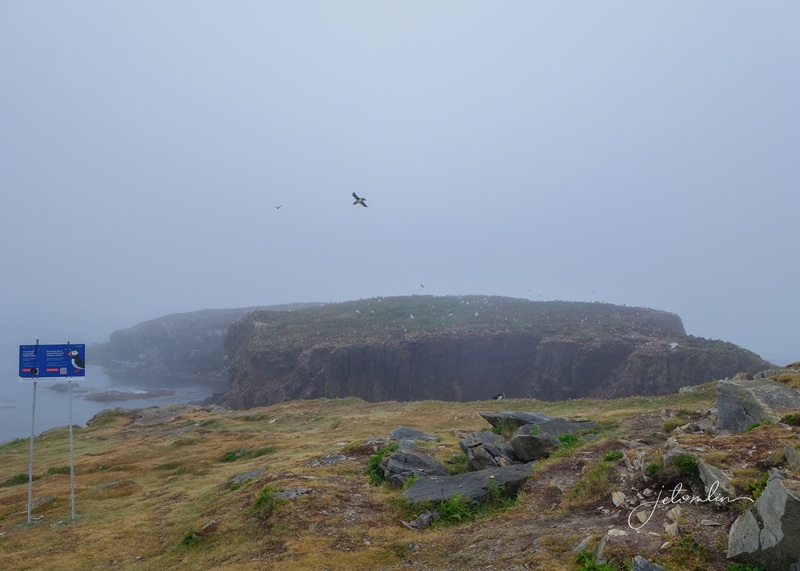
What I was given on my first foggy morning were more puffins than I could have hoped for! The rookery itself is located on an island offshore, at a reach of only the longest lens.

the offshore rookery, July 2025

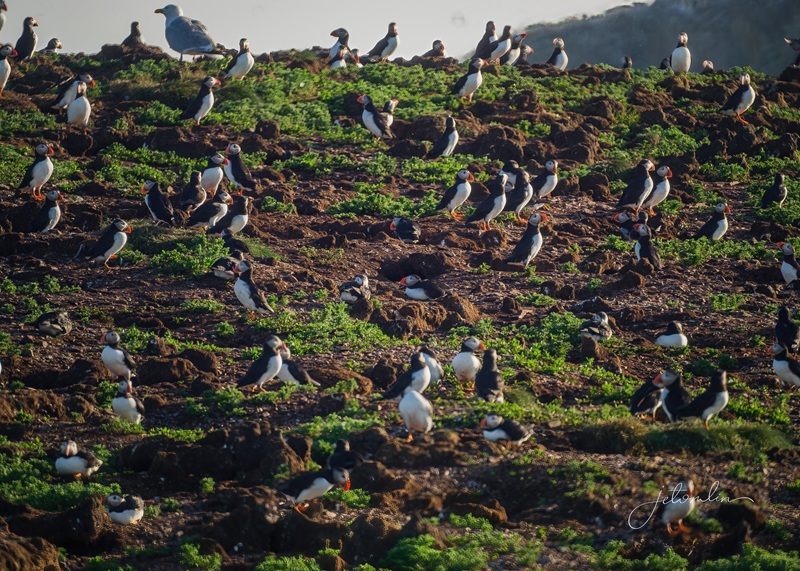
However, there were hundreds of puffins on the mainland, so close that I had to back up to capture them with my 100-400mm!

hundreds of puffins on the mainland! (July 2025)

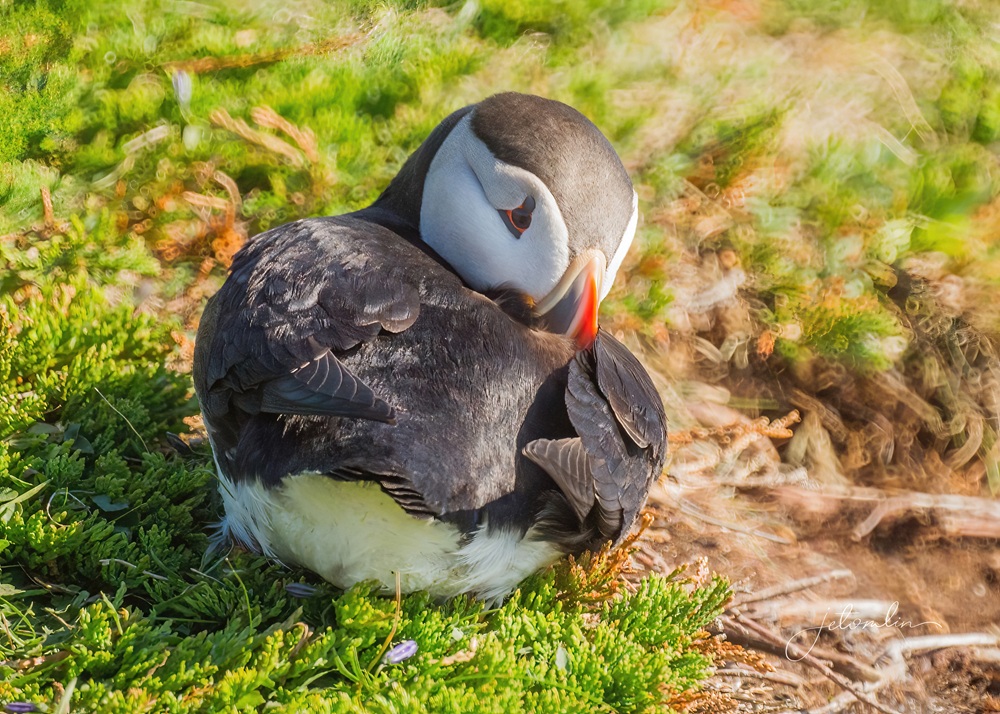
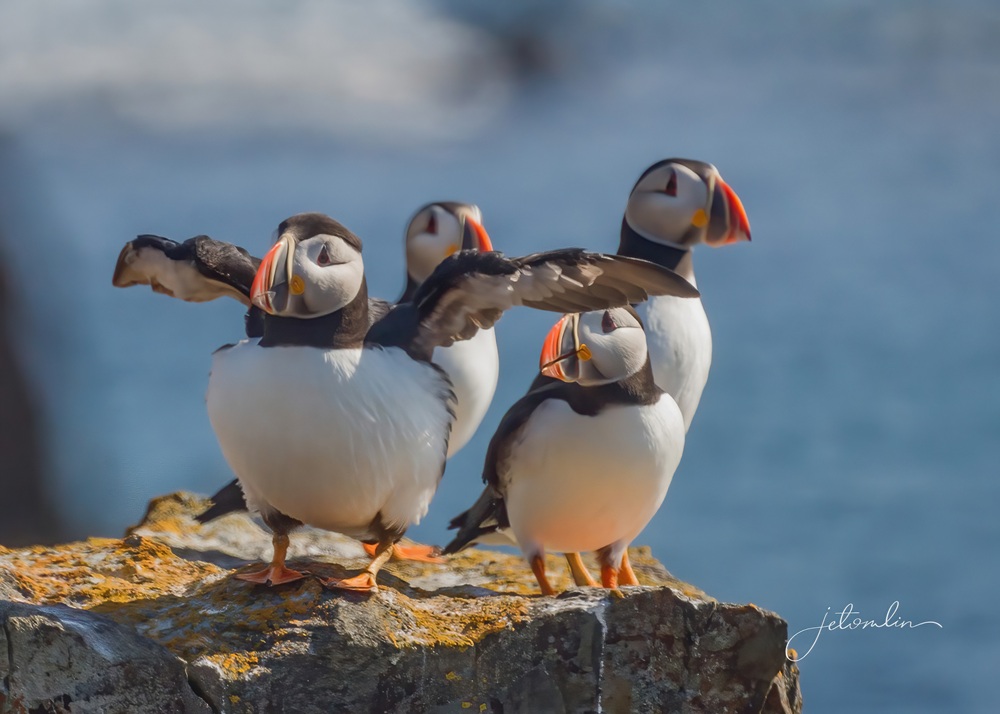
Although there were several photographers already milling around, there were more than enough puffins for everyone. I was in puffin heaven, enjoying their roly-poly, comical beauty.

puffin heaven! Elliston, July 2025

Wednesday morning dawned sunny and bright. I was back at the site by 6:45 and was greeted once again by hundreds of puffins on the mainland side. I had switched to my fixed 500mm lens this morning and needed to stay back even further to get my subjects in the frame! (click on photos to enlarge)

There were dozens of puffins floating in the bay, looking like miniature rubber duckies.

enjoy the beauty of the bay

I watched them for the longest time, even attempting a few shots of birds in flight – but photographing puffins in flight is like trying to capture a speeding bullet! So, I sat back and enjoyed the beauty surrounding me.

my little rock perch

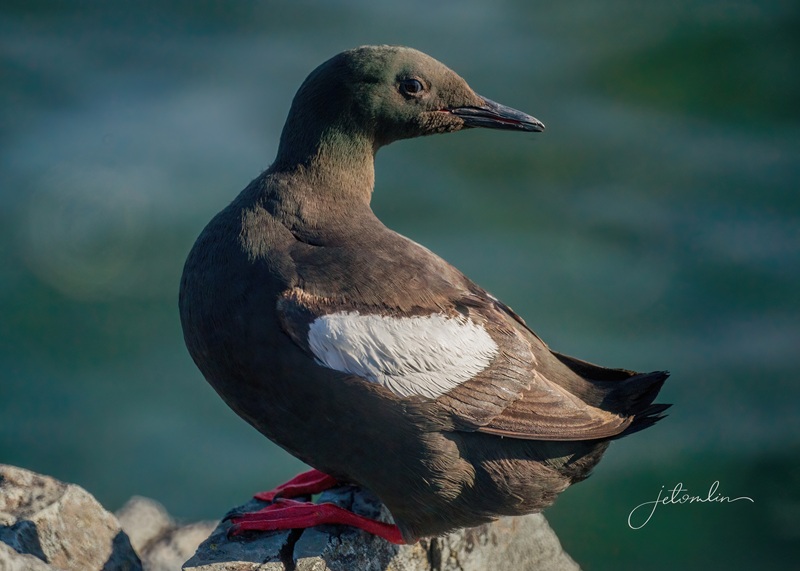
As I watched from my little rock perch, two beautiful black guillemots landed no more than ten feet away.

black guillemot

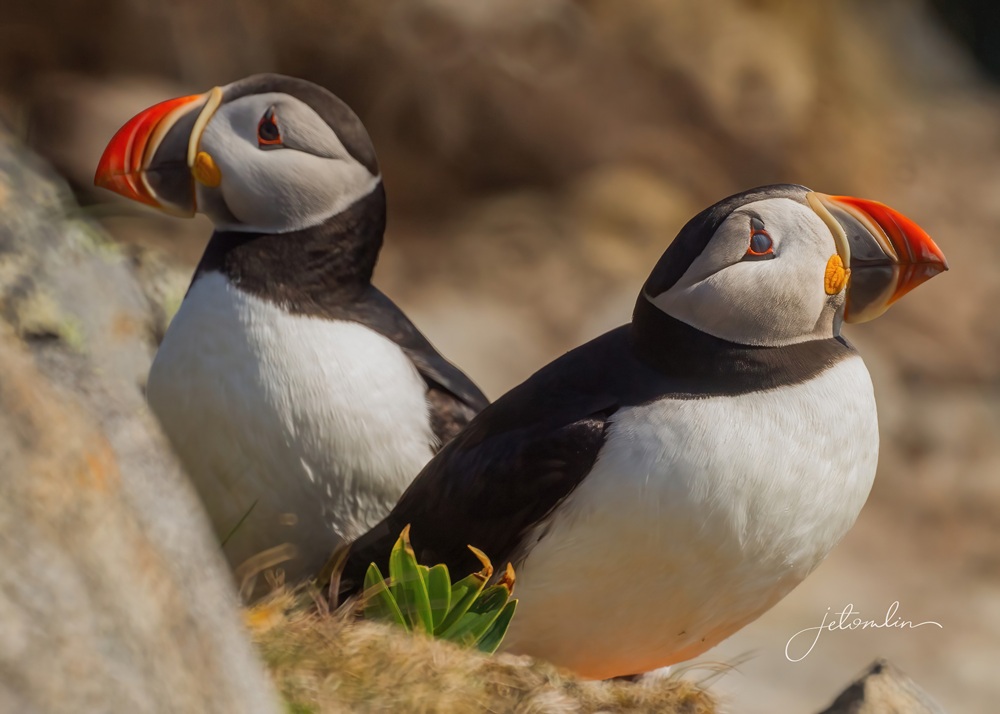
Finally, the sun was high enough that I could move back to the east side of the mainland to shoot a few more close-ups, as close-up as my lens would allow.

Elliston puffin site, July 2025

A circus (yes, “circus” and “improbability” are both collective names for a group of puffins) had gathered on the cliffside several yards from me, and I was at a good vantage point with the sun at my back. It was indeed a circus as I tried to video a bit of their antics.

Elliston puffin site, July 2025

Suddenly, one brave puffin hopped up on the rocky ledge and waddled so close I had to put my camera down – I could not get her in my frame!

this puffin came too close for me to capture with my lens! Elliston, July 2025

After two morning sessions with the puffins, I had filled two 32GB memory cards. Although I was, for now, puff-full, I was smitten with these birds and could hardly wait to visit them again.

I was totally smitten with these birds!

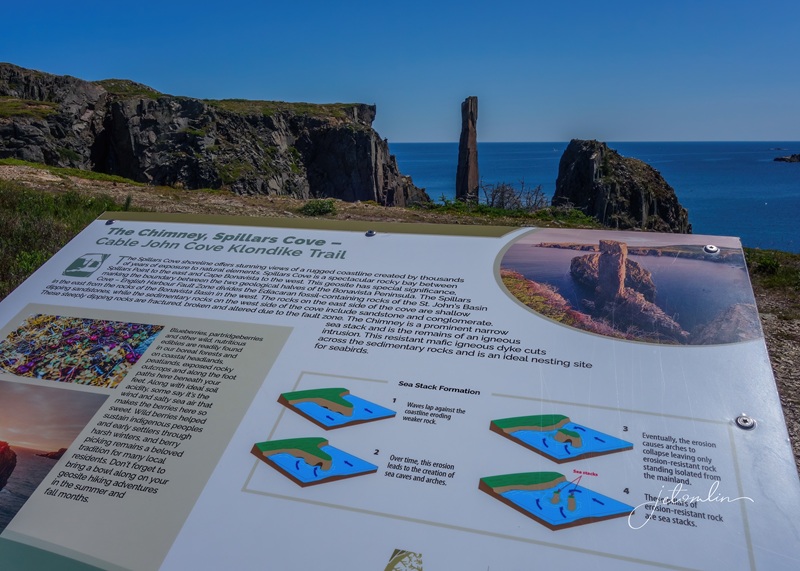
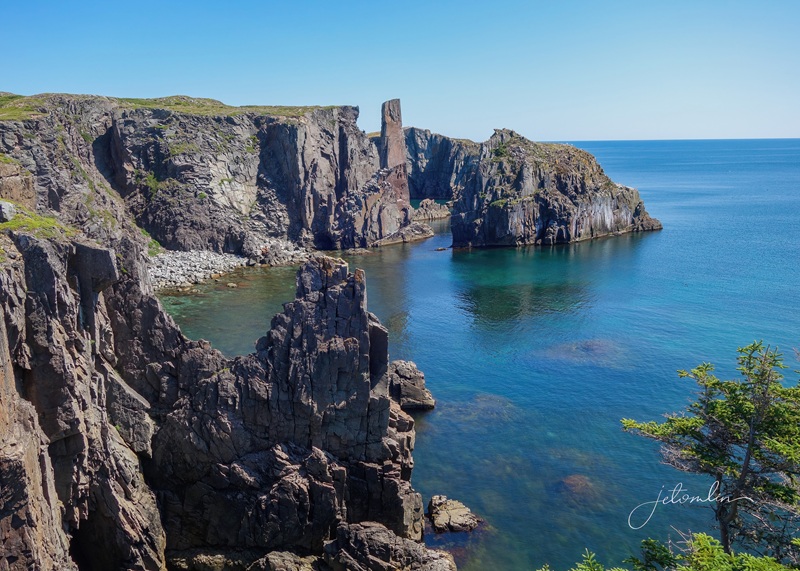
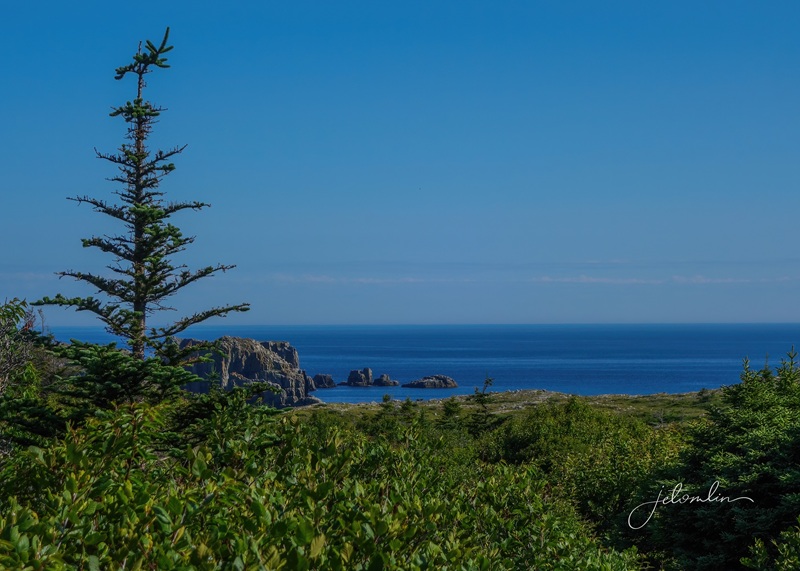
The Klondike Trail is an easy 3km out-and-back hike that runs from Spillars Cove to Elliston. The Spillars Cove trailhead begins at a famous rock formation called “The Chimney” and offers sweeping views of the cove, coastline, and a shorebird rookery. (click on photos to enlarge)

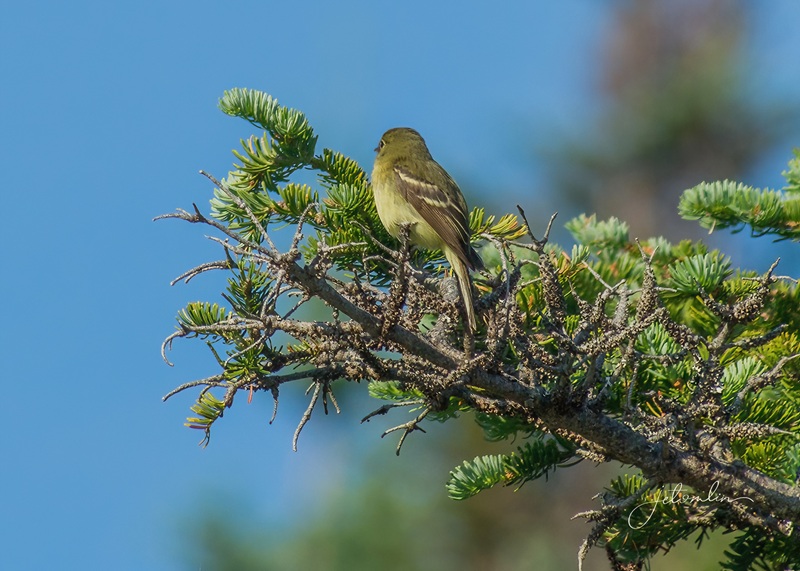
I chose to hike the trail to Elliston while the morning was still cool, as it promised to be a warm, sunny day. The trail led me inland, away from the rugged coastline, and I enjoyed the fresh, sweet air, as well as the many chirping birds, (click on photos to enlarge)

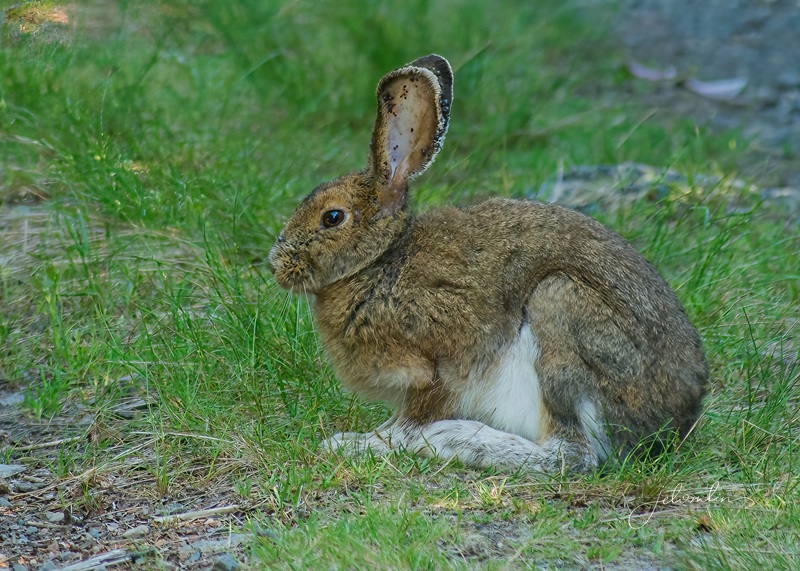
And a snowshoe hare modeling her summer coat.

snowshoe hare

Upon my return, I followed a well-worn path of flattened grass down to the edge of the cliffs directly across from the rookery.

Spillars Cove, July 2025

There were hundreds of puffins flitting around the island and swimming in the cove.

Spillars Cove, July 2025

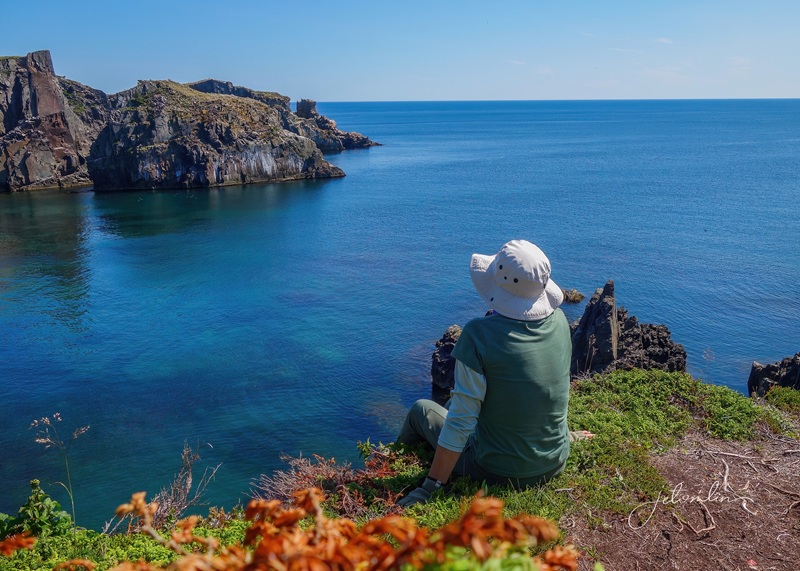
In 2017, we journeyed to Antarctica for our 35th wedding anniversary. I “penguined” for much of the time – I put down my camera and simply enjoyed the penguins and the beautiful scenery. This morning, I “puffined.” Unlike the sometimes-frenetic photographer activity at the Elliston site, I had Spillars Cove to myself.

this morning, I “puffined”

As I quietly watched, the puffins flew back and forth to burrows on the mainland, some even landing on a ledge directly beneath me.

as I quietly puffined, she landed on a ledge directly beneath me

The world’s largest population of humpback whales returns to Newfoundland each year between May and September, and tour boats run daily trips to watch them frolic and feed near shore. I did not want to book a whale tour until I was certain I had all my puffin “money shots.”  But after that spectacular first session on Tuesday morning, I booked a Friday tour with Discovery Sea Adventures.

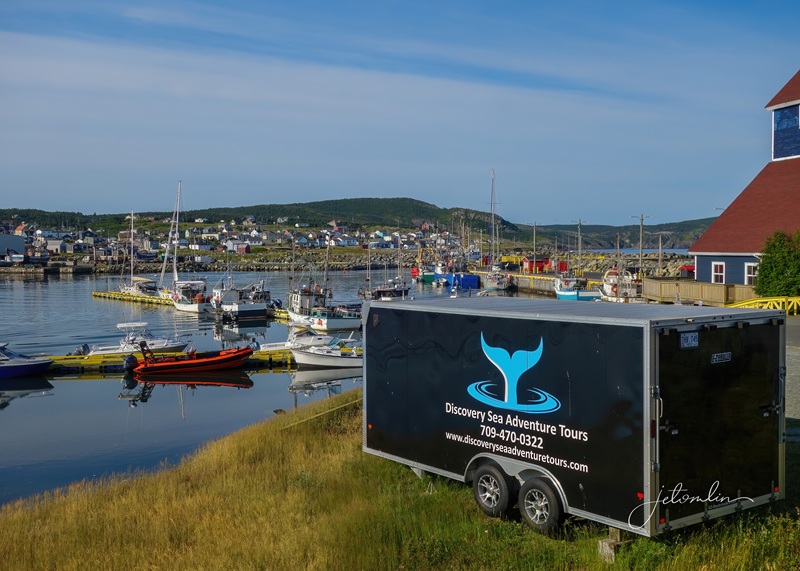
Discovery Sea Adventure Tours, Bonavista

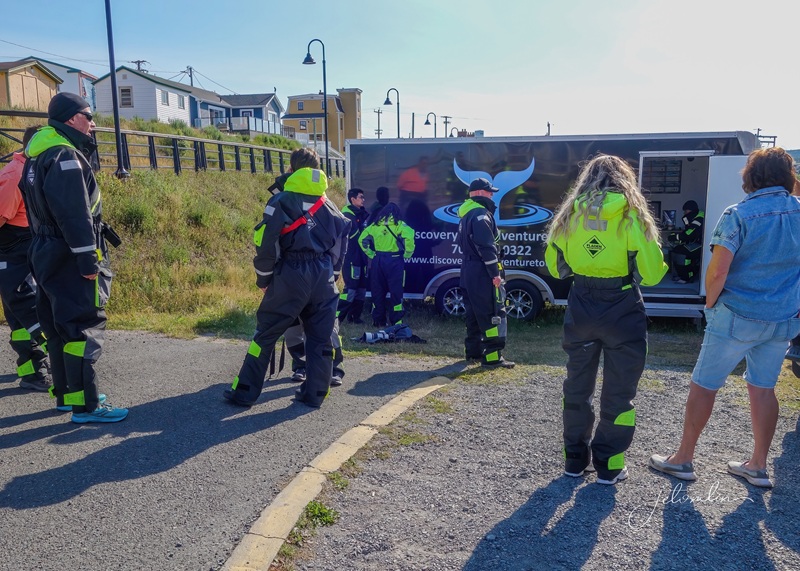
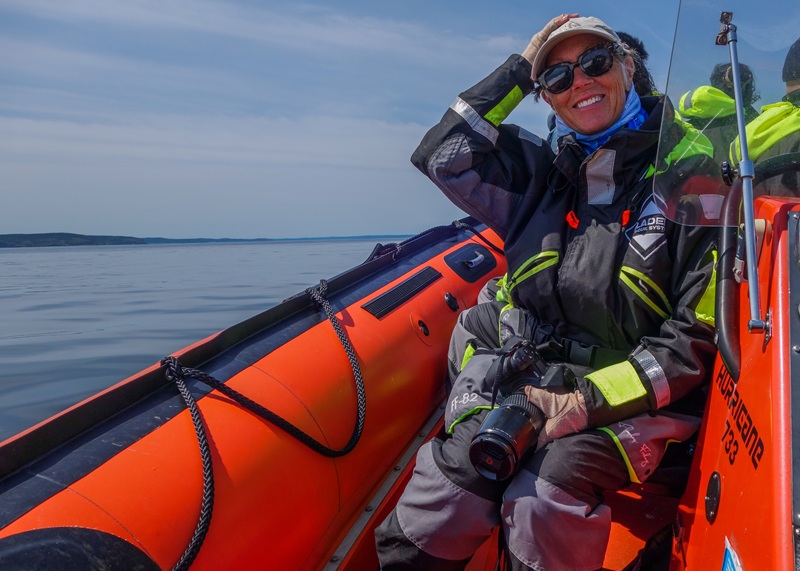
After everyone was dressed in a brightly colored survival suit, we boarded our zodiac and headed out to sea. 

gearing up in our survival suits

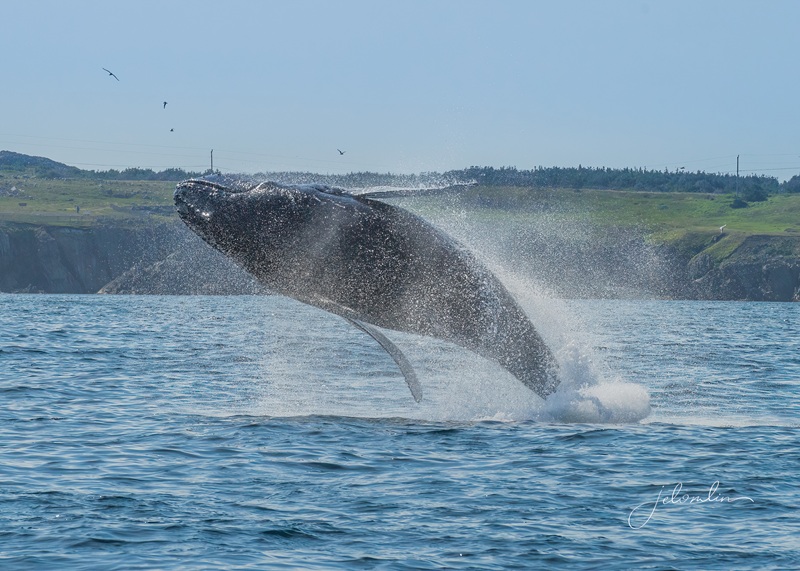
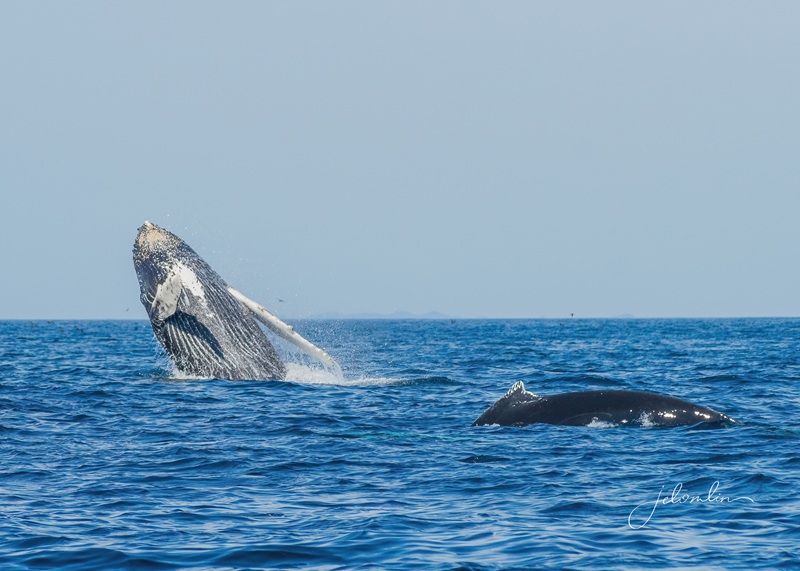
Within minutes, Captain Bob spotted a minke whale. These whales are very shy, and it was just a quick glimpse before she disappeared beneath the waves. Next up, a pod of Atlantic white-sided dolphins, but at the same time, a mother and baby humpback breached in the distance.

minke whale

Leaving the dolphins behind, we raced to the whales, as there is never a guarantee of how long they might continue this behavior. 

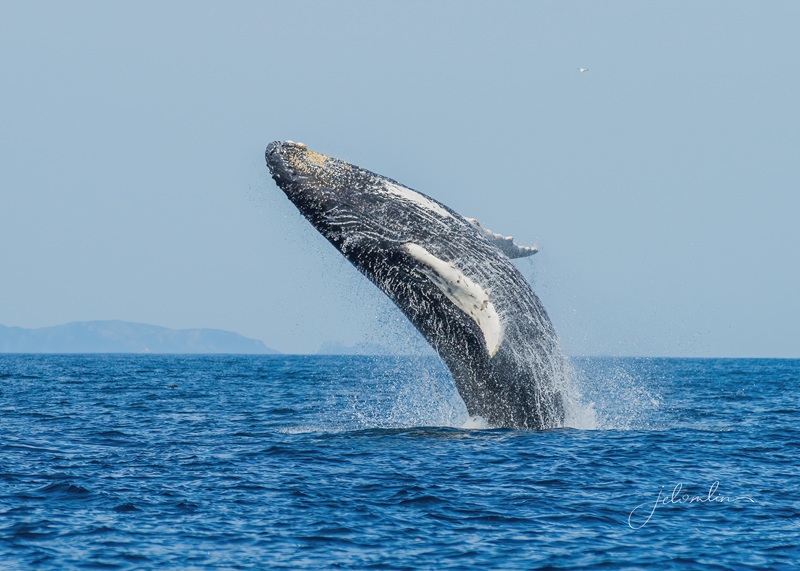
Mama jumped a few times, but the calf jumped over and over again. I missed a few breaches as I was distracted by more whales off in the distance, but in the end, everyone got their money shots. (click on photos to enlarge)

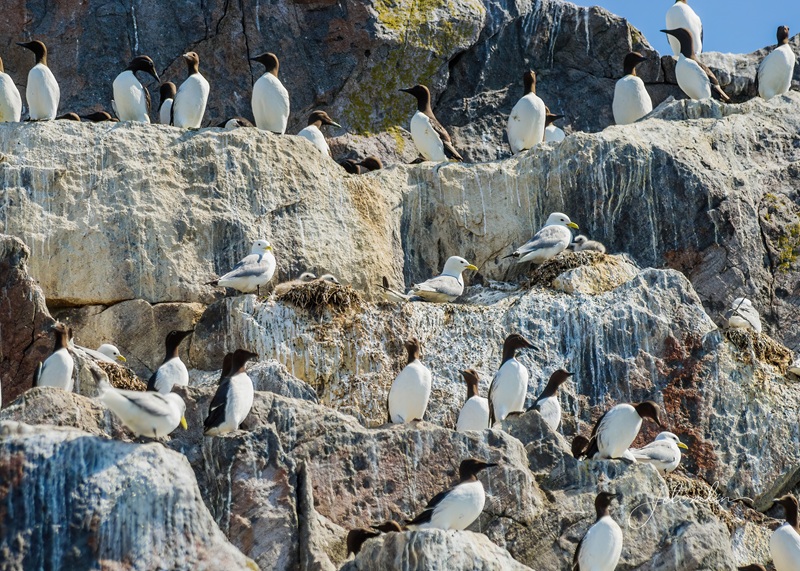
Finally, after more than an hour of continuous breaches, we left the whales. We headed to the seabird colony below the lighthouse, a bustling community of puffins, razorbills, and murres, among others.

the seabird colony below the lighthouse

Captain Bob wanted to find us more dolphins,

Captain Bob looking for dolphins

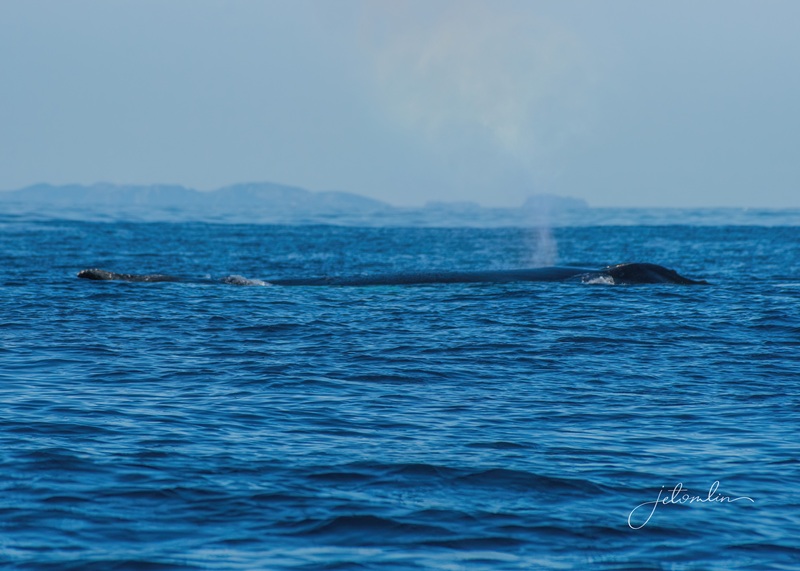
But we were diverted by three fin whales, the second-largest whale on the planet. These mighty whales rarely show their tails or breach, but they did show us their distinctive dorsal fins.

fin whale

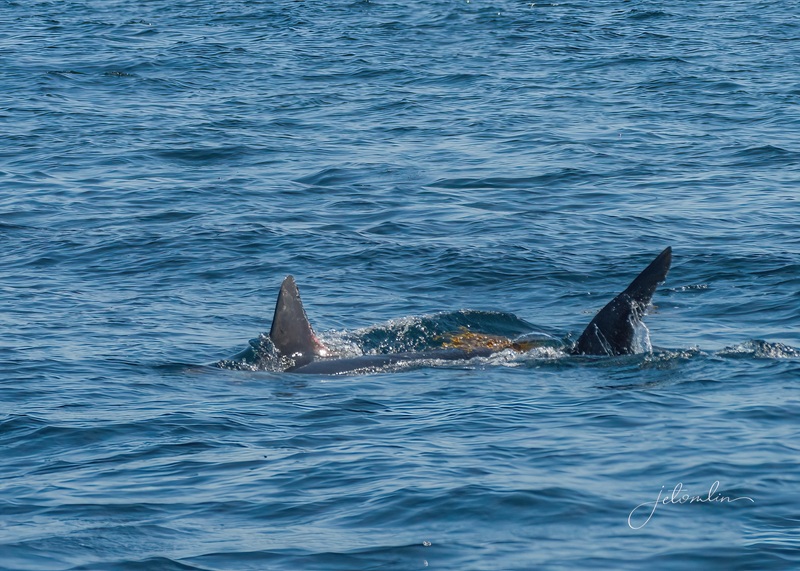
Suddenly, Patti, a fellow passenger, cried, “What is that fin?!?”  It turned out to be a porbeagle shark playing with a piece of kelp, adding even more excitement to an already fantastic day.

porbeagle shark playing with kelp

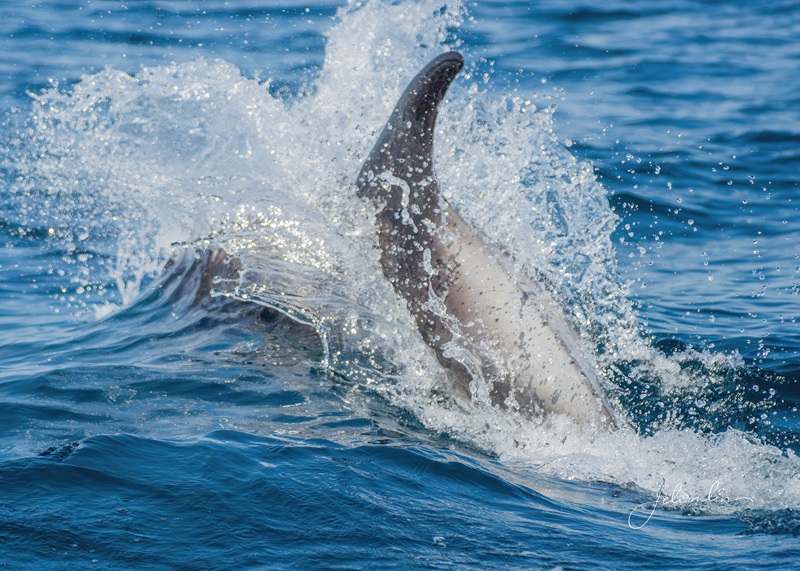
As we turned back towards Bonavista Harbor, we found our dolphins. They raced around the boat – almost too fast to photograph, but a thrill, nonetheless.

dolphins!

At the end of our adventure, Captain Bob instructed us to look up. A friend was flying a drone overhead and snapped a quick photo of our group – a special keepsake from our special day. (arrow through gallery set)

Later that afternoon, I returned to Cape Bonavista to search for a fox family that lives in the grassy meadow below the lighthouse. After 90 minutes of fox-less waiting, I walked up to the rookery. I was delighted to find a large group of puffins on the mainland, happily going about their evening business while cameras clicked away. (Arrow through gallery set)

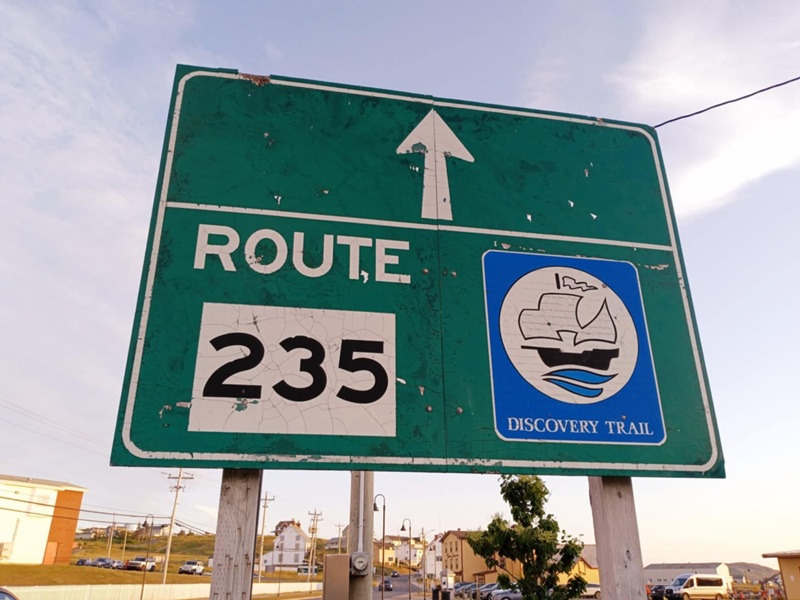
With the weekend upon me, I decided to explore more of the area. Johanna had given me a list of “must-sees,” and I planned routes that would cover most of them. As I drove along, I realized I was following part of the “Discovery Trail,” a 425km route that circles the Bonavista Peninsula.

I realized I was following part of the “Discovery Trail”

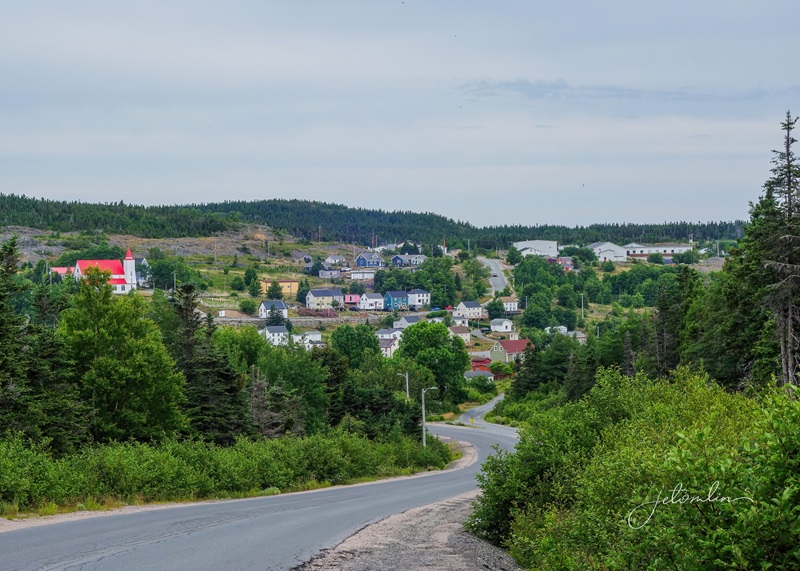
My first stop on Saturday was the charming town of Kings Cove and the Lighthouse Trail.

the charming town of Kings Cove

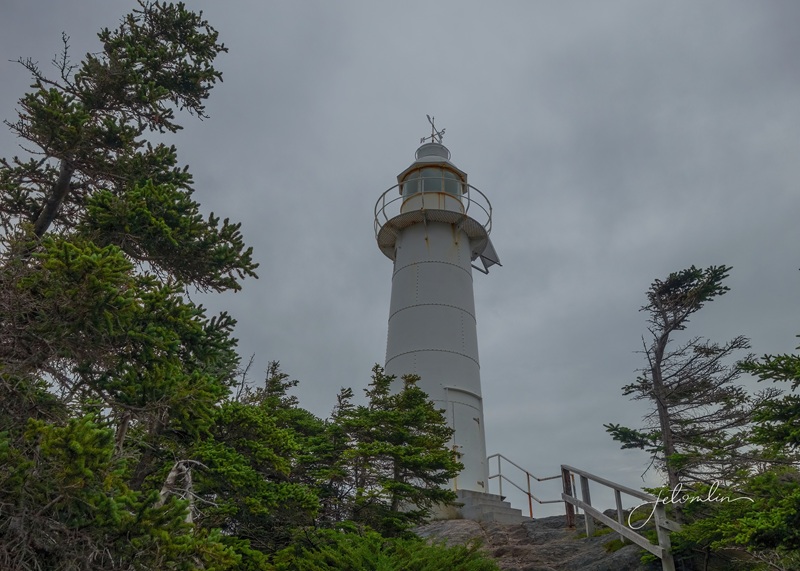
I chose the longer, 3.5km loop and was rewarded with a beautiful view from the lighthouse,

Kings Cove lighthouse

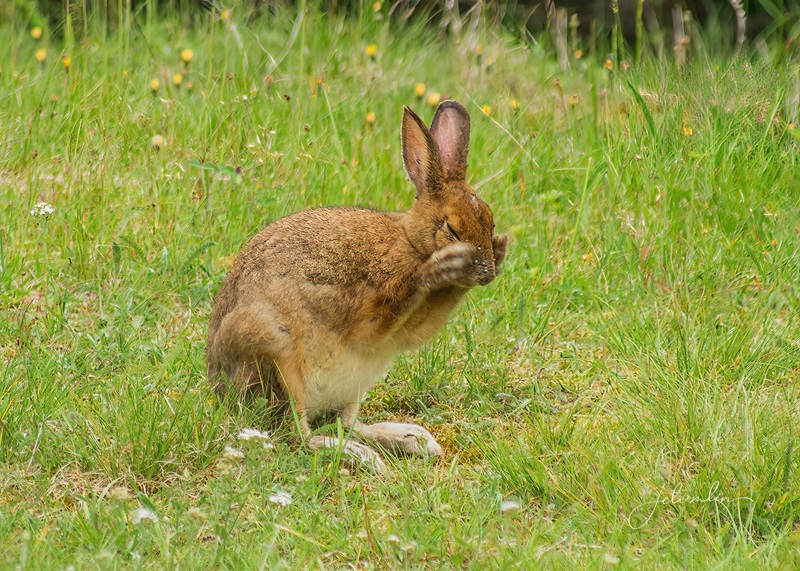
Another snowshoe hare,

the poor thing was trying to rub ticks off her nose

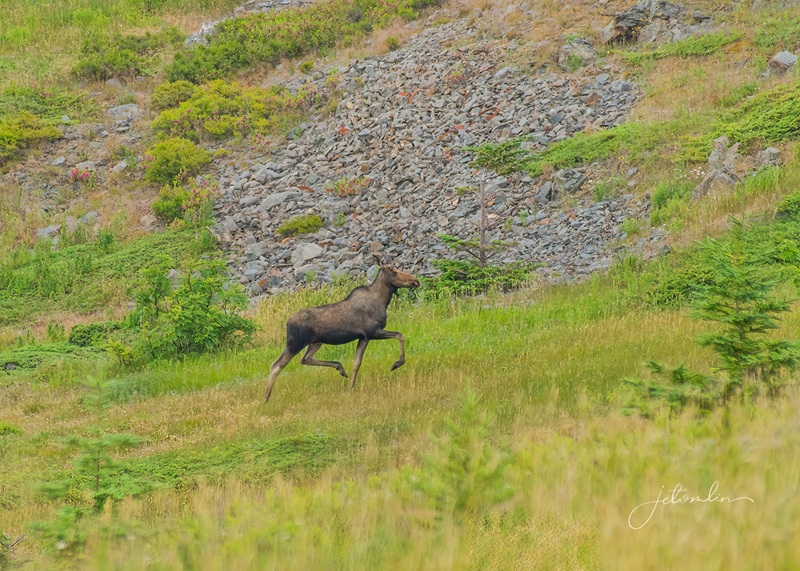
And a moose!

a moose

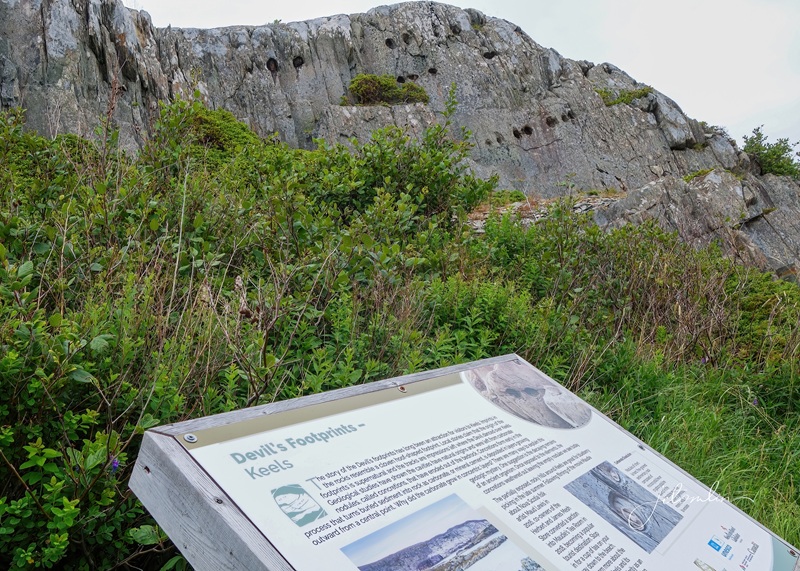
I had planned to stop at Maudie’s Tea Room in Keels for breakfast, but I was too early for their noon opening. I missed their sign on my way in and stumbled upon another interesting site: Devil’s Footprints.

Devil’s Footprints in Keels

While geological studies attribute these cloven, hoof-shaped indentations to natural causes, locals claim that the tracks were made by the Devil dancing over Keels. I found the local version a much better story!

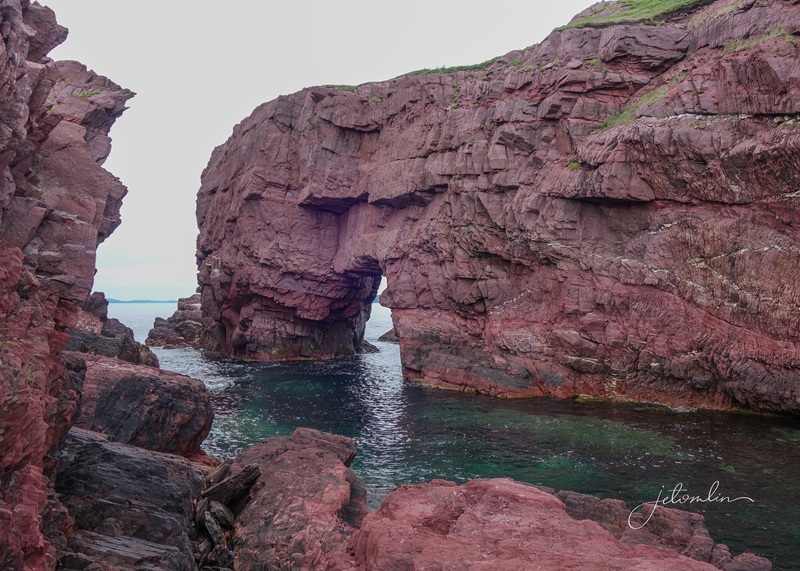
My journey then took me to Tickle Cove and the awe-inspiring Sea Arch, a magnificent rock formation.

Tickle Cove Sea Arch

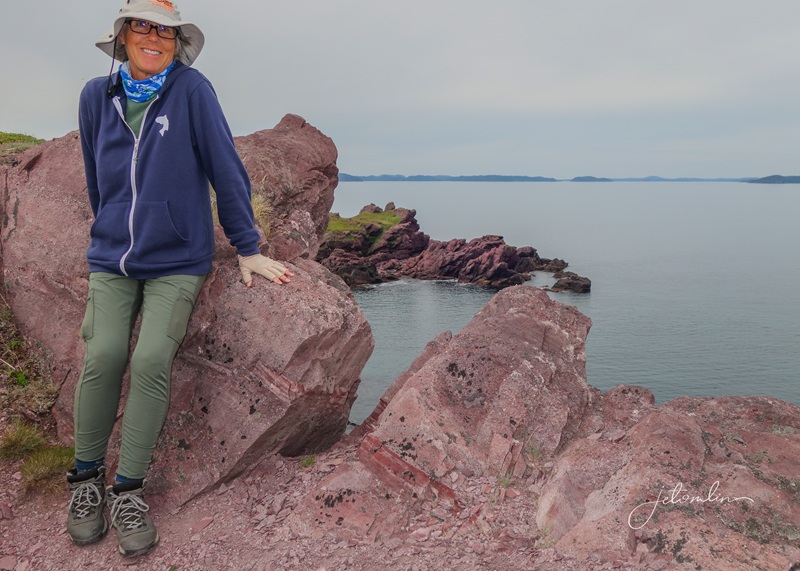
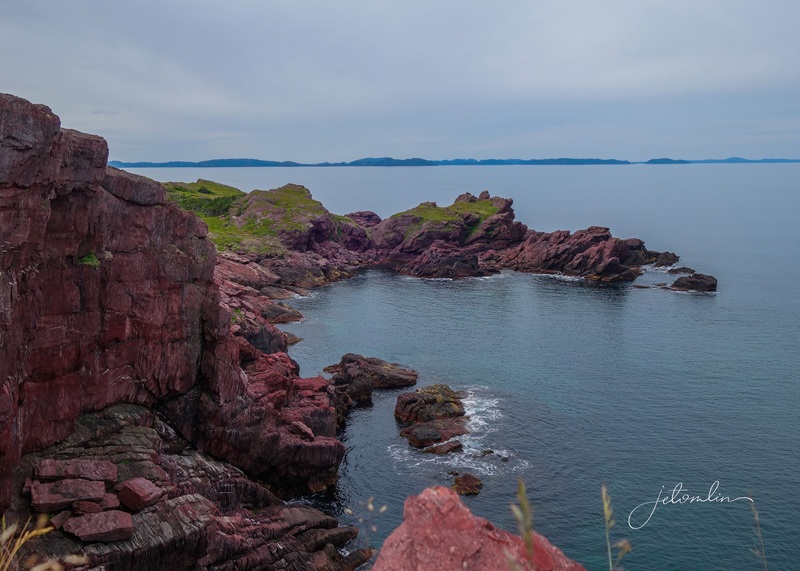
I scrambled to the top of the hill above the arch and, lying on my stomach, gazed straight down at the sheer drop! (click on photos to enlarge)

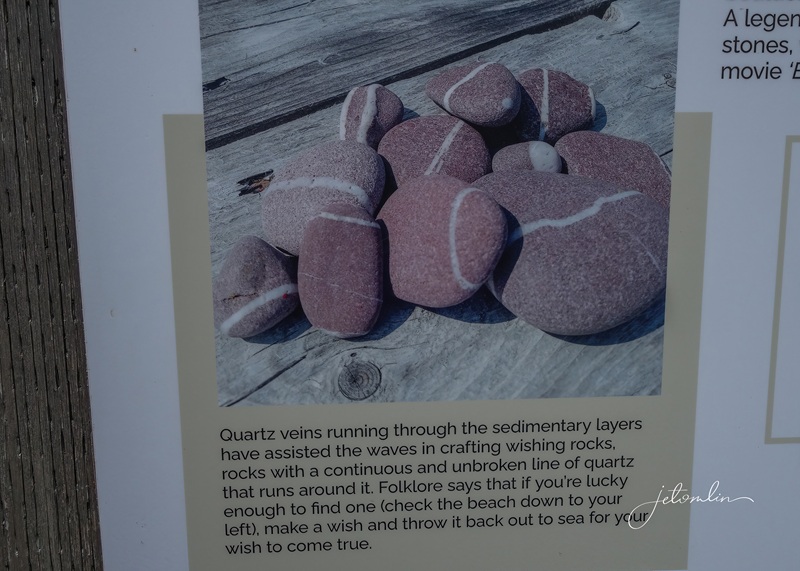
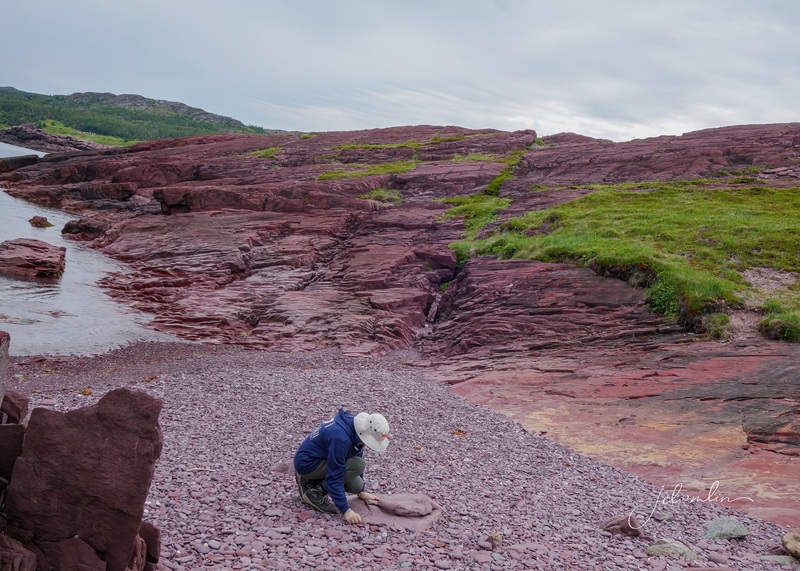
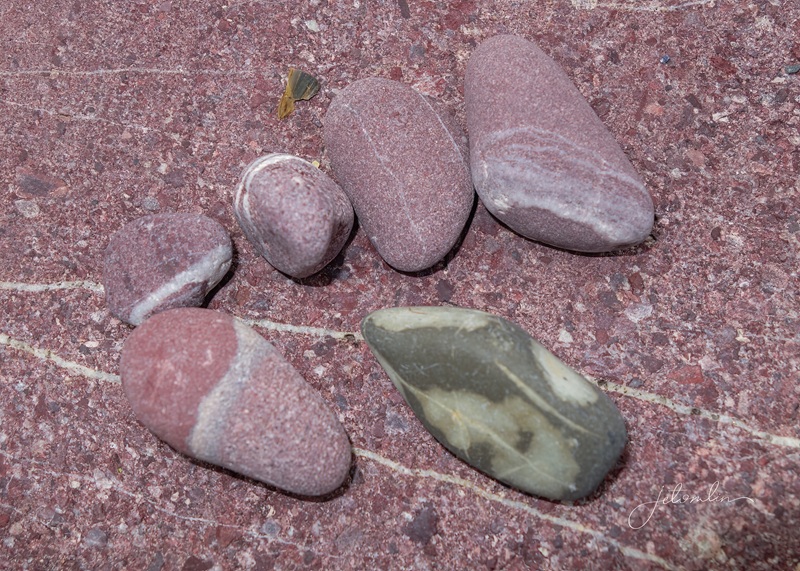
Below the Sea Arch was a small rocky beach filled with wishing stones – rocks with continuous lines of quartz running around them. Folklore says if you’re lucky enough to find one with unbroken lines and make a wish while throwing it into the ocean, your wish will come true.

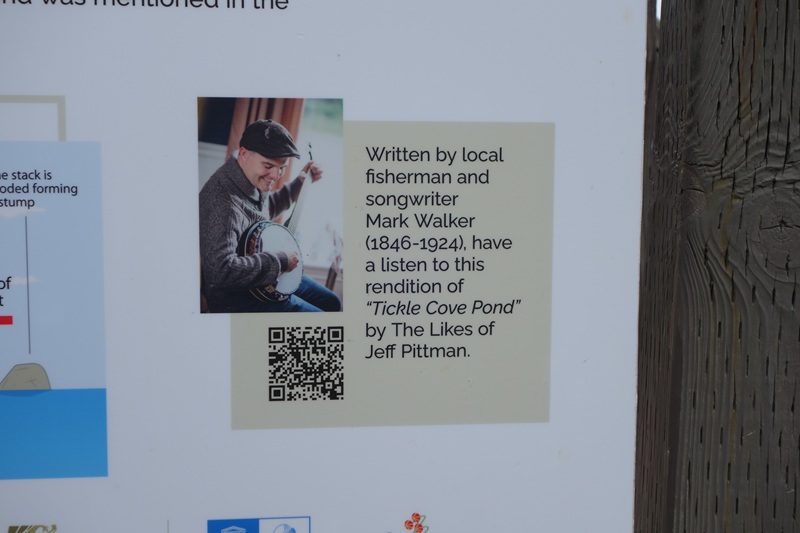
the legend of the wishing stones

I spent an hour on the beach searching for a few stones that were just the right size to carry home. While I was there, I also threw one into the sea with a wish to return to Newfoundland someday. (click on photos to enlarge)

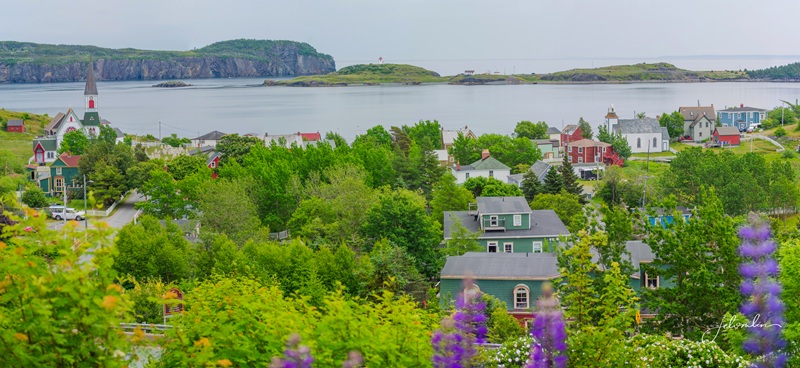
After a quick lunch in picturesque Trinity, I climbed the Gun Hill Trail for a panoramic view of the town.

the picturesque town of Trinity

And then, because I could not help myself, I returned to the Elliston puffin site. It was crowded this Saturday afternoon, and after snapping a few more photos of these captivating birds, I returned home to Bonavista. (Arrow through gallery set)

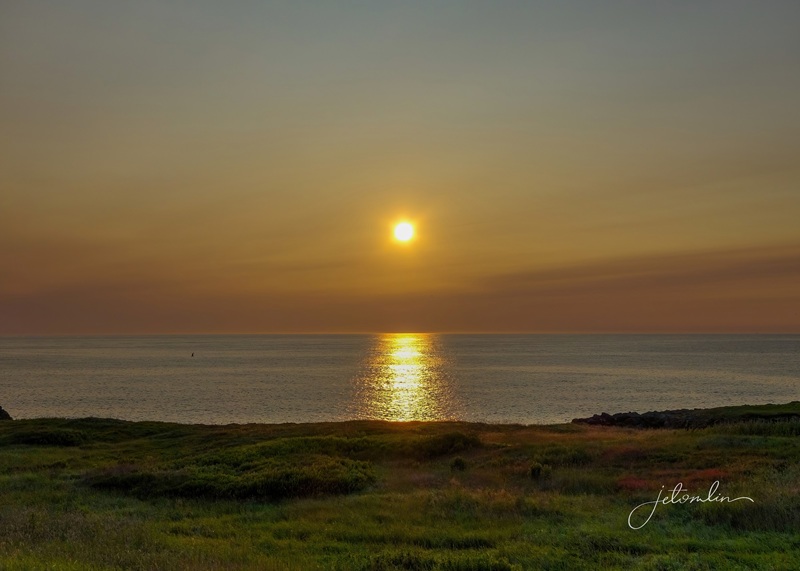
Sunday had me out the door before dawn, and I watched the sunrise over the ocean as I drove to Port Union and the Murphy’s Cove Trail.

sunrise over the ocean

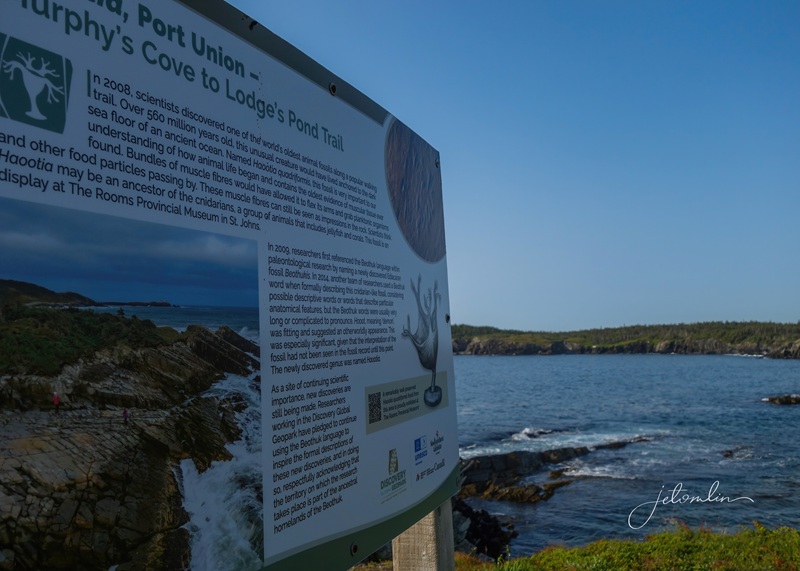
This 7.7km hike features multiple ocean views and an interesting fossil story.

Murphys Cove trail

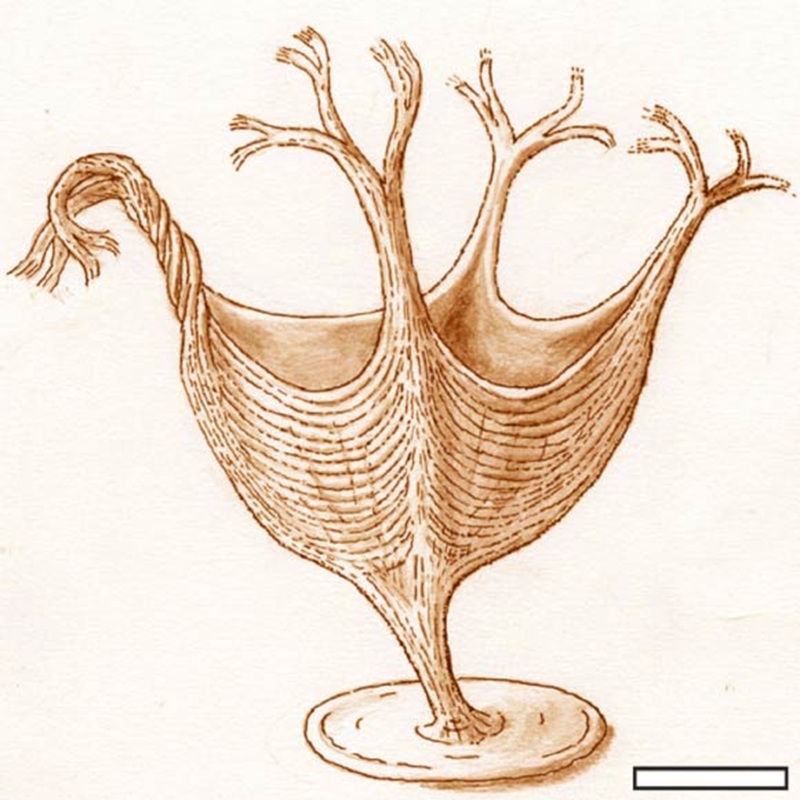
In 2008, scientists discovered the fossil of one of the world’s oldest living animals: a 560-million-year-old sea creature called a Haootia quadriformis. This ancient cousin to jellyfish is significant in understanding the origins of life. The fossil is on display in a museum in St. John’s, but it was fascinating to learn about it on this remote trail! (click on photos to enlarge)

However, the most exciting part of my hike was the sudden appearance of a red fox darting across the path in front of me! I had given up on seeing another one on my trip, and this unexpected moment made my day.

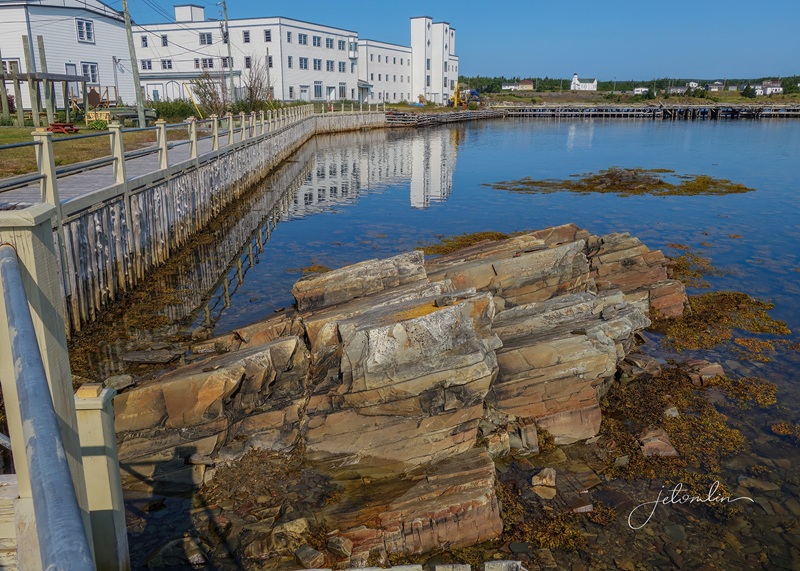
Port Union is North America’s first and, to this day, only union-built town. I checked out the historical Factory and Coaker Manor, and scrambled about on the rocks behind the Factory building, searching for (and failing to find) more fossils.

The Factory and Port Union fossil site

My next stop was the Skerwink Trail in Port Rexton. The Skerwink Trail is continually ranked in the top 35 trails in North America and Europe, and rightly so. As the founder of the trail, John Vivian, said, “This trail offers more scenery per linear foot than any other trail in Newfoundland.”

beautiful Skerwink Trail

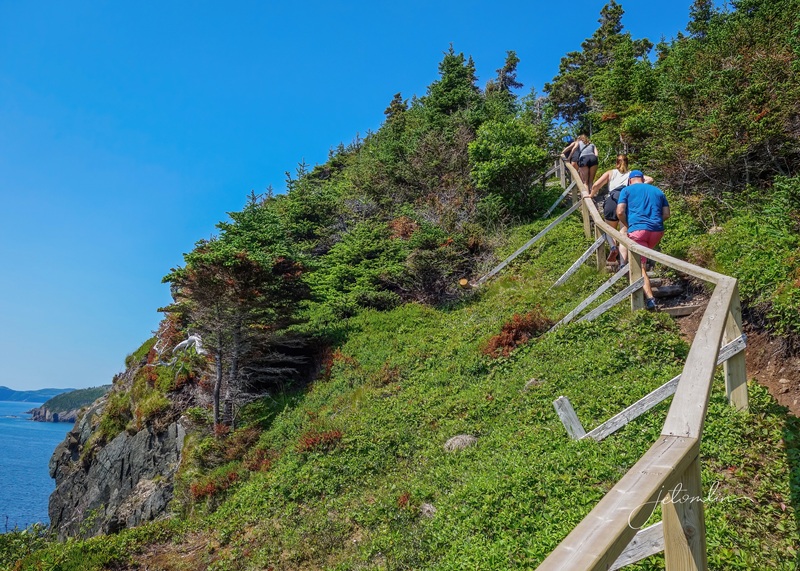
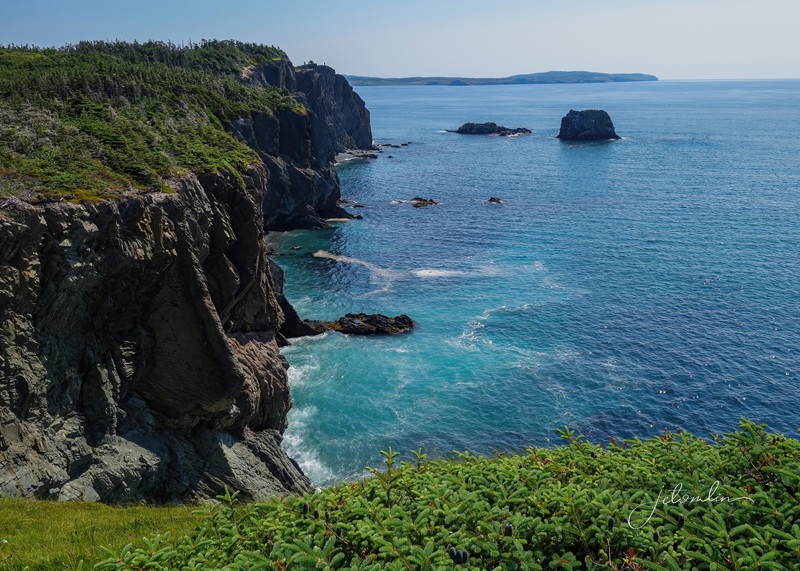
I followed the 5.3km route up and down steep hills that hugged the rugged coastline, offering breathtaking views of the ocean that on this day was an impossible shade of blue.

the steep up & down trail followed the rugged coastline

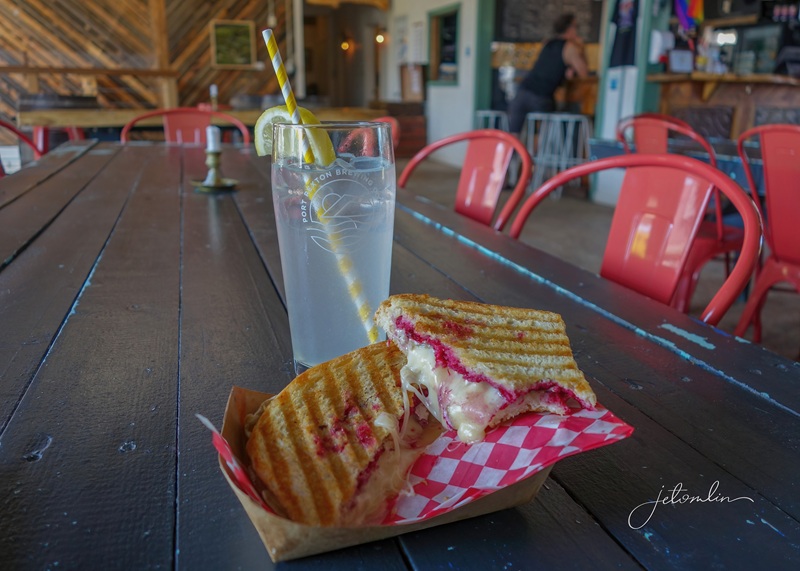
After two somewhat strenuous back-to-back hikes, I was ready for lunch! I stopped at the famous “Oh My Cheeses” food truck in Port Rexton and splurged on “The Gull” – grilled brie with Newfoundland partridge berry jam on toasted bread. Yum!!

grilled brie & partridge berry jam from Oh My Cheeses in Port Rexton

On my way back to Bonavista, I swung by the Elliston puffin site one last time. The puffins were not putting on a show like they had earlier in the week. But Newfoundland had one final surprise in store: an iceberg!

an iceberg! (July 13, 2025)

I traveled to Newfoundland for the puffins and went home with so much more: whales, dolphins, foxes, a moose, countless stunning landscapes, rewarding hikes, delicious seafood, picturesque towns, spectacular sunrises and sunsets, and an iceberg – the final icing(berg) on the cake!
Bonavista Peninsula landscapes (with “Up She Rises” sung by Jason Ryan during my dinner at Skipper’s Restaurant)

And although I didn’t have the opportunity to get properly “screeched in” on this trip, in my heart, I am an honorary “Newfie.”

To view all my puffin photos arrow through the set or click to open a new tab in Flickr:
Atlantic Puffins

To view my whale and other Newfoundland photos arrow through the set or click to open a new tab in Flickr:
Humpback whale