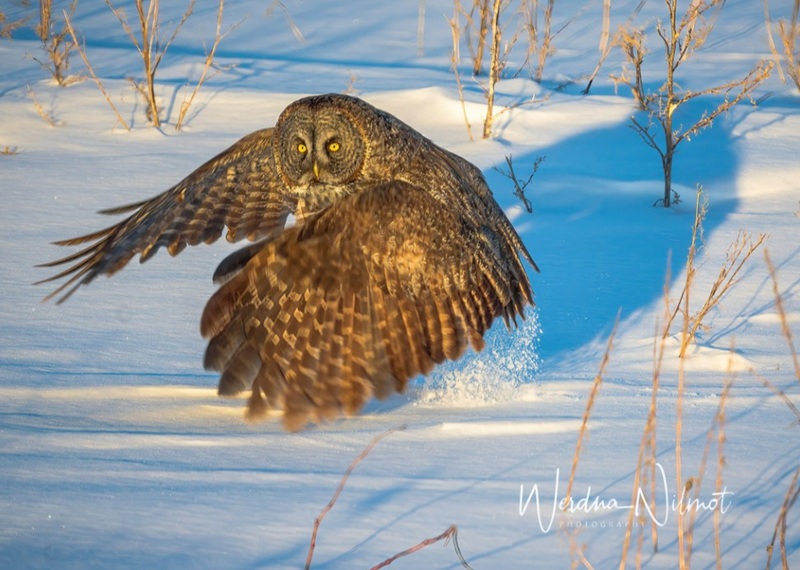
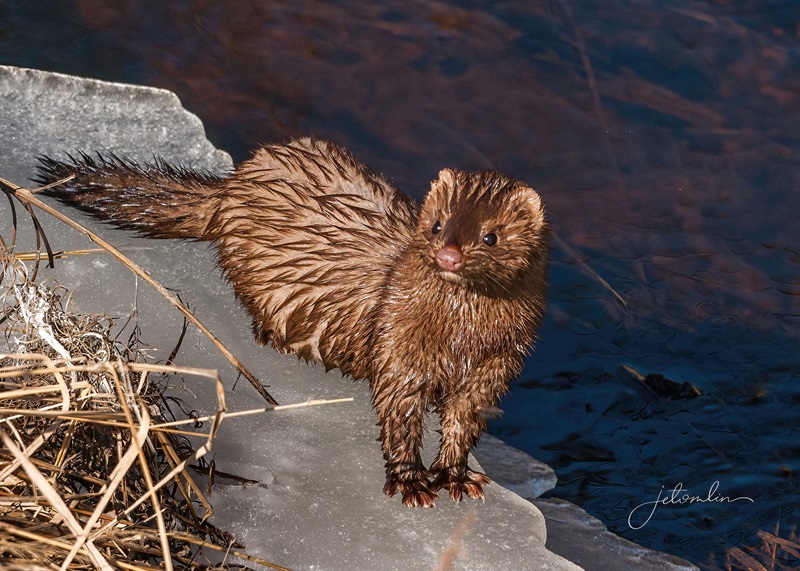
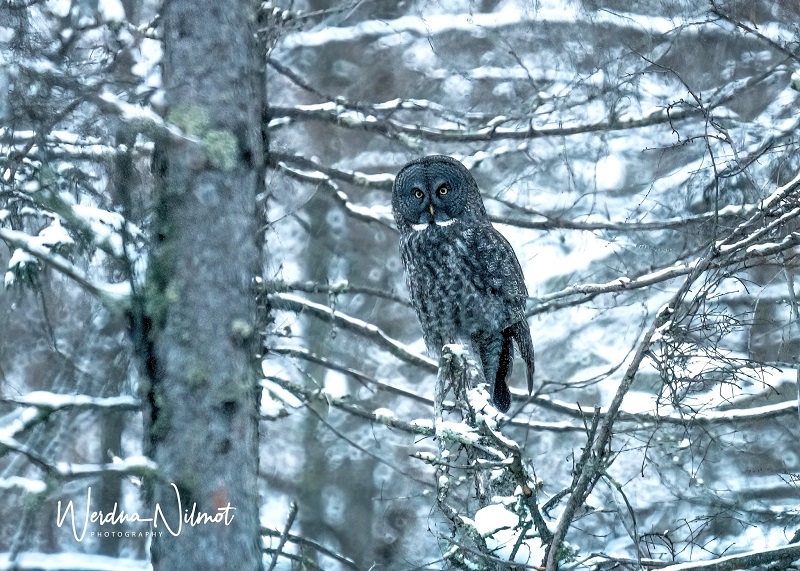
In 2022, 23, and 24, we traveled to Northern Minnesota’s Sax Zim Bog in the middle of winter to photograph owls. We always had a magical time and were fortunate to see everything from great grays hunting in the snow to a playful mink who seemed to enjoy posing for us as much as we enjoyed photographing her.
great gray owlminkclick on photos to enlarge
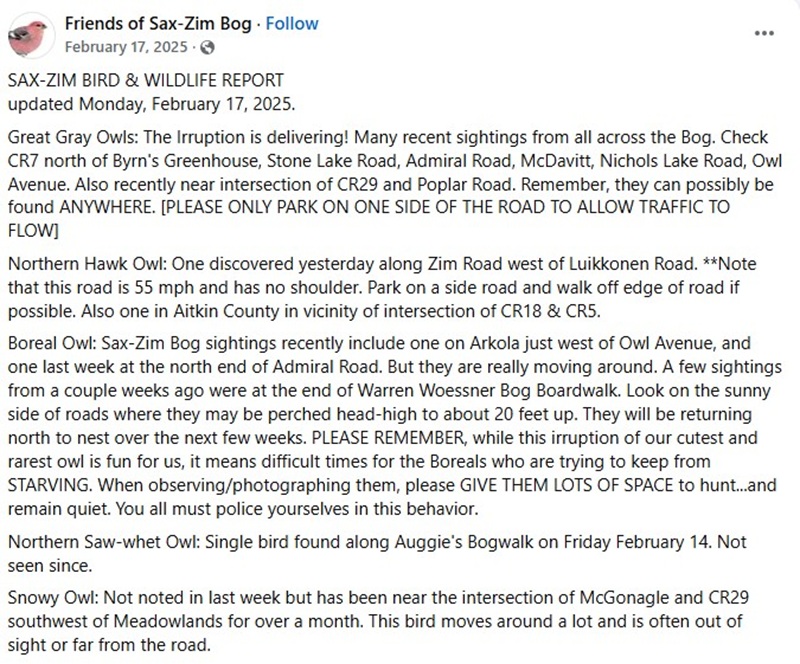
With Uganda already on our 2025 travel schedule, we were unable to make a trip north that winter. Unfortunate timing for us, as it was an “irruption year,” a rare event that occurs when there is a sudden increase in the population of certain owl species, including great grays.
SZB Bird & Wildlife Report, February 17, 2025
We hoped for the best in 2026, but by mid-January, it was clear that this winter was nothing like the last. Sightings of any owls were scarce, and great grays were non-existent.
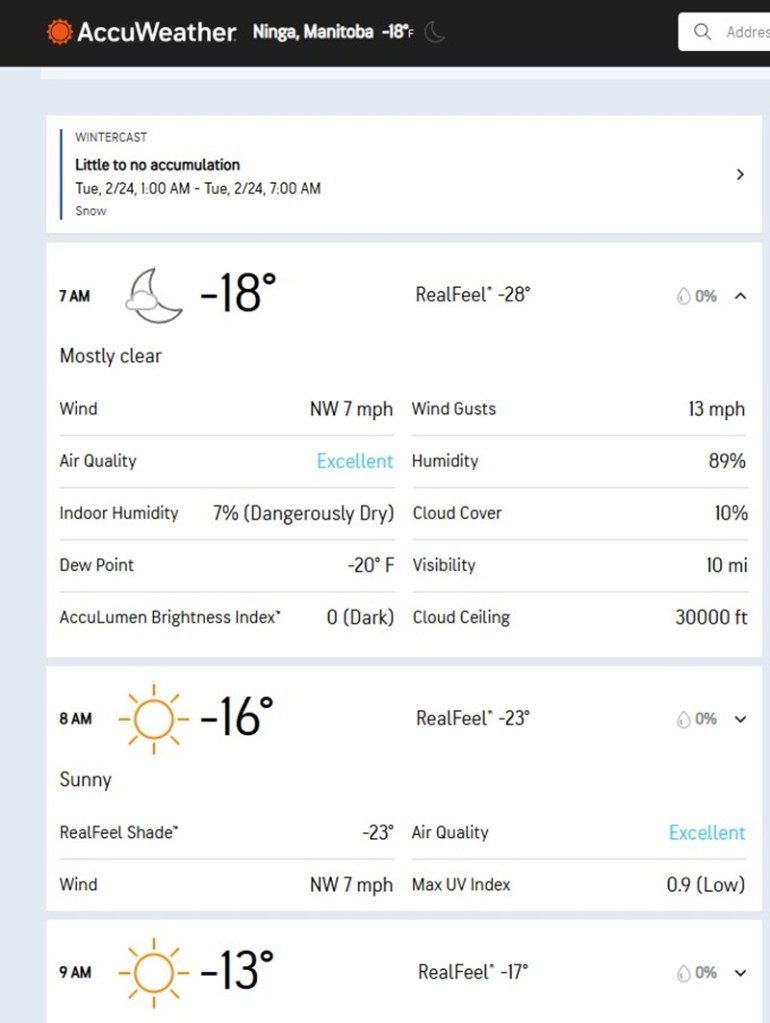
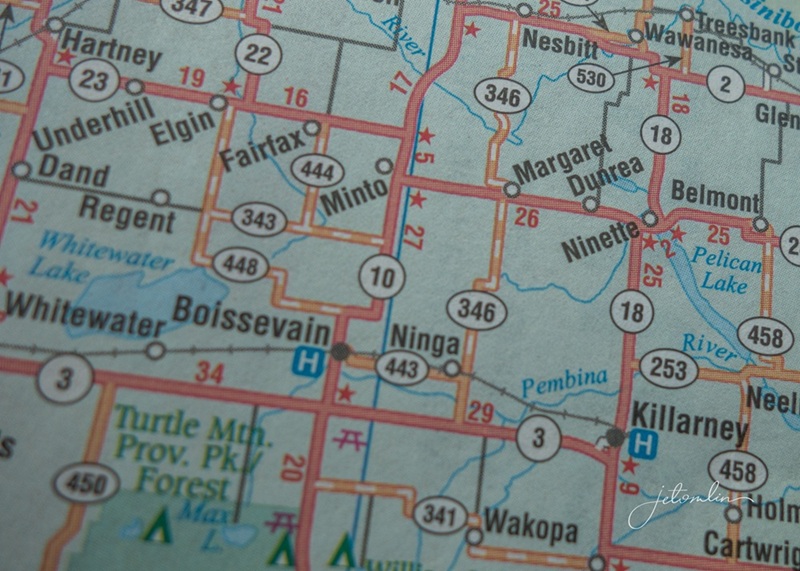
It didn’t make sense for us to travel all that way only to be disappointed. We felt that by going further north, we might have better luck with our wildlife sightings, so TG found an affordable Airbnb in the small town of Ninga, Manitoba.
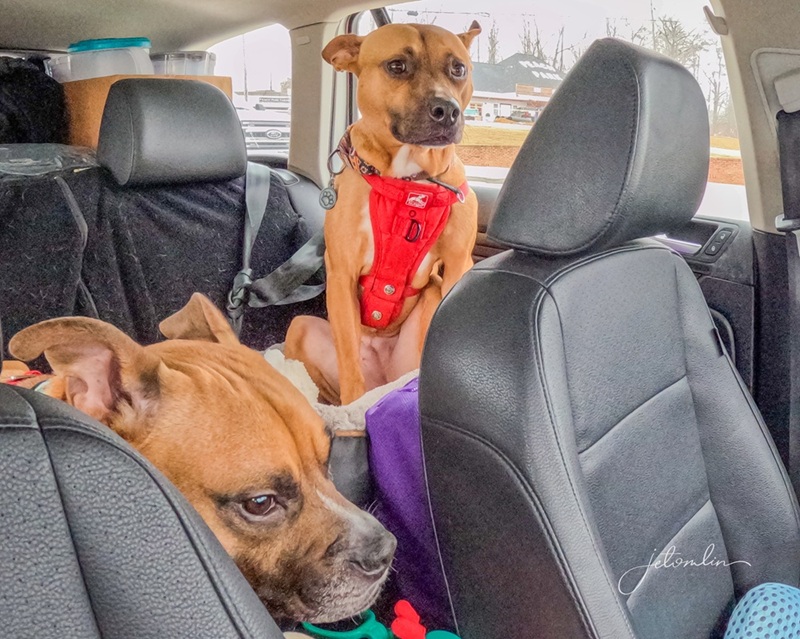
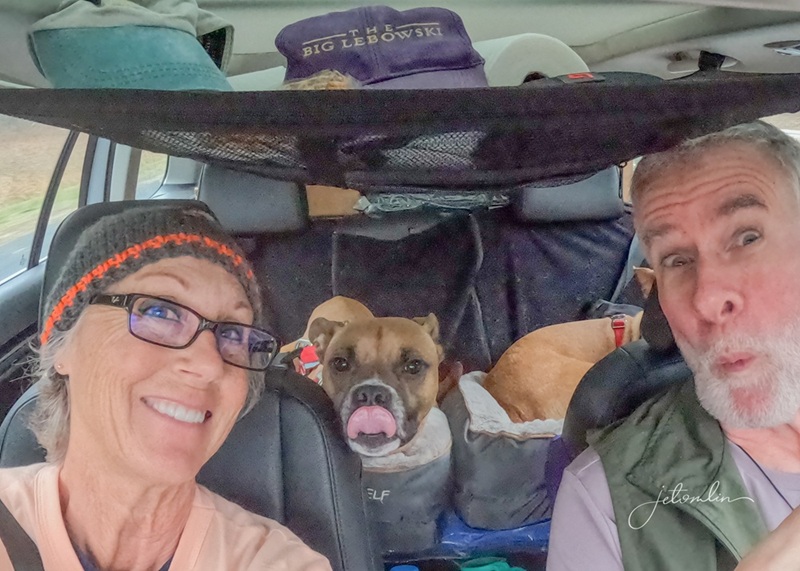
Oscar & Maddie: such good travel buddies!
1800 miles in the car
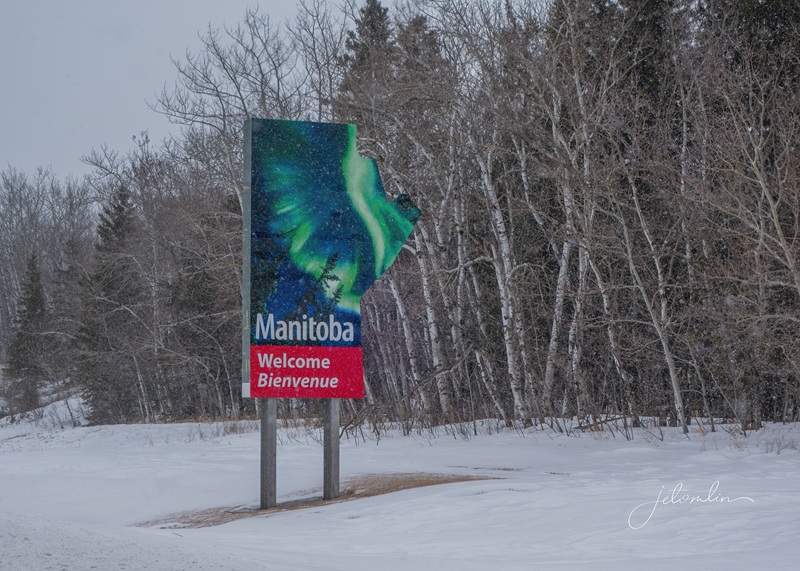
Welcome to Manitoba!
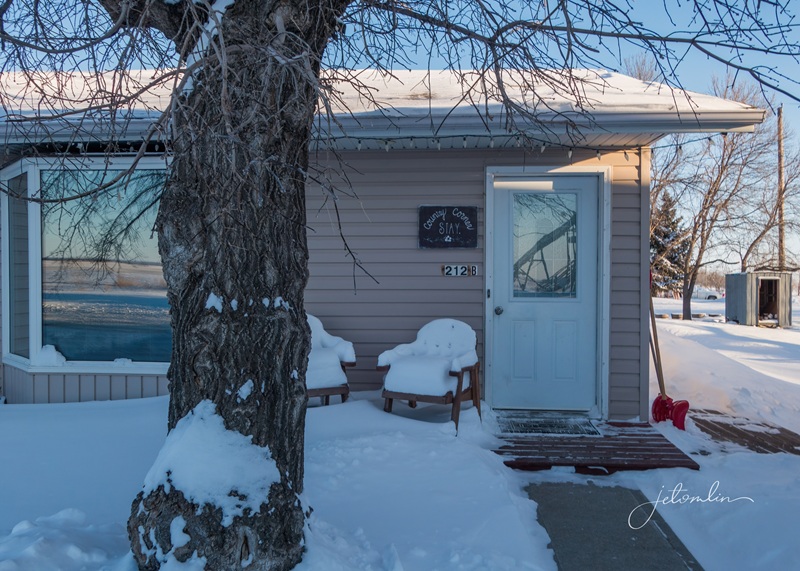
Bethany’s Country Corner Stay was a charming duplex and perfectly suited our needs.
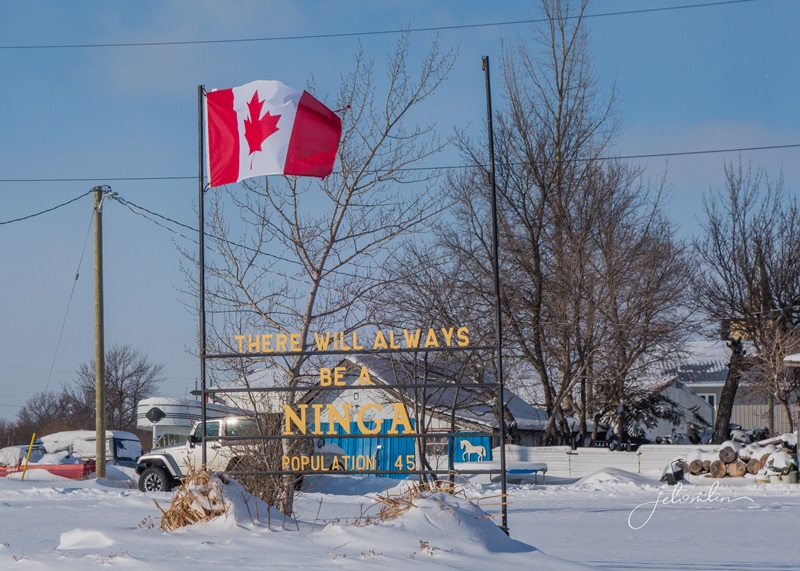
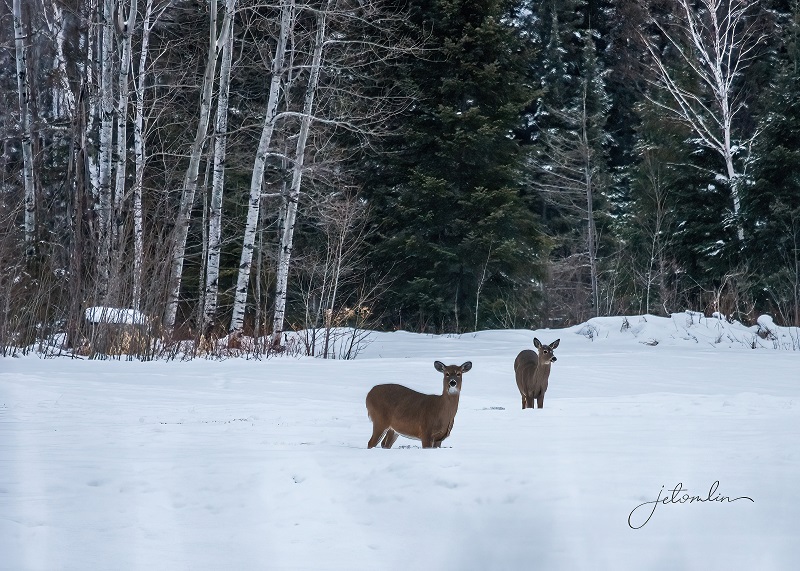
The forecast called for warmer temps in the coming weeks, so on our first full day, we made a quick grocery run to Brandon and then stayed close to home. Still, on that first drive we saw a red fox running across a snowy field, several white-tailed deer, flocks of snow buntings, a magpie, and, to our delight, a snowy owl. The area seemed promising! We also took a few walks around the tiny village of Ninga: population 45.
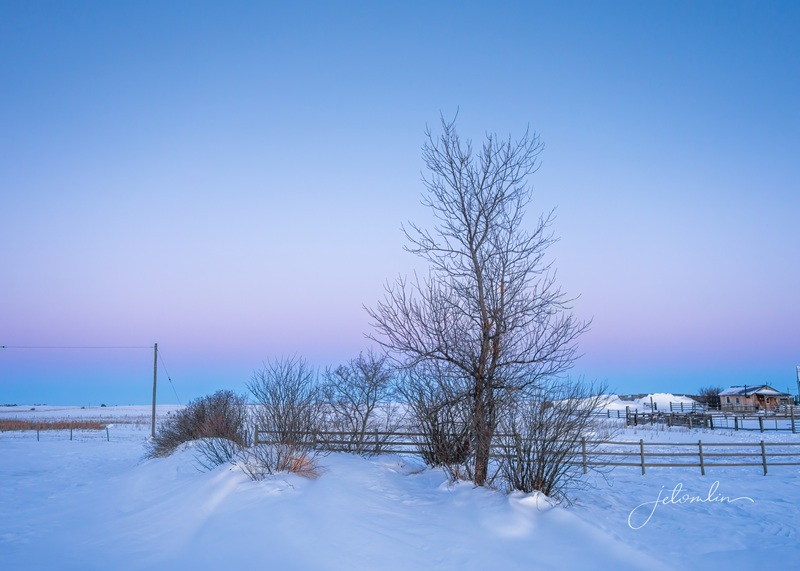
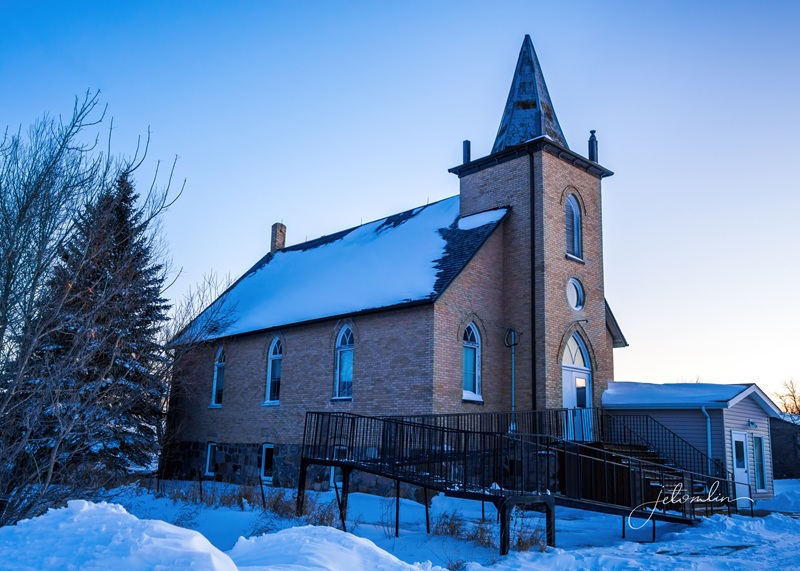
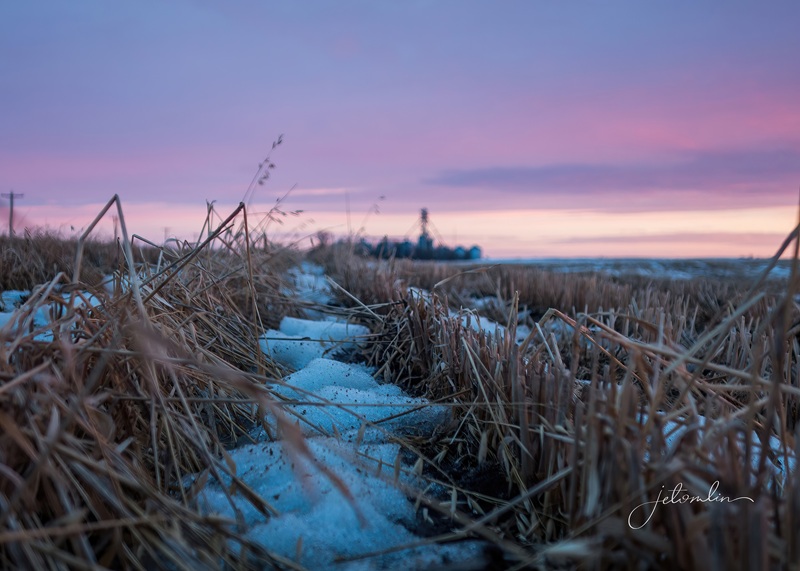
sunrise reflection to the westNinga Presbyterian Churchour view to the southNinga sunriseclick on photos to enlarge
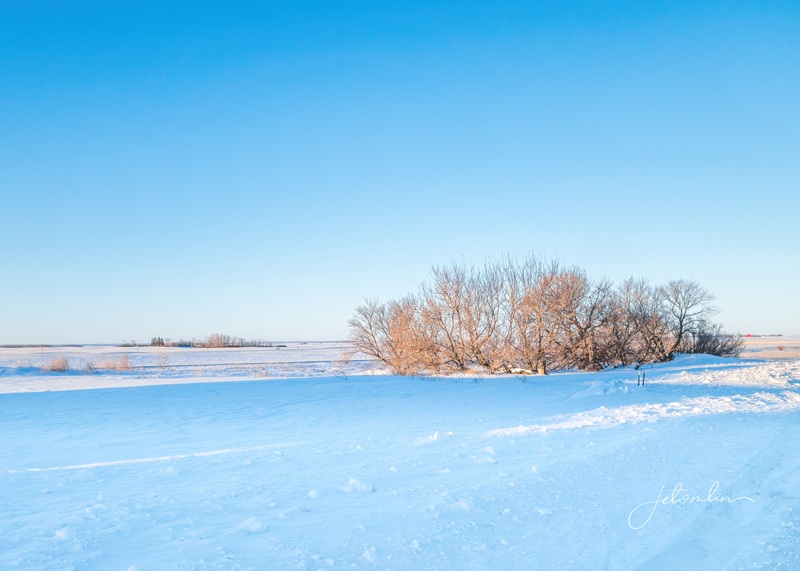
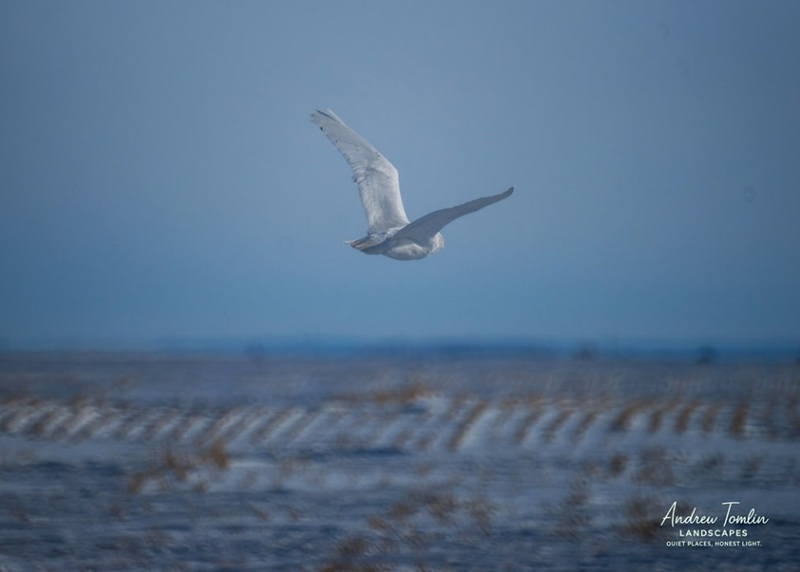
We quickly settled into a routine. Every morning, we woke early and planned our photo safaris. Since we were in snowy owl country, we were confident we’d have good luck no matter which road we took. Over the four weeks, we saw 28 snowy owls.
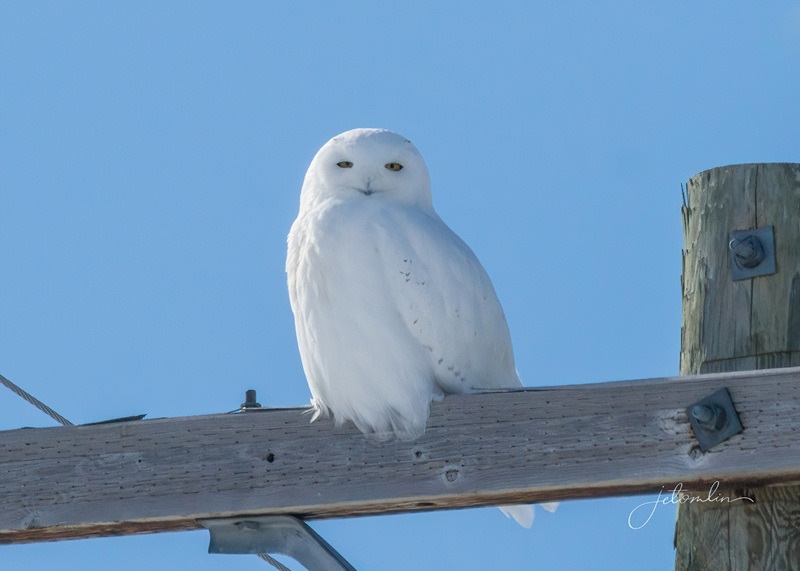
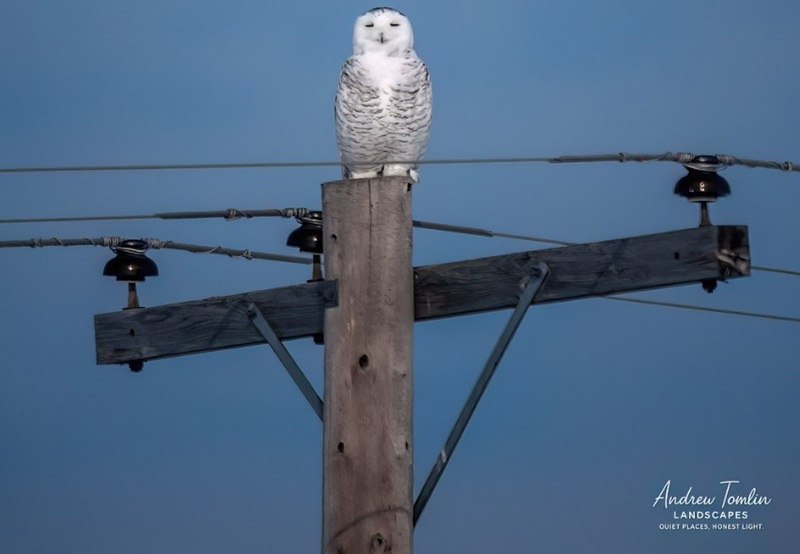
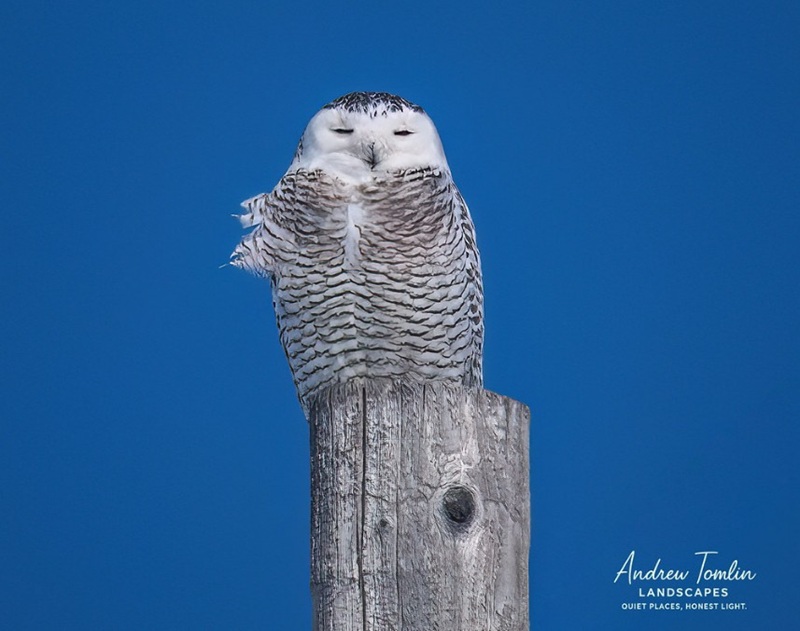
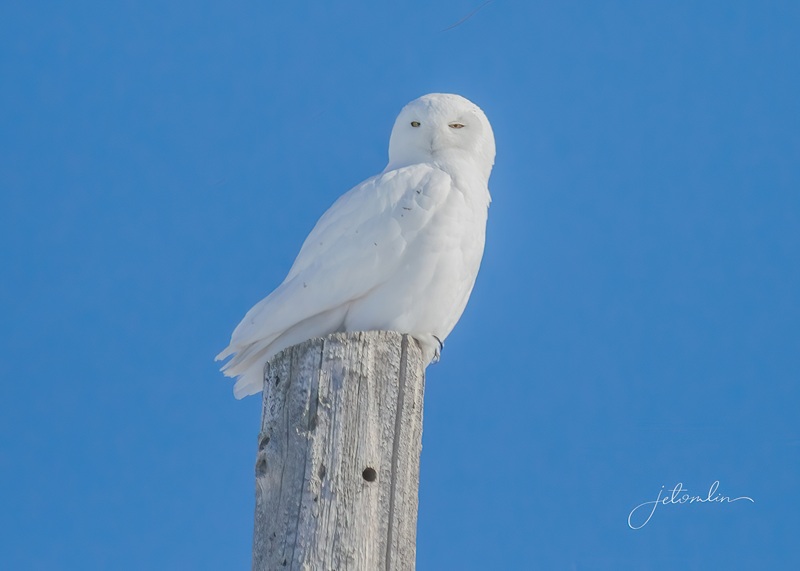
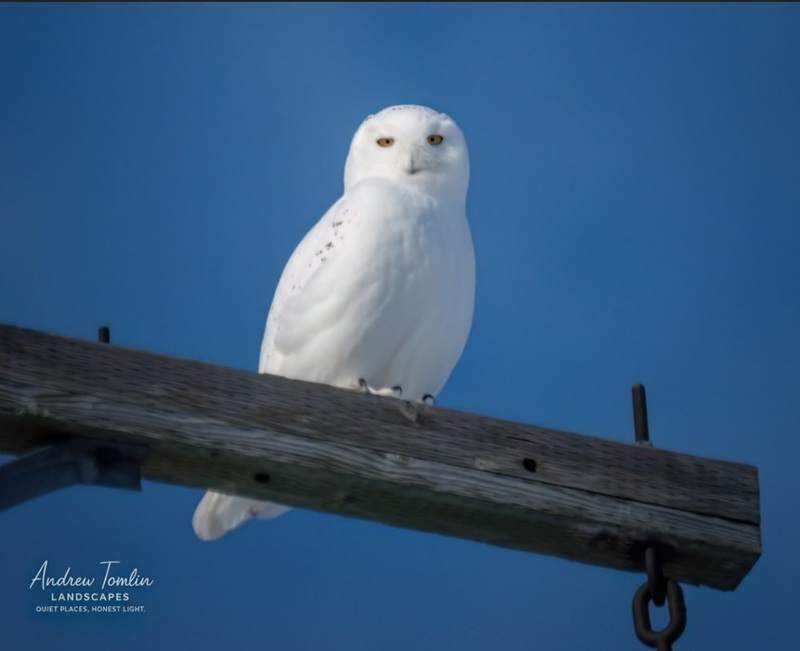
male snowy on a power pole
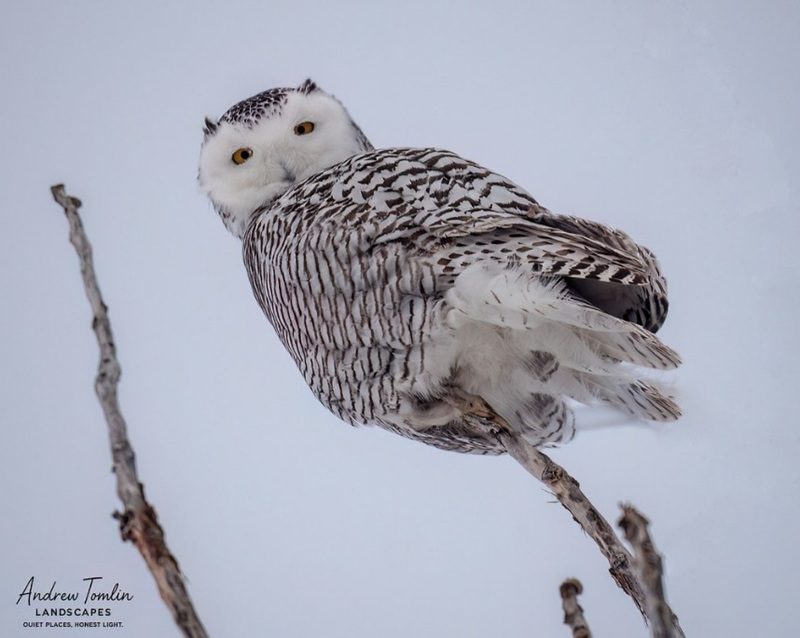
female snowy at the top of a tree
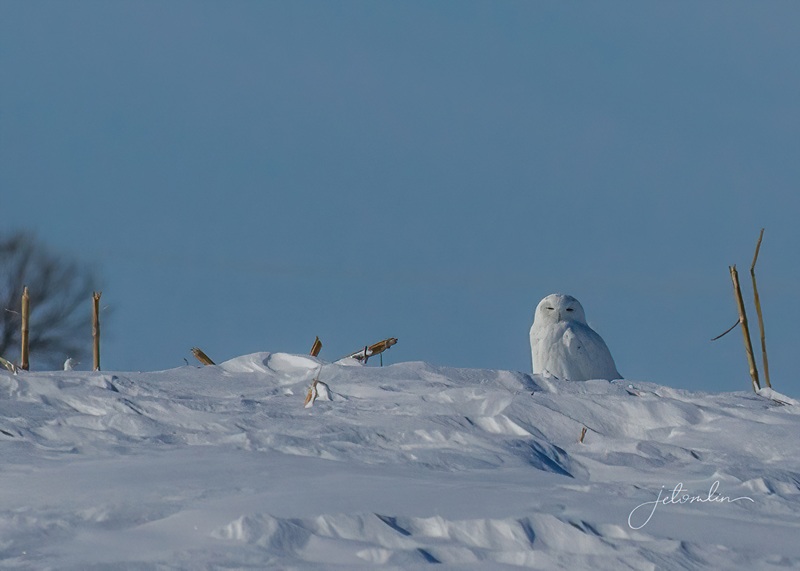
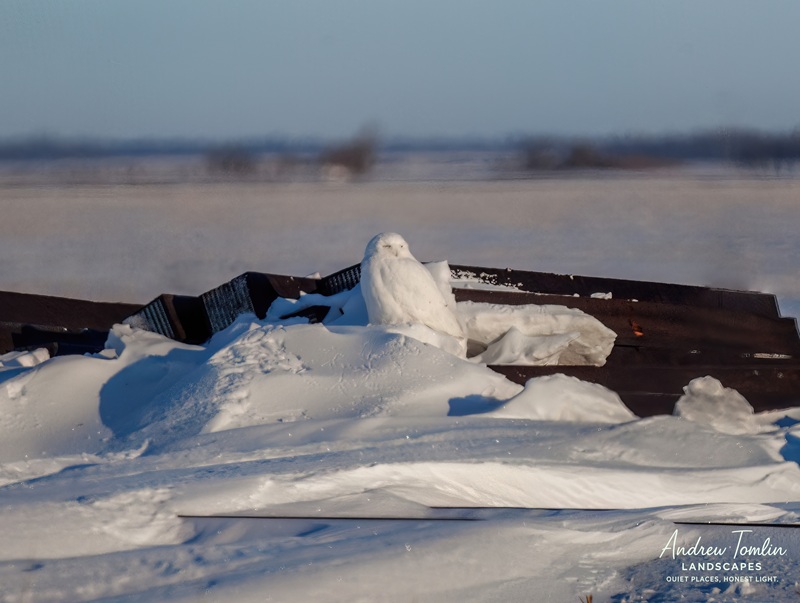
male snowy on a snow drift
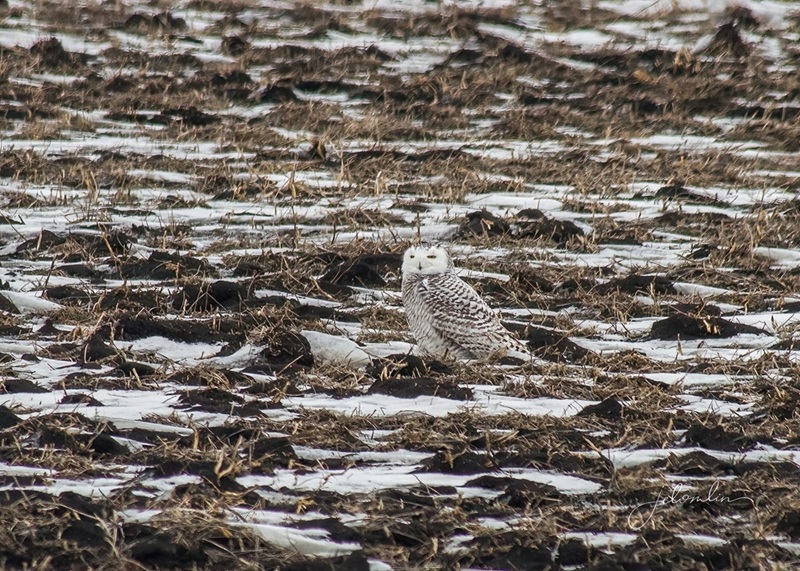
female snowy in a field
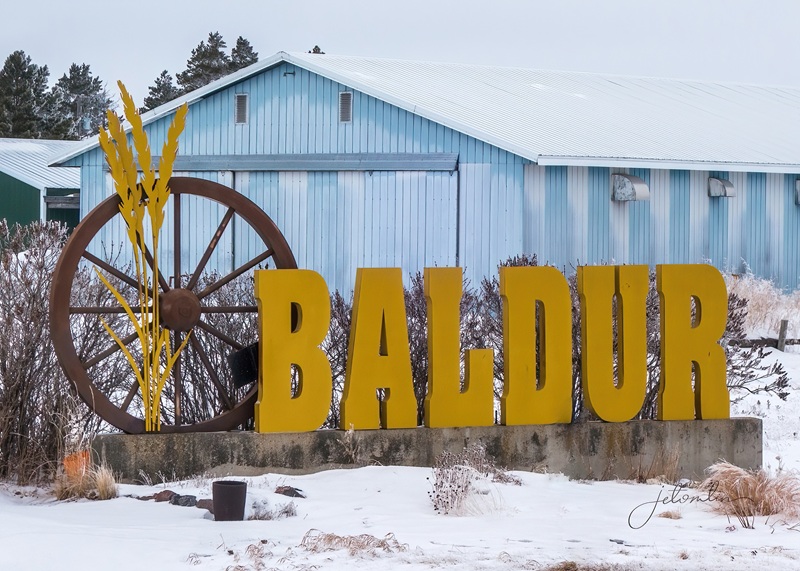
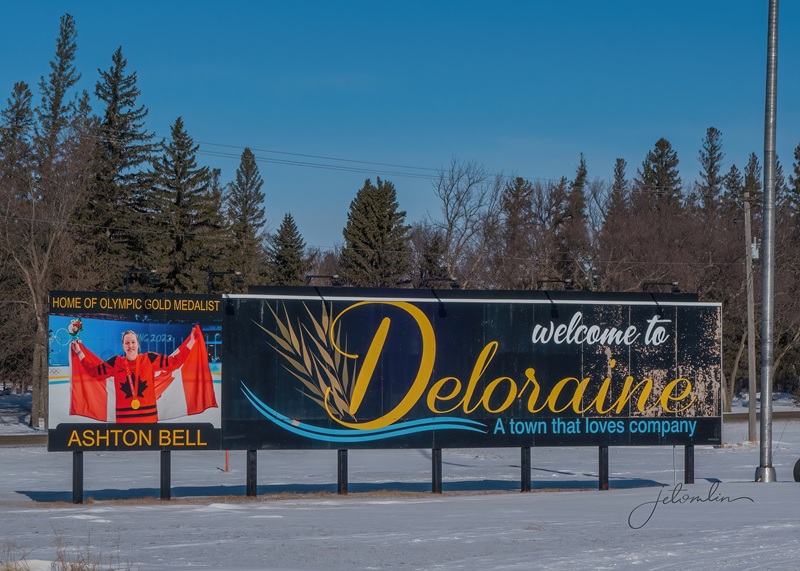
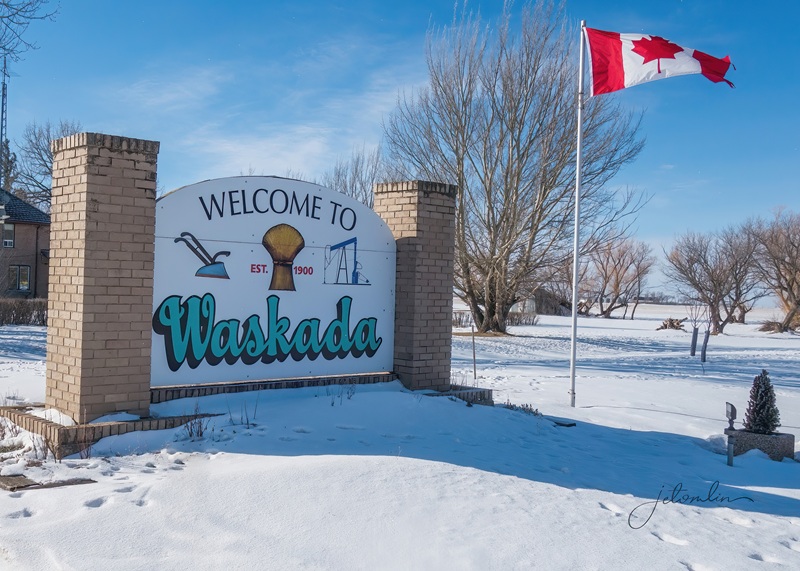
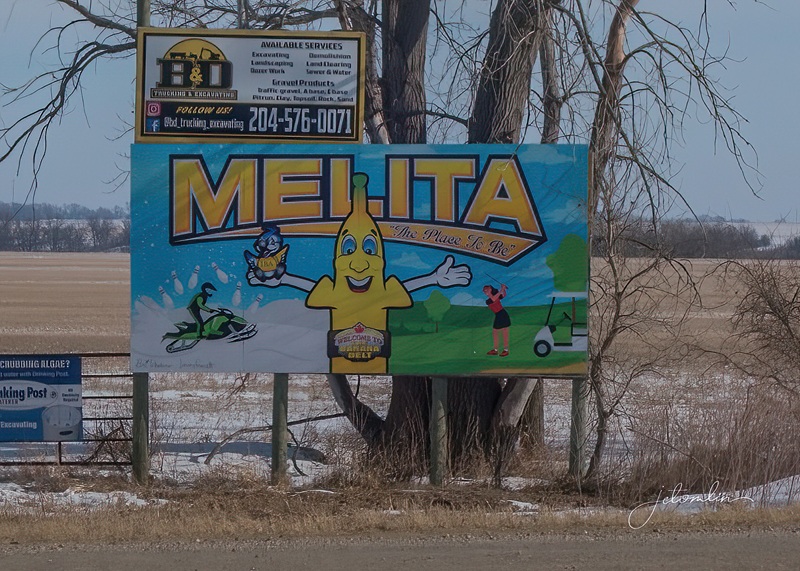
As a local said, “This is wheat country, and where there is wheat, there are rodents. And where there are rodents, there are owls!”
“This is wheat country, and where there is wheat there are rodents…”
“And where there are rodents, there are owls!”
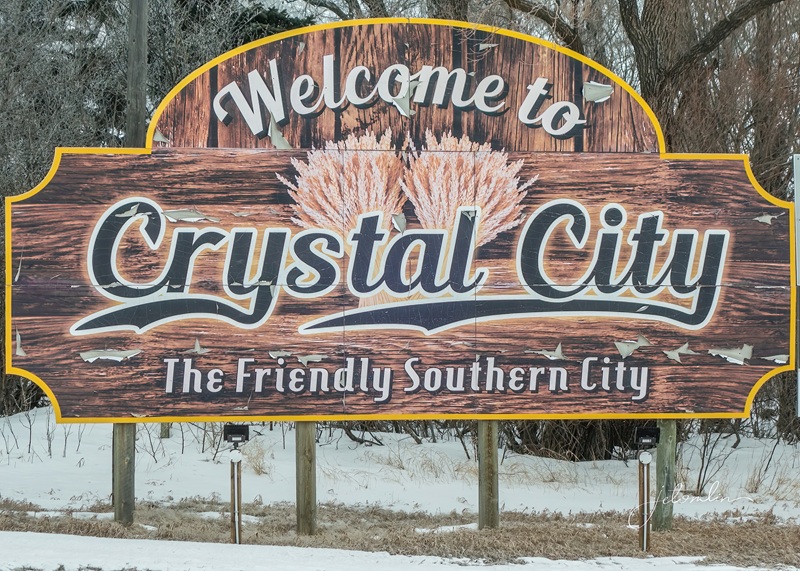
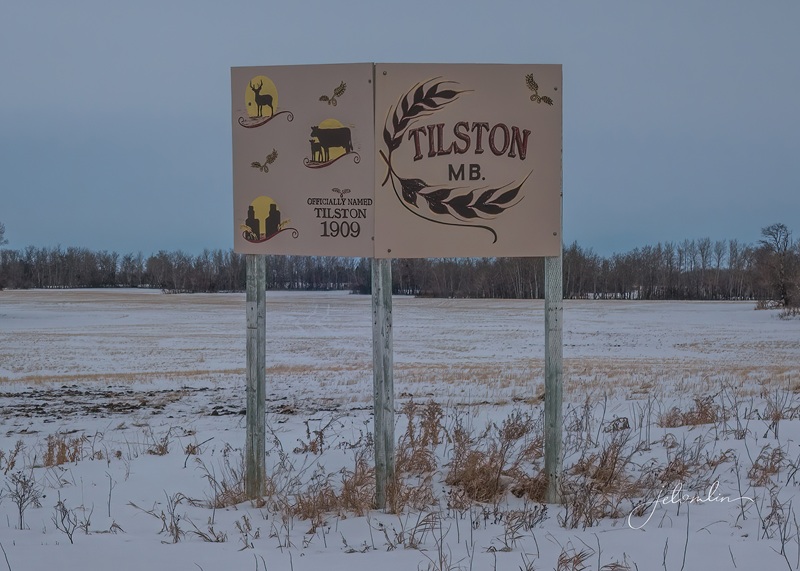
BaldurDeloraineWaskadaMelitaCrystal CityTilstonEach town has its own way of showcasing its agricultural heritage (click on photos to enlarge)
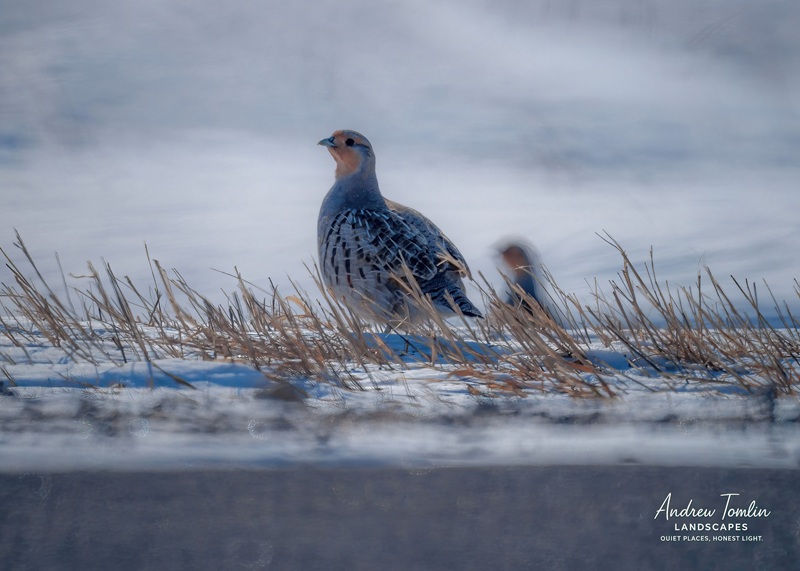
While searching for owls, we also hoped to photograph other prairie birds such as gray partridges, snow buntings, and grouse.
gray partridge
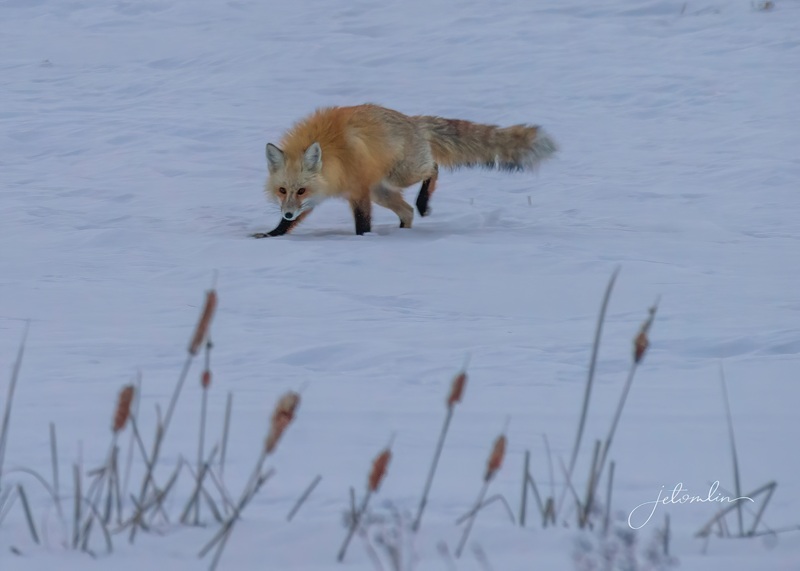
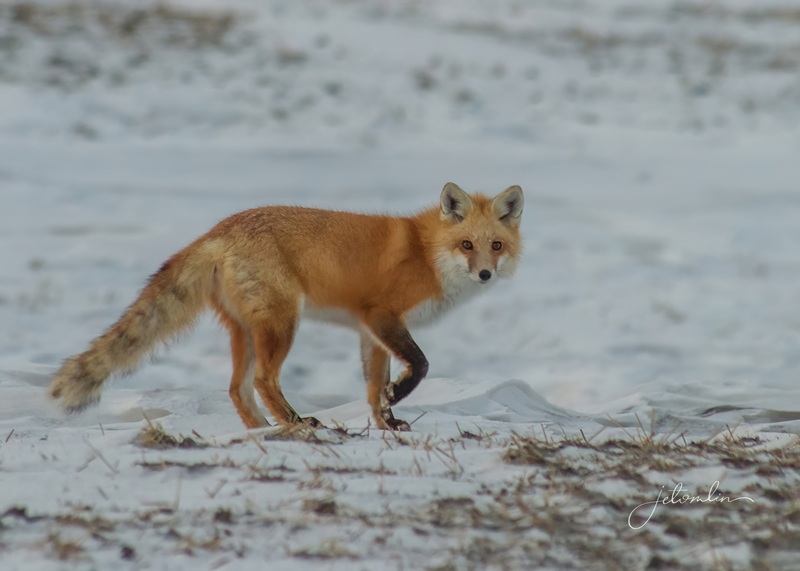
We wanted to get close-up photos of the red foxes we saw running through the fields,
red fox at dusk
And maybe even spot a moose or two.
moose cow & calf at sunrise (with a tip of the hat to Bullwinkle J. Moose)
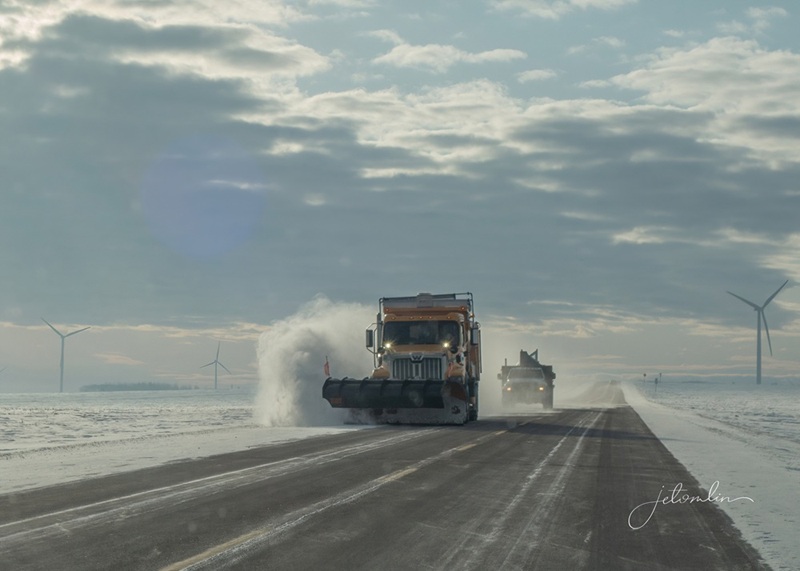
The cold weather meant we stuck to driving safaris. Even though we planned our routes each day,
We often ended up turning onto side roads. That was part of the fun and led to some unexpected adventures!
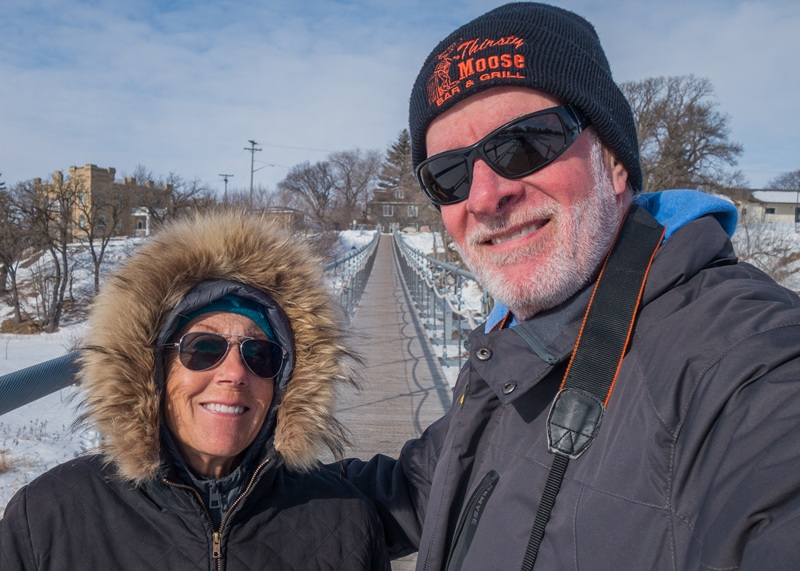
A slight detour took us to the Swinging Bridge in Souris
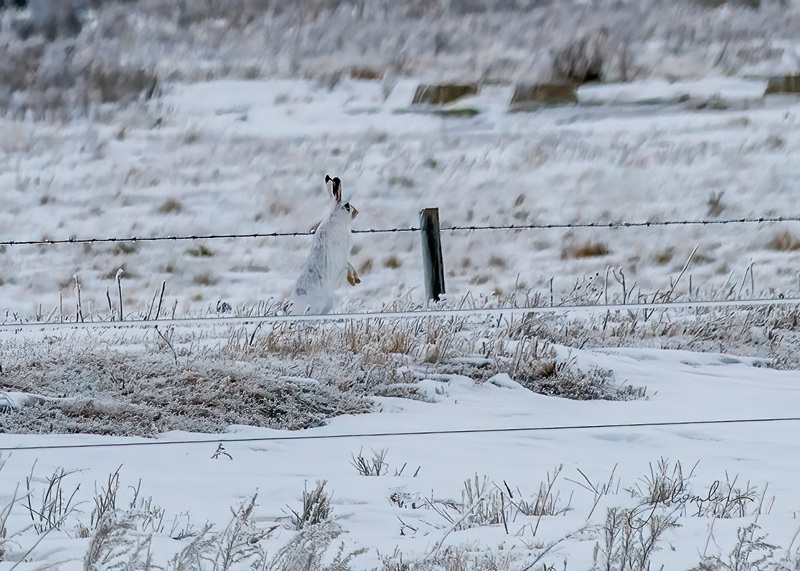
snowshoe hare
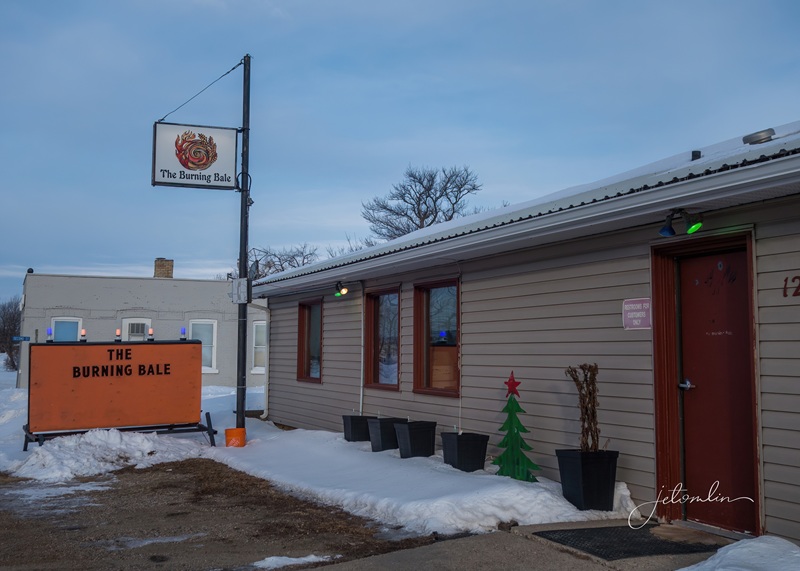
The Burning Bale in the tiny town of Elgin had amazing food!
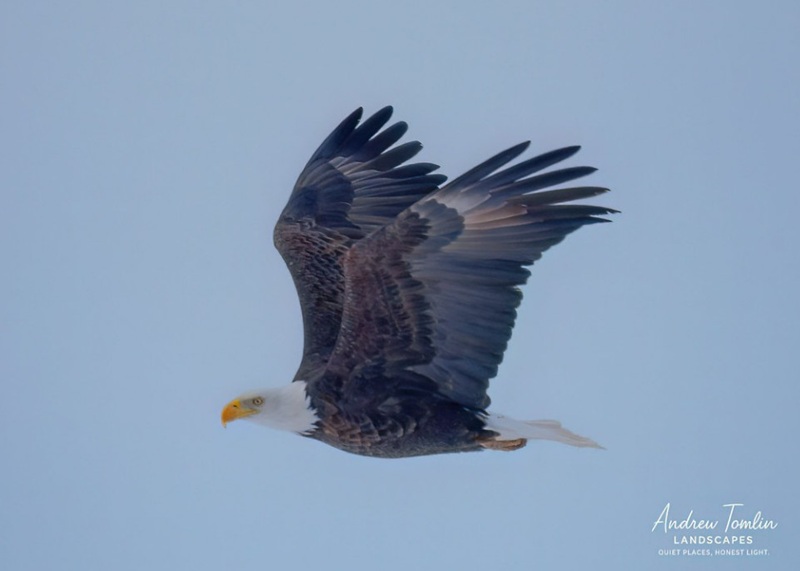
bald eagle
Based on eBird sightings, we had reliable intel of a great horned owl on a nest in Winnipeg, about a three-hour drive from Ninga. I wanted to check out the Via Rail train station anyway, so we made a day trip out of it.
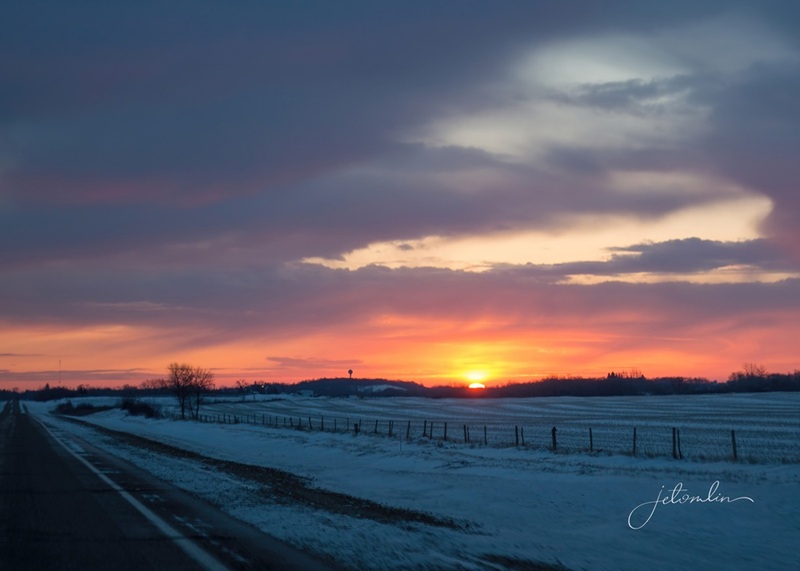
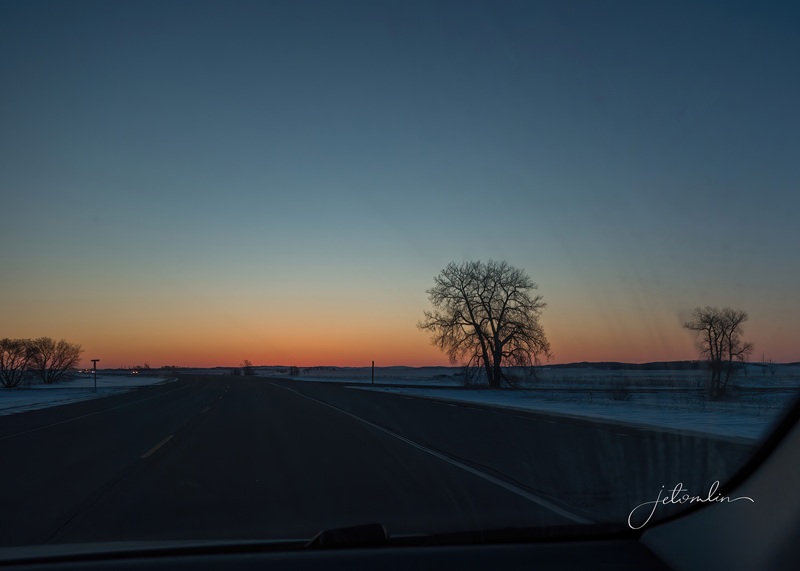
sunrise on the way to Winnipeg
Hwy 2
Union Station, Winnipeg
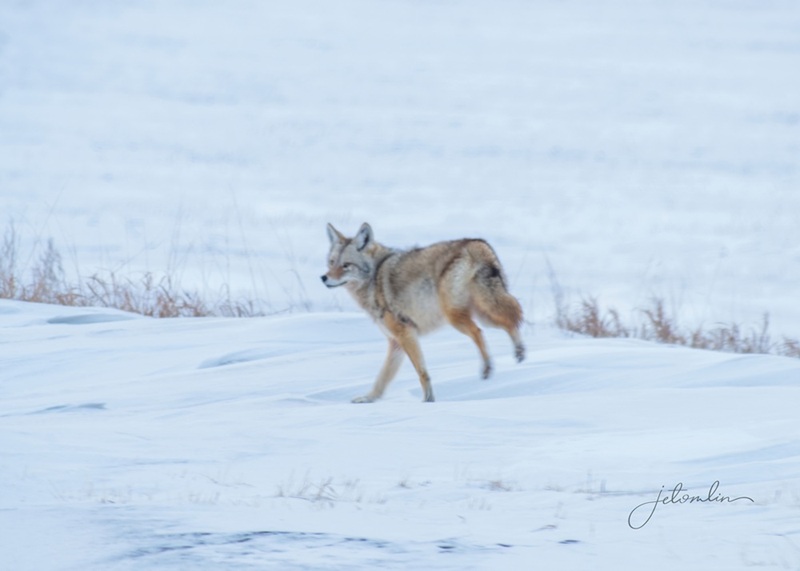
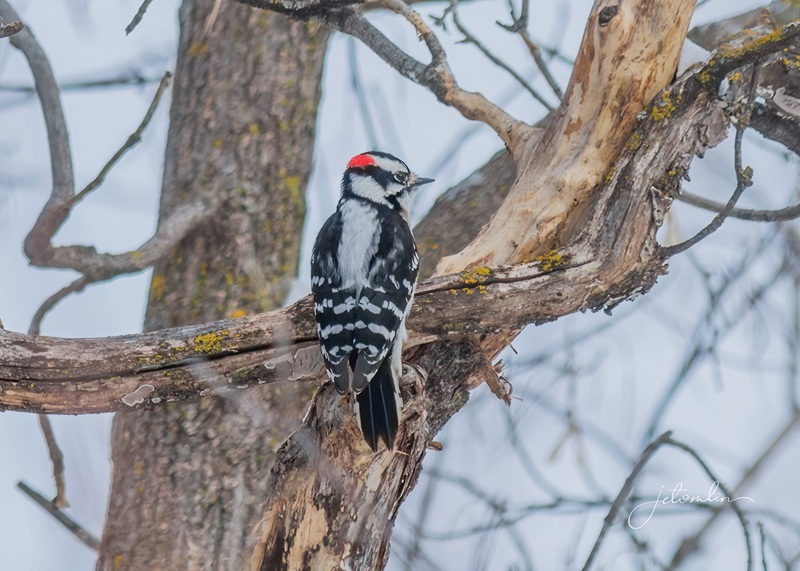
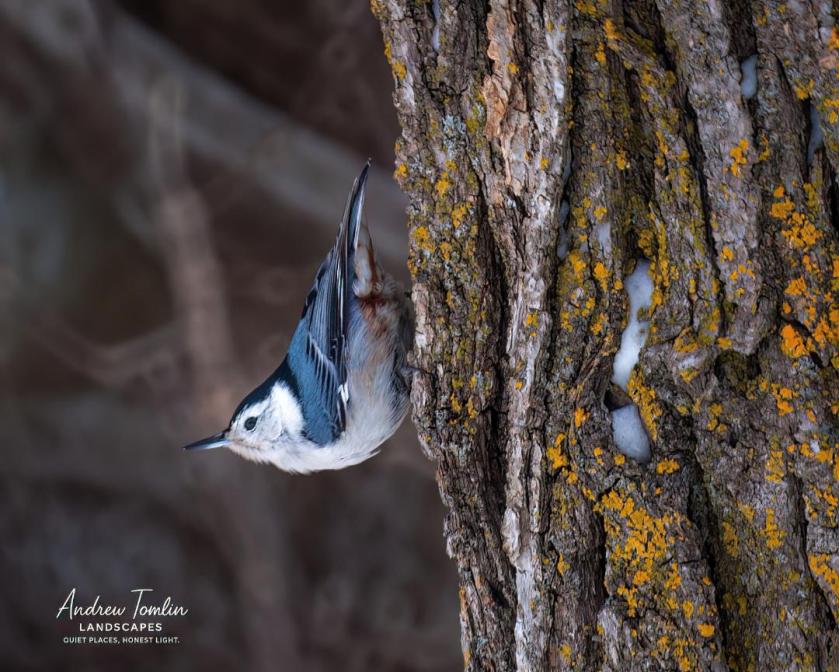
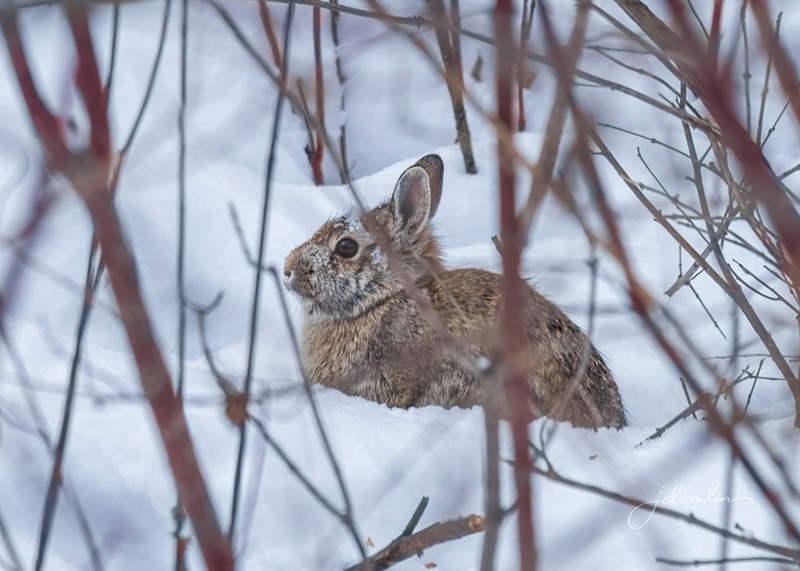
We didn’t have any luck finding the GHO that day, even with help from a friendly local named Ray—“as in Ray of Sunshine.” But we did hike over 10,000 steps, which felt great after long days of sitting in the car. Our other sightings made up for it: lots of beautiful birds in the park, and on our drive, a cooperative red fox, five coyotes, big herds of white-tailed deer, and four snowy owls!
red fox
coyote
downy woodpecker
white-breasted nuthatch
Eastern cottontail
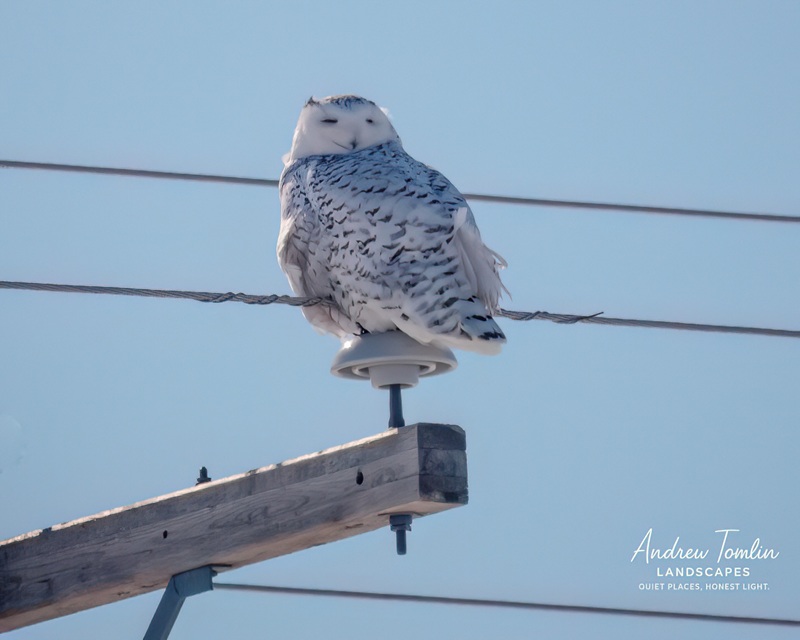
female snowy on a power pole (Hwy 2)
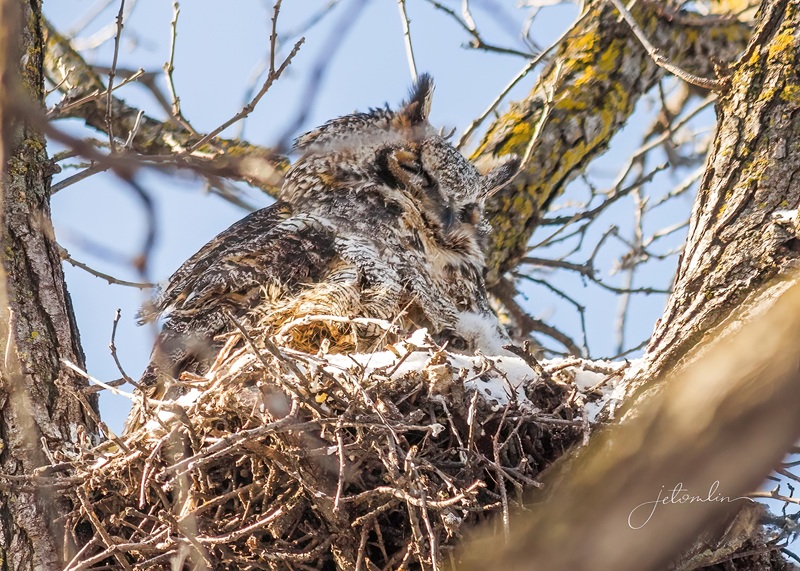
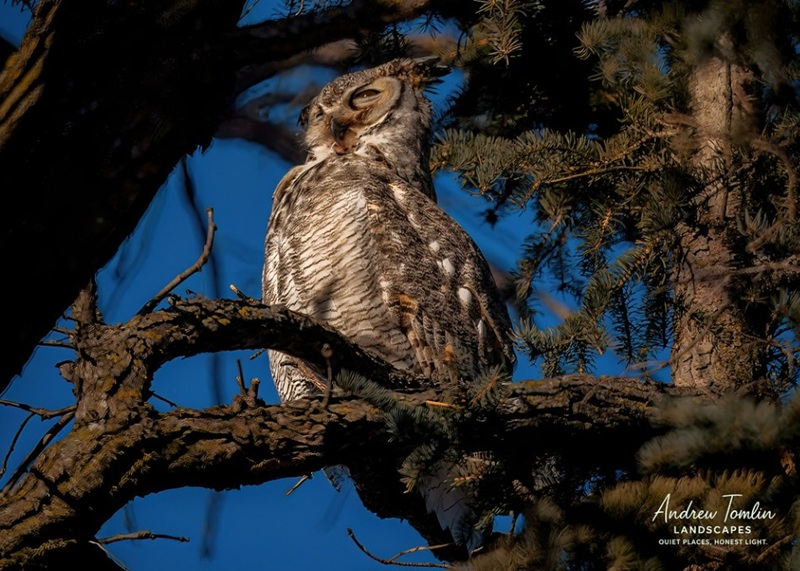
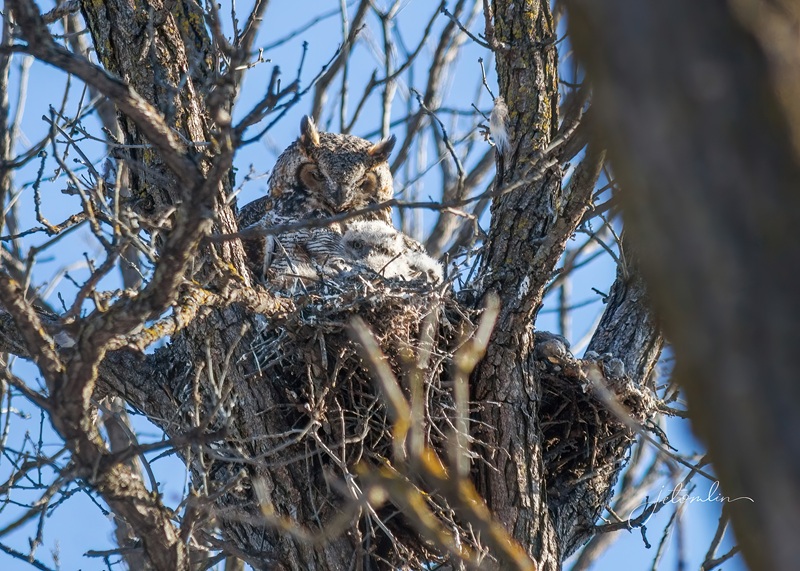
Two weeks later, we learned that the GHO owlets had hatched. With clear directions this time, we drove back to Winnipeg and were delighted to find mama and her two babies in the nest, while papa kept watch from a nearby tree.
papa watching from a nearby tree
mama watching over her babies in the nest
And, on our drive, we spotted two more snowys. Altogether, it was a six owl day!
female snowy owl on a power pole
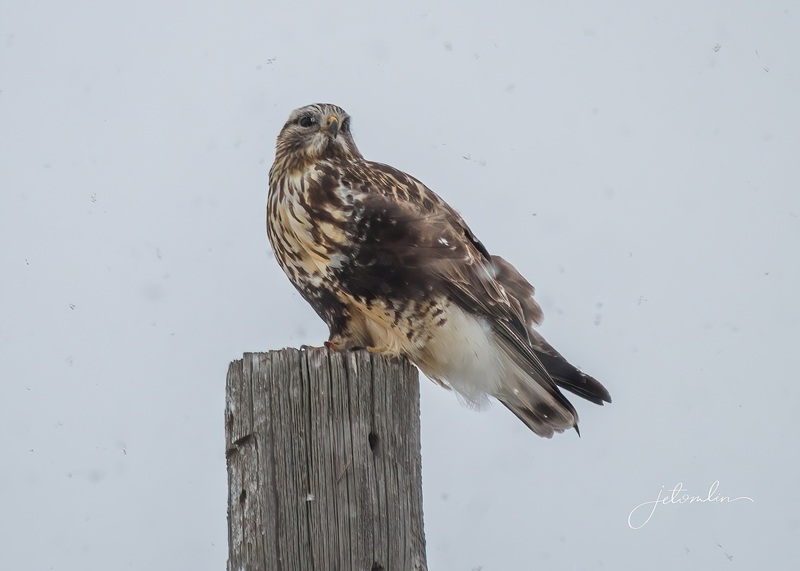
We were almost home when it began to snow. Even though we needed to keep moving, a beautiful rough-legged hawk landed on a pole right in front of us, so we stopped to take a few photos.
rough-legged hawk in snow flurries
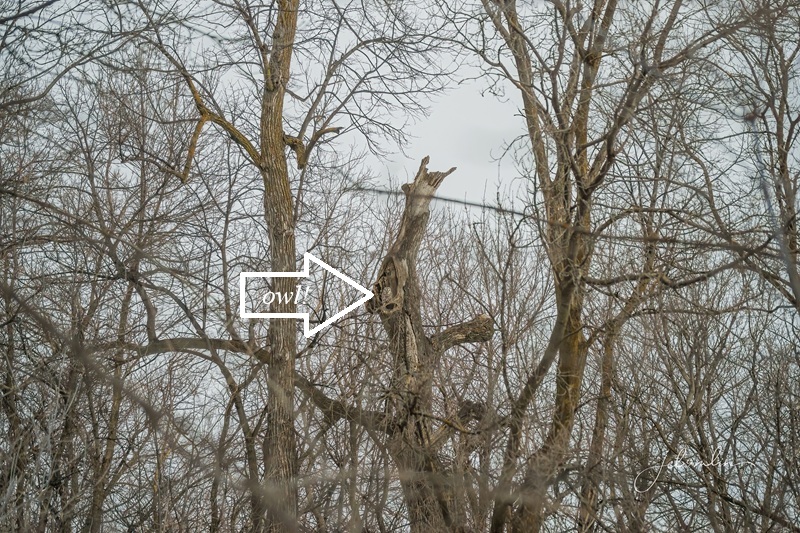
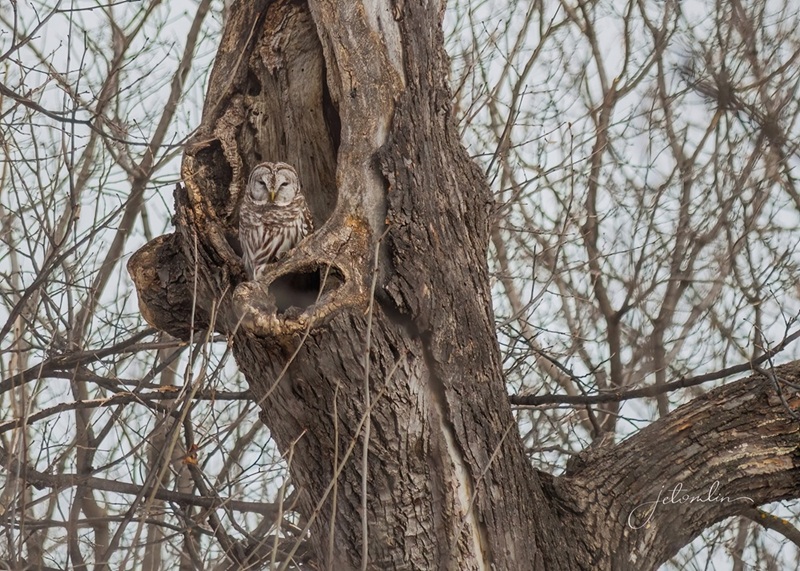
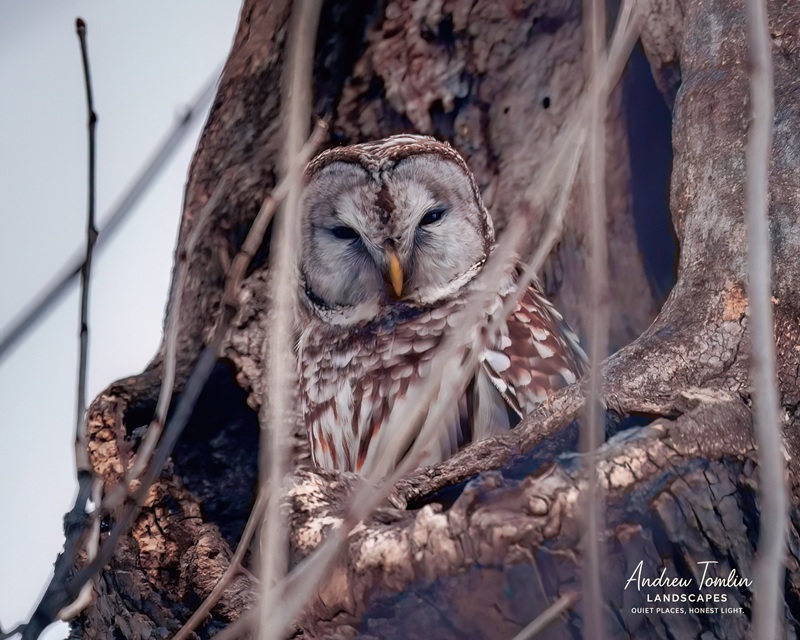
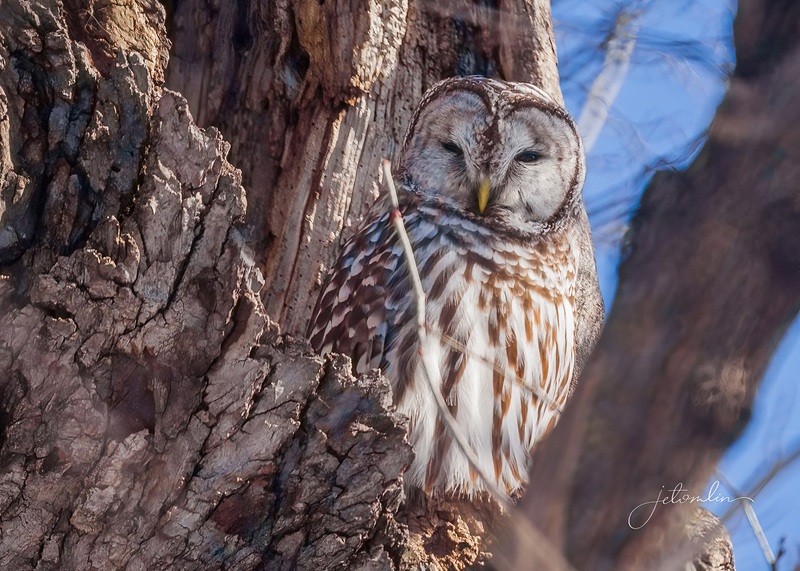
Almost daily, a barred owl was listed on E-bird at a park about two hours away. After two failed attempts to locate her, we had given up, unsure if another search was worth it. One night TG received a message from a fellow bird-lover with a map, GPS coordinates, and a recent photo. Armed with that intel, we found her, and she certainly was worth the effort!
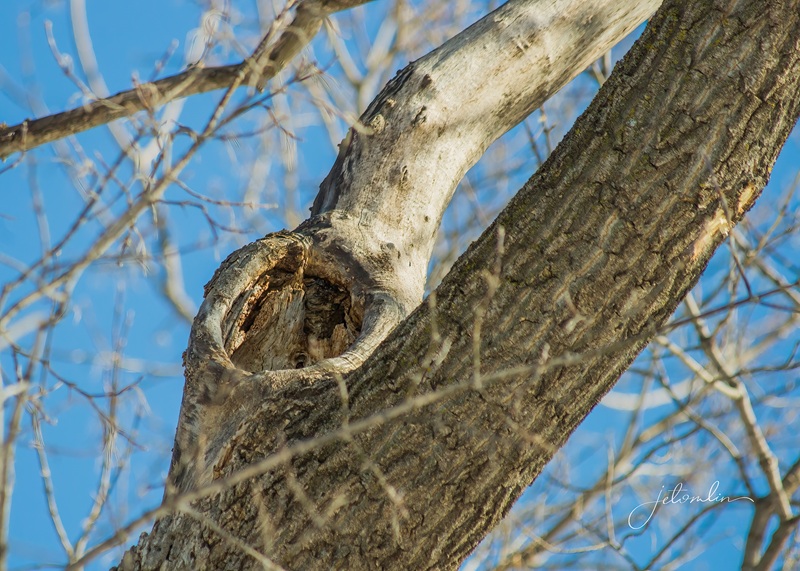
She was in a cavity in a tree across a creek, about 100 yards away.
If we didn’t know which haystack, we never would have found the needle!
barred owl
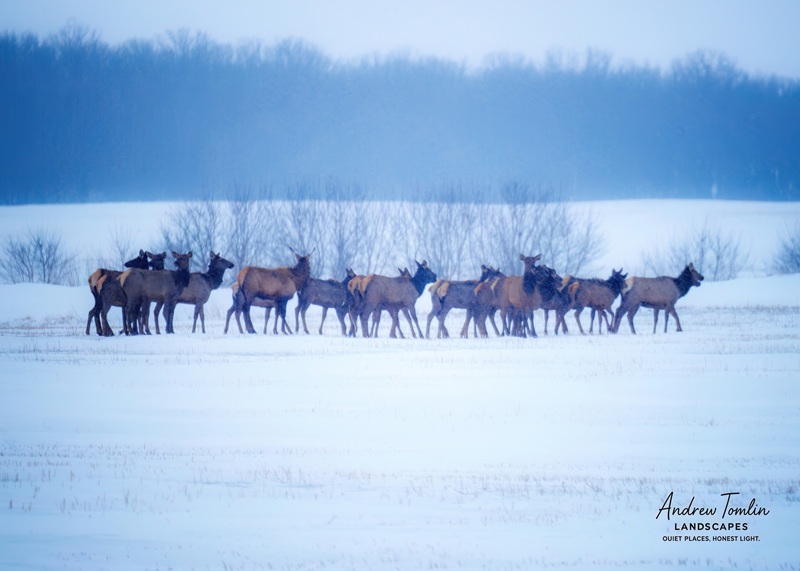
Everywhere we went, we were asked if we had seen any elk. “Not yet,” we’d reply. On our drive home that afternoon, we finally saw a large herd standing in a snowy field.
elk herd
We had heard about a screech owl at a park in Winnipeg but weren’t sure we’d be able to make a third trip before heading home. However, a beautiful Monday changed our minds.
another beautiful sunrise drive to Winnipeg
Since we were already in the area, we also decided to check in on the great horned family and say goodbye to the barred owl. On our drives to and from Winnipeg, we spotted four more snowys—three males and a female.
male snowy on a pile of railroad ties
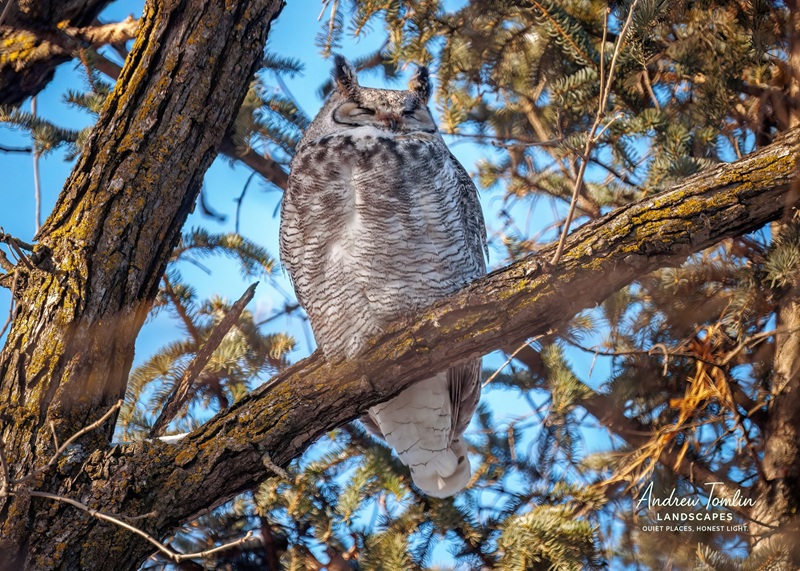
papa great horned
mama great horned and her two babies
female snowy
barred
male snowy
The screech owl was not at home in her tree, but it was still a three-species, nine-owl day!
nobody home!
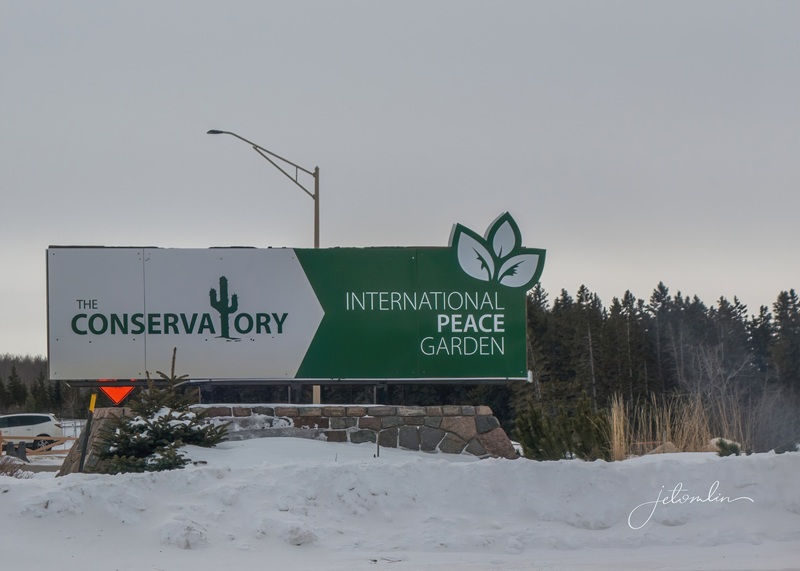
The International Peace Garden was established in 1932 to promote peace, cooperation, and friendship between the United States and Canada. This 3.65-square-mile botanical garden sits on the border between Canada and North Dakota and features 150,000 flowers, fountains, various structures, and an 18-foot floral clock.
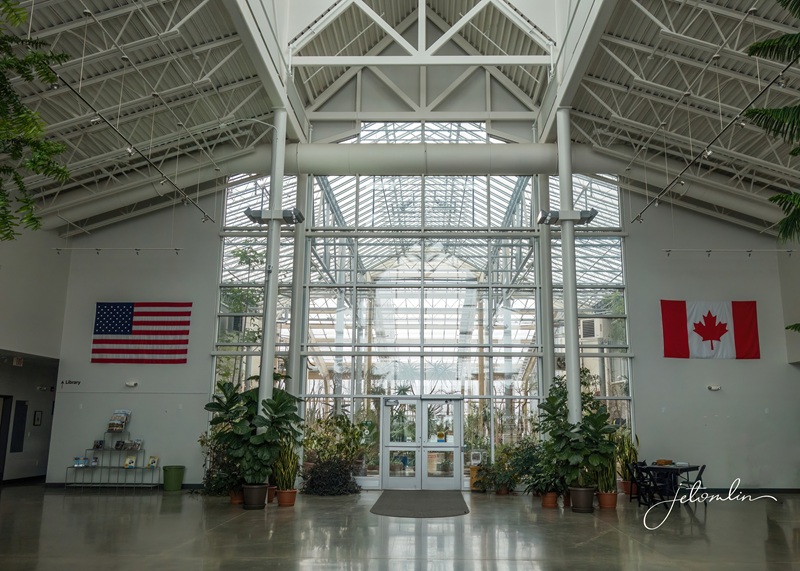
The garden sits on the border between Canada and North DakotaThe Conservatoryclick on photos to enlarge
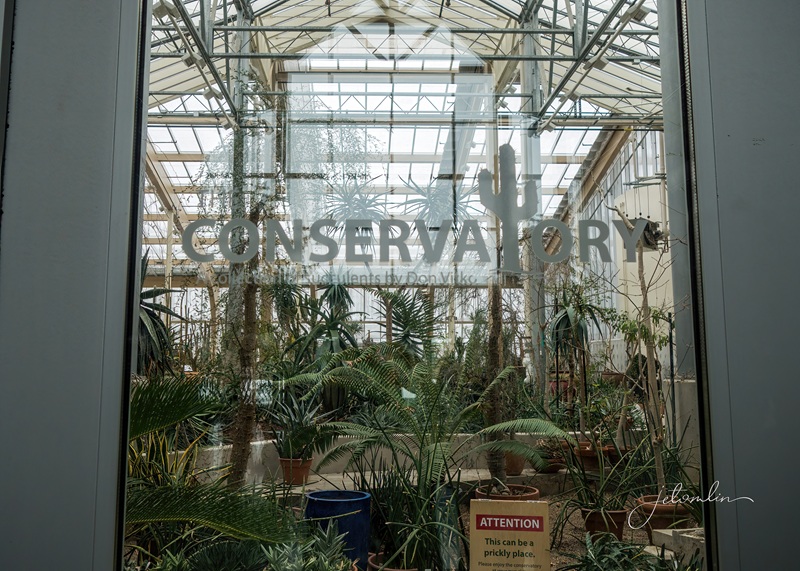
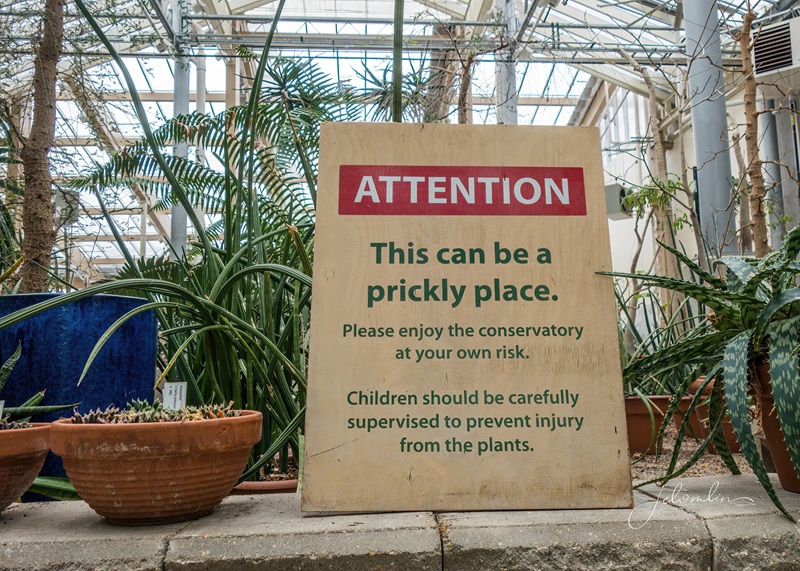
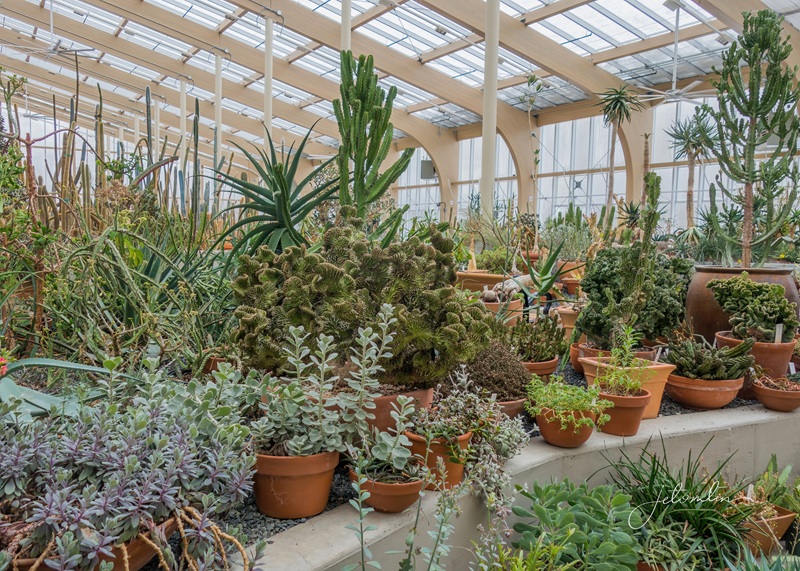
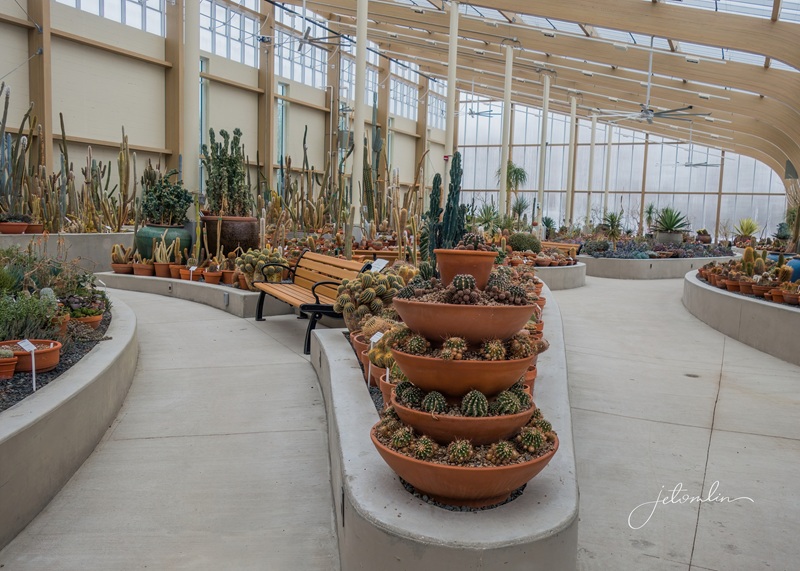
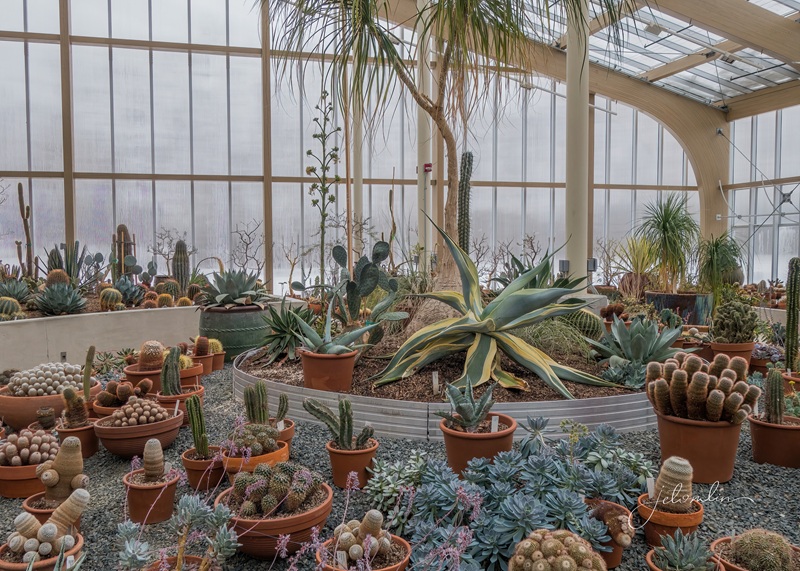
In the winter, there isn’t much to see outside, but the Conservatory was a perfect way to stay warm on a cold day.
The Conservatory
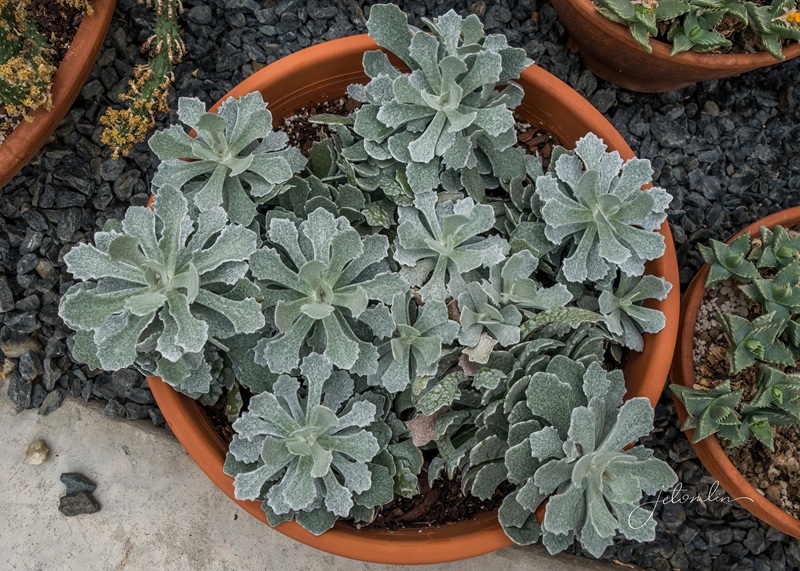
“This can be a prickly place”
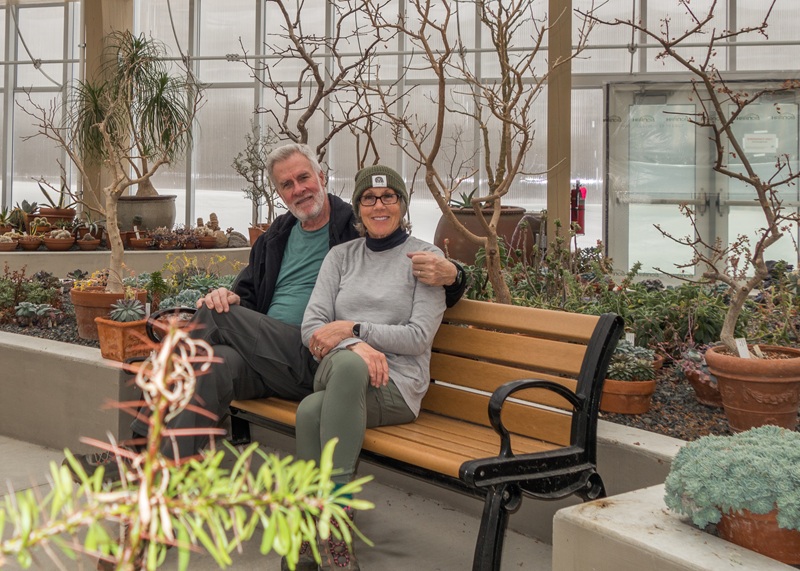
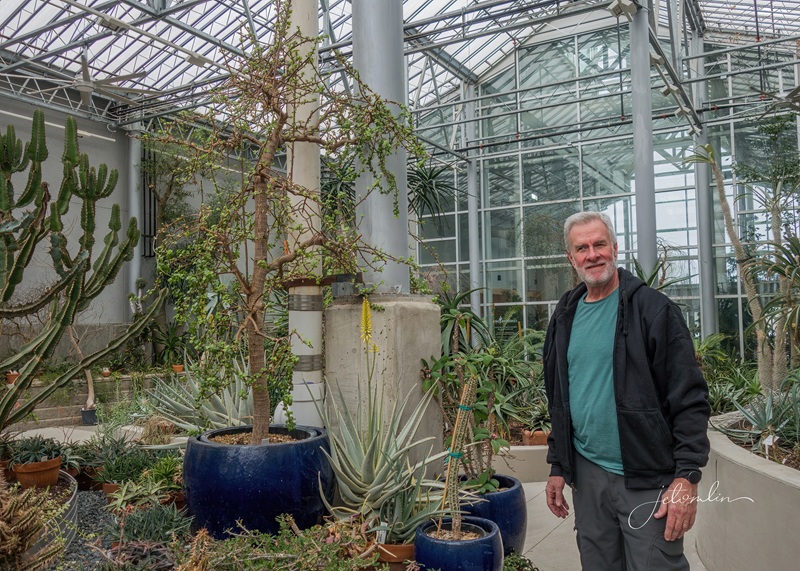
Conservatory selfie
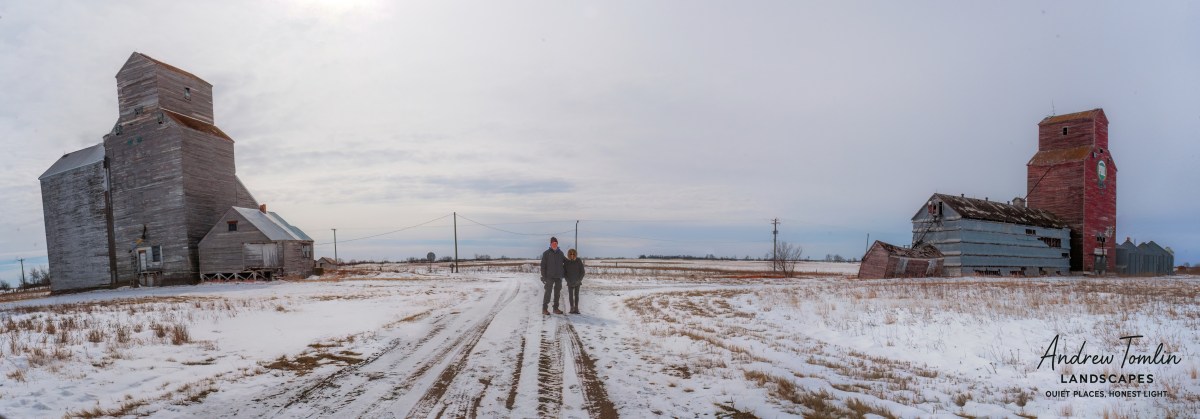
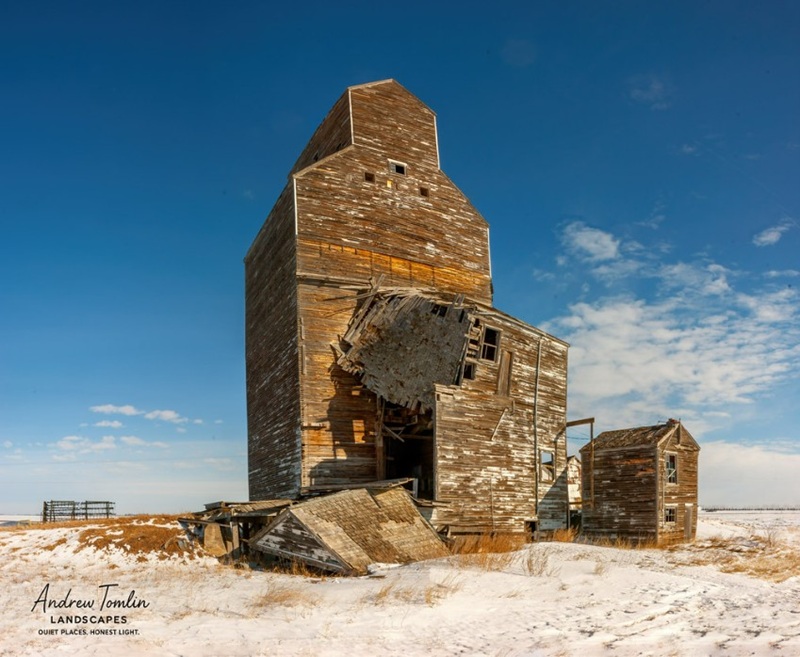
At their peak in the 1940’s, there were more than 5,500 wooden grain elevators or “prairie sentinels” across Manitoba.
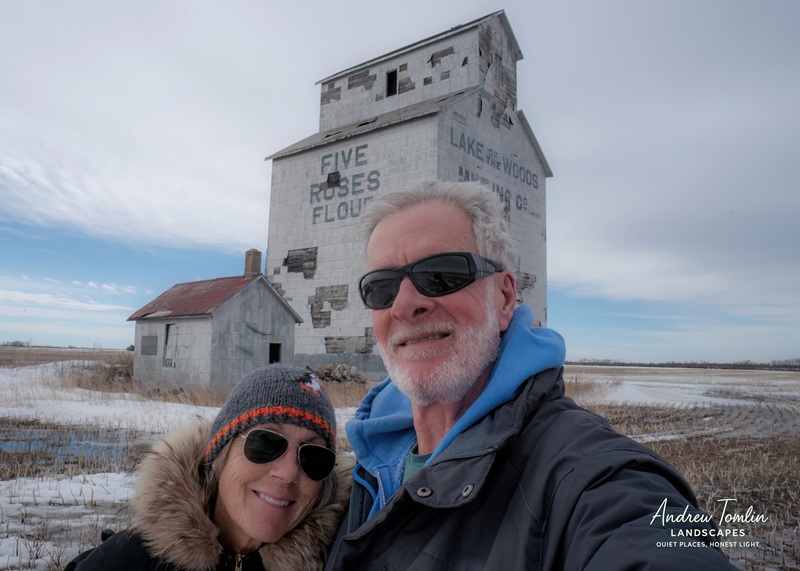
selfie at Cameron – Manitoba’s oldest grain elevator still on its original site (built in 1902)
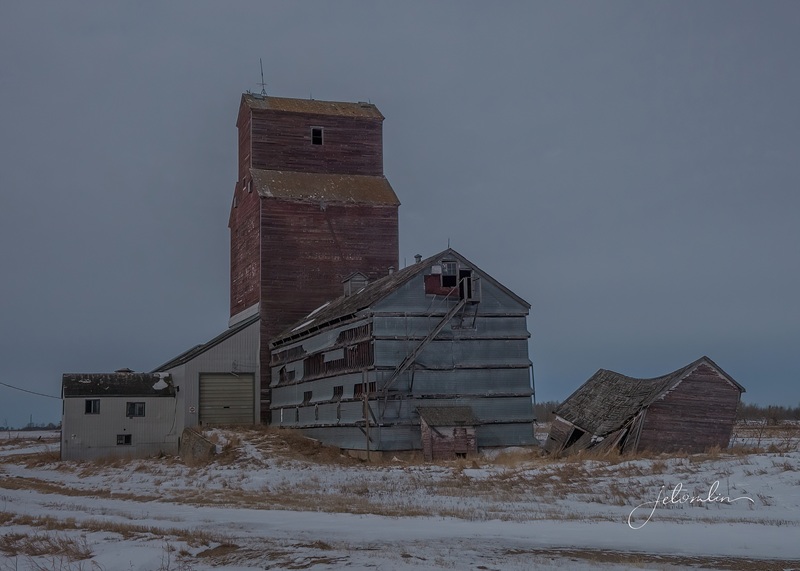
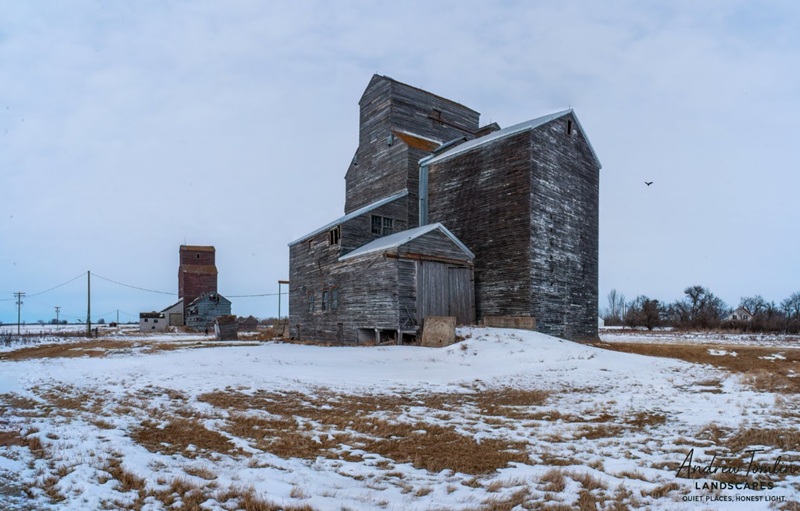
But as farms switched to steel silos, the wooden elevators became outdated and costly to maintain. Now, with more lost each year to demolition, fires, or natural disasters, these landmarks are quickly disappearing.
OberonTilstonThese two won’t be around for long (click on photos to enlarge)
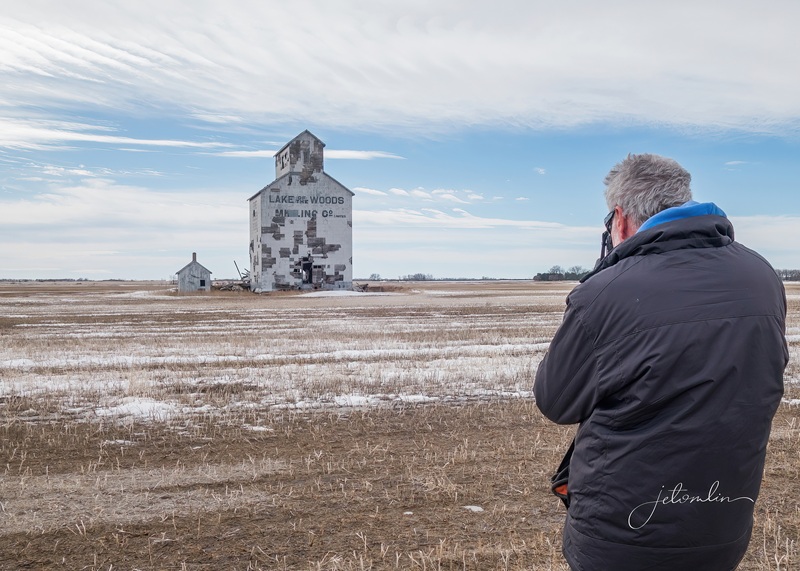
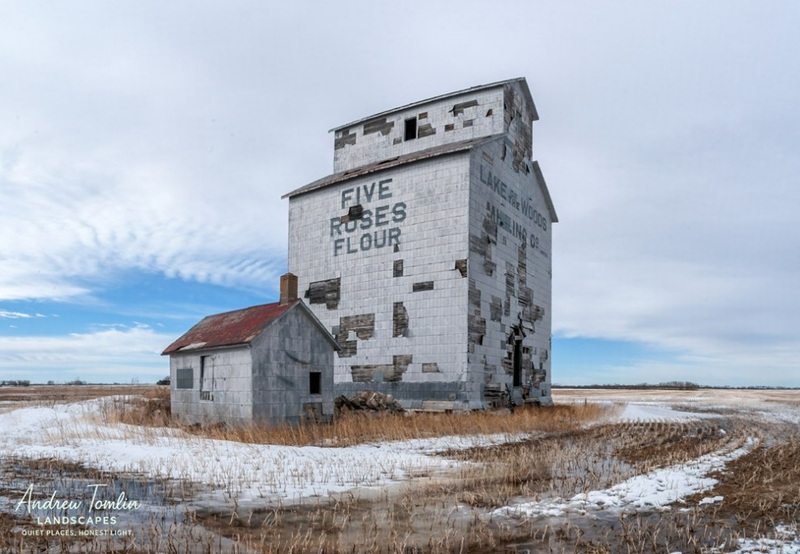
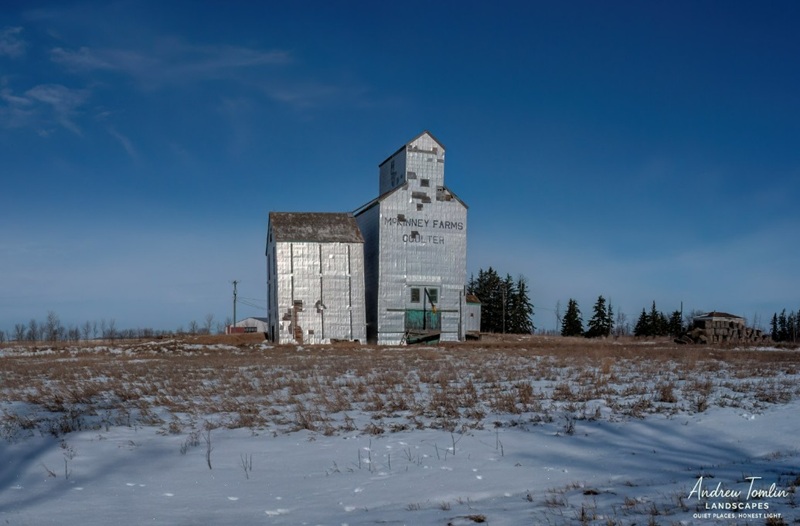
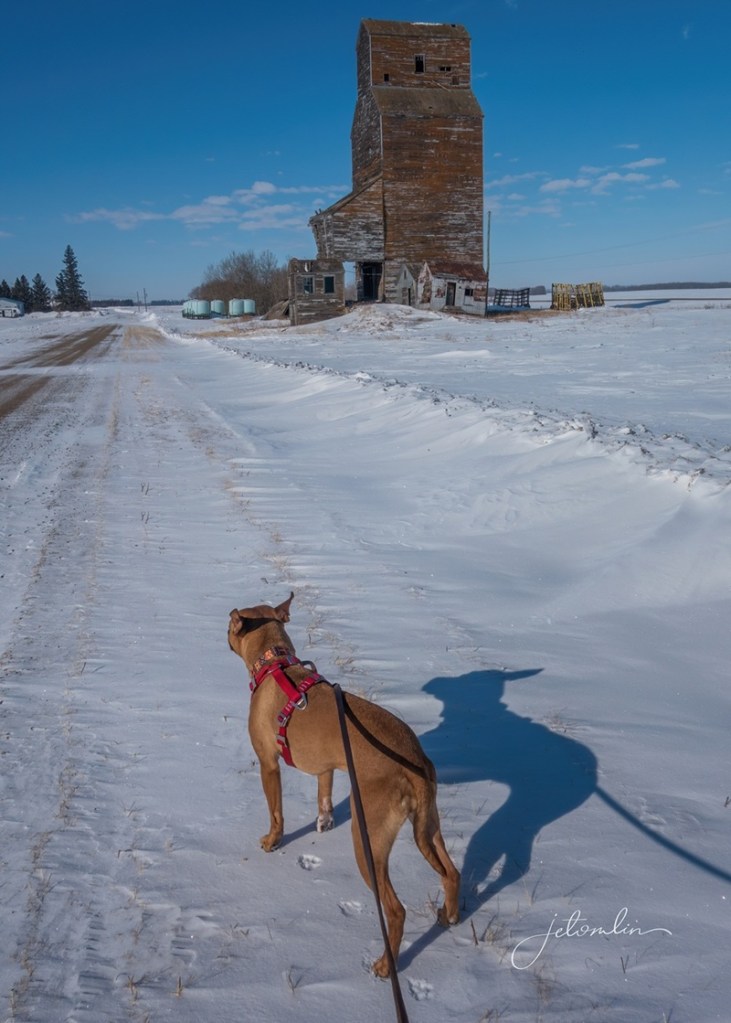
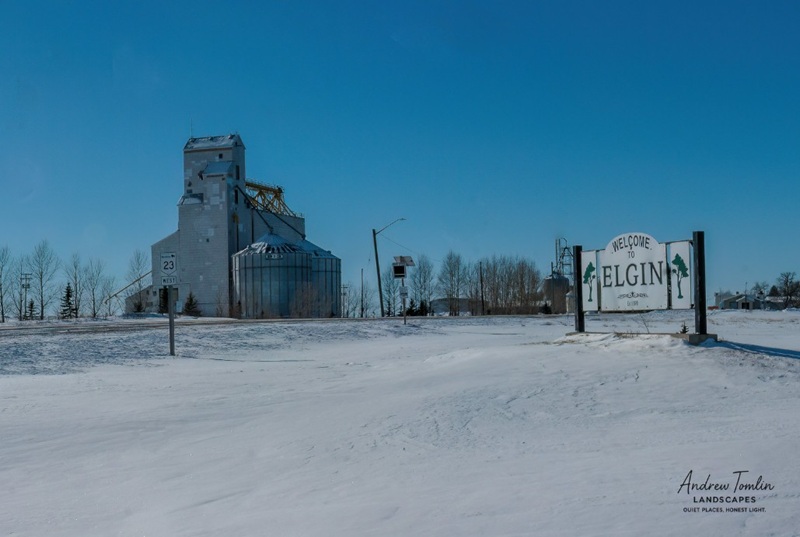
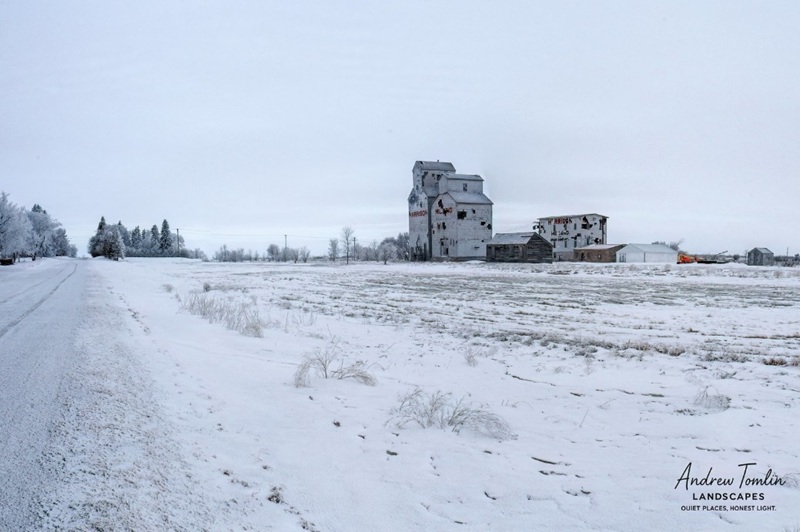
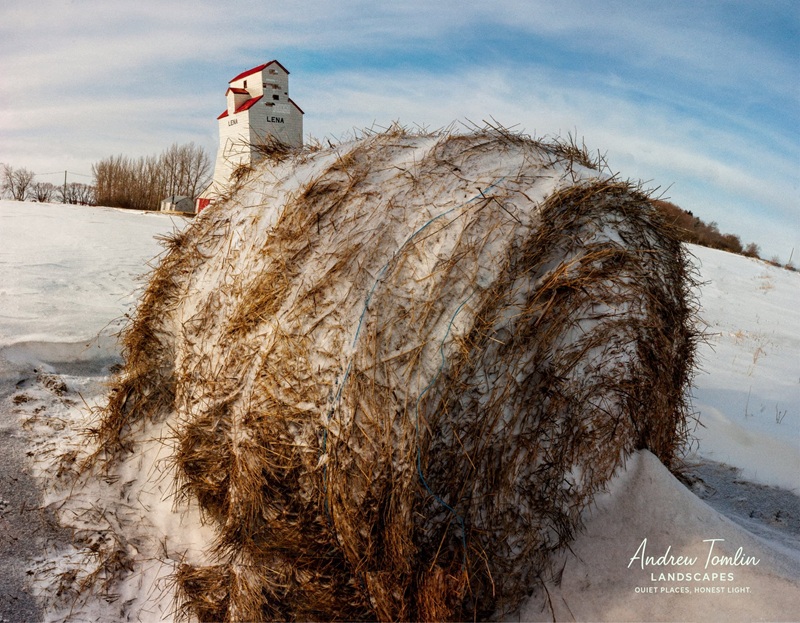
Across the province, only 80 classic wood elevators are still standing. Hoping to preserve some of this history before it is gone forever, we planned our wildlife safaris along routes where TG could capture a few of the old elevators that are still left.
TG at Cameron
Cameron
Tilston
Coulter
Oberon & Maddie
Elgin
Holmfield
Lena
McCreary with vintage train station
We also stopped to photograph interesting landscapes and other structures while out exploring.
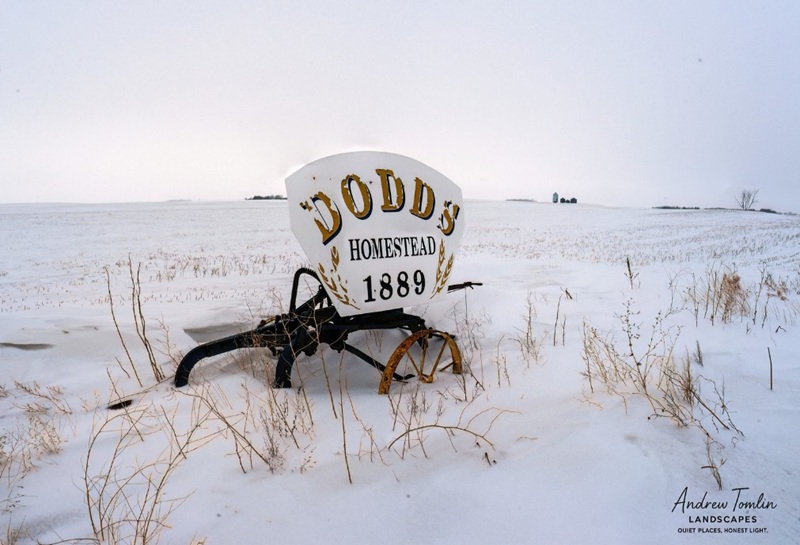
Dodd’s Homestead 1889
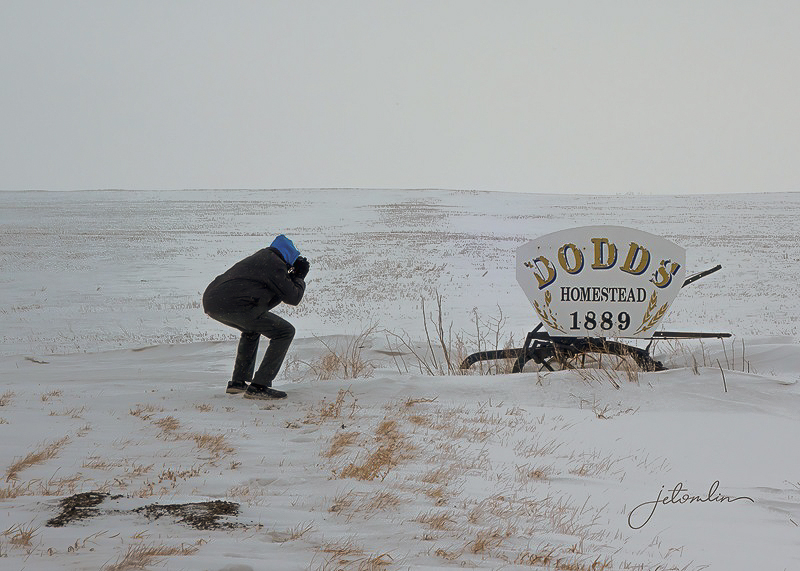
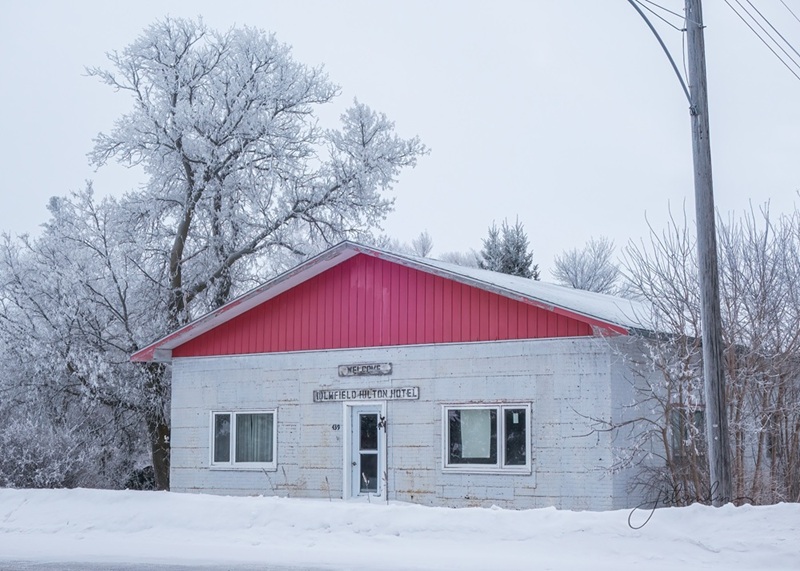
TG getting the shotHolmfield Hilton Hotellots of interesting signs, barns, and other structures to photograph (click on photo to enlarge)
March 13 turned out to be an extraordinary day. We didn’t have any specific plans – the snowstorm the prior evening had left many roads too edgy for our low-clearance VW Jetta.
It was blowing like a nor-easter the evening of March 12!
By mid-afternoon, the sun was shining, and TG suggested we pick up dinner from The Burning Bale. While driving, we saw a coyote by the side of the road and then two snowy owls in beautiful afternoon light. On the way back, we spotted two more snowys, bringing the total to four for the day!
male snowy owl
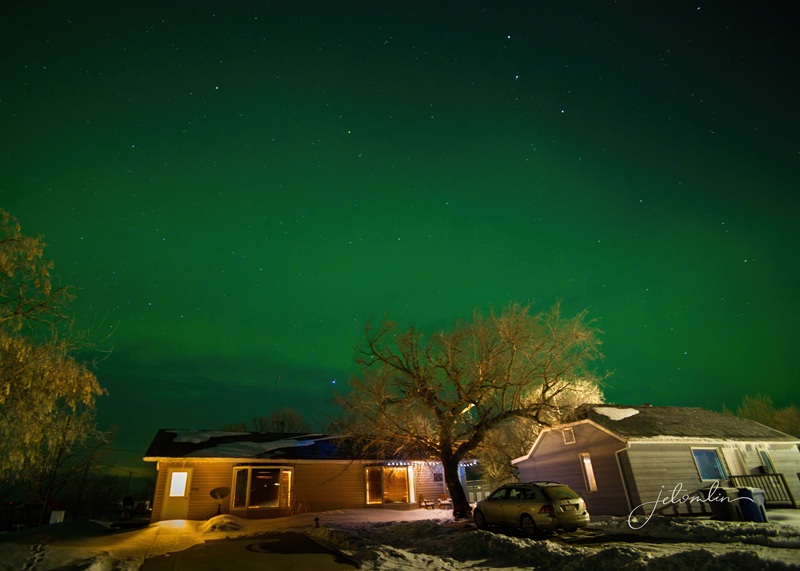
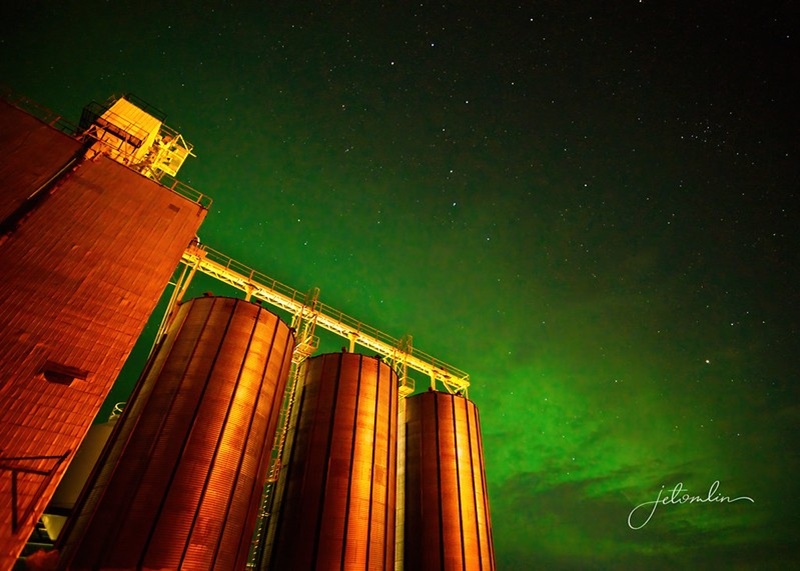
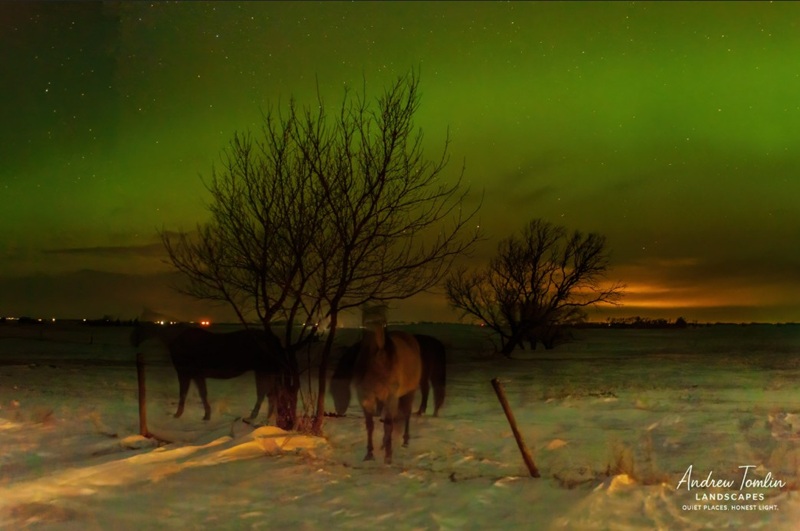
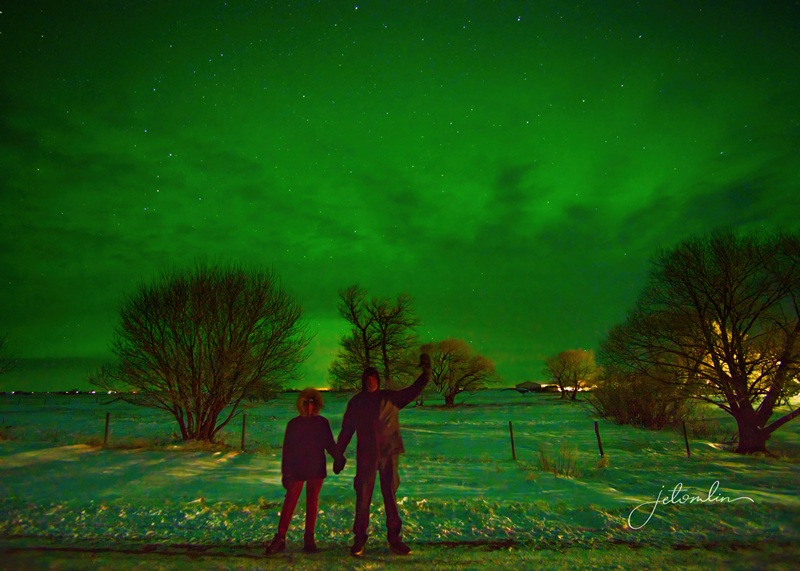
But the true magic happened later that night. A G2 storm bumped the KP index up to 6, and around 10 pm, we went outside to check the sky. The stars were bright, and the Northern Lights shimmered above us. Through our cameras, it glowed a brilliant emerald green. It was too cold to stay out for long, but we were grateful for this unexpected gift from Lady Aurora.
Country Corner Stay Airbnb
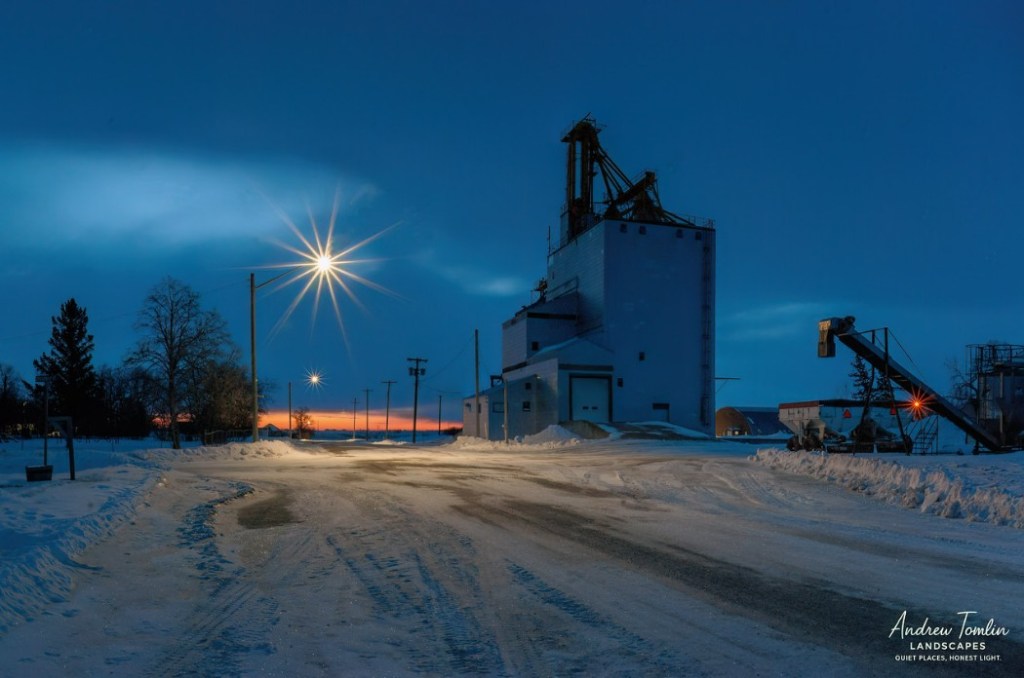
Aurora and Big Dipper over the Ninga grain elevator
Ninga horses under the Aurora
Ninga is about 14 miles from Boissevain (pronounced “boyz-eh-vane”) and was our closest option for gas and groceries.
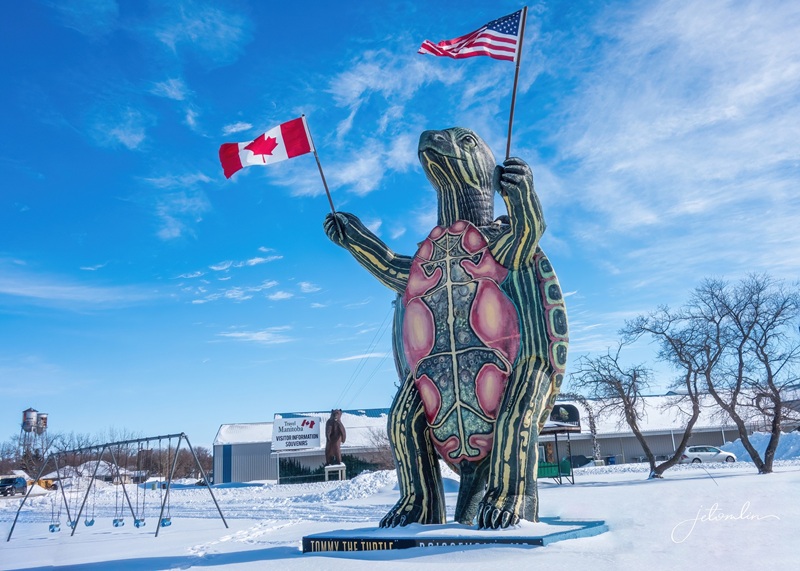
Tommy the Turtle, Boissevain
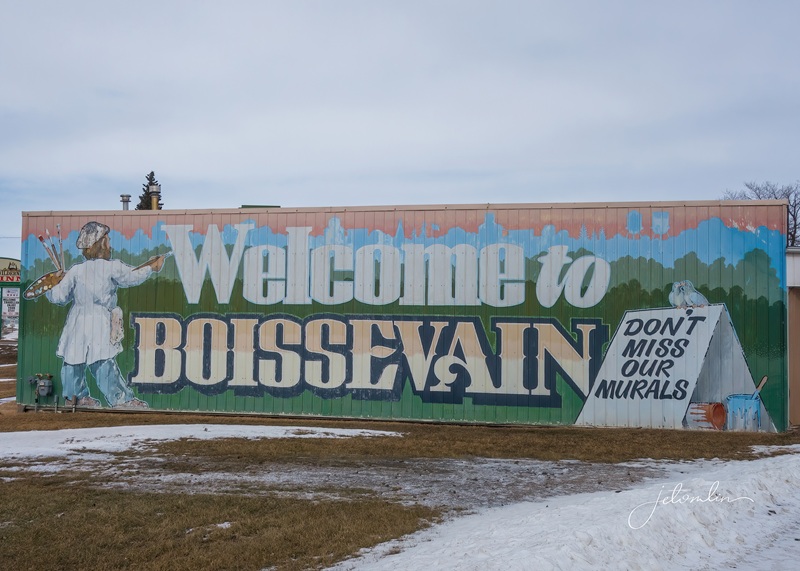
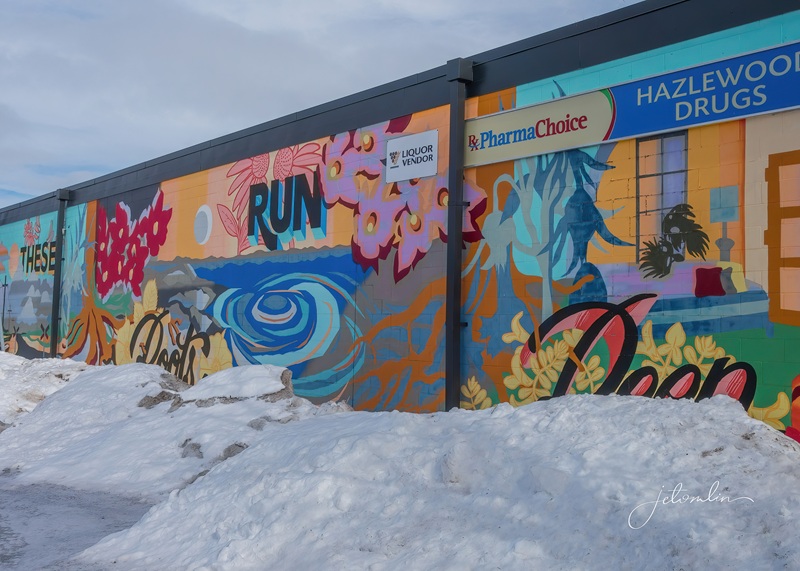
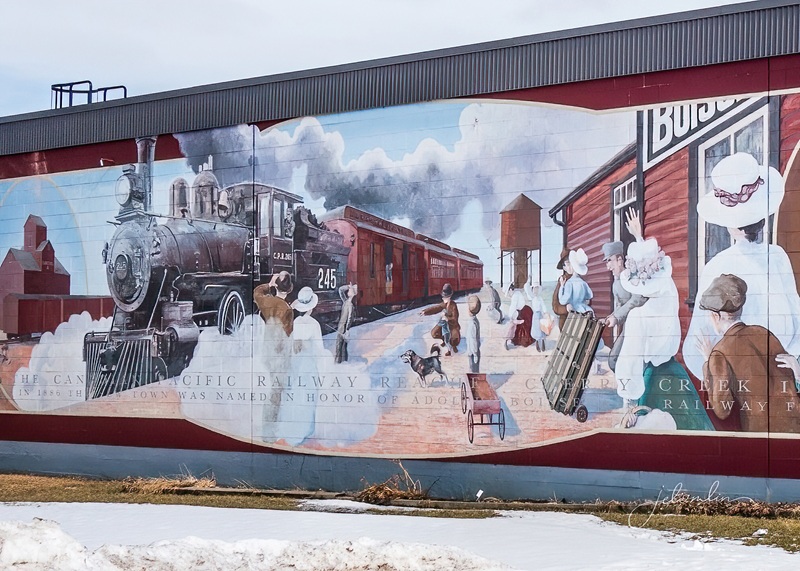
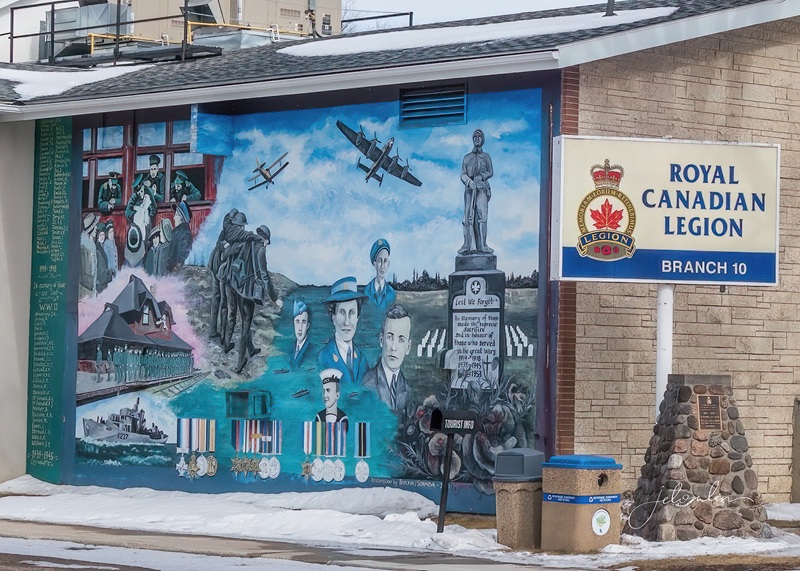
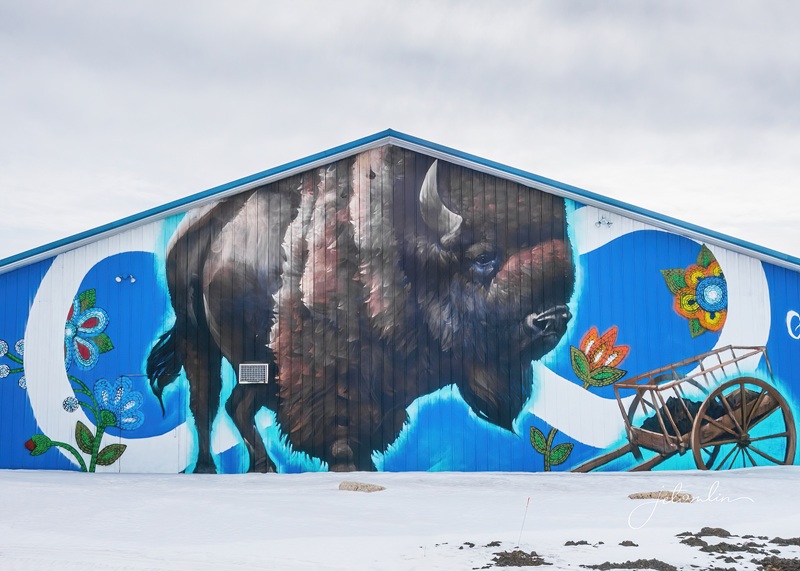
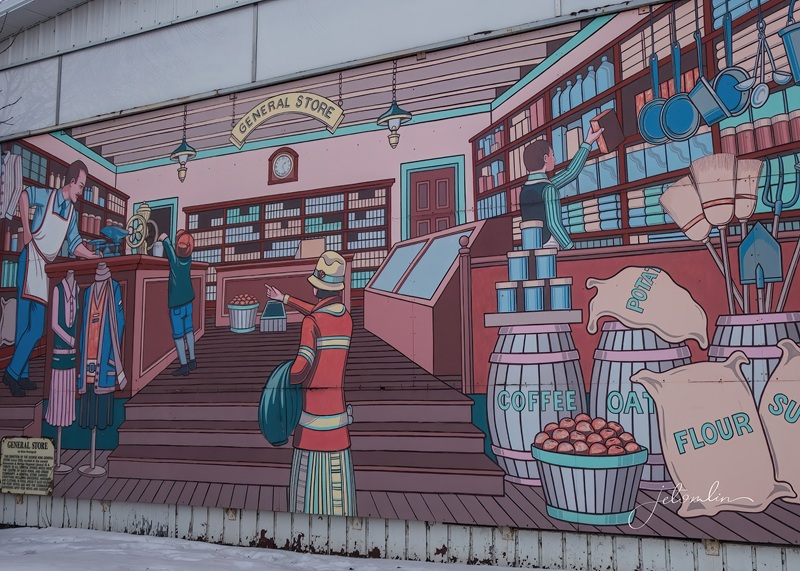
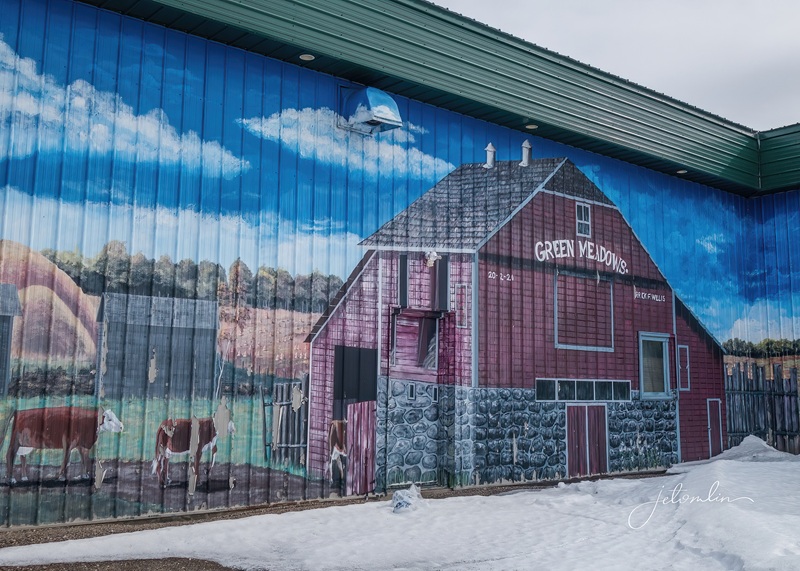
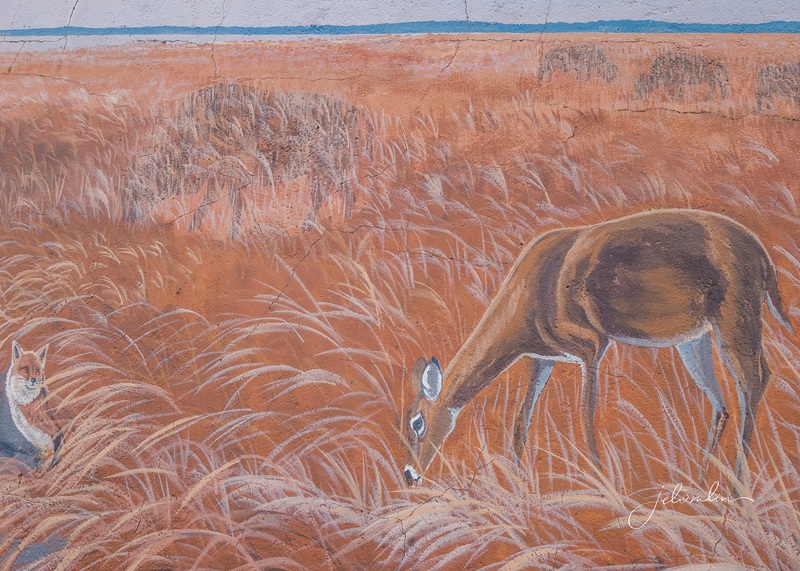
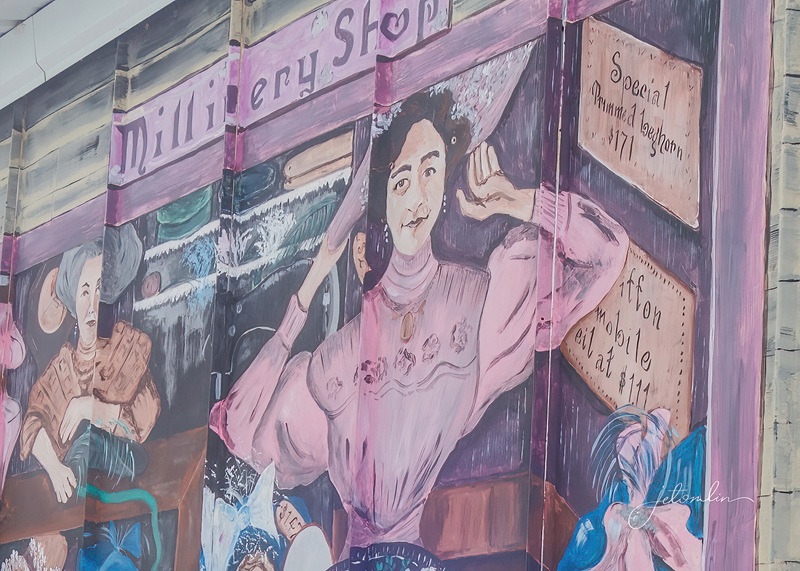
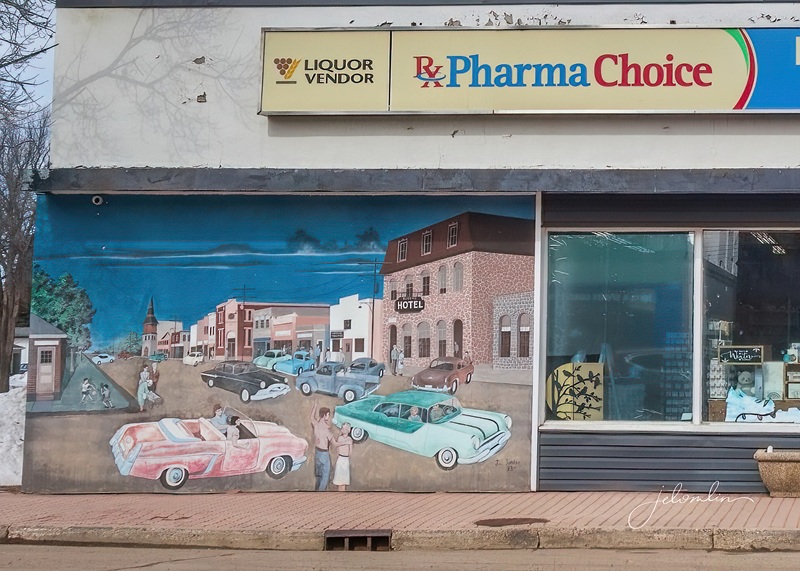
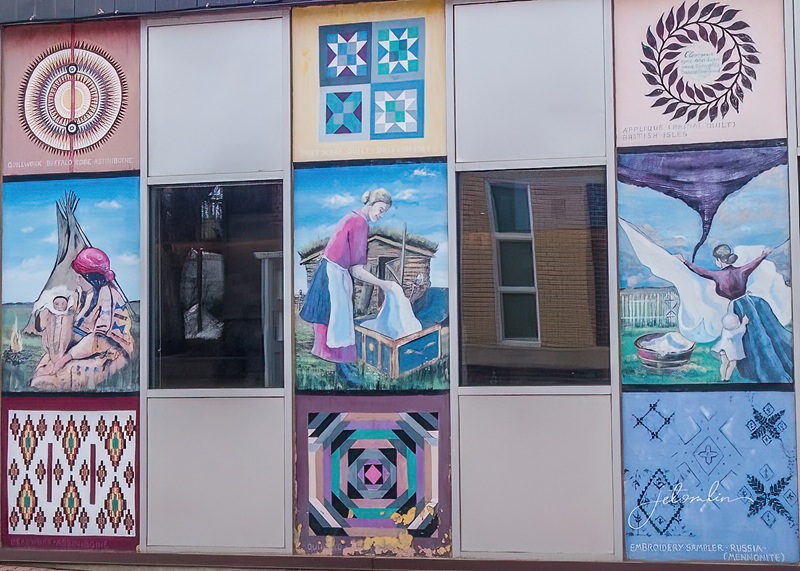
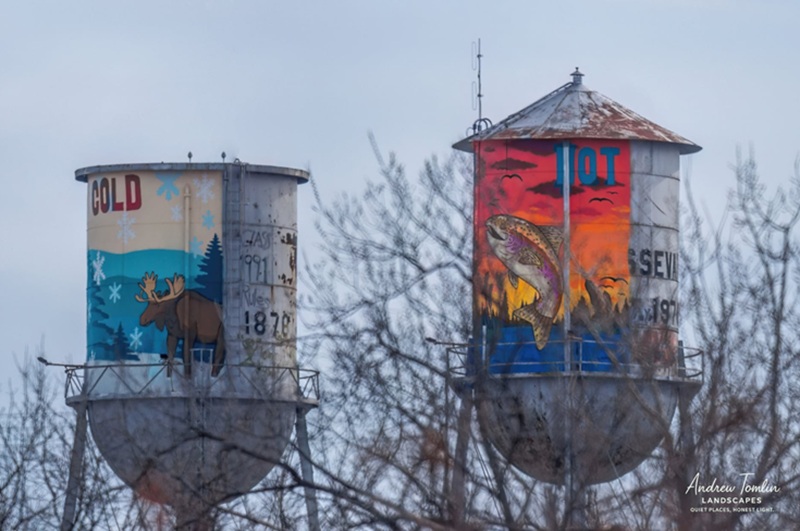
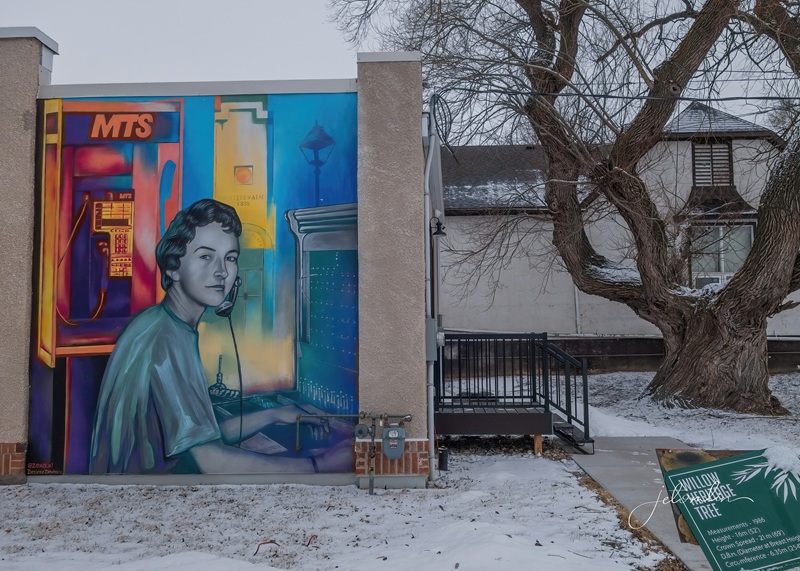
The Boissevain-Morton Arts Council (BMAC) was founded in 1990 to develop outdoor murals and promote tourism. More than 20 professional murals now tell the town’s story, several of which were visible each time we drove through.
Welcome to Boissevain – Don’t Miss Our Murals!
So, one day we walked around town to photograph them.
These Roots Run Deep
Romance of the Railroad
Royal Canadian Legion Branch #10
Travel Manitoba Visitors Center
General Store
Green Meadows Farm
Travel Manitoba
Millinery Shop
Main Street Saturday Night
Ethnic Mosaic
Water Towers
MTS Boissevain 1935
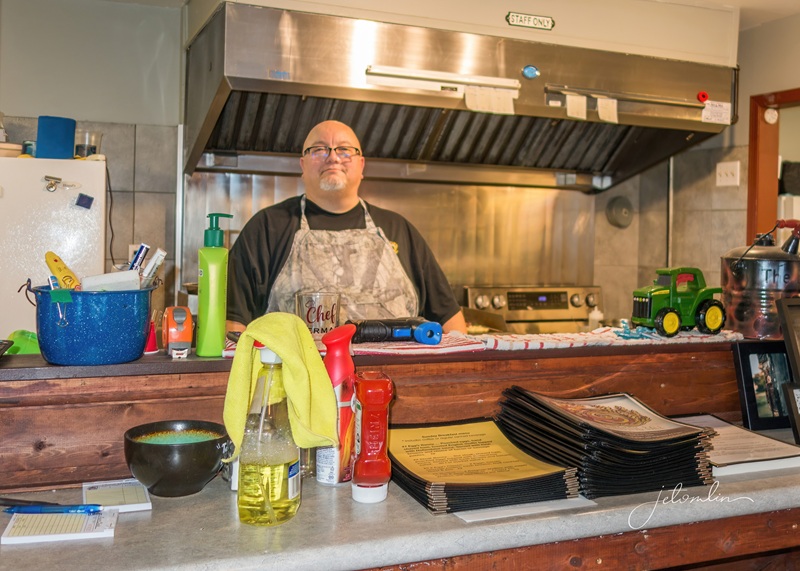
We met so many wonderful people during our visit—our gracious Airbnb hosts, Bethany, her mom Alma, and brother Justin were just the first. Richard recommended quiet roads for spotting moose and other wildlife. At The Burning Bale, Chef Germaine welcomed us with warmth and amazing food.
Chef Germaine, The Burning Bale Restaurant
Gord suggested Rt 245 for a scenic drive home.
30 seconds on scenic Rt 245 (sped up 2x)
And when we mentioned our passion for owls, many locals offered helpful information.
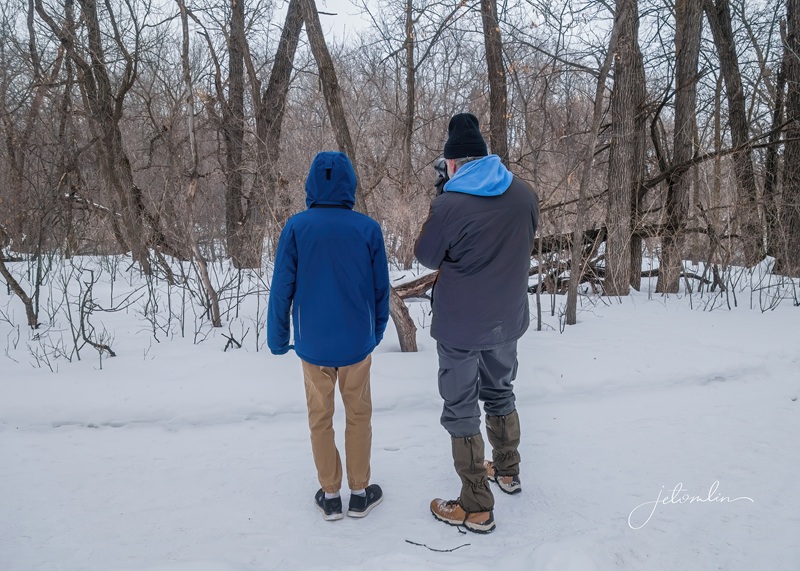
TG with a helpful fellow-birder
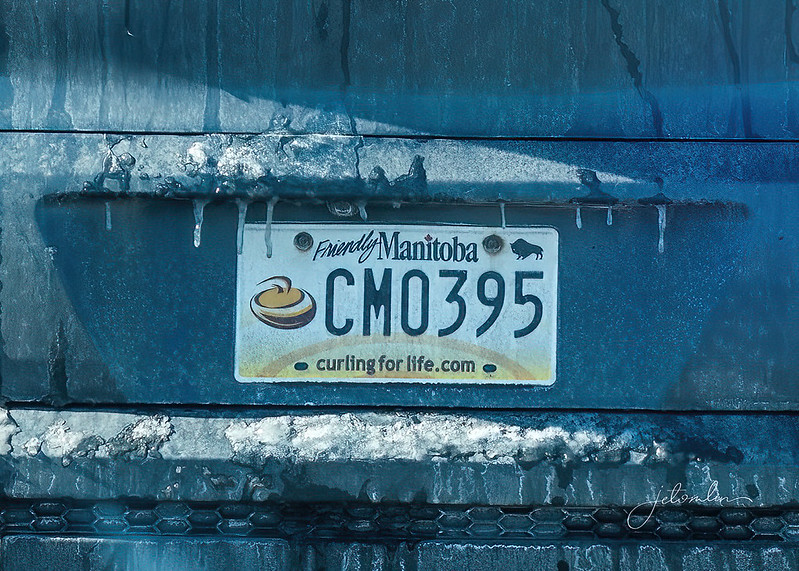
Manitoba’s license plate reads “Friendly Manitoba”—and we couldn’t agree more!
“Friendly Manitoba”
Sawmill Tea & Coffee Co
“Dear person behind me, the world is a better place with you in it”
With everything going on in the world right now, it’s important to take a break from the chaos once in a while. Manitoba’s wide-open spaces, abundant wildlife, and welcoming community helped us stay grounded and reminded us to look for peace, no matter what life brings.
Aurora over Ninga, March 13, 2026
To view all our photos from our month in Manitoba, click on the Flickr links below:
TG:
arrow through set or click on any photo to open a new tab in Flickr
JET:
arrow through set or click on any photo to open a new tab in Flickr
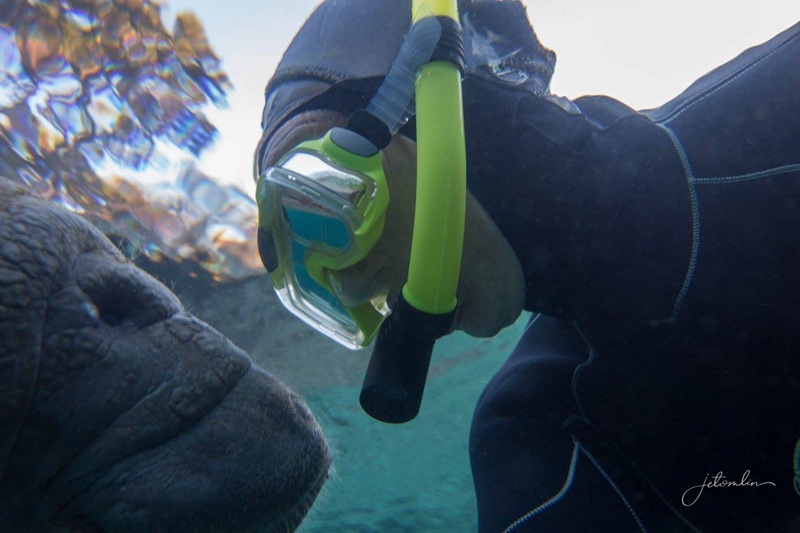
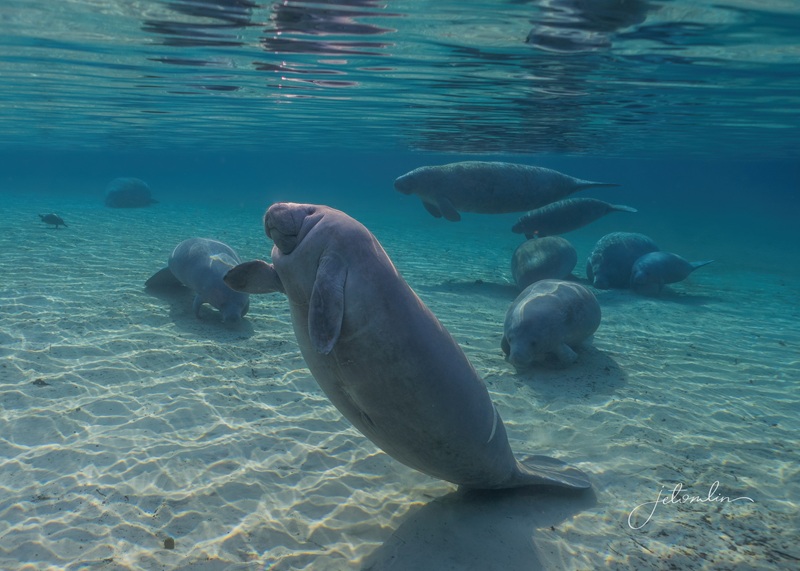
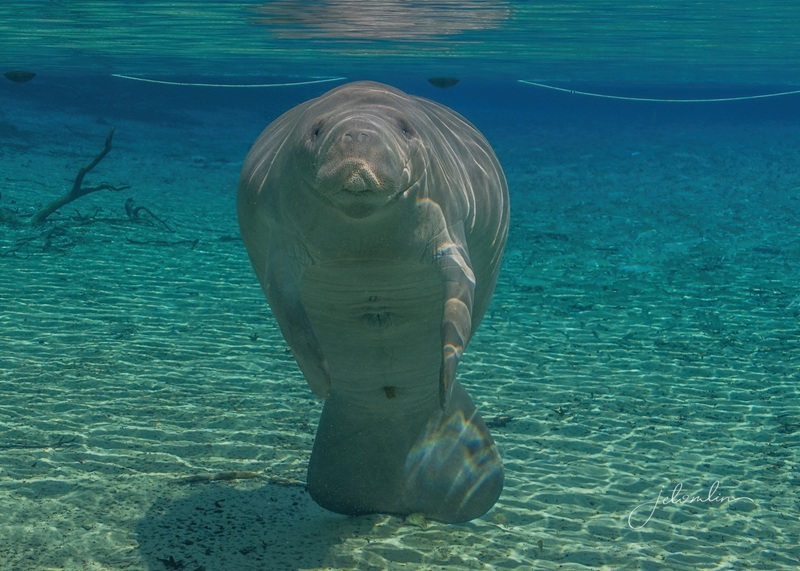
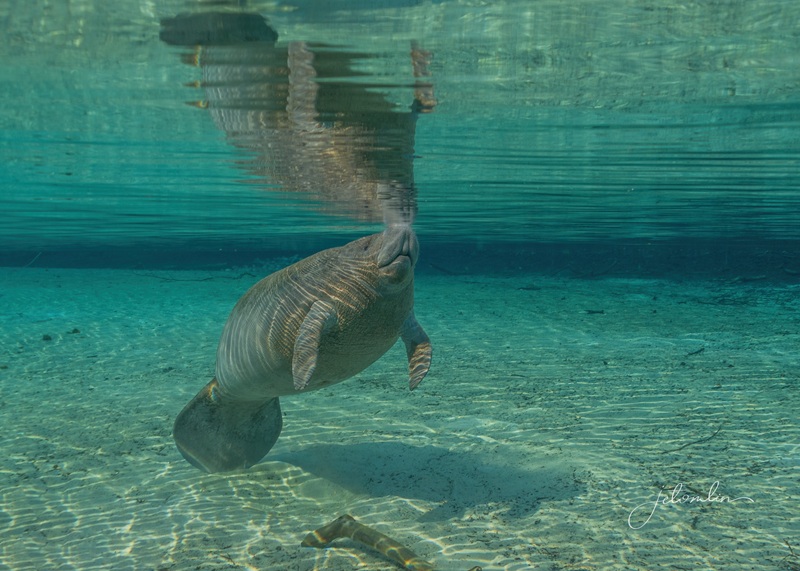
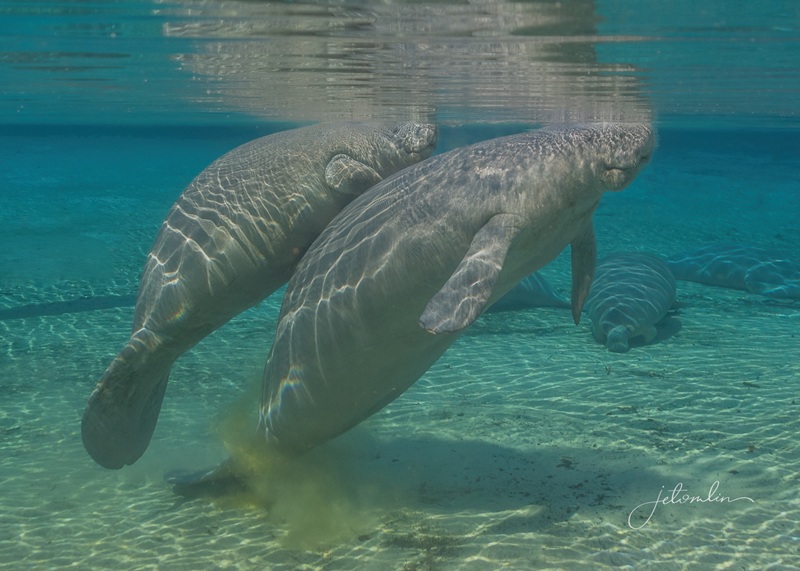
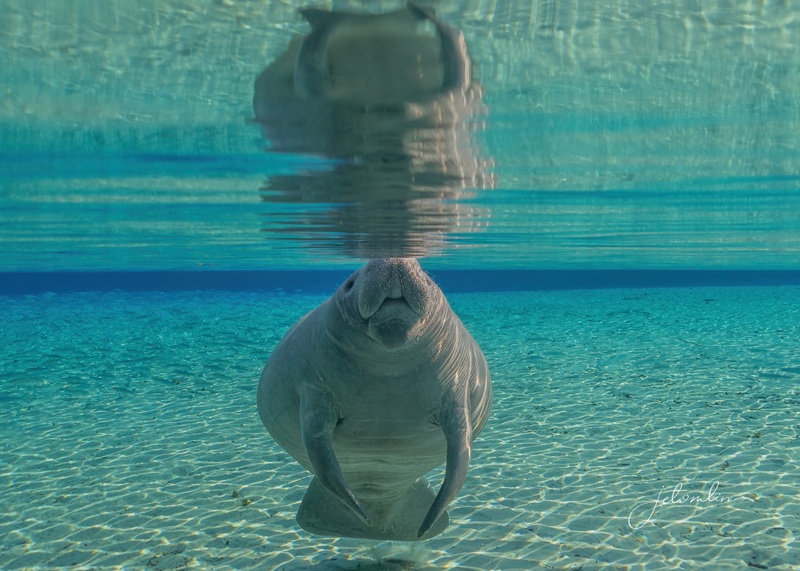
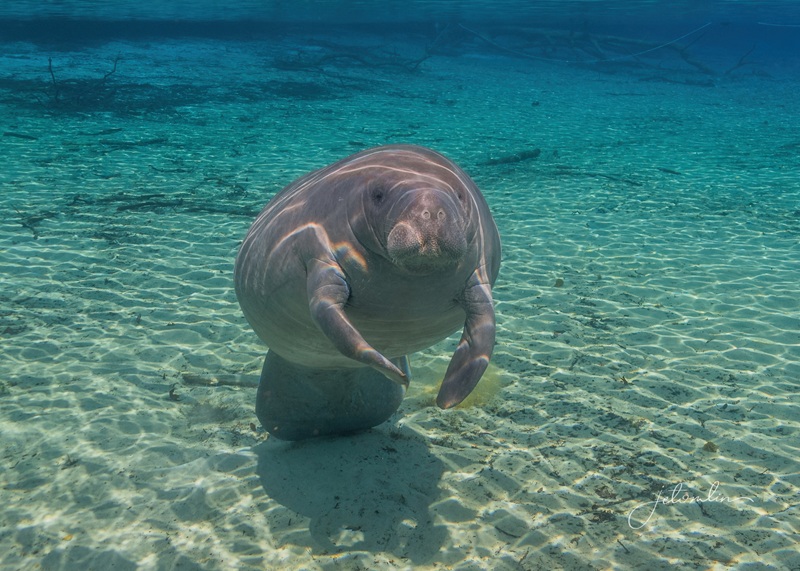
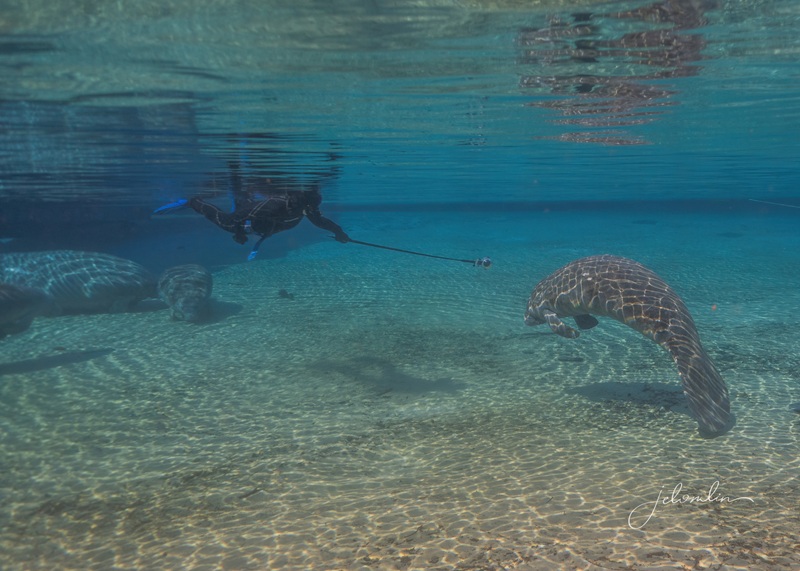
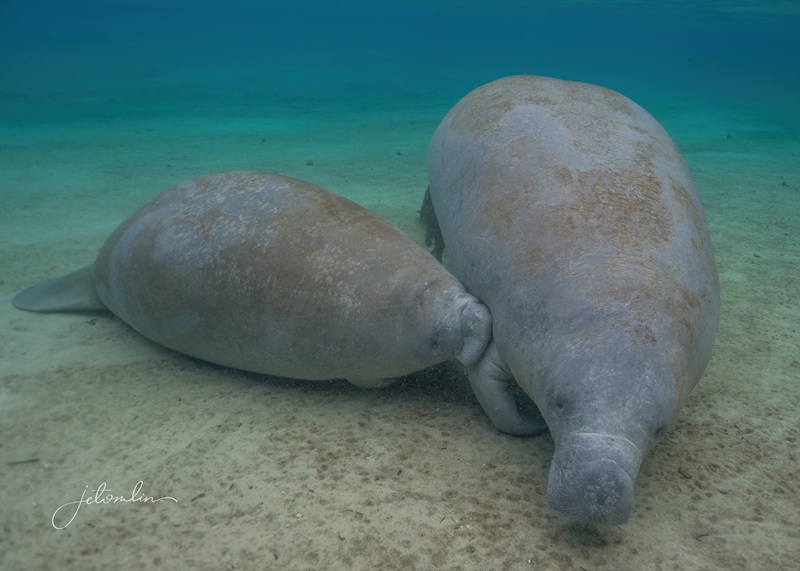
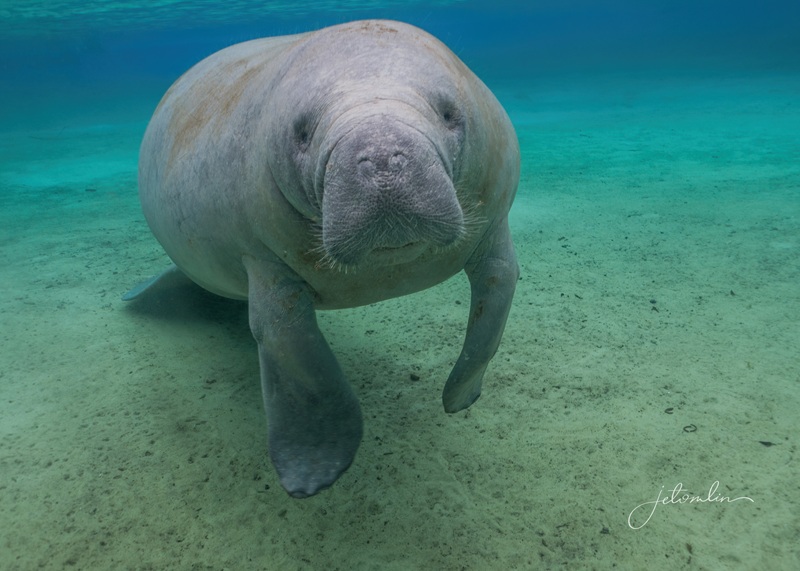
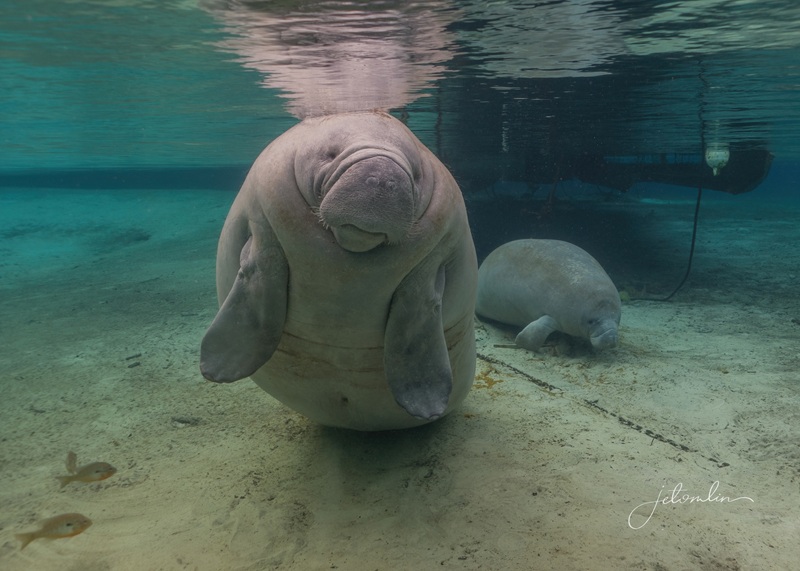
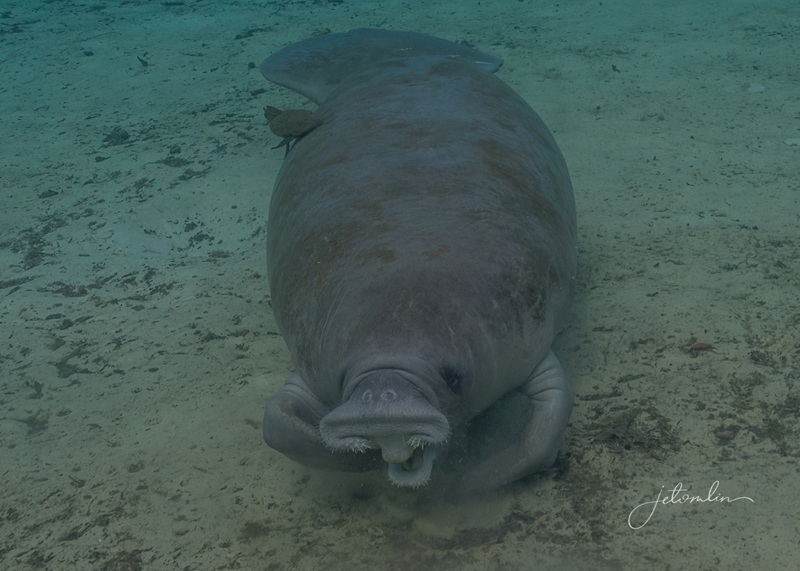
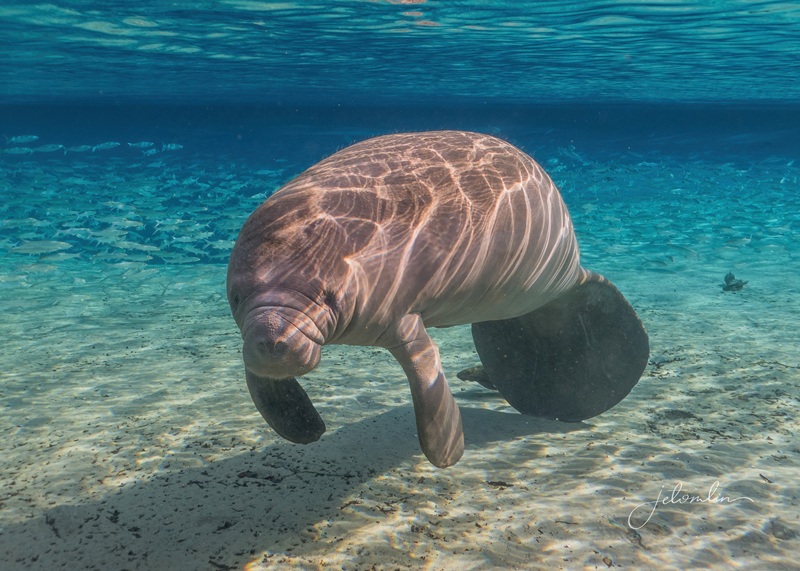
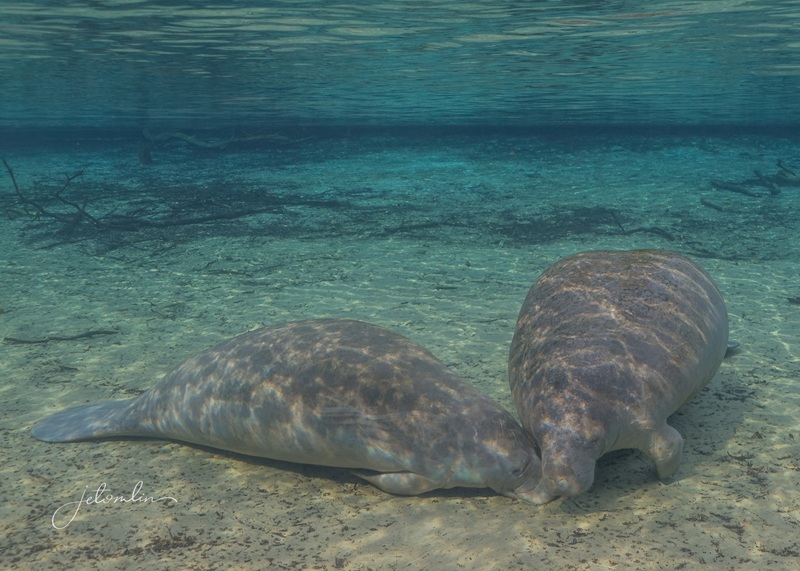
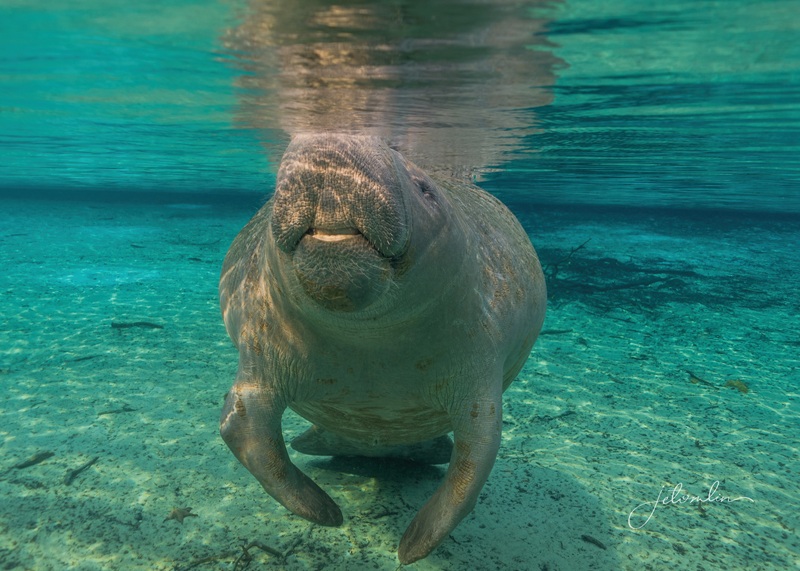
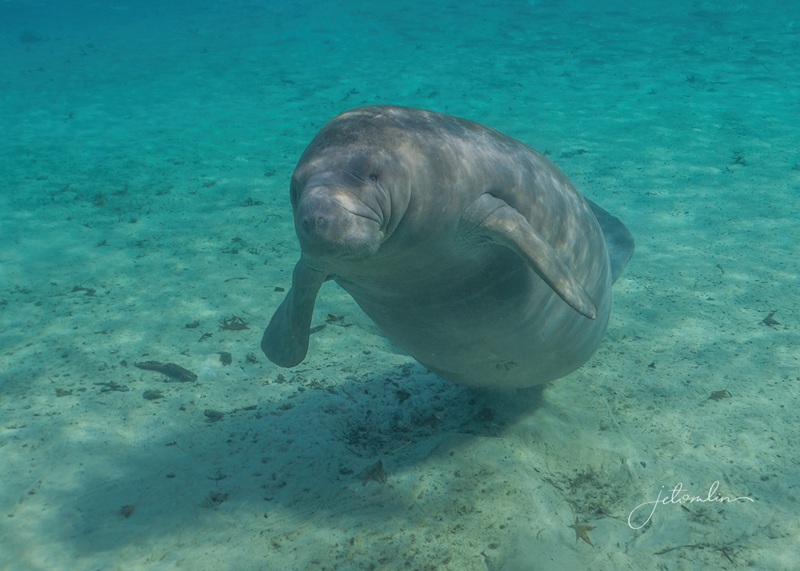
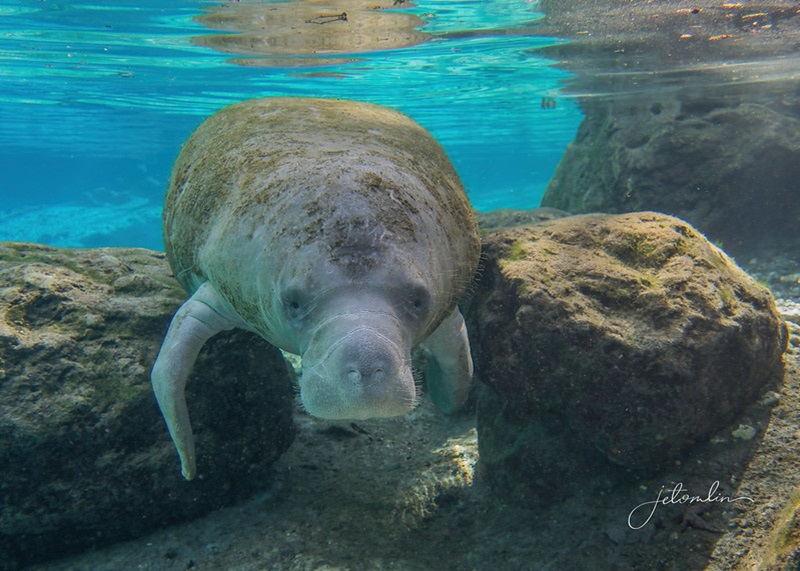
Some experiences in life never lose their charm, no matter how often you have them. For me, swimming with manatees is one of those things. For the past two decades, I have traveled to Central Florida every winter around my birthday to swim with these gentle giants. It doesn’t matter how many times I’ve done it; each encounter, when I come face-to-face with a sweet “floating potato,” fills me with joy.
February, 2016
Since TG is not a fan of cold-water swimming, I’ve always invited a friend or two to join me on my yearly pilgrimage.
20182021
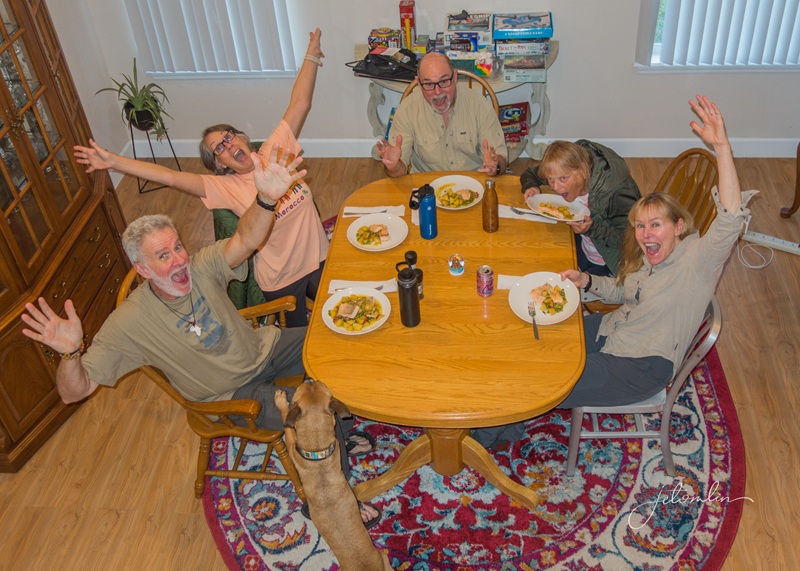
In 2025, two sets of friends joined me, and we had such a great time we decided then & there to meet up again in 2026. Plus, since we’ve moved so far away, getting “the band” back together once a year is as much a treat as the manatees!
January 2025
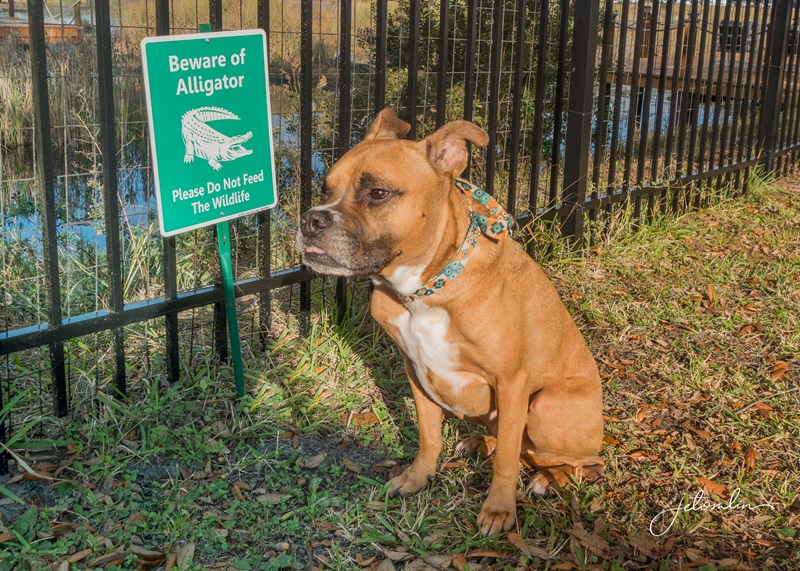
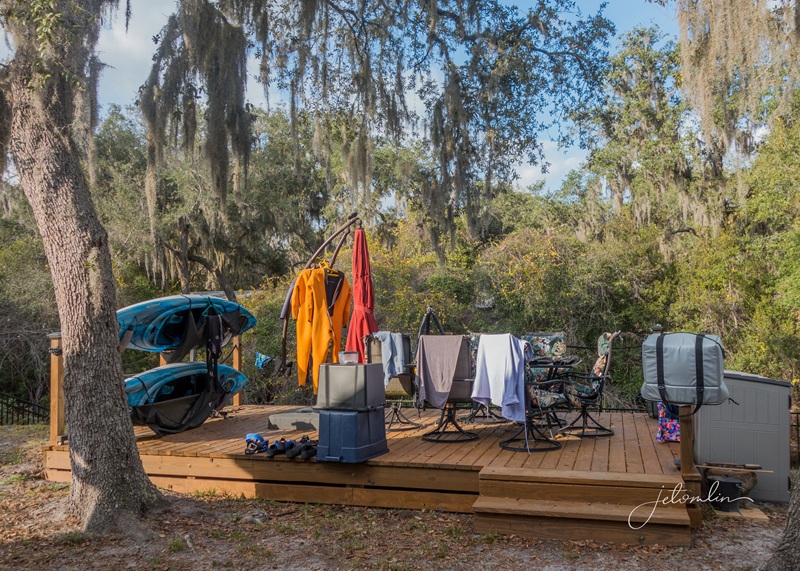
TG found a pet-friendly Airbnb conveniently located close to the springs and other natural areas. It had a “Big Chill” vibe, with plenty of space for the five of us (plus two pups), a large kitchen/common area, a fenced-in backyard overlooking a lake, and a spacious deck for drying our wet gear.
We arrived on Monday afternoon and, after settling in, enjoyed all the birds flitting through the trees across the canal.
We prepared our gear for our first visit to the springs the next morning. The air temperature was in the 50s—a bit warm for manatees—but we found over 30 in the swim area and around the anchored boats.
January 6, 2026
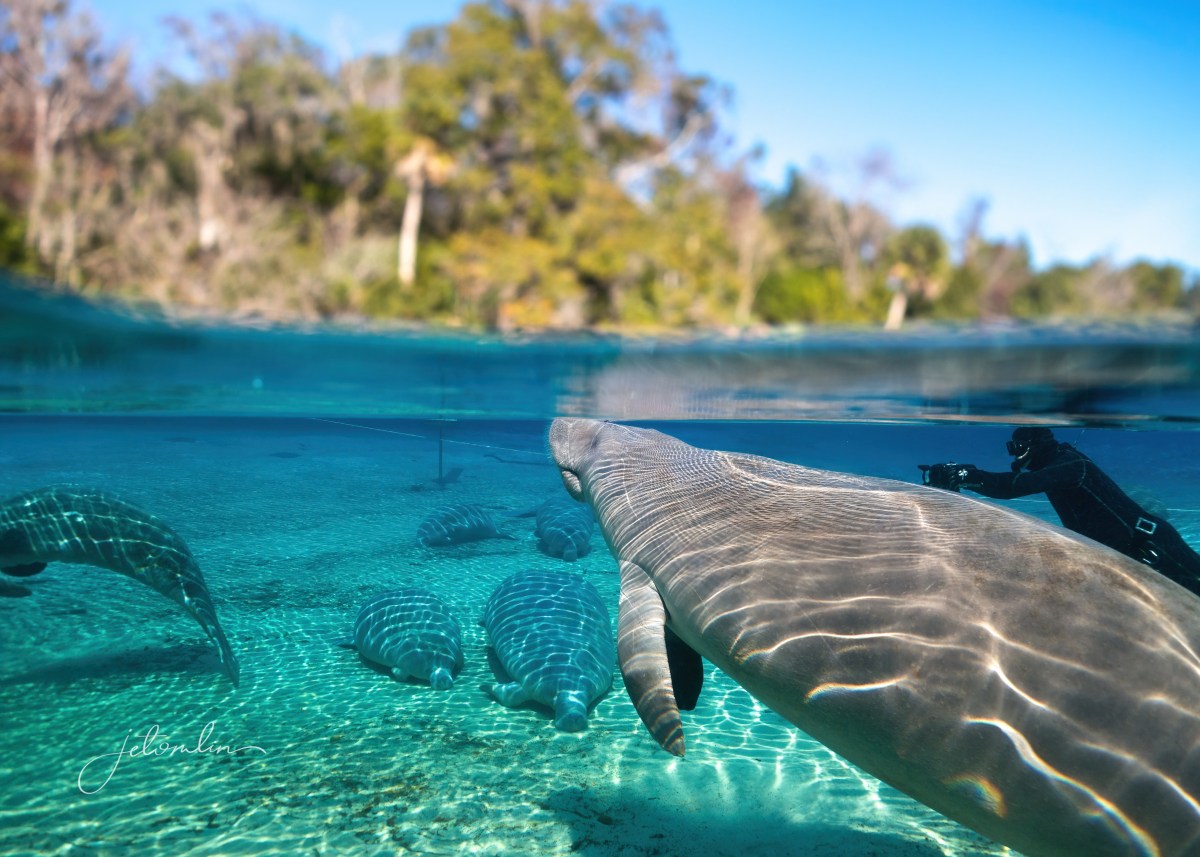
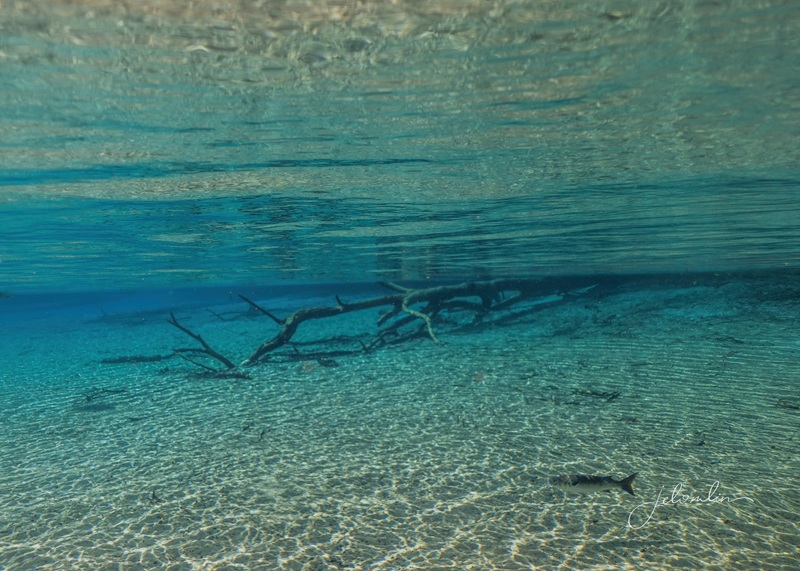
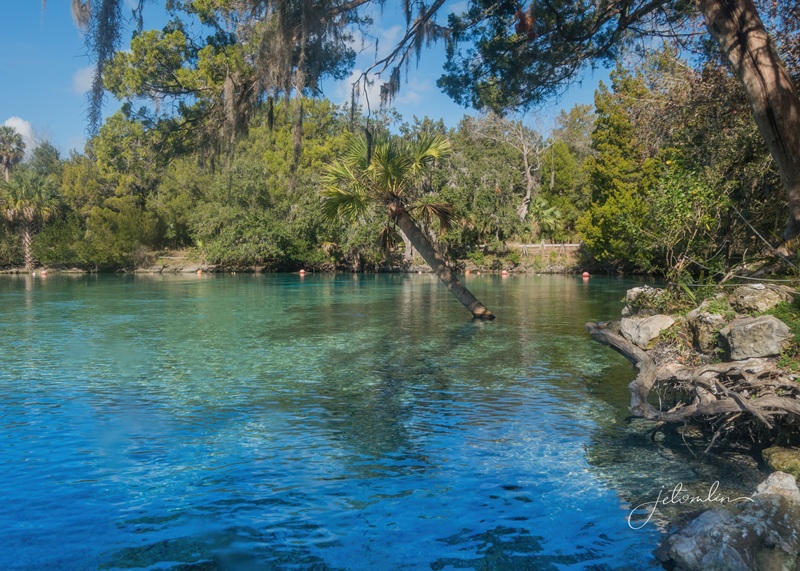
The water in the springs was crystal clear and a beautiful blue. It’s no wonder that on his first visit to a Florida spring in 1513, Ponce de León believed these waters had rejuvenating properties.
crystal clear, blue water
And although Florida’s natural springs aren’t literally Fountains of Youth, the National Park Service has noted that “being surrounded by trees, water, or open skies lowers cortisol levels and blood pressure within minutes. The natural world signals safety to the brain. Stress fades. Mood lifts. You remember how it feels to breathe deeply.”
the springs entrance
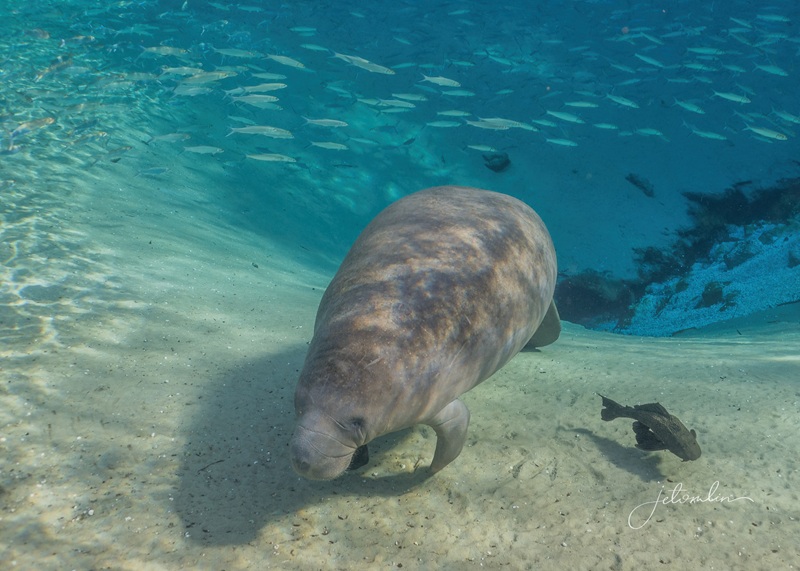
Our first manatee snorkel of 2026 was just as wonderful as it had been the last 20 times I had done this, and with bright sunshine and air temperatures near 80 degrees, we stayed in the water for over three hours before succumbing to the crisp 72-degree water.
click on image to view full size
Along with the manatees, we swam with multiple painted turtles
painted turtle
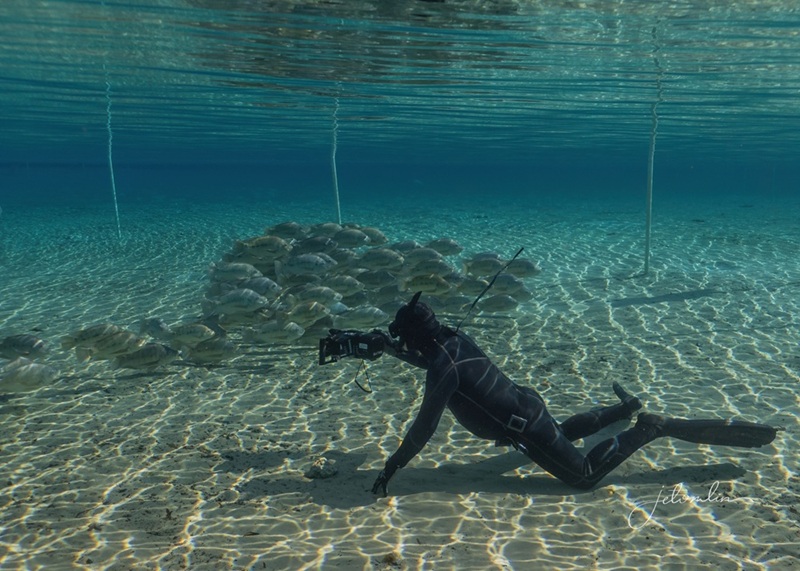
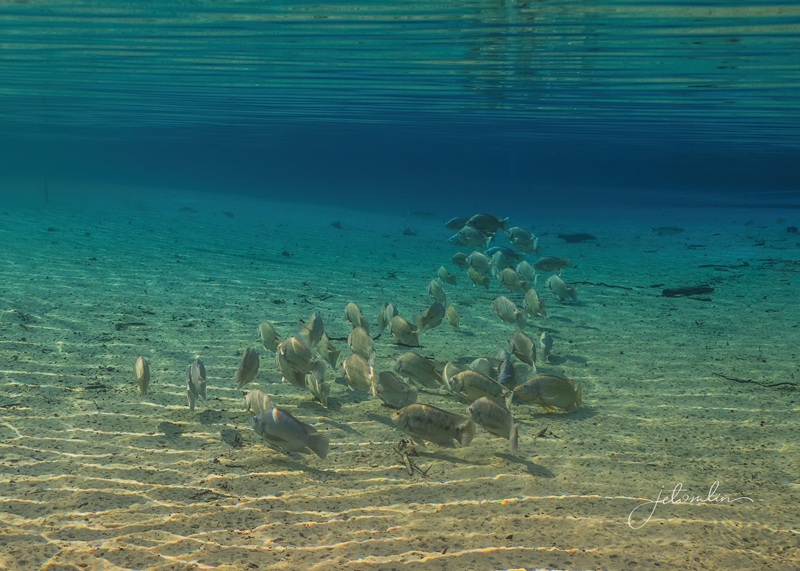
And huge schools of fish: mullets, tilapia, freshwater sunfish, and largemouth bass.
huge schools of fish!
While enjoying the manatees, we also found an alligator snapping turtle, which quickly disappeared into the mangrove roots in the shallows.
alligator snapping turtle (at 25% speed)
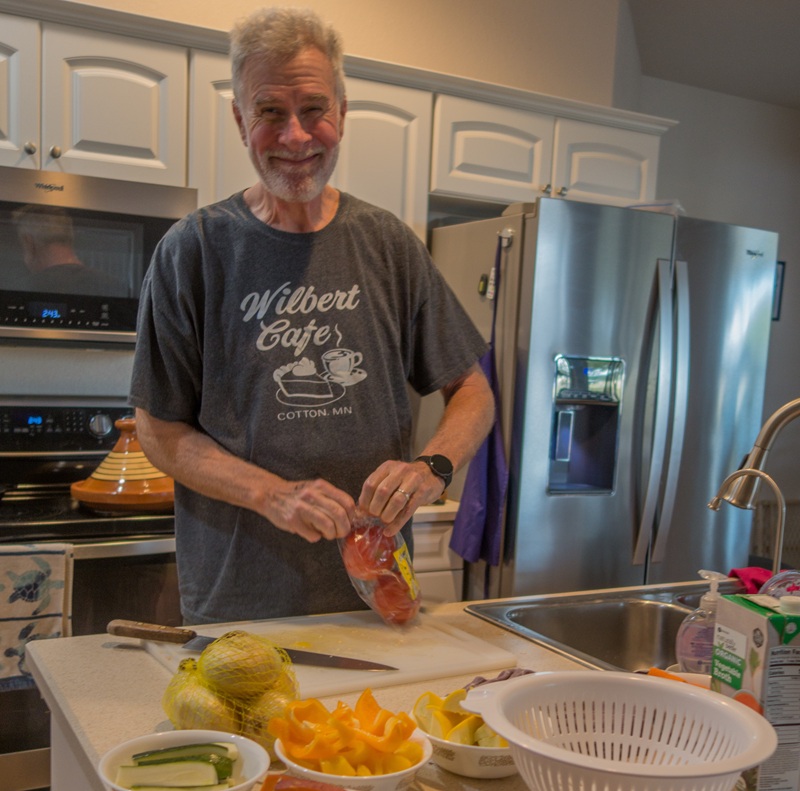
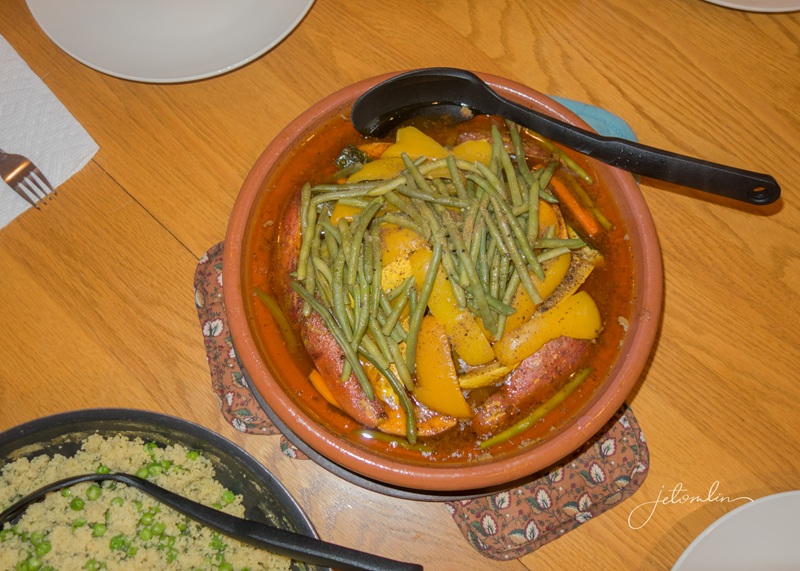
While we were having fun in the water, TG was back at the house, preparing dinner each evening. He loves to cook and got as much pleasure from us enjoying his meals as we did from eating them!
TG cooking!Moroccan tajinThe Band!click on image to view full size
On Wednesday, we returned to the springs for Round 2. The air temperature was rising, and we saw fewer manatees than the previous day. Even so, there were close to 20, including a mother and her nursing calf.
January 7, 2026 – mother and nursing calf
Though it wasn’t as sunny as Tuesday, the light filtering through the crystal-blue water was perfect for photographing the manatees without a “dappling” effect.
click on photo to enlarge
manatee roll!
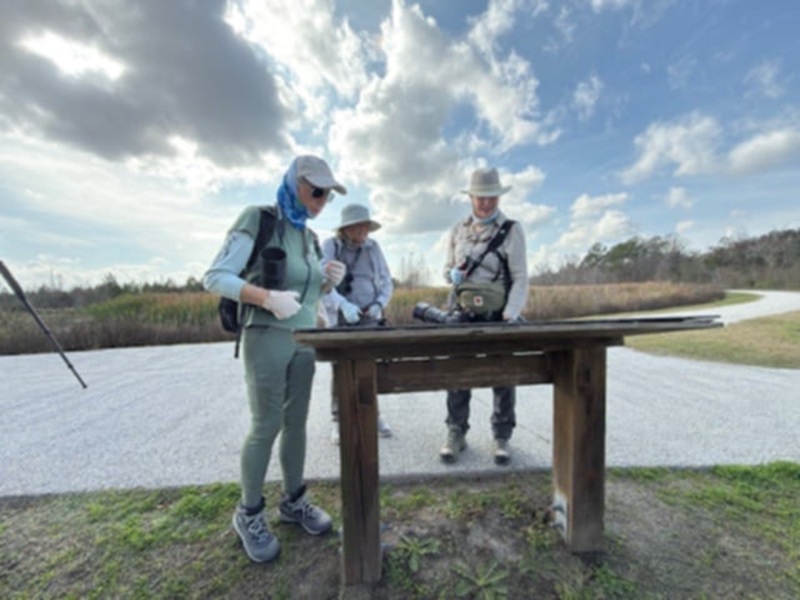
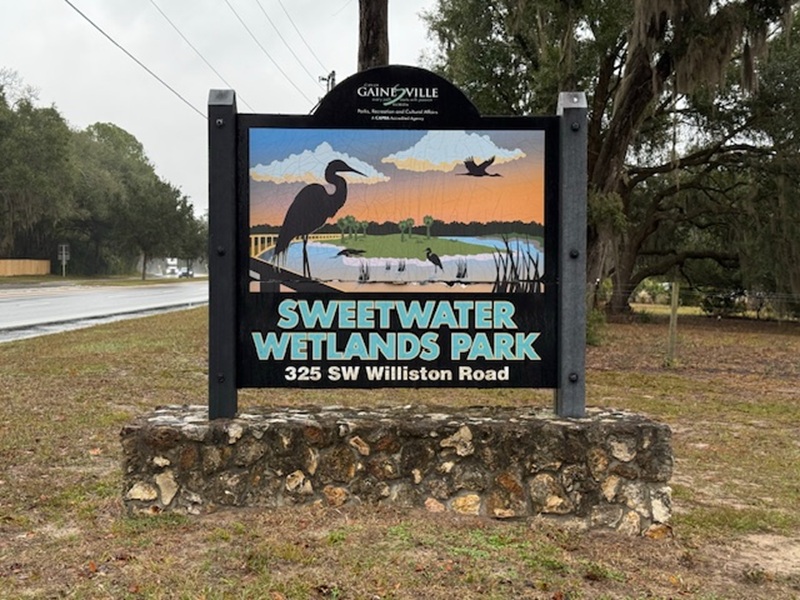
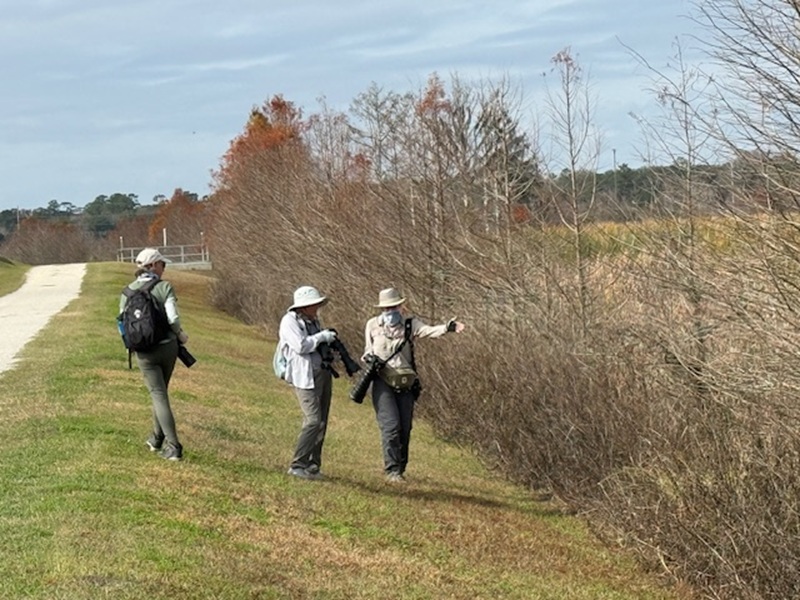
We took a break from the manatees on Thursday to visit two local nature areas: the La Chua Trail in Paynes Prairie State Park and Sweetwater Wetlands.
Sweetwater Wetlands (photo by John Casey)
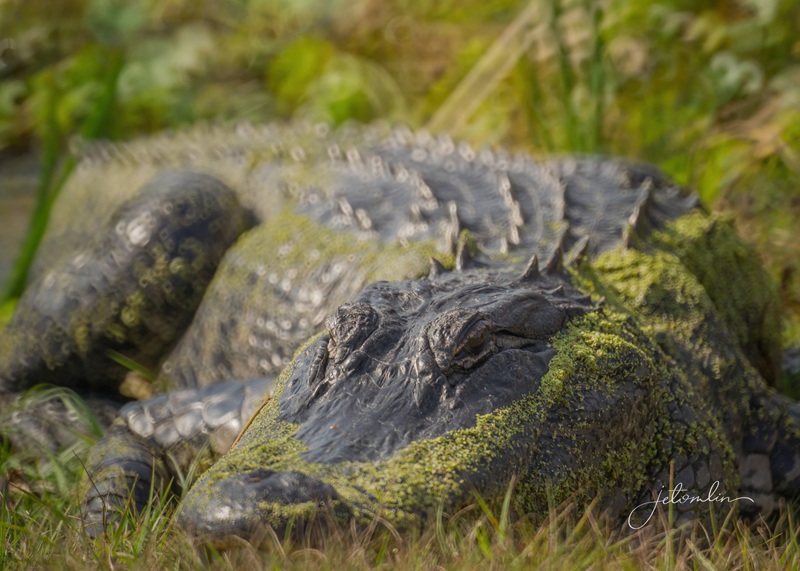
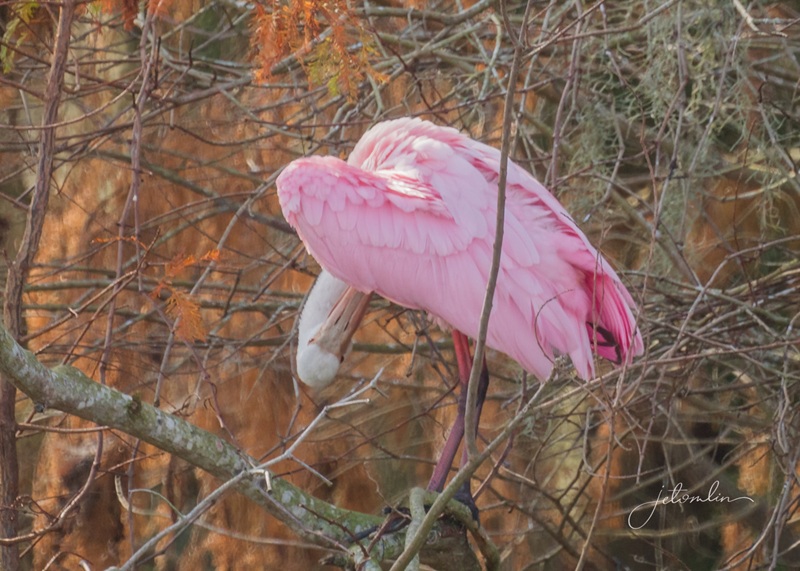
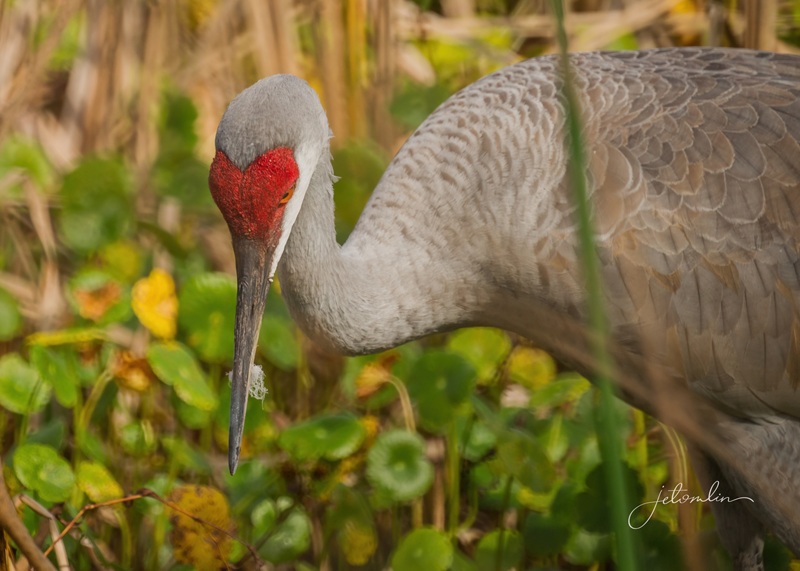
Highlights included more alligators than we could count, several species of sparrows, a roseate spoonbill, dozens of nesting great blue herons, and fearless sandhill cranes.
On Friday, we returned to the springs for Round 3, but there wasn’t a single manatee to be found. We swam all the way up the run to the lake to no avail.
January 9, 2026 – not a manatee to be found!
However, we did come across a 4-foot alligator sunning on a log, which was quite the experience—to be in the water, looking up at an alligator! It almost made up for the lack of manatees.
little gator sunning on a log
Knowing that it would be busy at the springs, we decided to spend the weekend topside. Saturday morning, we were up at the crack of dawn for a return trip to Sweetwater Wetlands.
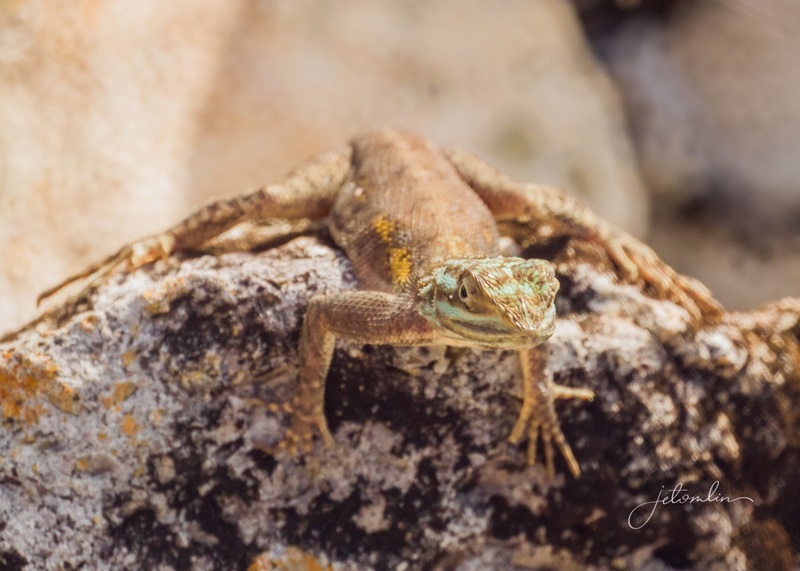
agama lizard at Sweetwater Wetlands
Later in the day, we went back to the La Chua trail at Paynes Prairie, with a stop at the Ecopassage Observation Boardwalk to hopefully see some bison. We were happy to find some reasonably close to the deck and got off a few good shots before we continued on.
bison at the Ecopassage Observation Boardwalk, Paynes Prairie
We arrived at La Chua at dusk to look for owls, and although we heard plenty of calls of both barred and great horned, it was nearly dark before we spied our first one. It was a great horned, so far away it was nothing more than a tiny dot high on a treetop.
owl patrol at La Chua, Paynes Prairie (photo by John Casey)
The setting sun painted the prairie a beautiful orange as we headed back to the car.
click on photo to enlarge
Sunday morning, we went back to Sweetwater for one last visit. We arrived even earlier than on Saturday – we were second in line for the 7 am gate opening. However, the morning fog never lifted, making for poor light and challenging photography.
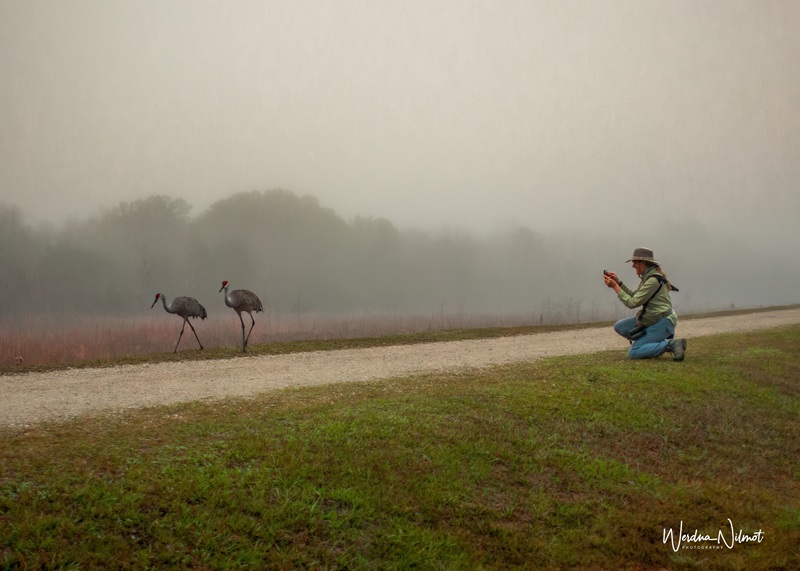
sandhill cranes at Sweetwater Wetlands (photo by TG)
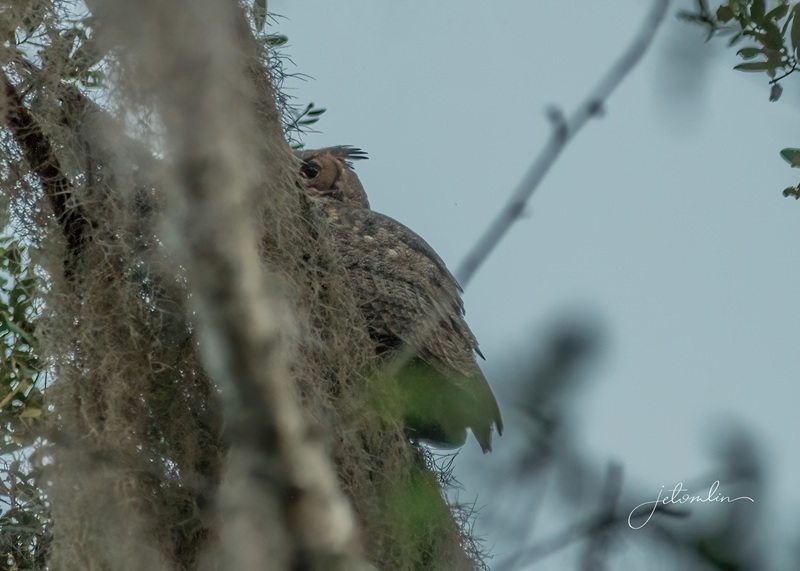
As we scouted for owls along a tree-lined path, we momentarily glimpsed a great horned owl before she disappeared behind the moss curtains.
great horned owl at Sweetwater Wetlands
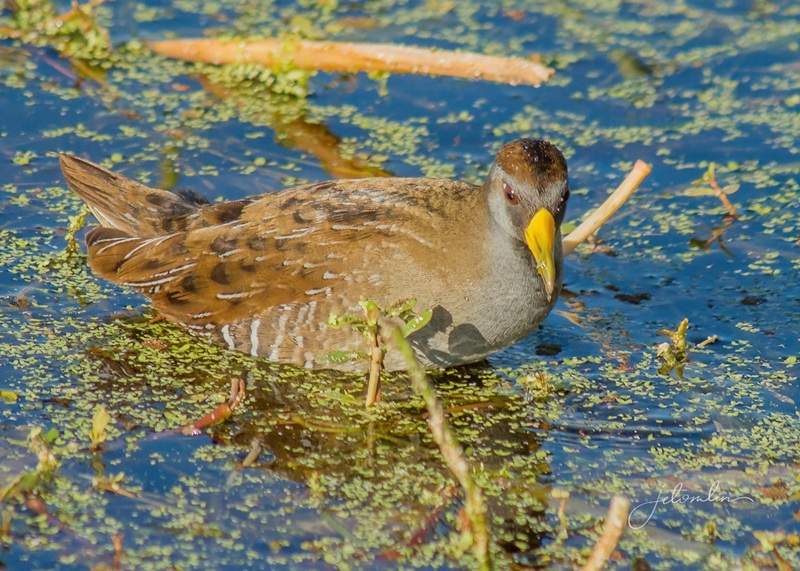
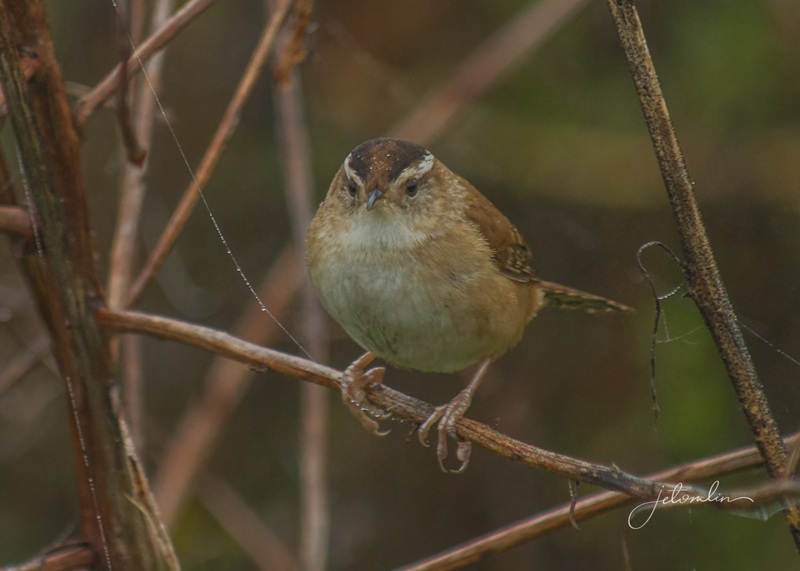
Even so, it was a wonderful morning, and we were treated to multiple beautiful birds, including a marsh wren and a sora – two new birds for me!
sora
marsh wren
Around 9 am, it started to rain, and we hurried back to the parking lot.
around 9 am, it started to rain
We spent a quiet afternoon around the house and drove back to La Chua at sunset for one last chance to photograph an owl. We heard their distinctive hoot-hoot-hoot but were unable to locate them.
we heard multiple owls calling but were unable to locate them
sunset at the Airbnb
The following morning, we returned to the springs for Round 4. Air temperatures had dropped significantly overnight, and when we arrived at the park, the car’s thermometer read 42 degrees. I was certain we were in for a treat, and sure enough, we saw at least 20 manatees in and around the swim area.
January 12, 2026
We spent another three hours with them and only got out when our fingers got too cold and stiff to work the buttons on our cameras.
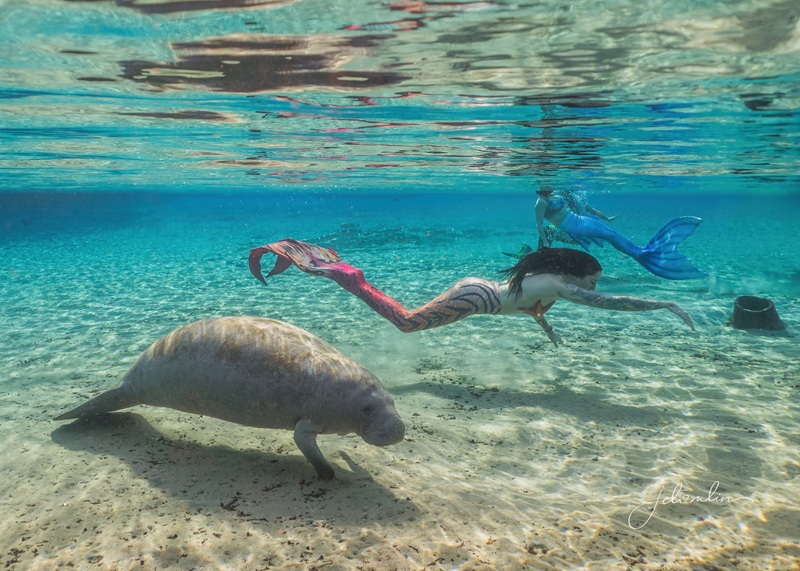
We also saw a bald eagle, an otter, multiple appearances of the alligator snapping turtle, and mermaids! The Florida Springs Mermaid Pod was there practicing, and it was fun to watch as they gracefully swam amongst the manatees.
mermaids!
After warming ourselves with a bowl of steaming hot soup, we spent the afternoon preparing to head home the following morning. We had four glorious swims at the springs, multiple birding opportunities, and hours filled with laughter, friendship, and Nature.
The Band, Sweetwater Wetlands, January 2026
What a mana-treat it was to spend the week with people so dear to my heart! As we drove home, I indeed felt my mood lift and my stress fade away.
January 12, 2026 – manatee at the springhead
To view all my manatee photos click here:
arrow through set or click on any photo to open a new tab in Flickr
To view all my topside nature photos click here:
arrow through set or click on any photo to open a new tab in Flickr
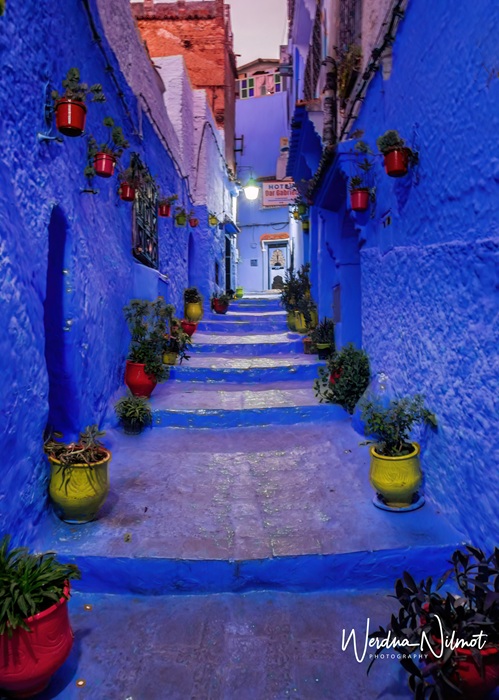
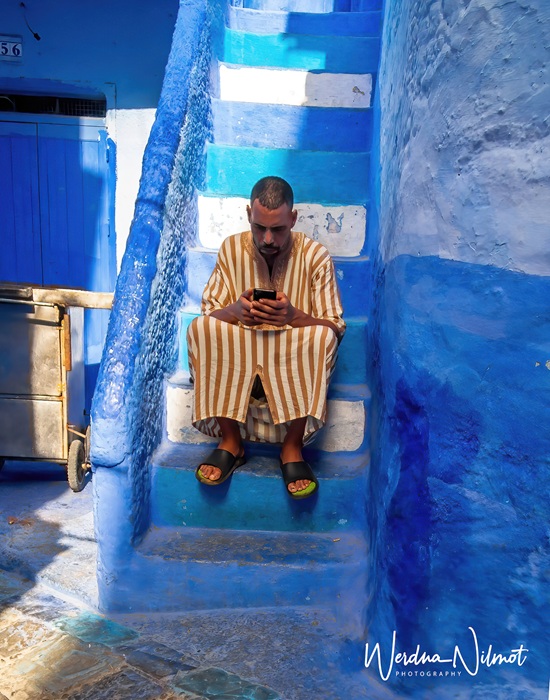
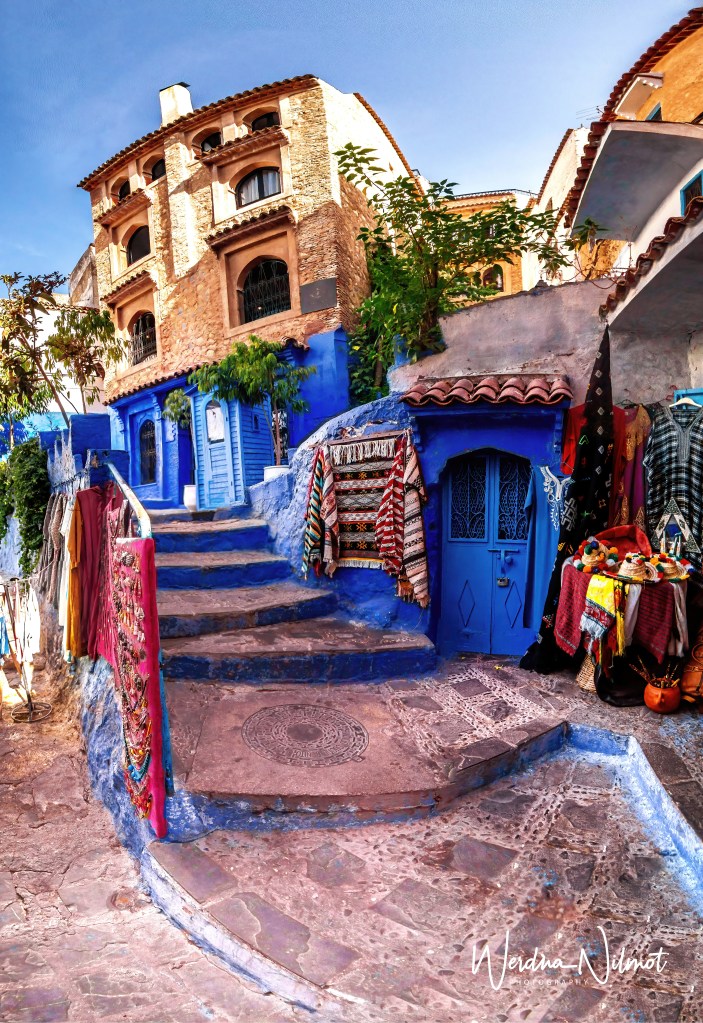
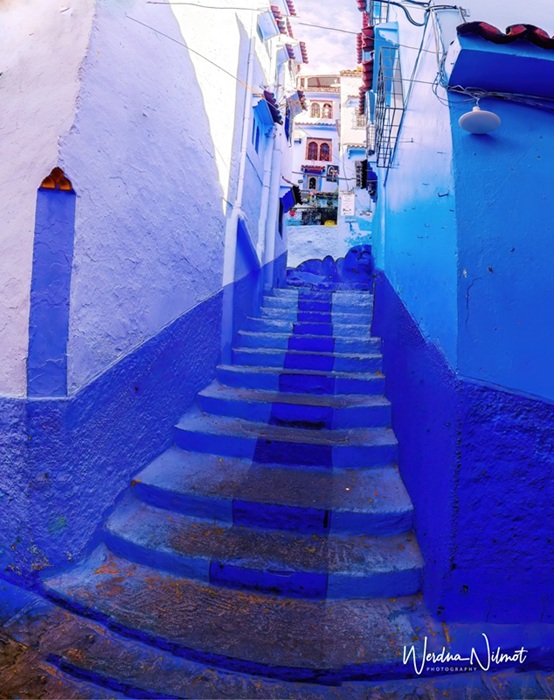
Morocco, or Maroc as it is known in country, has been on my list of “must-see” destinations for decades. Its unique blend of stunning landscapes, rich culture, and delicious cuisine is a photographer’s dream. However, with so much to see, it wasn’t easy to decide where to go and for how long. JET and I have always been “thoroughly explore one area” type travelers, so after much research, I settled on Chefchaoen, famous for its incredible architecture and beauty.
I was particularly excited about capturing the iconic blue colors of the city against the backdrop of the Rif Mountains. We decided that this would be a solo trip, giving me ample time to take the landscape shots I hoped for. And so, in September 2025, I departed from Pensacola Airport for an 8-day visit to the Blue City of Chefchaouen.
on my way to Chefchaouen
“M” is for Muslim
The main religion in Morocco isSunni Islam, which is also the state religion of the country. Officially, 99% of the population is Muslim, and virtually all of those are Sunni.
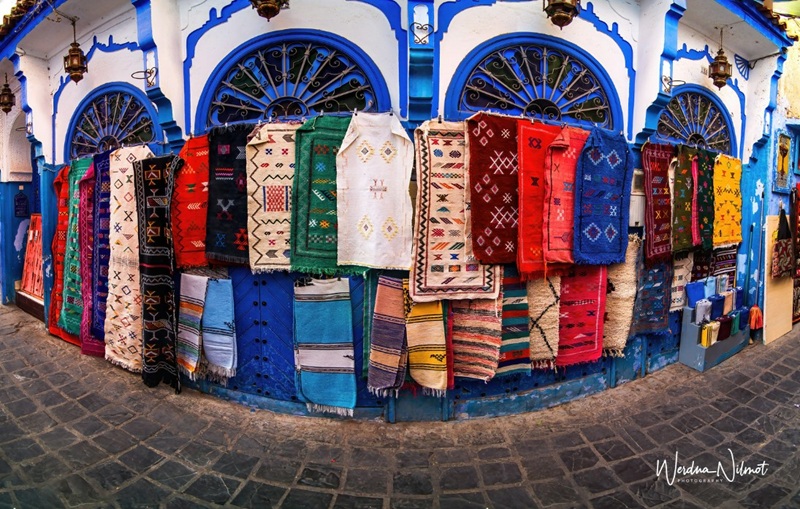
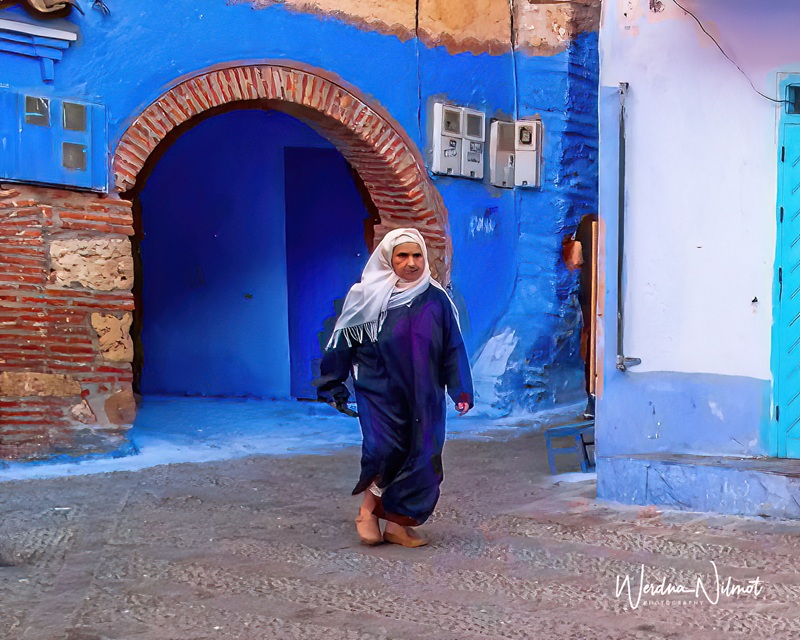
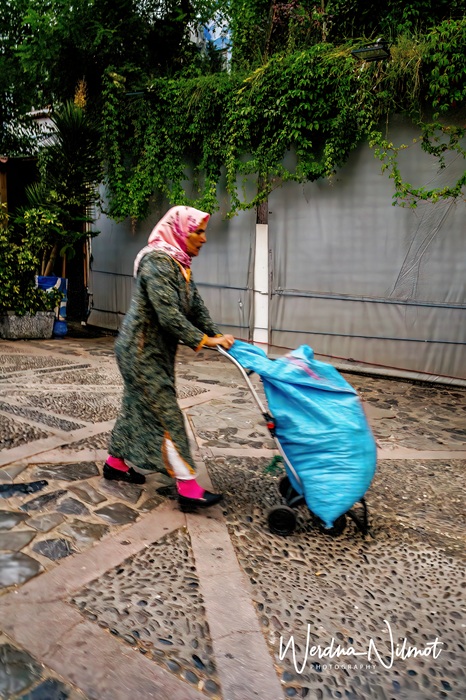
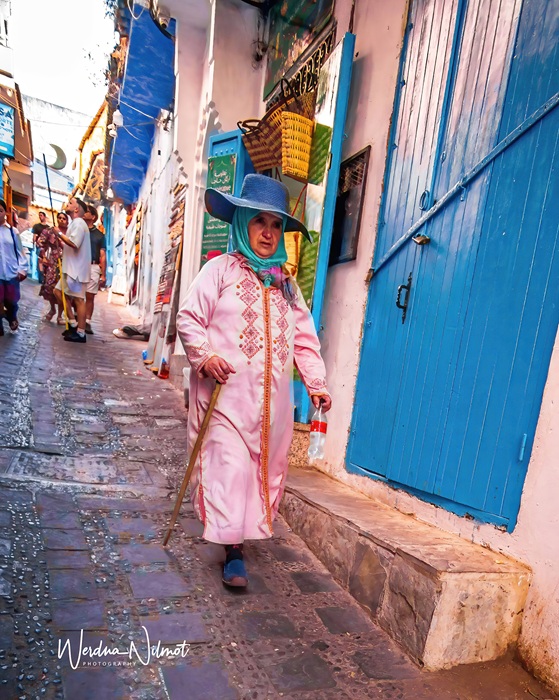
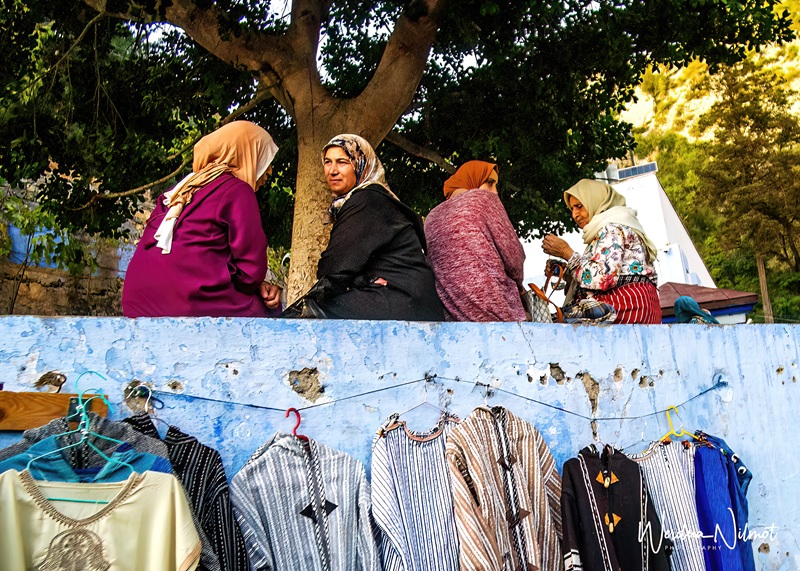
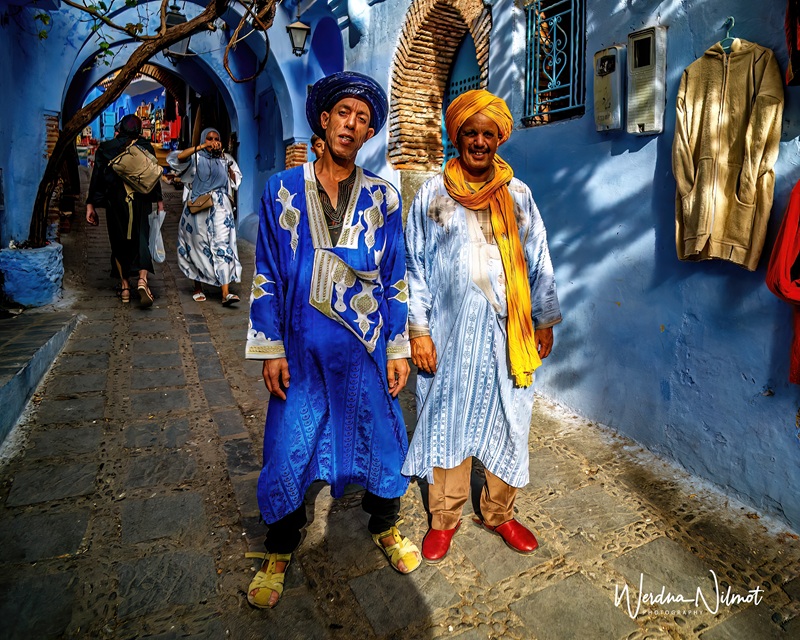
The five daily calls to prayer, a fundamental practice in Islam, resonated throughout my visit to Chefchaouen. These calls, a constant in the city’s soundscape, served as a reminder of the profound role of faith in daily life. From the hijabs adorning women’s heads to the vibrant prayer rugs on display in the bustling markets, the influence of the Muslim faith was evident in the many photographs I captured. (click on photos to enlarge)
women in hijabsprayer rugs for sale
My visit to Chefchaouen also revealed the rich diversity of Islamic art. Islam prohibits figurative imagery in architecture, but that has not stifled creativity. Instead, it encouraged the development of other art forms such as mosaics and geometric patterns.
The city is a living testament to this artistic tradition; with so many examples, I spent most of my first full day wandering through the narrow streets and simply taking it all in. By the end of my visit, I was thrilled with what I had been able to capture but knew I had only scratched the surface.
I recorded the following call to prayer on my first night in the Blue City, and it became the soundtrack of my week.
Chefchaouen Call to Prayer
“A” is for Art
Ärt (noun) A diverse range of cultural activity centered around works utilizing creative or imaginative talents, which are expected to evoke a worthwhile experience, generally through an expression of emotional power, conceptual ideas, technical proficiency, or beauty. (Wikipedia)
Morocco in general, and Chefchaouen in particular, fit this definition perfectly and was the principal reason I chose this destination. I first saw photos of “The Blue City” some 20 years ago and had long ago added it to my bucket list of places to visit.
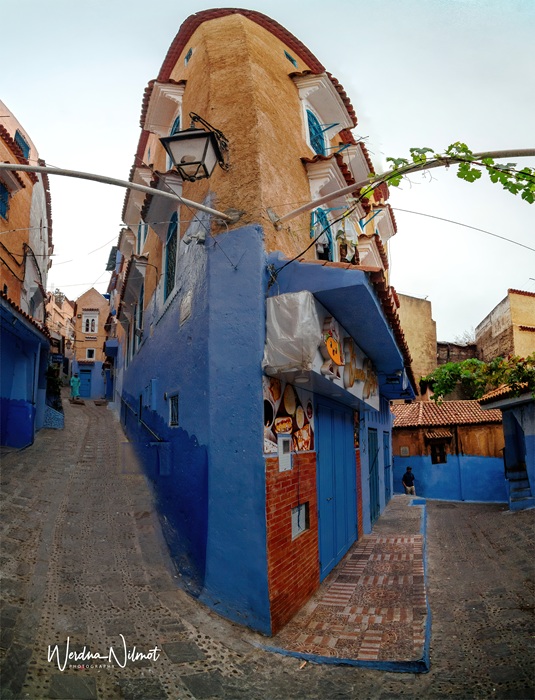
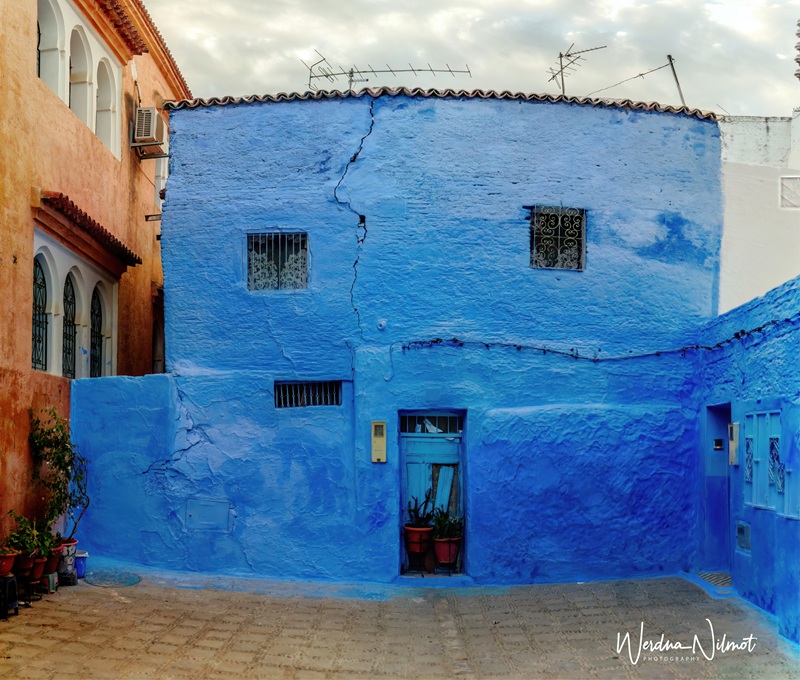
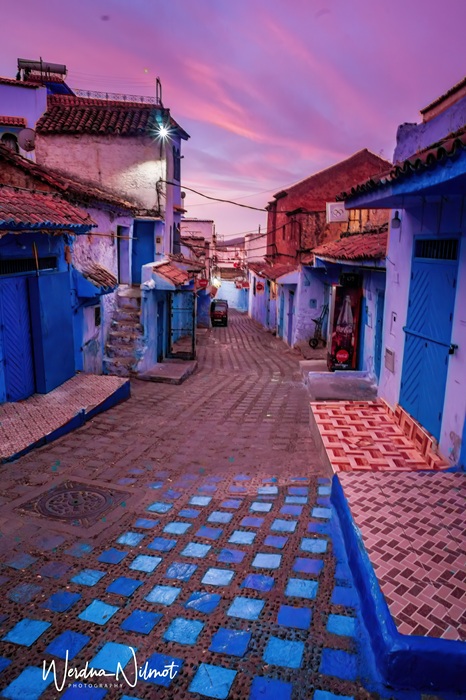
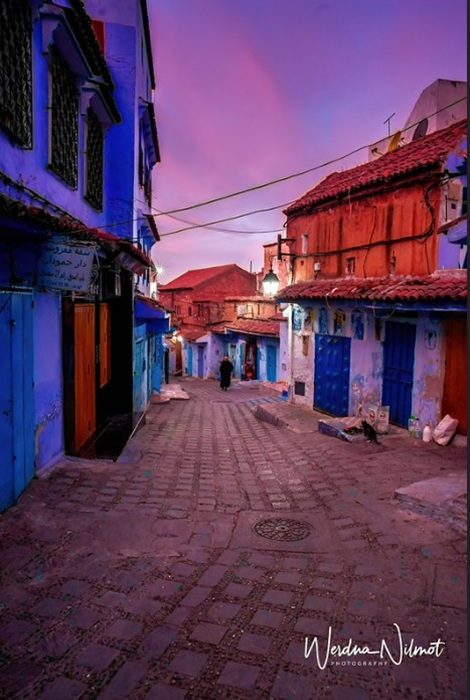
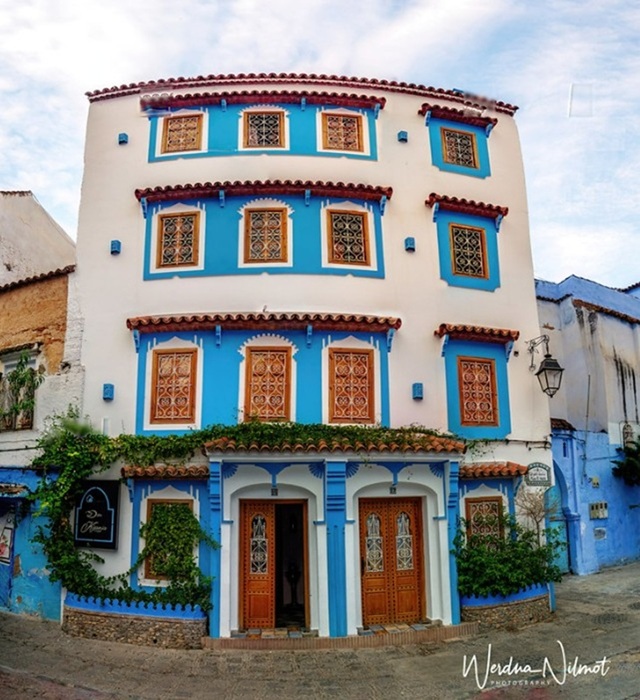
Chefchaouen “Bleuville”
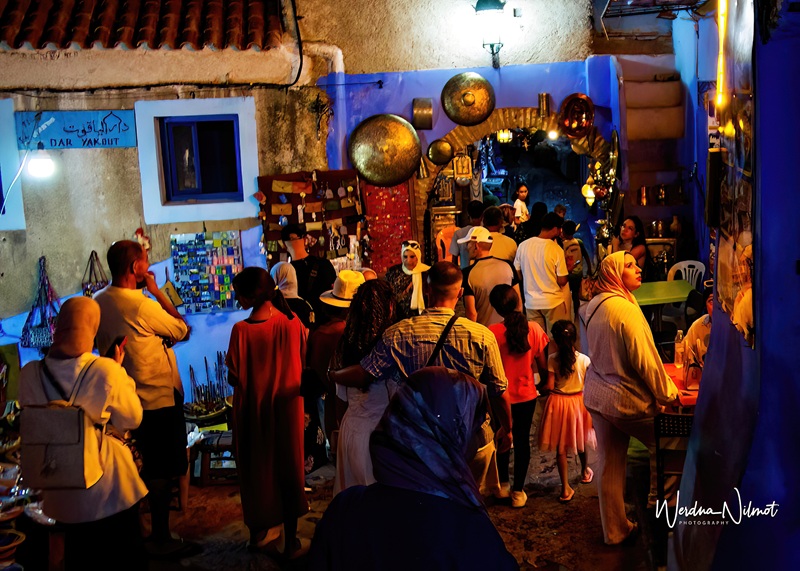
The medina is a ubiquitous part of most Moroccan cities and refers to the old part of town, where markets, vendors, restaurants, and people all coexist in perfect, chaotic harmony.
coexisting in perfect, chaotic harmony
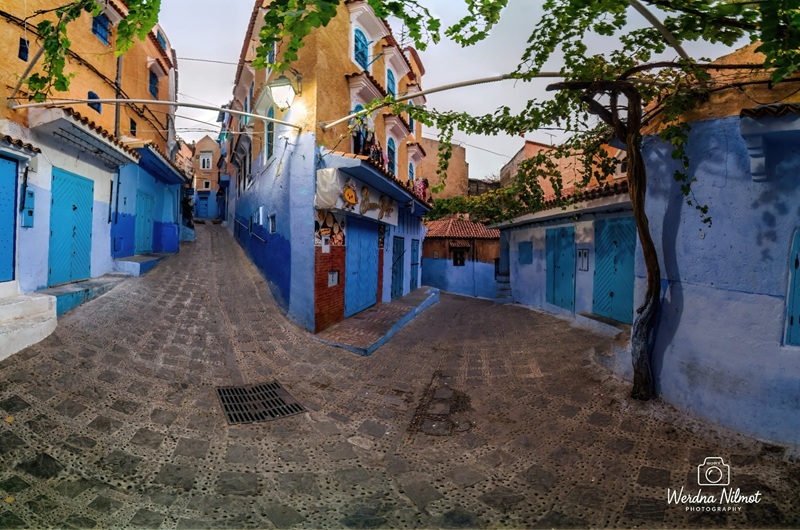
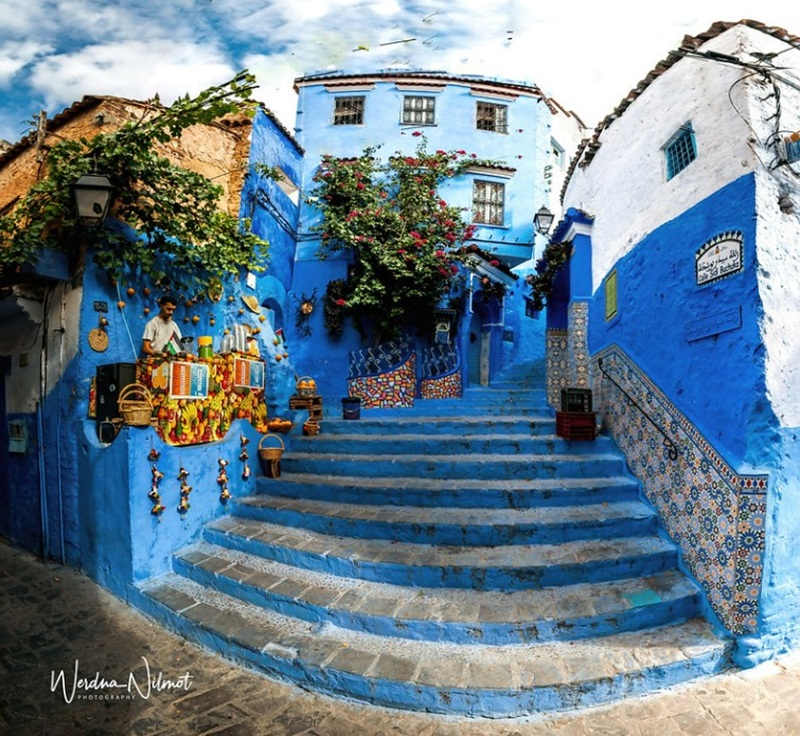
Chefchaouen’s medina is over 500 years old and was initially built as a fortress designed to protect against Portuguese invasions. Over time, it transformed into a vibrant hub influenced by Andalusian, Moorish, and Jewish cultures. The iconic blue, representing the sky and heaven, is believed to have been introduced by the Jewish community.
medina street
Art is visible everywhere in the medina:
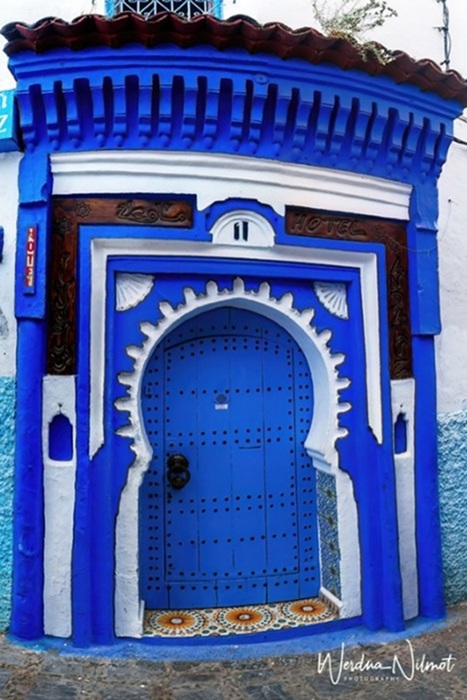
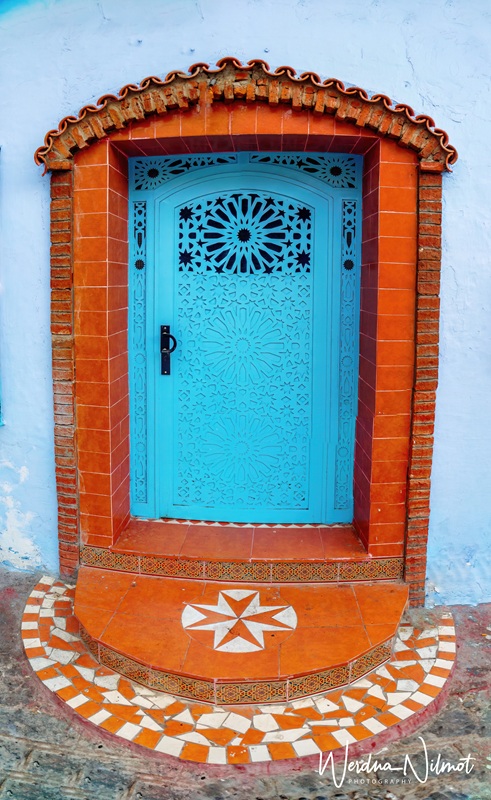
Doors:
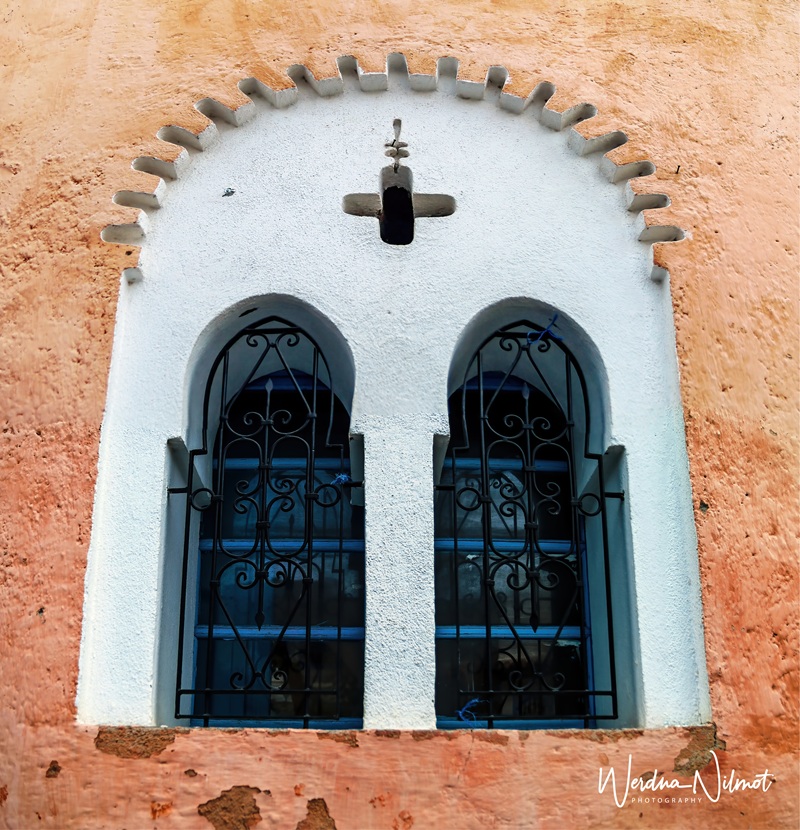
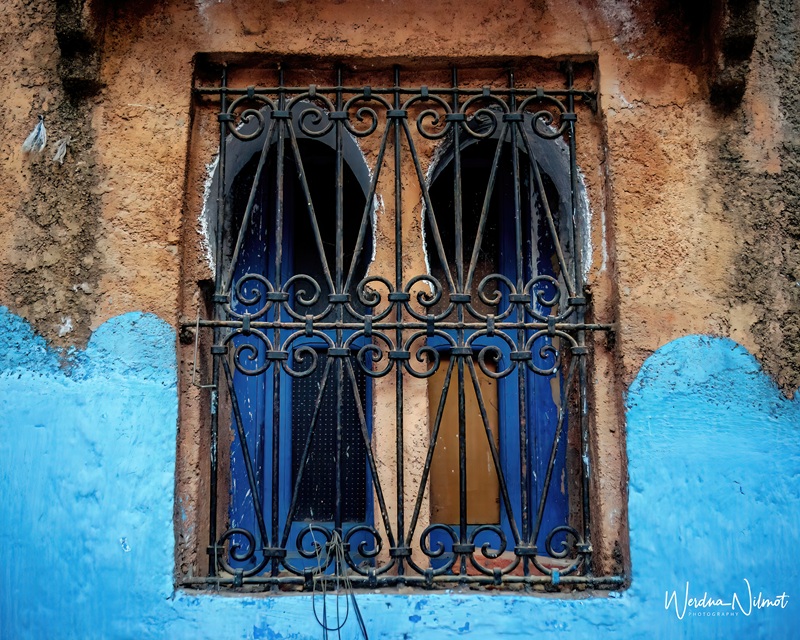
Windows:
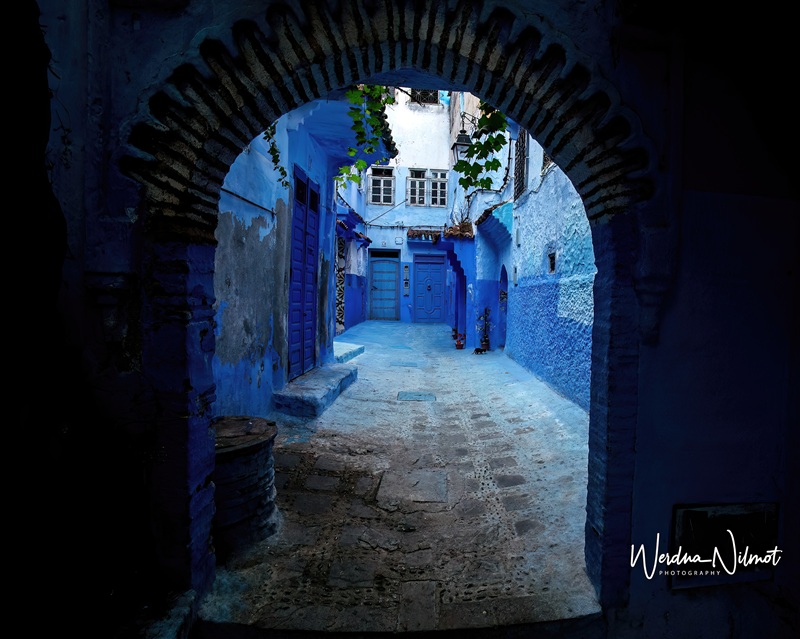
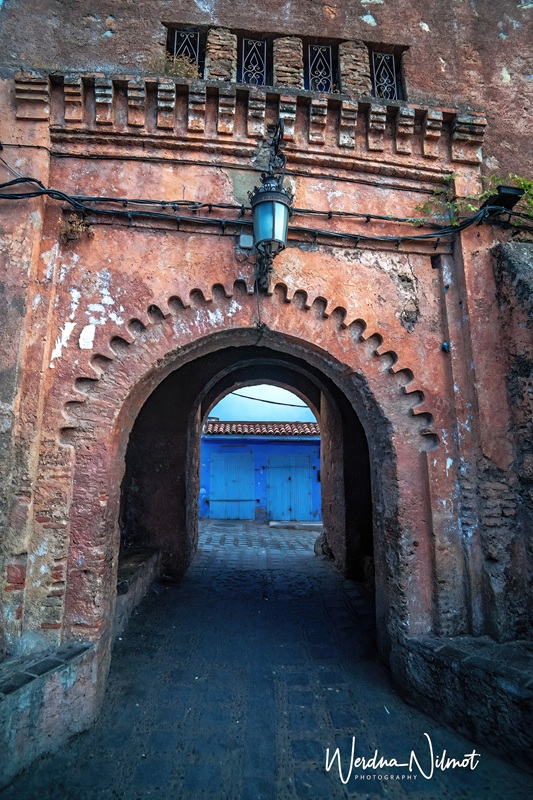
Gates: (click on arrow to view photo set)
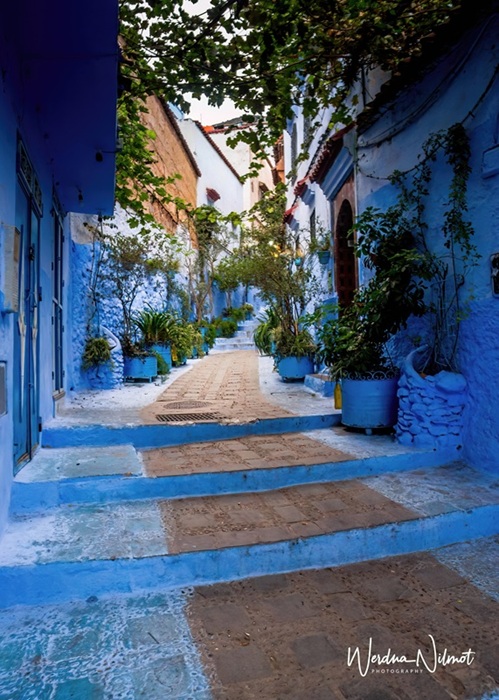
Sidewalks:
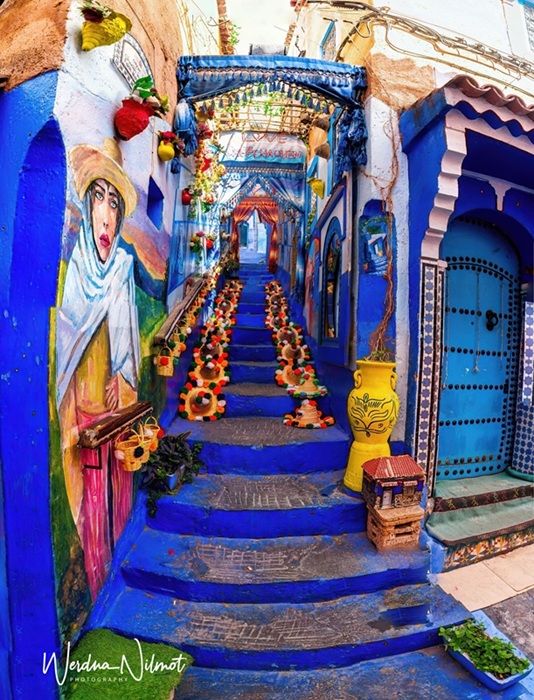
Steps: (click on arrow to view photo set)
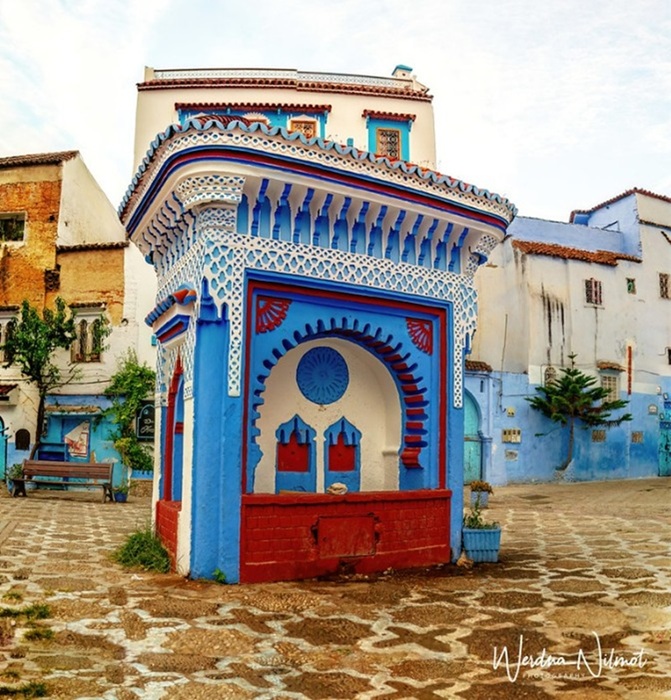
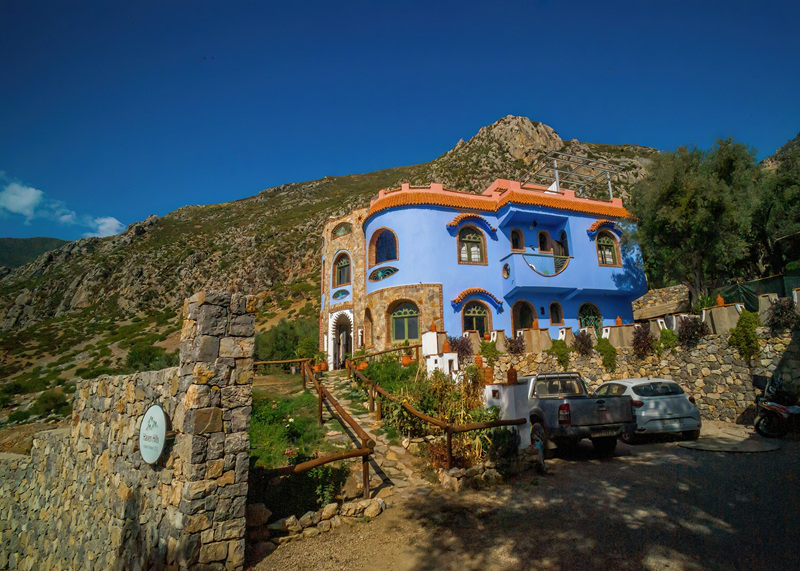
Buildings: (click on photos to enlarge)
Murals: (click on arrow to view photo set)
Pavement: (click on arrow to view photo set)
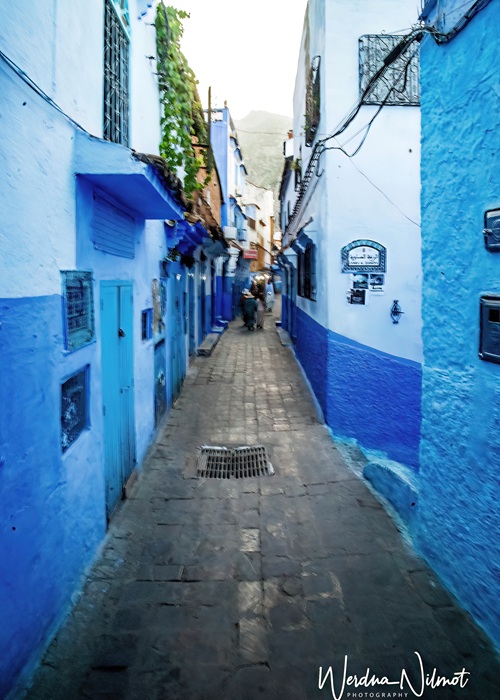
Even in the wideness or narrowness of the streets and alleys:
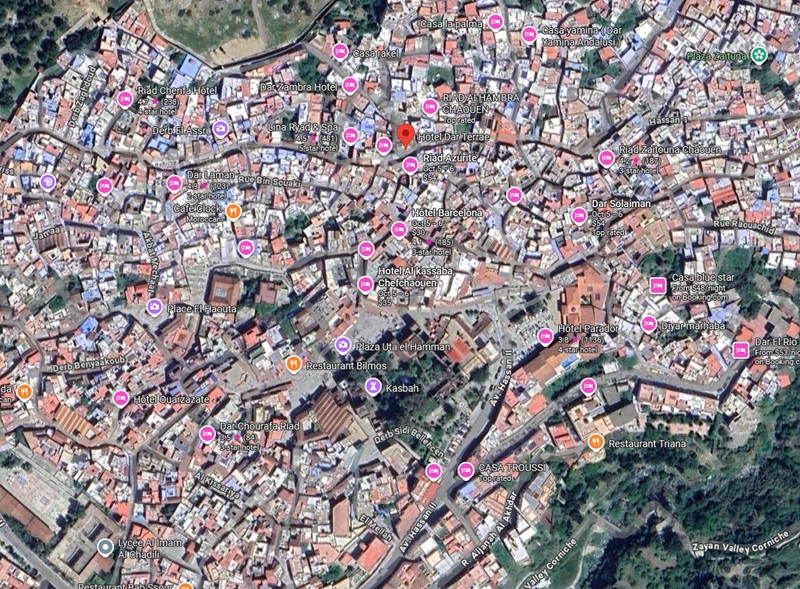
An aerial view of the medina depicts a maze-like pattern that will test anyone’s sense of direction the first few times they visit. I happily found myself lost more than once!
Google maps screen shot of the medina
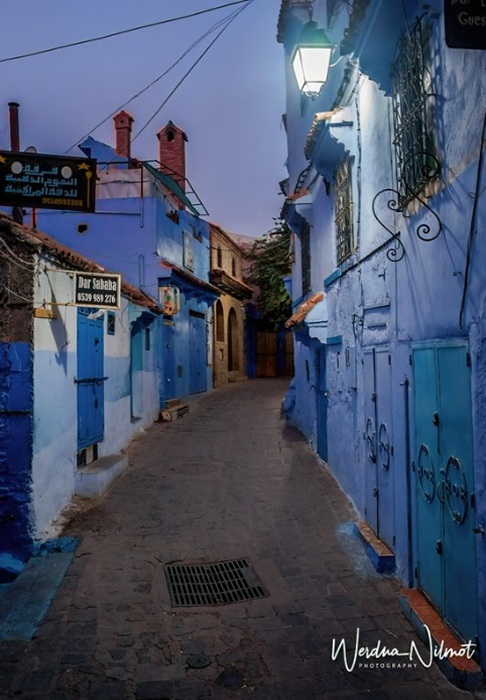
Lighting plays a pivotal role in shaping the appeal of Chefchaouen. Revisiting the same spot at different times of the day unveiled a new perspective each time, a testament to the city’s ever-changing beauty. (click on photos to enlarge)
alley at sunrise alley at night
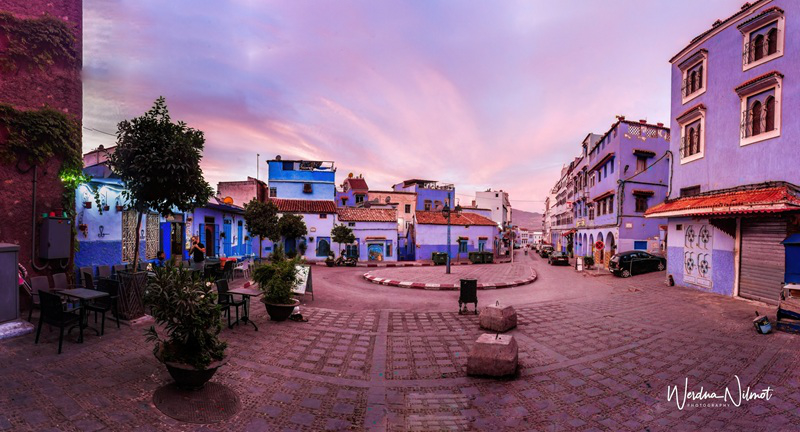
The early hours just after sunrise gave a soft, dreamlike look to the city. It was mostly deserted, waiting for the town to come alive with shopkeepers, residents, and day trippers. The city’s blue color was dominant at this time of day.
plaza early morning
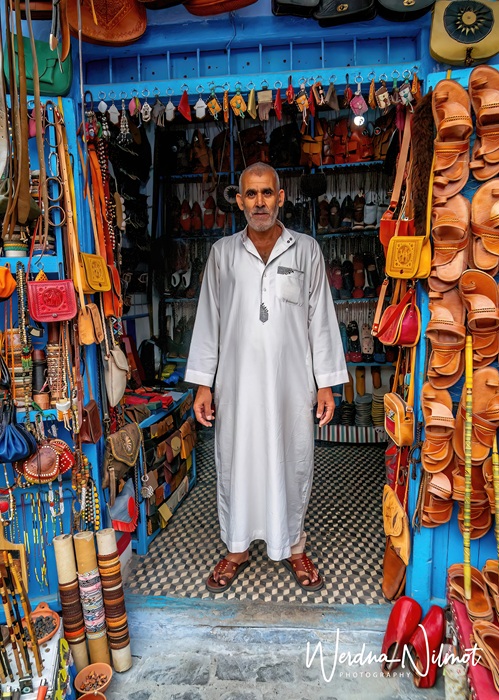
As the sun rose, the medina came alive with an explosion of colors as the shopkeepers displayed their wares and both locals and day trippers arrived. (click on arrow to view photo set)
plaza daytime
I bought two belts from this shop
local women chatting
Mustafa the rug weaver
After the sun set and evening fell, streetlamps created long shadows. The signature blue almost glowed in the night. People walking in the streets and squares seem to appear from the mist and then disappear just as quickly.
people seemed to appear and disappear quickly
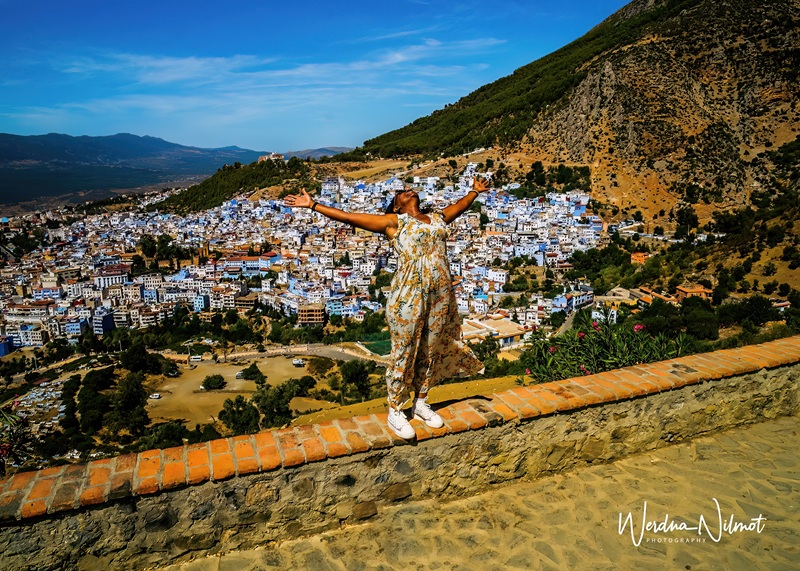
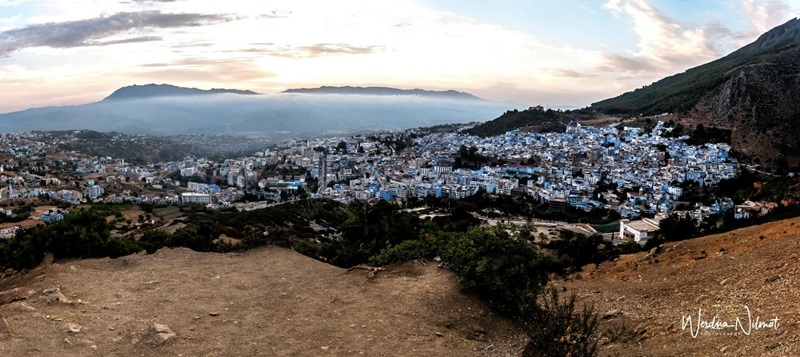
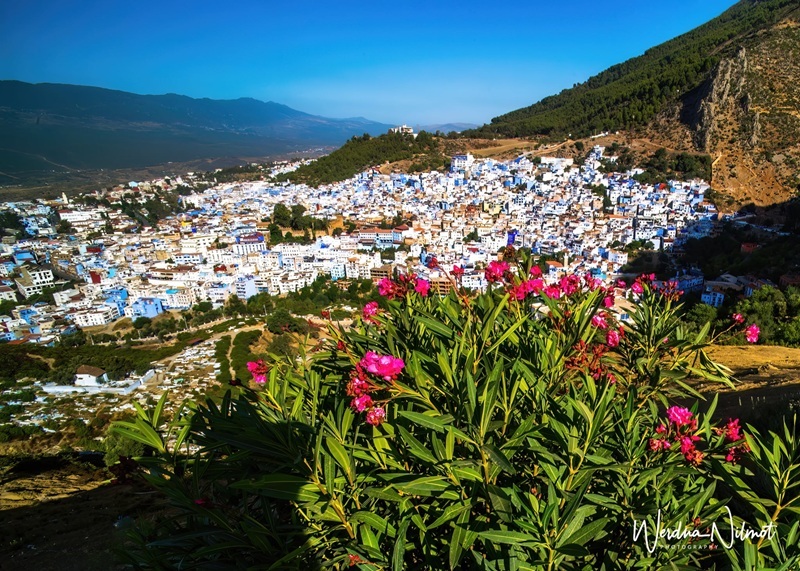
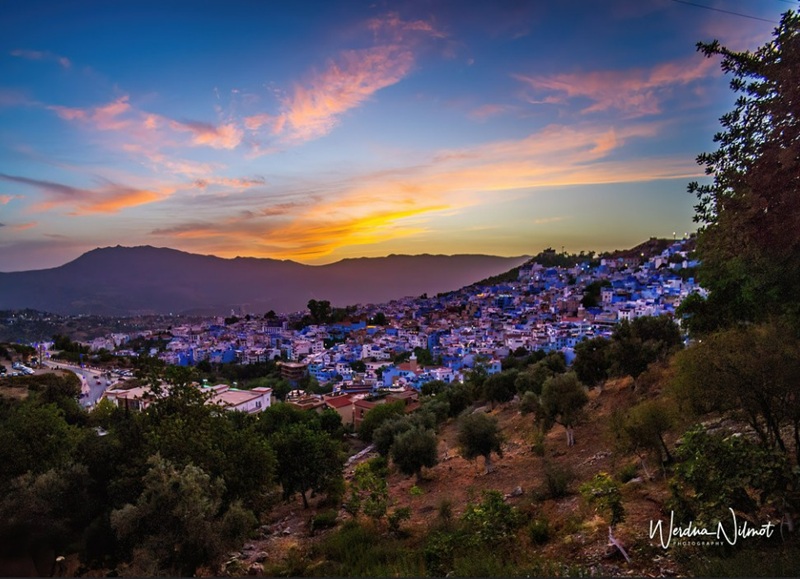
Chefchaouen is situated in a valley within the Rif Mountain range. A short hike up above the city provided views that would make any landscape photographer or painter’s heart leap.
The time of day also factored into the mood of my images. Early mornings offered foggy, mystical views of the still-sleeping city. Midday sun highlighted the tableau of colors below. Sunset provided a serene blue hour color as the natural light faded and the city lights came on, one by one, revealing a nighttime jewel sparkling below. (click on arrow to view photo set)
early morning
midday
night
As I walked through Chefchaouen and on the mountain trails above it, I was reminded of the privilege I had to experience this beautiful, living canvas. It’s a journey that I’ll cherish forever.
a journey I will cherish forever
“R” is for Riad
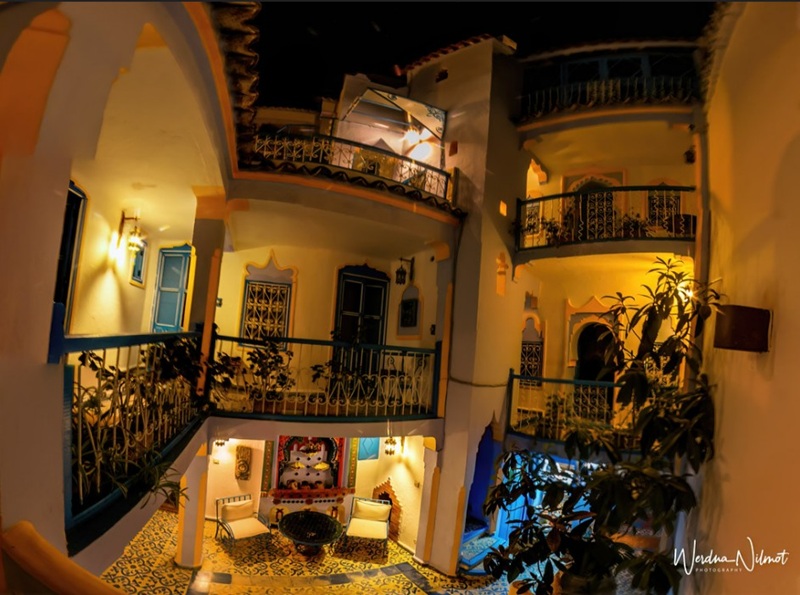
When I was researching my accommodation options in Chefchaouen, I was drawn to the unique charm of a riad. A riad, or traditional Moroccan home, is different from a typical hotel as it is built around an interior garden or courtyard.
typical Chefchaouen riad
In fact, the word “riad” stems from the Arabic word for “garden.” They are the most authentic options for travelers who want to experience the country’s culture and history and are usually located in the old medinas of most Moroccan cities.
Hôtel Dar Terrae interior
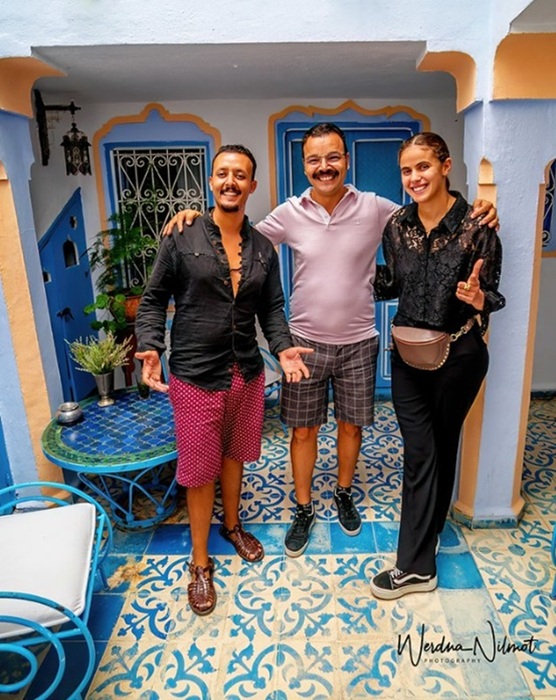
Originally, these homes were commissioned and inhabited by the affluent, often accommodating several generations of the same family. The Hôtel Dar Terrae was no exception, being home to a large extended family.
Hôtel Dar Terrae family
I was pleasantly surprised by the exceptional personal service I received: a staff member greeted me at the taxi drop-off outside the medina and carried my luggage uphill to the hotel and into my room, making me feel well cared for. (click on photos to enlarge)
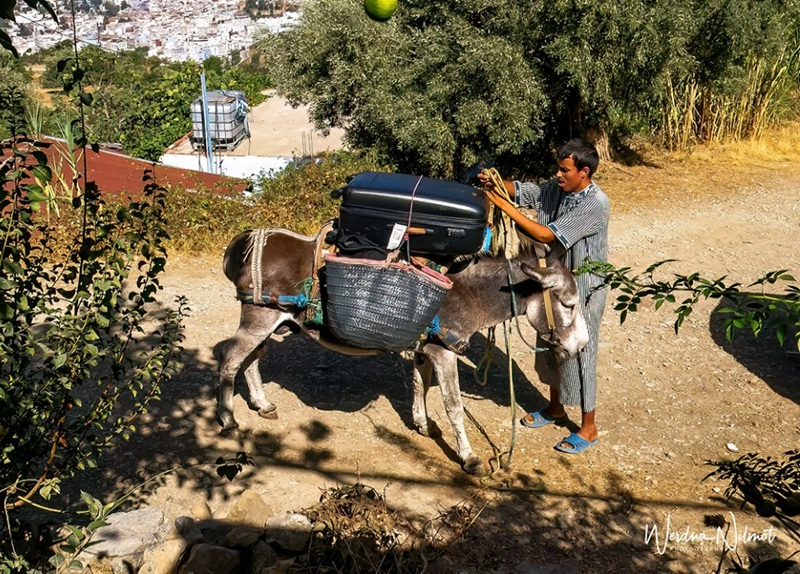
street leading to Dar Terraedonkeys are used on the narrow streets and hills
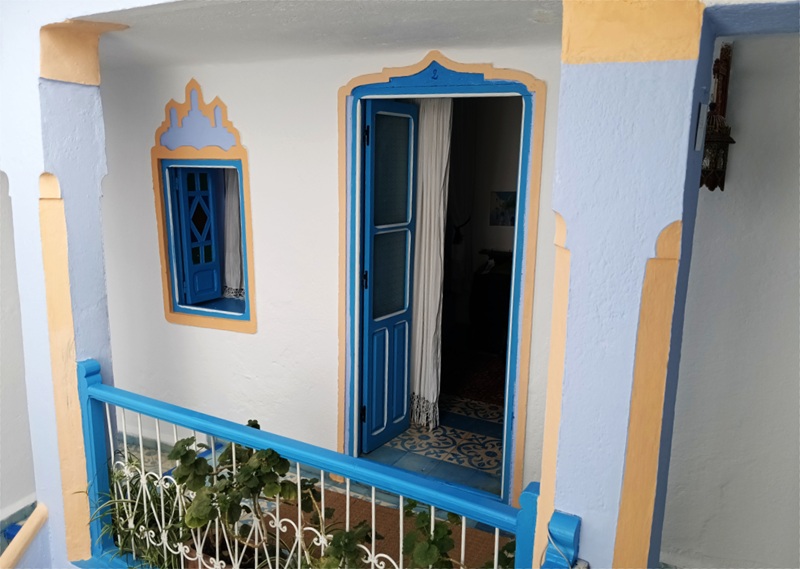
To make the most of the limited space available in Morocco’s crowded medinas, riads are typically narrow and tall, with at least two stories overlooking the central courtyard. These stories have open balconies, allowing residents to enjoy the fresh air and sunlight streaming in from the open roof.
the open balcony outside my room
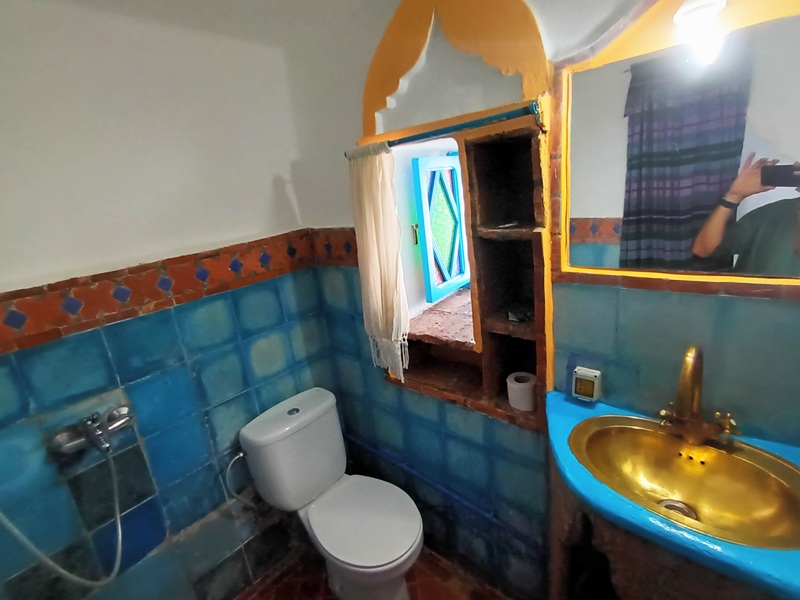
The rooms were small, lacking a lot of storage space, but my not-quite-queen bed was comfortable enough, and the shower had plenty of hot water. (click on arrow to view photo set)
my not-quite-queen bed
small bath with plenty of hot water
While the open space did allow for a fair amount of ambient noise, the riad was a secure and convenient place to stay. More importantly, it offered great value for the money – approximately $30 per night, with breakfast included.
Hôtel Dar Terrae video tour during the morning call to prayer
The Adhan al-Fajr (dawn call to prayer):
Allahu akbar: (God is the greatest) Ashhadu anna la ilaha ill Allah: (I testify that there is no god but God) Ashhadu anna Muhammadan rasul Allah: (I testify that Muhammad is the Prophet of God) Hayya alas salah: (Come to prayer) Hayya alal falah: (Come to success) Assalatu khayrum minan naum: (Prayer is better than sleep) Allahu akbar: (God is the greatest) La ilaha illa Allah: (There is no god but God)
“O” is for Oranges
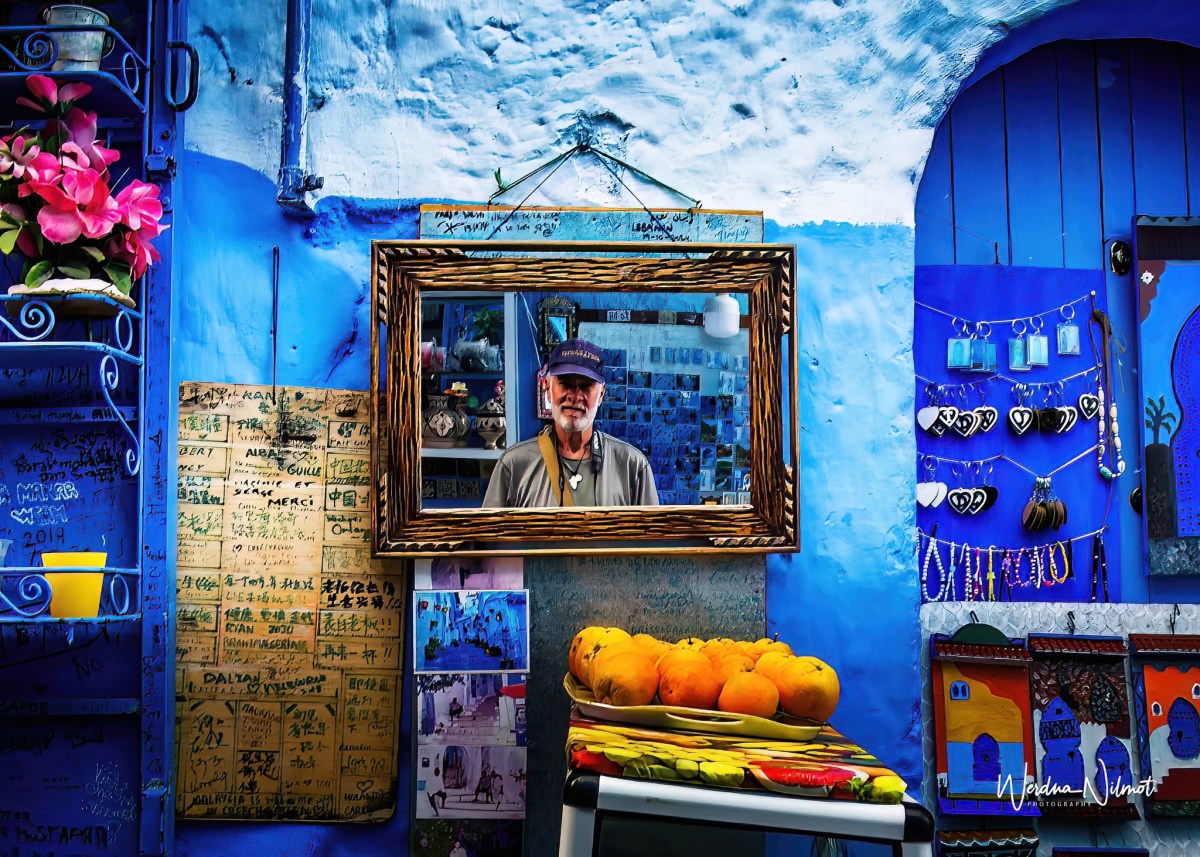
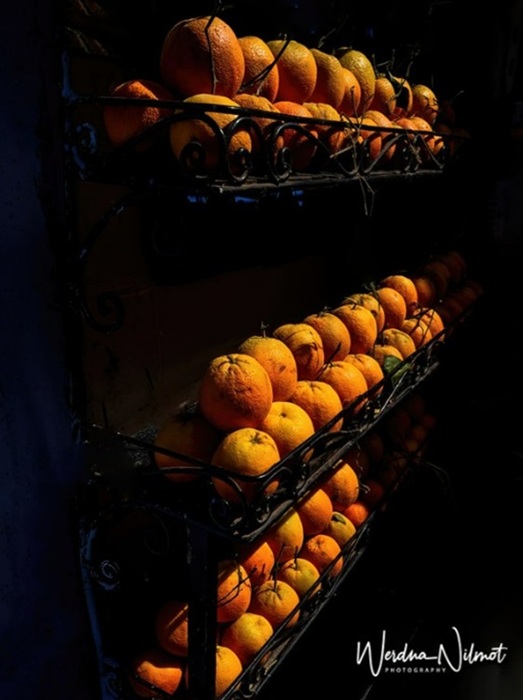
Morocco is one of the world’s leading producers of oranges, with 40% of the crop exported to the USA. The region around Chefchaouen is renowned for its citrus production, as the warm climate and fertile soil make it an ideal location for cultivating high-quality fruits, such as oranges. They are hand-picked, so only the ripest and best are selected.
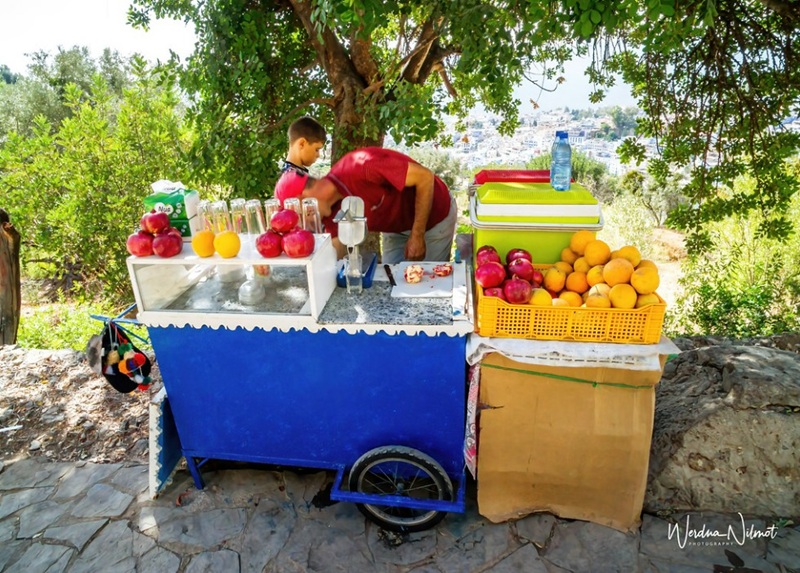
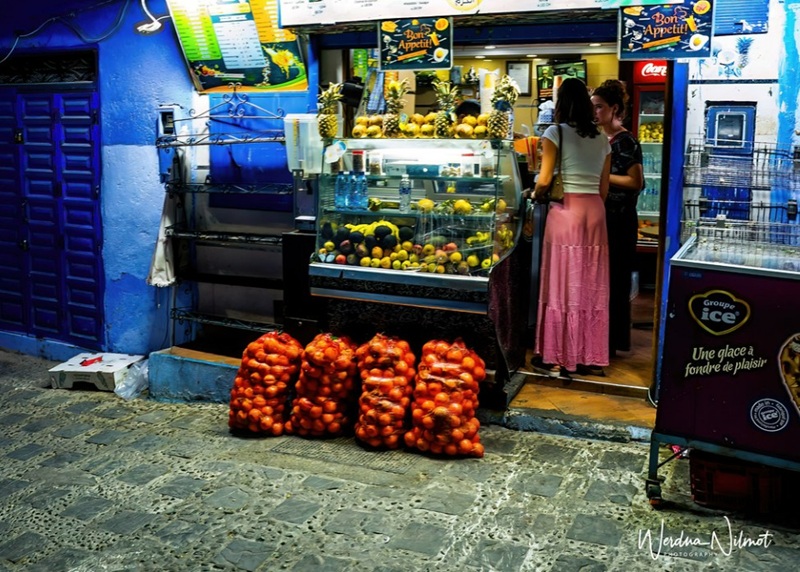
Considering Chefchaouen’s warm weather and steep hills, a glass of cool, fresh-squeezed OJ was just what I needed on a hot, sunny day.
There were plenty of stands scattered about the city where I could quench my thirst, offering up to 24 different combinations of fruits. I drank my share of plain OJ or mixed with pomegranate or mashed avocado. The latter turned my drink into a creamy, out-of-this-world milkshake concoction.
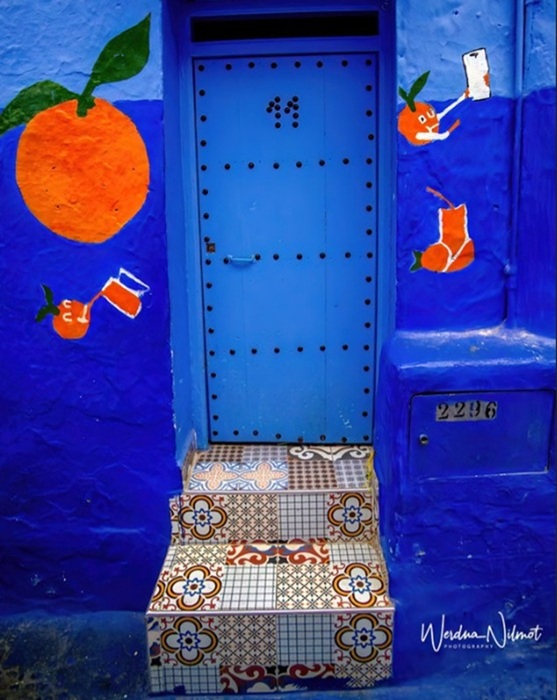
Oranges play an essential role in expressing the unique charm of Chefchauoen – adding a splash of bright color against the blue background.
But oranges aren’t just for drinking. Their cultivation is deeply embedded in the local fabric – enhancing traditional dishes or adding sweetness to desserts.
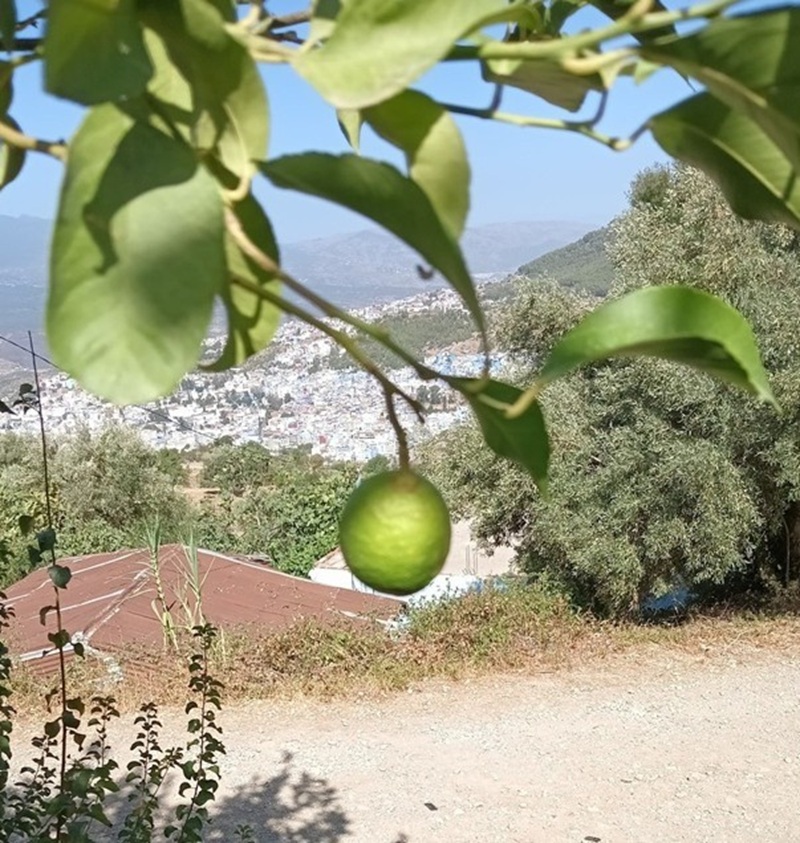
Walking around the city and its surrounding hillsides, I saw citrus trees nestled against ancient buildings and landmarks. This timeless blend of natural beauty and cultural heritage underscored the importance of citrus as both a culinary treasure and a symbol of Moroccan identity, leaving me inspired.
“C” is for Cuisine
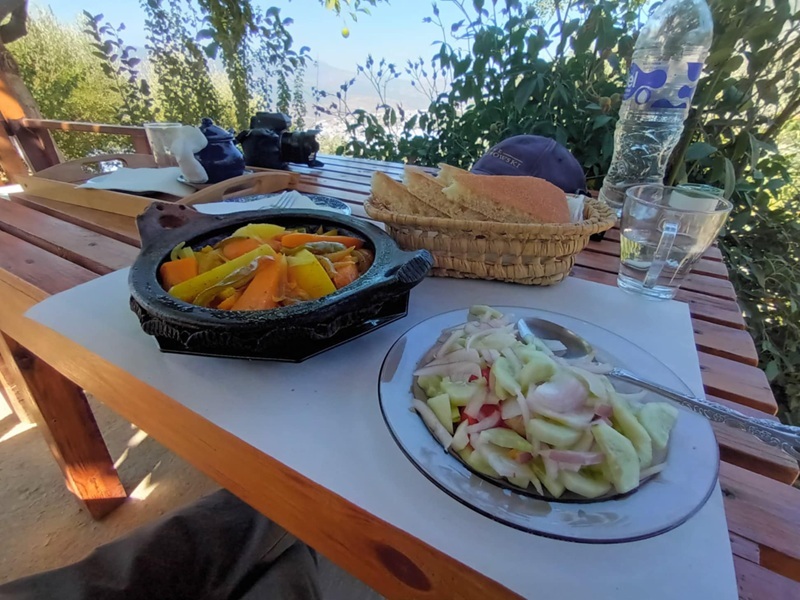
Think “Moroccan cooking” and you’re immediately transported to a world of exotic spices and distinct flavors. With its long history of colonization, Morocco draws from a fusion of international cuisines, including Arab, French, Spanish, and Mediterranean. My meals in Chefchaouen were a feast for the senses, capturing the essence of Moroccan heritage with traditional dishes like tagine, couscous, and harira soup. And what better way to experience a culture than through its cooking?
Moroccan spices at the market
During my visit, I avoided the touristy spots near Plaza Uta El Hammam because they tend to be crowded, overpriced, and serve average food. I was, however, open to dining in busy local places, as long as the prices were reasonable, the food was excellent, and they were relatively free of the day trippers.
the busy Plaza Uta El Hammam
These restaurants stood out:
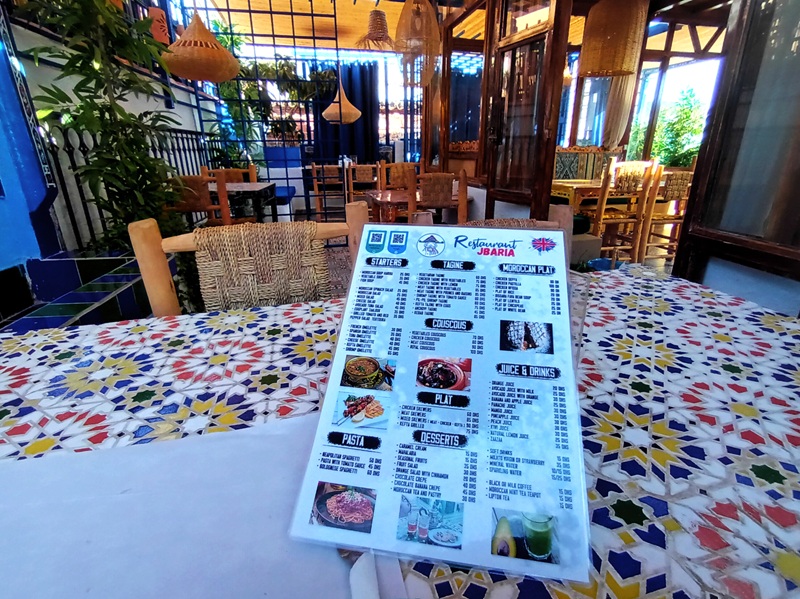
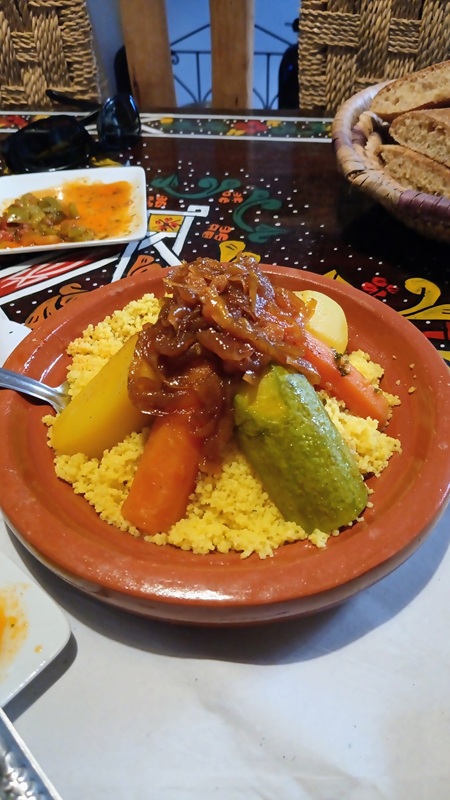
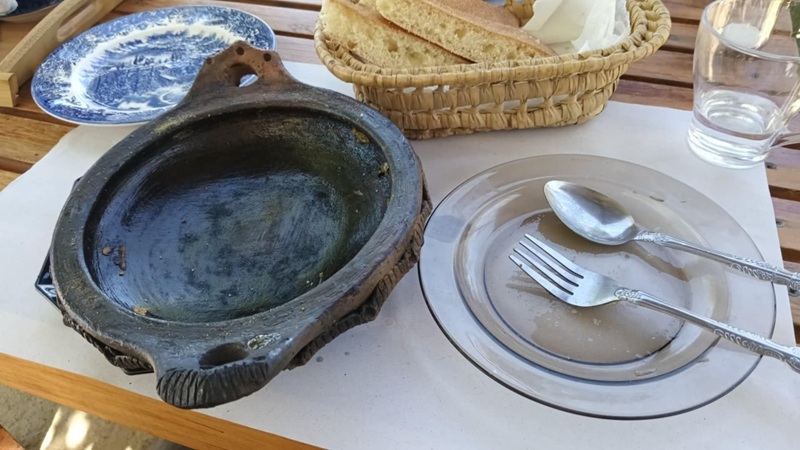
**Restaurant Jbaria** offered a fantastic tagine, along with complimentary appetizers, in a warm and inviting setting. Tagine is a traditional Moroccan dish that refers to both the dish itself and the clay pot in which it’s cooked. It combines vegetables, meat, or seafood along with spices, which are then slowly steamed together and served with either couscous or bread. (click on arrow to view photo set)
Jbaria menu
first night dinner – approx $9
veggie tagine with couscous
Restaurant Jbaria
**Restaurant Baladi** provided a simple atmosphere with affordable prices, generous portions, and outstanding local cuisine. (click on photos to enlarge)
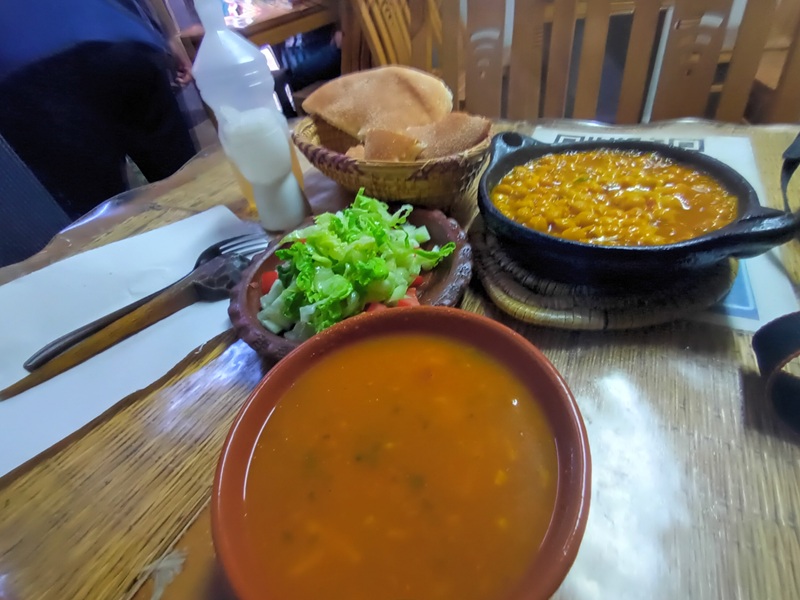
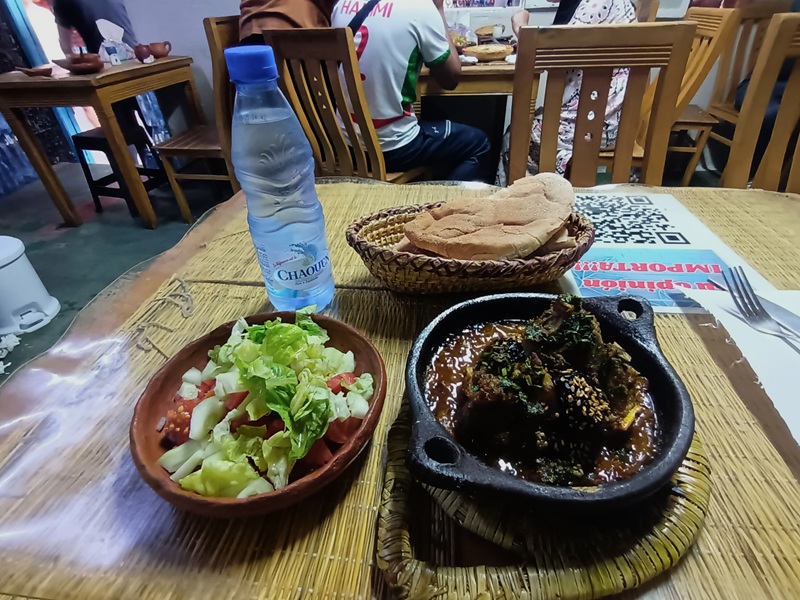
harira soup with lentils, bread, salad, and water – approx $3.50 goat tagine
**Café Panorama Loubar**, located on a mountainside above Chefchaouen, served the best tagine I tried. It also featured stunning views (especially at sunset), friendly service from the owner, Abdul, and reasonable prices. However, meals were cooked to order so there was a bit of a wait. While waiting, I enjoyed excellent mint tea and delicious cookies. (click on arrow to view photo set)
Café Panorama Loubar entrance
Abdul, the owner
lunch
Chefchaouen sunset
There was a small café near Bab Souk, which opened at 7 AM—early for Morocco—offering good coffee, friendly service, and affordable, hearty breakfasts. (click on arrow to view photo set)
early morning coffee
Chefchaouen is also home to numerous takeout spots, stands, and carts offering a diverse range of food and drinks at low, street-food prices. (click on photos to enlarge)
take-out near my riad“Buen Gusto”
A special note about mint tea: it is intended to be savored, allowing time to enjoy the presentation along with the flavor, and is a perfect way to take a break when exploring Chefchaouen’s bustling streets.
the art of mint tea
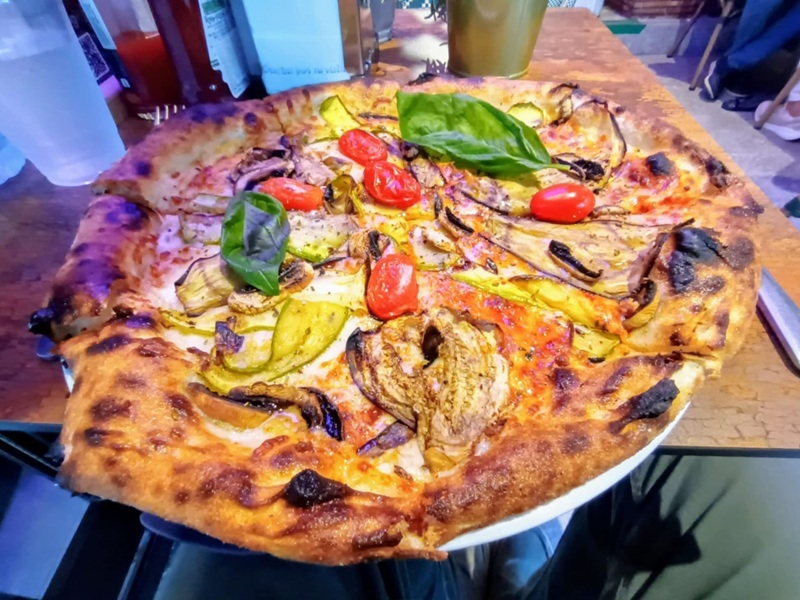
After sampling traditional fare for several days, on my last night in Morocco I dined at a contemporary pizza parlor in Tangier. The vegetarian pizza was exceptionally well-prepared, featuring a delicate, flavorful crust topped with fresh vegetables and finished with basil leaves.
vegetarian pizza in Tangier
In conclusion, Chefchaouen cuisine isn’t just about flavor — it is rooted in centuries of tradition and hospitality where every dish tells a story. (click on arrow to view photo set)
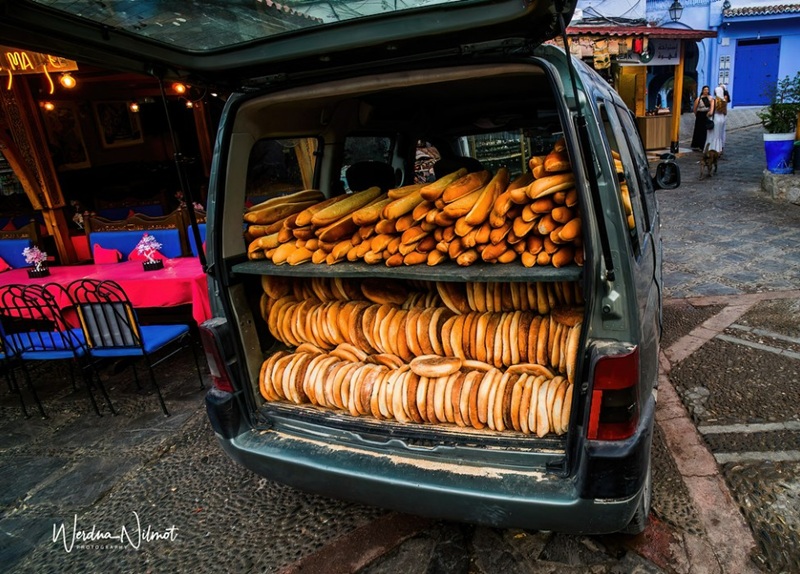
morning bread truck
a typical lunch at Restaurant Baladi
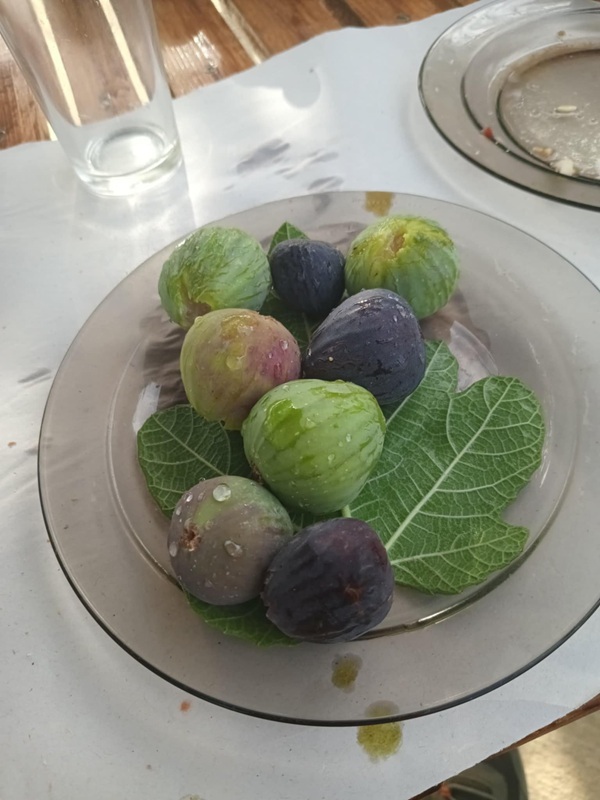
simply elegant figs
mint tea with bread and olives
the end of a delicious meal!
Merci beaucoup. À bientôt … (Thank you and see you soon)
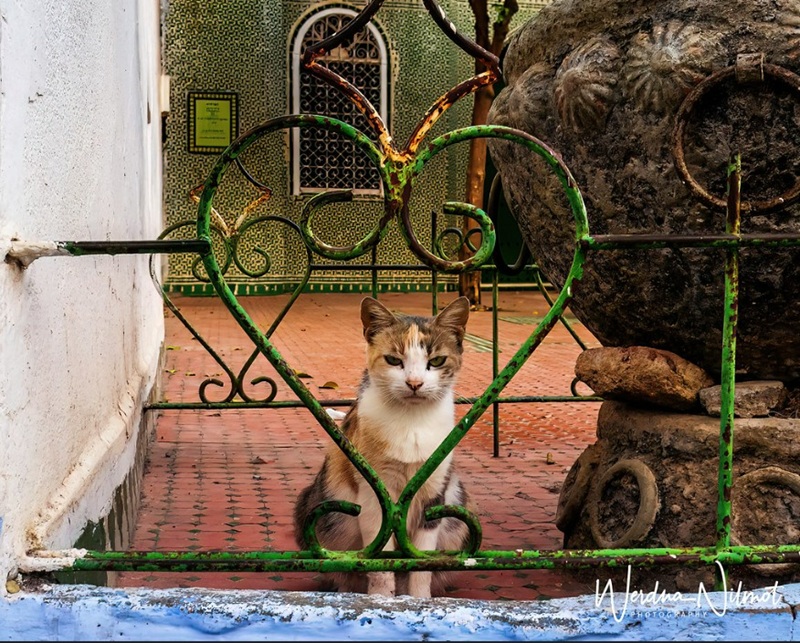
My eight days in Chefchaouen were a sensory delight: the sight of a friendly street cat striking a perfect pose in a metal heart, the feel of her soft fur as she wrapped around my ankles,
The aroma, sound, and flavor of a sizzling bowl of bissara soup,
Bissara soup (turn up the volume to hear it sizzle!)
And the silent echoes of the generations who had walked these same alleyways in the centuries before me.
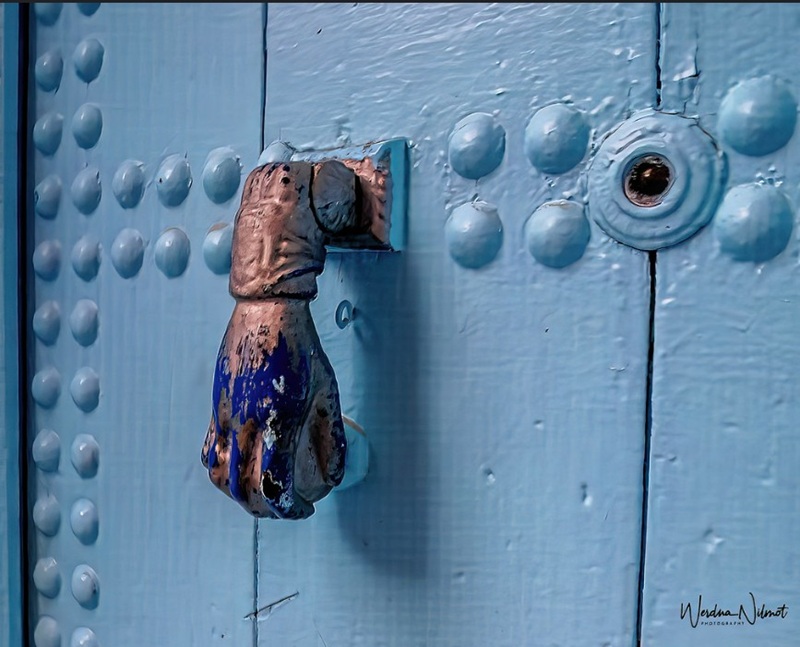
Before I left, I shared with JET my hope of returning with a portfolio of about 200 excellent photos. In the end, I came home with almost that exact amount. But the personal connection I felt with Chefchaouen was so strong that I could have chosen any single theme and easily captured 200 images of cats or people, even door knockers! This visit left me longing for more, and I’m already planning my return trip.
door knocker
To view all of my photos from my Chefchaoen visit, hover on the image to arrow through the set or double-click to open a new tab in Flickr:
When TG and I first started road tripping, we quickly learned that while a 10 to 12-hour drive might get you from Point A to B, you miss a lot on the journey. Now, we limit our driving days to eight hours or less to allow for sightseeing along our route.
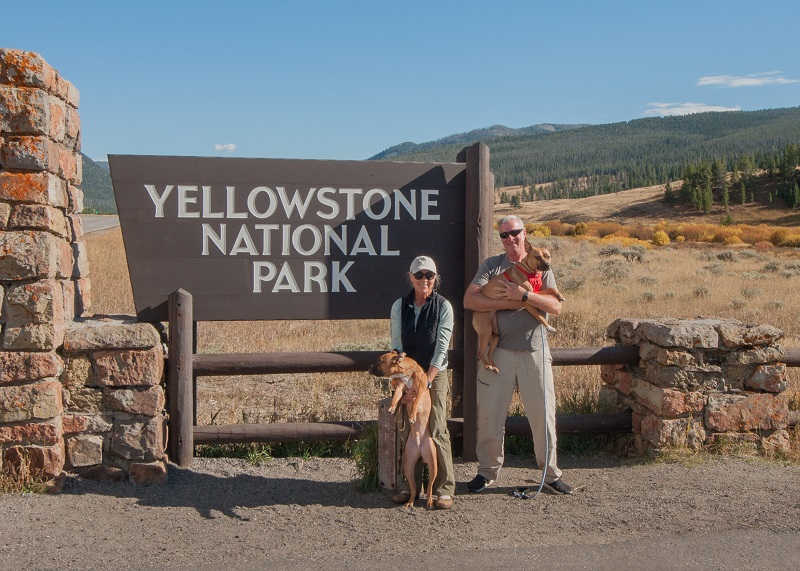
We left New Mexico on Wednesday to arrive in Gardiner, MT, by Friday. The second stop on our “Westward Ho II” road trip was Yellowstone National Park. When we visited the park in the fall of 2022, we had many wonderful animal encounters, but we longed to see more bears, especially cubs.
October 2022
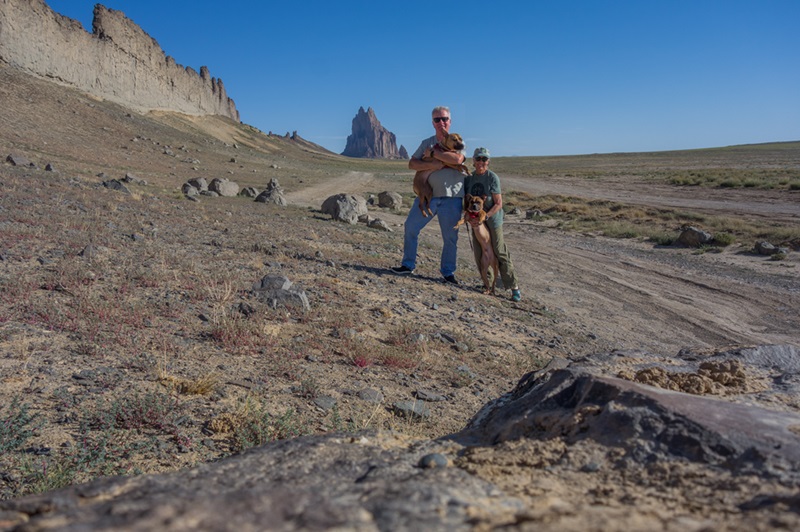
We spent Wednesday night in Gallup, N.M., and were on the road early Thursday morning, with a planned stop at Arches National Park before continuing to Provo, Utah. But first, we detoured by Ship Rock, a dramatic 7,177-foot-high rock formation on Navajo Nation land that figures prominently in Navajo mythology. We briefly chatted with Ray, a Navajo guide who was waiting for clients, took a few photos, and were on our way.
family selfie at Ship Rock
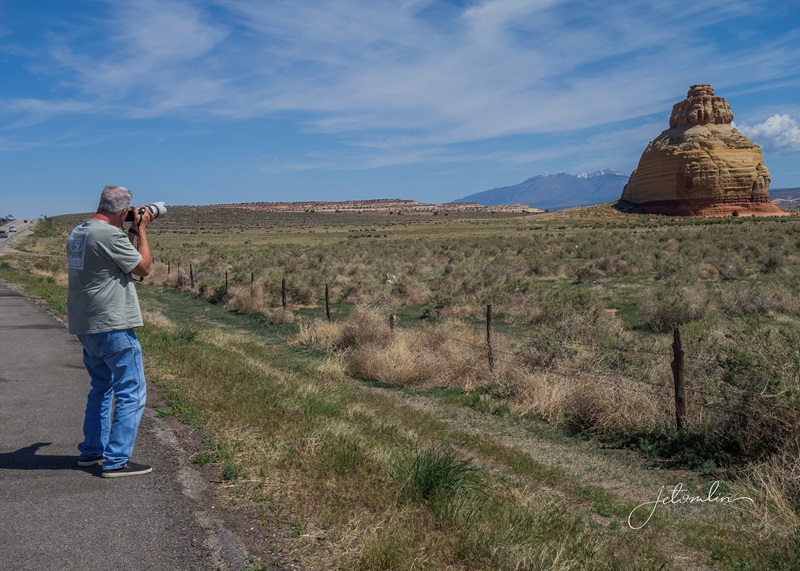
We drove north and west towards Arches, passing by another interesting rock formation called “Church Rock.”
TG at Church Rock
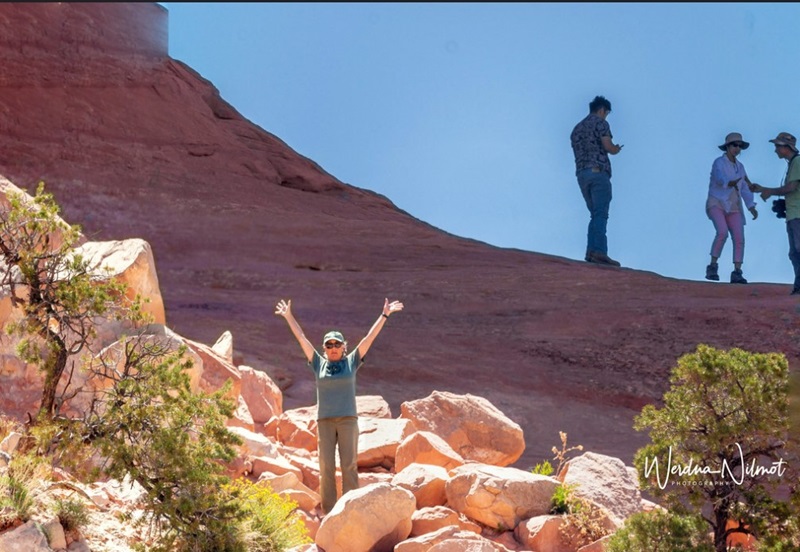
And the beautiful Wilson Arch.
me at the top of Wilson Arch (almost)
Regrettably, just after Wilson Arch, our plans took an unexpected turn. We found ourselves caught in a horrific traffic jam, with cars backed up for almost 15 miles. By the time we got through, it was too late to stop at Arches. Disappointed, we continued to Provo for the night, a reminder of the importance of building in extra time!
traffic backed up on 191 between Wilson Arch and Moab
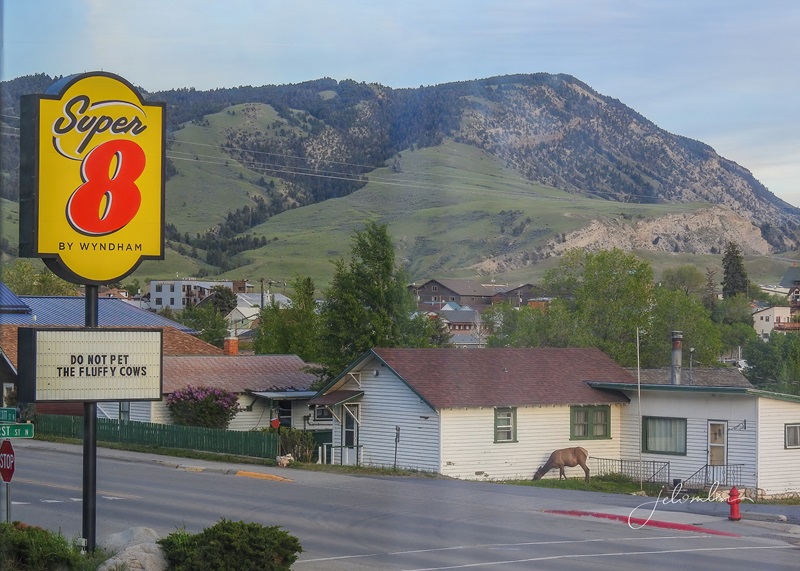
We made it safely to Gardiner the following day with no further incidents. Our suite at the Super 8 was perfect: it had two bedrooms, two full bathrooms, a comfortable living area, and a fully equipped kitchen. We could not have asked for better accommodations for the four nights we spent outside the north entrance to Yellowstone.
view from our room at the Super 8, Gardiner (yes, that’s an elk by the building)
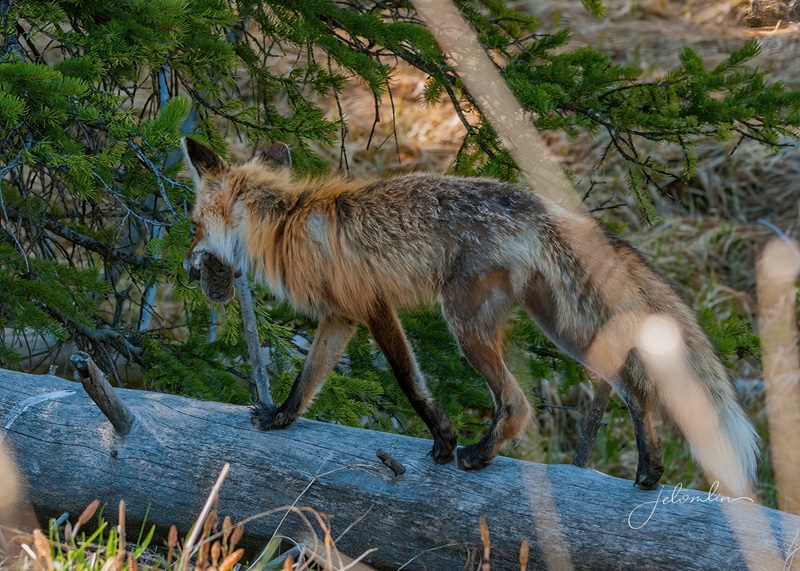
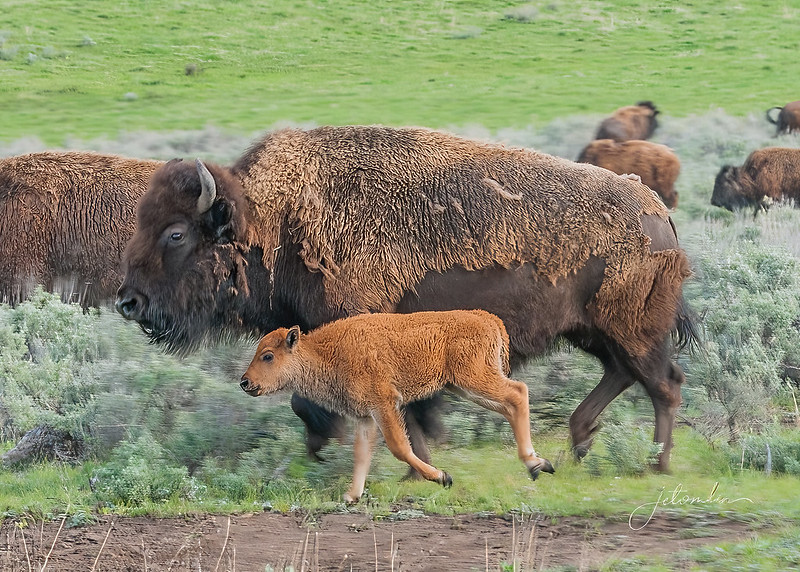
We were out the door early Saturday morning for our first photo safari into the park. There were herds of bison, pronghorns, and elk. We spied a moose cow with a small calf and later, two bulls. A coyote hunted in a field, and a red fox sashayed alongside the road with her mouth full of breakfast.
red fox with breakfast
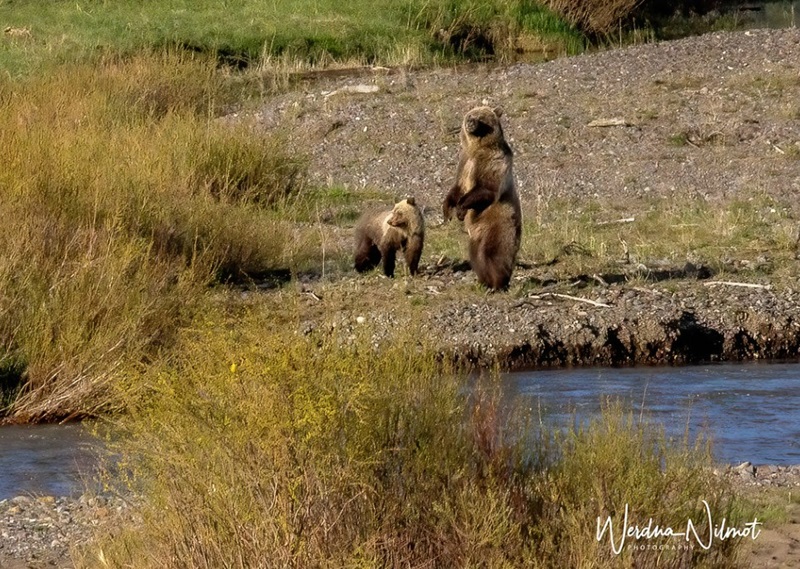
And much to our surprise and delight, a mama grizzly with two cubs! This sighting was lucky as they came down the hill at a pull-out, with only two other cars already at the spot. We spent a good ½ hour with them before enough people had arrived to make it an official “bear jam.”
grizzly mama and two cubs
One interesting side note about this sighting: Because we were staying at the Super 8, we could not leave O & M alone in our hotel room—they had to accompany us into the park. Typically, when people or cars are nearby, Oscar is a jerk (there’s a reason we call him “Oscar the Grouch”). But he and Maddie were quiet as church mice during the grizzly sighting. No one even realized we had two dogs in the car. The pups knew … them thar was BEARS!!
O & M quietly waiting
On Sunday, we got another early start. We arrived in Lamar Valley by 7 a.m., and just a few miles into our drive, we spotted a mama grizzly and her year-old cub across the river. They gave us a more typical bear sighting than we had experienced the day before – they were at least 200 yards away.
grizzly mama and year-old cub across the river
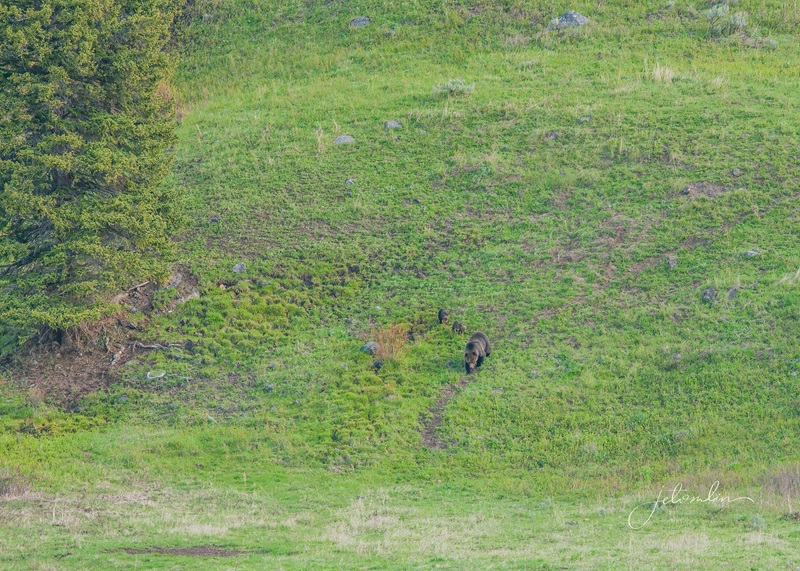
We moved on to the Trout Lake trailhead, where we had the close encounter yesterday. There were no bears this morning, so we slowly made our way back west. About a mile down the road, we saw our mama and the cubs coming down the mountain.
mama and cubs coming down the mountain
A bison herd grazing in the field scattered as soon as the bears arrived. We had no agenda today, so we waited and watched to see if anything happened. The bears stayed far off, almost out of reach of our lenses.
the bison scattered as soon as the bears arrived
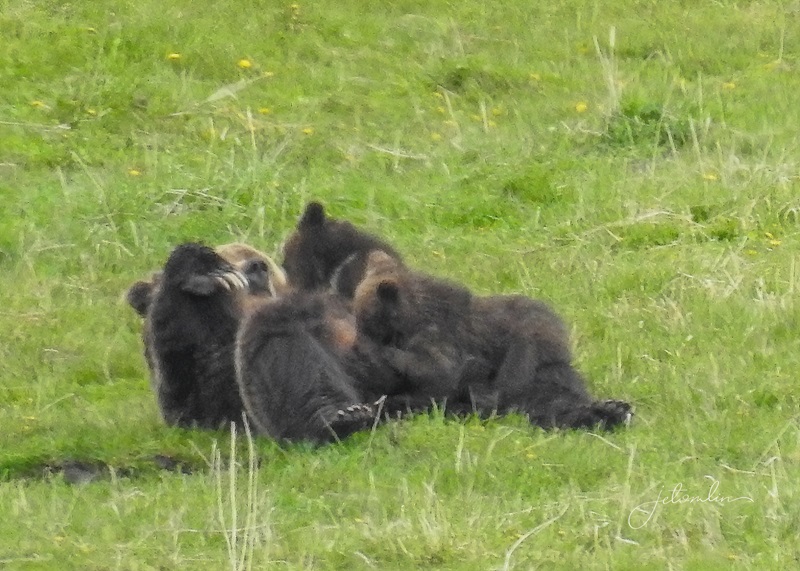
At one point, mama lay down, and the two cubs began nursing. Although we were too far away to see much, witnessing this intimate moment was still a thrill. Afterward, both cubs were in a milk coma, and they all napped. By this time, we had been in that spot for over two hours.
mama grizzly nursing her two cubs
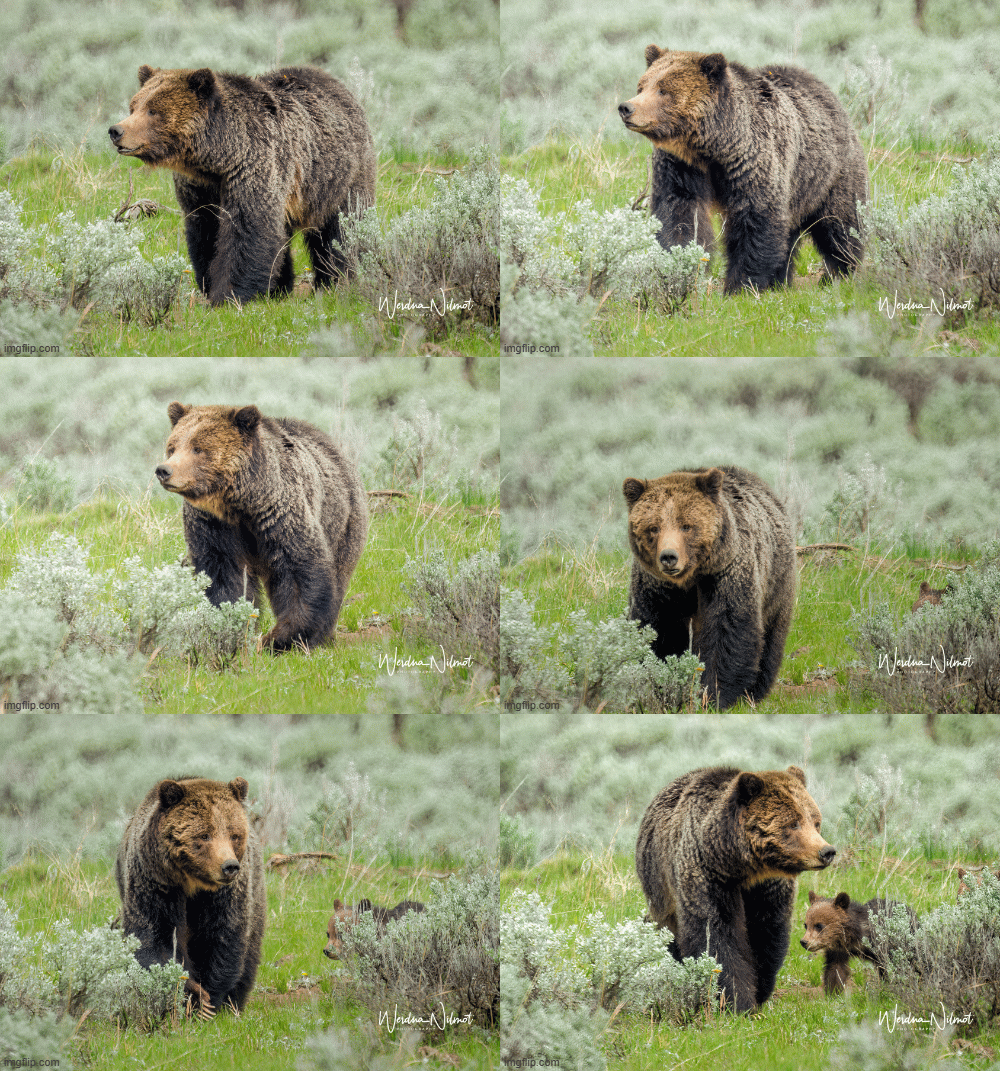
Suddenly, mama started coming towards us, the cubs following behind. She wanted to cross the road to the river, but people and cars blocked her. She moved further down the hill, out of our sight, and finally crossed to the other side.
12-image gif of grizzly mama and cubs
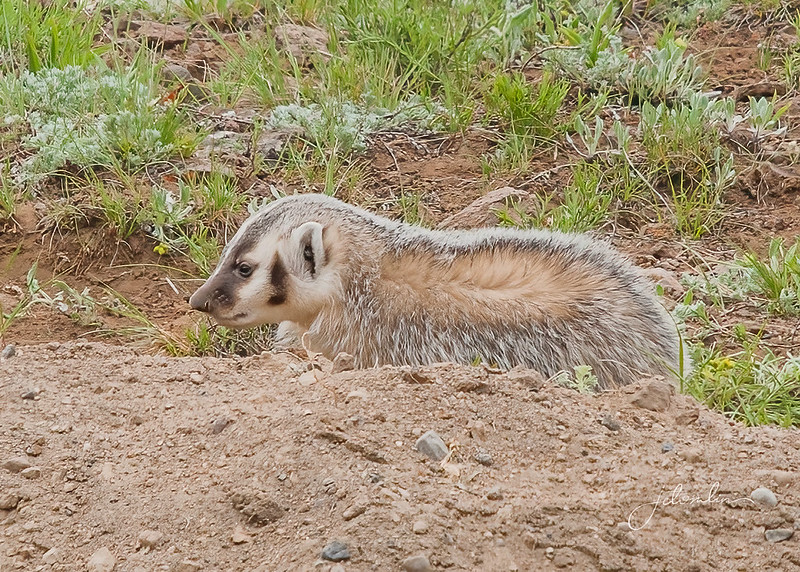
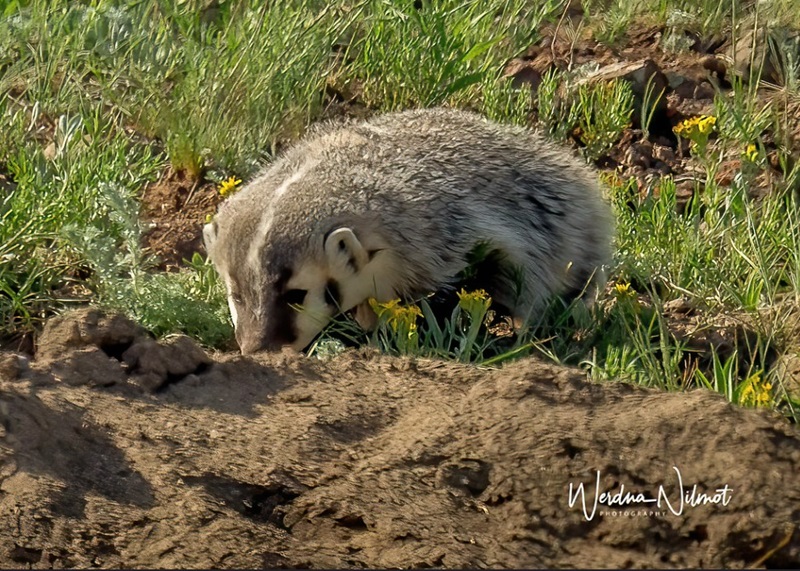
We continued west, stopping for a badger
badger
And then a coyote before coming upon a huge group, watching a mama grizzly and three cubs high on the side of a hill. They were nothing more than little dots, even with our binoculars, so we didn’t linger.
classic Yellowstone bear jam
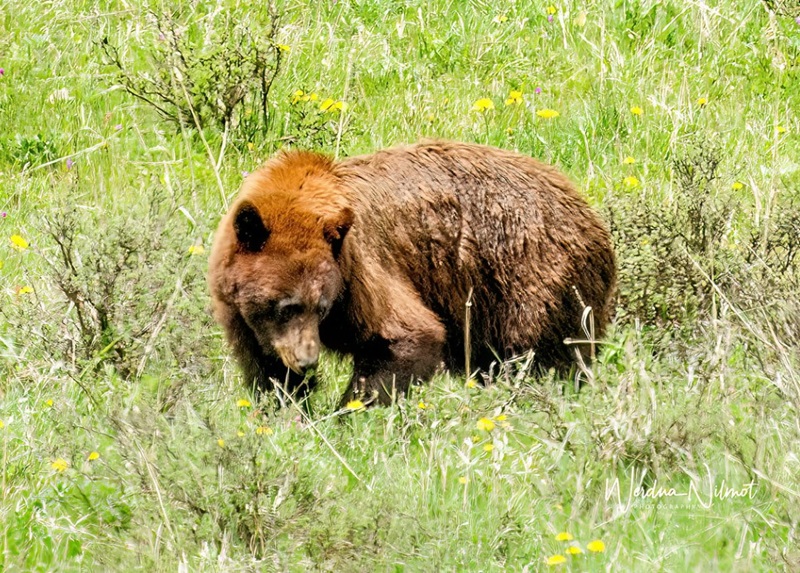
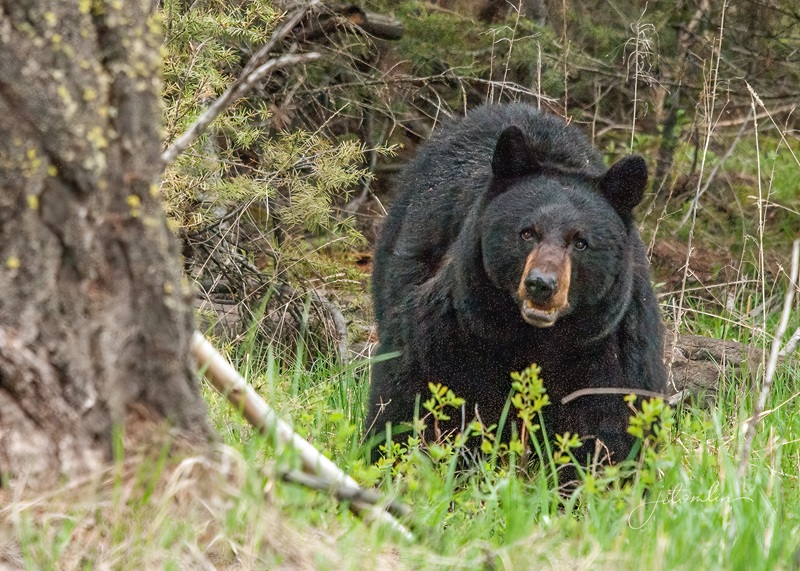
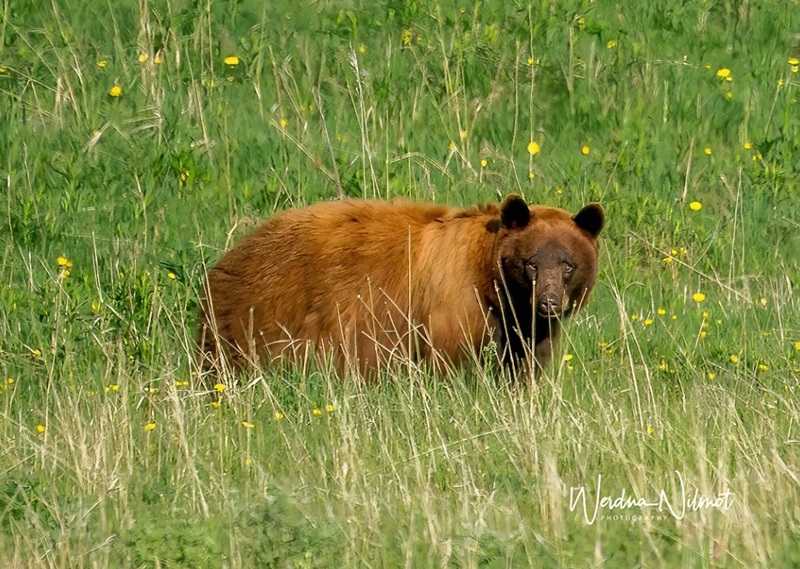
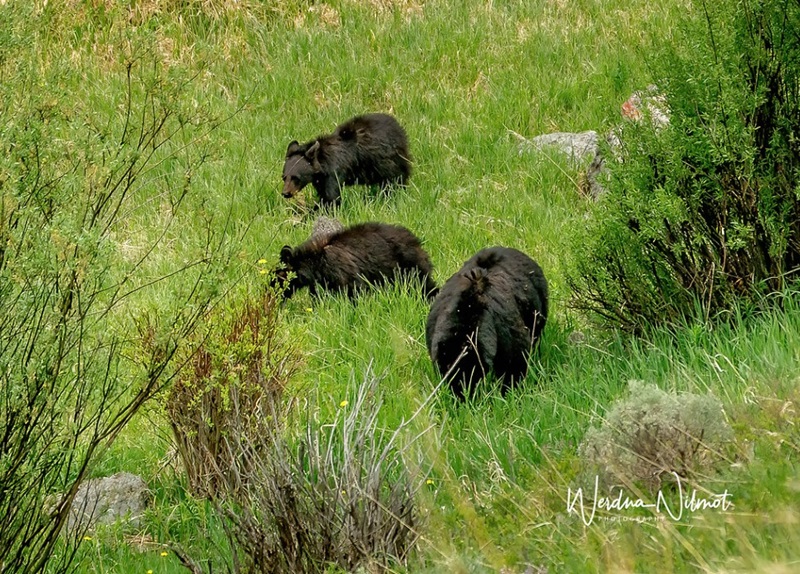
Not much further, we spied a lone cinnamon morph black bear grazing in a field of dandelions. This sighting turned into another bear jam, so after taking a few shots, we moved on.
a lone cinnamon morph black bear
It was another awe-inspiring day in the park, filled with the wonders of nature. As we drove home, I casually told TG that although I was thrilled with all our grizzly sightings, I still hoped to see a black bear with cubs.
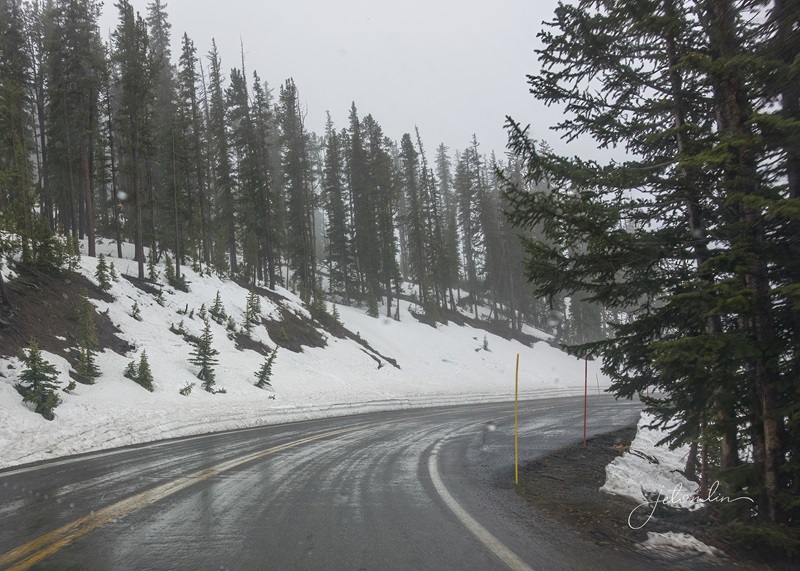
On Monday, we planned to make a day of it and packed a picnic lunch. The weather was cloudy and drizzly, but we managed to spy the mama and year-old grizzly we had seen the day before in Lamar Valley. We decided to drive the Dunraven Pass, a scenic road that leads over Mt. Washburn, reaching an elevation of 8,800 feet.
the drive over Dunraven Pass – lots of snow up on the mountain!
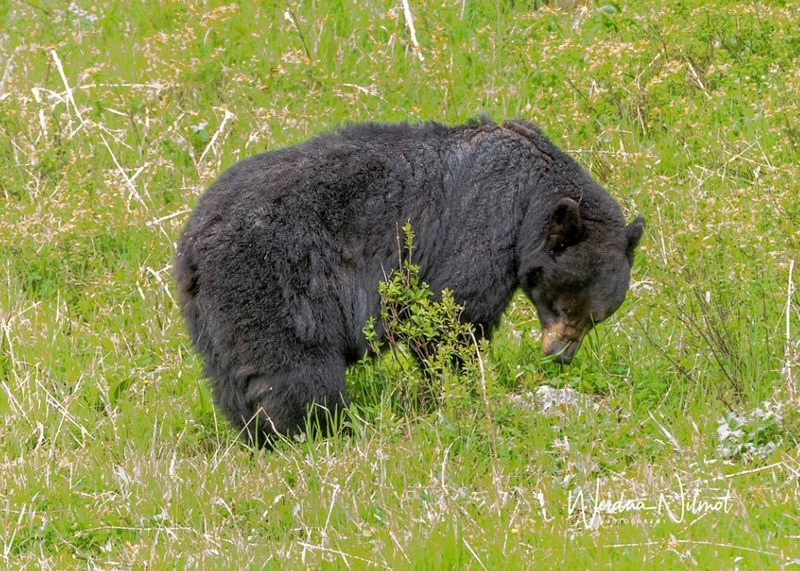
No sooner had we started the drive than we spied a black bear grazing along the side of the road.
black bear
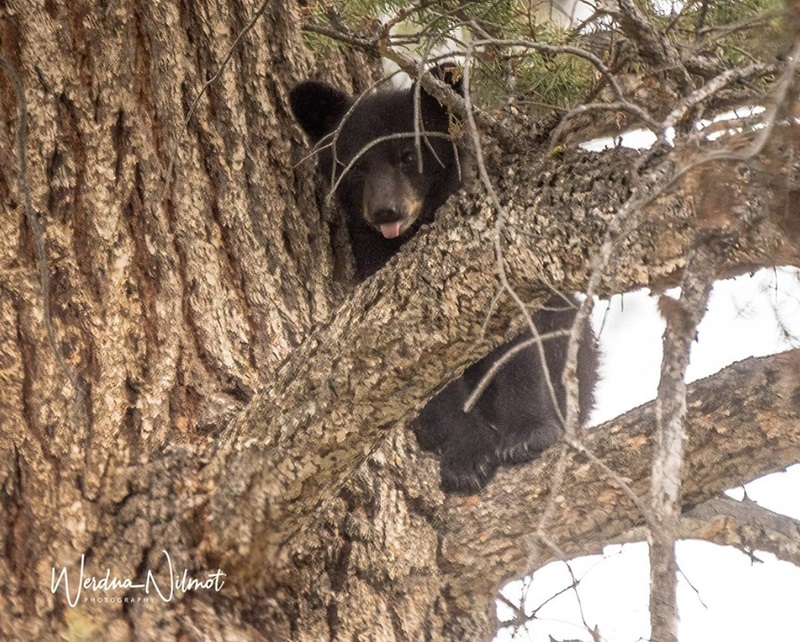
A few miles further, we found ourselves in a classic Yellowstone bear jam. Two tiny black bear cubs were perched at the top of a tall tree, their mother keeping a watchful eye from below. Two rangers were on duty, managing the traffic and ensuring everyone’s safety. Ranger Fred shared, “Her nickname is Good Mama, but I call her Bad Mama as she’s been known to charge.”
mama watching her cubs in the tree
The cubs were challenging to photograph. They were mostly hidden by branches and were nothing more than black blobs to the naked eye. Eventually, they woke up and started to climb down. Mama moved to the bottom of the tree, growing increasingly agitated. The crowd was kept back, 75 yards or more from the tree, as cars continued to pass by in both directions.
two tiny black bear cubs high up in a tree
As the situation escalated, Mama bear signaled the cubs to climb higher, and the rangers swiftly instructed us to return to our cars. “We’re turning this into a drive-by,” Fred said, “for the good of the bears and for your safety.” It was time for us to go.
time for us to go!
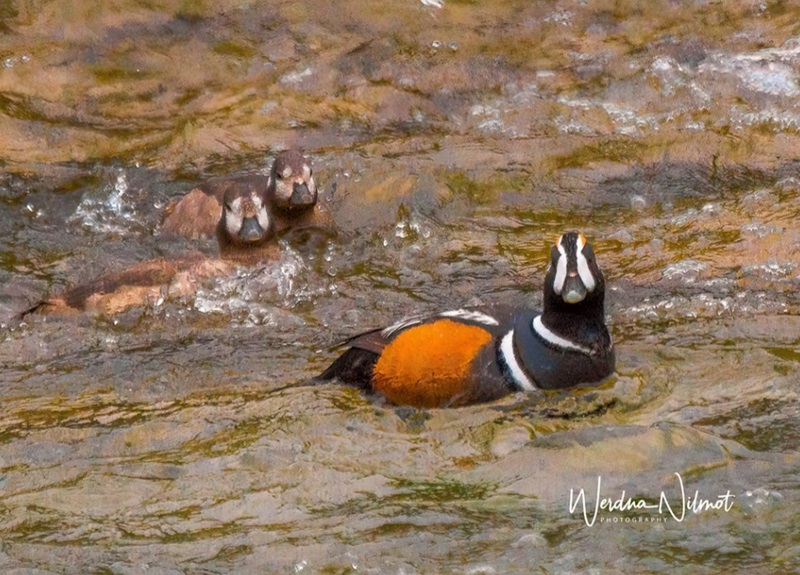
Near Fishing Bridge, there is a pull-out called LeHardy Rapids. We stopped there for lunch and to photograph the beautiful harlequin ducks surfing on the Yellowstone River.
harlequin ducks (one male and two females)
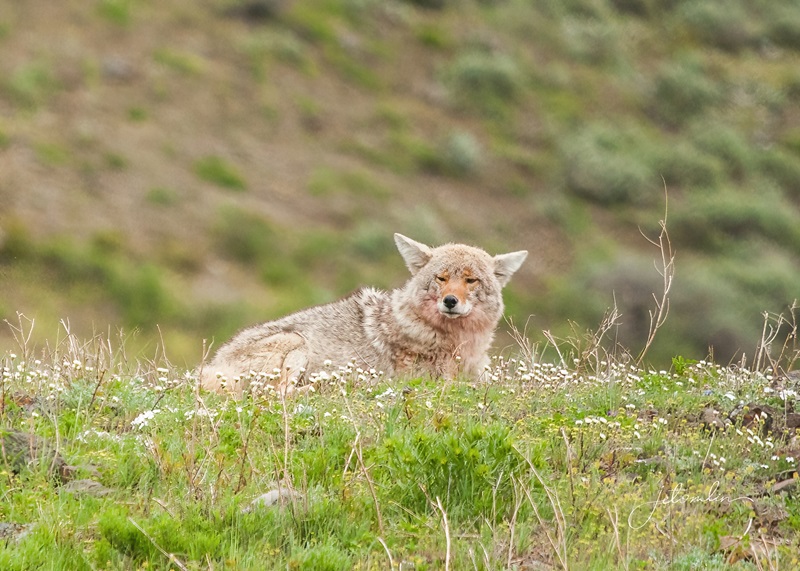
We drove back to Lamar Valley, but with the on-and-off rain, it was a tough day for everyone. A lone coyote, an animal we often see around the park, had created a huge traffic jam while he sat on the ridge eyeing the crowd and wondering what all the fuss was about.
coyote
Tuesday was moving day. We stayed near Yellowstone for a few nights to get sunrise access to the park. But too many nights in a hotel room, plus riding around in the car all day, was not good for O & M – or for us. We had booked an Airbnb outside Livingston for the remainder of our time in Yellowstone.
our home for the week!
Shepherd’s Nook was a true escape from the world, miles from any sign of civilization. Our home away from home was a cozy haven, equipped with all the essentials, including reliable Wi-Fi and a washer and dryer. The only light that broke the night darkness was the faint glow from Livingston, and the stars were breathtaking!
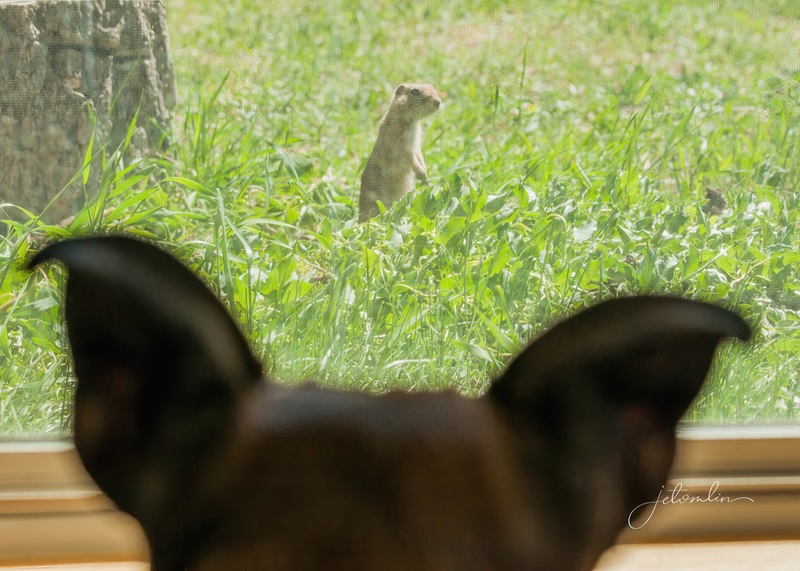
We had been going nonstop for a solid week and needed time to recharge, so we gave ourselves a day off on Wednesday. We spent the day leisurely, enjoying the view from our apartment. Oscar was enamored with the Richardson’s ground squirrels that played outside our ground-level windows – it was like TV for dogs!
TV for dogs!
On Thursday, we returned to Yellowstone. Our goal was to spot bears, and we ended the day with five separate sightings of black bears and cubs.
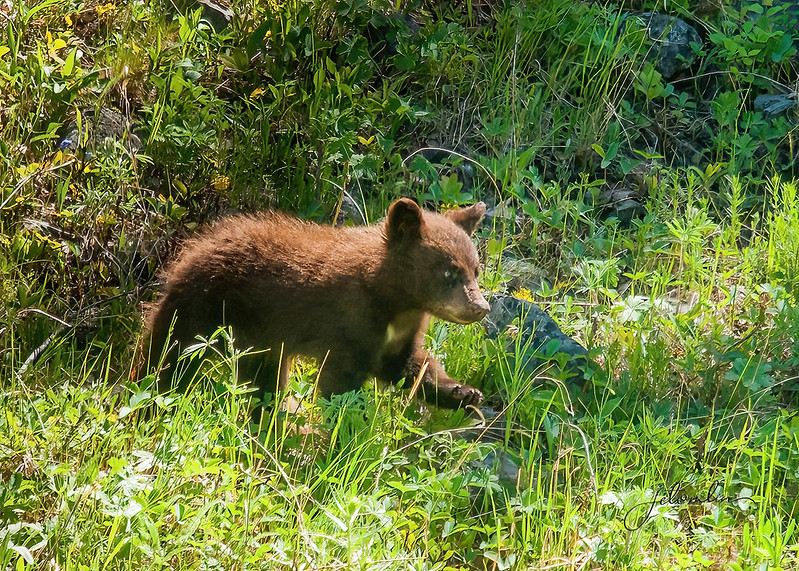
black bear cub (cinnamon morph)
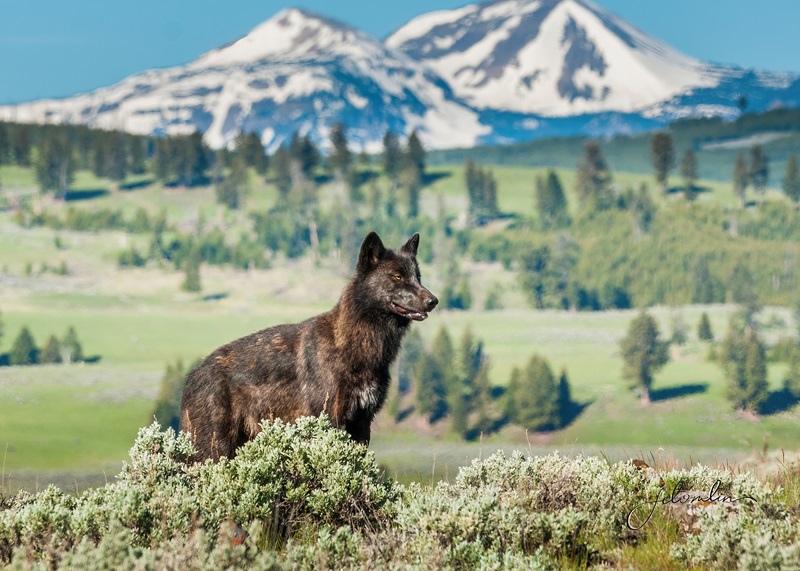
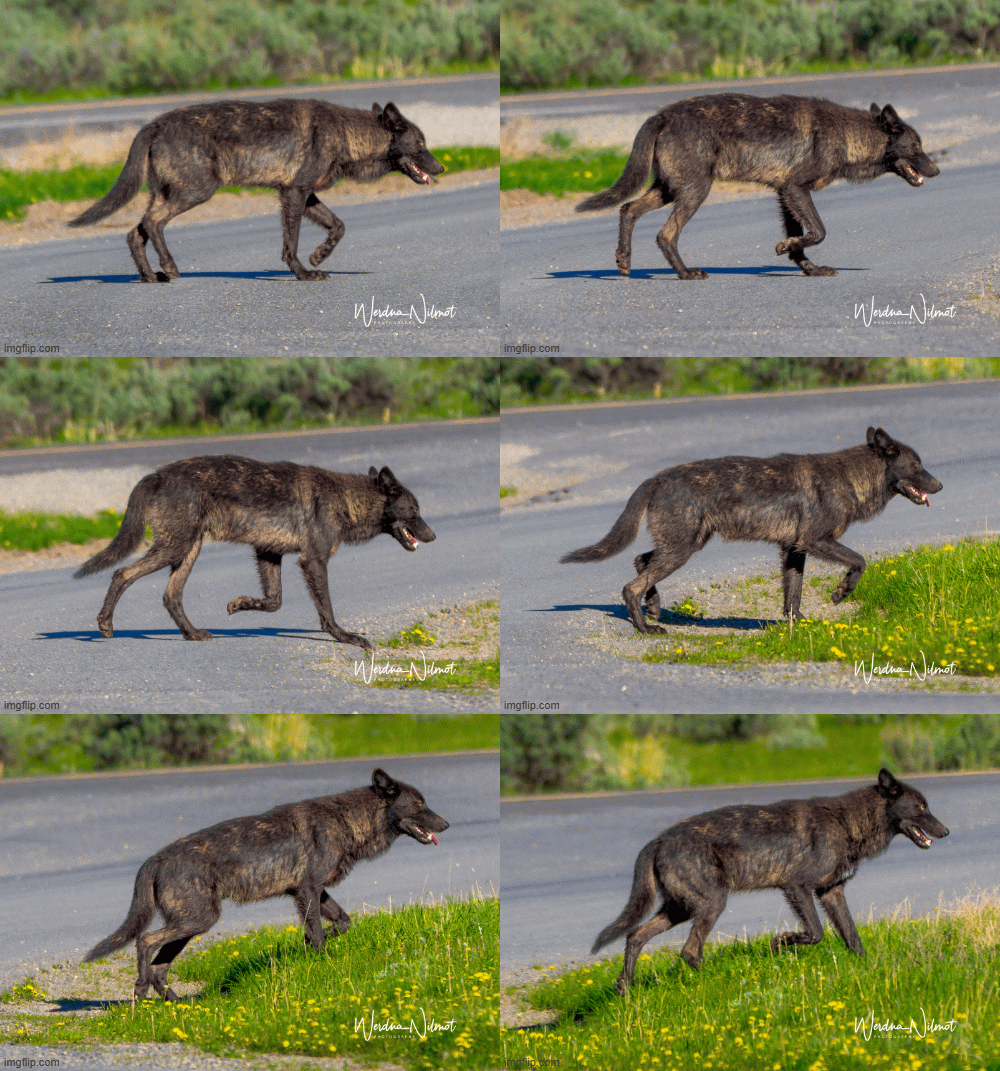
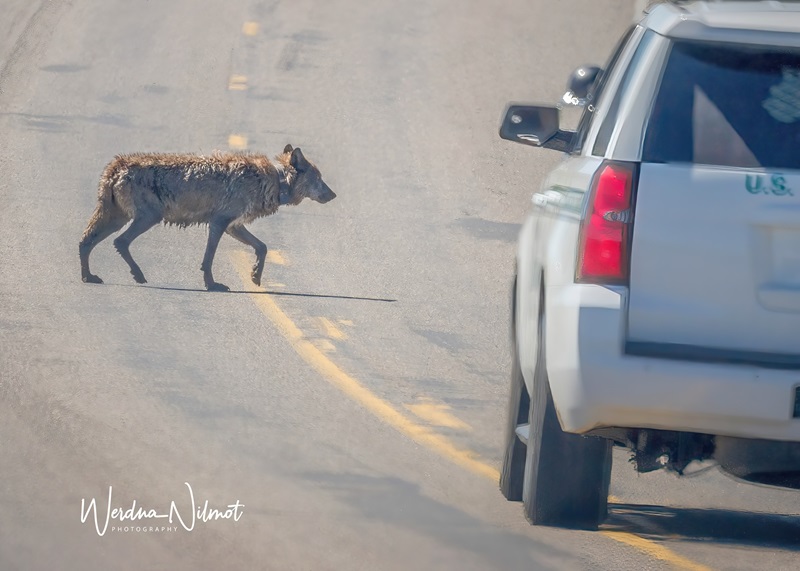
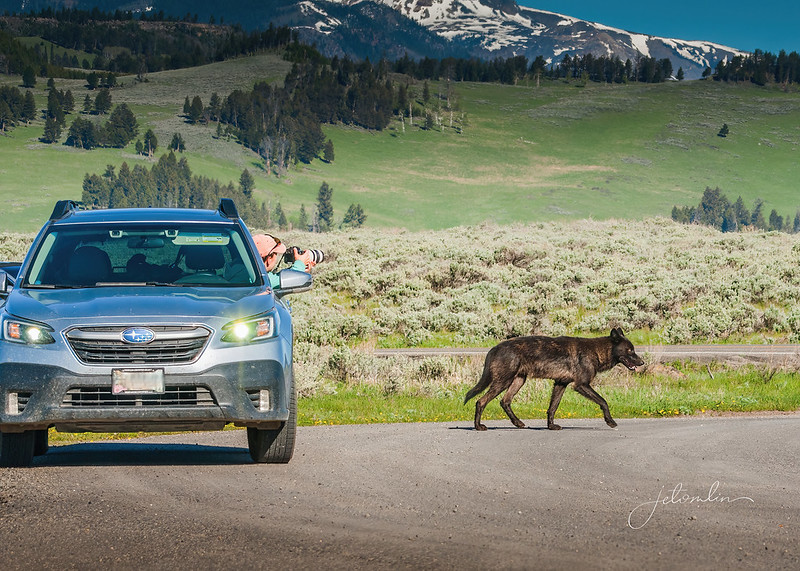
But the true magic was something extraordinary. A majestic black wolf sauntered through a field and crossed the road in front of us. TG swiftly drove ahead and turned into the first available pull-out. The wolf emerged over the ridge and posed in the most perfect, postcard-worthy light we could have hoped for.
a postcard-worthy shot!
After hearing of multiple wolf sightings viewed only through a scope or powerful binoculars, seeing one this close was a dream come true. The sheer majesty of the creature, with its sleek, black fur and piercing, yellow eyes, left us in awe.
12-image gif of the wolf crossing the road
Not long after that, a second wolf emerged from the river and crossed the road behind us—two close wolf sightings in as many hours!
a second close wolf sighting in as many hours!
Our Airbnb host, Judson, provided many suggestions for local wildlife safaris and scenic drives. We opted to stay close to home on Friday and Saturday to explore the nearby areas.
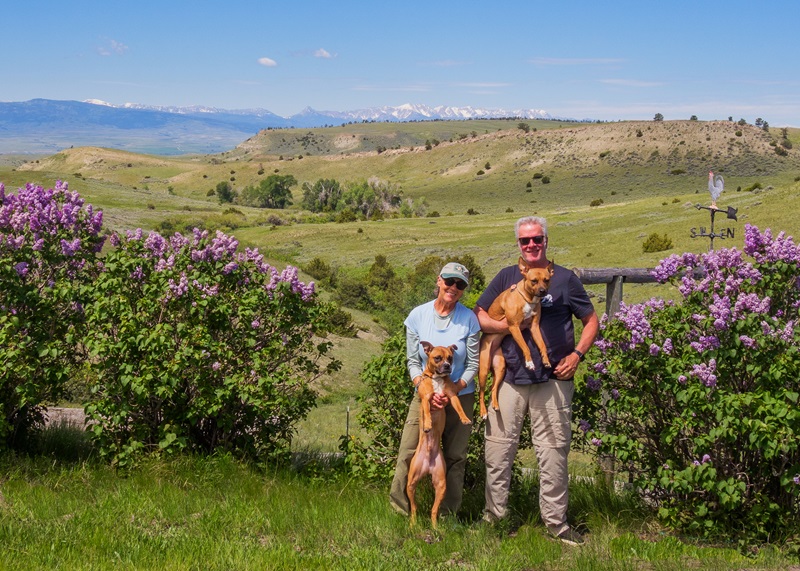
family selfie at Shepherd’s Nook
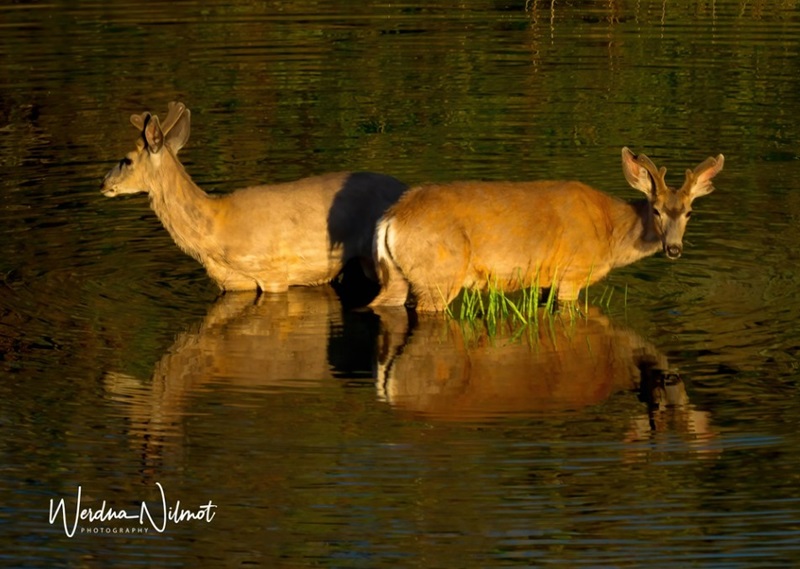
That evening, as if to affirm our decision, a herd of mule deer walked through the yard and down to the creek, a pronghorn appeared over the ridge, and a coyote stealthily hunted for dinner on the hillside across from our window.
coyote hunting for dinner
We spent the two days simply unwinding and immersing ourselves in the tranquility of the area, much of which we could enjoy without leaving the property.
mule deer beside Adair Creek (below our window)
To experience the beauty of Shepherd’s Nook, click here:
hover on photo to arrow through the set or click on any photo to open a new tab in Flickr
Sunday was our last visit to Yellowstone. We began the day with two back-to-back bear sightings, so we were off to a great start!
black bear (cinnamon morph)
Our drive took us towards Tower Falls, a place where we had previously spotted bears. However, luck wasn’t on our side this morning. Undeterred, we ventured to Lamar Valley, where a delightful surprise awaited us – the mama badger, leisurely sunbathing outside her den!
mama badger
TG wanted to take some panos of the valley with bison grazing, so we moseyed west.
Lamar Valley
We encountered a mama bear and two adorable cubs as we made our way from Tower Junction back towards Mammoth. The scene was chaotic, with several cars and people crowding the area. In a moment of pure pandemonium, the bears crossed the road between the vehicles, then reversed course and retreated down the hill.
a royal FUBAR!
We stayed back, trying to get the best photos we could. Finally, a ranger arrived and brought order to the chaos.
black bear cub crossing the road
We were happy to have one last sighting of a mama bear with cubs, but we also knew we were “done” with Yellowstone on this visit. Neither of us was comfortable with the huge crowds that seemed to have arrived overnight.
black bear mama with two cubs
We spent our last two days near home, enjoying the wildlife around Shepherd’s Nook and preparing for the next stop on our road trip.
mule deer at golden hour
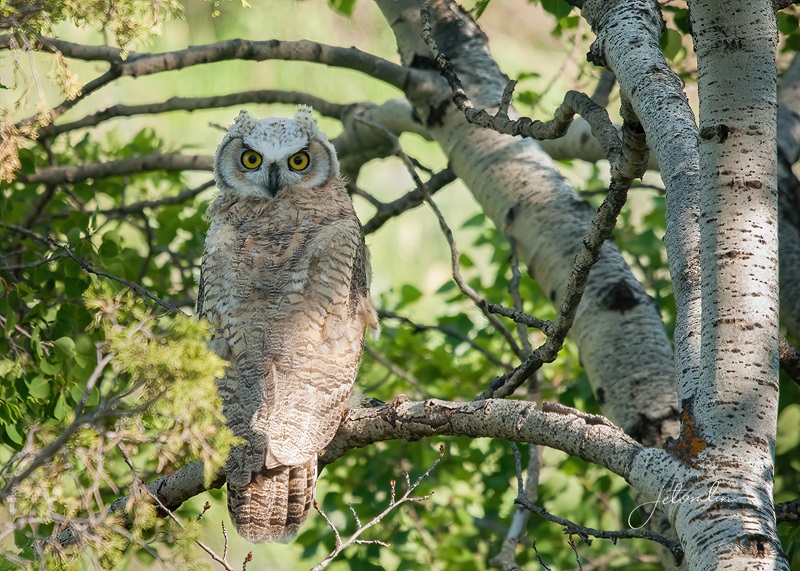
great horned owl (juvi)
As we said goodbye to Montana, we were filled with profound gratitude. Between the Super 8 in Gardiner and the Shepherd’s Nook Airbnb, we spent 11 full days in the Yellowstone area. We dedicated five days to the park, spending an average of five hours per visit. While surrounded by countless bison, pronghorn, and elk, our hearts were set on spotting bears.
bison and red dogs crossing the road in Lamar Valley
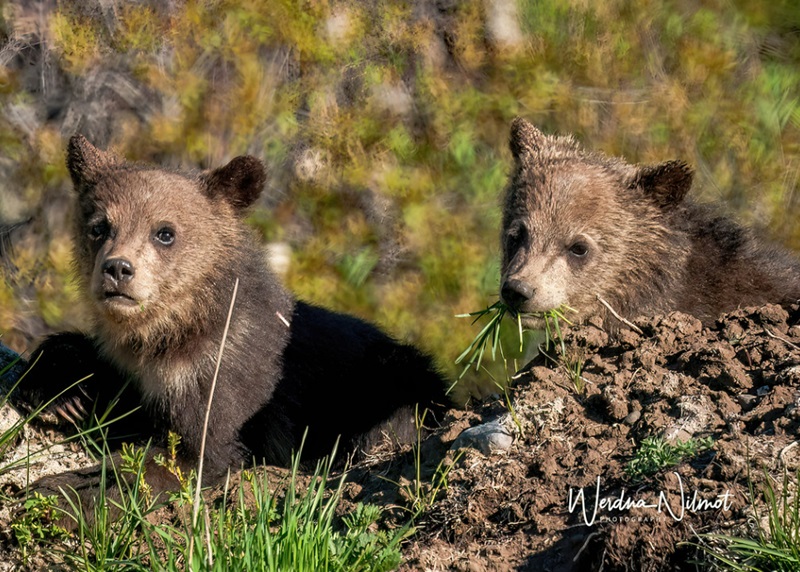
And in the end, we were rewarded with 37 grizzly and black bears in 16 unique sightings, with eleven of those being a mama and cubs.
grizzly bear cubs
But the most awe-inspiring moment—surpassing even the bear sightings—was the wolf we were fortunate to encounter on June 6, 2024. It was truly extraordinary, as he passed no more than two car lengths in front of us.
wolf crossing in front of our car
It is a moment we will cherish forever.
To see all the photos from our eleven days in the Yellowstone area click below:
TG:
hover on photo to arrow through the set or click on any photo to open a new tab in Flickr
JET:
hover on photo to arrow through the set or click on any photo to open a new tab in Flickr
TG and I both reached a milestone birthday in 2024, a year shaping up to be full of memorable moments. We celebrated my big day by spending a week in Crystal River, FL snorkeling with the manatees.
Three Sisters Springs, Crystal River, FL, January 2024
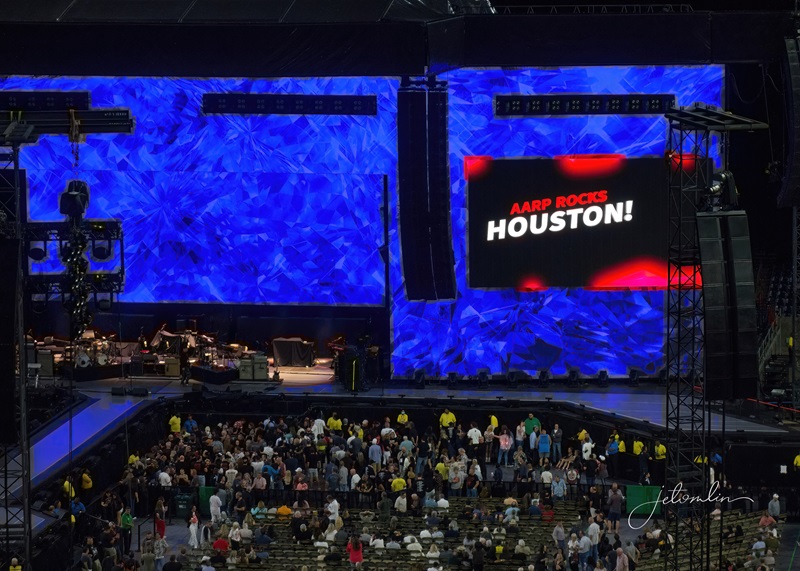
TG, a lifelong Rolling Stones fan, was over the moon when we learned that the first stop on the Stone’s Hackney Diamonds tour was in Houston, conveniently on our way to New Mexico. We added two nights onto the beginning of our trip and could barely contain our excitement as we purchased tickets for the April 28 concert. Happy Birthday, TG!
AARP Rocks Houston!
It was a great show, with the timeless talent of Mick, Keith, Ronnie, and the band combined with incredible technology. We had a fantastic time, singing along to old favorites and grooving to songs off their new album.
Miss You, Houston, TX 4-28-24
The following morning, we continued our journey west. After two visits to the Bosque del Apache in November, we were eager to experience the unique charm of New Mexico’s desert in the hot summer months with its colorful rattlesnakes, lizards, and toads.
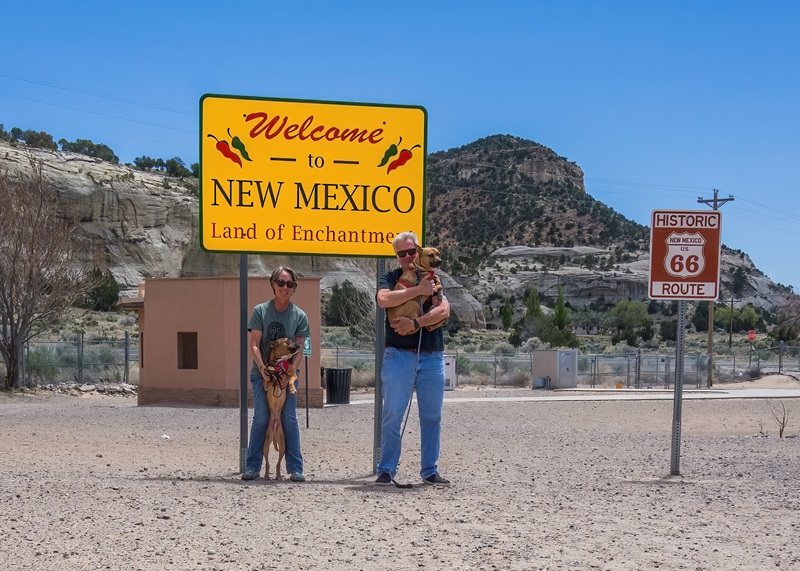
Welcome to New Mexico!
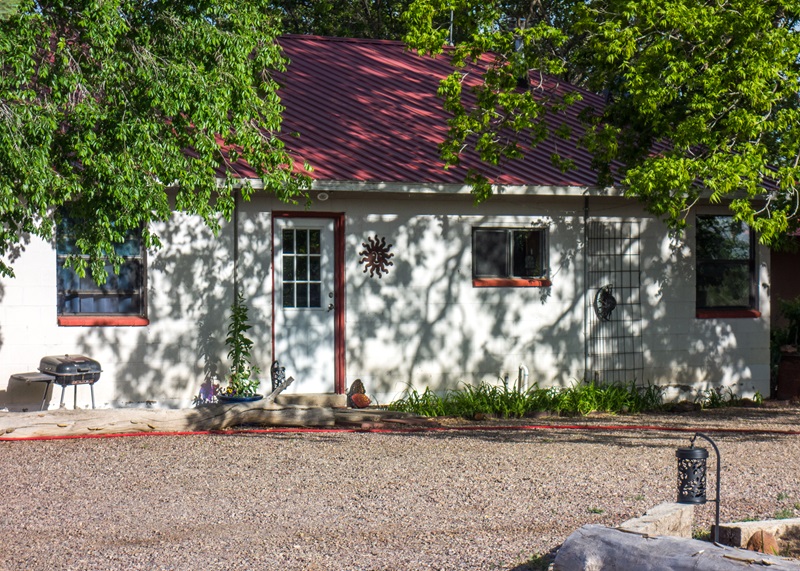
This visit marked our third stay at Casita del Crane’s, Pam’s cozy Airbnb in Lemitar. It has become our home away from home and a perfect base for explorations.
Casita del Cranes
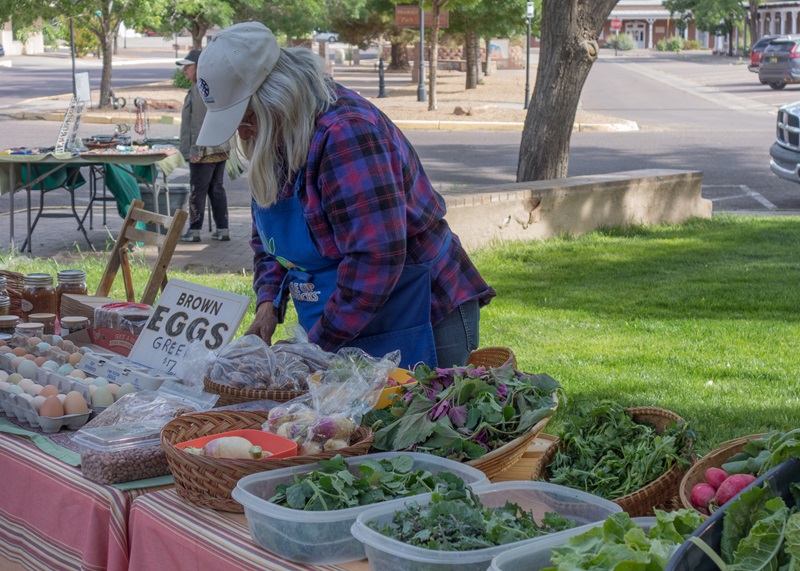
Pam is always interested in our photo safaris and sharing goodies such as fresh greens from her organic garden. These personal touches make our stays here so special.
Pam selling her organic veggies and eggs at a local farmer’s market
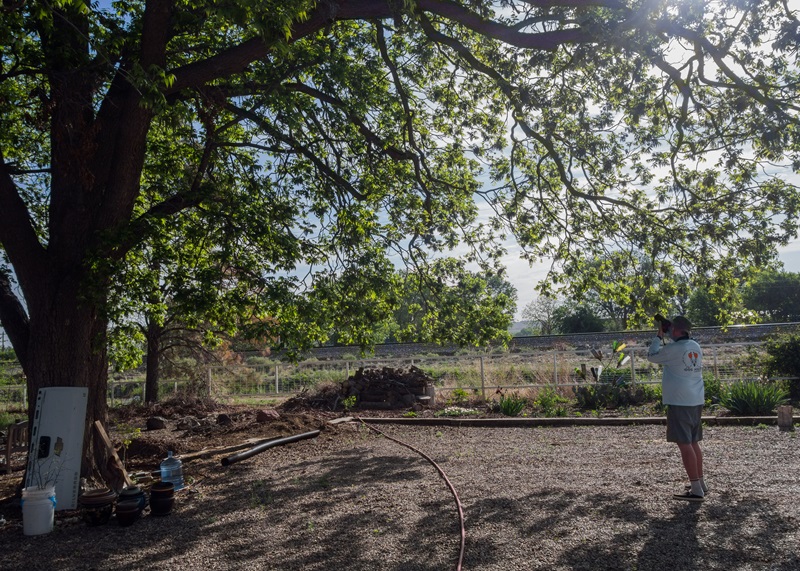
Something we’ve always enjoyed about staying at Pam’s is all the nature that greets us right outside our door.
so much nature right outside our door!
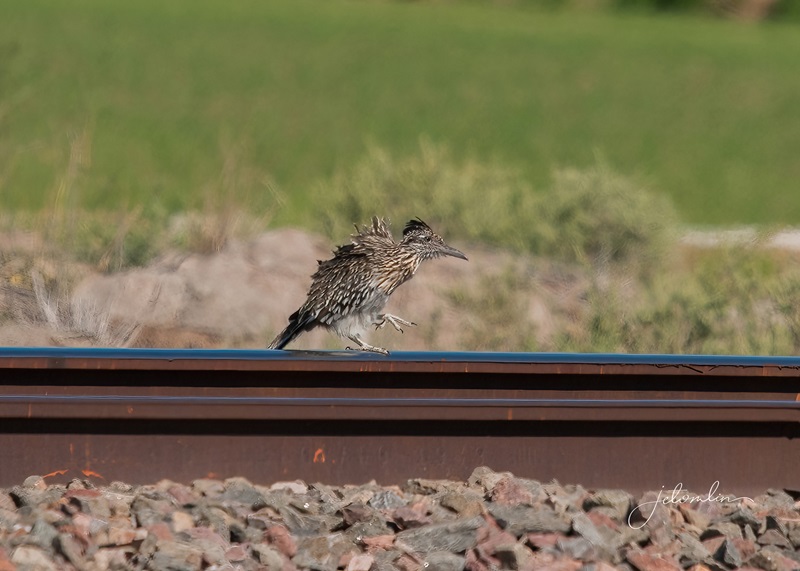
A stroll through her garden or a walk on the dirt road alongside the creek is a wildlife adventure in itself. We’ll often see roadrunners scurrying along the railroad tracks — so cliché it’s comical!
a roadrunner clearly up to mischief!
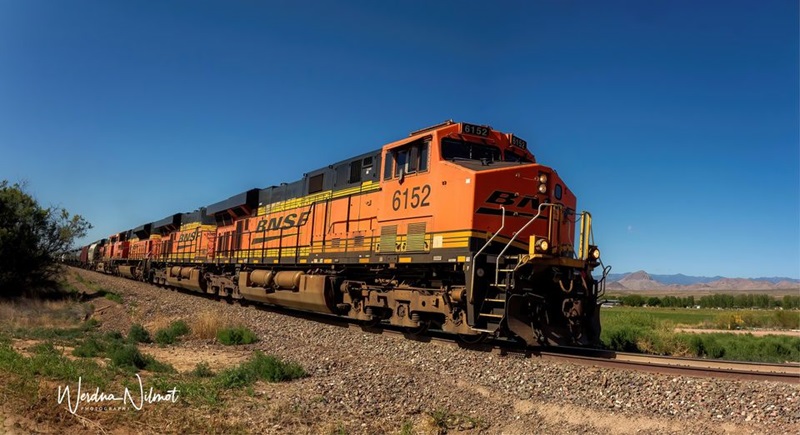
And the rumble of the freight trains that pass by, accompanied by a long, lonesome whistle and clickety-clack of the cars, is charming.
freight train rumbling by
You can view all our photos from our walkabouts at Pam’s here:
hover on photo and then arrow through the set or click to open a new tab in Flickr
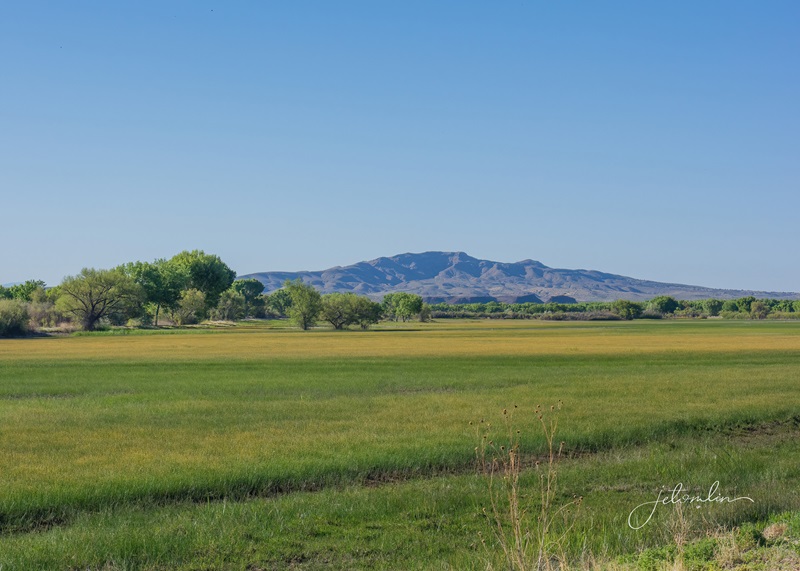
We explored Spring in the Bosque del Apache – a different time of year than previous visits. It was a tranquil place, with none of the mad frenzy we witnessed during the sandhill crane migration in November.
Bosque del Apache, May 2024
While we searched for reptiles,
western zebra-tailed lizard, Bosque del Apache
We also enjoyed all the birds and other wildlife that call this area home.
vermillion flycatcher, Bosque del Apache
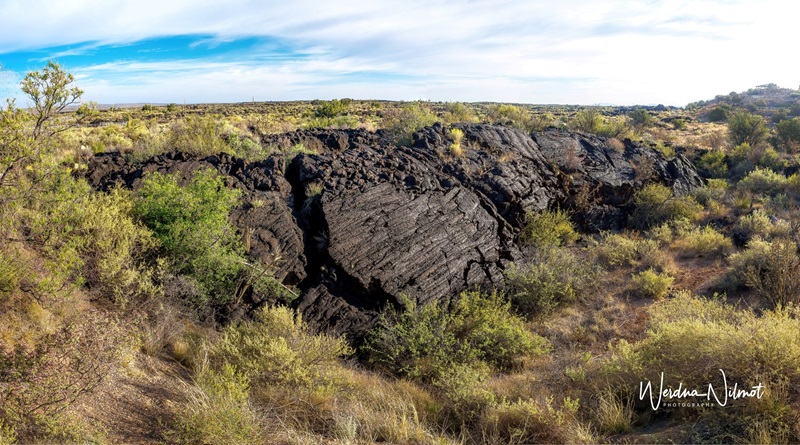
We drove to the Valley of Fires, a lava flow covering 125 square miles. From a distance, it looks like black, barren rock, but as you hike the trails, you’ll see many varieties of desert flowers, cacti, and trees.
Mountain tea growing out of the black lava, Valley of Fires
The valley was formed around 5,000 years ago when a volcano erupted, leaving behind a trail of molten lava. It’s a fascinating place, a stark contrast between destruction and new life.
125 square miles of black lava
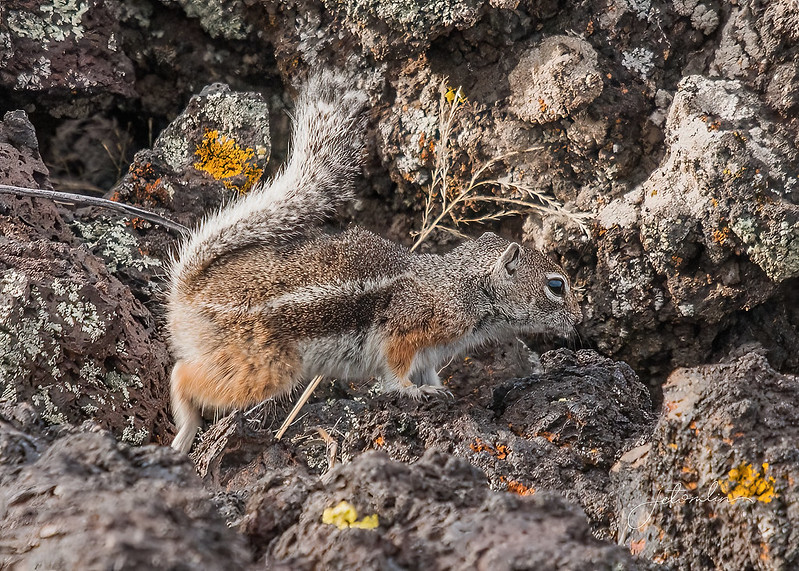
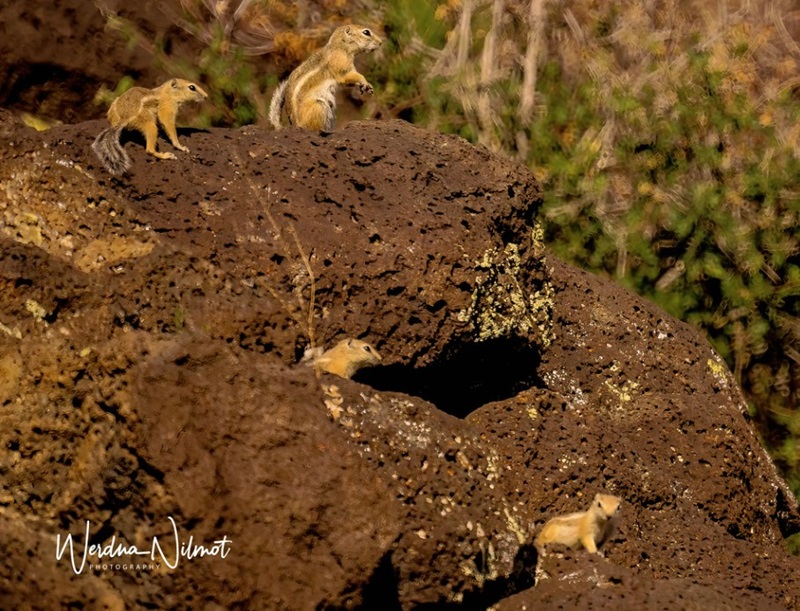
Thanks to TG’s keen eyes and trusty binocs, we watched as ground squirrels and Harris’s antelope squirrels foraged for breakfast.
Harris’s antelope squirrel (Ammospermophilus harrisii), Valley of Fires
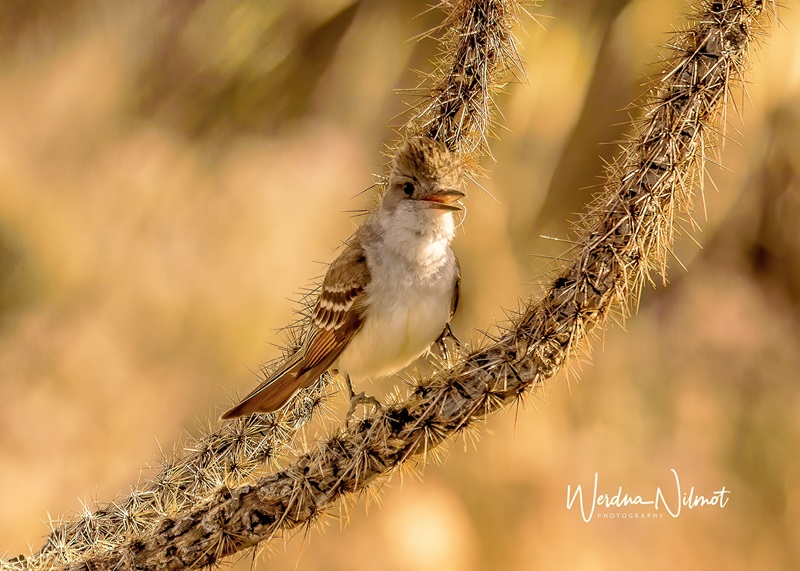
It’s a birdwatcher’s paradise, and we spied ash-throated flycatchers, black-throated sparrows, and western tanagers among other birds.
ash-throated flycatcher, Valley of Fires
Just a week after settling in, we were back on the road for another concert. The Stones were performing in Glendale, AZ on May 7, just a seven-hour drive away. One of TG’s best friends from high school and his brother live in the Phoenix area, so along with Dan, Bill, and their wives, we purchased Stones tickets for a second show in as many weeks.
on our way to Glendale, AZ
After dinner and some quality catch-up time, we piled into our cars and headed over to State Farm Stadium. The atmosphere was electric, with fans of all ages eagerly anticipating the show. And the Rolling Stones did not disappoint.
eagerly waiting for the Stones!
Their performance was off-the-charts, even better than the tour opening in Houston.
“I know it’s only rock & roll but I like it” (Yes that’s me singing along with Mick)
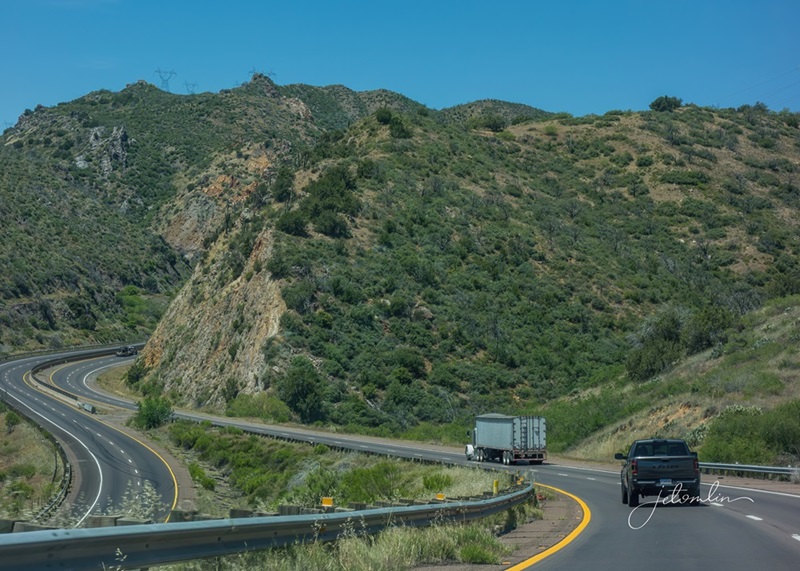
The drive to and from Arizona was beautiful. Our route took us up and over the mountains, with every curve in the road a new, breathtaking view.
our drive through the Arizona mountains
We finished our second week with a lot of rock and roll …
Monkey Man, Glendale, AZ 5-7-24
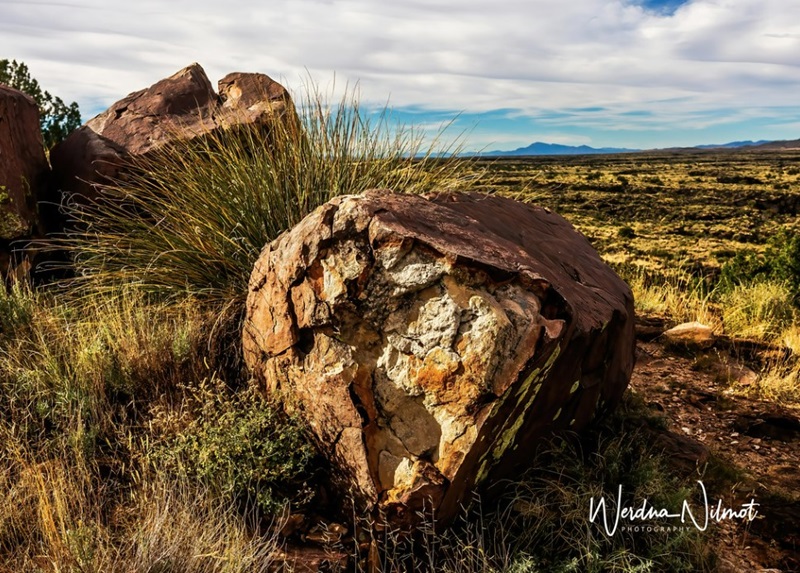
A lot of rocks …
Valley of Fires
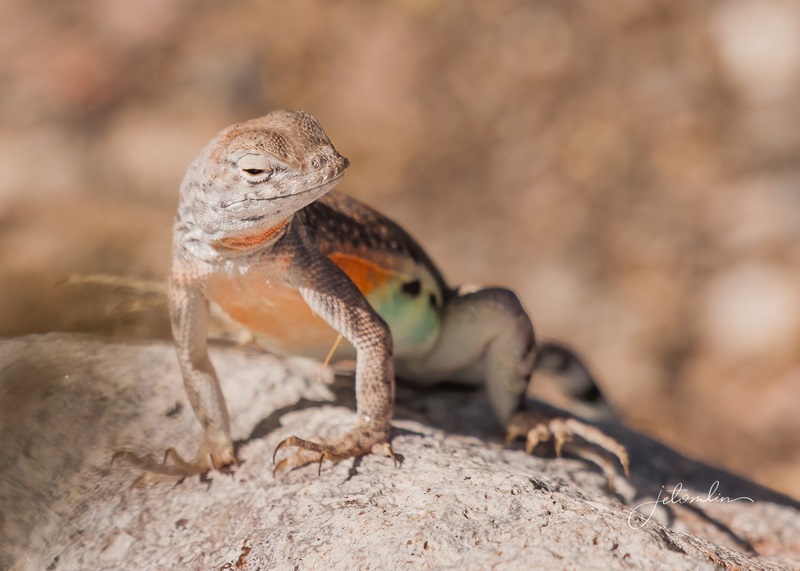
And a lot of lizards …
greater earless lizard, Bosque del Apache
But no rattlesnakes – unless you count the what-we-thought-was-dead snake lying in the middle of the road. By the time we turned around to get a proper ID, it was gone. Either a raptor scooped it up or it slithered off on its own! 😲
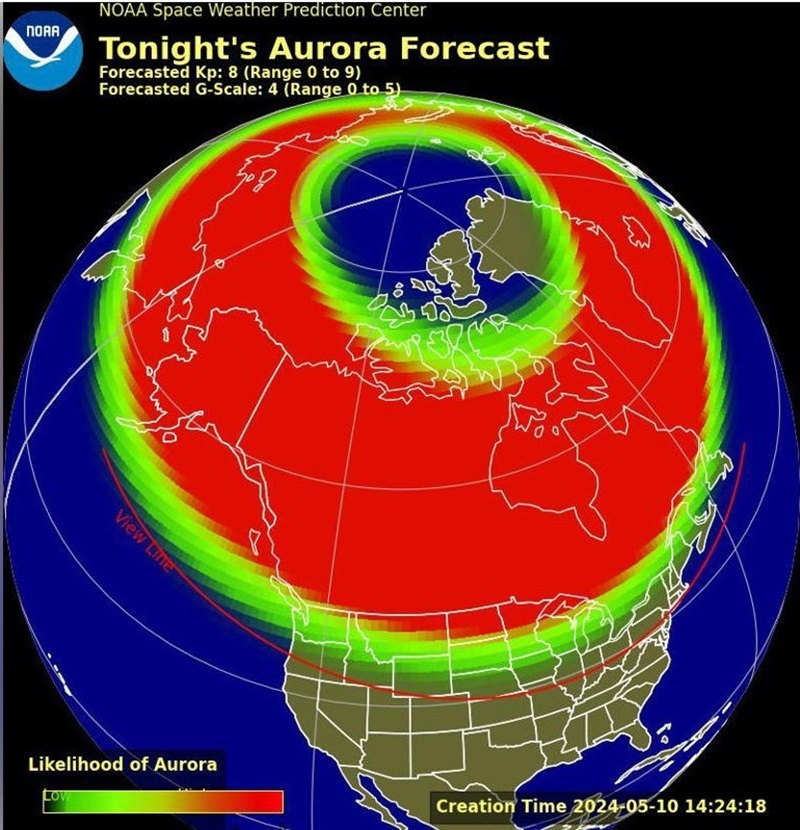
On the night of May 10, the Earth was hit by a G5 solar storm, a rare and powerful event that occurs when a large amount of energy is released from the sun’s atmosphere. This was the strongest geomagnetic storm in 21 years, causing the KP index to spike to 9. The internet exploded with photos from as far south as Key Largo, FL, capturing the stunning auroras that were a result of this storm.
Aurora forecast for May 10, 2024
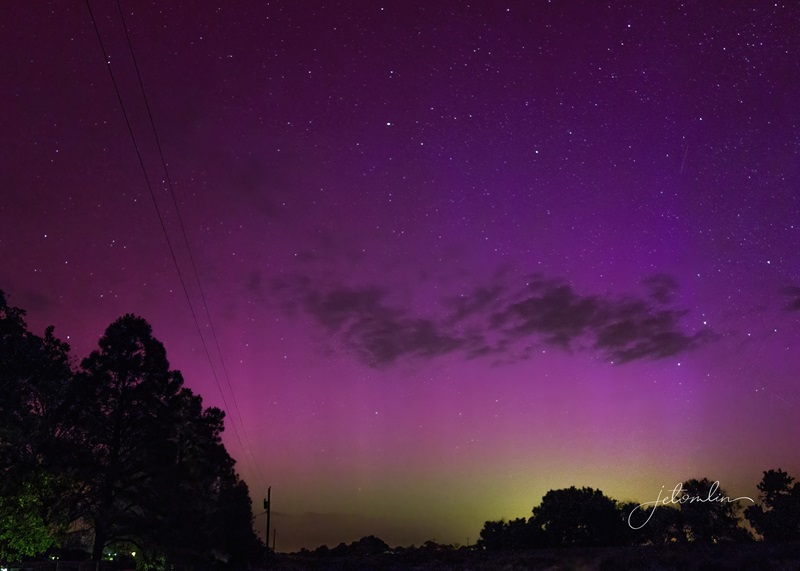
TG woke me at 2:30am. “You’re going to want to come outside,” was all he had to say for me to be up and out the door with my camera and tripod. Visible even to our naked eyes, we were amazed at what we could capture with our lenses.
May 11, 2024, 3:00am
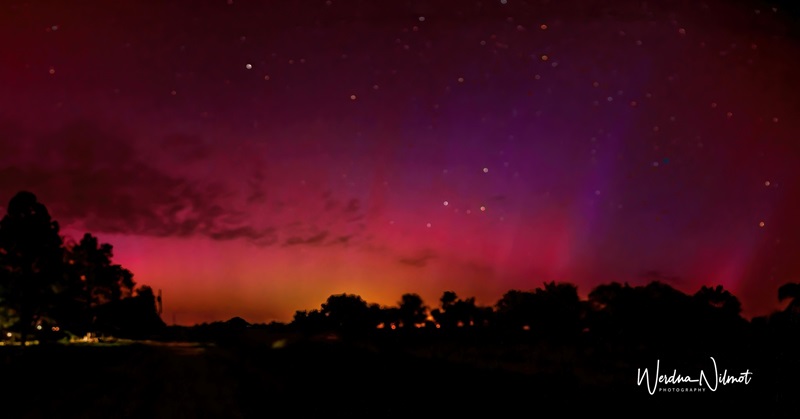
In the hour we stood outside, awe-struck, the sky changed colors from vivid reds to purples & greens to pinks & oranges. It was hard to put away our cameras and go back to bed!
May 11, 2024, 3:30am
We started Week Three with high expectations. We were each going to have a solo adventure, with TG embarking on a trip to Prince Rupert, British Columbia, while I stayed back at Pam’s with Oscar and Maddie.
Oscar spies a roadrunner in Pam’s garden
I dropped TG off at the Albuquerque airport on Monday afternoon. He was due back on Friday after an overnight flight from Vancouver. The three days stretched before me, and I planned to make the most of them.
ABQ Sunport
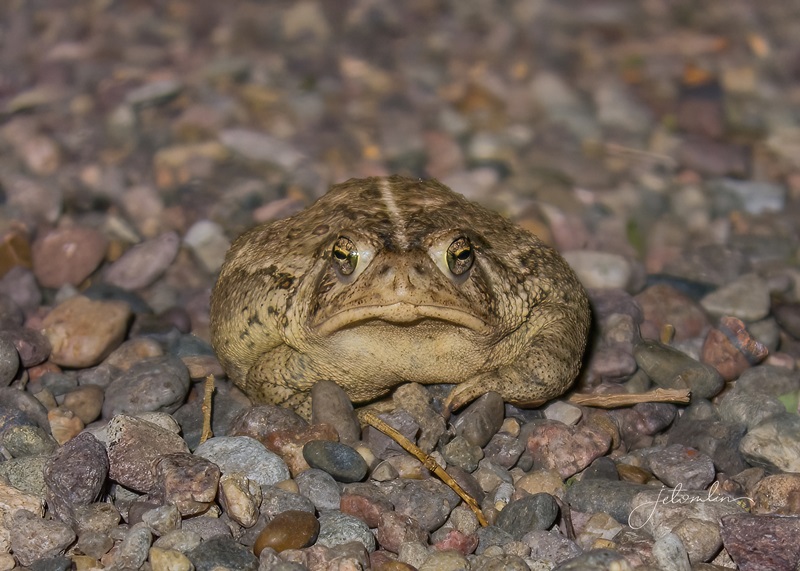
When I took O & M out later that evening, we stumbled upon a woodhouse’s toad (Anaxyrus woodhousii) sittingin the driveway! These toads are native to the western United States and eat a variety of insects and scorpions—so a welcome visitor to have around the house!
woodhouse’s toad
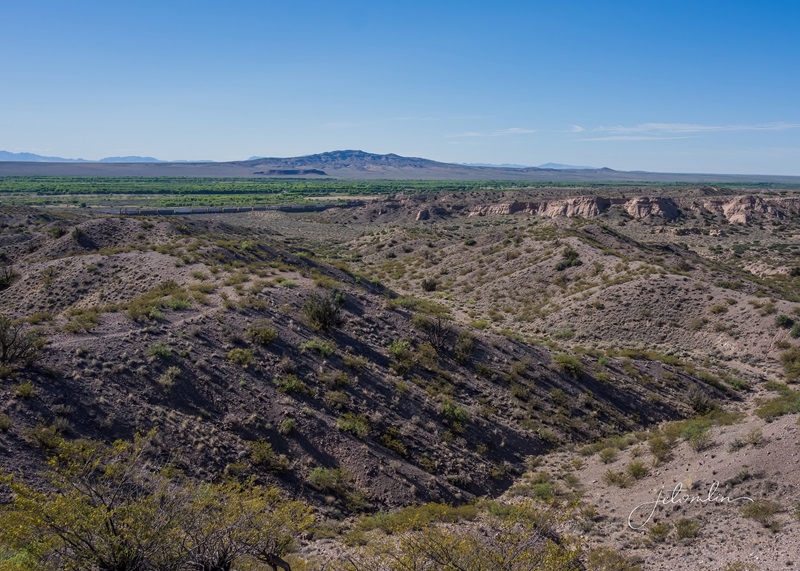
The following morning, I decided to hike the Canyon National Recreation Trail in the Bosque del Apache. This trail is a 2.2-mile “lollipop” loop through the Chihuahuan Desert, the Solitude Canyon, and a climb to the top of a 200ft mesa.
view from the top of the mesa
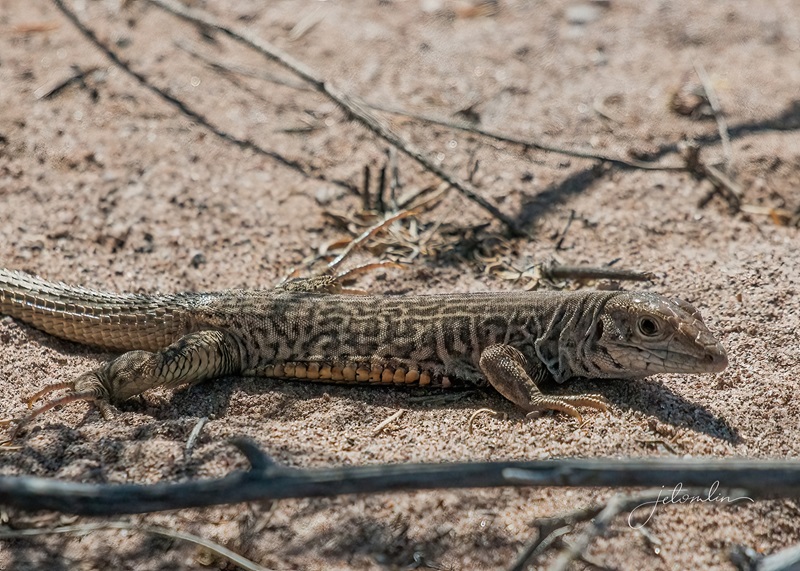
I had no doubt I would see birds and lizards
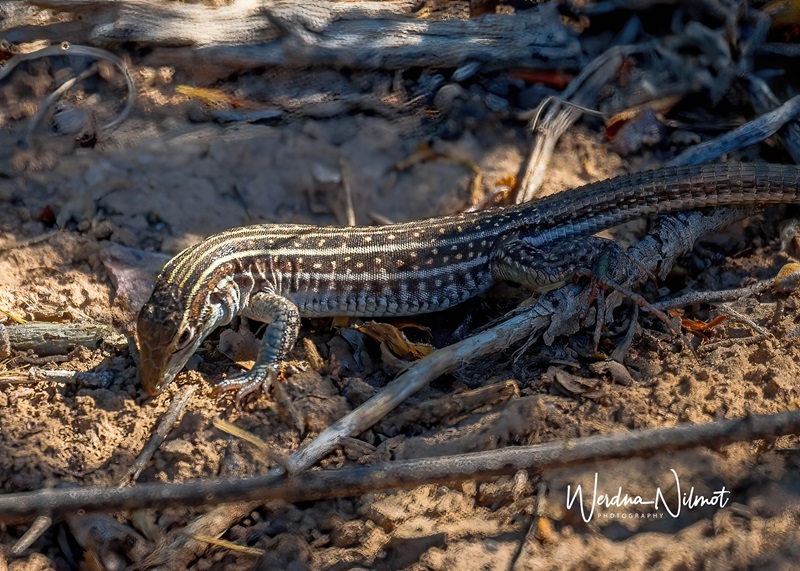
western whiptail lizard
But with snakes proving challenging to find, I started my hike with zero expectations. Little did I know I was in for an astonishing surprise.
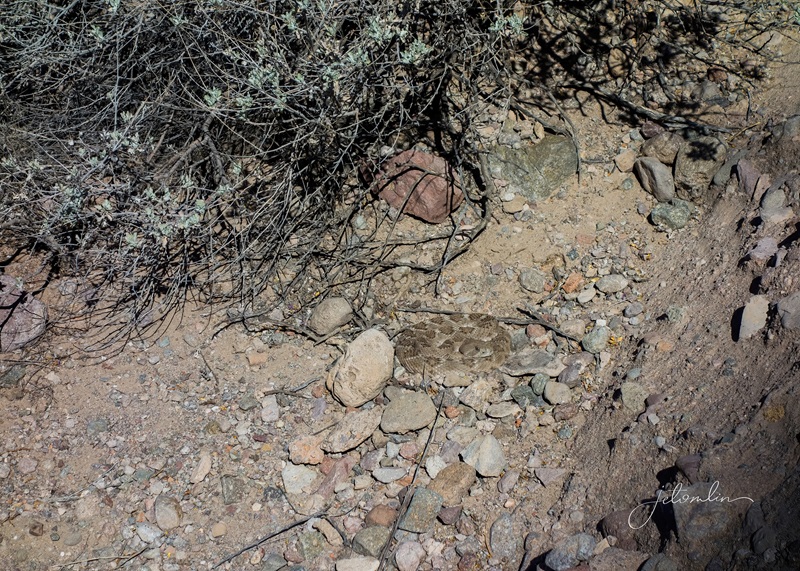
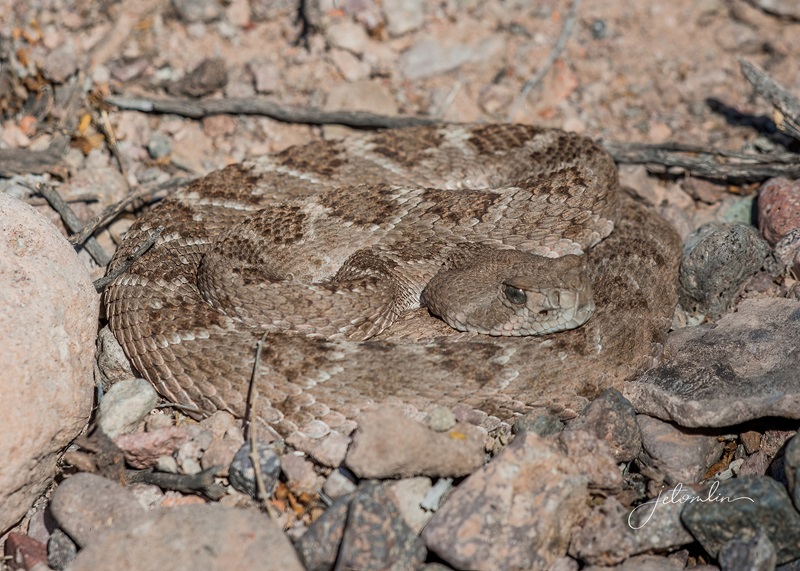
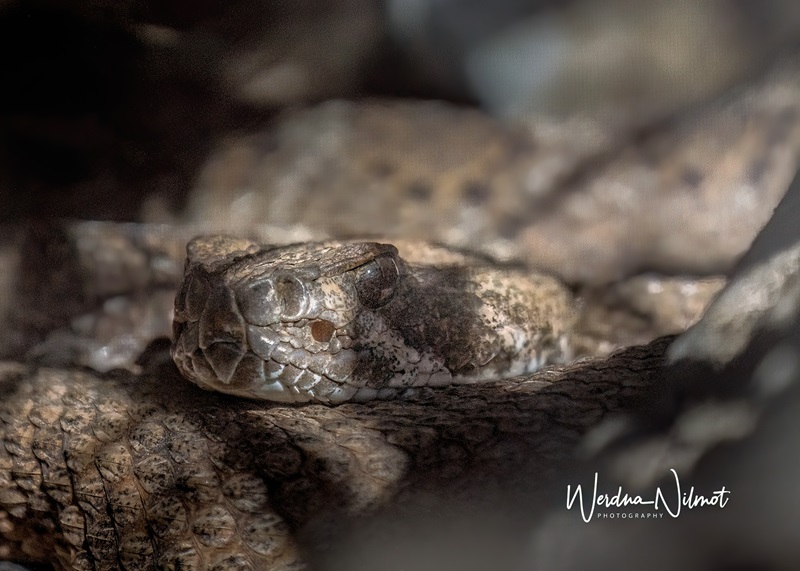
As I stepped off the trail for a closer look at something, I found myself face to face with a magnificent western diamondback rattlesnake, basking in a puddle of warm sunshine! The sheer beauty of the moment left me breathless.
can you spot the snake?
After capturing countless photos, I continued my hike. When I returned to the start of the loop, I retraced my steps, hoping to catch another glimpse of my resting beauty. However, she had gracefully moved on. I whispered a silent ‘Thank You‘ to the wilderness and made my way back to the car.
western diamondback rattlesnake, 5-14-24
What an exciting start to my solo week!
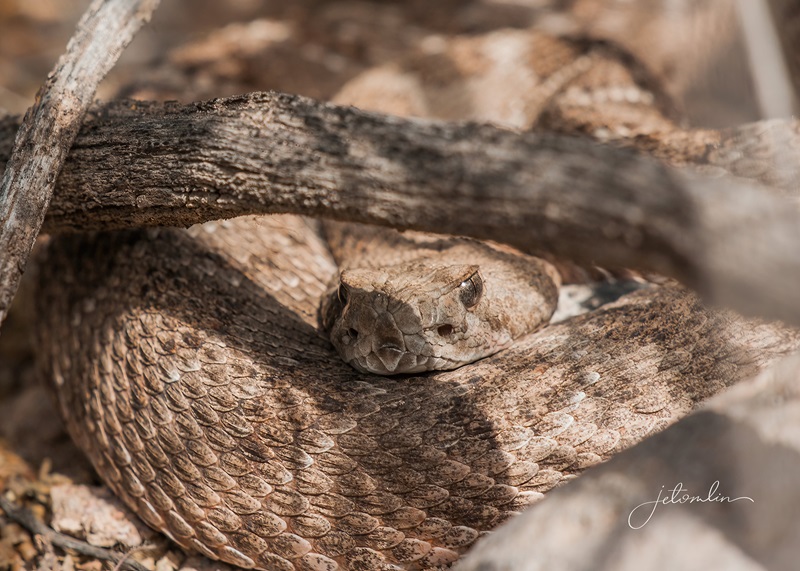
The following day, I returned to the Canyon Trail. To my delight, Resting Beauty was still in the same area, nestled under a bush with thick, tangled branches providing a near-perfect camouflage.
western diamondback rattlesnake, 5-15-24
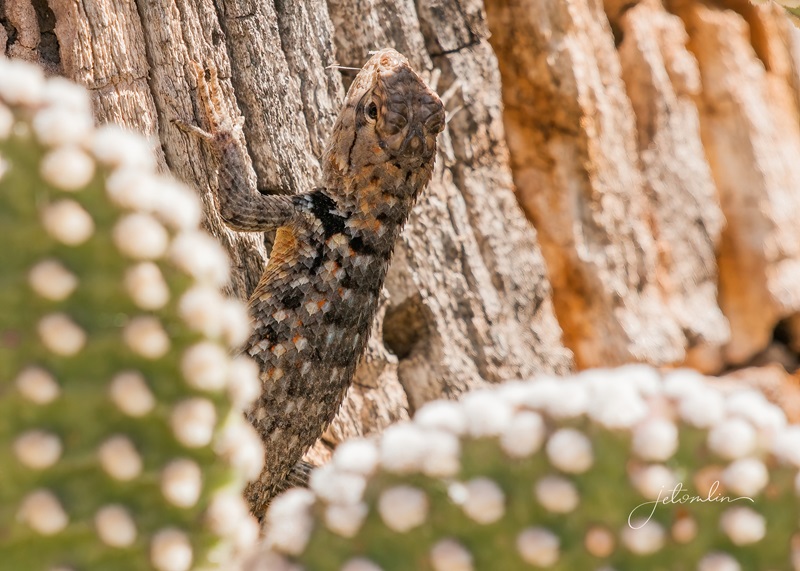
Ater taking a few shots, I moved on, leaving her undisturbed. As I continued my hike, I was thrilled to spot four more different lizards, each one new to me.
Texas spiny lizard
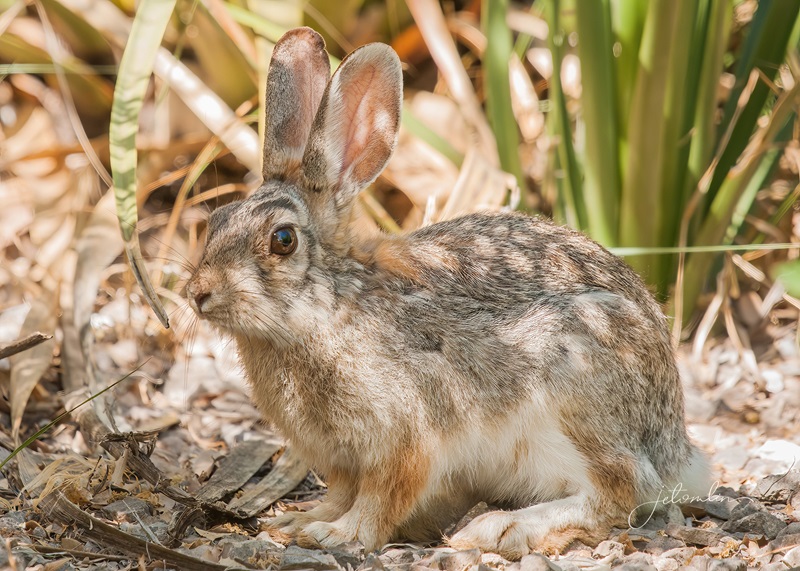
And then, as if to add a touch of whimsy, I came across an adorable desert cottontail, its soft fur blending perfectly with the sandy landscape.
desert cottontail
You can see all the photos from my Canyon Trail hikes here:
hover on photo and then arrow through the set or click to open a new tab in Flickr
On Thursday I woke to a thunderstorm, but by noon the skies had cleared, and the cheerful chirping of birds beckoned me to the nearby Socorro Nature Area, a BLM reserve just three miles from Pam’s.
brown-crested flycatcher, Socorro Nature Area
The sky over the mountains looked ominous, but there was sunshine overhead. So, I ventured out on the one-mile loop to see what I could see.
the mountains to the west, 12:00pm
As I walked along, the air was filled with the calls of many different birds, including a pair of Gambel’s quail. These birds, with their distinctive topknot of black feathers, captivated me on our first visit to New Mexico in 2021. Their call resembles a meowing cat; when alarmed, they gurgle like they’re underwater. On that first visit, I thought they were rare and intriguing. I still find them charming, but they are so common that these days I’m much more selective about when I snap a photo.
Gambel’s quail (male), Socorro Nature Area
I checked the dead logs and scrub for signs of life and was thrilled to spot several lizards. I’ve learned the ID’s of so many lizards on this trip: “A common side-blotched,” I whispered to myself, and later “a checkered whiptail!”
common side-blotched lizard, Socorro Nature Area
You can see all the photos from my Socorro Nature Area hikes here:
hover on photo and then arrow through the set or click to open a new tab in Flickr
That night, TG called while awaiting his flight from Vancouver. He was excited about everything he had seen in Prince Rupert and couldn’t wait to share his experiences with me. And I was just as excited to share my three days with him. Our solo adventure week had been a win-win!
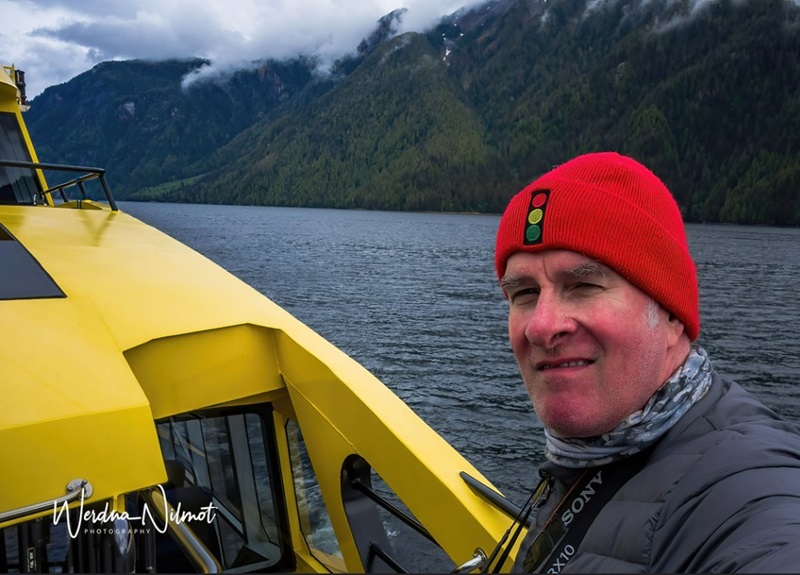
TG on the Prince Rupert Adventure Tours “Inside Passage”
You can read TG’s Prince Rupert blog here (right click on title to open in a new tab):
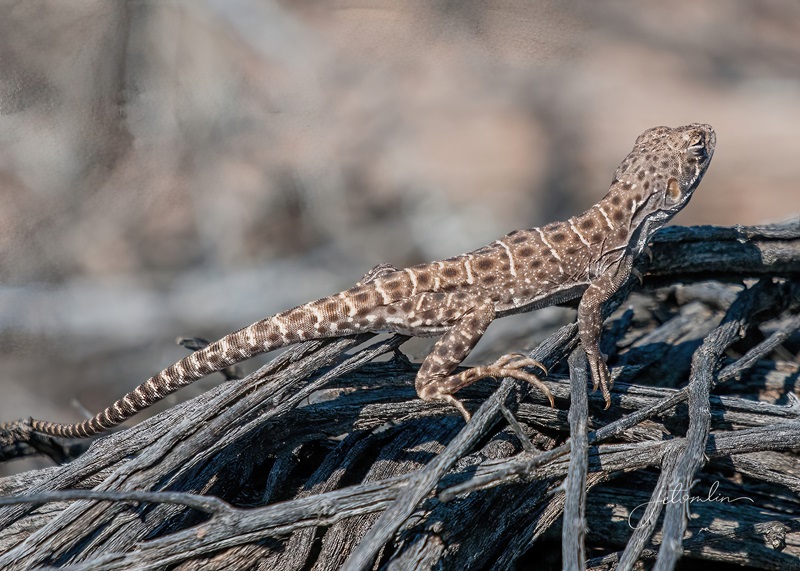
TG wanted to work on his photos, so on Saturday I returned to the Canyon Trail hoping to spot Resting Beauty – or one of her cousins. There were no snakes that morning, but I was delighted to add another new lizard to my growing list: a long-nosed leopard!
long-nosed leopard lizard
TG and I went back to the Canyon Trail three more times after that, and on two occasions we spied Resting Beauty tucked tightly beneath a thick tangle of branches. She didn’t give us *quite* the photo-op of my first sighting but it was a thrill nonetheless!
western diamondback rattlesnake 5-25-24
Pam and Steve invited us to a BBQ party one afternoon. We wanted to stick close to home, so that morning we headed to the Socorro Nature Area.
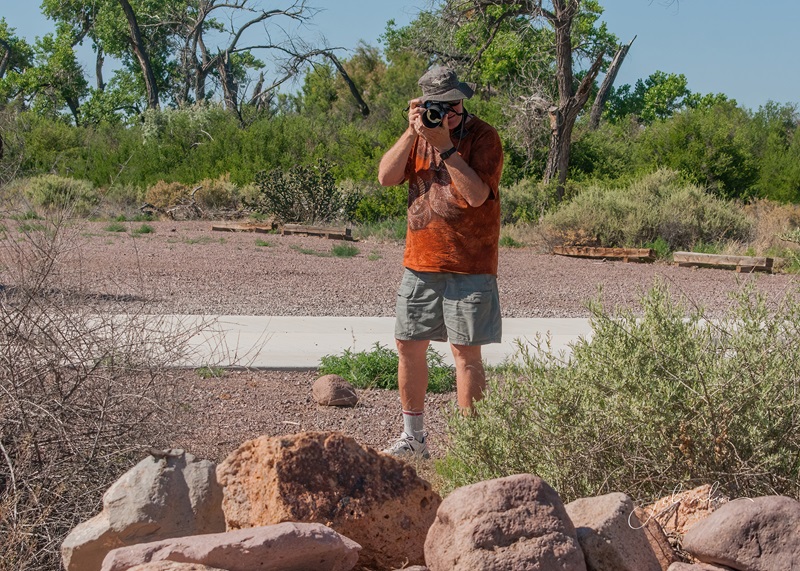
TG photographing lizards at the Socorro Nature Area
We spotted several lizards, including two new ones: a desert side-blotched lizard and a Chihuahuan spotted whiptail.
Chihuahuan spotted whiptail lizard
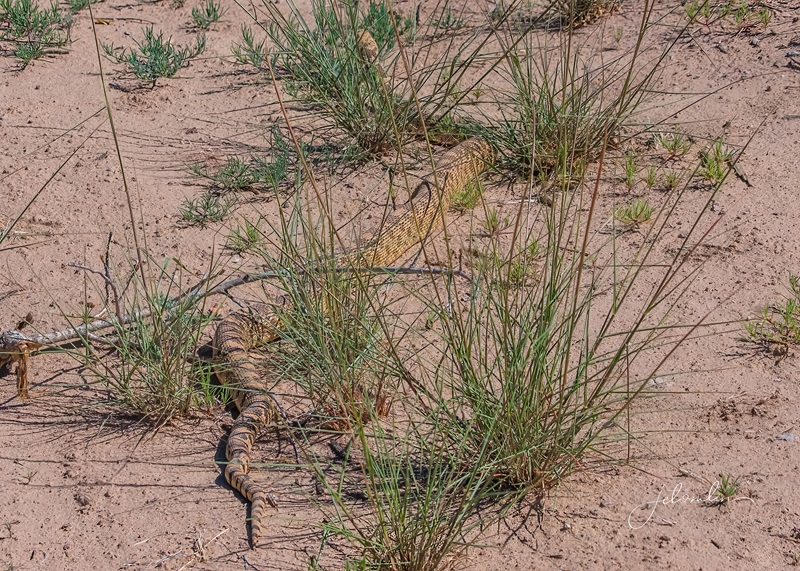
TG stepped towards a rock to photograph yet another lizard when WHOOPS! he almost stepped on a five-foot bull snake, fully stretched out and basking in the morning sun.
WHOOPS! a 5-foot bull snake fully stretched out, basking in the morning sun
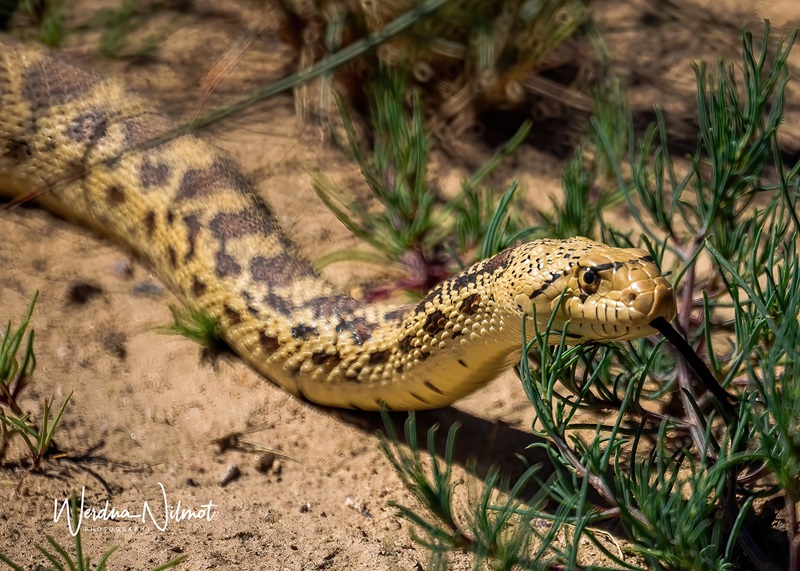
I saw him jump out of the way before I saw what made him jump. What a big, beautiful girl she was! As we watched, she slithered up a pile of dirt and into her little hidey-hole.
bull snake
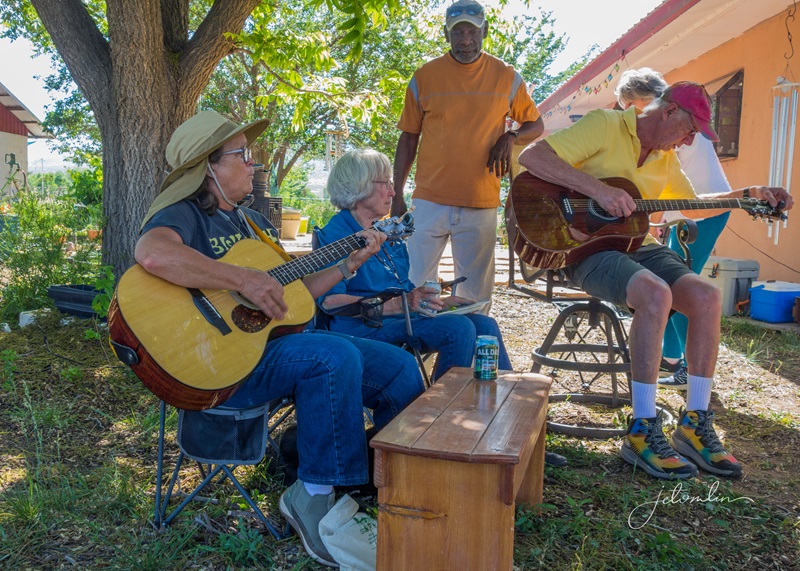
Later that day, we walked next door for the BBQ. Most of Pam and Steve’s friends are musicians, and we were treated to a delightful afternoon of good conversation and the soulful sounds of rock and roll.
Grateful Dead, Tom Petty, John Prine, and their own original songs
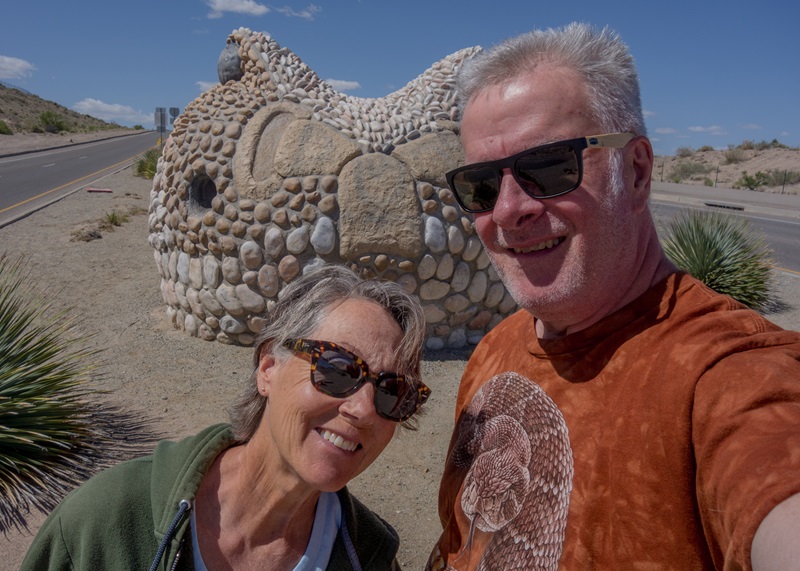
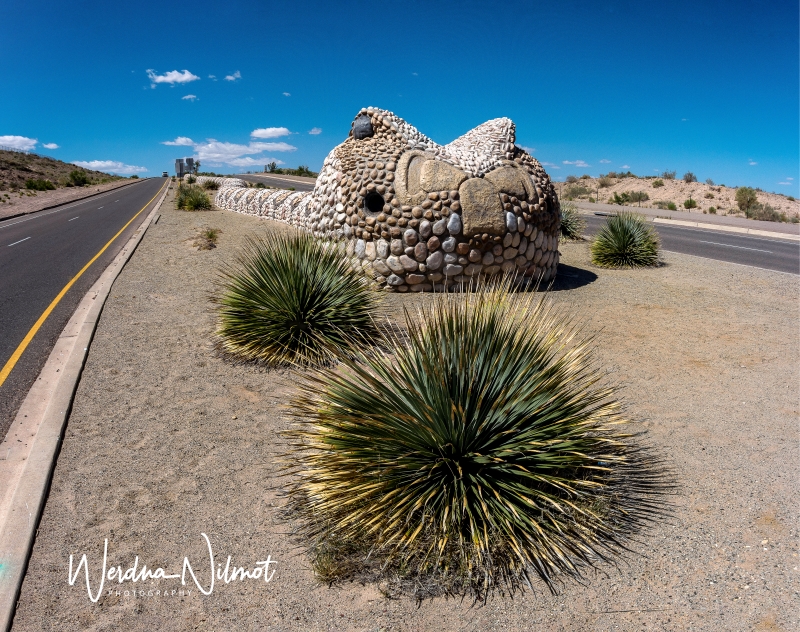
One day we couldn’t resist checking out one of the quirkiest roadside attractions you will spy driving around Albuquerque: a giant rattlesnake gliding down the median on a long hill near the airport.
giant rattlesnake selfie!
The snake has spawned many urban legends, but the real story is simple. When the city hired Sites Southwest to landscape the median, they were faced with a challenge. Plants were not an option, as there was no water source. So, they decided upon a sculpture that spoke to the region, and what better way to represent New Mexico than a giant rattlesnake made of rocks?!?
Albuquerque’s giant rattlesnake sculpture
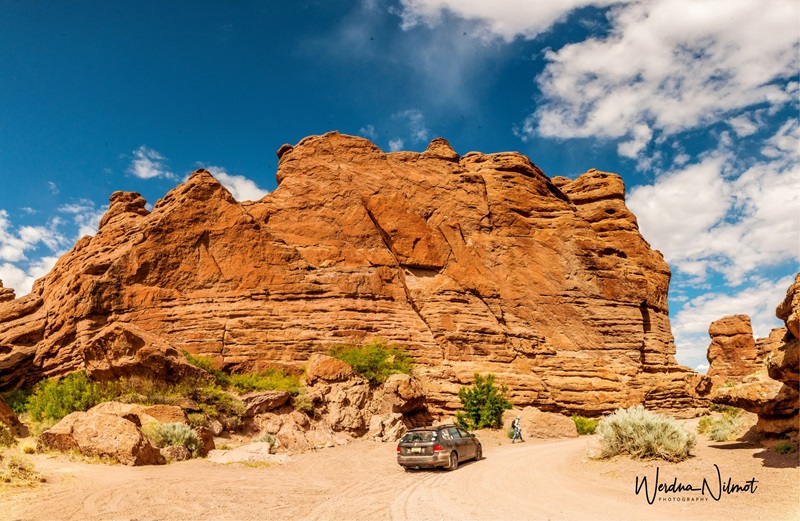
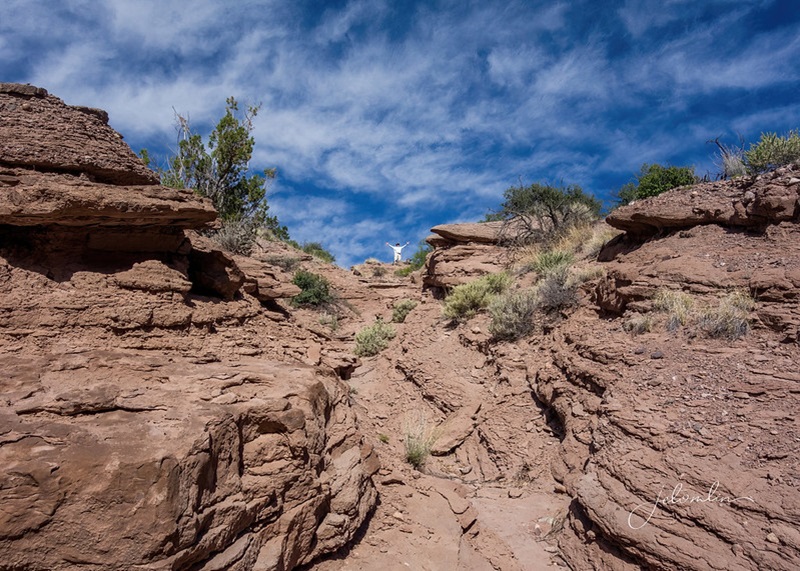
With incredible geological formations, New Mexico’s many wilderness areas allow you to immerse yourself in the tranquility and beauty of nature. San Lorenzo Canyon, a mere six miles from Pam’s, is one of these unique gems.
San Lorenzo Canyon
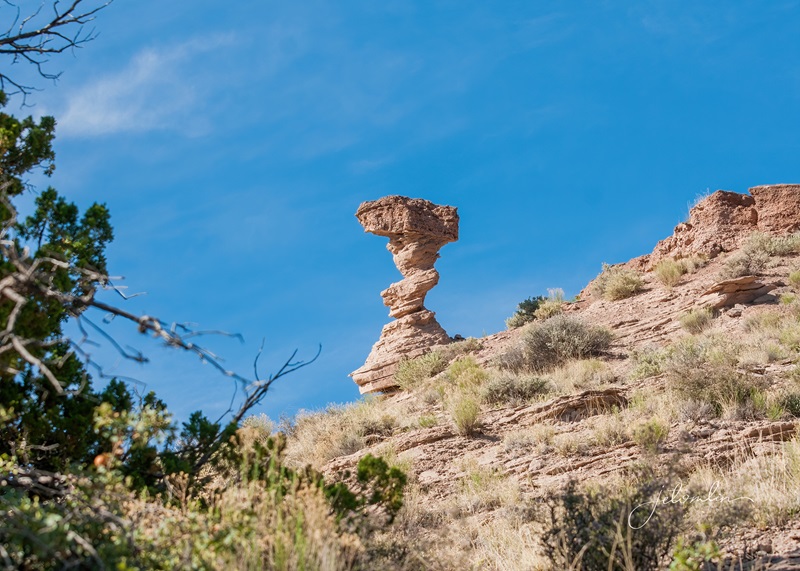
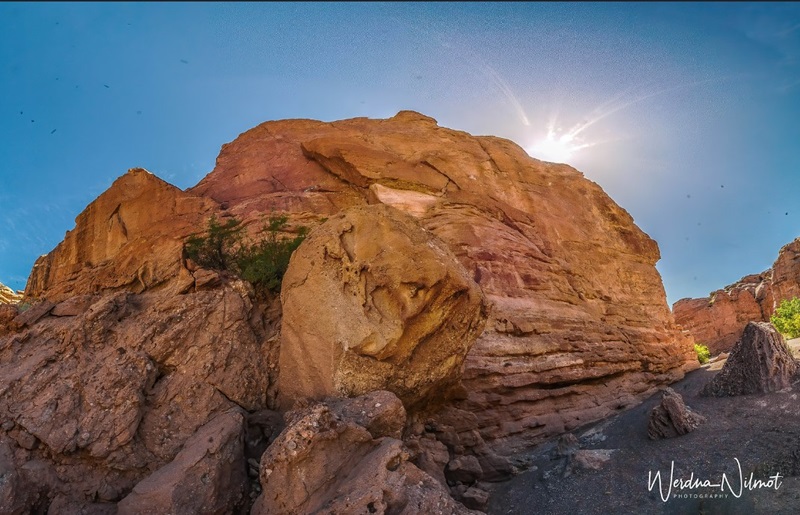
This natural wonderland contains picturesque sandstone cliffs, mesas, arches, and hoodoos.
hoodoo in San Lorenzo Canyon
It reflects millions of years of Earth’s history – a landscape shaped by the movement of tectonic plates and erosion.
a landscape shaped by the movement of tectonic plates and erosion
The beauty of the place is truly inspiring!
Apache plumes, San Lorenzo Canyon
We dedicated two days to exploring the San Lorenzo Canyon. Our goal was to search for wildlife while capturing the breathtaking landscapes.
TG doing his magic
On our first morning hike, we spied several lizards, colorful desert flowers, beautiful birds, and four antelope jackrabbits that scattered as soon as they caught sight of us.
the antelope jackrabbits scattered as soon as they caught sight of us
We stuck to paths we felt confident to hike. However, there was one climb that I decided to abort midway.
midway up I decided to abort my climb
I feared that what went up might not be able to come down, so I turned around and let TG scramble to the top.
TG made it to the top!
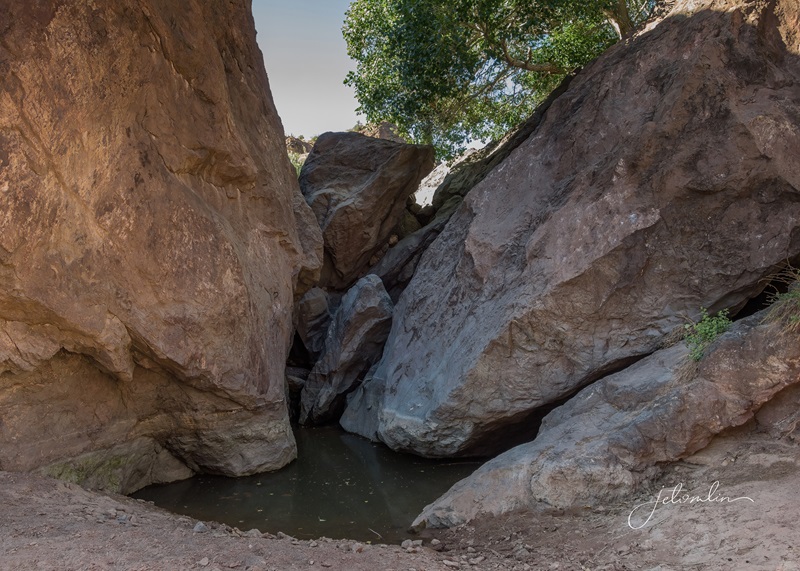
On our second visit, we drove the 5 ½ miles to the canyon’s end. The road dead-ends at a small spring, surprisingly full of cold, somewhat muddy water.
the spring at the end of the San Lorenzo Canyon Road
We hiked around on the rocks, looking for lizards and other wildlife while also shooting the stunning rock formations.
cliff chipmunk
San Lorenzo Canyon
Not intending to rockhound, I found two lovely pieces of sparkling pinky-white quartz!
We got up early one morning to explore the Petroglyph National Monument, just outside of Albuquerque. This national park is home to one of the largest petroglyph sites in North America.
Petroglyph National Monument
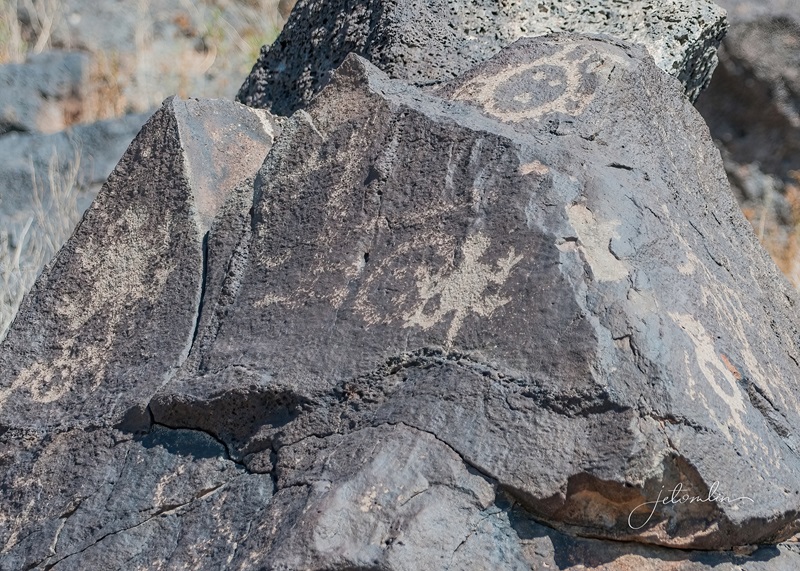
There are multiple trails at the park, each of varying length. We chose to hike the Piedras Marcadas Canyon, a 1.8-mile loop. Although the Piedras (rocks) Marcadas (marked) were named by the Spanish settlers who came to this area during the mid-1600s, most of the petroglyphs were made by ancient Pueblo people 400-700 years ago, and to this day have profound cultural and spiritual significance.
ancient lizard petroglyph!
Upon starting our hike, we were delighted to spy a jackrabbit feeding in the early morning light. Later we came across a mother and four baby Harris’s antelope squirrels scampering around on the rocks.
a family of Harris’s antelope squirrels (Ammospermophilus harrisii)
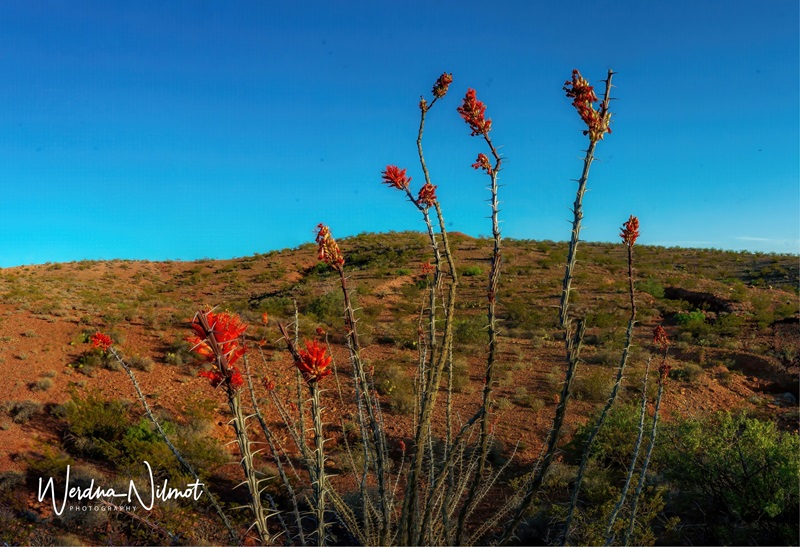
That evening, Pam and Steve invited us to a “Sundowner.” We drove to a remote area to view the ocotillo cacti blooming on the hillsides and enjoyed cheese & crackers while watching the sunset. As the skies grew dark, nighthawks and bats swooped in the air above us.
ocotillo cacti blooming at sunset
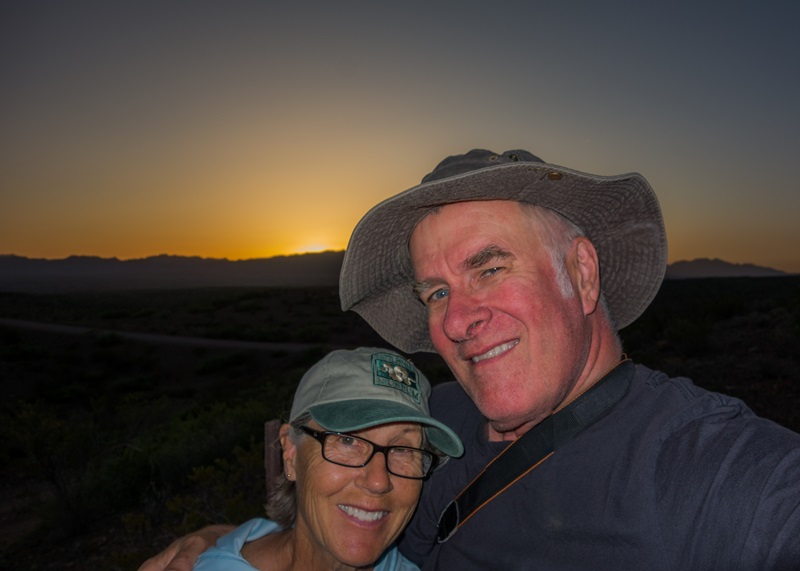
It was a wonderful end to our fourth week in New Mexico!
New Mexico sunset selfie
We were under no pressure during our final week. Our count was now up to 14 lizard, one toad, and two snake species—including four sightings of the western diamondback. We revisited many of the trails we had hiked before and began preparing for the next stop on our road trip.
San Lorenzo Canyon
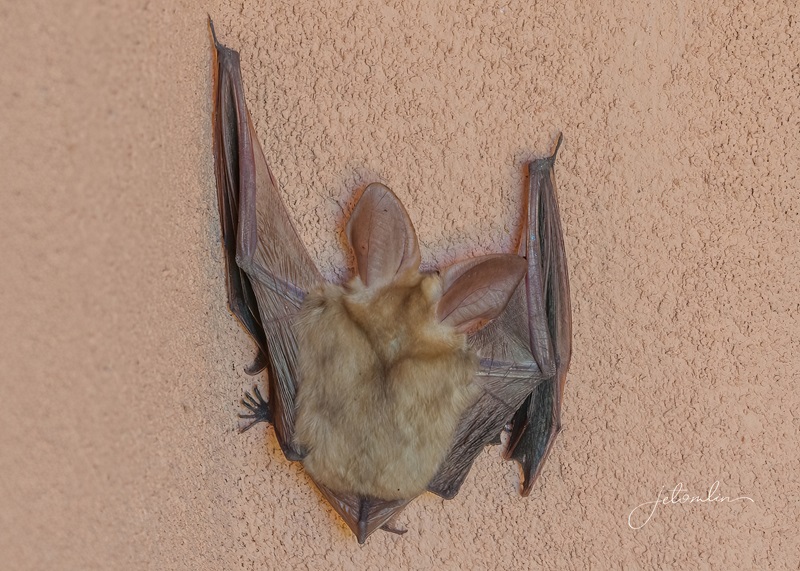
However, New Mexico had one more surprise in store for us. Pam’s sister lives in Polvadera, just a ten-minute drive away. A pallid bat, Antrozous pallidus, had decided to take a nap on the side of her house! Pam drove me over to photograph this lovely little creature, sharing in the excitement of the moment.
pallid bat, Antrozous pallidus
Some might call us crazy for dedicating more than a month to the pursuit of snakes, lizards, and toads. And rest assured, we’re not planning to swap our beloved Oscar and Maddie for a pet python any time soon! But after a lifetime of capturing the wonders of our world underwater and the dozens of birds and mammals we’ve encountered on land, we felt it was time to turn our lenses towards the often-overlooked cold-blooded creatures.
TG capturing “Resty Beauty”
The animals in New Mexico’s desert are uniquely beautiful, and our journey of photographing them has opened our eyes to a whole new world. We hope this blog has sparked a sense of wonder in you, inspiring you to seek out and appreciate the beauty surrounding you, no matter where your journey takes you.
desert spider beetle
To view all of our photos from New Mexico visit our Flickr albums below.
TG:
hover on photo to arrow through the set or click to open a new tab in Flickr
JET:
hover on photo to arrow through the set or click to open a new tab in Flickr
Coming next … “You can observe a lot just by watching.” – Yogi Berra
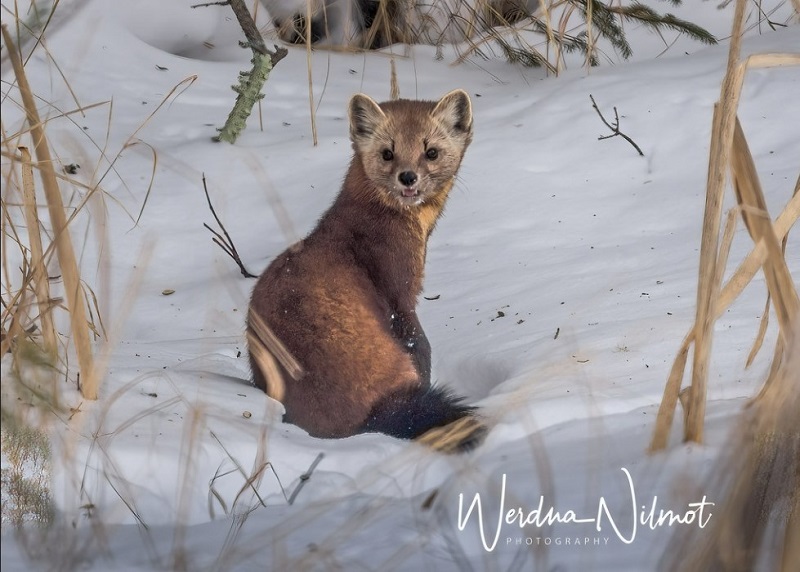
In 2022 we spent a month at the Sax-Zim Bog in Northern Minnesota. This 300+ sq mile area is home to a wide variety of winter birds and animals including great gray owls. We were incredibly fortunate with our sightings that month with 25 great grays, 8 barred owls, 4 snowy owls, one northern hawk owl, 8 bald eagles, two pine martens, multiple porcupines, a bobcat, a red fox, and many of the regular winter birds.
pine marten (February 2022)
We knew we could never top our 2022 trip and debated whether to include a stop on our way home this year. But since we were practically driving right by, we booked a week at an Airbnb in Hibbing. Kalen’s place was perfect: roomy and comfortable with everything we needed, plus conveniently located to both downtown Hibbing and the Sax-Zim Bog.
According to everyone we spoke to, great gray owl sightings were down this year. The resident owls were all seasoned hunters, snow totals less than half of what they should be in January, and temperatures warmer than normal.
much less snow and warmer temps than normal for January
This combination allowed the owls to catch their voles at the night, with no need to hunt alongside the road in the daytime. Owls were seen sporadically pre-dawn or at dusk, in extremely low light conditions. Of course, I was optimistic that we would see at least one before our week was over.
cars waiting for a GGO along Hwy 7 at sunset
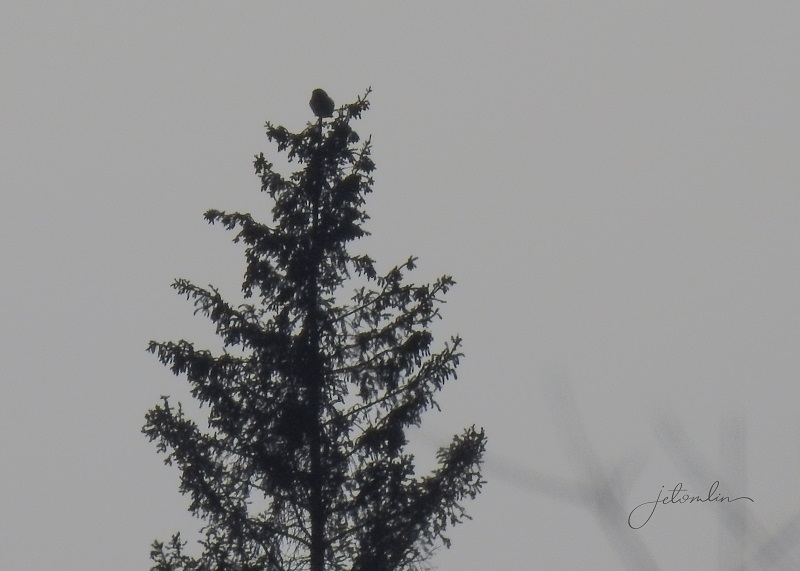
On our first day, we did see a northern hawk owl, so far away it was only an owl-shaped outline even with my fully zoomed Nikon P900. Some people had blazed a trail through the snow to get closer and in doing so flushed her even further from view.
nothing more than an owl-shaped outline!
As fortunate as we were in 2022, we kept coming up owl-less on this visit. Not to be discouraged, we focused on some of the smaller bird species that had eluded us last year or that we wanted to improve upon.
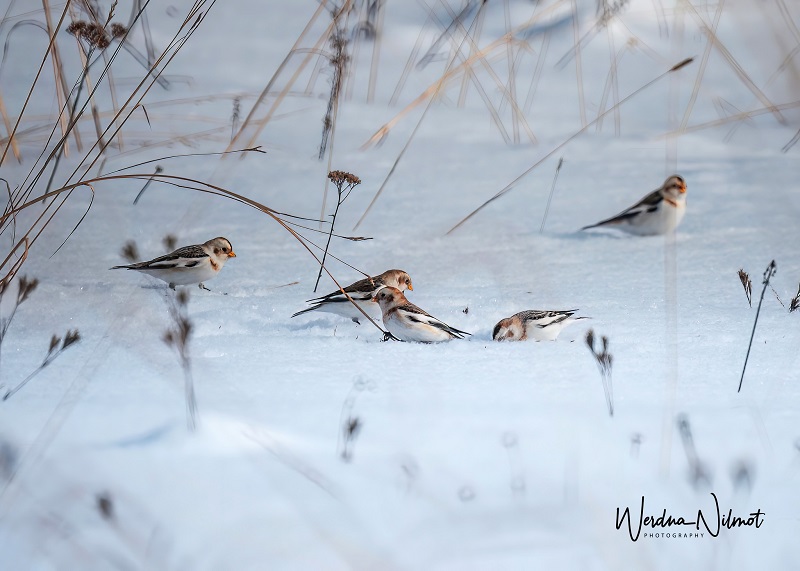
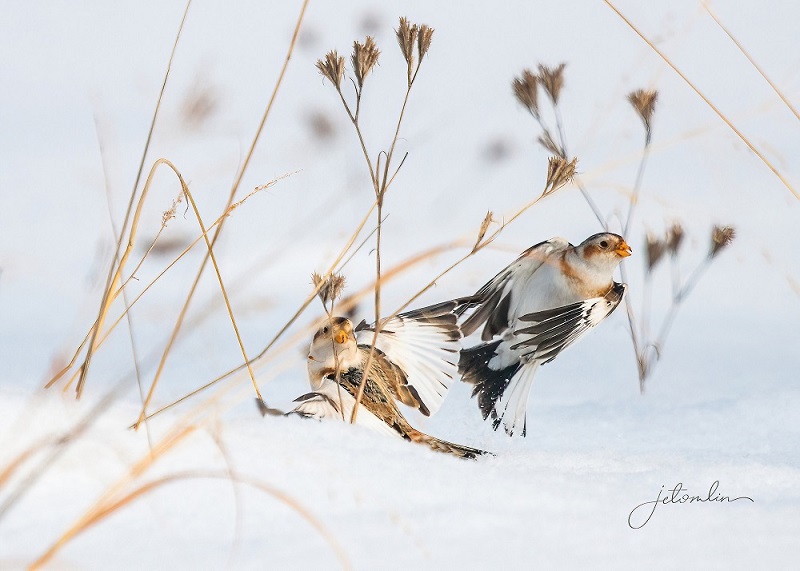
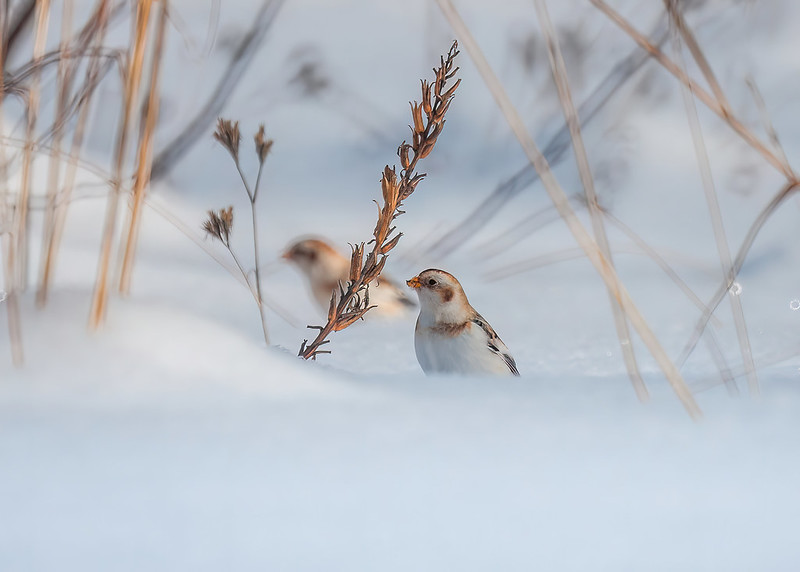
snow buntings
There was a lovely flock of snow buntings at the gravel pits on Admiral Road and we caught them one morning in the bright sunshine.
snow buntings
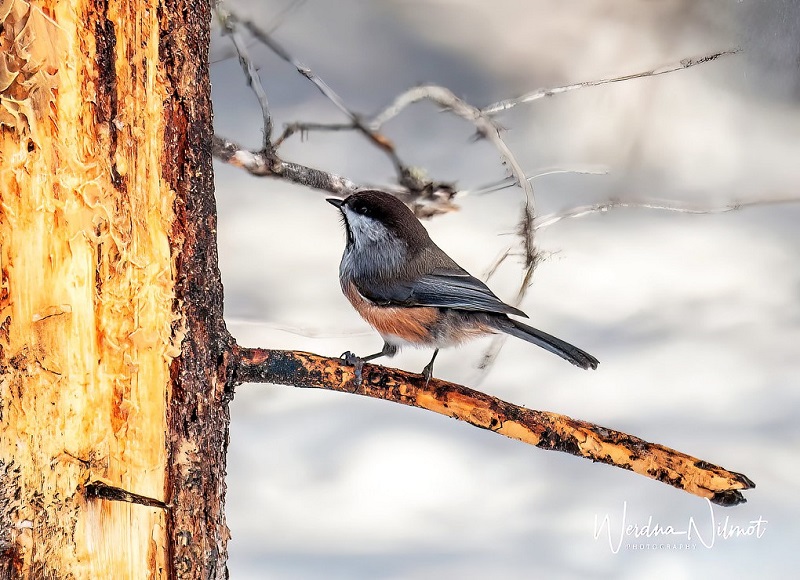
TG was able to capture some beautiful images of a boreal chickadee at the Arkola Road feeders – another species that eluded him last year.
boreal chickadee
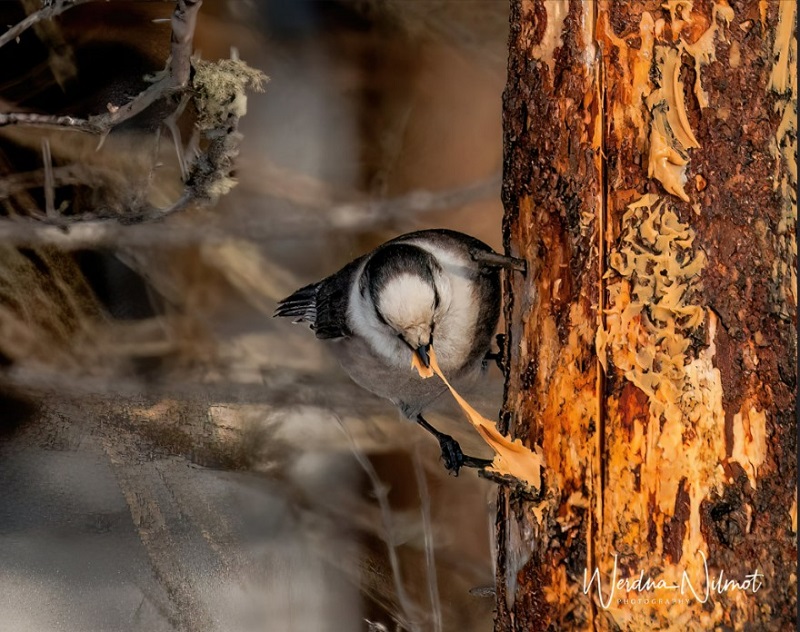
He also managed to catch a Canada Jay stretching a glob of peanut butter like saltwater taffy.
Canada jay with peanut butter!
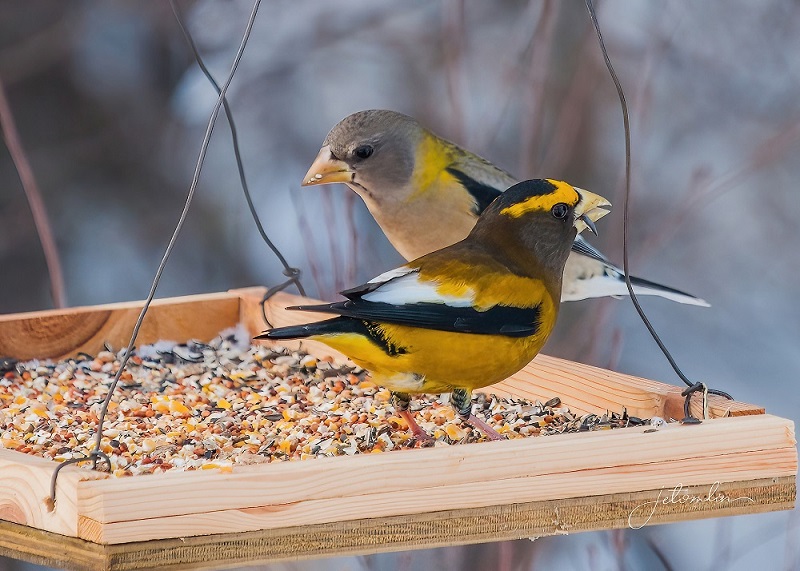
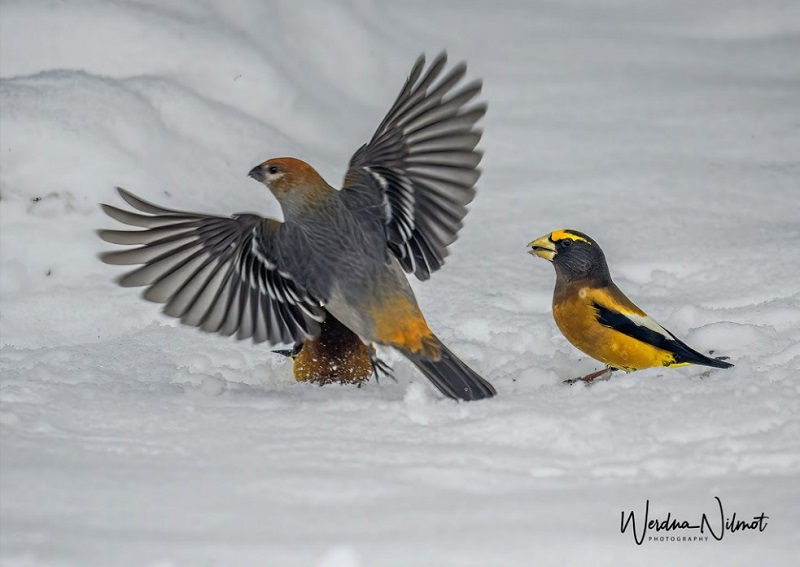
I was able to spy both male and female evening grosbeaks together at the feeders on Admiral Road.
male and female evening grosbeaks
That was three new bird species for TG and two for me: not bad for a week with “not much happening!”
freight train on Hwy 7
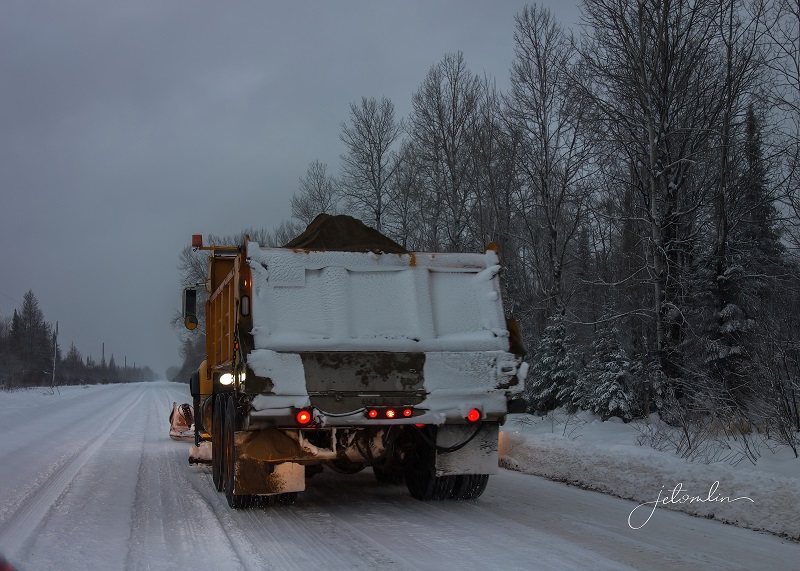
It snowed all day on Monday, January 16, and we woke up to six inches of new snow on Tuesday morning. We followed the snowplows through the bog,
following behind a snowplow
And accidentally flushed a barred owl in the pre-dawn light.
barred owl in flight
The fresh snow seemed to have picked up sightings and we caught several of the winter birds at the feeders around the Bog:
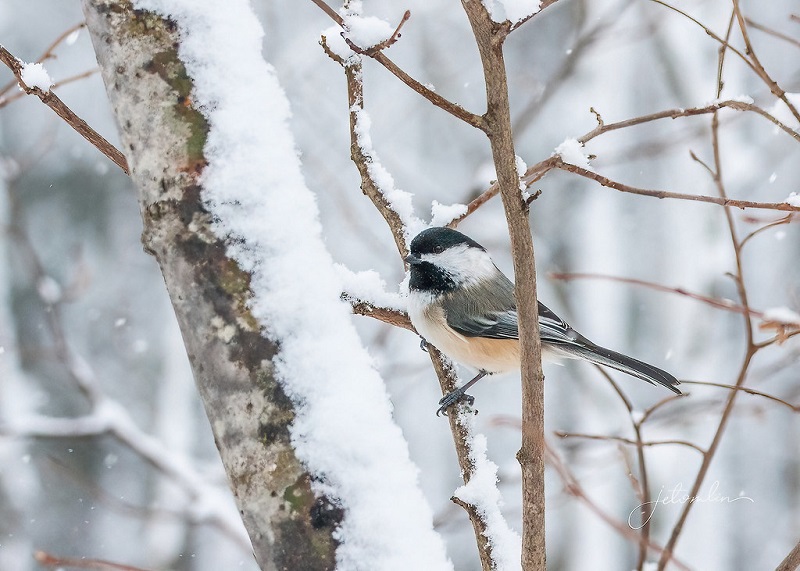
Black-capped chickadees,
black-capped chickadee
Evening and pine grosbeaks,
female pine grosbeak & male evening grosbeak
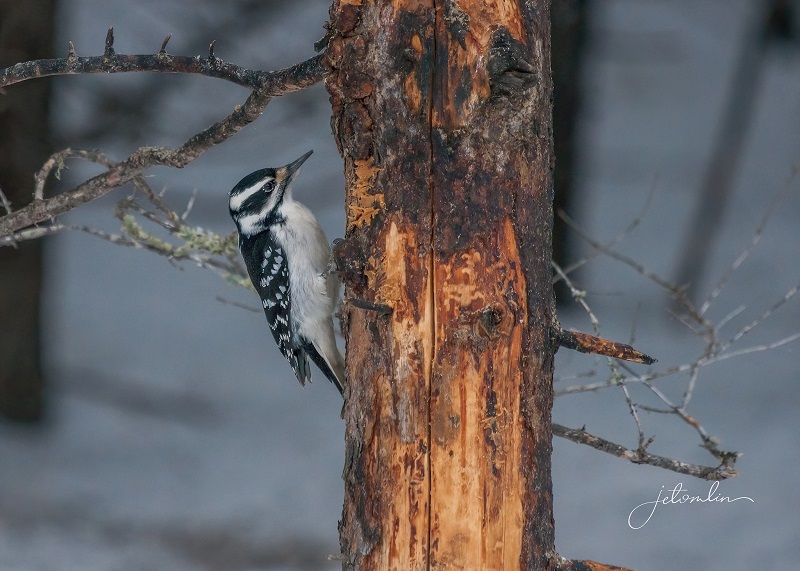
Multiple species of woodpeckers,
hairy woodpecker
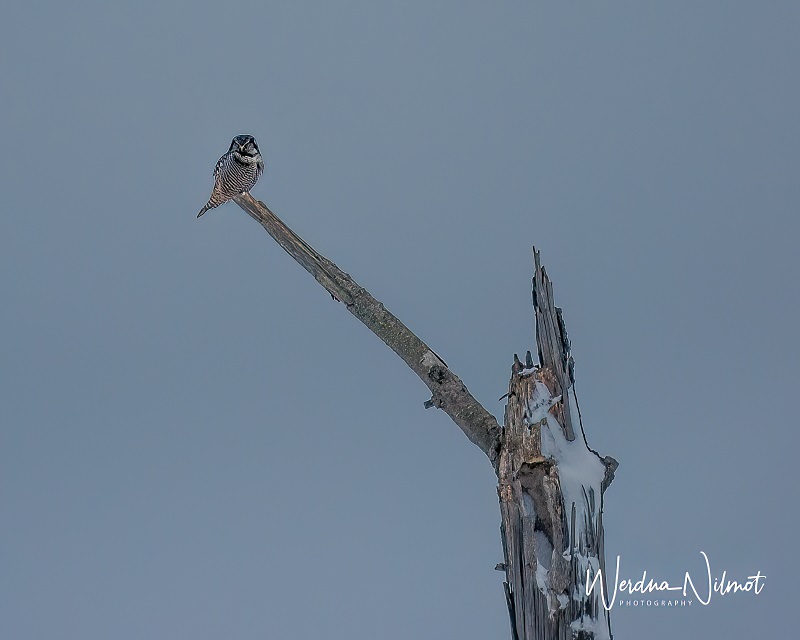
And much to our delight the return of the northern hawk owl!
northern hawk owl
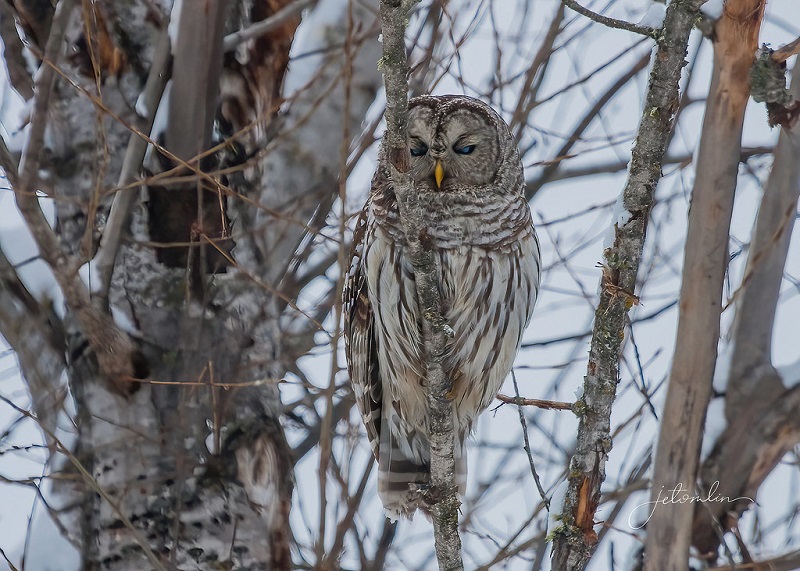
After spending some time with the hawk owl, we decided to head home but first detoured past the spot where we saw the barred owl earlier that morning. Imagine our surprise when she returned while we were chatting with two other men who happened to stop by at that same time.
barred owl
It was just the four of us, and she stayed long enough for us to snap a few photos before once again disappearing into the woods.
she patiently sat while we snapped a few pics and then disappeared into the woods
We decided to leave Hibbing a day early to shave a few hours off our drive on Friday. Wednesday the 18th was our last full day in the Bog. We were headed towards the Admiral Road snow buntings when something big caught our eye: no sooner had we grabbed our cameras when she nose-dived into the snow and disappeared. It was a great gray owl. No photos but a thrill nonetheless!
With that encouraging spy we agreed that, if we could get packed and ready, we would make one last run out to the Bog early Thursday morning. We left the house at 7 am, feeling drawn towards Overton Road where GGOs had recently been spotted. Overton Road is in the western section of the Bog, not heavily trafficked, and a long drive from most of the areas we had frequented over the week.
white-tailed deer on Overton Road
No sooner had we turned down the road when we got a message: “GGO on Overton. Look for the blue SUV.” We were at the spot within ten minutes, the first car behind the ladies who had spied her.
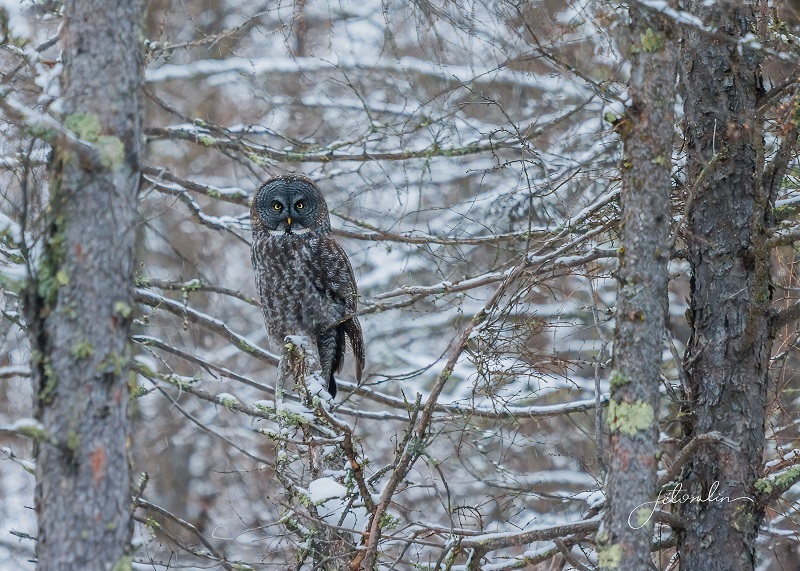
great gray owl on Overton Road, January 19, 2023
We spent almost an hour with this magnificent creature, and I left crying tears of joy. A huge, heartfelt Thank You to Beth and Debbie who so kindly shared this sighting with us and the handful of folks who happened to be out that early — and close by!
January 19, 2023
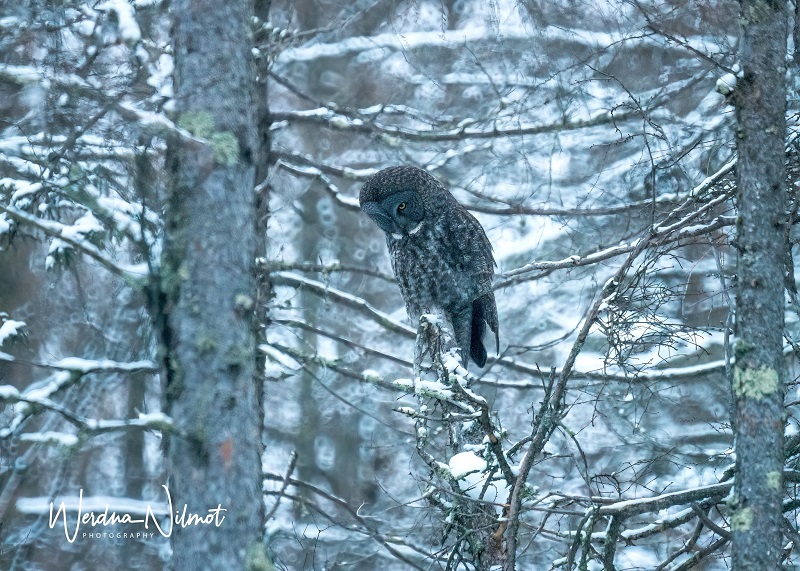
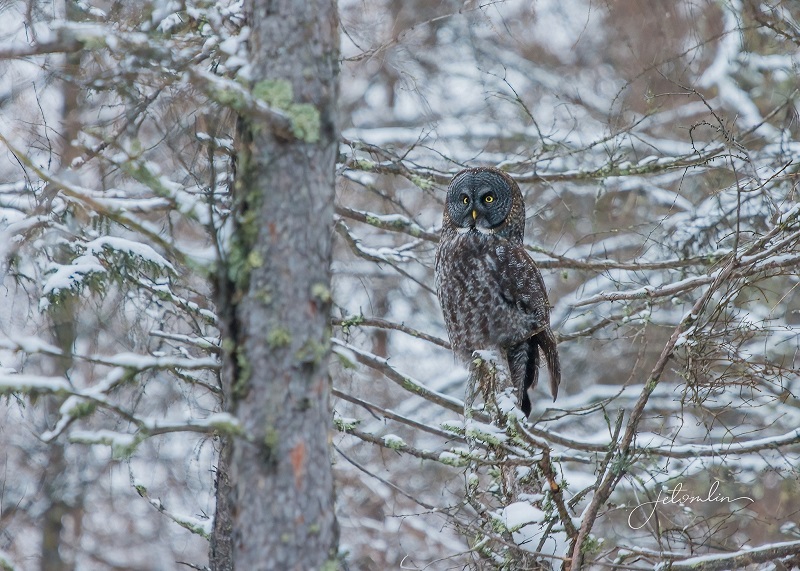
Great grays, also called Phantoms of the North, are the largest owls in the US, and one of the most elusive. They tend to avoid areas with people and even in places like the Sax-Zim Bog it is a treat to see one. We feel fortunate that on this short trip we were able to spy two.
January 19, 2023
Final tally for the week: two sightings of a barred owl, two sightings of the northern hawk owl, a quick look at a great gray on Admiral Road, an hour-long visit with a great gray on Overton, and multiple winter birds around the Bog.
pine grosbeaks (male & female)
“There are few guarantees in the world of birds, but if you keep an open mind and an open heart, a winter day in the Sax-Zim Bog may be frozen, but like ice cream, it’s guaranteed to be sweet.” (Laura Erickson)
January 19, 2023
You can view all of our photos from this visit at our Flickr links below:
TG:
hover on photo to arrow through the set or click on any to open a new tab in Flickr
JET:
hover on photo to arrow through the set or click on any to open a new tab in Flickr





































































 On The Road with Tall Guy & JET