
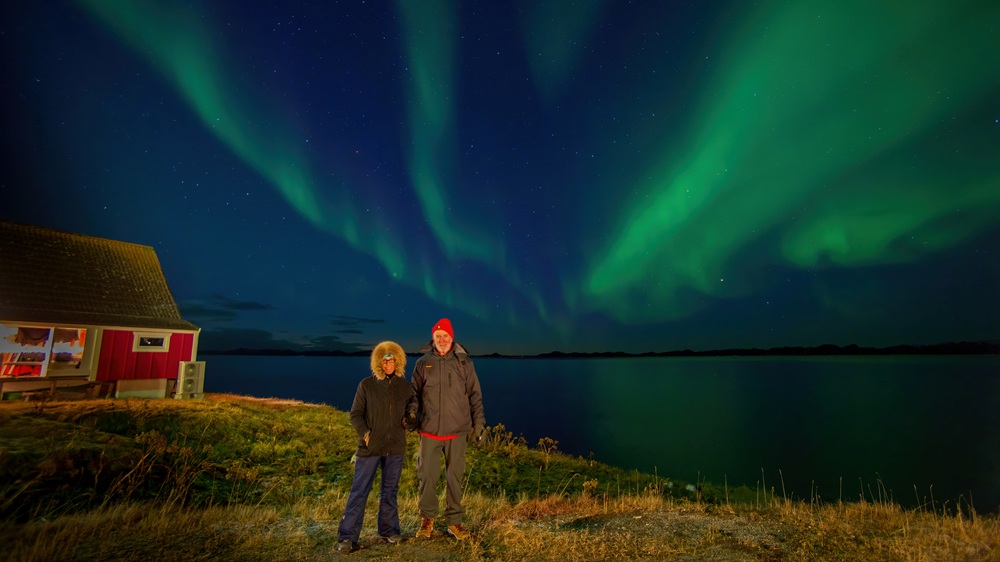
Due to heightened solar activity, 2025 promised to be a spectacular year for Northern Lights. Greenland consistently ranks among the top five places in the world to witness the aurora, so in November we set out on a two-week adventure to the “World’s Largest Island.”
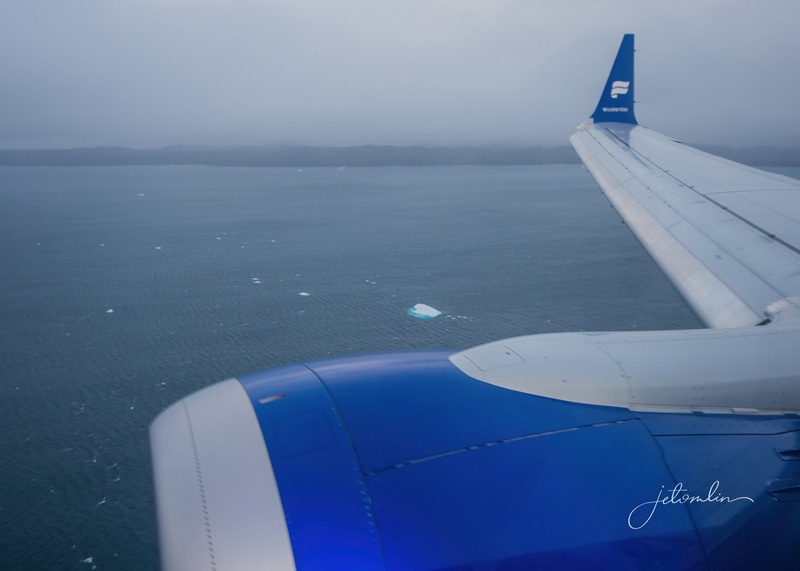
We chose the capital city of Nuuk as our home base and Steve’s Airbnb was perfect: offering a cabin-style house in “Old Nuuk,” with an oceanfront view and within easy walking distance to shops and grocery stores.
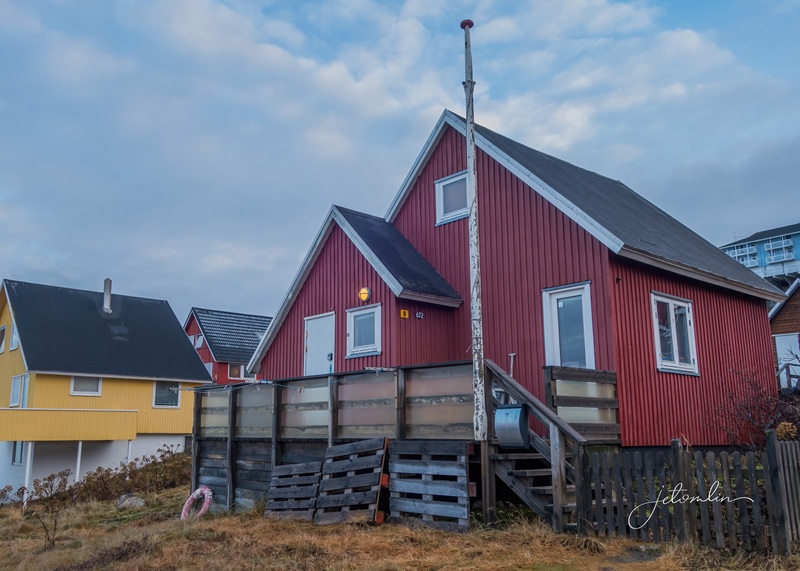
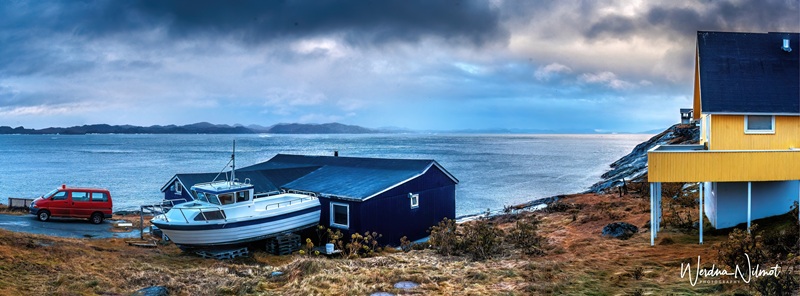
You can find his listing here:
Waterfront 2-Story House 6 people – Houses for Rent in Nuuk, Sermersooq Kommune, Greenland – Airbnb
We arrived to chilly wind and rain.

But the following day, we were greeted with milder weather and set out to explore. It was interesting to leave the house at 8:30 am when it was still dark and witness the gradual lightening of the sky around 10:00. By 4:00 pm, it was dark again.

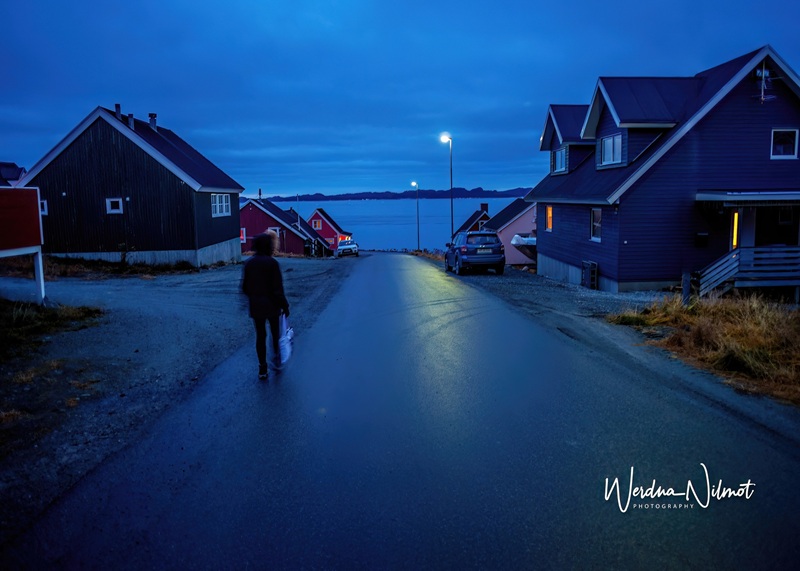
Despite the short day, the city was beautiful, and we found several subjects to photograph.
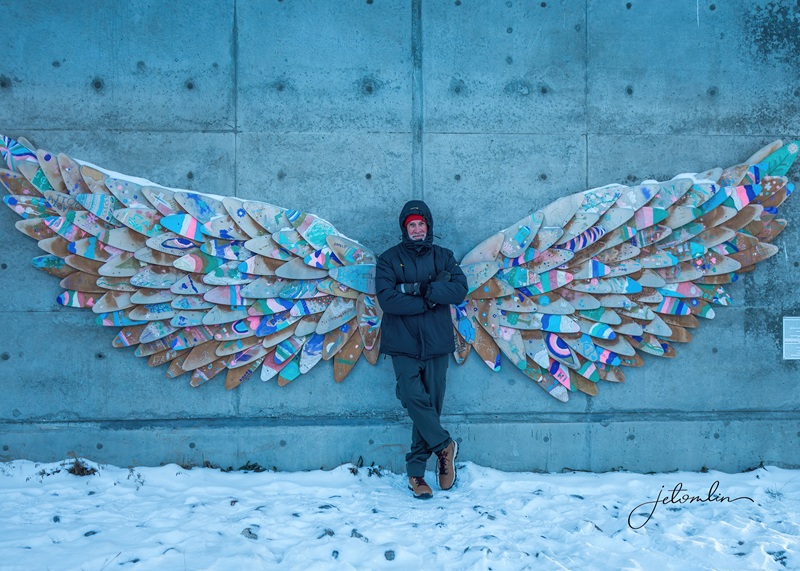
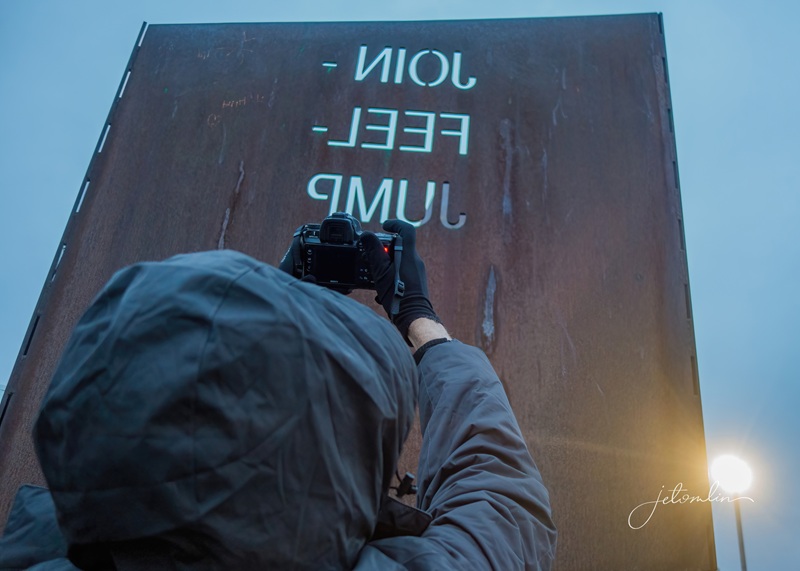
That afternoon, I walked down to the sea below our Airbnb. I asked a woman if I could cross through what I thought was her yard. She gestured broadly and said, “The land is for everyone.”
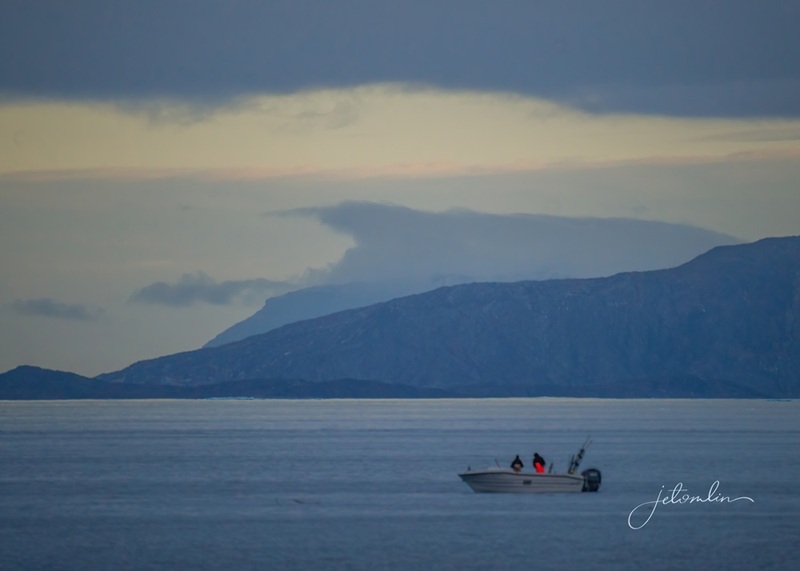
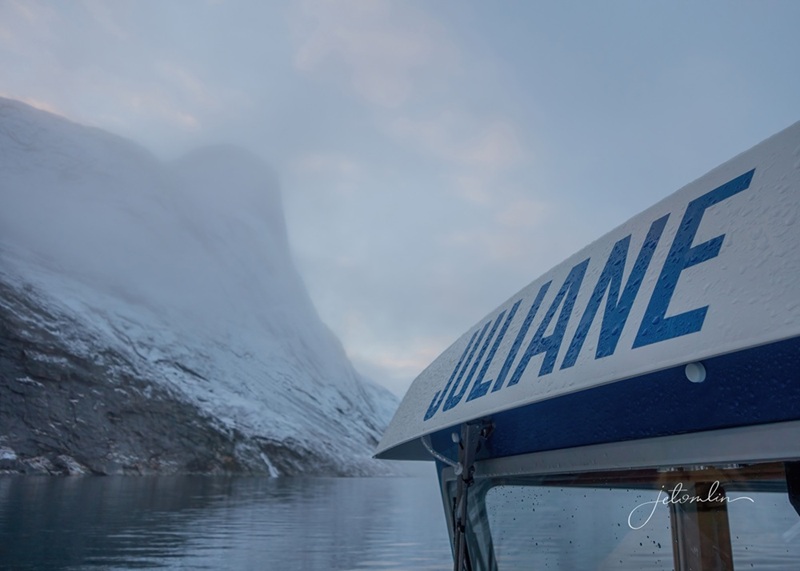
The next morning, we met Captain Ilasaiq (pronounced e-liss-E-ah), guide Ida, and fellow-traveler Patrick at the Tidewater Steps for a fishing charter. It took about an hour for the “Juliane” to reach the fishing area, and along the way, we spotted a seal that quickly dove beneath the surface, a white-tailed sea eagle, and centuries-old icebergs.
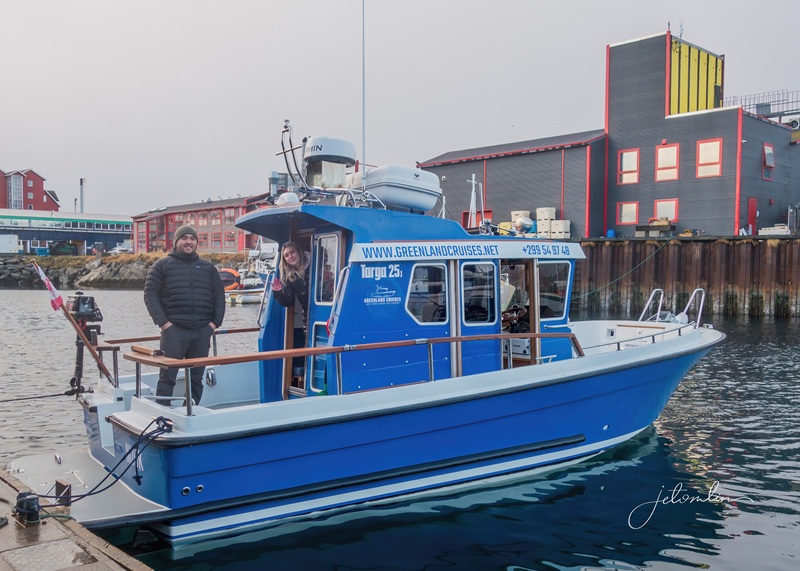
The rugged, beautiful landscape gave us a sense of how truly untamed and remote this country is.
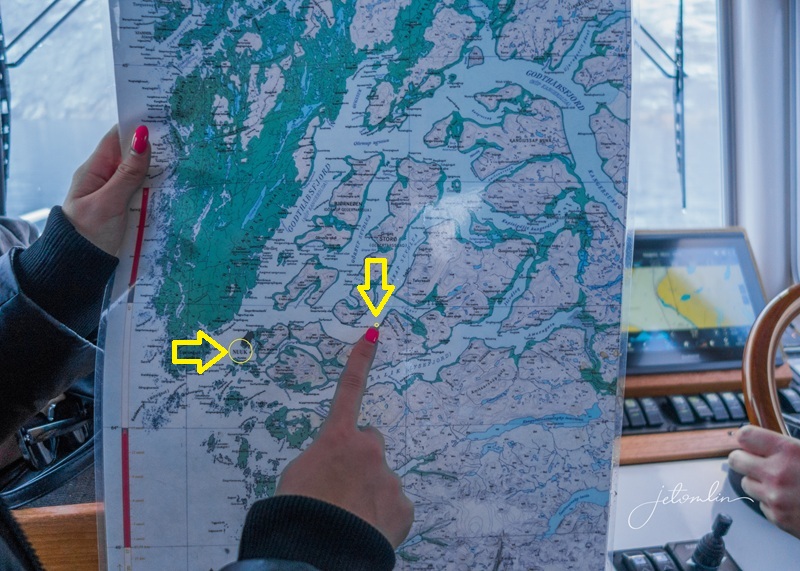
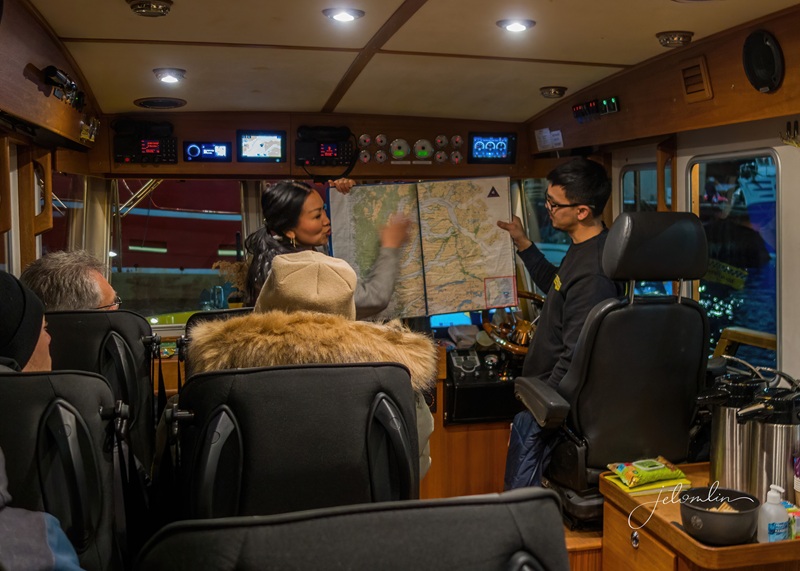
I asked Ida to indicate on the map where we were, and that gave us an understanding of how truly vast this country is. We had traveled for over an hour, but on the map it looked like we had barely moved at all!
The sea was calm, and as Capt. Ilasaiq maneuvered us into position the sun broke through the clouds, lighting the towering mountains around us.
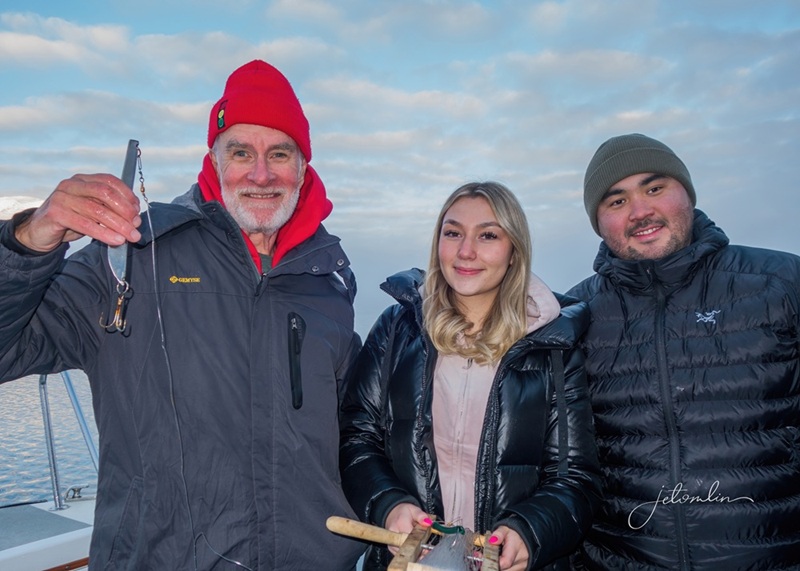
Ida demonstrated how to use the Greenlandic fishing gear, and we dropped our lines into 400 ft of water.
Almost immediately, we started catching fish! Patrick reeled in a cod and a redfish,
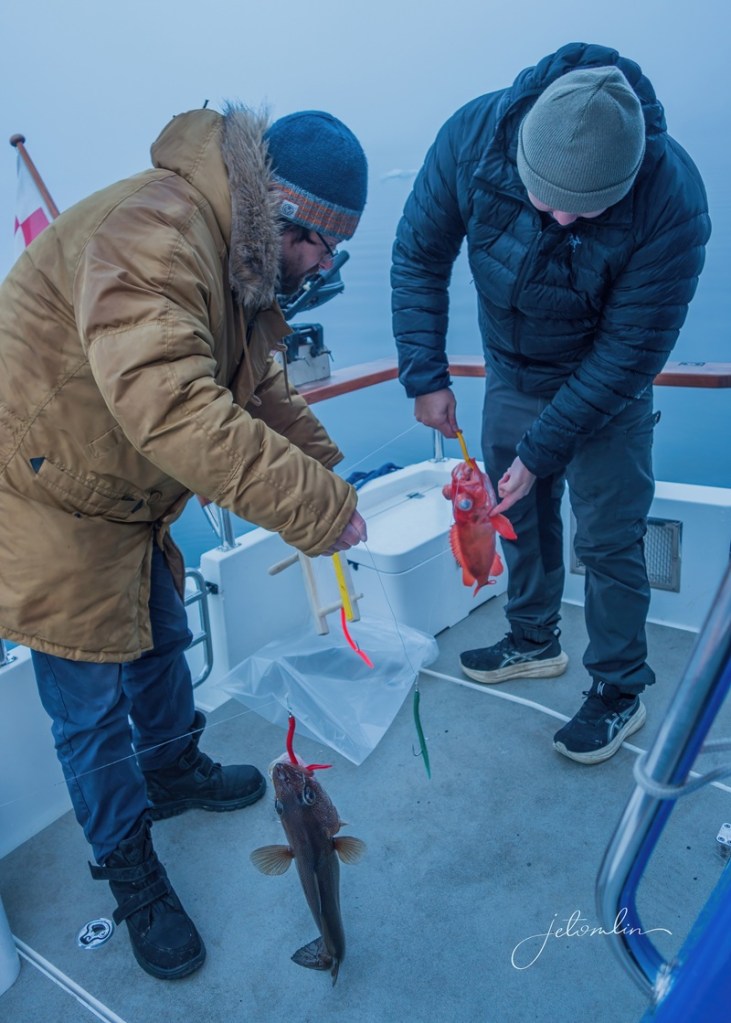
Followed by TG doing the same.
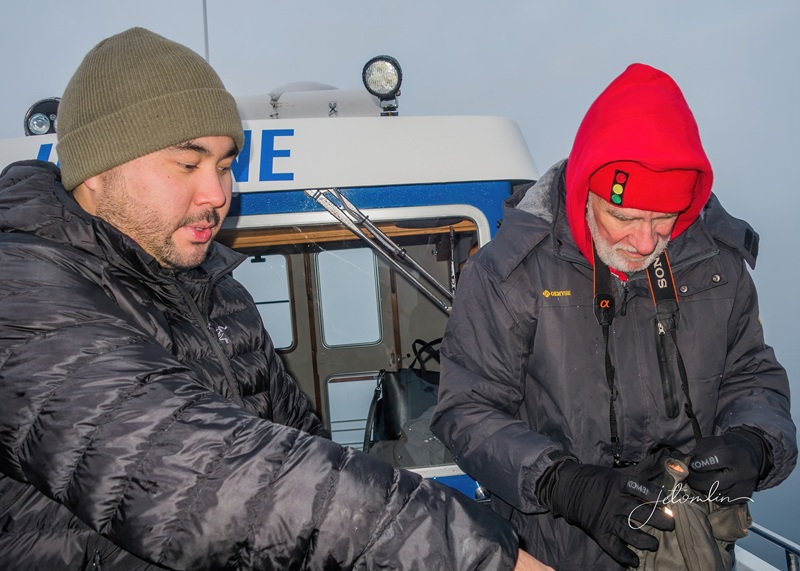
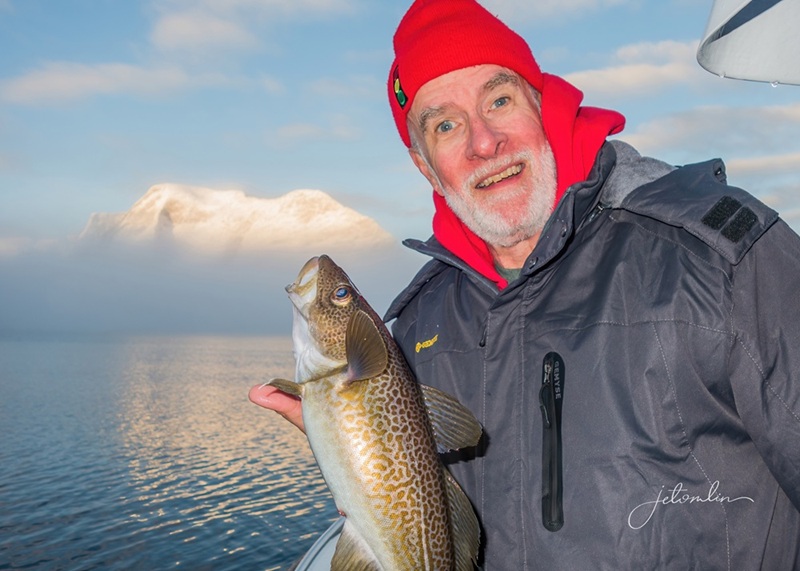
Then it was my turn, and I caught the biggest redfish of all! The hour flew by, and before we knew it, it was time to head back.

What a fun day we had! Between the three of us, we caught a dozen cod and redfish. Our only regret was that we had no place to clean ours, but Capt. Ilasaiq was more than happy to take them off our hands.
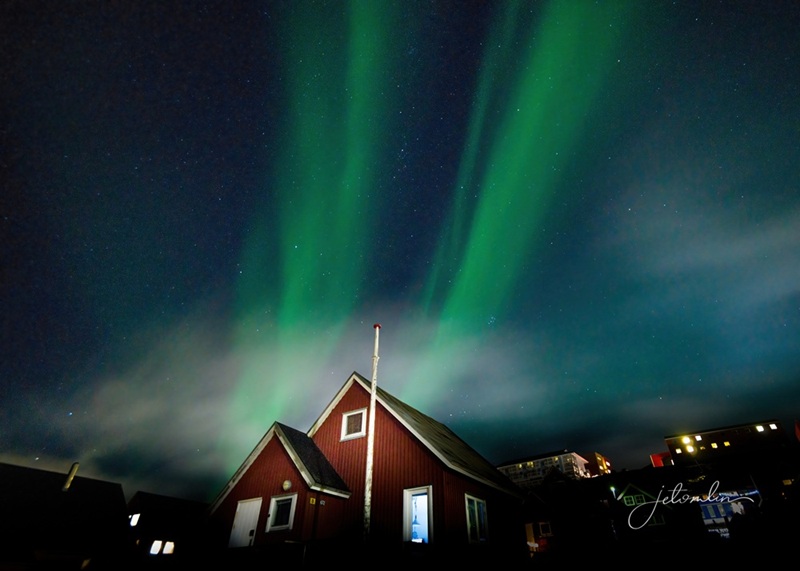
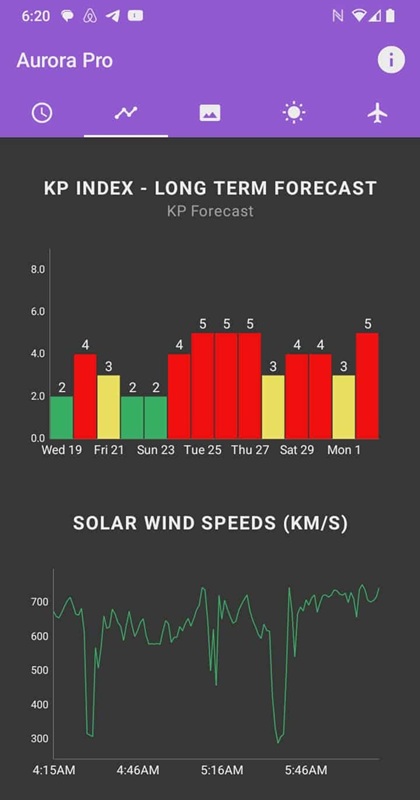
The forecast for that night called for clearing skies, so we stayed up in anticipation. The predicted KP was low – only a 1-2, but we knew that this far north would give us a decent chance should the Lady decide to dance. Sure enough, around 9 pm, TG got the alert on his Aurora App: “If skies are clear, you might be able to see the aurora.”
Peeking outside, we saw green ribbons streaking across the sky! We bundled up against the cold, grabbed our tripods, and spent the next few hours shooting what we came for: the Northern Lights!


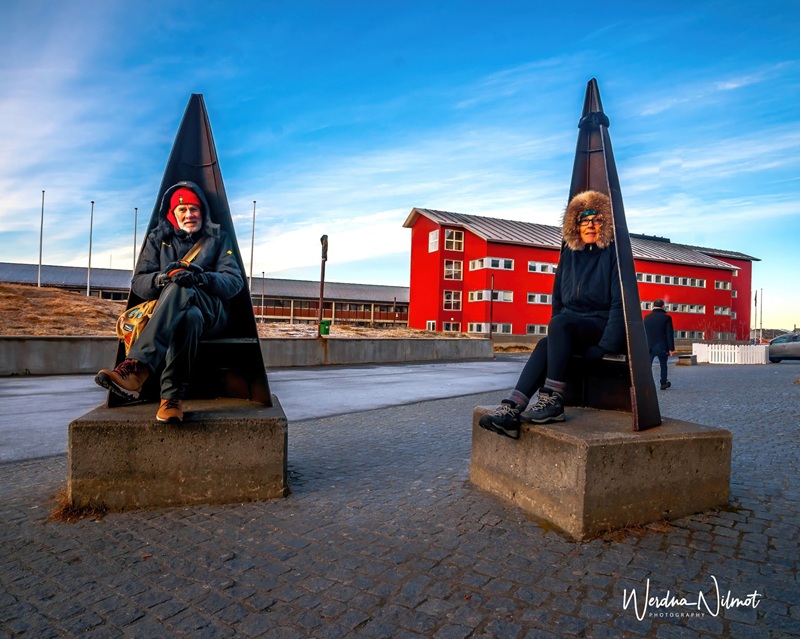
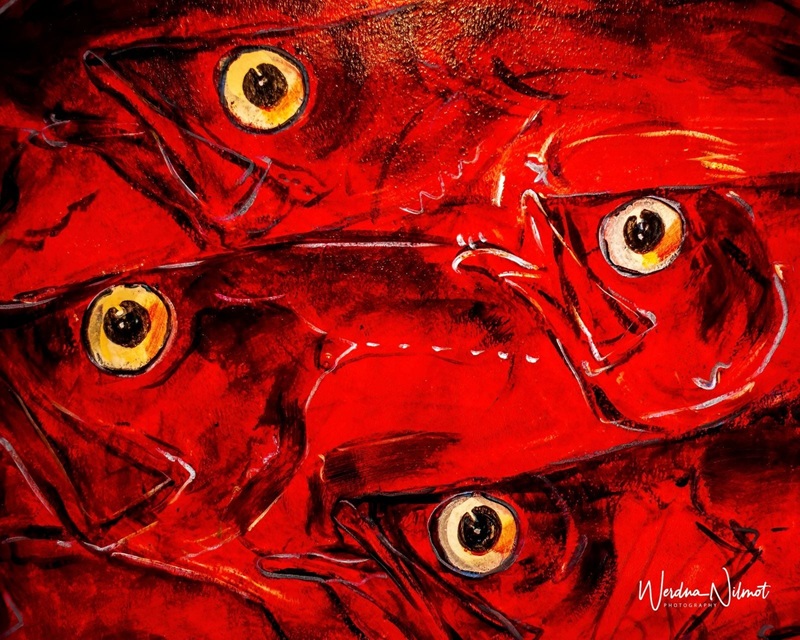
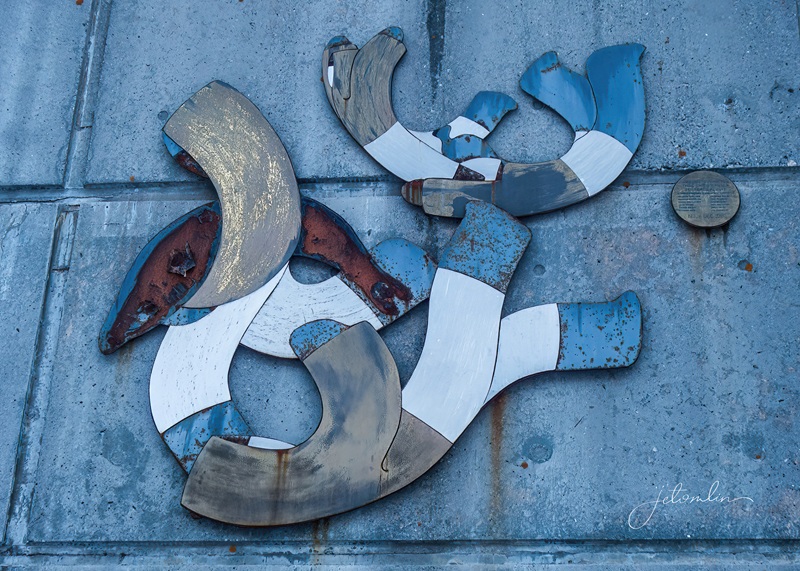
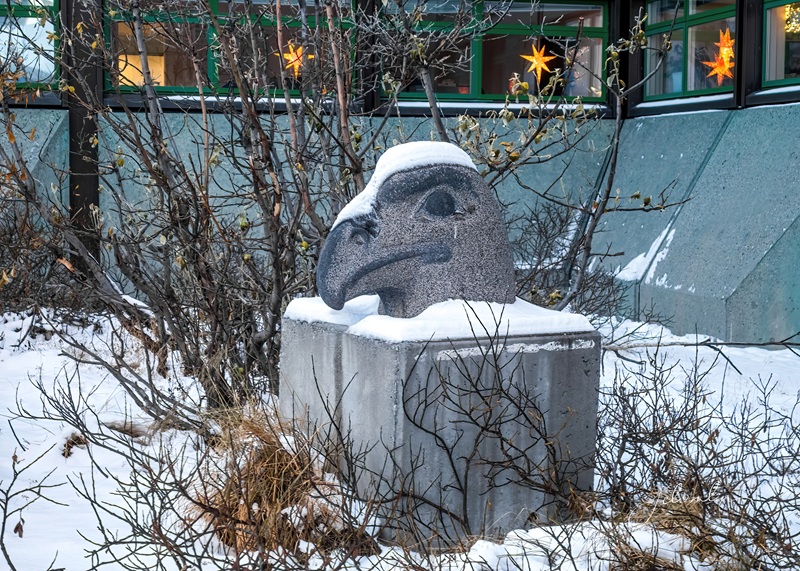
With the pressure off, we focused on Nuuk’s public art, which includes schools of fish, giant seals, Inuit legends, and impactful murals, all reflecting Greenlandic culture.
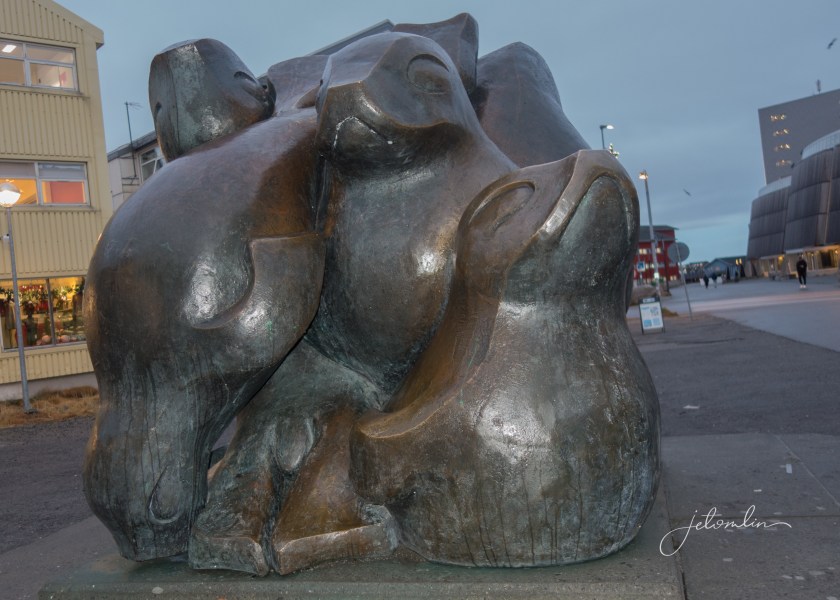

We walked by Kaassassuk every time we went to town. It marks the beginning of a pedestrian walkway with multiple shops, restaurants, and businesses.
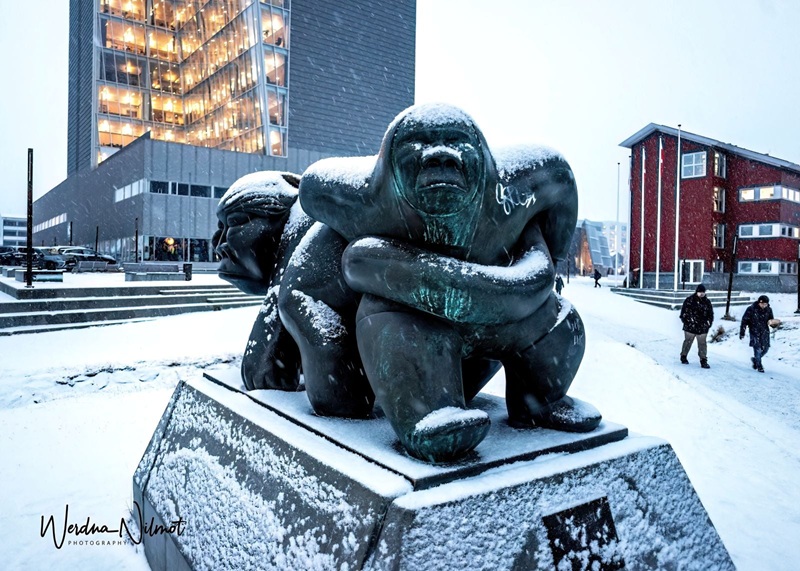
The sculpture depicts the orphan, Kaassassuk, who was humiliated and bullied until he met the Lord of Power. According to the legend, Kaassassuk was flung by the Lord of Power until he gained unconquerable powers.
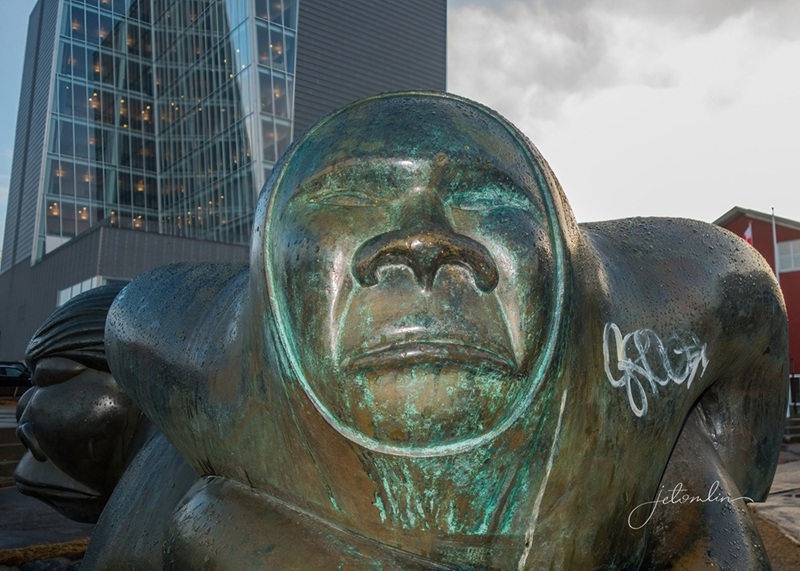
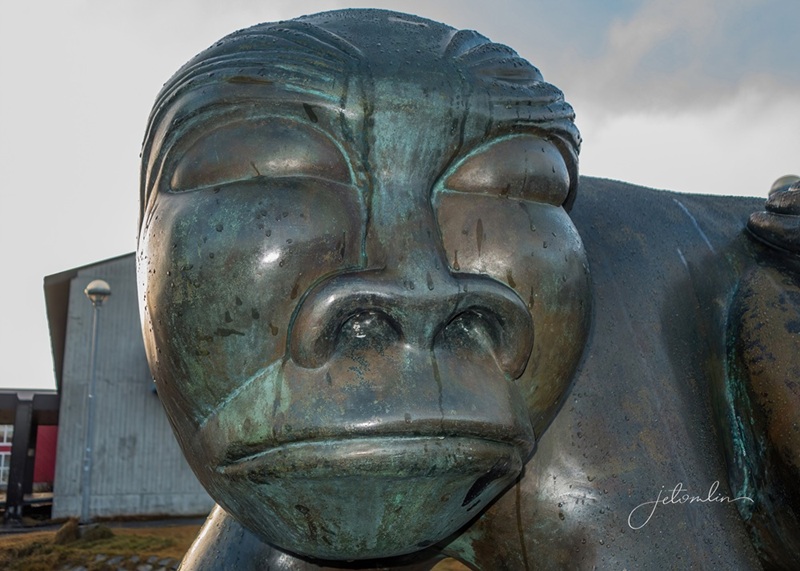
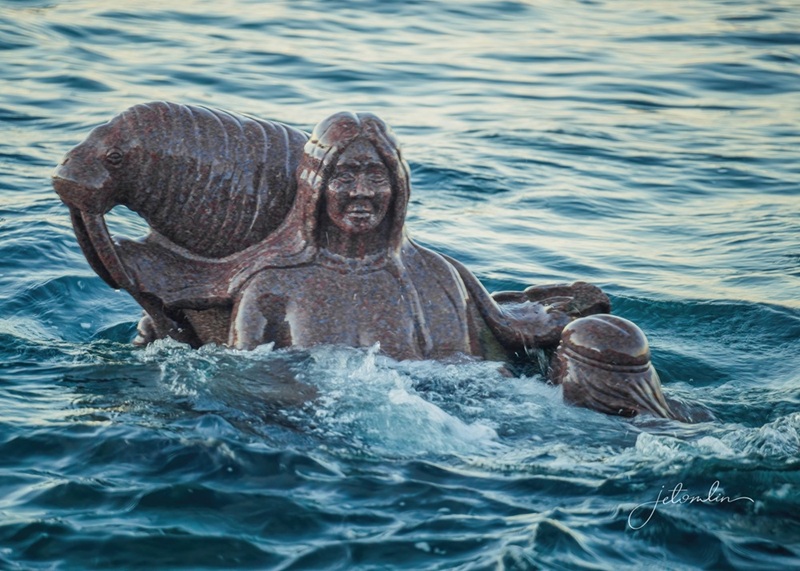
The first time we visited Sassuma Arnaa, Mother of the Sea, was at low tide, and the entire sculpture was visible. In Inuit mythology, she rules over all sea creatures. When angered by disrespect for nature, her long black hair becomes tangled, trapping the animals and leaving the people without food.


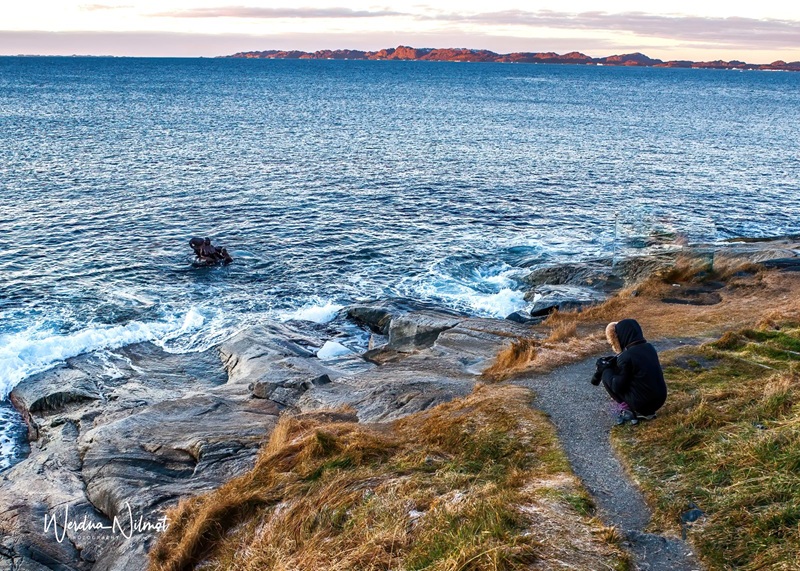
The sculpture depicts an angakkoq (shaman) combing her hair and calming her spirit to restore balance and free the animals once again. When we went back at high tide later in the week, only her shoulders and head were visible above the waves.
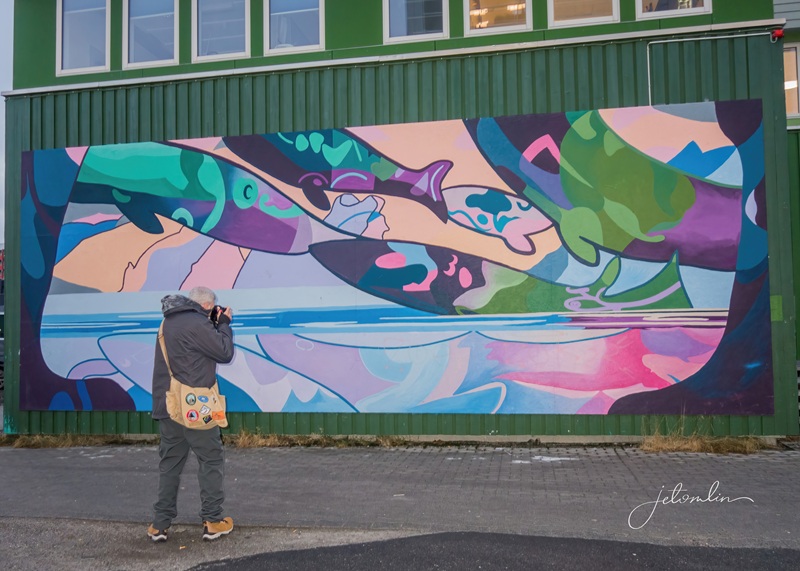
“Loading” is a mural by Greenlandic artist Inuk Højgaard. His inspiration was the striking difference between the “big city” of Nuuk and the rest of Greenland.
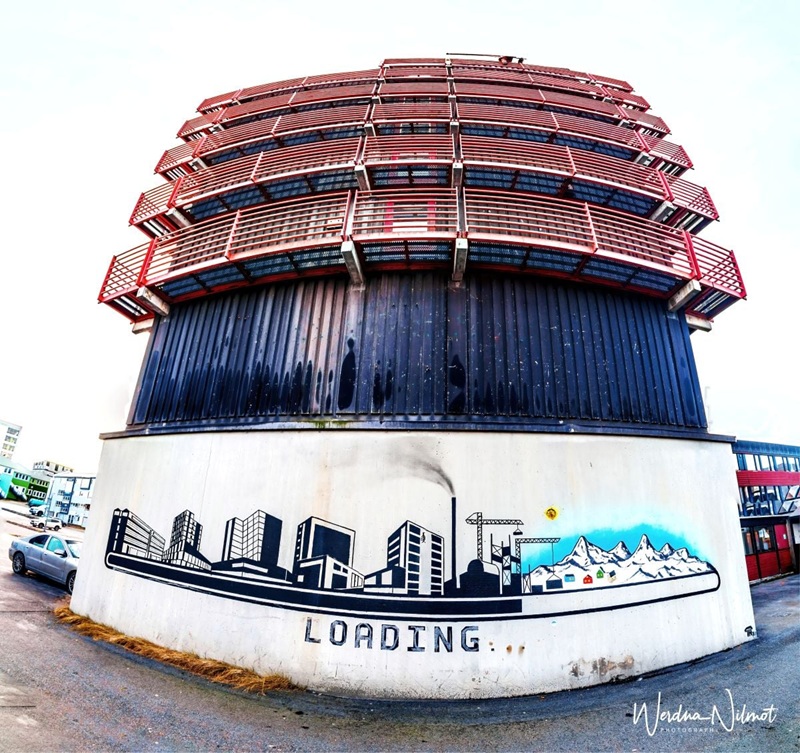
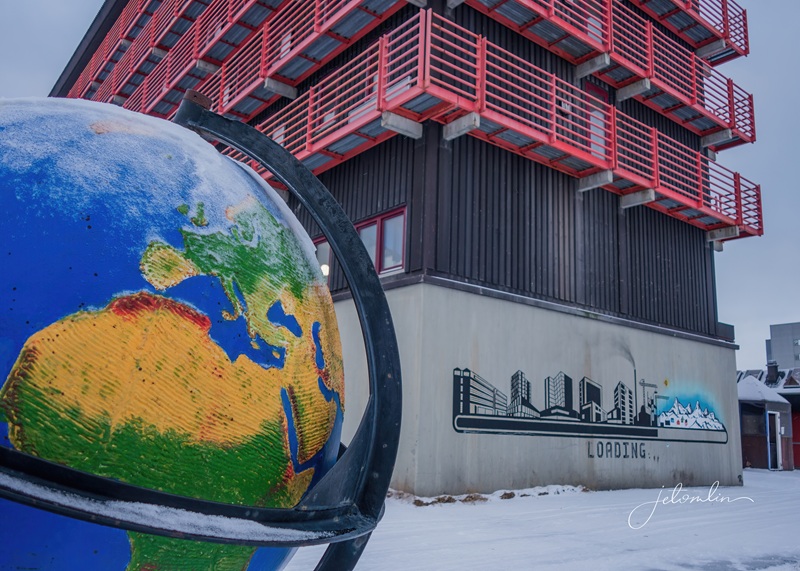
About a third of Greenland’s total population lives in Nuuk, making it a central hub with amenities like an extensive bus service, banks, high-rises, and supermarkets offering most items found back home.
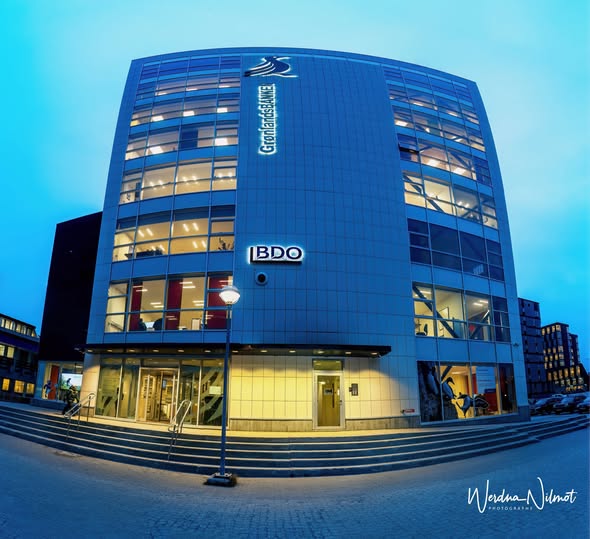
In the small, scattered villages throughout the rest of the country, residents still maintain more traditional ways of life.
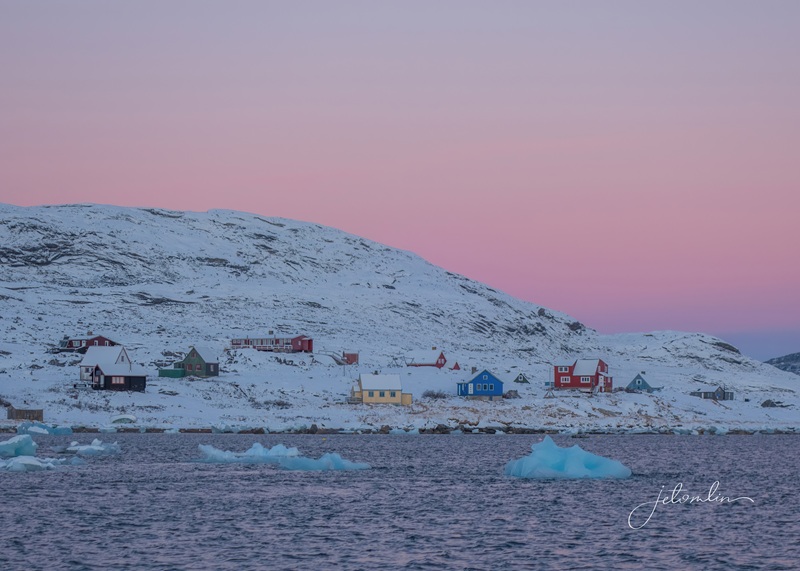
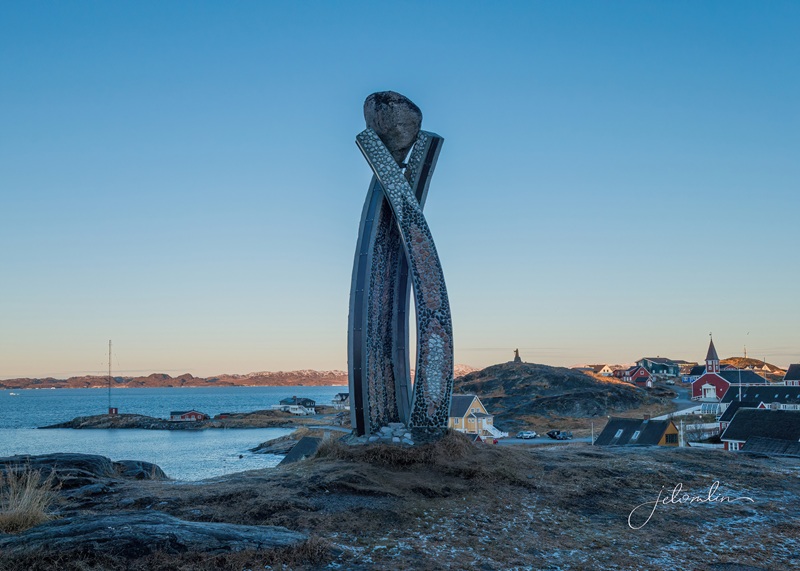
The Inussuk stands with a view of the colonial harbor and fjord. In Greenlandic, the word means cairn or “something that looks like a human being.” The three columns twist and lean against each other, united at the top, to symbolize the people of Greenland in the North, East, and West – joining and supporting each other. The stones that make up the sculpture are from all over Greenland.
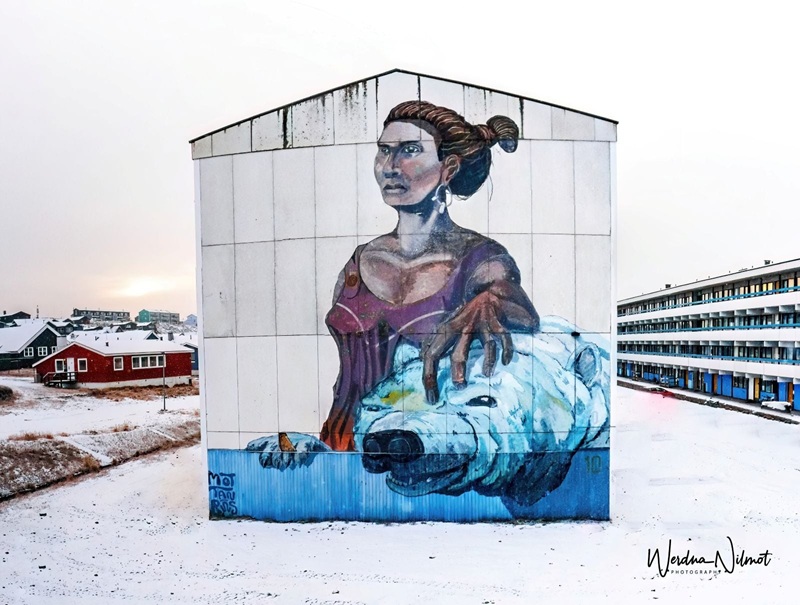
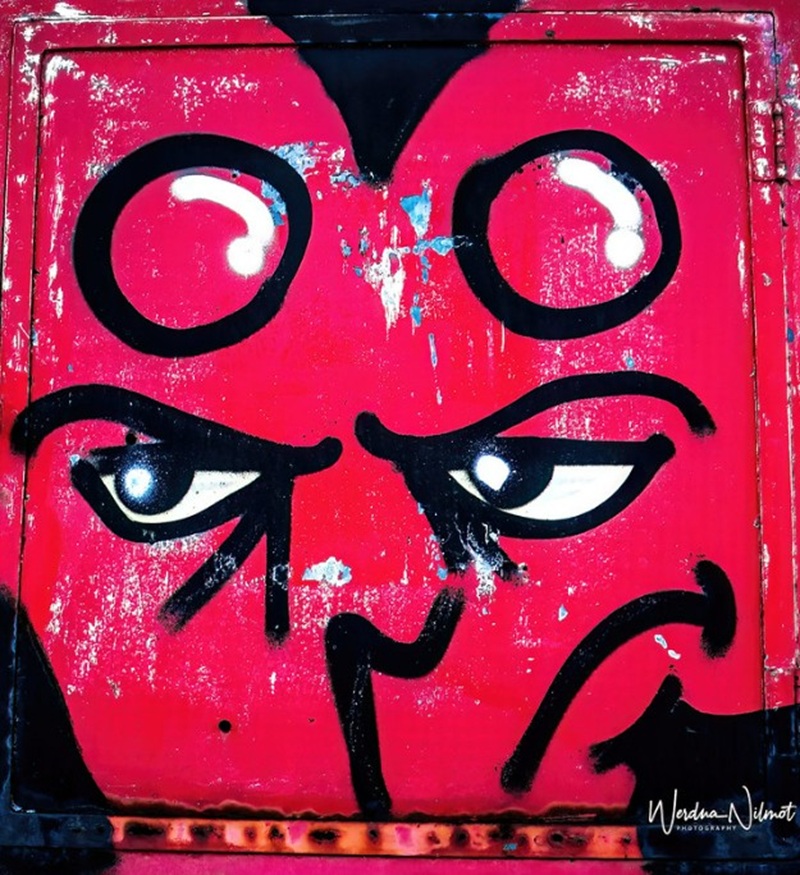
We also discovered several “unofficial” installations. But because street art is seen as a democratic right, these works are supported by the city.

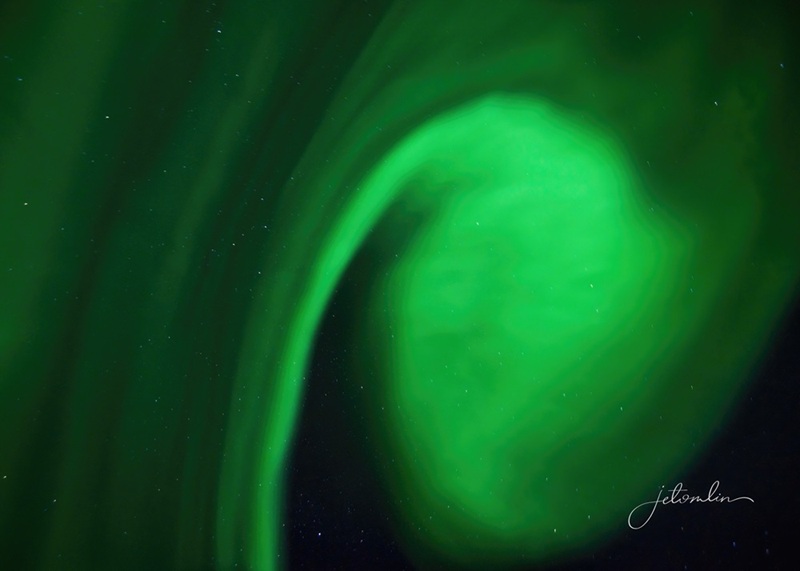
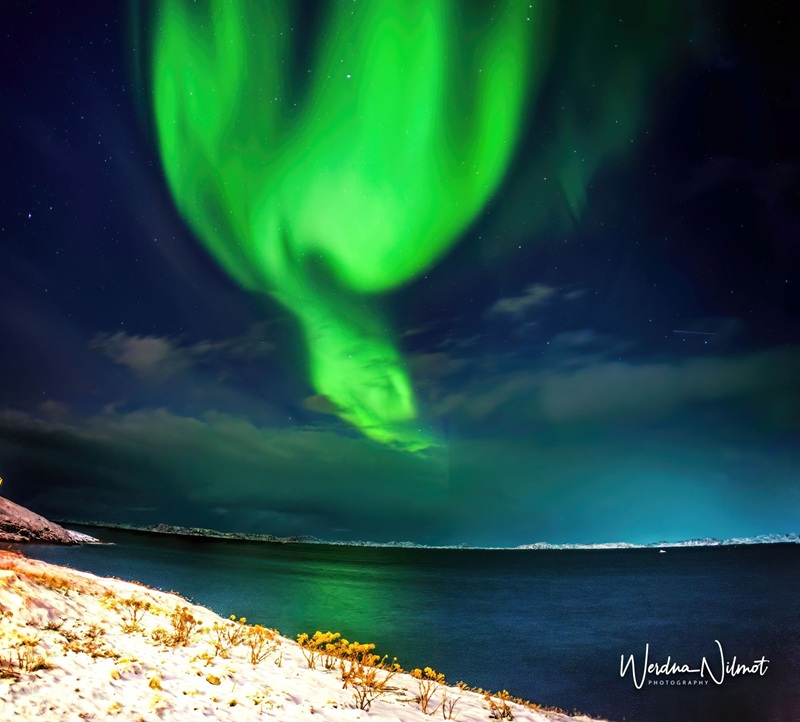
The night of Nov 24 turned out better than we could have imagined. The aurora came out around 7:30 pm, and we literally cried for the beauty of it. It kept going until, overwhelmed and exhausted, we went to bed at 1:30 am. I woke up at 3:00, and the Lady was still dancing! It was everything we had hoped for, and we both ended up with a photo set of our dreams, making it a truly memorable night.


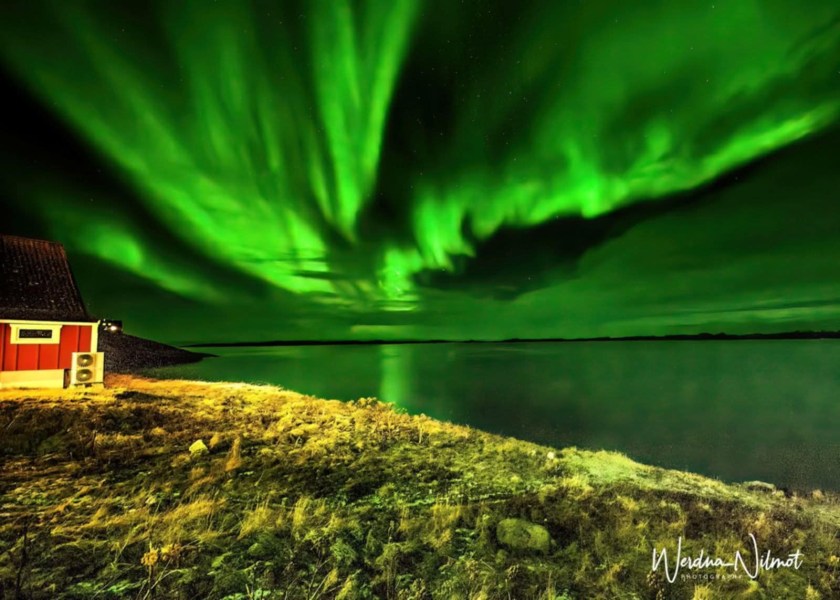
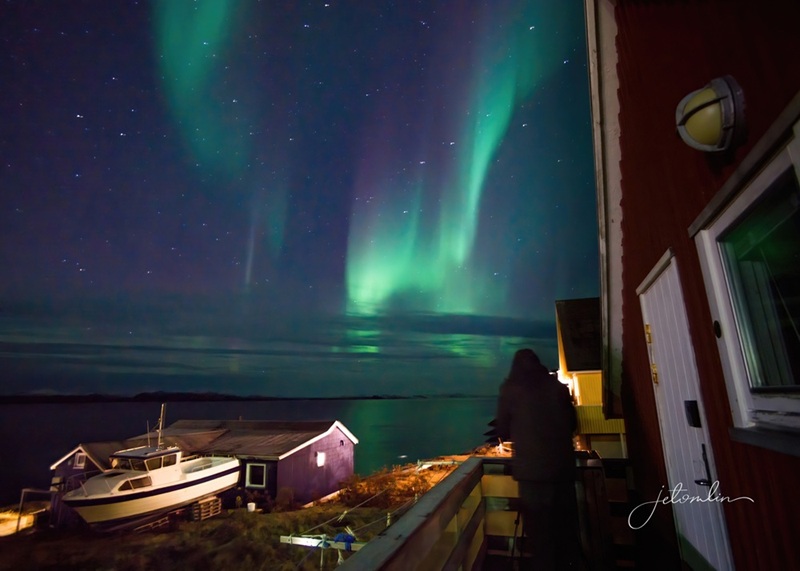
The next day, we went in search of a mural I had seen on the Visit Nuuk Facebook page. We stopped in at a bank and ended up chatting with Pani. She is Kalaallit (Inuit) and confessed that she still gets emotional every time she sees the aurora.
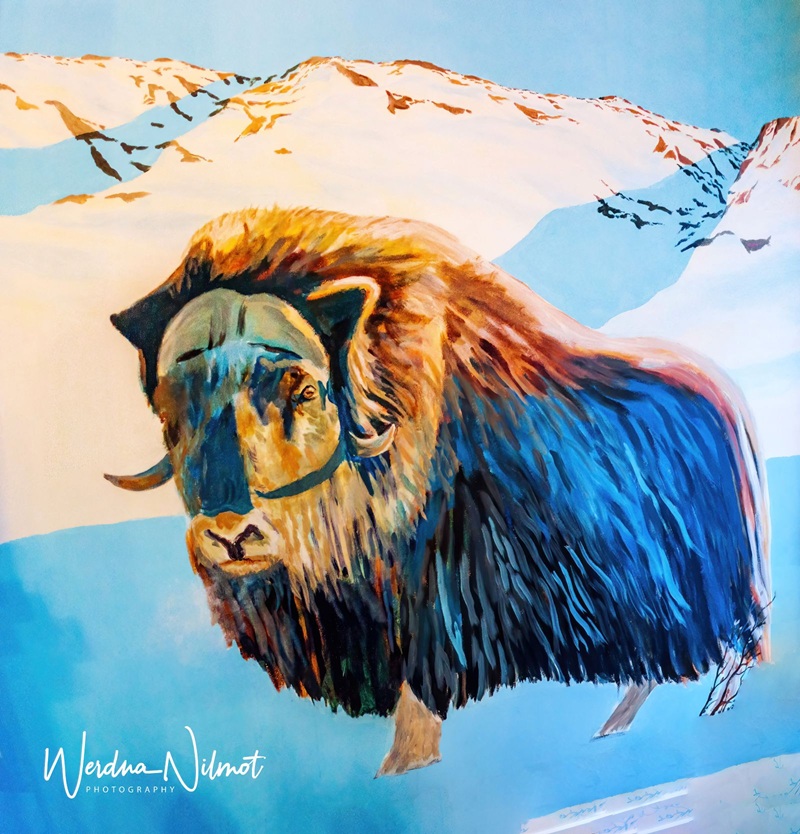
That night turned out to be another one for the books.
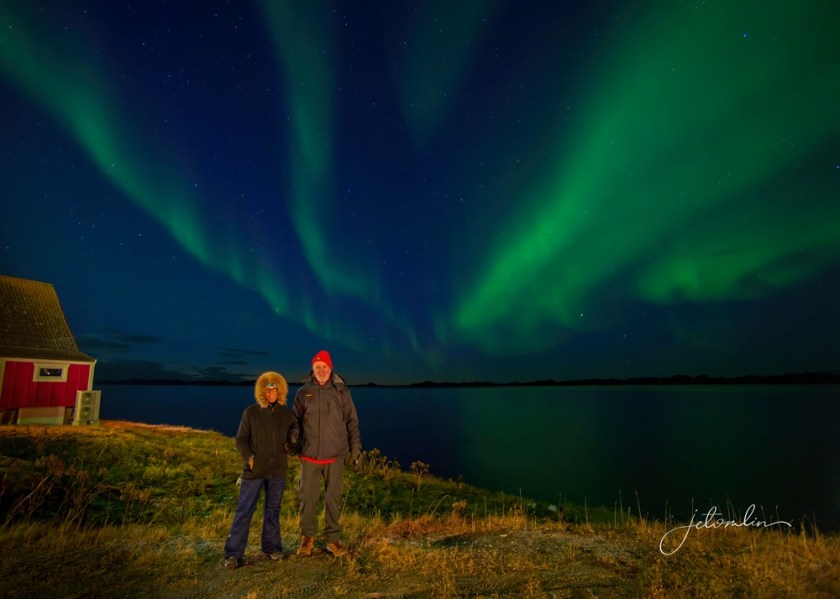
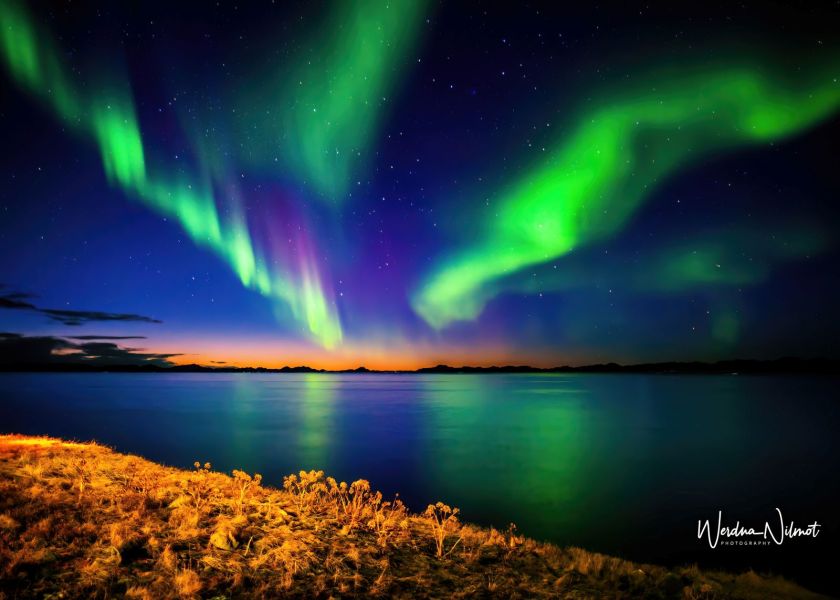
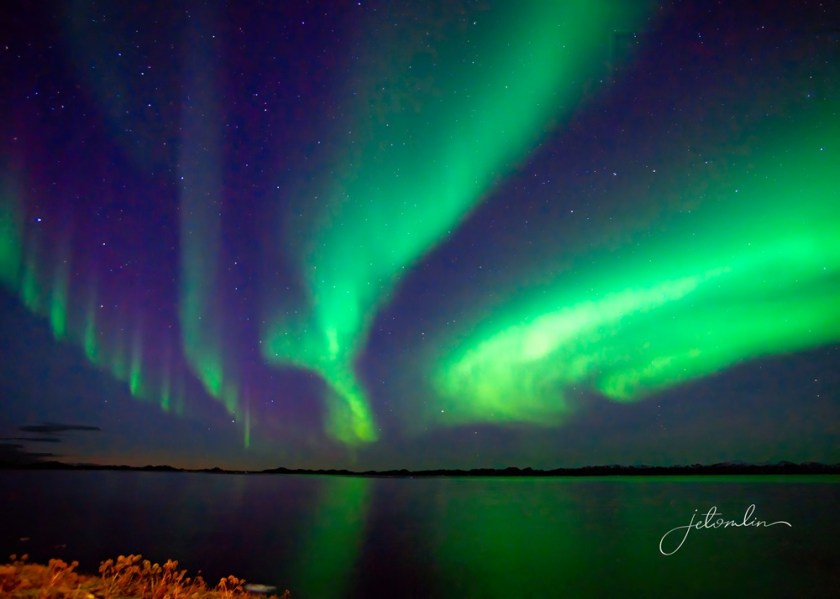
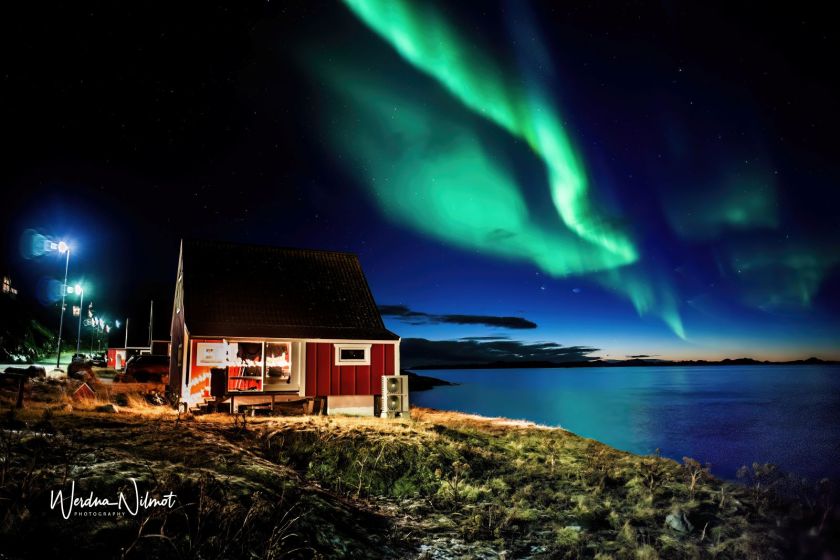
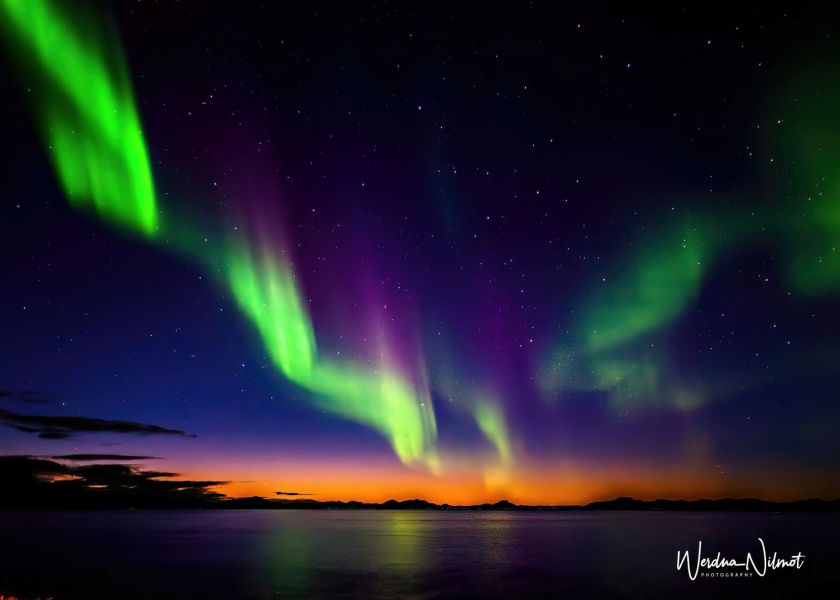
The aurora once again gave us a show beyond our wildest dreams, beginning early at 6:30 pm and wrapping up by 10 pm, so I could still get a good night’s sleep before my adventure the next day.
I had booked a 6-hour ice fjord cruise while TG chose to stay in town. Once we were underway, Captain Angunnguaq (“sweet little man”) and guide Pakkutannguaq (“person who is being hugged”) gave us a quick briefing.

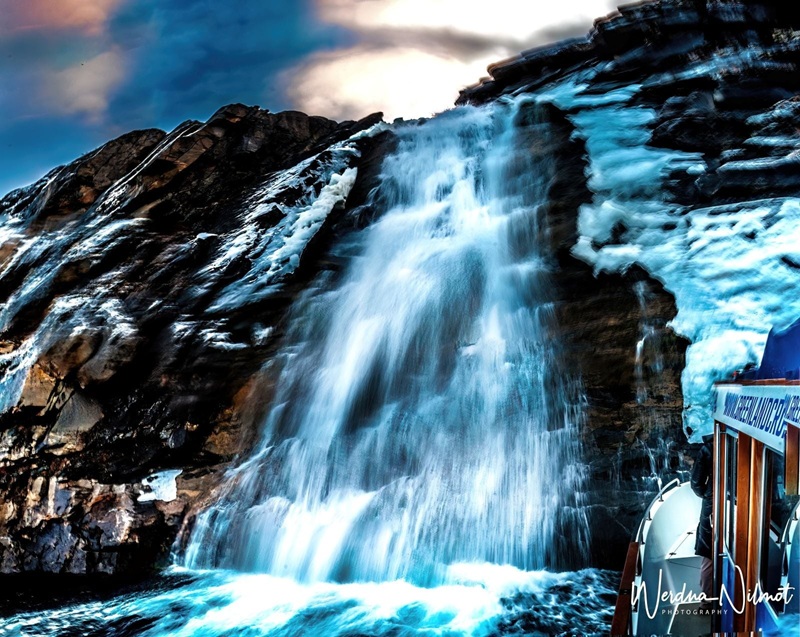
We stopped beneath a massive glacier to admire a frozen waterfall, while a harp seal rested on a nearby iceberg.

About ten minutes later, we passed the abandoned fishing village of Qoornoq, which is now used for summer vacation homes.

As we journeyed onward, the morning sun painted the sky a beautiful pink over the towering icebergs.

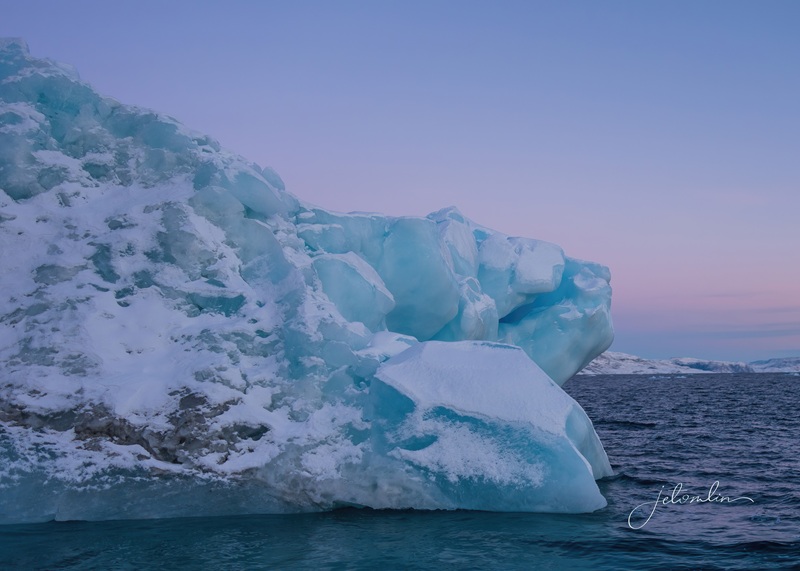
Moving deeper into the fjord, the sea became frozen, and Pakku explained how our Finnish-designed boat was built to break through the ice.
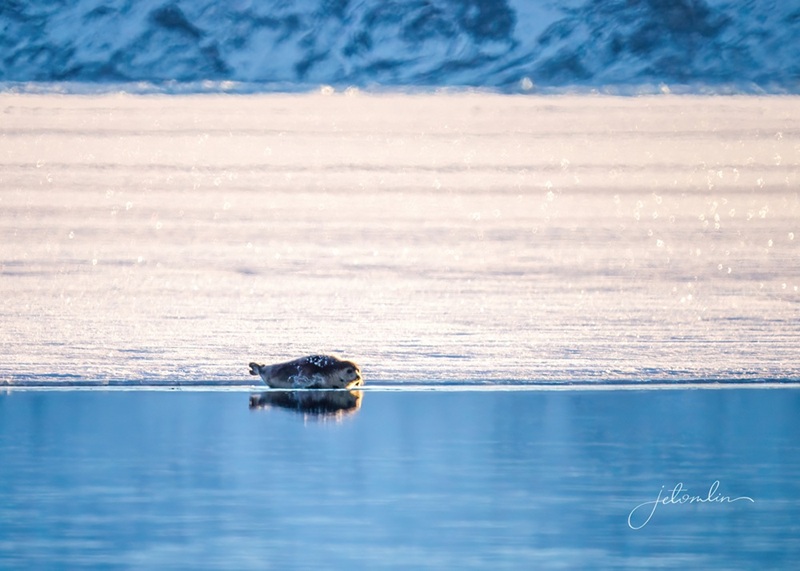
Up ahead, a tiny dot gradually took the shape of a ringed seal. But just as we got close enough for photos, she disappeared beneath the surface.
Eventually, the ice became too thick to continue, and we stopped at the edge of a vast, white shelf, sparkling in the bright sunshine.
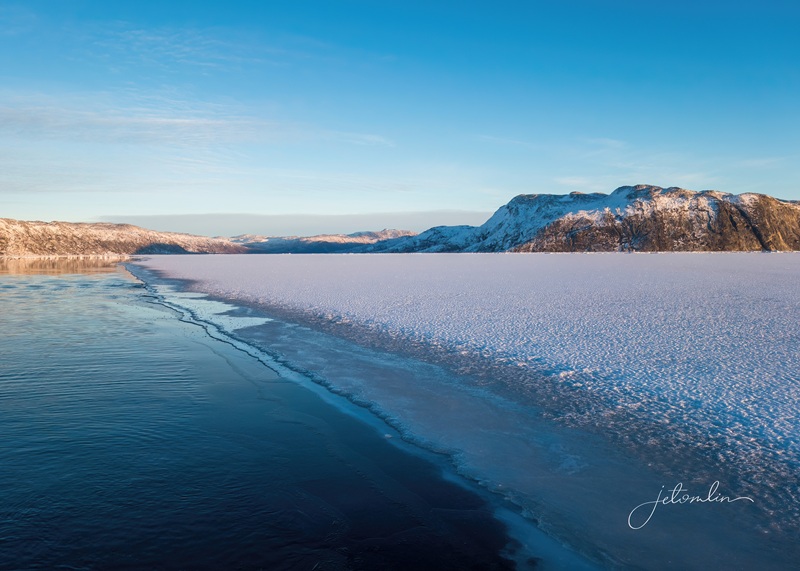
Capt. Angunn anchored the boat and, after outfitting us with survival jackets, invited us to step out onto it.

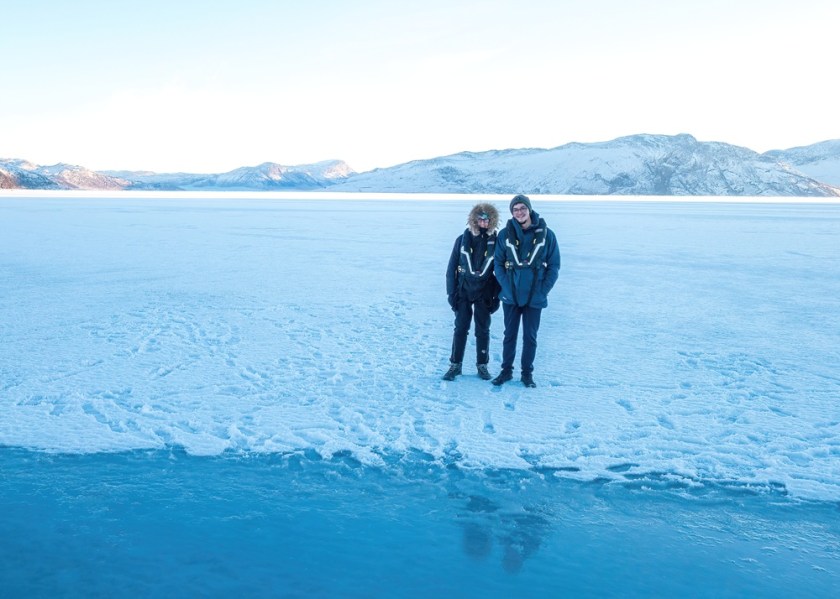
Then it was time for a few brave souls to take an arctic plunge. Pakku said you can survive for 29 minutes in the frigid water, but no one lasted more than a few seconds!
It took about two hours to return to Nuuk, and as I said goodbye, I was thankful for another beautiful day spent connecting with nature.
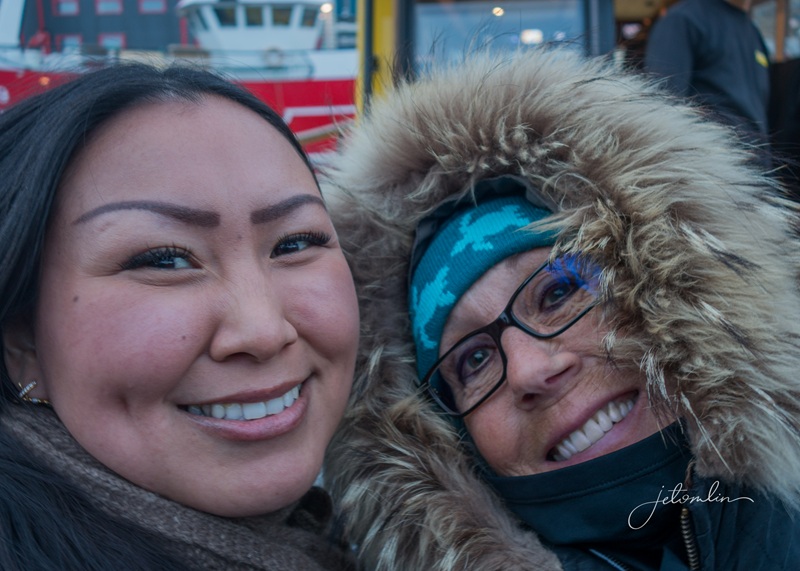
The next morning, we woke up to a fresh blanket of snow, turning Nuuk into a winter wonderland.
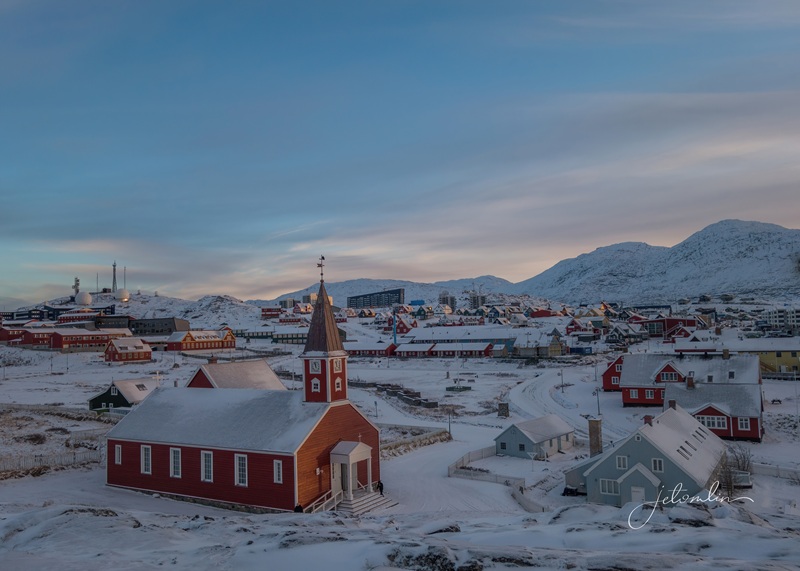
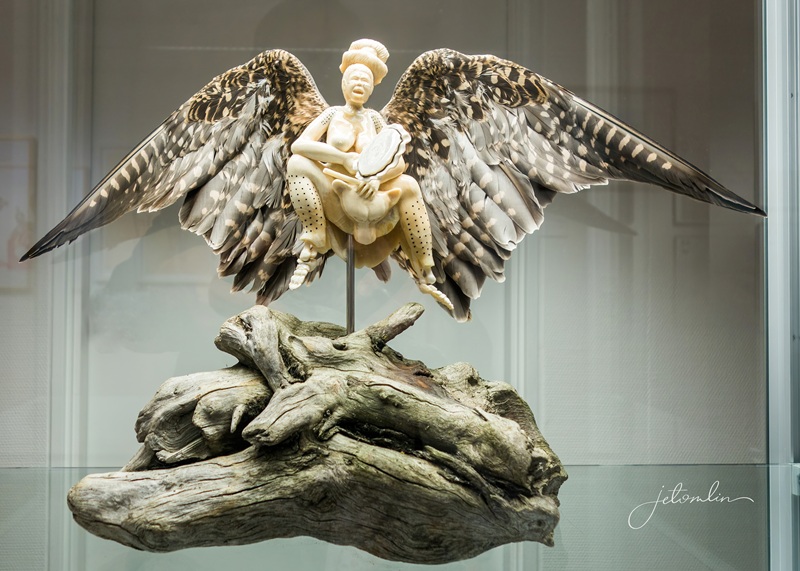
It was Thanksgiving Day, which this year coincided with our wedding anniversary. We spent the day exploring the Nuuk Art Museum.
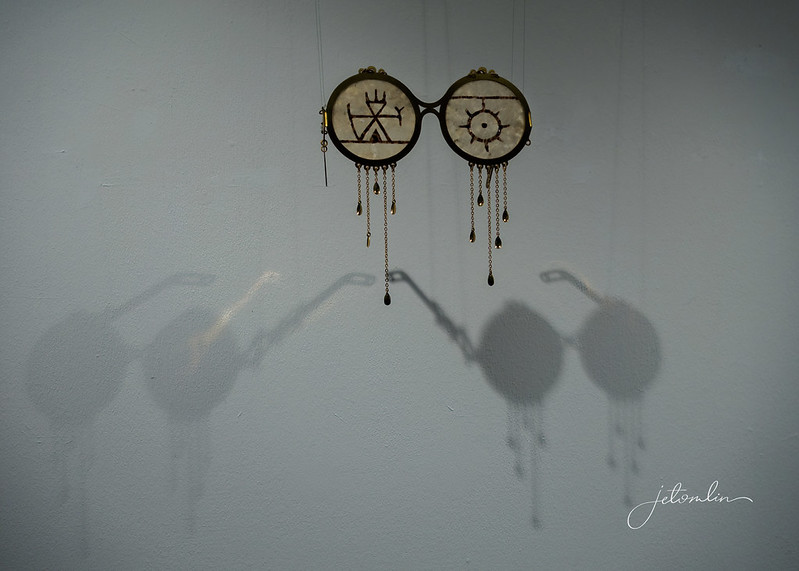

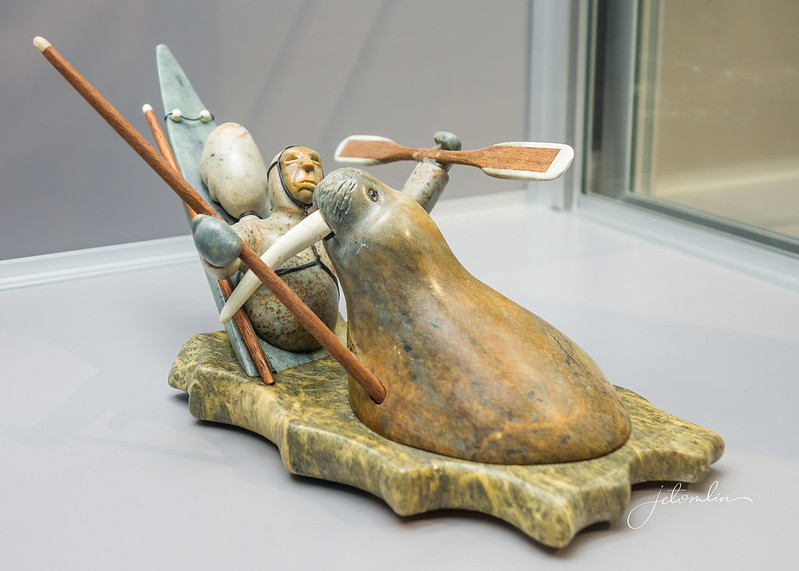

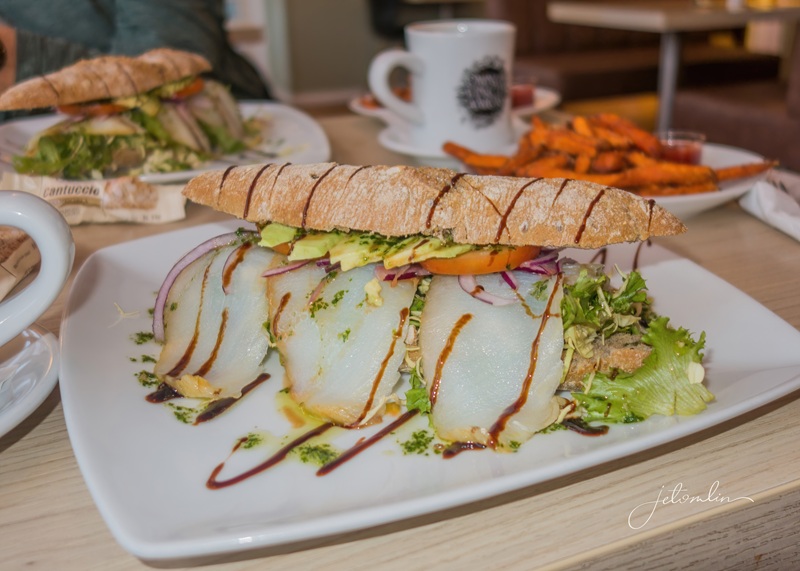
We enjoyed a lunch of smoked halibut sandwiches at Café Esmeralda and took advantage of the holiday sales for some souvenir/Christmas shopping.
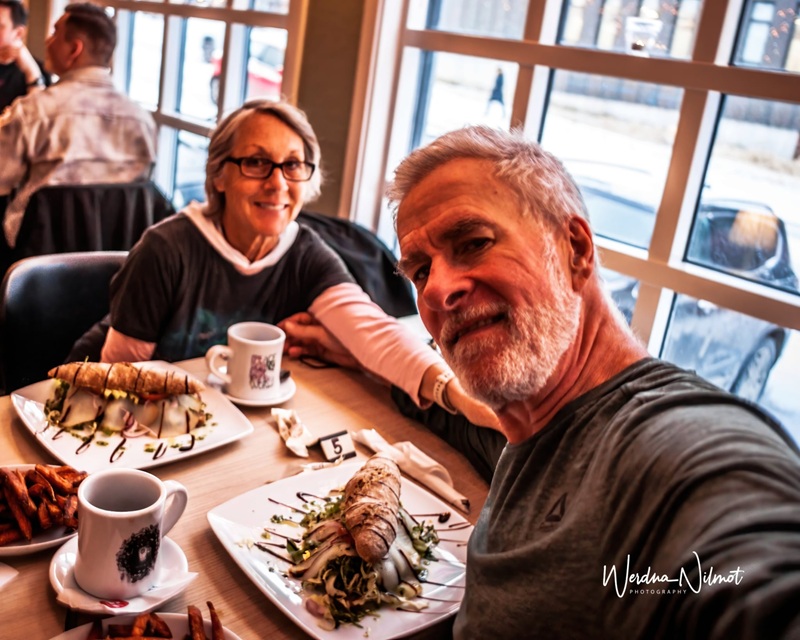
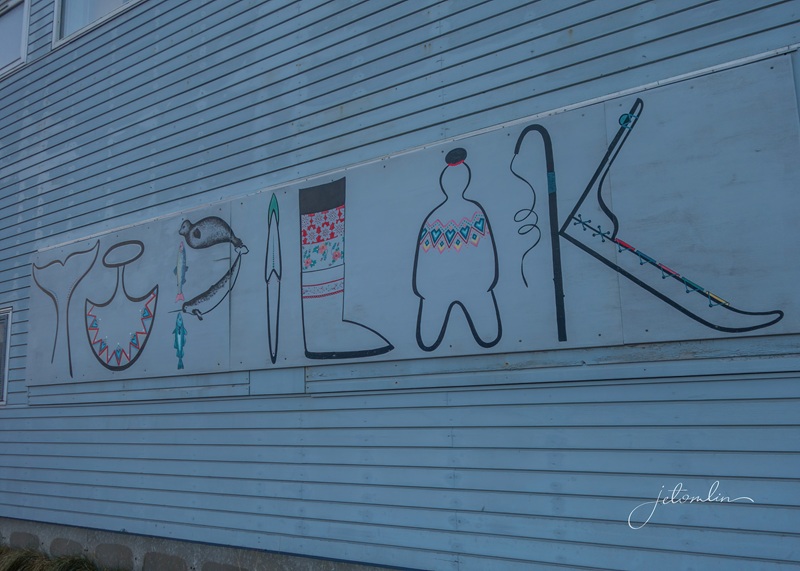
I have to give a special shout-out to the lovely ladies at Tupilak Travel for all their friendliness and hospitality over our two-week visit!
Before we left for Greenland, we studied the aurora forecast and weather reports, knowing that both would be crucial to our success. We needed strong geomagnetic activity and clear skies, and we hoped to experience at least one good aurora night during our two-week stay.
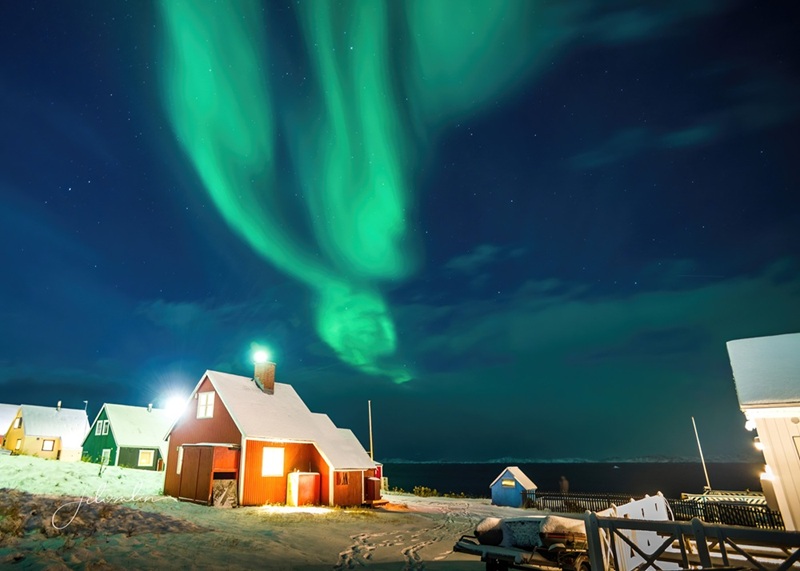
We had read that winter typically arrives in Nuuk around the end of November, and by the evening of the 28th, the town was indeed covered in snow. With more snowfall predicted for the rest of our stay, we weren’t optimistic about seeing the aurora again. Still, we were grateful for the five nights of Northern Lights we had already enjoyed, especially the three that exceeded all our expectations.

So, imagine our surprise and delight when we peeked out the window later that evening and saw streaks of green in the sky. What was predicted to be a night of 100% cloud cover gave us our sixth show – this time lighting up the snow-covered houses like a winter fairyland!
We are not “foodies” by any stretch. We would much rather be out taking photos than sampling the culinary delights of the places we visit. But we did want to try a few traditional items: smoked halibut, which we had at Café Esmeralda on our anniversary, muskox and/or reindeer, and a “Greenlandic Coffee.”
A visit to Café Kaffivik accomplished the last two on our list. It was a charming off-the-beaten-path little coffee shop, about a 45-minute walk from our Airbnb.
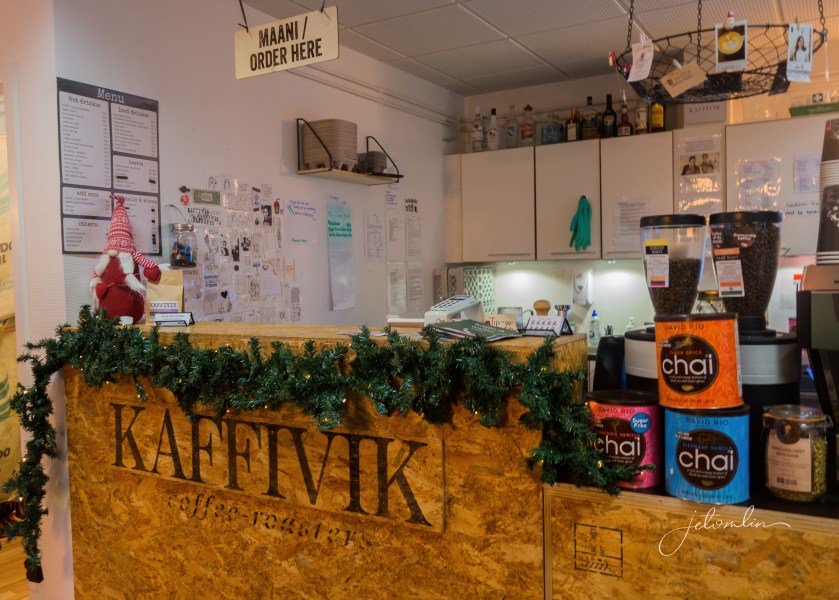

They serve a combination muskox/reindeer sandwich, which TG found delicious.
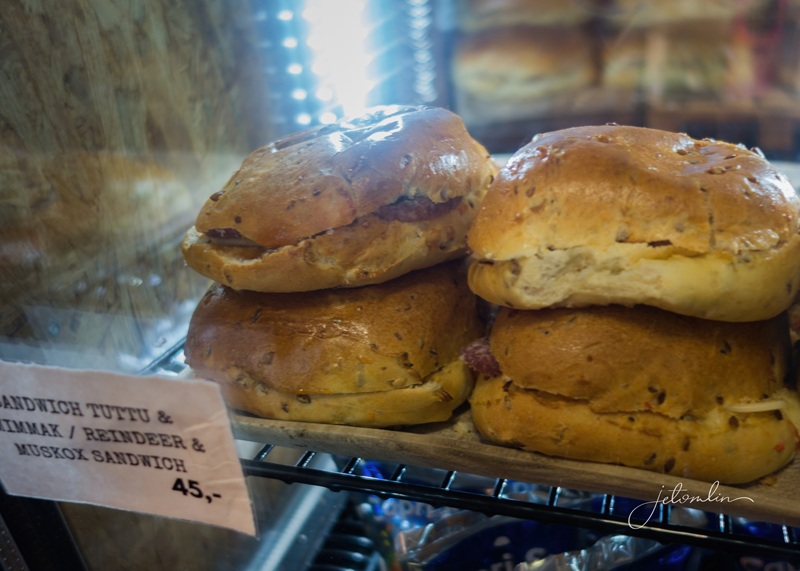

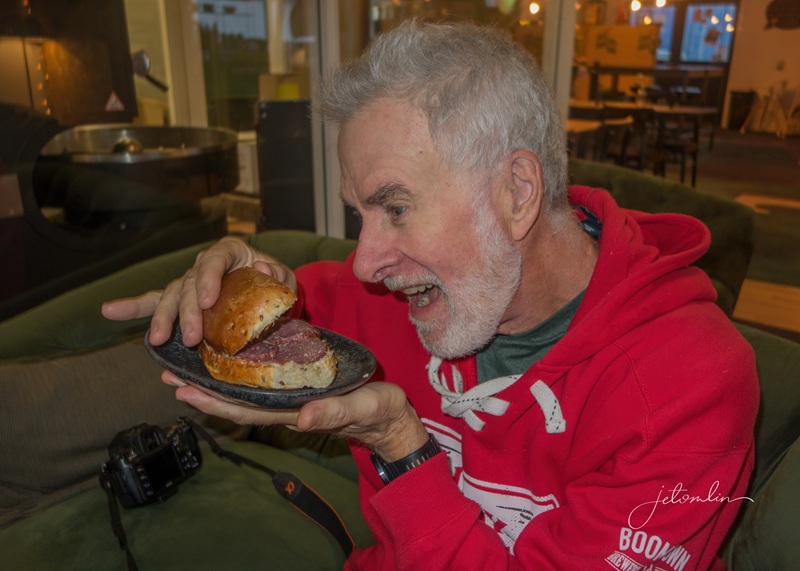
And I tried the Greenlandic Coffee: as bold and beautiful as the land itself! It’s a unique blend of whiskey, Kahlua, black coffee, and whipped cream, served in a Bordeaux wine glass with a spoonful of Grand Marnier added as it’s presented.
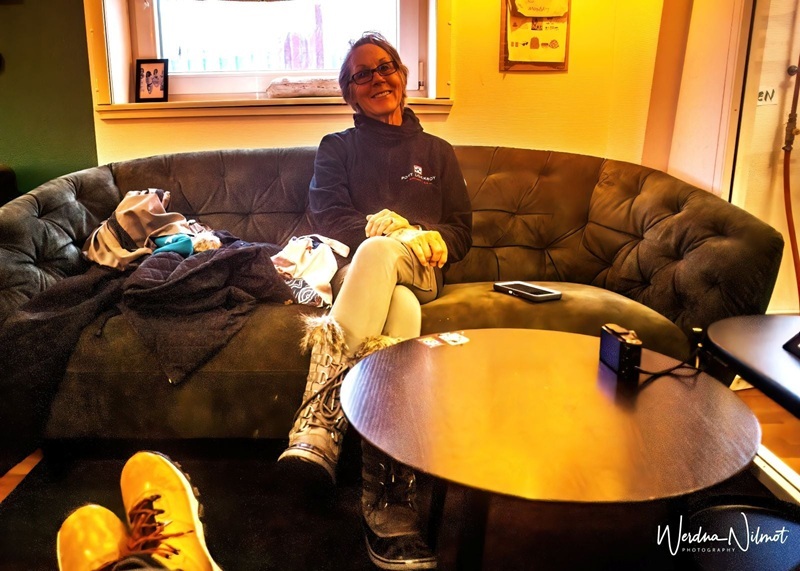

We didn’t just have a sandwich and a coffee – Café Kaffivik was an experience!
On our walk that morning, we passed by Ajagaq, an artist’s workshop. Only one person was working when we went back the following day, a craftsman named Barse Svendsen.
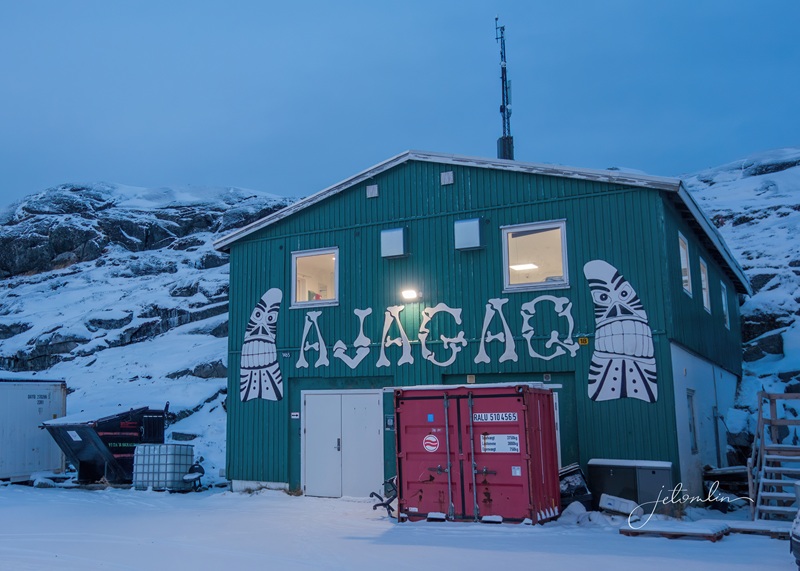
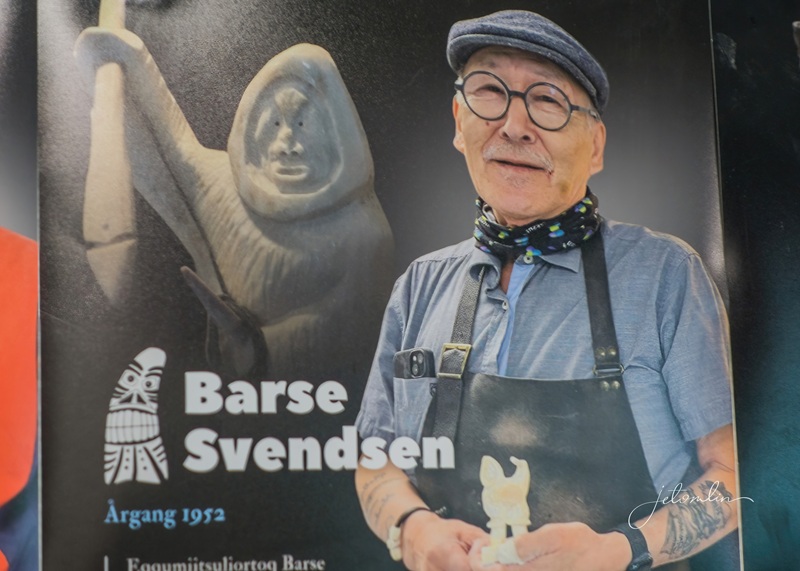
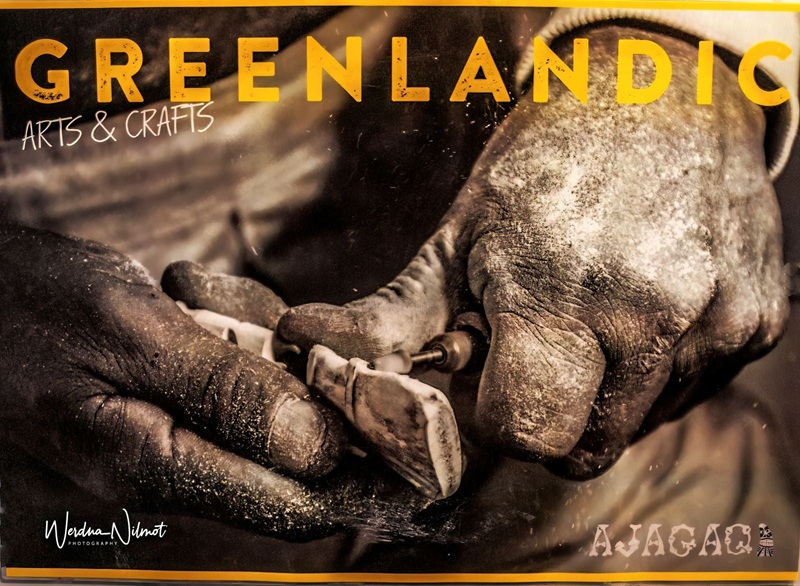
He did not speak any English but was able to communicate (by pointing to a poster) that he was carving a small figure on a beluga whale’s tooth. He did not want me to take his photo, but he did permit me a short video of him carving the tooth with a tool similar to a dentist’s drill.
It was nonetheless a fascinating visit, and we were able to take photos of the various displays. Later, we learned that Barse is one of the most renowned artists in Nuuk. He uses traditional materials, such as reindeer antlers and walrus tusks, sourced from local hunters who are allowed to hunt a certain number of these animals each year.
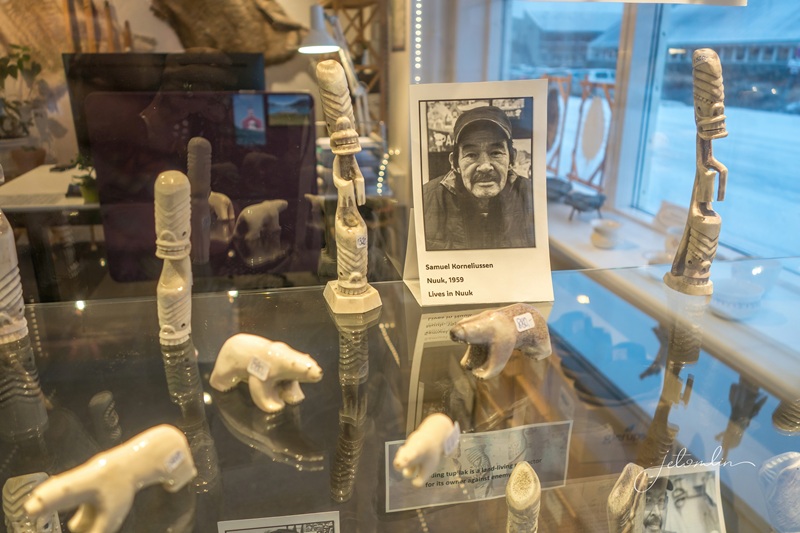
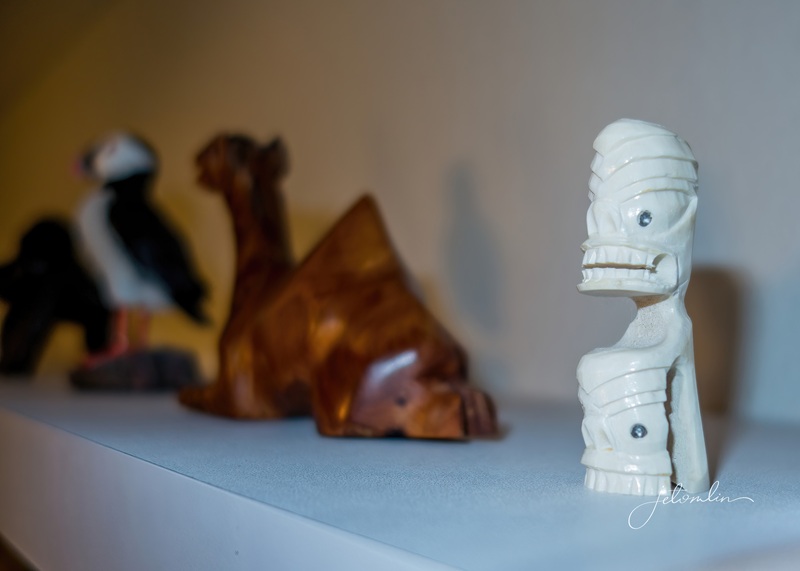
Throughout our travels, I have collected a carved animal from each of the countries we visit: an elephant from South Africa, a gorilla from Uganda, TG even brought back a camel from his trip to Morocco. I chose to purchase a “tupilak” from Greenland. These curiously grotesque figures are part of Inuit mythology, created by shamans to seek and destroy enemies. My tiny tupilak, purchased at Tupilak Travel and carved by Ajagaq artist Samuel Korneliussen, now sits on a shelf with the rest of my animal collection as a reminder of Greenlandic culture.
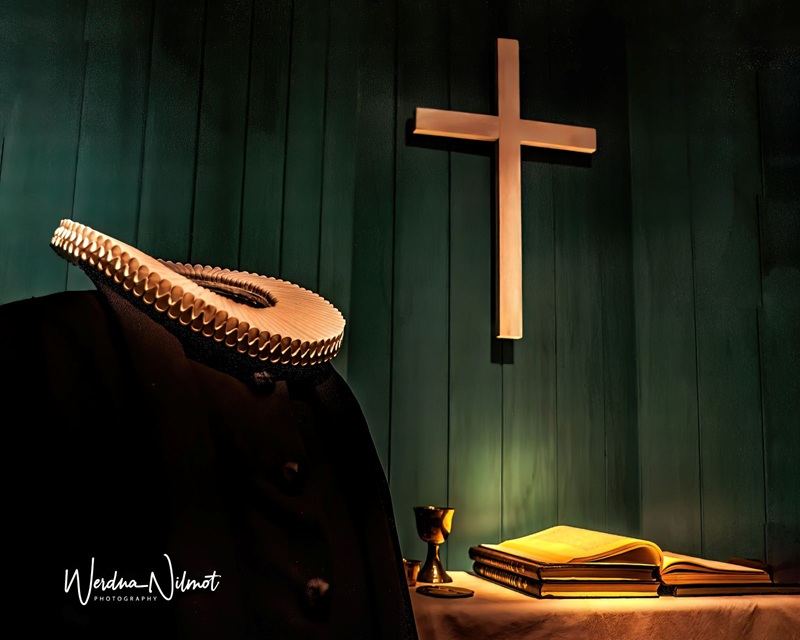
What was predicted to be another day of 100% cloud cover turned out to be sunshine and blue sky. We scrambled up to the Hans Egede statue, which sits high on a hilltop with a panoramic view of Nuuk. Hans Egede was a Norwegian missionary credited with reviving Danish-Norwegian interest in Greenland after contact had been broken for nearly 300 years. He also founded the city of Nuuk.

A common myth states that, as the Inuit had no bread nor any idea of it, Egede adapted the Lord’s Prayer as “Give us this day our daily seal,” (a food staple in Greenland).
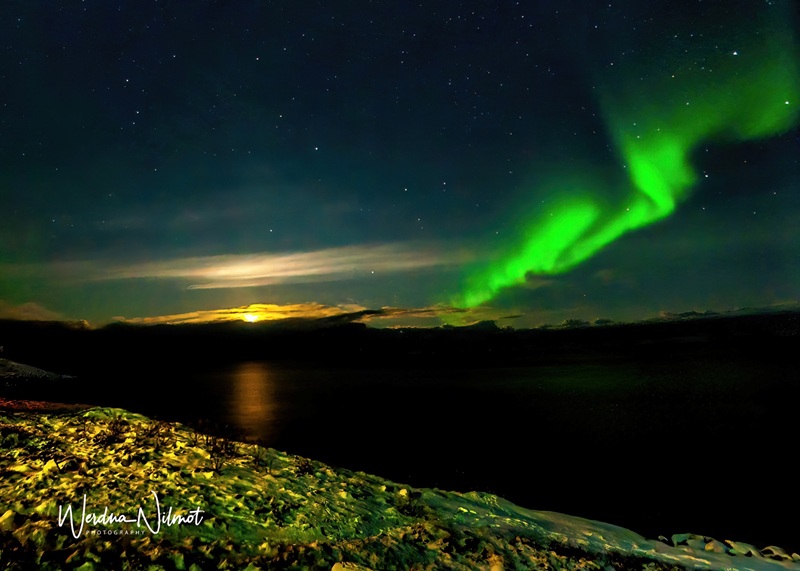
That evening, the sky was again overcast, with only a hint of green poking through the clouds. The glorious nights earlier in our stay had spoiled us, and we didn’t bother putting on our winter gear to go outside in the cold. However, the forecast showed clear skies at 2 am. When the alarm went off, we peeked outside: the Lady was dancing again! We bundled up for a short 45-minute photo session and added to our aurora count, which now stood at eight nights!

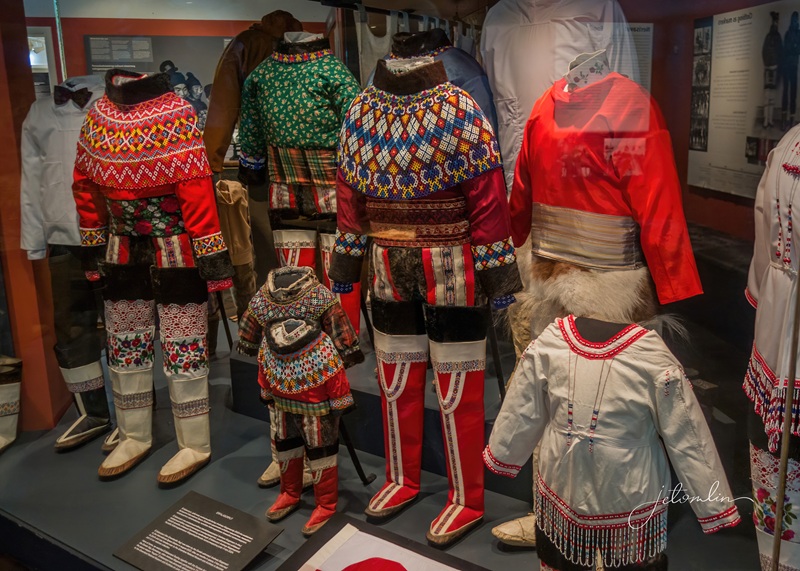
We saved the National Museum and Archives for Sunday. We knew it would be snowy and cold, and figured it would be a perfect day to spend indoors. After a delicious falafel bowl lunch at Kyling’s, we headed over to the museum.

The museum offers a journey through the history of Greenland, starting with the Paleo-Inuit culture around 2500 BC and continuing to modern times. It turned out to be a fascinating way to spend a few hours.
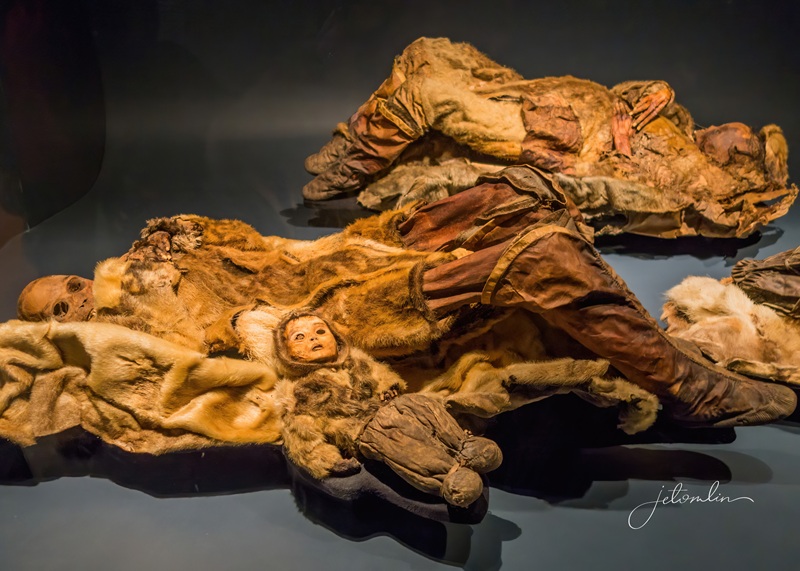
One noteworthy exhibit features the Quilakitsormuit mummies, a grave chamber containing the remains of four individuals who were buried around 1475. While their cause of death remains unknown, it is believed they died and were buried around the same time, fully clothed for their long journey to the Land of the Dead.
Later that afternoon, as we were walking home, we noticed guys putting up wooden signs around the town’s Christmas tree. “When are they lighting the tree?” we asked. “Today! Santa comes at 4 pm to light the tree, and about 3,000 people will be here,” was the reply.
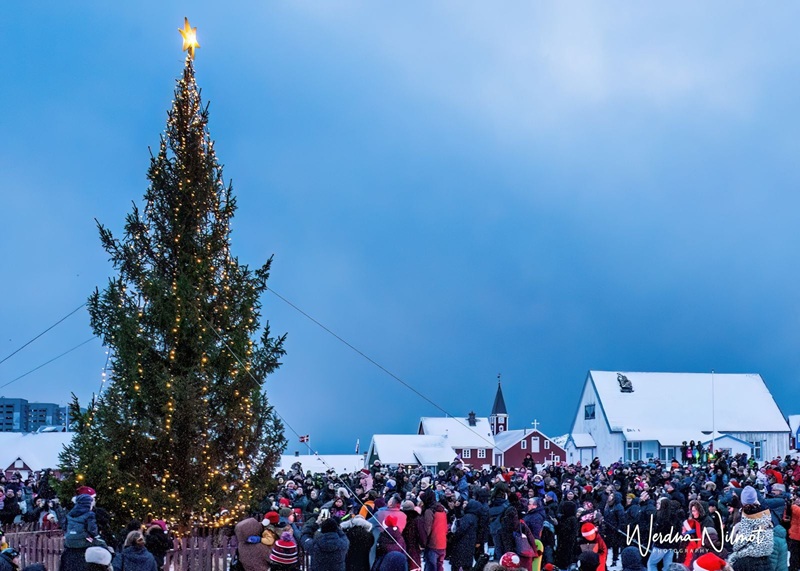

That was an opportunity we could not miss, so we joined the festivities, sharing in the excitement of everyone celebrating together.
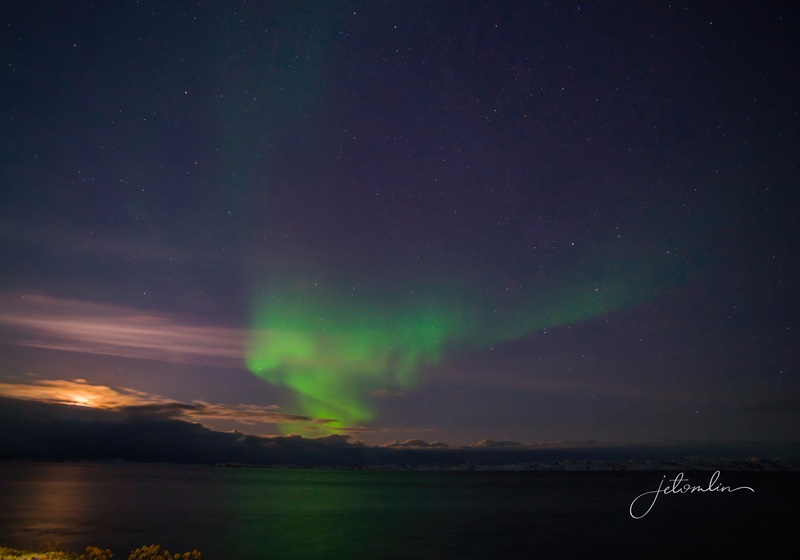
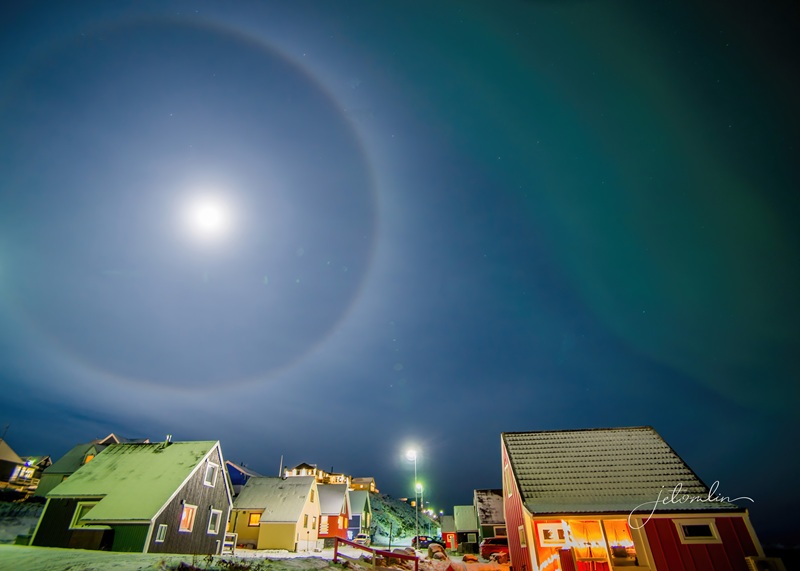
By the first of December, the moon was slightly more than half full and reflected brightly off the white snow. We had no expectations; we had already experienced more nights of aurora than we had dreamed of. But that evening the sky was clear, and once again the Lady danced.
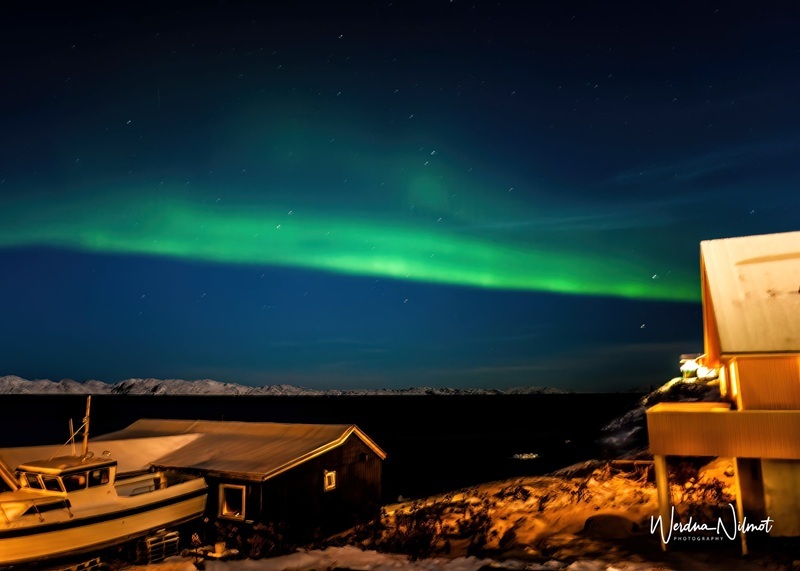
We walked to the cathedral in hopes of capturing a different composition. While the aurora did not put on the brilliant spectacle we had witnessed earlier in our stay, it was beautiful, nonetheless.
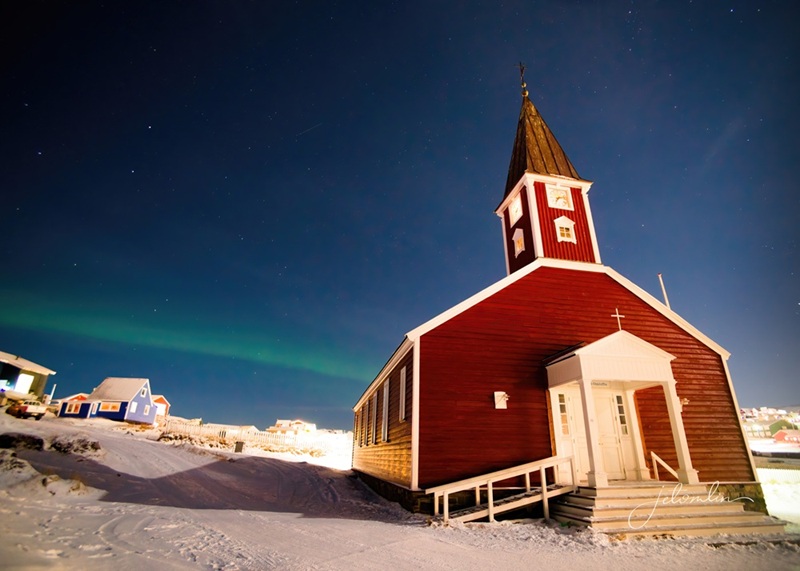
Shortly before 10 pm, we checked the sky again. Despite the bright moon, we could see green streaks, so we bundled up and headed out for one last session.
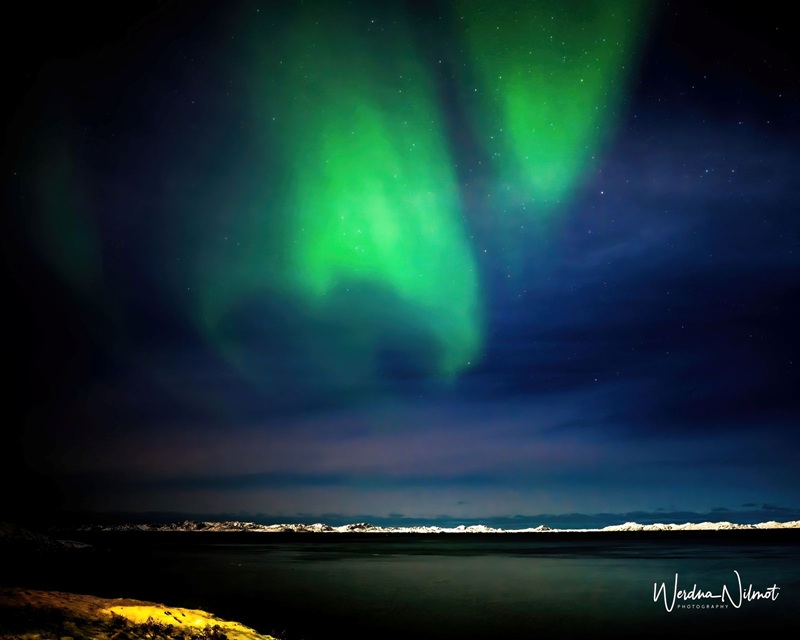
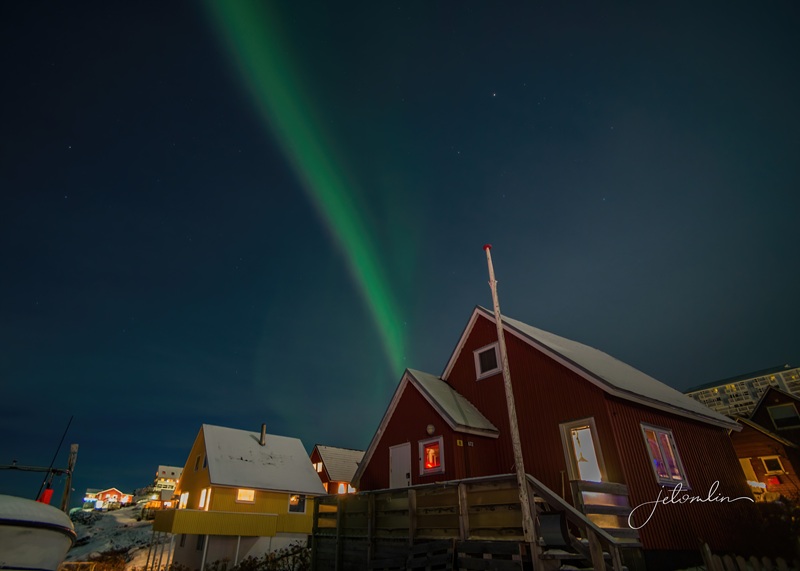
On the morning of December 2, TG shared the following:
Well, we are at our last full day in Nuuk, Greenland. Today is packing day, so we will not be trying for more aurora photos tonight regardless of the weather & skies. We have been most fortunate with respect to each of them. Our arrival on November 19 was met with driving rain and cold wind. The first 3 nights were socked in with 100% thick cloud cover. That changed beginning on November 22. We would see the aurora every night except for one from 11/22 – 12/1/2025, a total of 9 nights.
Last night was challenging, probably the toughest because of a waxing moon about half full and very bright. It was a clash of two titans for supremacy, with clouds trying to take control from both of them…it was a fitting end to an extraordinary adventure in Greenland.
Our visit was full of extremes: frigid weather, stunning aurora, enormous icebergs,
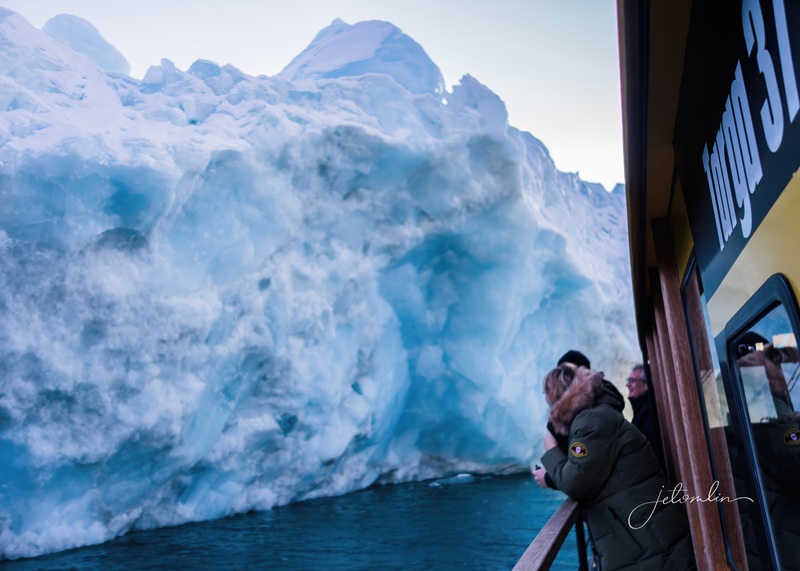
And the friendliest, most welcoming people you’ll ever meet.
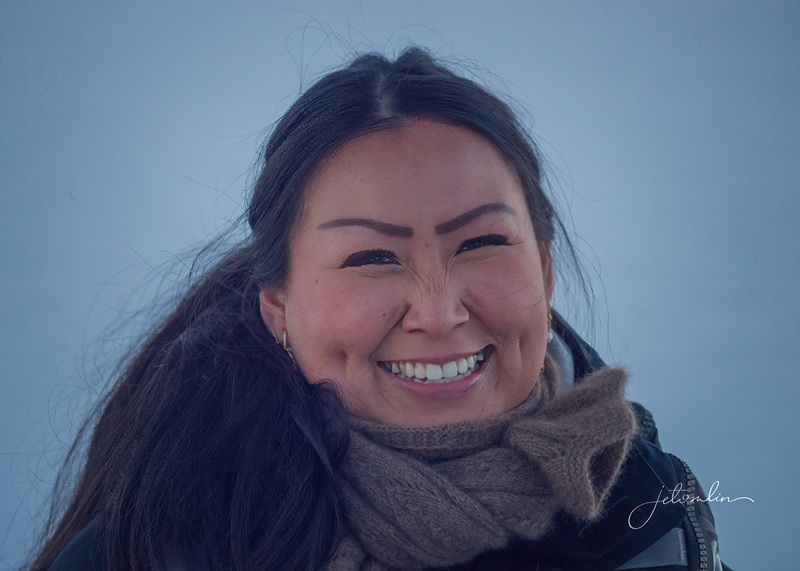
The weather was unpredictable: when the forecast called for 100% cloud cover, we had glorious northern lights. And the magnificent, rugged mountains left us in awe, making us marvel at how anything could survive in such a harsh environment.
And yet, life has found a way for thousands of years. As we learned on our visit to the National Archives, humans have been in Greenland since around 2500 BC.
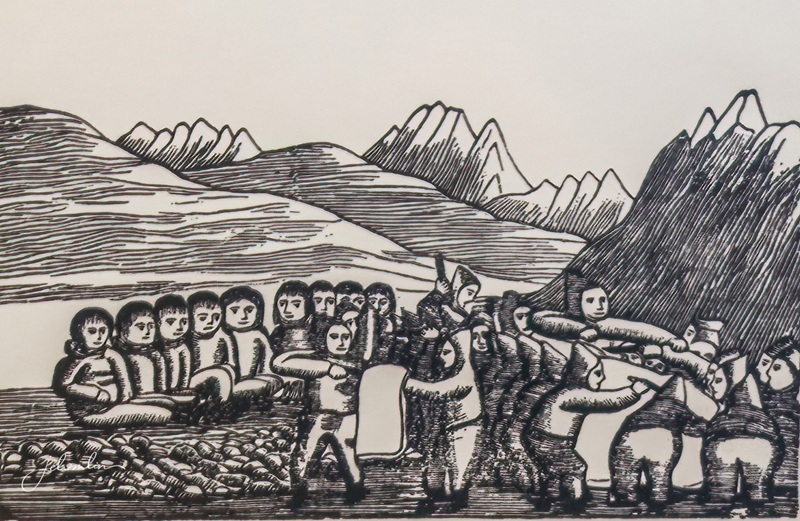
We went for the Northern Lights and left with a profound appreciation for this beautiful country, the people, and their fascinating culture and history. Greenland is a bit of a mystery – one that you can’t fully comprehend until you’ve been there. But once you have, it will capture your heart forever.
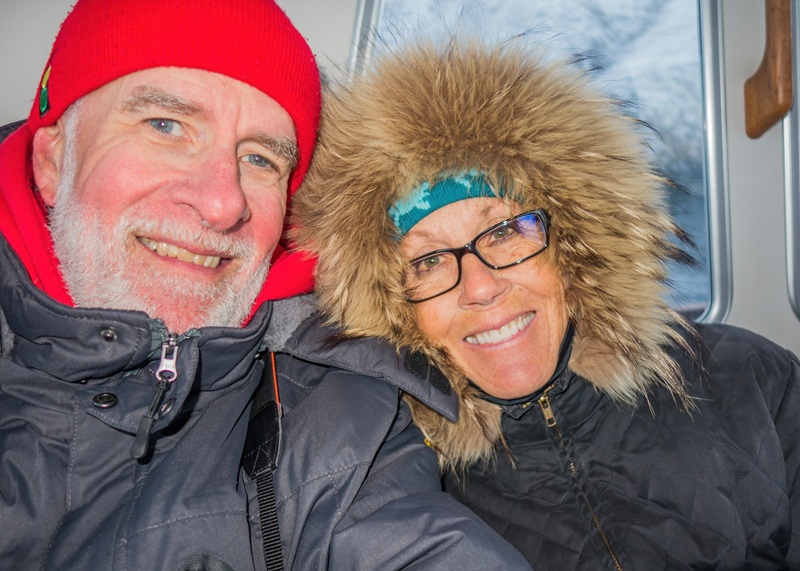
To see all of our photos from Greenland, click on the Flickr links below:
TG:

JET:



























 On The Road with Tall Guy & JET