
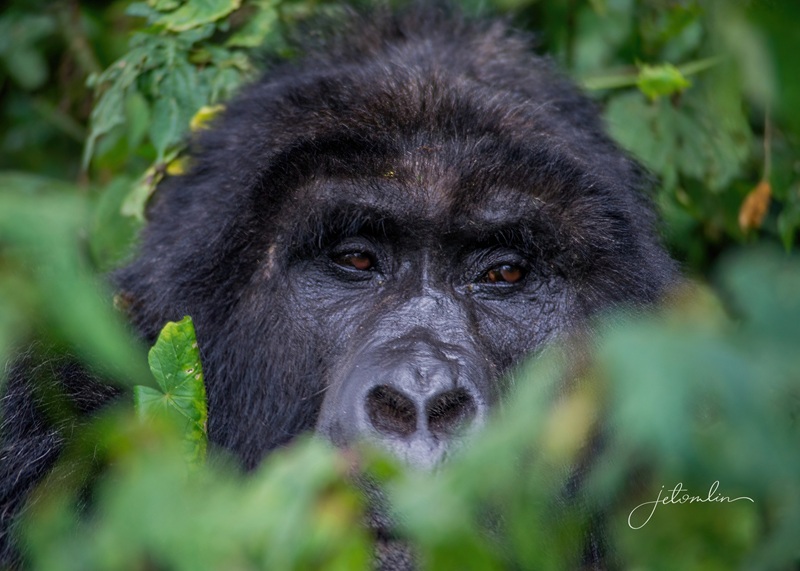
It has always been a dream of ours to photograph gorillas in the wild. They are continuously on the go, so seeing them can vary from a short hike to a grueling, hours-long trek through the jungle. We wanted to do this sooner rather than later, as we are not getting any younger.

There are only a few places in the world that offer this experience: Uganda, Rwanda, and The Congo. Uganda presented the most affordable option, and our first step was to find a tour operator who could tailor an itinerary to our preferences. Along with gorillas, we also wanted to see chimpanzees, golden monkeys, and shoebill storks. These activities are regulated, requiring special permits, guides, and armed rangers.
Gorillas are specially protected, with a limited number of trekkers permitted each day and a limited amount of time (one hour) once your assigned family is located. Mountain gorillas are critically endangered, and trekking plays a vital role in protecting them.
The dollars we paid for our permits support anti-poaching, habitat preservation, and education programs.
We researched extensively, read reviews, and compared prices. We found the right fit in Buyaga Safaris, a Ugandan company that was able to make our dream a reality. Our journey to see the gorillas would take us through other “must-see” destinations: Murchison Falls, the Victoria Nile, and Queen Elizabeth National Park.
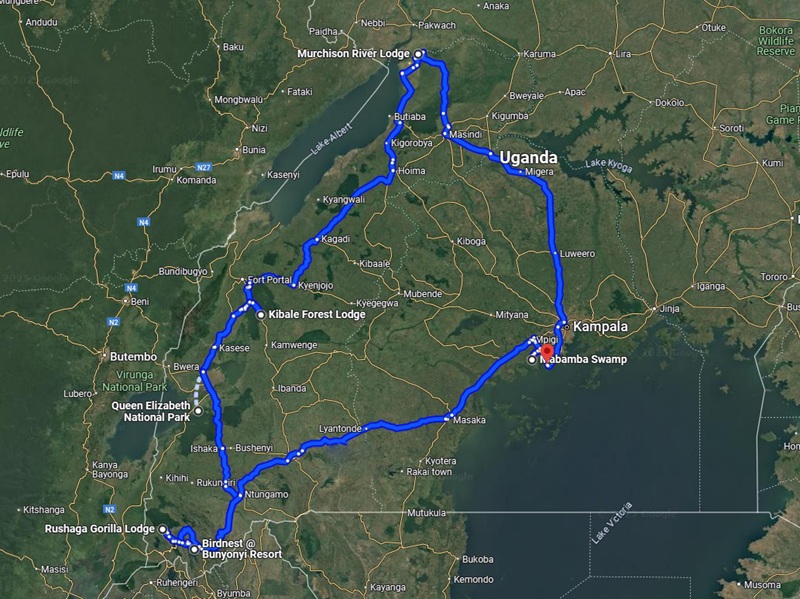
On Thursday, February 6, 2025, Eric, our driver/guide, met us promptly at 8am and we were on our way.

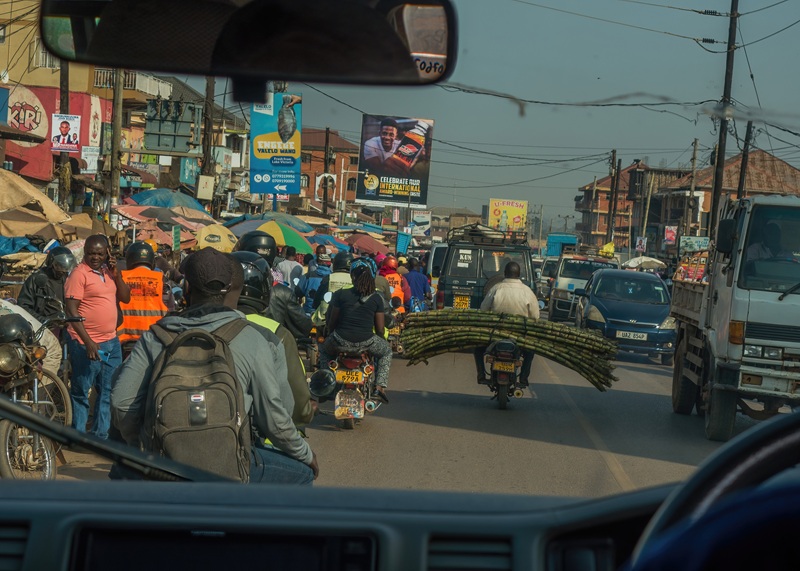
We navigated the choreographed ballet of near misses that is Kampala traffic and drove straight to the Ziwa Rhino Sanctuary.
After being poached to extinction in Uganda, 27 square miles were set aside in 2002 to repopulate rhinos and one day re-introduce them into the wild.
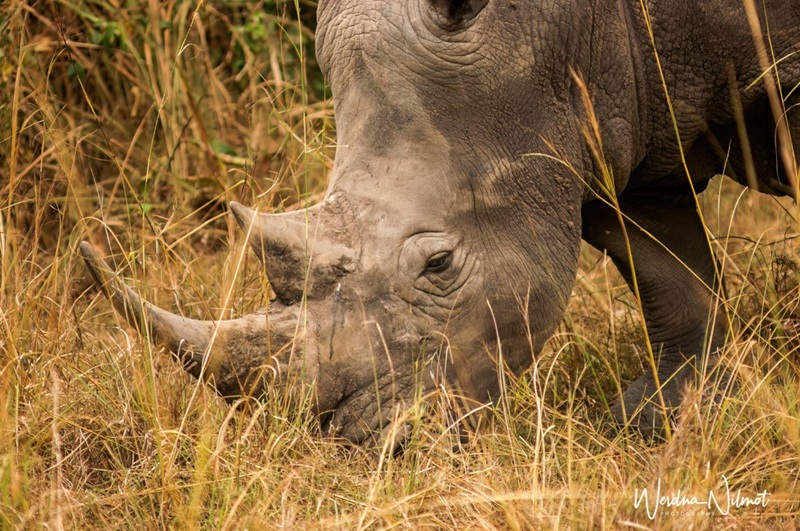
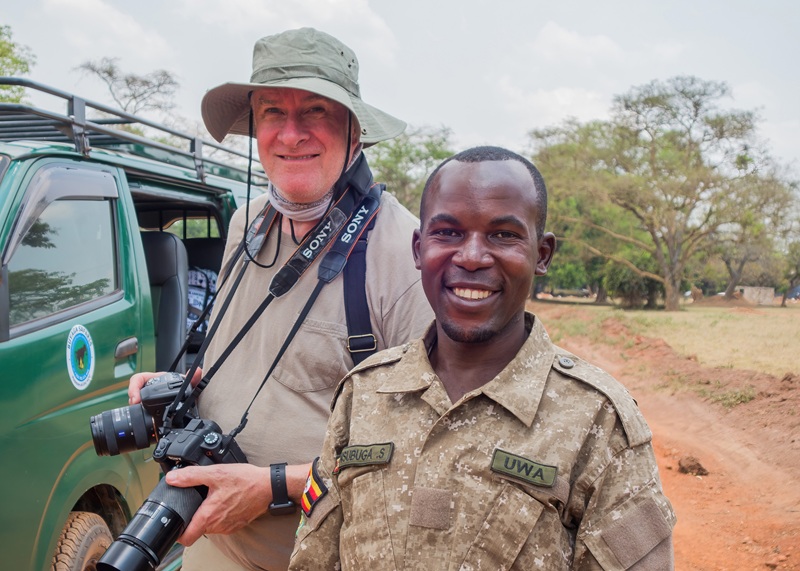
Along with our ranger/guide, Sheriff, we tracked them on foot, finding 14 rhinos and approaching closer than I thought possible.
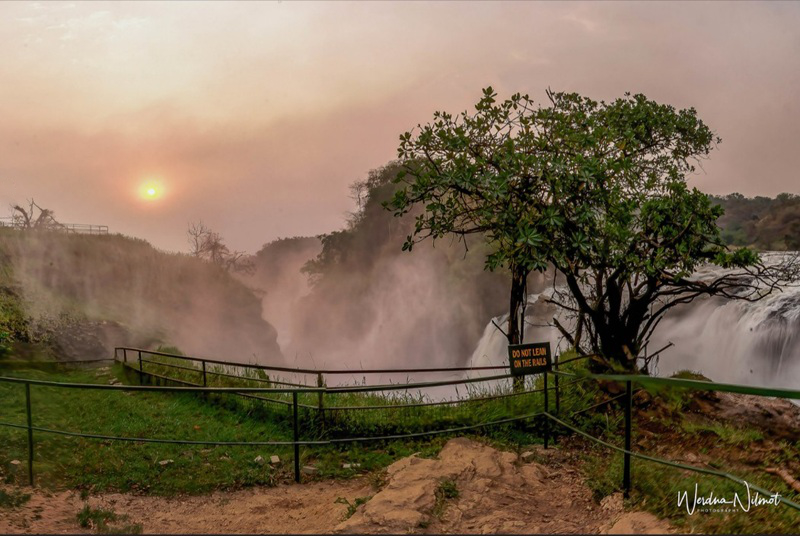
Then, we were off to Murchison National Park and the mighty Murchison Falls. The drive took most of the afternoon, and after visiting the top of the falls,
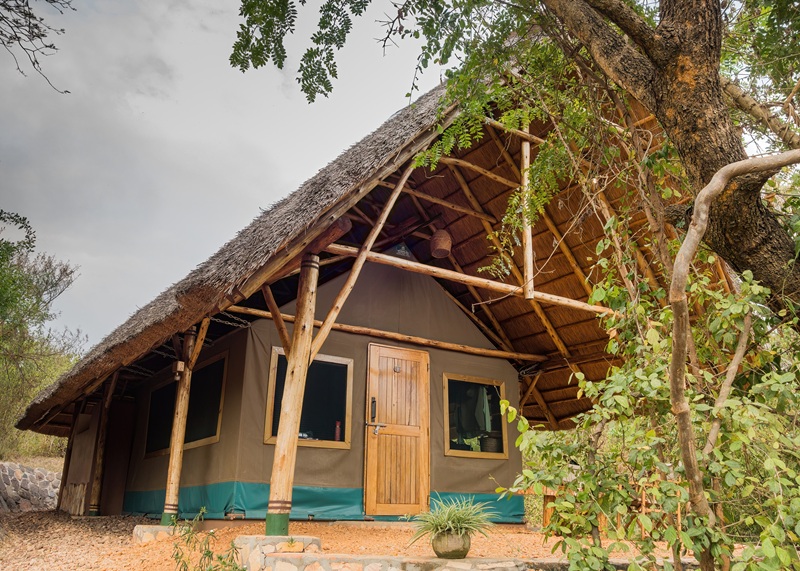
We checked into our home for the next two nights: the Murchison River Lodge. The lodge is “glamping” at its best: a sturdy canvas tent set on a bamboo deck with thatched roof covering the entire unit.
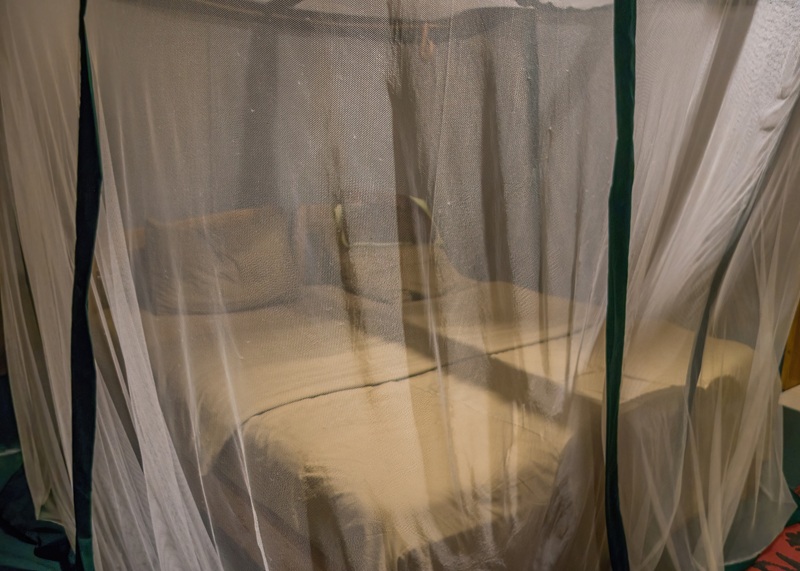
The attached bath was open air, and we were warned to keep the door shut to avoid monkeys sneaking into our bedroom during the night!
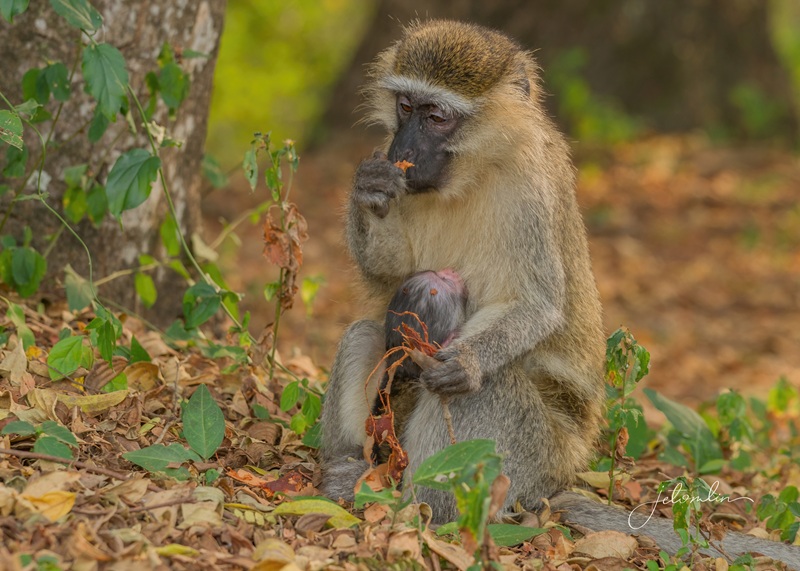
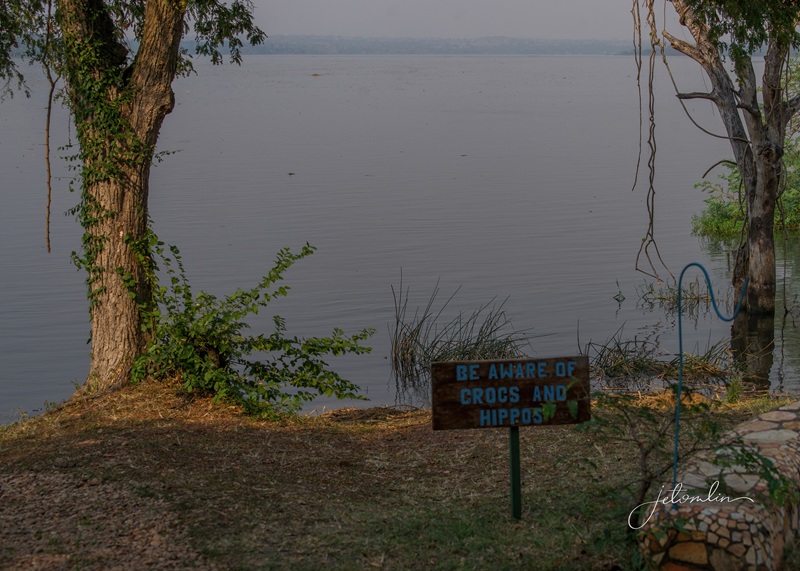
The common dining area overlooked the Victoria Nile, and after dark, the lodge provided escorts to and from our tent due to the threat of hippos coming up onto the paths.
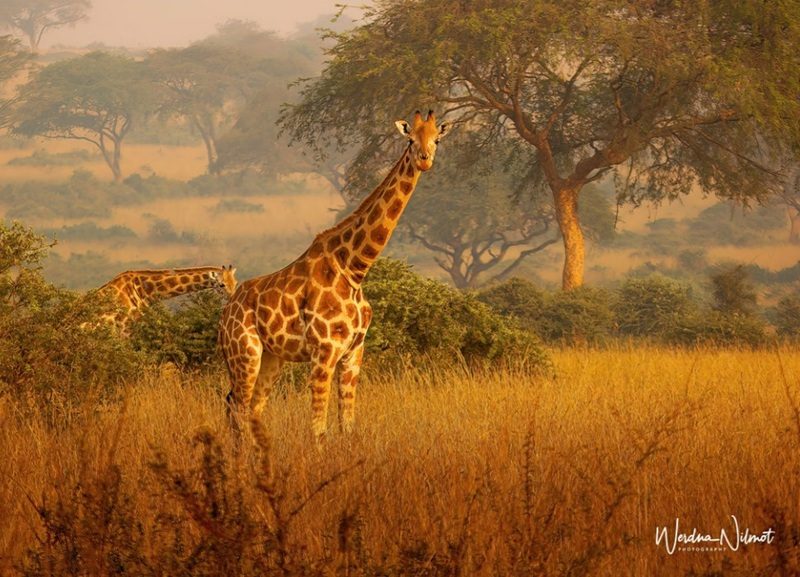
We were up early the following day for a game drive through the park. We saw lions, giraffes, the ever-present Ugandan kob, warthogs, buffalos, elephants, and dozens of beautiful birds.
That afternoon, we took a cruise on the Nile. Shortly after we were seated, we talked with Herbert, the on-board naturalist, about all the birds we had seen on our drive that morning. We compared the photos in our cameras with his East African bird book, repeating the unfamiliar names.
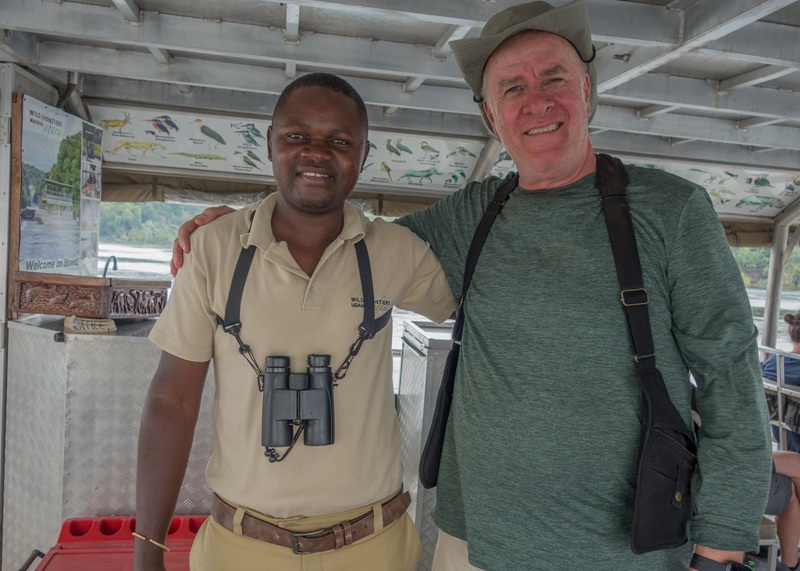
After we were underway, Herbert instructed us to follow him. He had set up two chairs in what I can only describe as “VIP” seats. We had the best view on the boat!

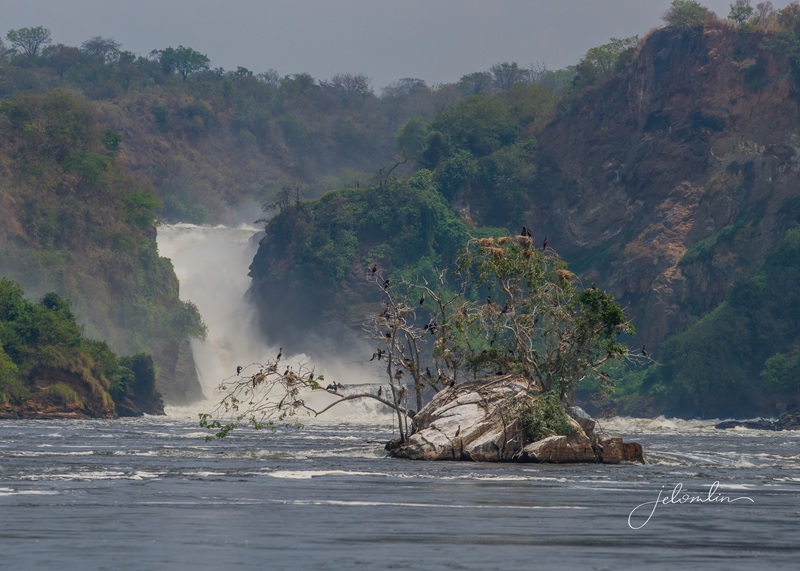
We reached the bottom of the thundering falls, our turn-around point. It was a treat to see it from this perspective after our view from the top yesterday!
Goal #1 of 4: Kibale
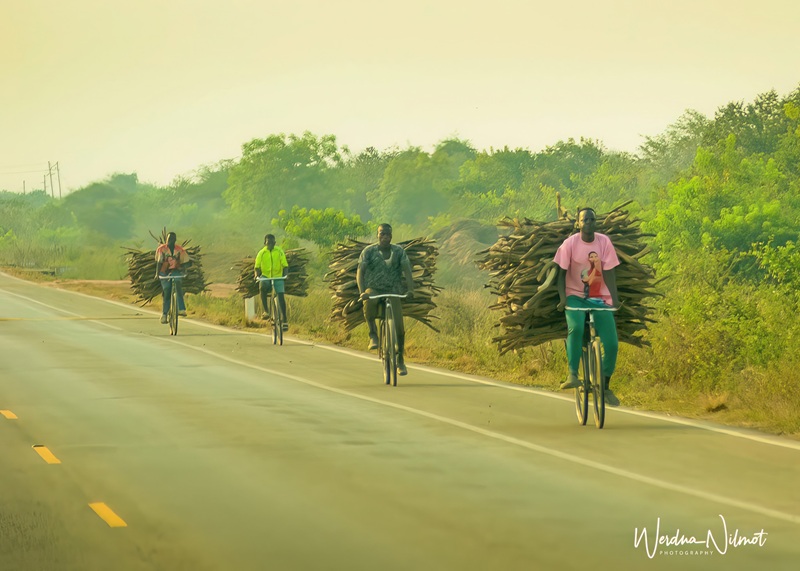
The next morning, we journeyed to the Kibale National Forest. The drive took us all day, and we enjoyed the beautiful scenery along the way. Eric provided just the right mix of conversation and quiet, allowing us to enjoy what the road gave us.
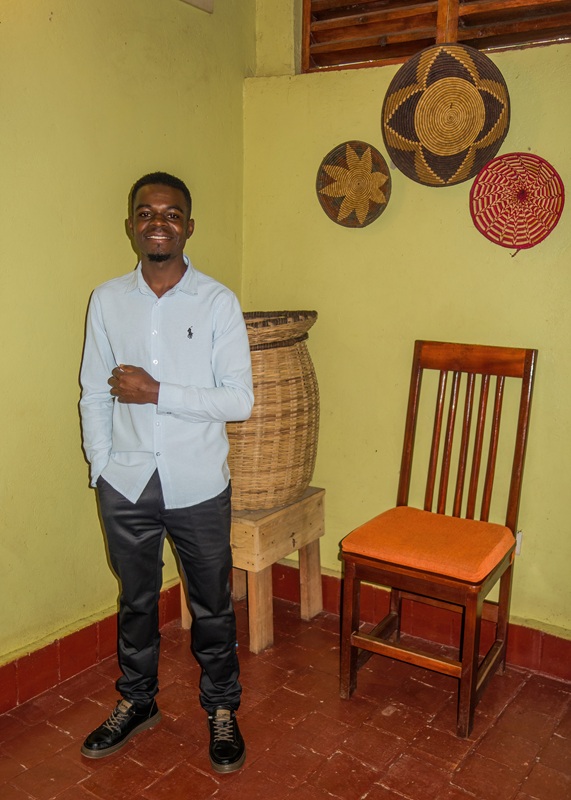
We checked into the Kibale Forest Lodge shortly before dinner. Our room was spacious and comfortable, and the manager, Dennison, a delight.
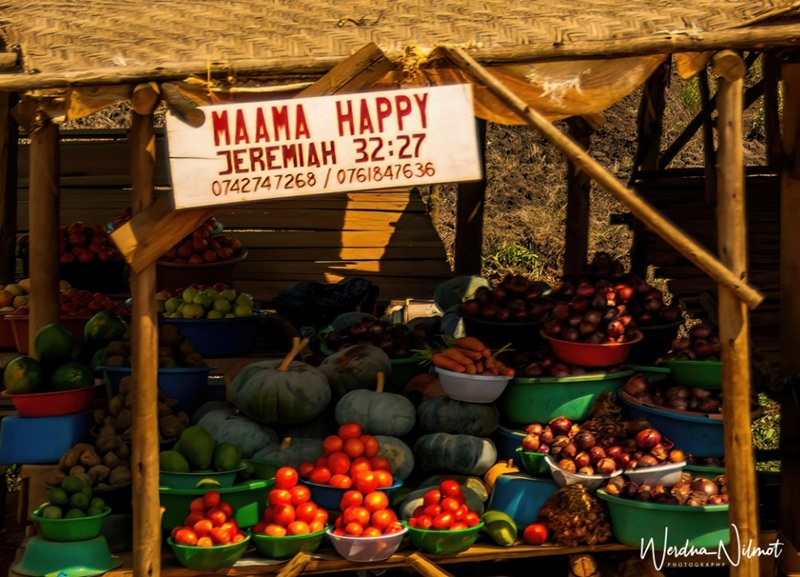
Uganda is rich in fresh produce, and we had no trouble finding delicious, nutritious vegetarian meals at every stop. Our meals at Kibale Forest Lodge were no exception.
Early the next morning we gathered at the Kibale park headquarters for our chimpanzee trek.
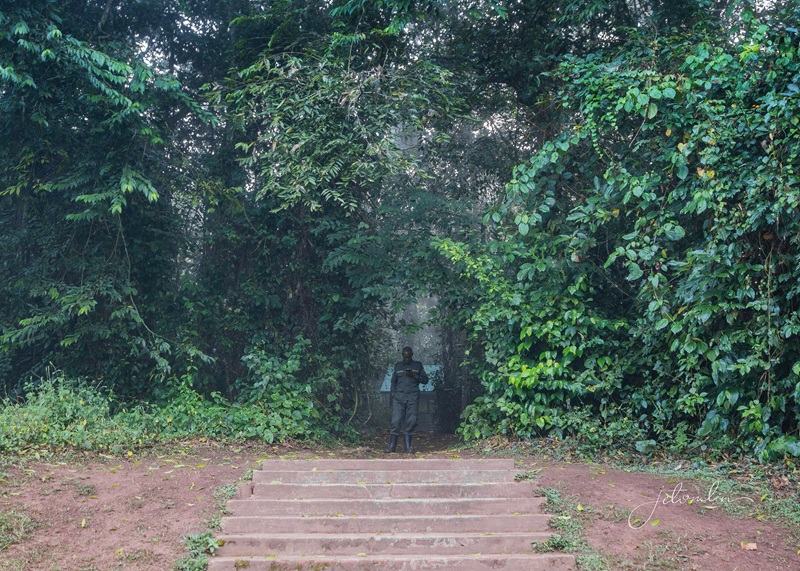
After the briefing, we were divided into groups of 8. We set off with our ranger/guide, Gordon, and two armed rangers, Russ and Nicholas.
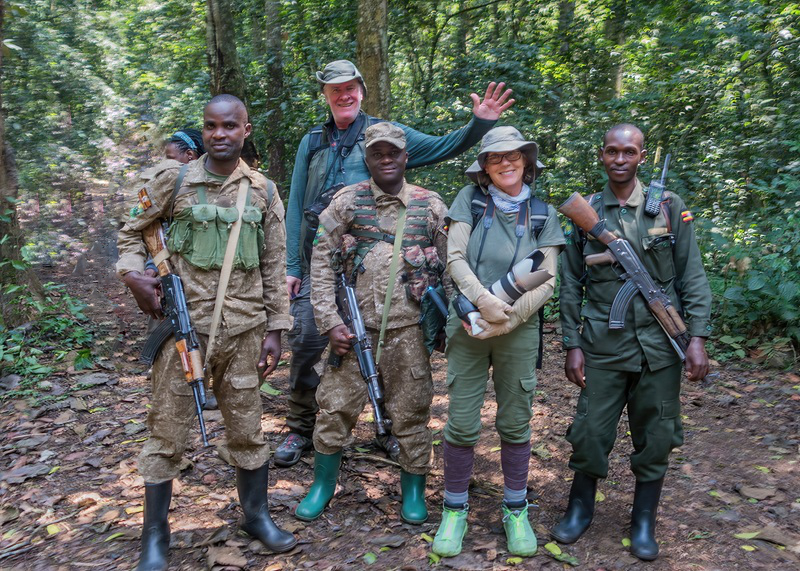
The Kibale Forest is known as the “Primate Capitol of the World,” home to 1,450 chimpanzees and on our walk, we also saw many beautiful butterflies and red-tailed monkeys. It took about 45 minutes to find our first chimpanzee, high in a tree.

After taking several photos, he took off – and so did we! We dashed through the forest to keep up with the speedy chimp. Although the path was not steep, it was “off trail” and fast-paced. We found another chimp sleeping on the ground, allowing us to catch our breath.
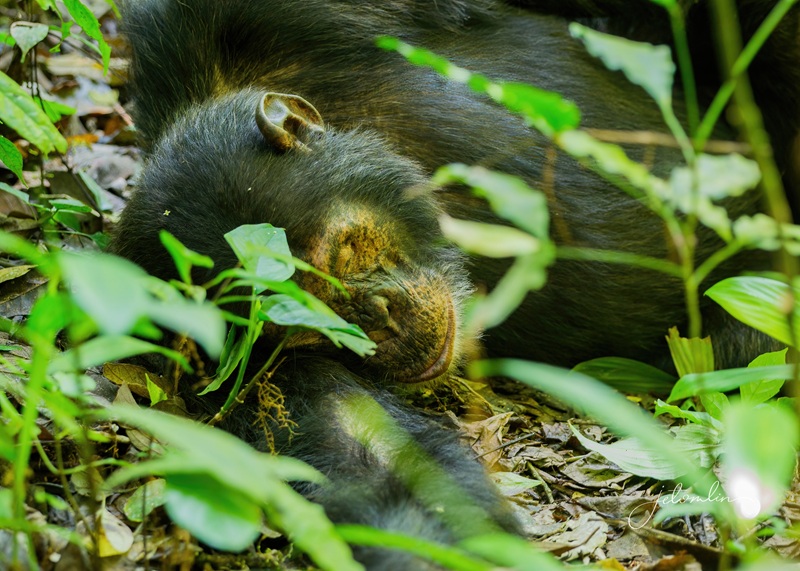
In the end, we saw 25 different chimpanzees and heard the vocalizations of another 10.
Gordon said it was “a good day.”

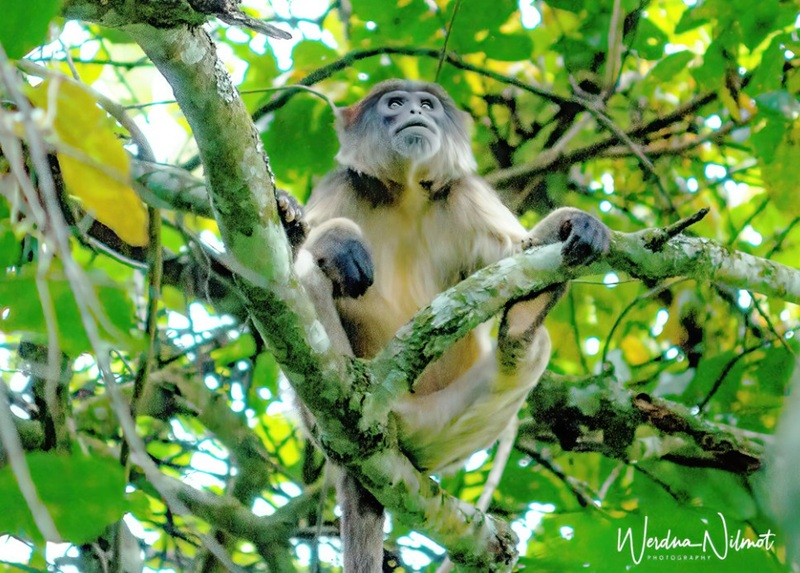
But it didn’t end there. Immediately after lunch, we met our guide, Eddie, for a walk through the Bigodi Swamp. He asked us how much time we wanted to devote to the swamp, as he also had some “community experiences” planned. We agreed to walk for about two hours, spotting red-tailed monkeys,
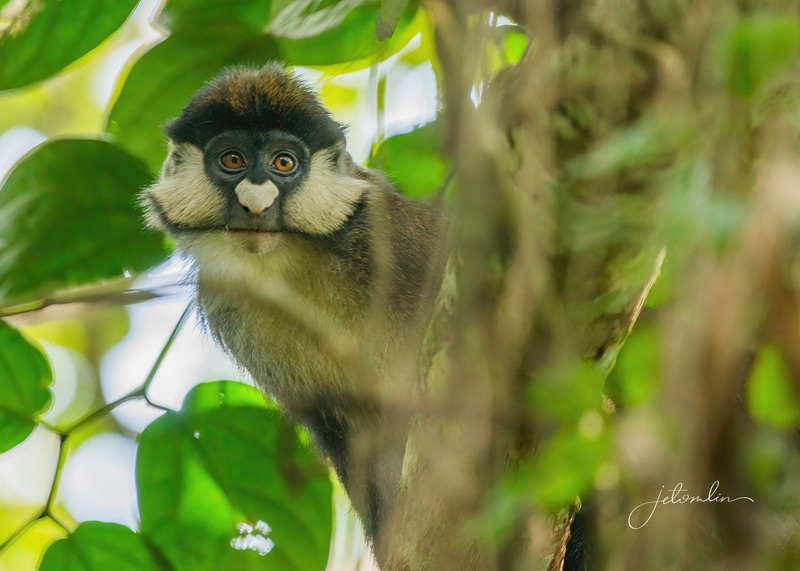
Black & white colobus, vervet, and rare, red colobus monkeys. Along the way, he also pointed out various plants used for traditional medicines, curing everything from headaches to baldness.
Eddie called us “Papa” and “Mama.” We didn’t mind—we were old enough to be his parents and it was far easier to remember than our names. Going forward, I told everyone we met to call us Papa and Mama. “You are my children of the world,“ I said.
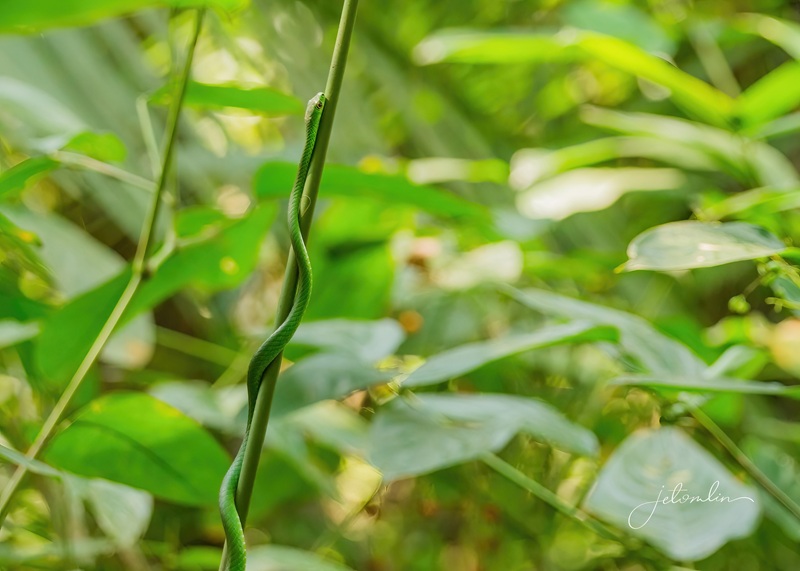
But the highlight of our walk was not the many primates we saw. Eddie asked how we felt about snakes. “We wouldn’t want one as a pet, but we love photographing them,” we replied. He backtracked a few steps and pointed out a slender green creature curling along a branch. We took a few photos and then hurried along. “A green viper,” he told us once we were safely on our way.
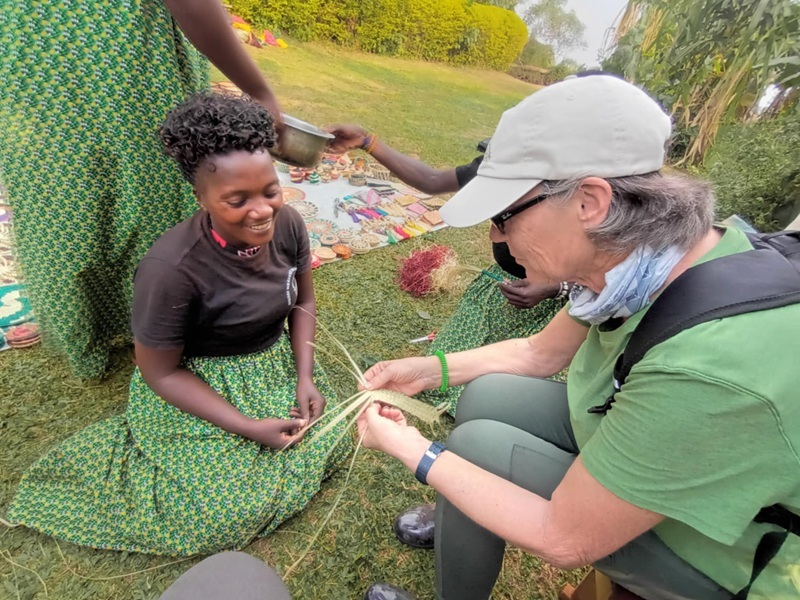
After our swamp walk, we visited the “Women Who Weave,” who entertained us with many songs and dances. And yes, I was encouraged to get up and dance with them!
I also got to try my hand at weaving, and they showed us how they make their natural dyes.
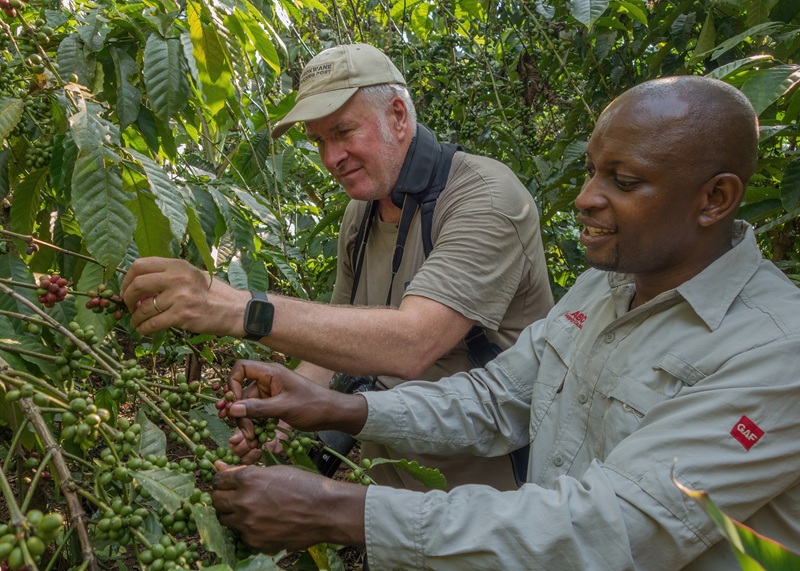
Then it was time for our “coffee experience.” Eddie explained how coffee is cultivated and harvested.
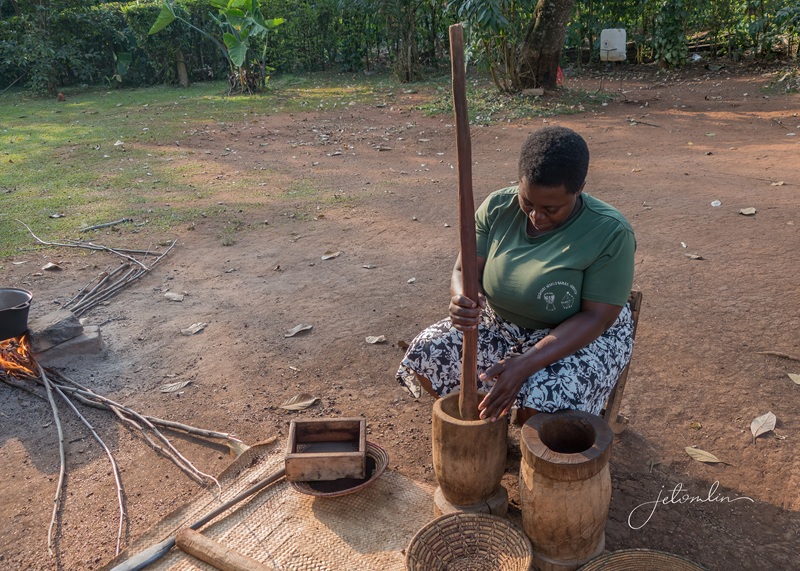
We watched as the bright red beans were roasted to a dark brown, pounded, sifted to remove the outer kernels, and sifted and pounded again until they were as fine as powdered sugar.
“Write something in the final product,” Eddie instructed me. After a moment’s thought, I spelled out the letters “L-O-V-E.”
And finally, we enjoyed the richest, most delicious cup of coffee we had ever tasted.

But there was one last surprise in store: a visit to “Rest in Banana.”
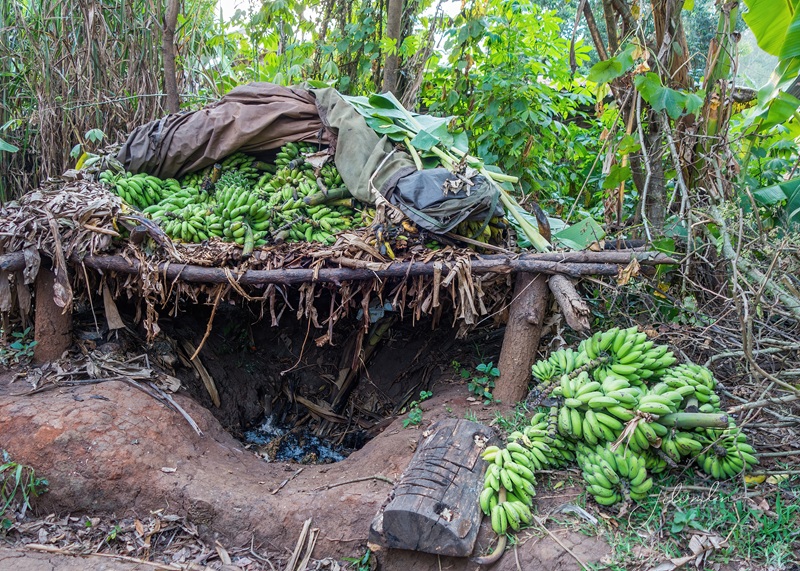
For the Banana Man, every day is banana day. He demonstrated how he makes banana juice, turns it into banana beer, and finally distills it into banana gin—40 and 60 proof! My “Putin Special,” he said.
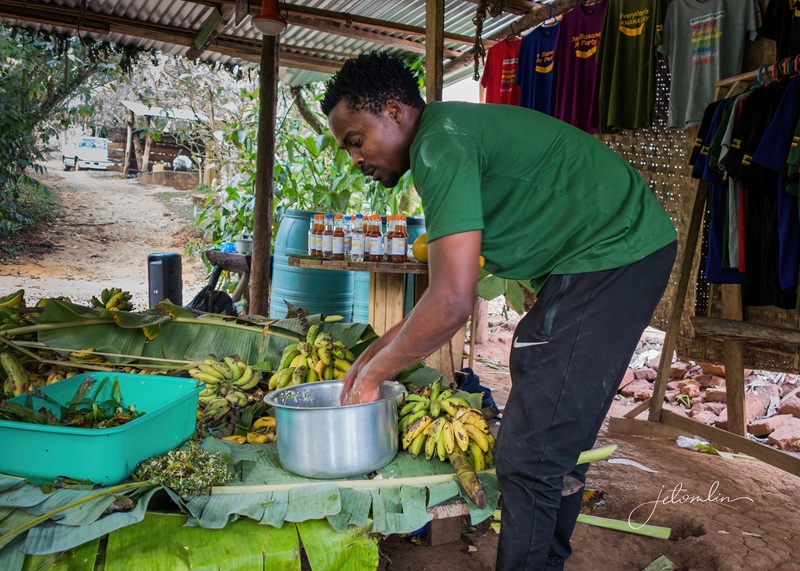
Each step of the way, we were given a tiny shot glass to taste.
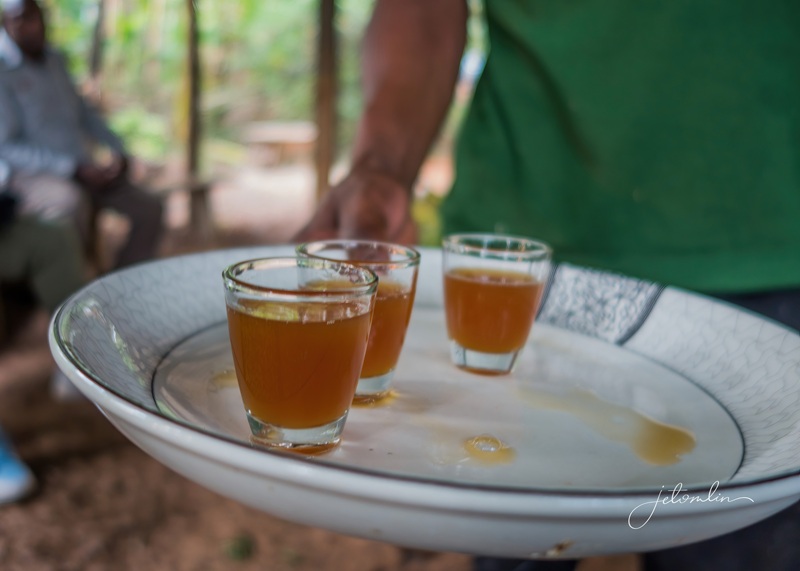
It was now around 5 pm, and the Banana Man had been brewing—and sampling—his product all day!
The next morning, we transferred to Queen Elizabeth National Park and our home for the next two nights. Elephant Hab turned out to be our favorite accommodation of the journey. Our spacious cottage had a big front porch,

King bed, a separate changing room, and an en suite bath. The entire structure smelled of cedar. It was beautiful.

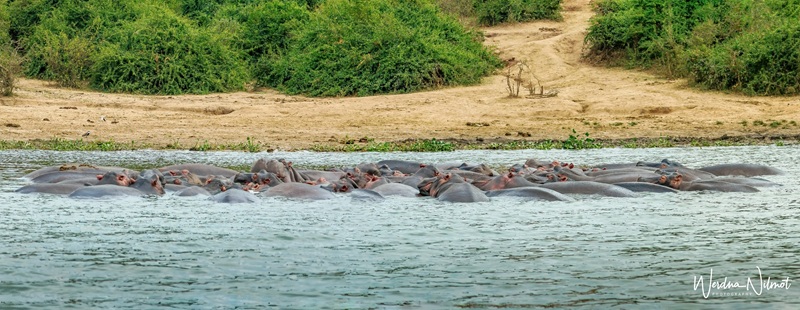
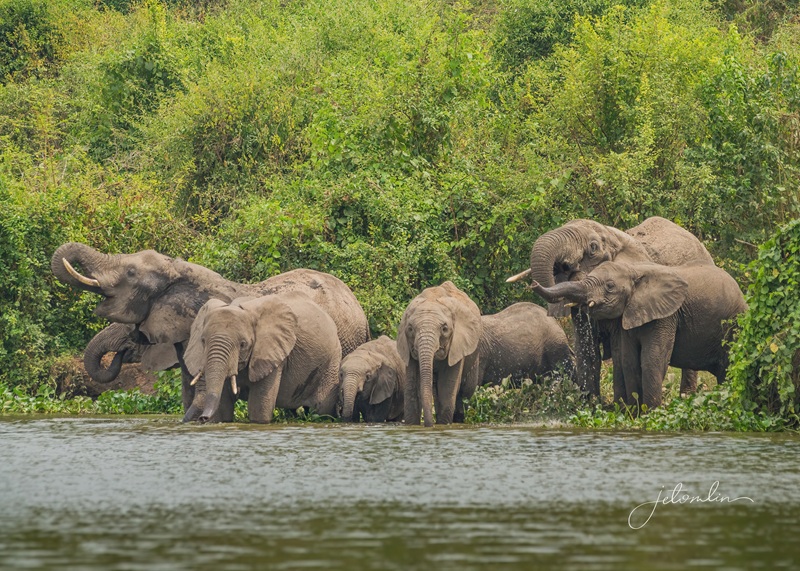
After we checked in, we went for a launch cruise along the Kazinga Channel.
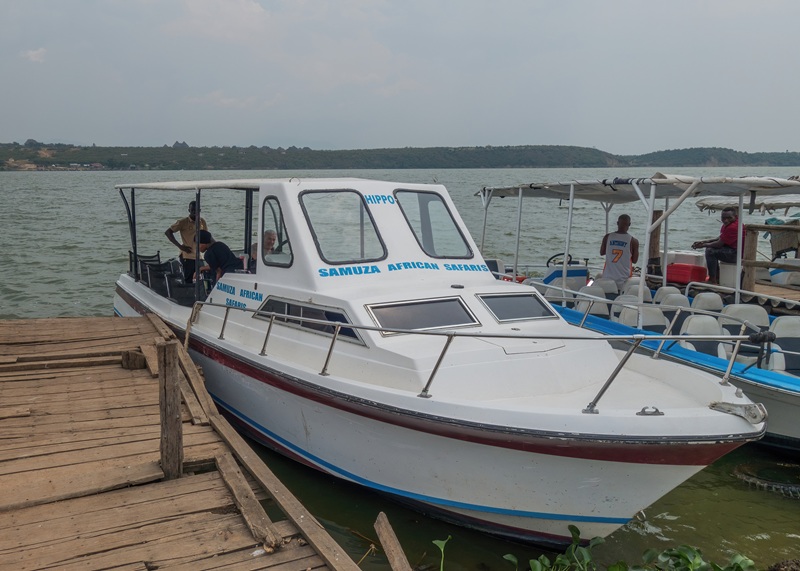
The hippos were so thick you could almost step across the river on their backs,
But the highlight was a huge herd of elephants who came down to the water’s edge.
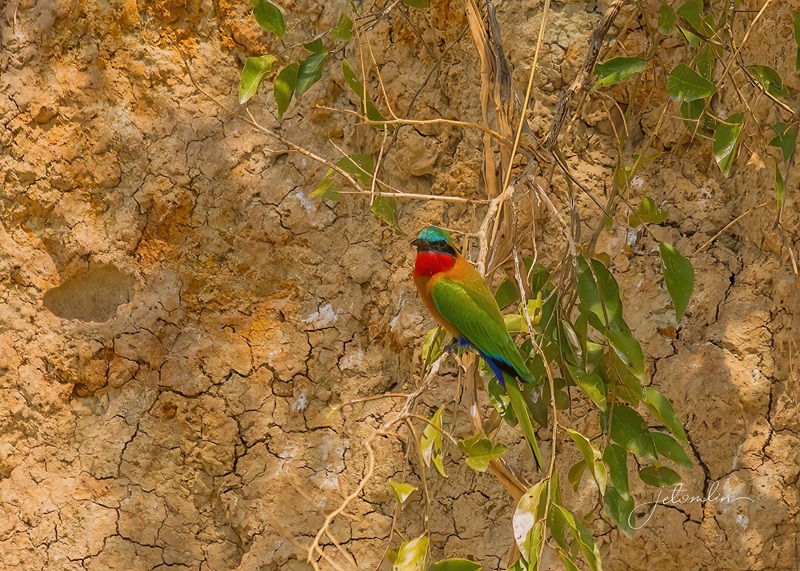
We also spotted many monitor lizards, crocodiles, and countless colorful birds.
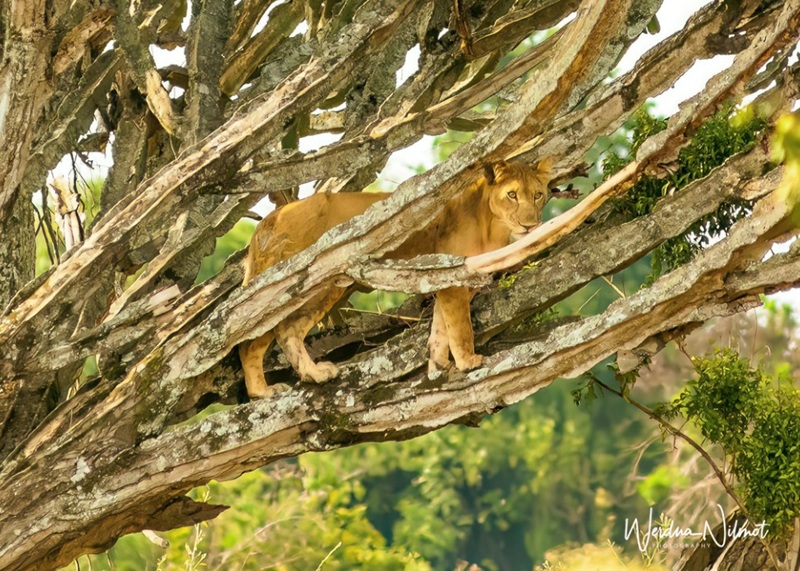
After the cruise, Eric asked if we would like to go on an impromptu game drive. “YES!” we enthusiastically replied. This turned out to be one of the most thrilling sightings of our trip. We drove the Channel Track at Queen, stopping to photograph two lions resting in a tree. We enjoyed all the warthogs and kobs that crossed the path.

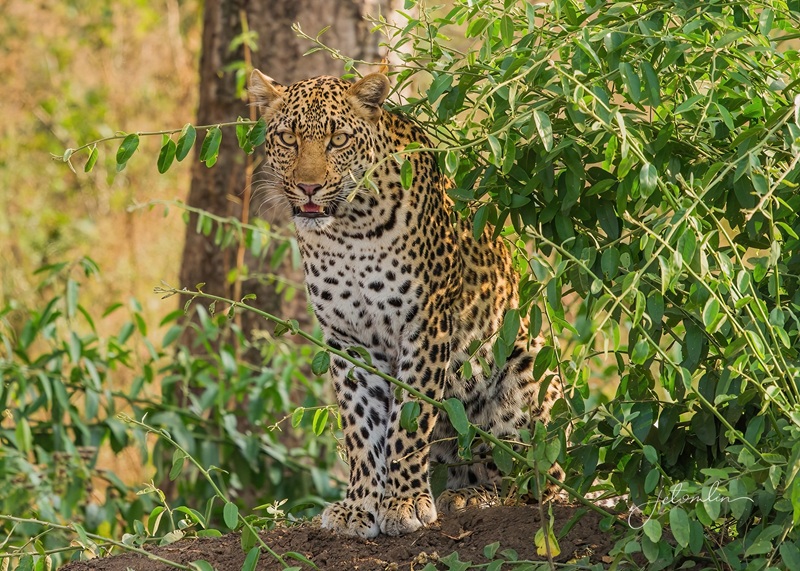
A bit further along, something caught my eye, and I cried, “Stop! Back up! I think I saw a lion.” Eric quickly backed up, and sure enough, there was a cat sitting against a mound of dirt. TG looked through his 500mm lens. “That’s not a lion,” he said. “It’s a leopard!”
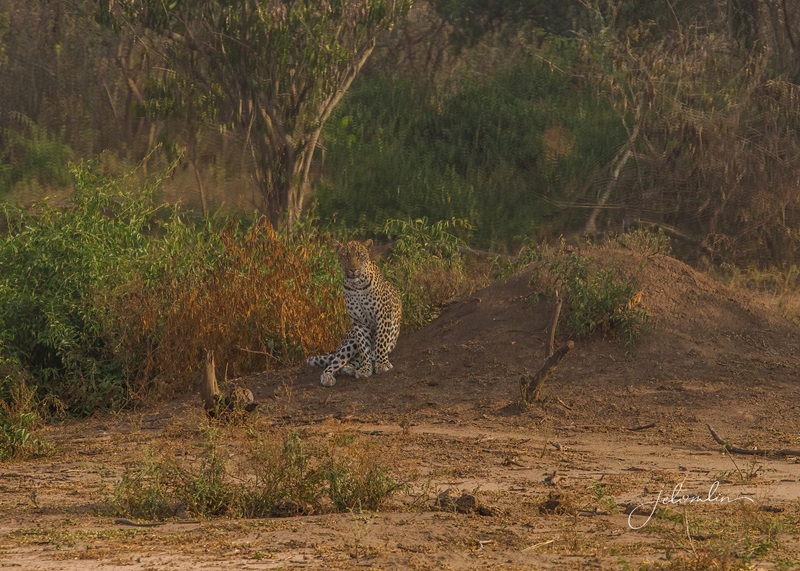
The beautiful animal walked closer as we watched, finally lying about 20 meters from the van.

Eric quickly called his fellow guides, but it took almost twenty minutes for other vehicles to join us. In the meantime, we had the photo opp of our dreams.
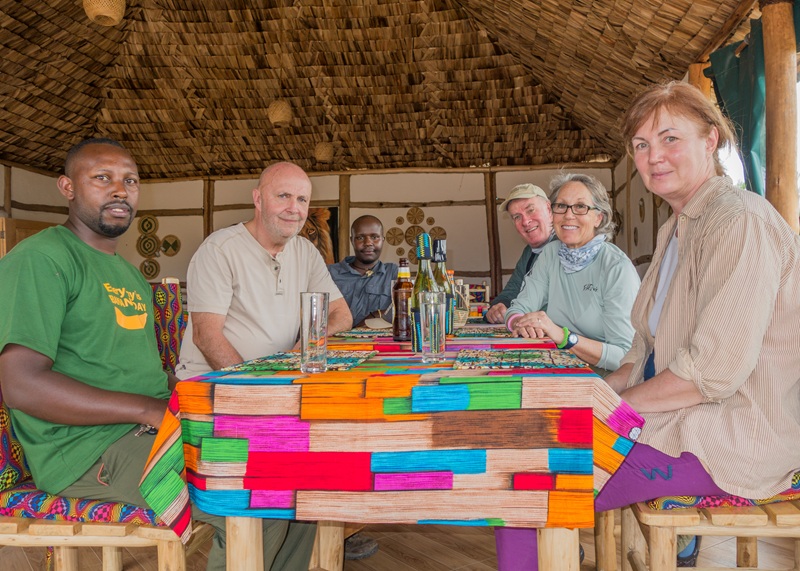
We were joined on this part of our journey by a lovely Czech couple: Martina and Ivan. We ate dinner together both nights and would later meet them again in Bwindi.
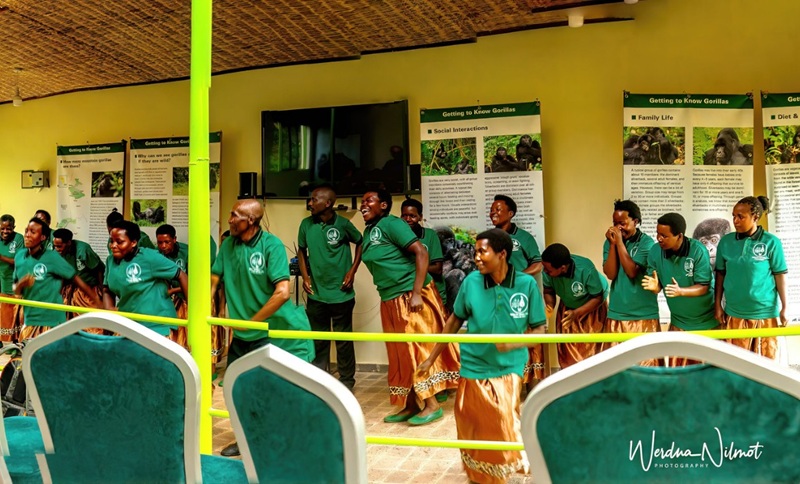
But while at Elephant Hab, we were treated to some special visitors. A group of children from a local orphanage gave us a pre-dinner song and dance performance. Most of their songs were energetic and joyful,
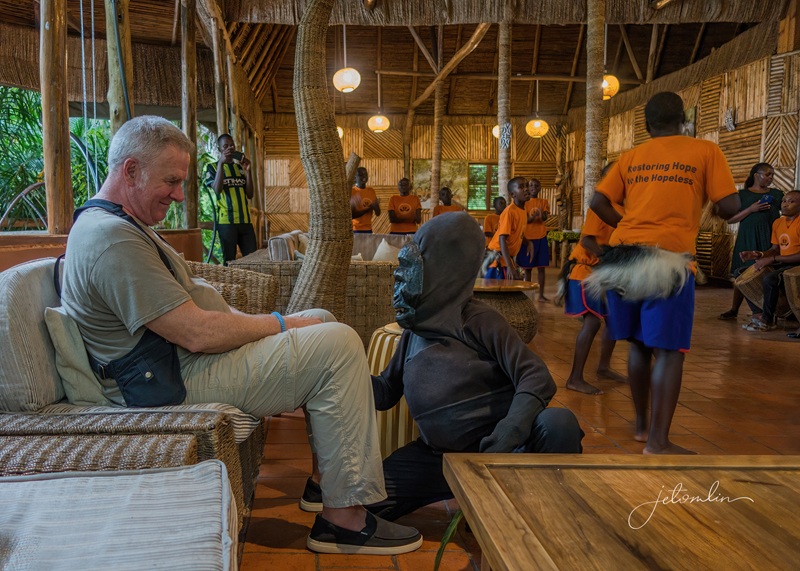
But one broke my heart: a song about AIDS and loss, a poignant reminder of the suffering in this part of the world and how truly blessed we are in the USA, even in the uncertain political times of 2025.
The following morning, Eric took us on a drive to the craters.
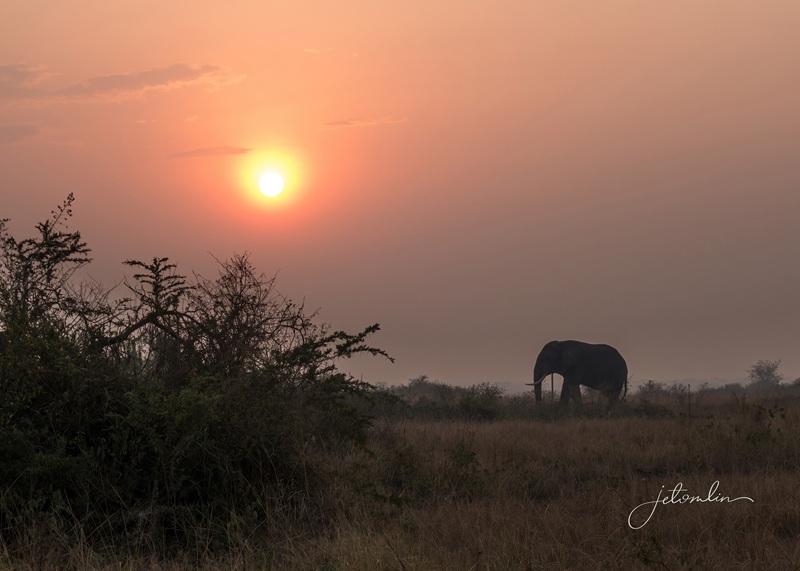
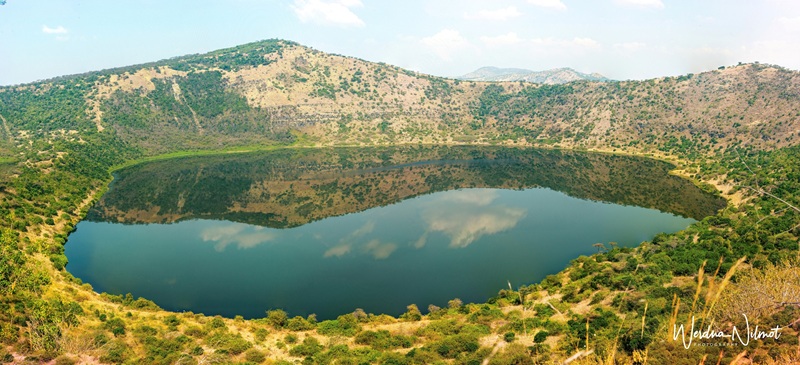
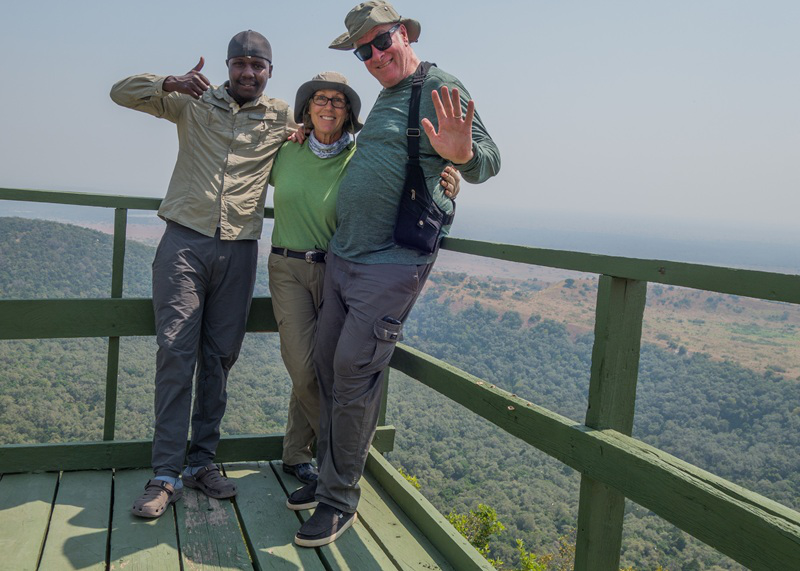
There are multiple craters in this section of the park, many of which are beautiful lakes, but some are used for harvesting salt.
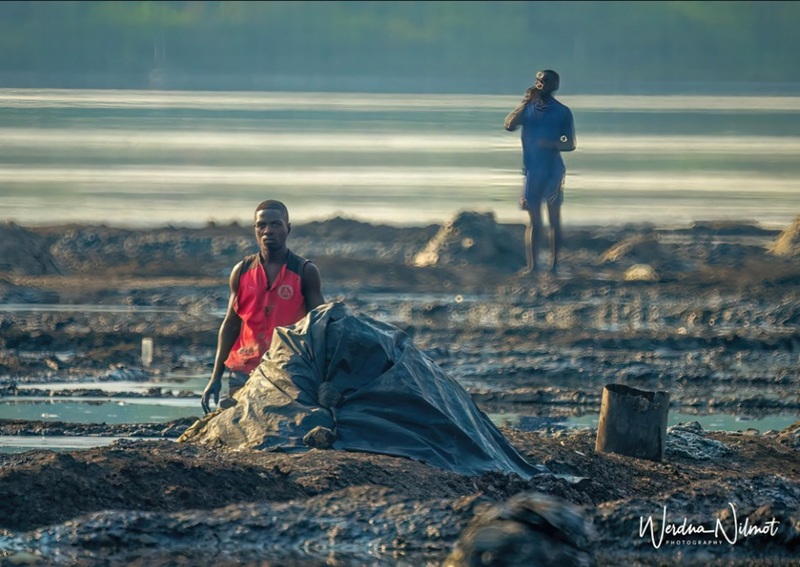
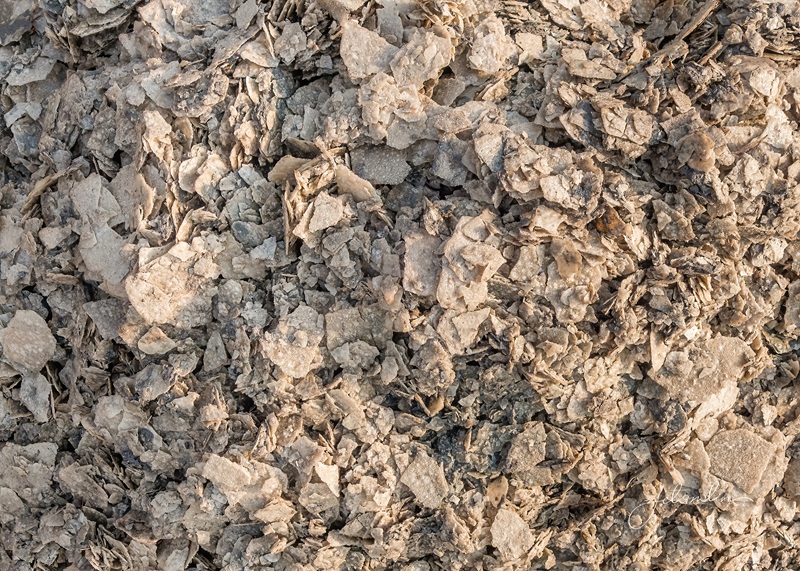
We stopped at a salt lake to watch the workers standing in the thick black mud, scooping up the water and tossing it onto the crusty surface.
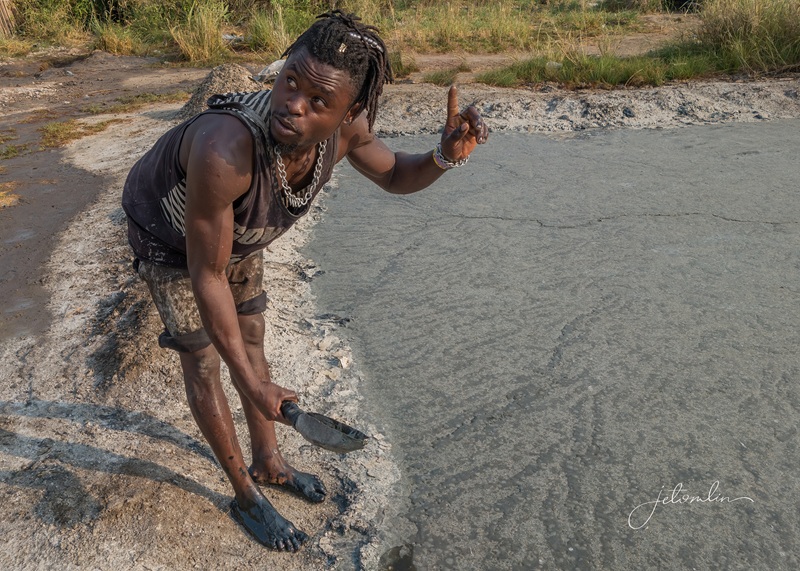
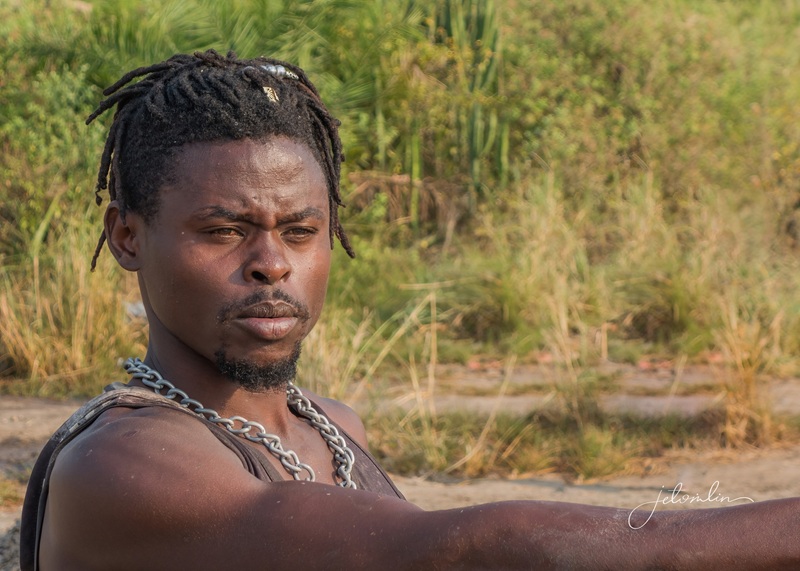
Once the crust is thick enough, it is gathered up and dried. The dirty gray piles were a world away from the pure-white crystals we find in the grocery stores at home!
The next day, we drove to the Ishasha sector in search of the famous tree-climbing lions.

However, due to a prescribed burn, the lions had moved away from any accessible location.

We did, however, see lions in trees in both Murchison and Queen. So even though we did not see THE tree-climbing lions, we did see lions in trees!
Late that afternoon we arrived at Bakiga Lodge in Bwindi, minutes from the entrance to the Impenetrable Forest. Our room was basic but comfortable and clean,
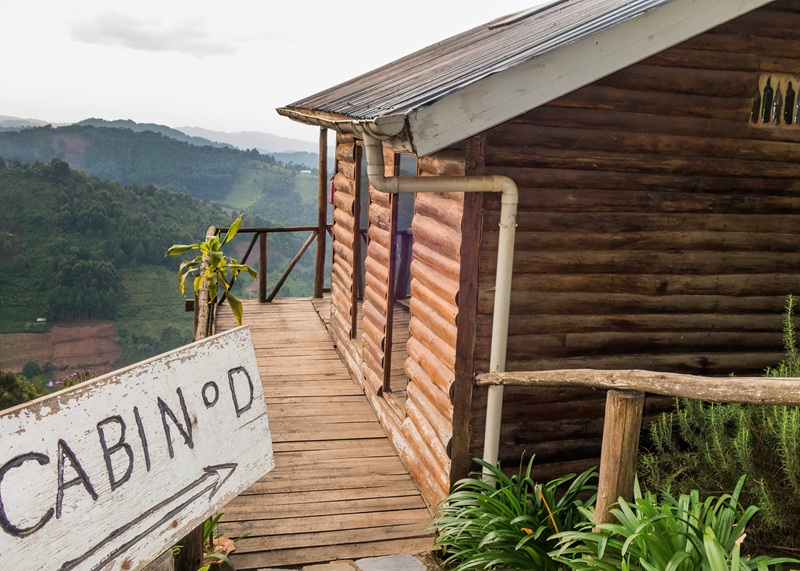
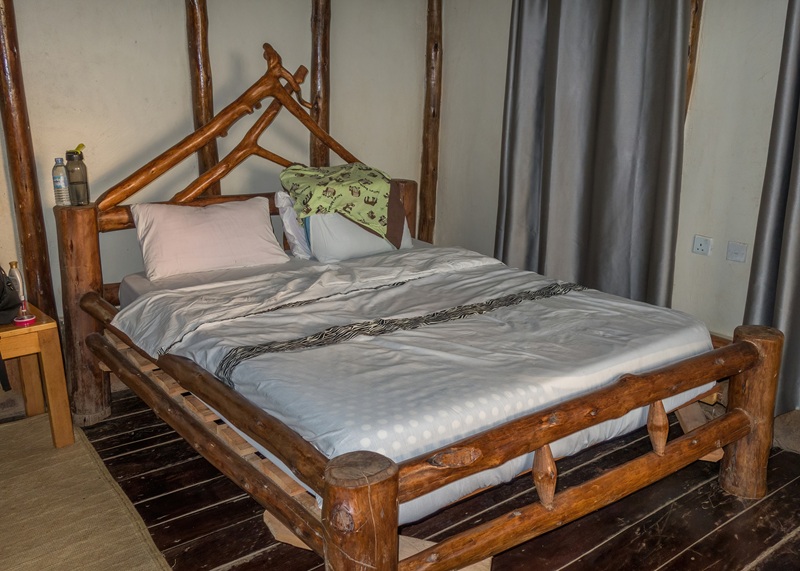
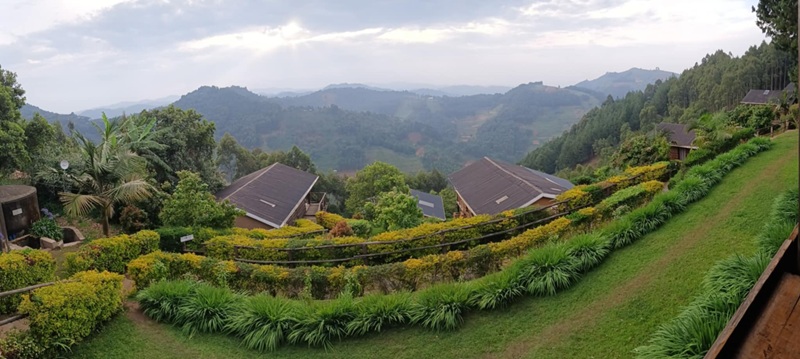
And the view from our balcony was worth a million dollars. We went to bed early, anticipating what the next two days would bring.
Goal #2 of 4: The Impenetrable Forest
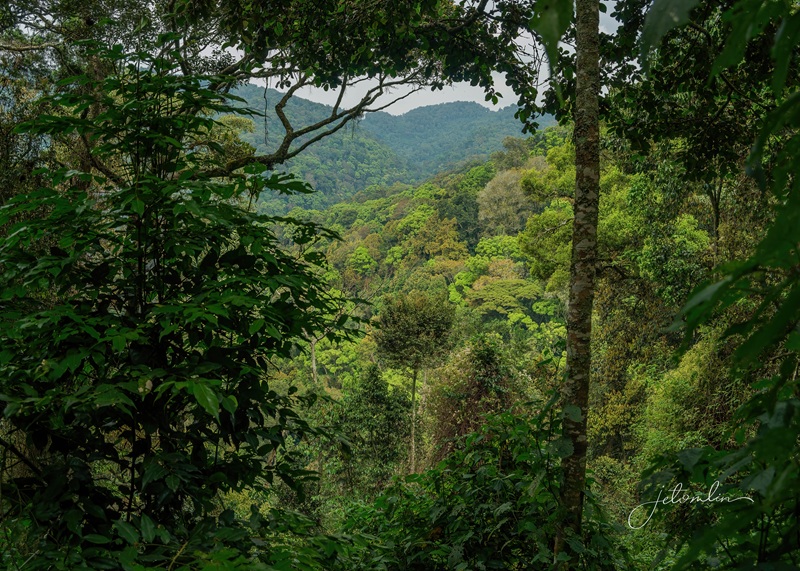
The Bwindi Impenetrable Forest is a World Heritage Site, one of the most biologically diverse areas on earth.
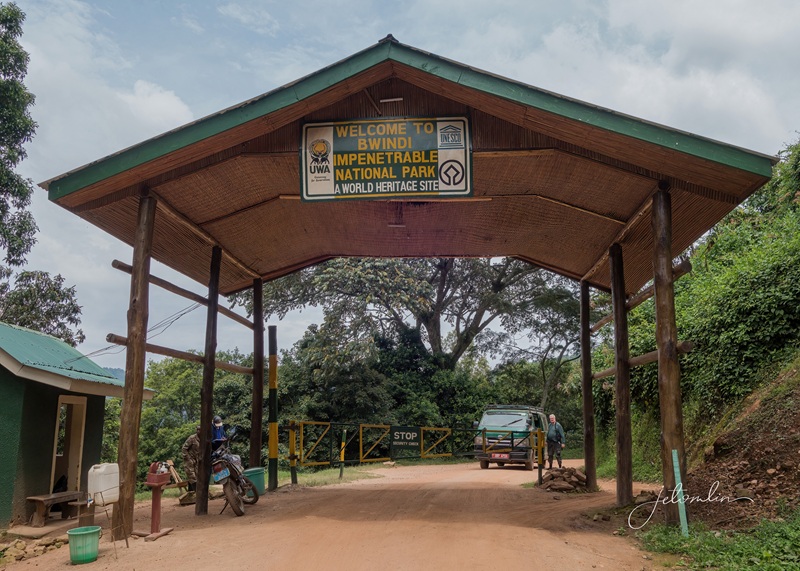
It is home to roughly half of the world’s mountain gorilla population: approximately 600 gorillas live in this rich, dense rainforest.
Eric drove us to the park headquarters for the briefing about our day’s activities. Then we were divided into groups of eight and assigned a gorilla family.
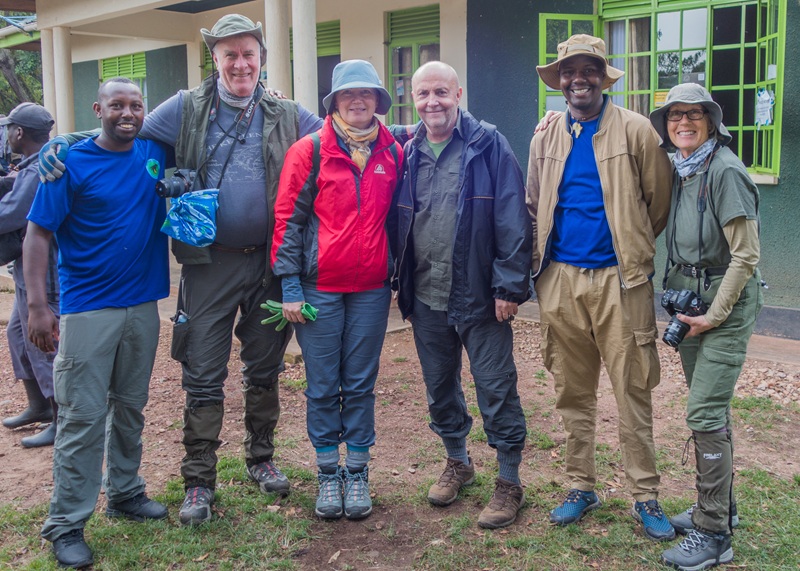
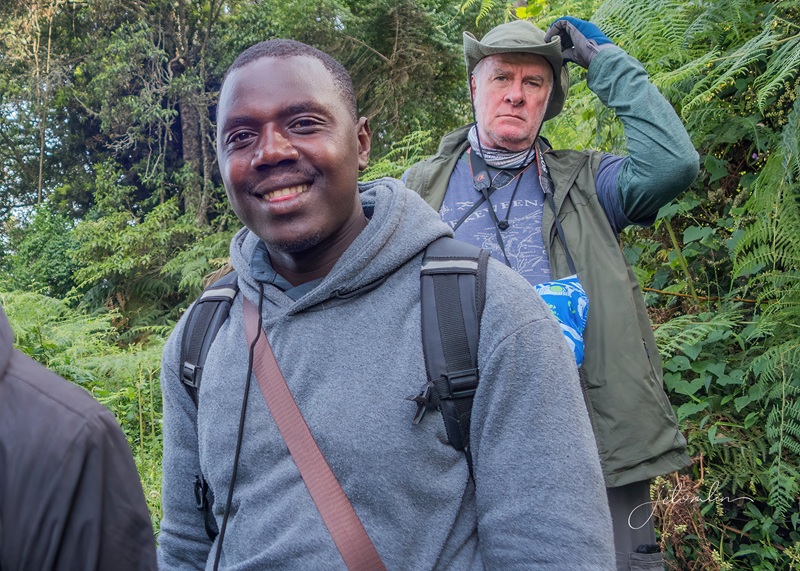
This was also when we hired our porters: strong young men and women who carried our backpacks and lent a helping push or pull when needed. Nestor was adorable, and I loved him so much that I asked for him again the next day.
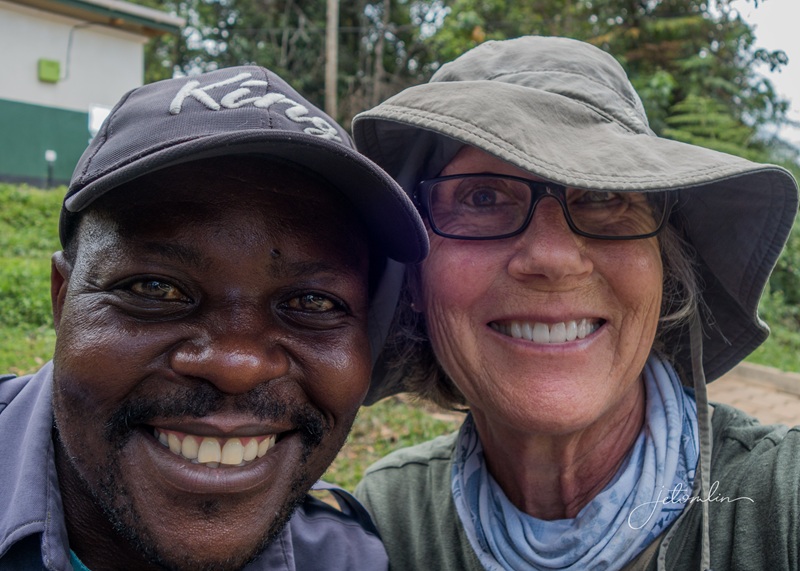
TG hired Silas, and we also hired him the following day.
Today, we were assigned the Mukiza gorilla family.

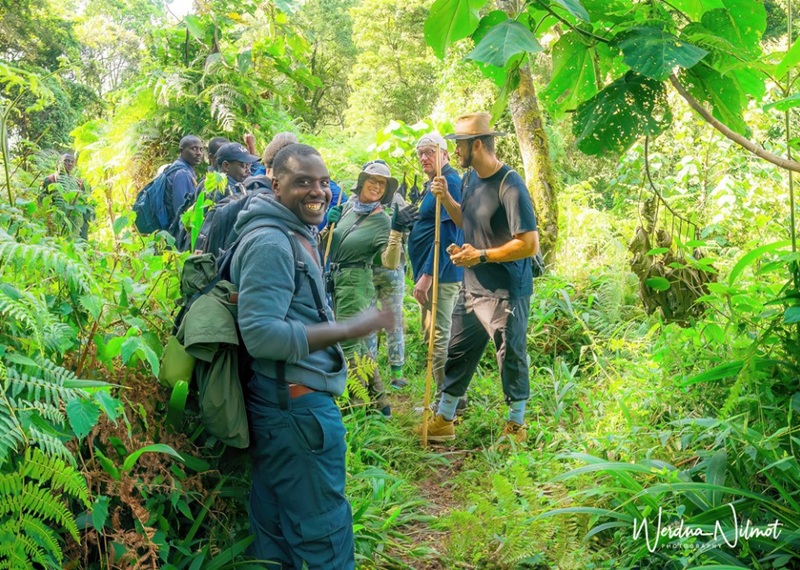
Our ranger/guide, Ben, along with armed rangers Felix, Roland, and George, led us up and down the steep jungle terrain for almost two hours, stopping many times to hack their way through the thick foliage, before we found our family.

I thought it was the most physically challenging thing I had ever done, including my 13 full, 26.2-mile marathons.
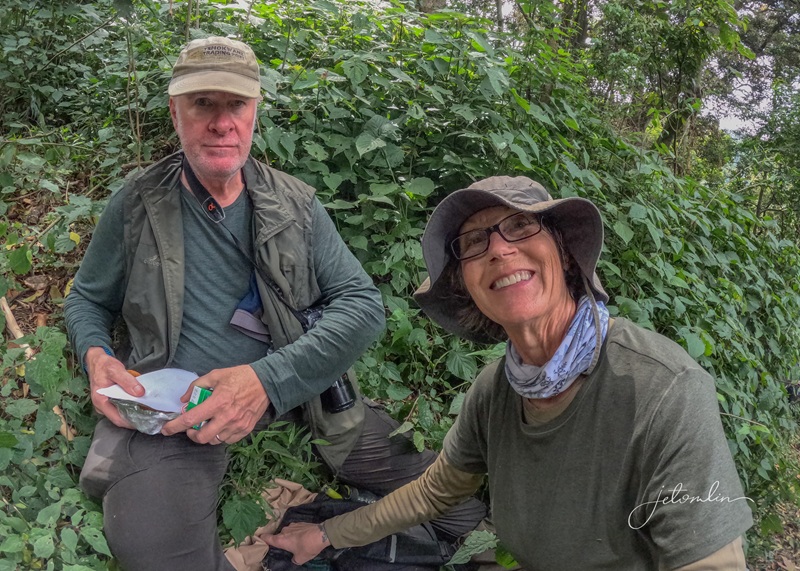
The hour we spent with them went by quickly as we struggled to find good photo opportunities through the many branches and bushes obstructing our view.
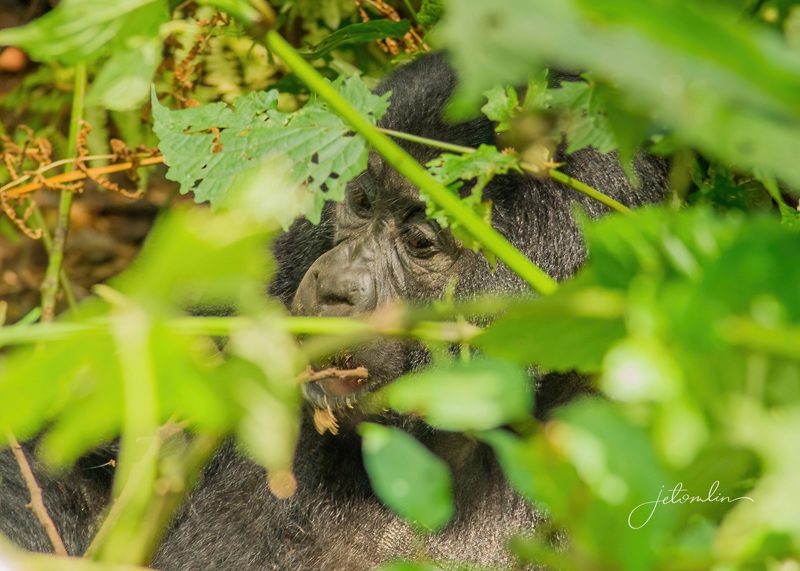
Elevation in the Impenetrable Forest reaches 7500ft. The altitude, combined with the required masks and the adrenaline rush, made it difficult to breathe.
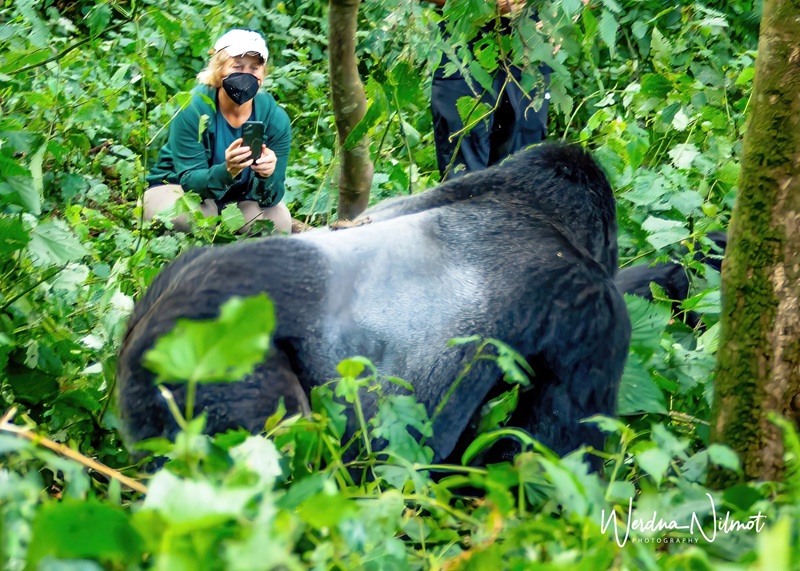
But to stare into their intelligent eyes took my breath away. It was life-changing, and on that day, what was wild turned to wonder.
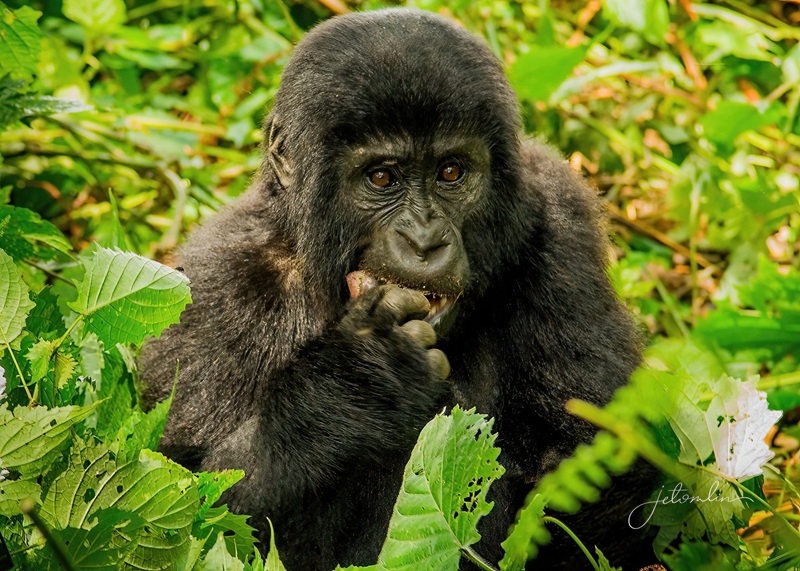
It took another two hours to return to headquarters, where Eric waited to take us home to the lodge. Too tired to do anything that afternoon, we opted for showers and a nap before dinner. We were doing this all over again tomorrow!

After our briefing the next morning, we were assigned to ranger/guide Allen and two of the guards from yesterday, Roland and George. Today we were to visit the Bitukura family. They are the oldest habituated gorilla family in Bwindi, comprised of three silverbacks, two blackbacks, multiple juveniles, and babies.

We drove up and up to the top of the mountain and then began our hike down – straight down – a steep, slippery 30-degree-angle hillside. It wasn’t easy to breathe between the altitude and exertion, and Silas and Nestor earned their keep on this day. But after about an hour of slip-sliding, we reached the family.
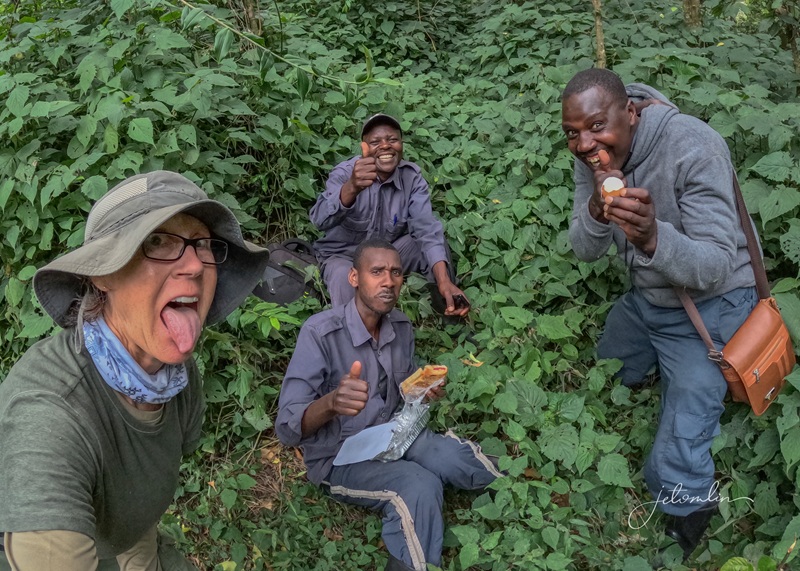
And then things turned to magic. Standing on narrow paths with thick vines to keep us from tumbling over the cliffside, the gorillas walked right by us – one even slapped TG on his backside as he ambled by.
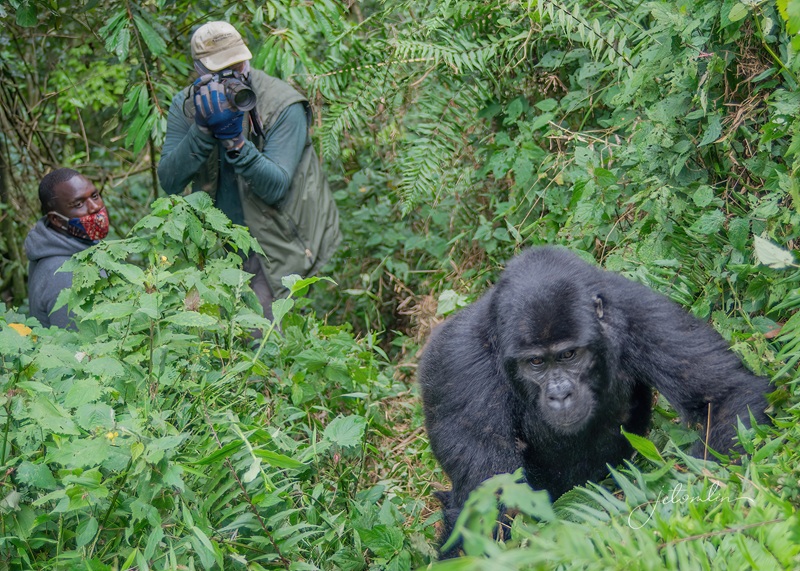
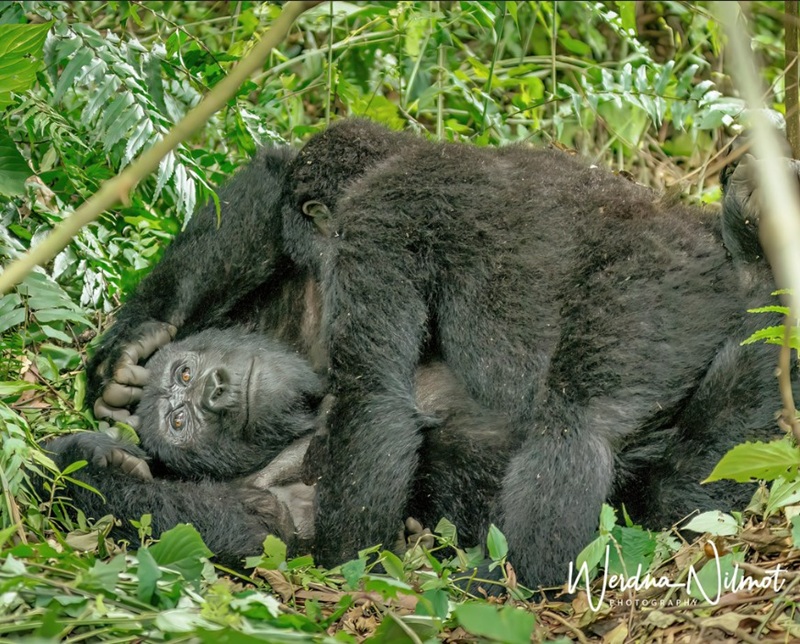
As I watched, a baby climbed up on his mother’s chest and began to nurse. She looked at me as if to say, “I’m Mama, and this is my baby.” I put my camera down and stared back into her eyes. “I’m Mama, too,” I silently whispered. It was a moment I will never forget. Considering we share 97.4% of our DNA, it’s no wonder the line between Mama and me became blurred.
Today’s trek was shorter but even more challenging than the day before. What went straight down had to go straight up, and it seemed to take forever to scramble back up the steep hillside.
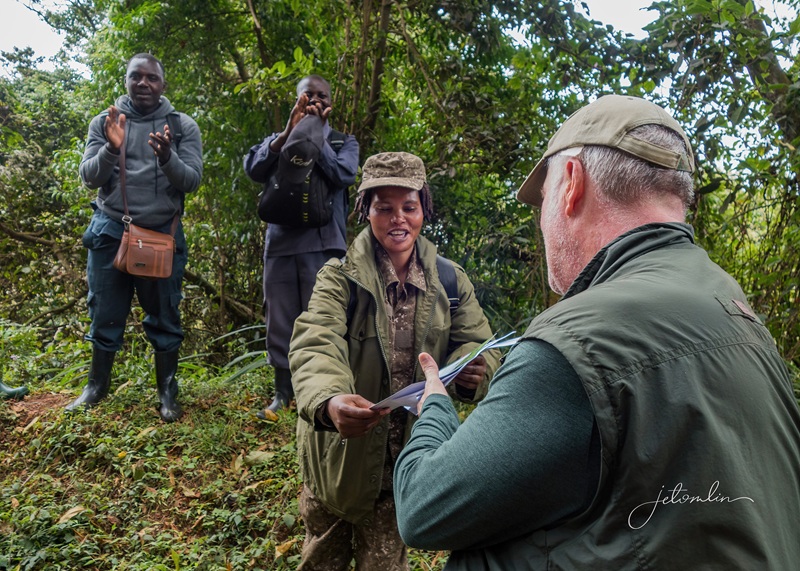
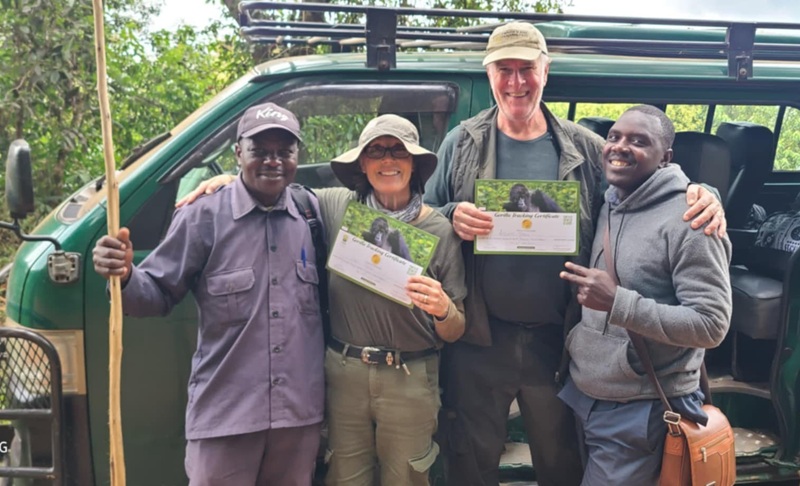
But in the end, it was only three hours from start to finish, and before we knew it, we were back in the van with Eric, heading towards the Mgahinga National Park.
Goal #3 of 4: Mgahinga
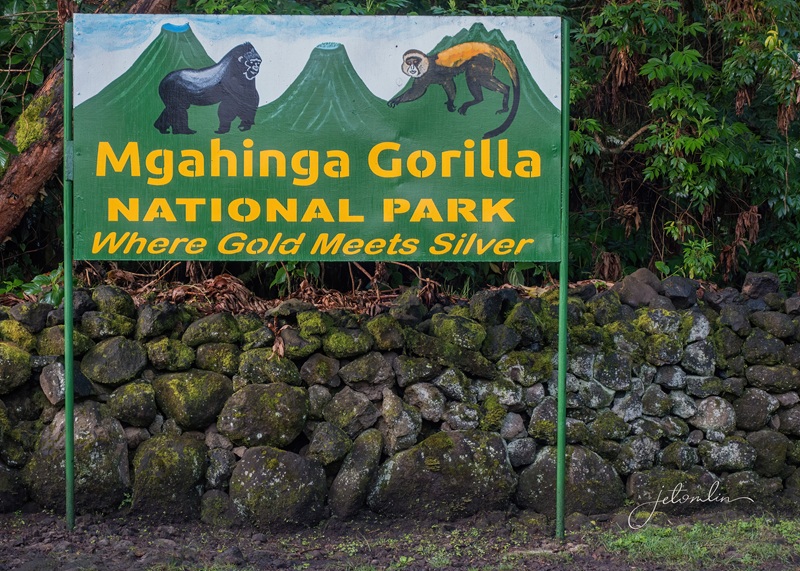
Our home for tonight was a guesthouse: Amajambere Community Camp. It was simple but clean and just steps from the national park entrance.
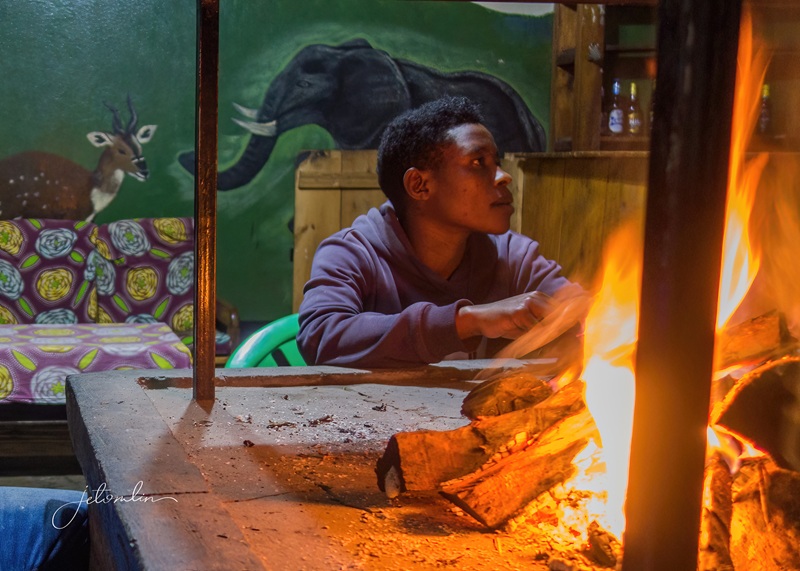
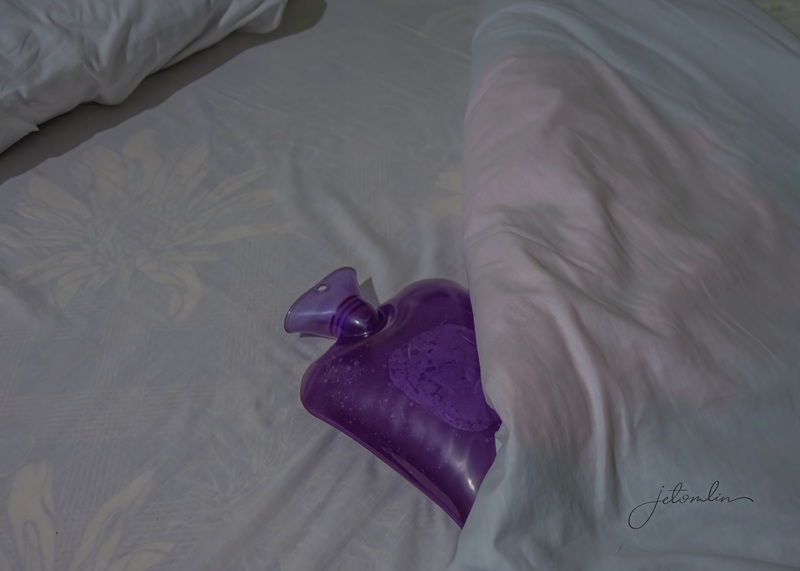
The area is high in the mountains, and the night air was so cold that our hostess, Clemensia, gave us hot water bottles to warm our bed.
We gathered at the park headquarters early the following day for a briefing and our golden monkey trek.
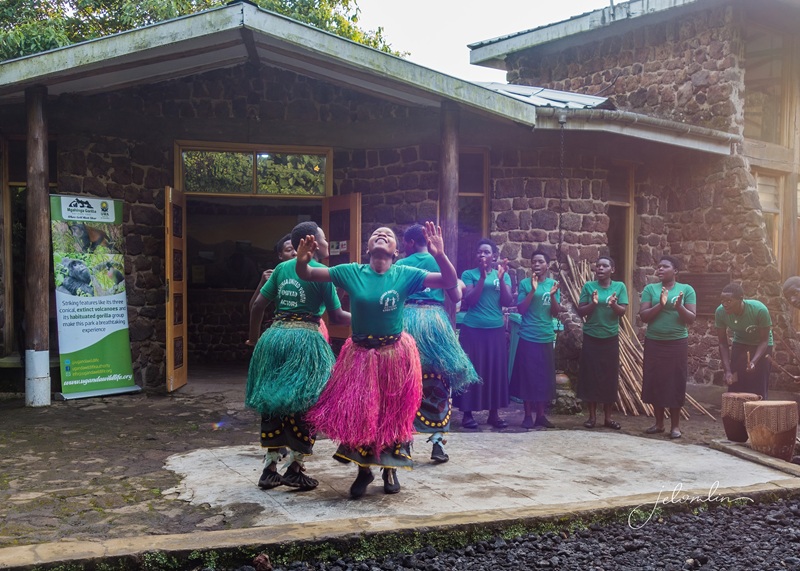
Our ranger/guide this morning was Miel. I said, “That’s honey in Spanish!” He laughed and said, “Yes! You can call me Honey.”
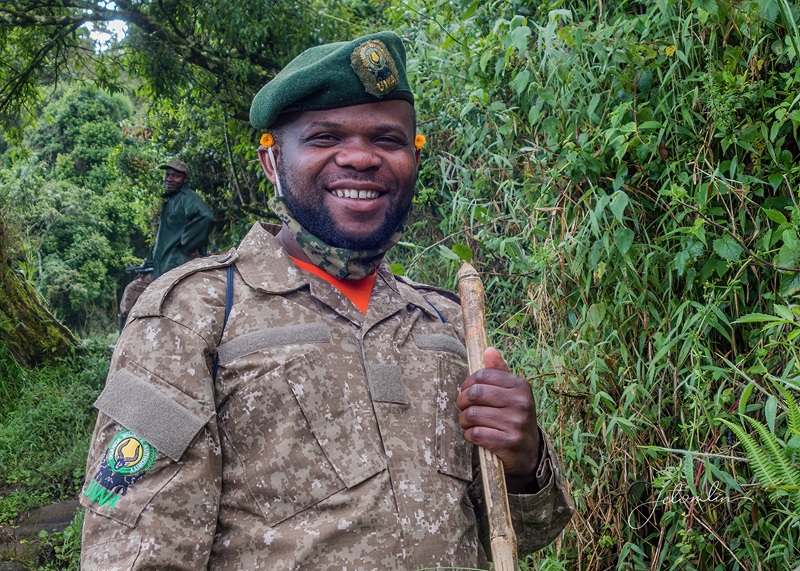
The up & down hike was not particularly difficult, but after two back-to-back arduous gorilla treks, my quads did not take long to scream. I was happy that within an hour, the rangers got word that the monkeys had been located.
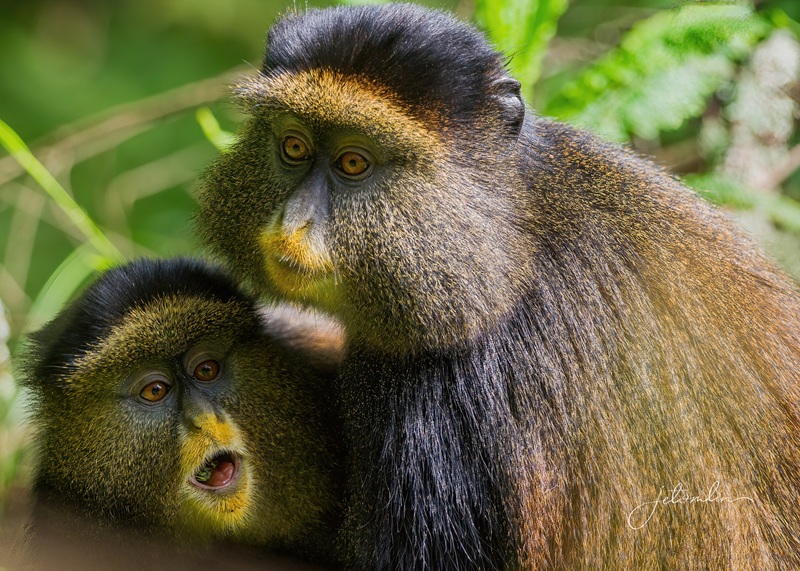
Despite heavy rains the night before, the day turned to glorious sunshine, lighting up the monkey’s fur so they were golden!
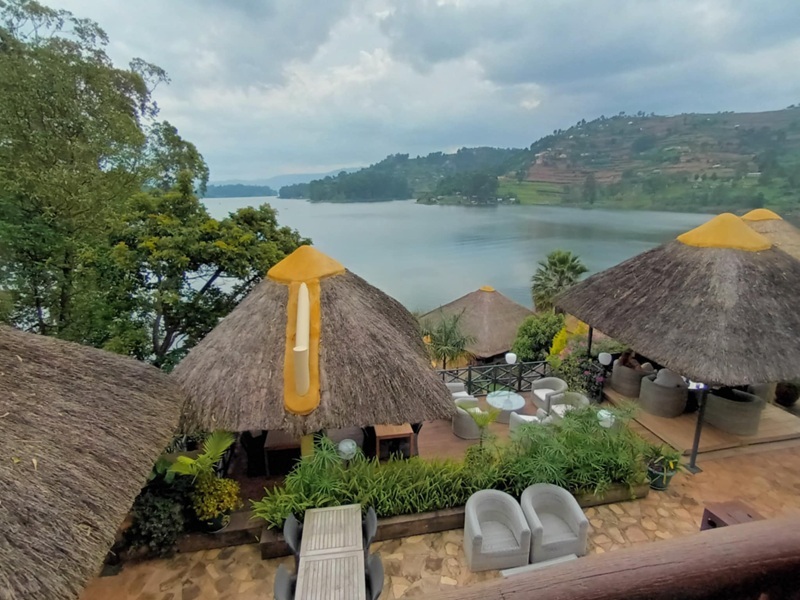
We were back at headquarters by noon and on our way to Lake Bunyoni for an evening of relaxation at Birdnest Resort. This beautiful hotel sits directly on the lake, and after three days of strenuous trekking, we were grateful for the hot shower and comfortable bed.

Goal #4 of 4: Mabamba Swamp
Eric wanted to hit the road early the next morning. We had an 8-plus hour drive ahead of us and we were on our way by 6:30am.
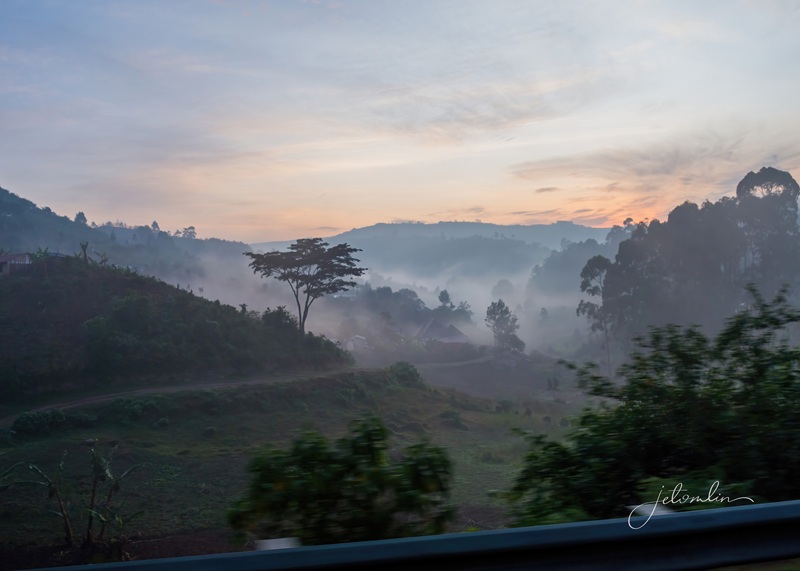
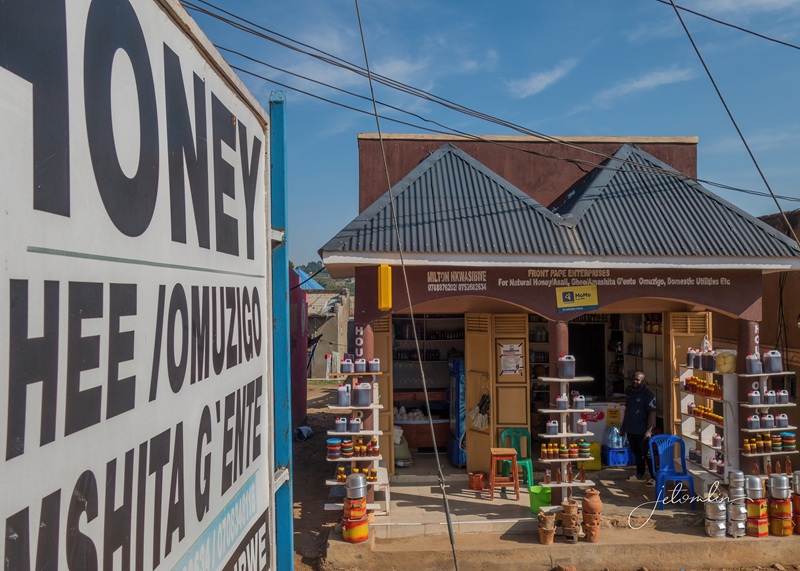
Eric stopped at a shop specializing in local honey so that I could take a jar home,
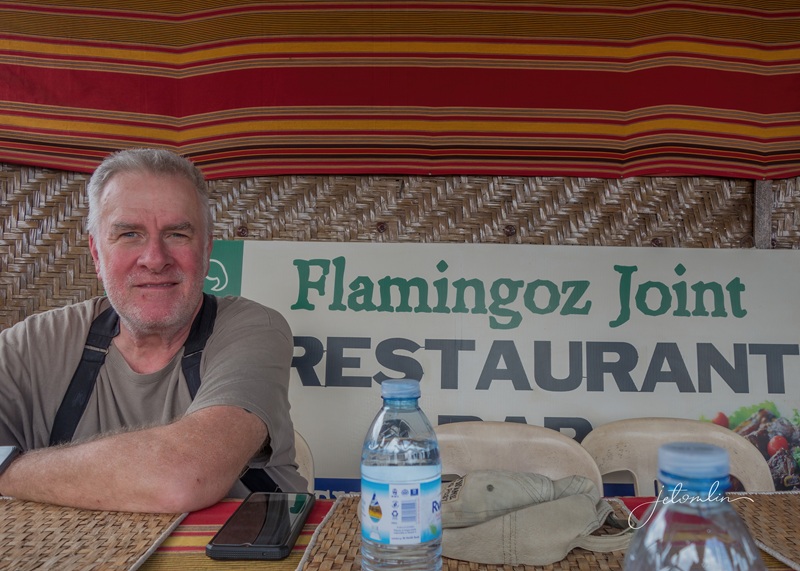
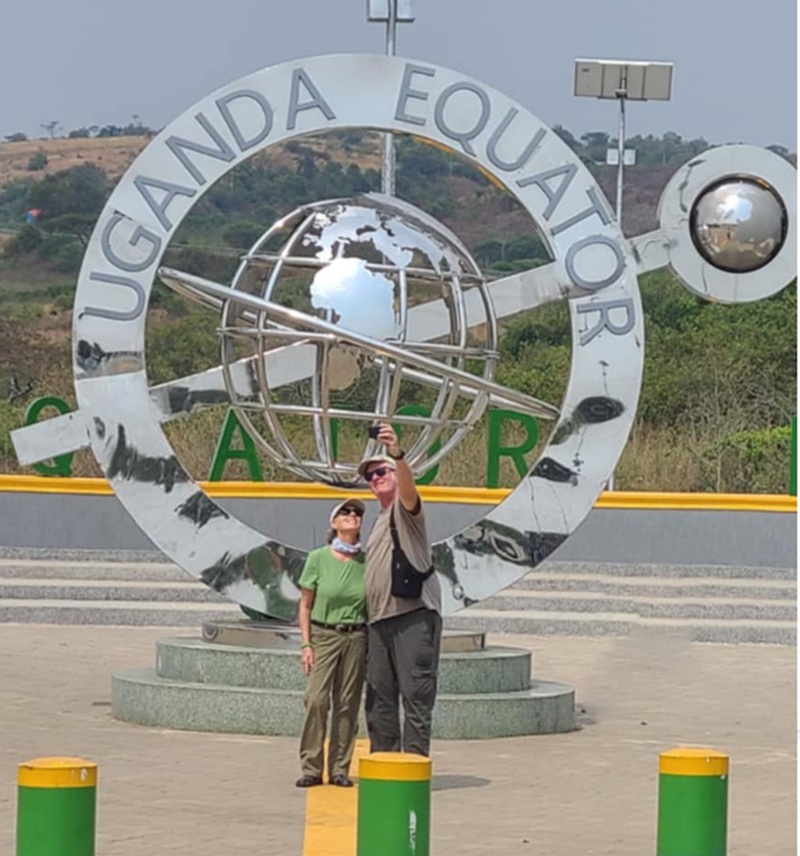
And then an Equator lunch break at “Flamingoz Joint.”
Mabamba Lodge sits on Lake Victoria, surrounded by lush gardens and beautiful birds, including multiple hamerkops.
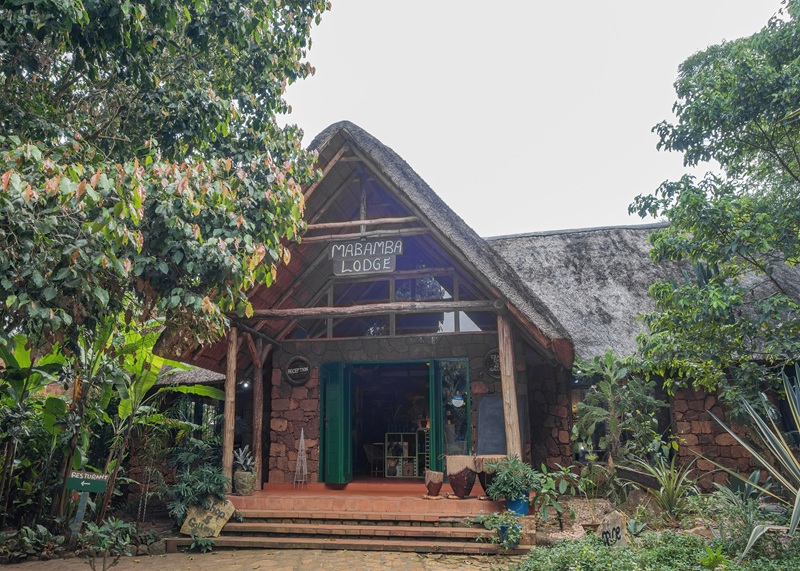
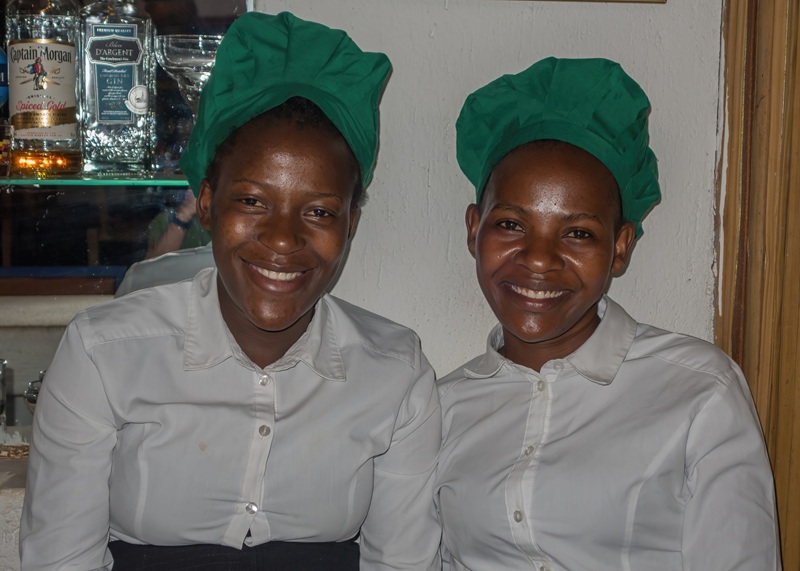
Five sweet young ladies manage the lodge: Joan, Juliet, Jo-Ann, Josephine, and Jane.
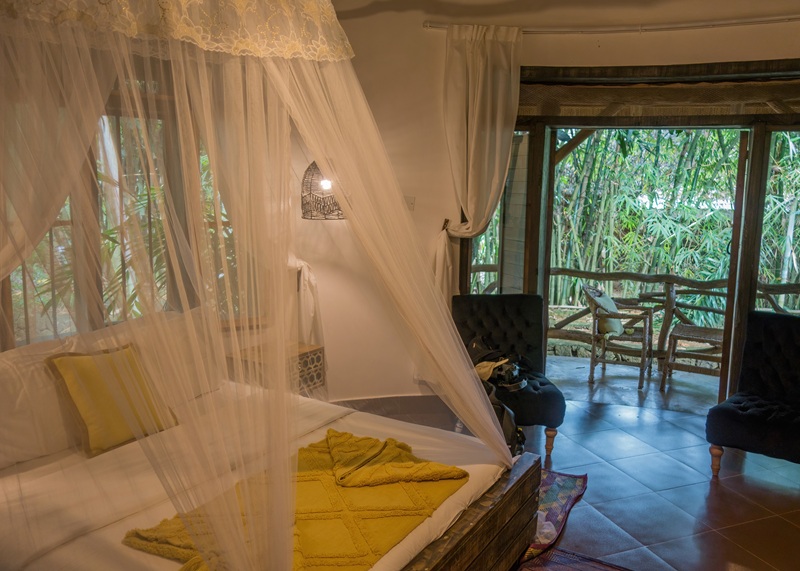
The private cottages are equipped with king beds, en suite baths,
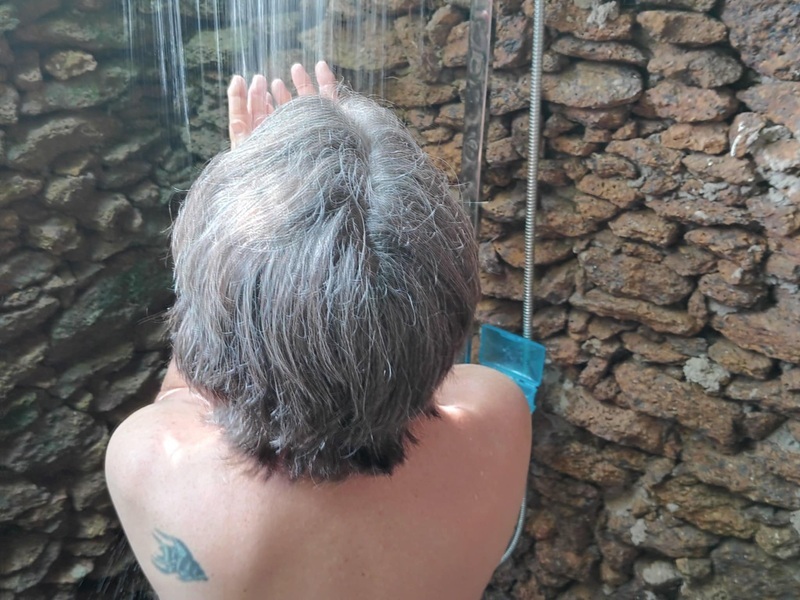
And outdoor showers.
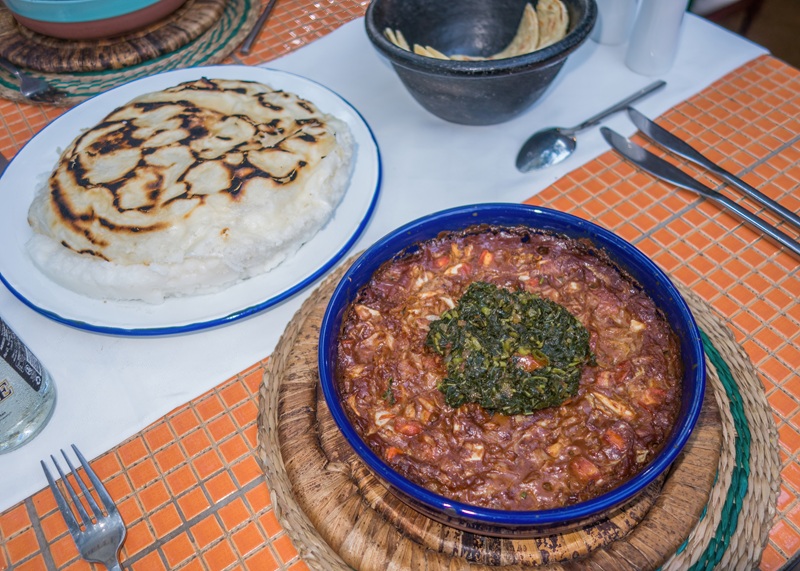
And the food!! Every meal we enjoyed in Uganda was delicious, but Chef Sara outdid the rest. The presentation—and taste—was 5-star-worthy cuisine.
We were instructed to meet at 7am sharp to search for the elusive shoebill storks, and soon we were motoring across Lake Victoria on our way to the swamp.
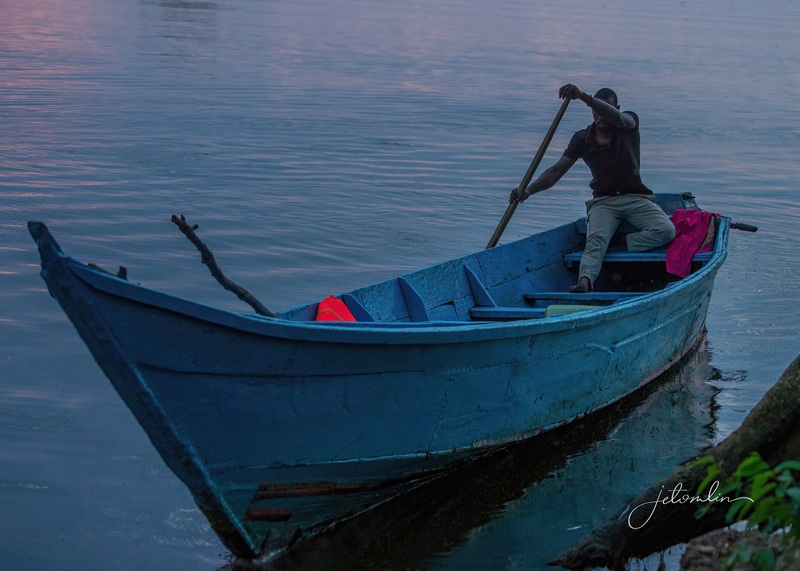
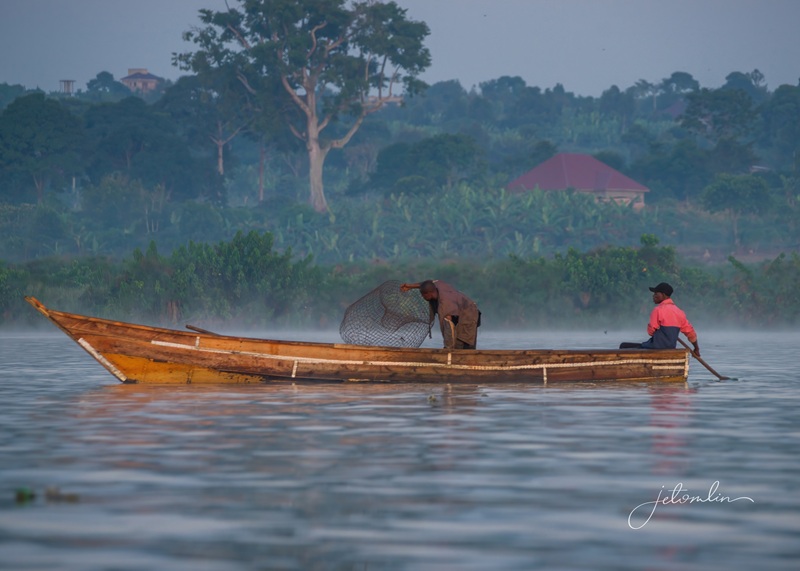
The lake was busy with fishermen on this early morning, catching lungfish, tilapia, and other fishes.
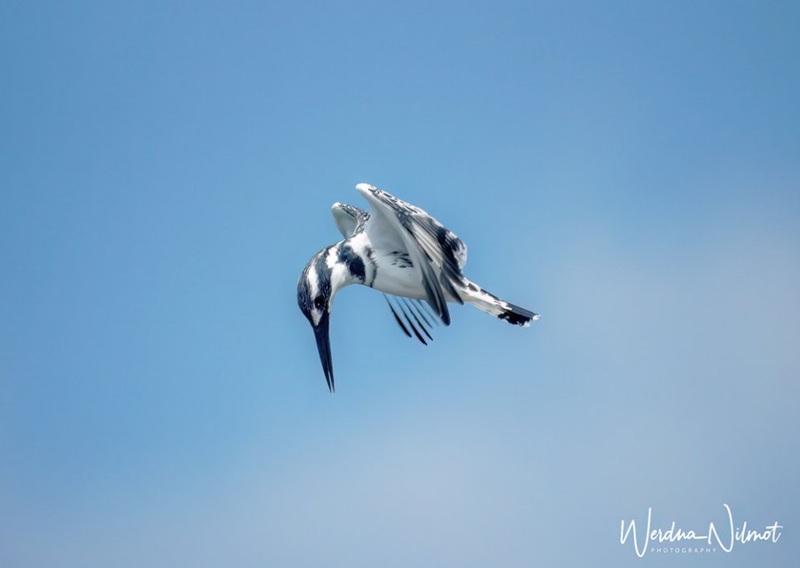
We passed many beautiful birds along the shoreline, while pied kingfishers dove into the water around us, spearing their breakfast.
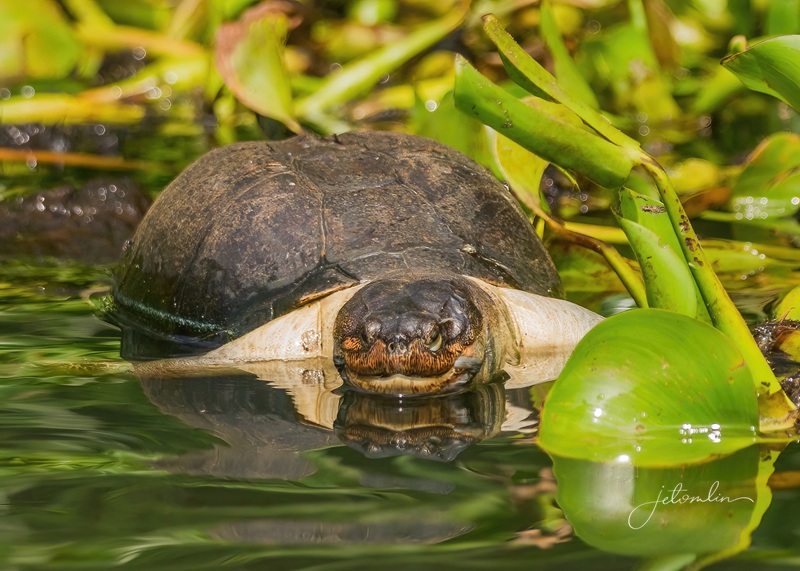
Jonathan pointed out a spotted-necked otter (too quick for a photo) and an African mud turtle.
But our guide (also named Eric) wanted to get to the swamp before the other boats made the crossing from Entebbe. Mabamba Lodge is the only accommodation close to the swamp – other tour boats take an hour or more just to cross the lake before reaching the entrance.

As Jonathan turned our boat towards the swamp, the tall grasses and papyrus gradually closed in around us, the waterway growing increasingly narrow as we made our way deeper into the lush green.
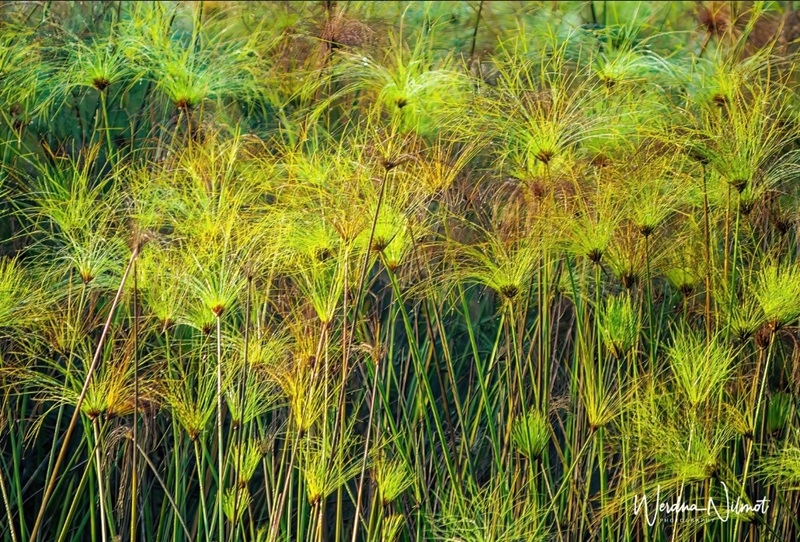
Finally, it was an impassable mess of sludge, and Eric said, “Now we push.” TG and I looked at each other as Jonathan and Eric grabbed long wooden poles and pushed the boat through the muck.
We inched along for what seemed like forever when suddenly Eric whispered, “Are you ready for the shoebill?”
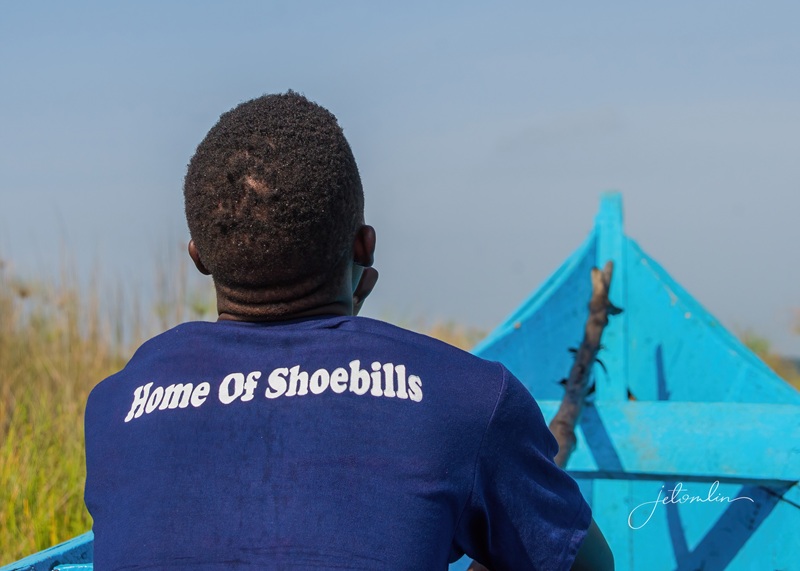
And there he was – standing tall and magnificent directly before us. We both gasped at the size and majesty of the bird – so beautiful, mysterious, and prehistoric-looking!
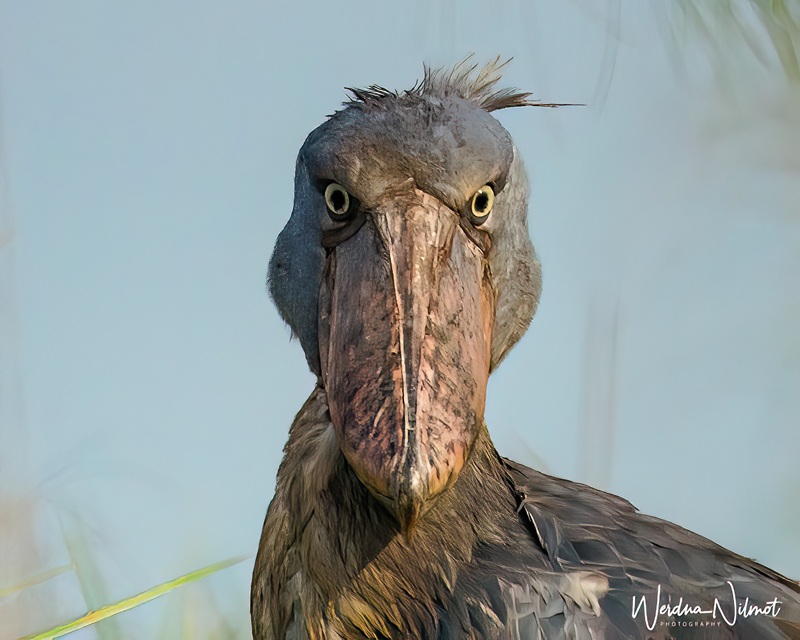
After taking multiple photos in such a clear, unobstructed spot, he grabbed a big clump of weeds in his mouth and flew up to a nearby ridge.
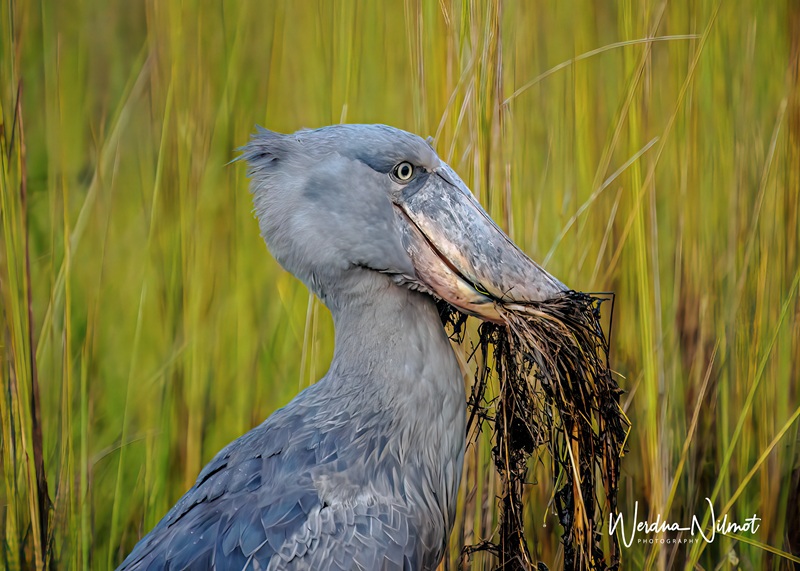
Eric told us there was a nest with a baby! Although it was too tucked in to see much more than the fluttering of its little wings, it was still a thrill.

Just then, the female flew in, signaling the changing of the guard. The male flew off, and we were given another hour with Mama.
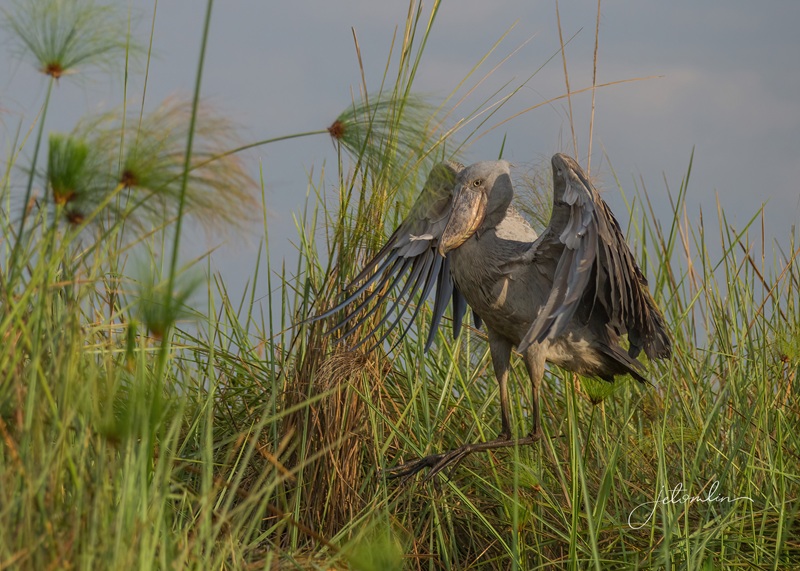
Several more boats had arrived by then, and we knew it was time to go.
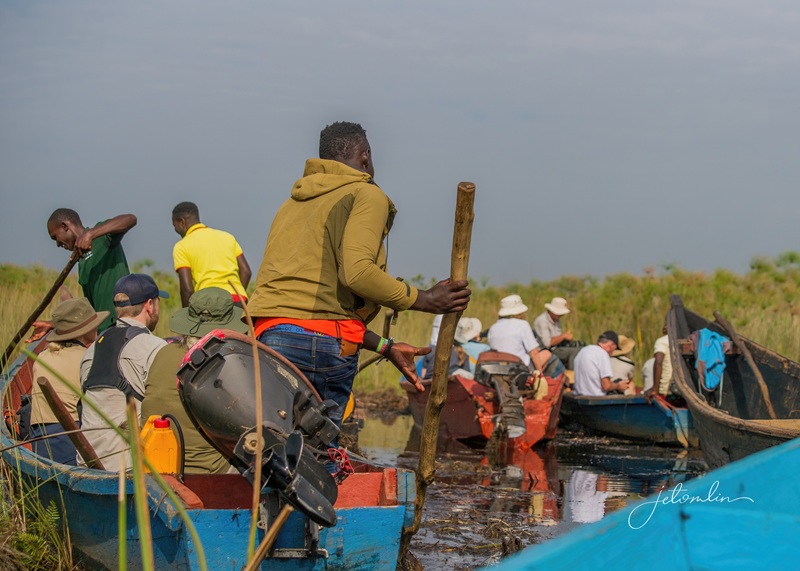
As we made our way back out of the sludge, we saw yet another shoebill standing alone in the tall grass.
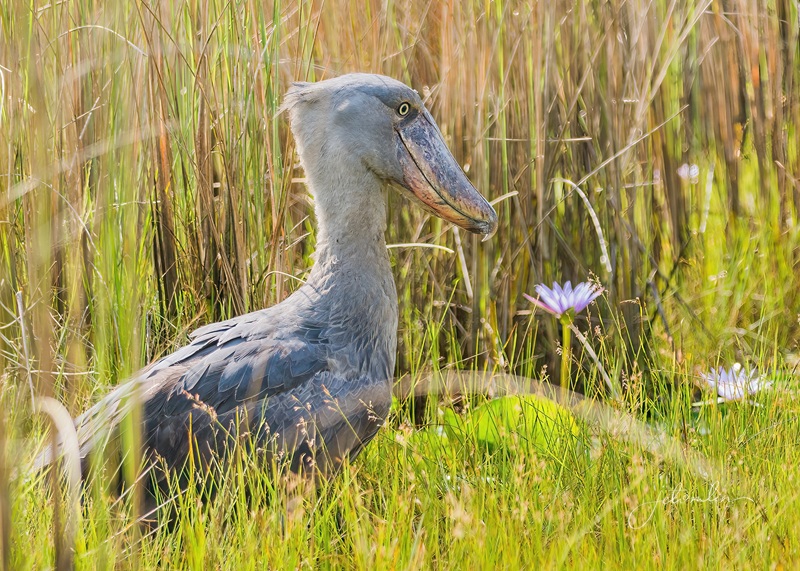
Eric said there are an estimated 10-15 shoebills in the entire swamp and that morning we saw four.
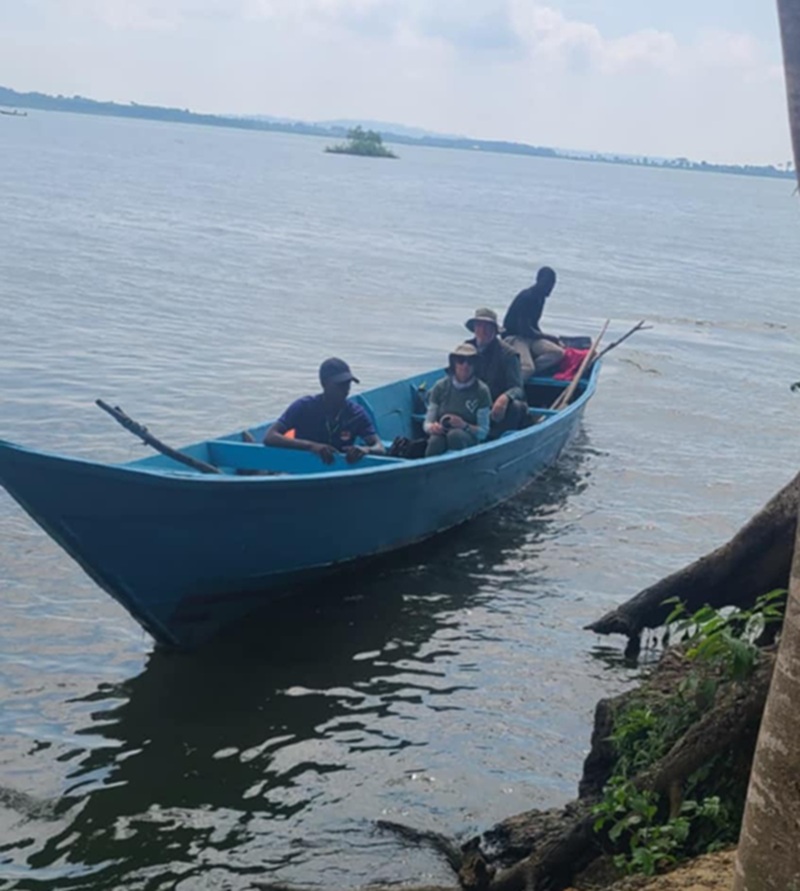
The next day, we went back to the swamp, but the majestic birds did not give us the same photo opps.
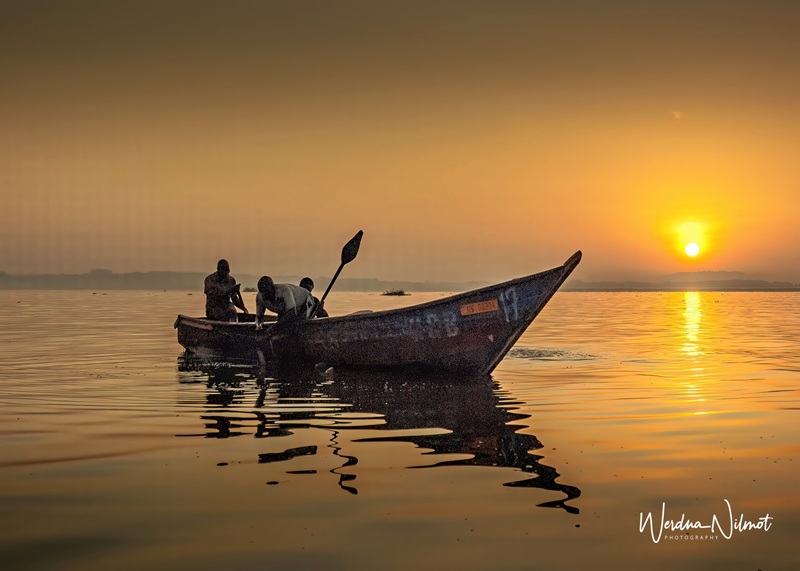
We were truly blessed with the sightings we had the previous day. Even so, we saw another four: the mama and the fluttering of little baby wings, and two more flying high overhead.

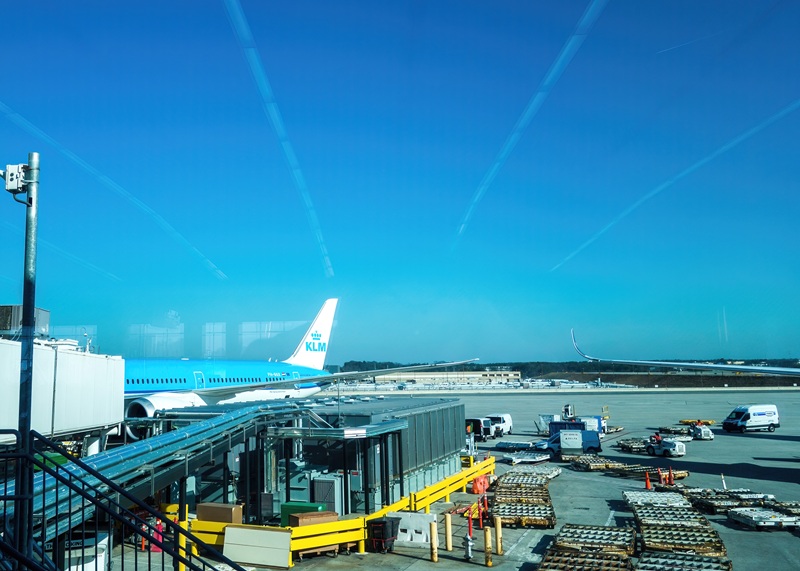
After a late breakfast, we were on our way to Entebbe and the end of our journey. We took the car ferry across Lake Victoria,
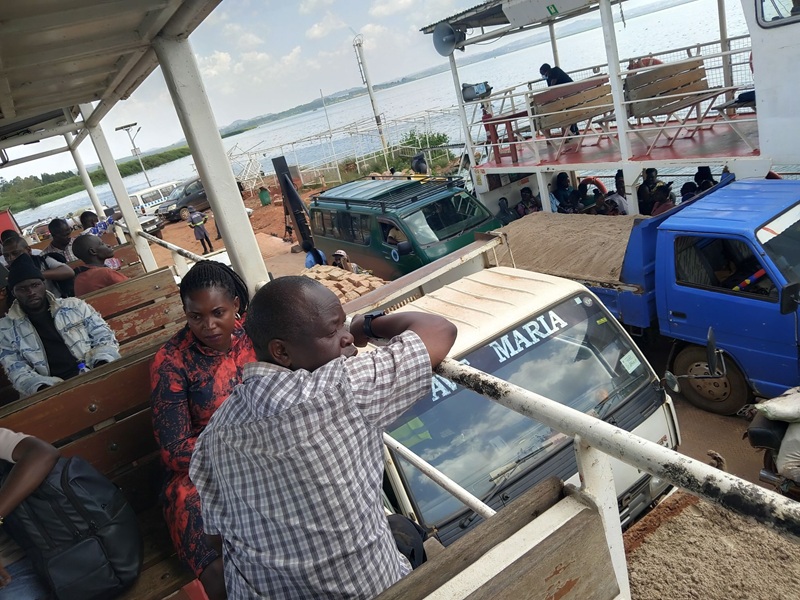
And Eric dropped us off at Aivilo’s Guest House late that afternoon. It was the perfect place to relax, re-organize our bags, and wind down before beginning our long journey home.

I cannot say enough about Eric. He was an excellent driver; even on the sketchiest mountain roads, we always felt safe in his capable hands.

His easy-going, “it will work out” nature kept us from getting stressed about the few minor hiccups we had along the way. He was a joy to travel with.

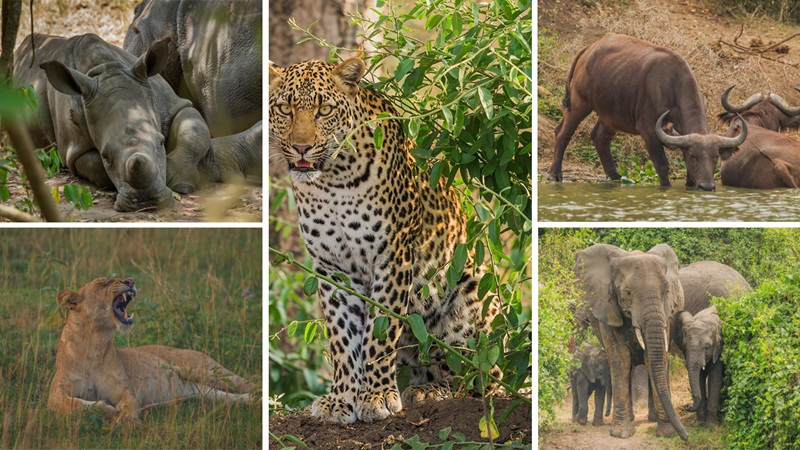
And Peter’s itinerary was just the right balance of adventure and relaxation. We accomplished our four goals and so much more – we even managed to tick off the Big Five, something we had not expected!
We traveled over 800 miles, passing through multiple agricultural areas: acres of banana trees, mountains of pineapples,
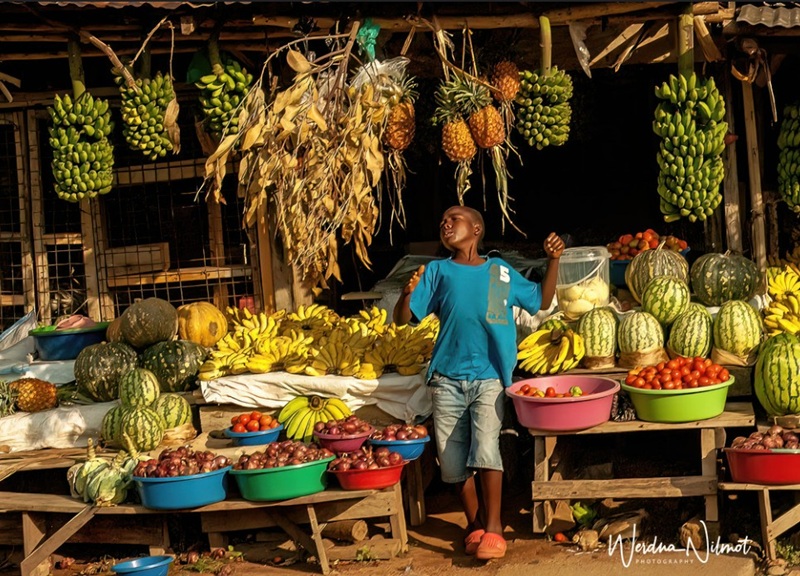
Terraced green hillsides, mats of coffee beans drying in the sun, and huge piles of onions that filled the air with their savory scent.
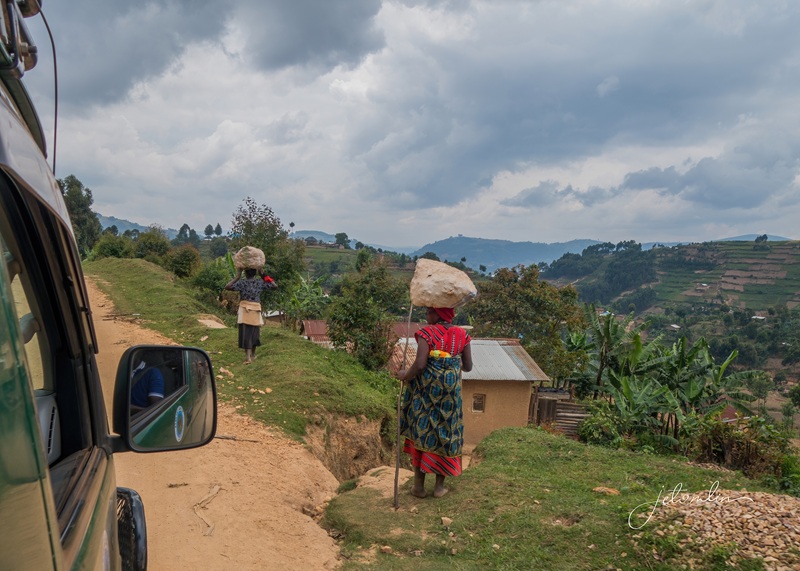
Uganda truly is the “Pearl of Africa,” full of gorgeous landscapes,
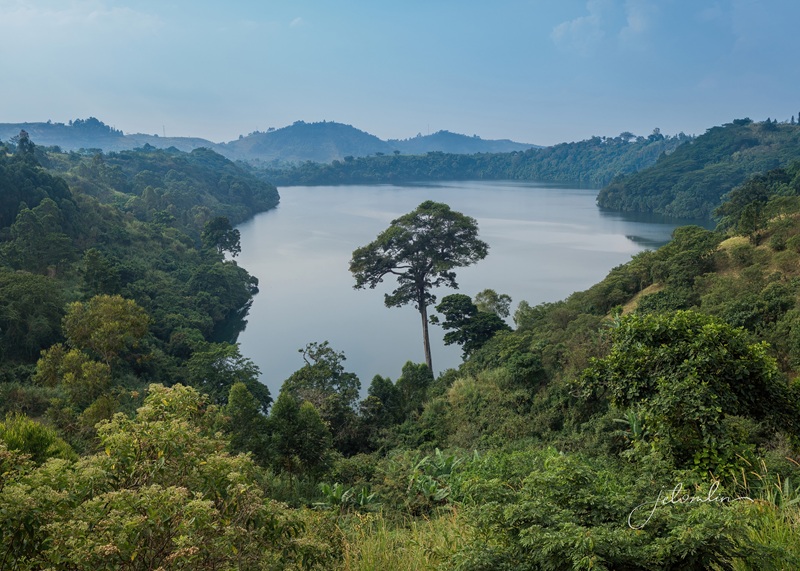
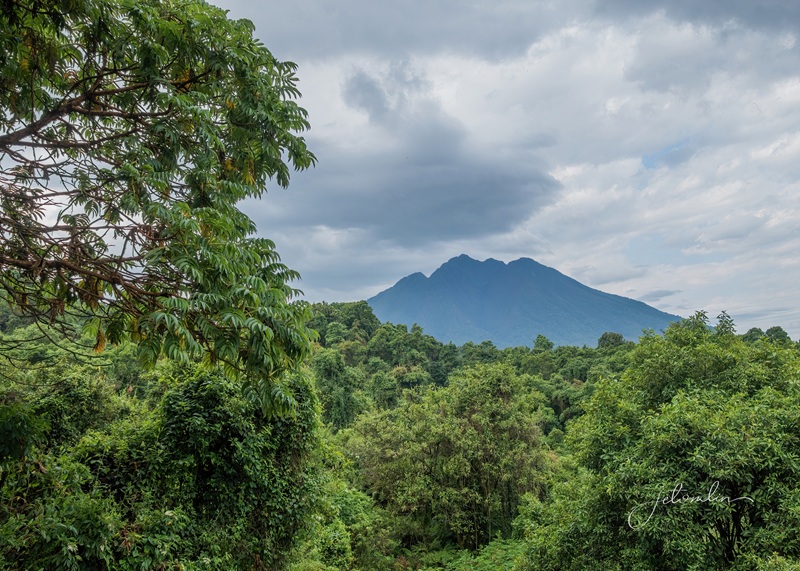
Beautiful mountains,
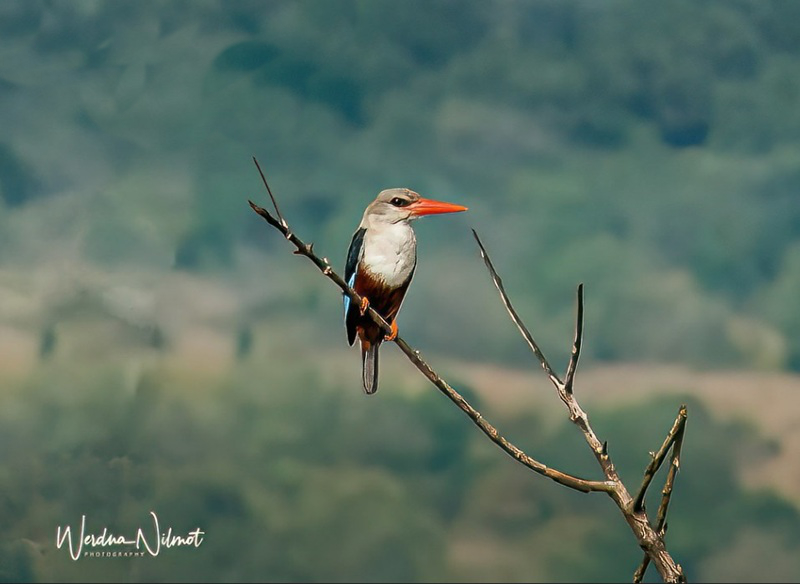
Incredible wildlife, colorful birds,
And the friendliest smiles you’ll ever see.
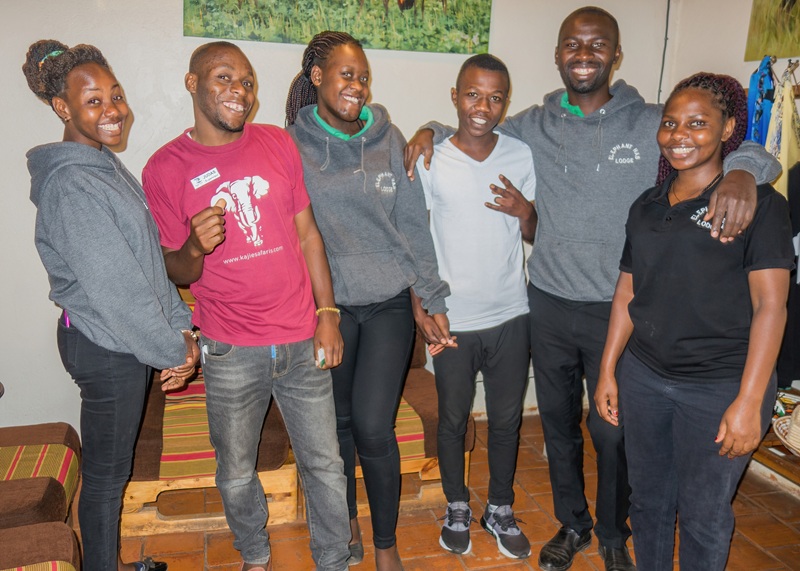
Thank you, Peter, Eric, and Buyaga Safaris for a trip beyond our wildest dreams. We hope to see you again someday.
To see all of our photos from Uganda, click on the links below.
TG: Click on any photo to open a new tab in Flickr or hover to arrow through the set

JET: Click on any photo to open a new tab in Flickr or hover to arrow through the set.


 On The Road with Tall Guy & JET
Your trip was really amazing. Now we regret that we spent in Uganda only six days.
LikeLiked by 1 person
We really want to go back and spend more time in Queen Elizabeth, Lake Bunyoni, Lake Mburo and again at Mabamba Swamp…
LikeLike
We understand.
LikeLiked by 1 person
Ivan & Martina – When we do go back we will let you know our plans. Maybe we can meet up again! 🙂
LikeLike
Maybe …
LikeLike
But our invitation to Prague/Czechia still stands.
LikeLiked by 1 person
love it!!! Such a beautiful experience!! Thanks for sharing!!!!
LikeLike
Thanks Jenny! So glad you enjoyed it! 🙂
LikeLike
Just. WOW. So lovely. Thank you for sharing.
LikeLike
Thanks Martie! So glad you enjoyed “traveling” along with us!
LikeLike