
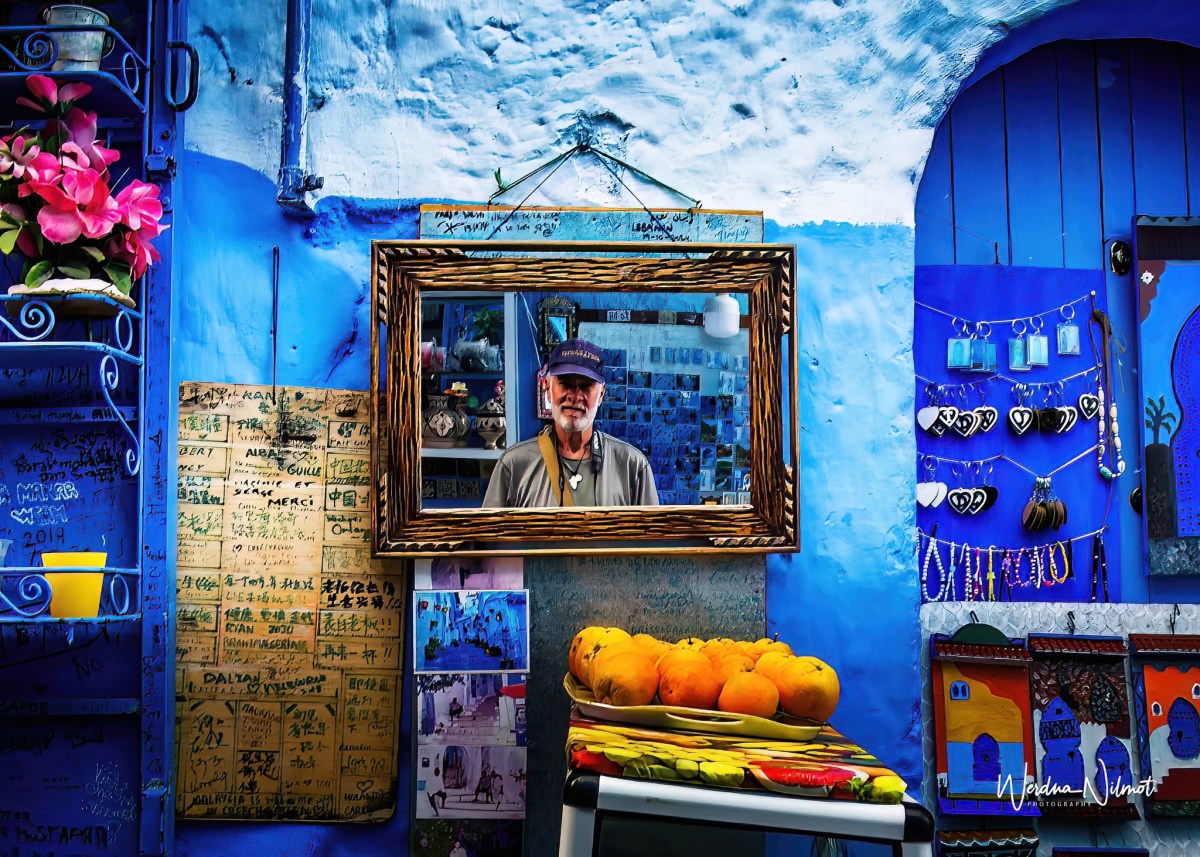
Morocco, or Maroc as it is known in country, has been on my list of “must-see” destinations for decades. Its unique blend of stunning landscapes, rich culture, and delicious cuisine is a photographer’s dream. However, with so much to see, it wasn’t easy to decide where to go and for how long. JET and I have always been “thoroughly explore one area” type travelers, so after much research, I settled on Chefchaoen, famous for its incredible architecture and beauty.
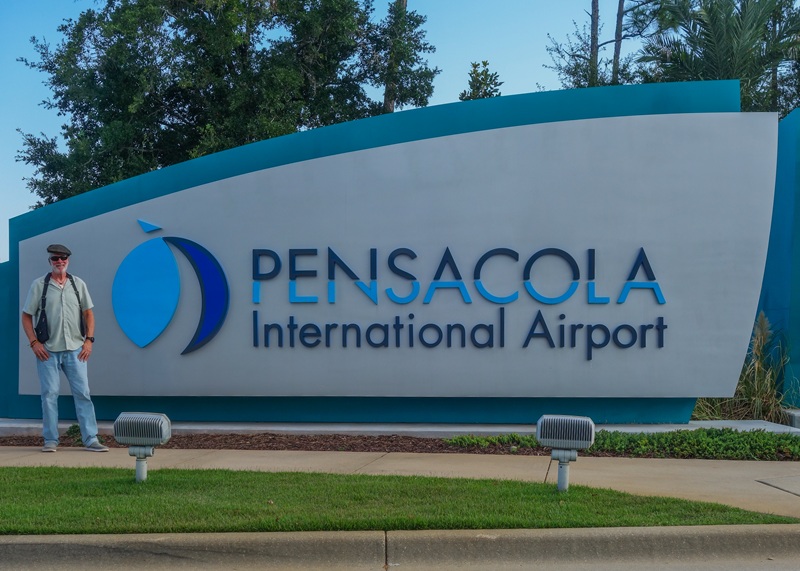
I was particularly excited about capturing the iconic blue colors of the city against the backdrop of the Rif Mountains. We decided that this would be a solo trip, giving me ample time to take the landscape shots I hoped for. And so, in September 2025, I departed from Pensacola Airport for an 8-day visit to the Blue City of Chefchaouen.
“M” is for Muslim
The main religion in Morocco is Sunni Islam, which is also the state religion of the country. Officially, 99% of the population is Muslim, and virtually all of those are Sunni.

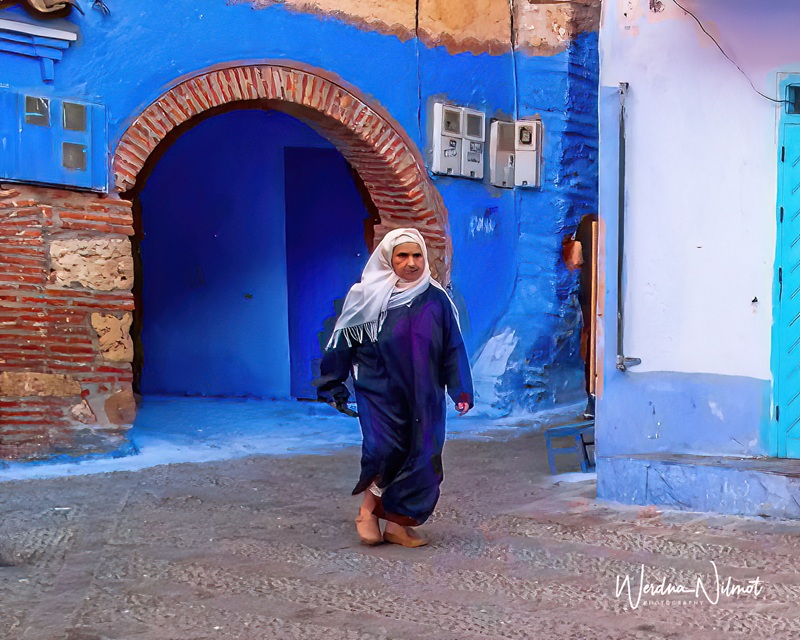
The five daily calls to prayer, a fundamental practice in Islam, resonated throughout my visit to Chefchaouen. These calls, a constant in the city’s soundscape, served as a reminder of the profound role of faith in daily life. From the hijabs adorning women’s heads to the vibrant prayer rugs on display in the bustling markets, the influence of the Muslim faith was evident in the many photographs I captured. (click on photos to enlarge)

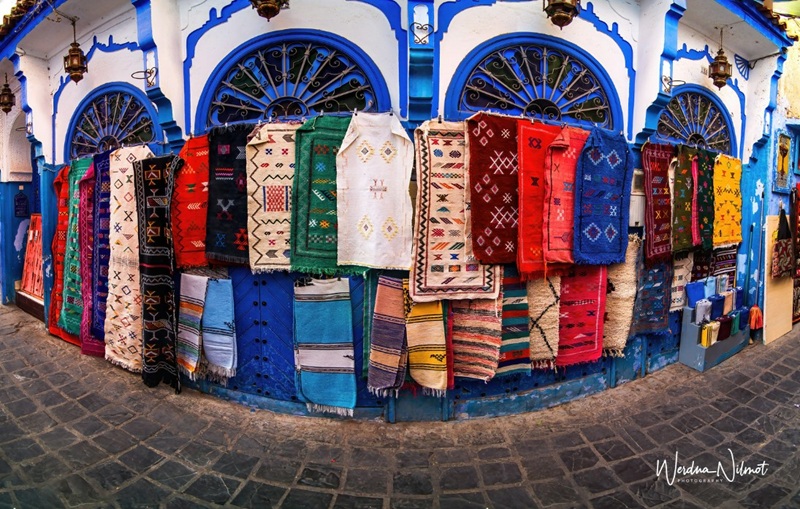
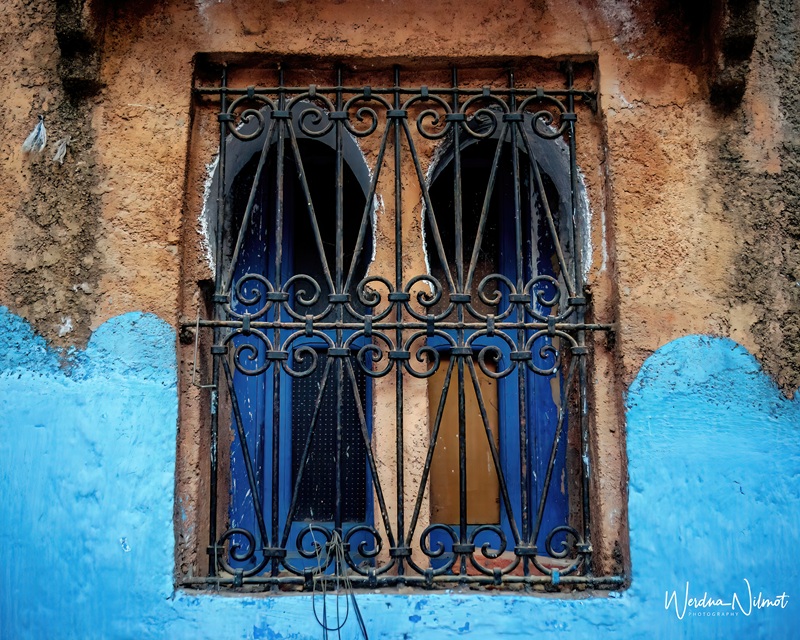
My visit to Chefchaouen also revealed the rich diversity of Islamic art. Islam prohibits figurative imagery in architecture, but that has not stifled creativity. Instead, it encouraged the development of other art forms such as mosaics and geometric patterns.
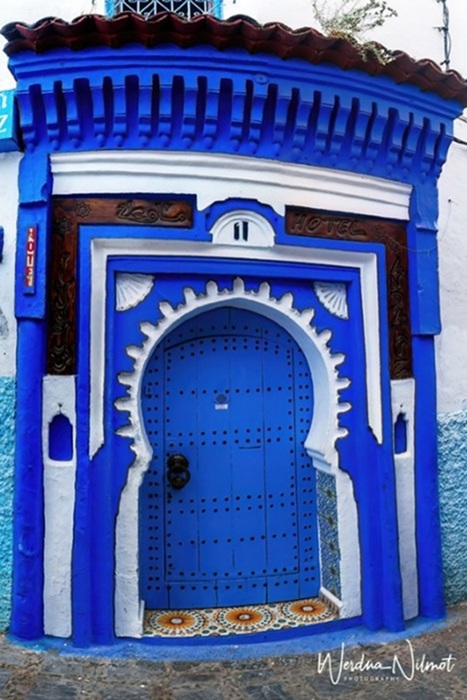
The city is a living testament to this artistic tradition; with so many examples, I spent most of my first full day wandering through the narrow streets and simply taking it all in. By the end of my visit, I was thrilled with what I had been able to capture but knew I had only scratched the surface.
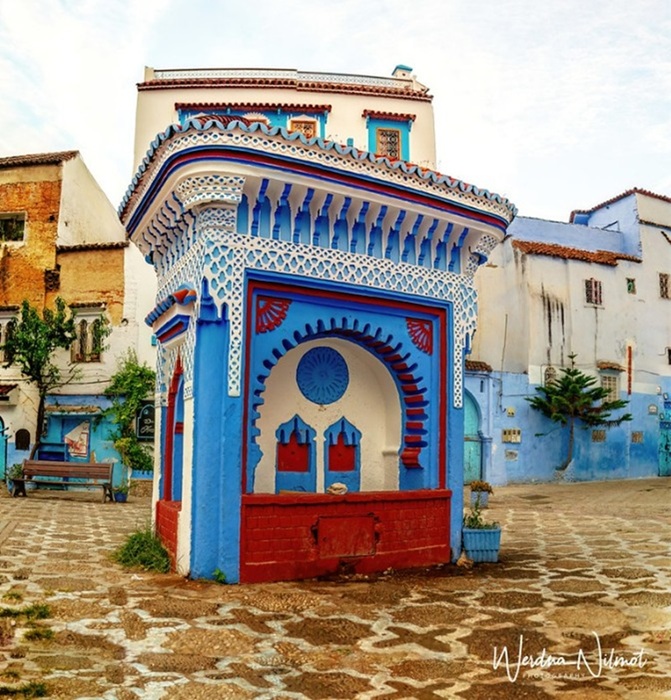
I recorded the following call to prayer on my first night in the Blue City, and it became the soundtrack of my week.
“A” is for Art
Ärt (noun) A diverse range of cultural activity centered around works utilizing creative or imaginative talents, which are expected to evoke a worthwhile experience, generally through an expression of emotional power, conceptual ideas, technical proficiency, or beauty. (Wikipedia)
Morocco in general, and Chefchaouen in particular, fit this definition perfectly and was the principal reason I chose this destination. I first saw photos of “The Blue City” some 20 years ago and had long ago added it to my bucket list of places to visit.

The medina is a ubiquitous part of most Moroccan cities and refers to the old part of town, where markets, vendors, restaurants, and people all coexist in perfect, chaotic harmony.
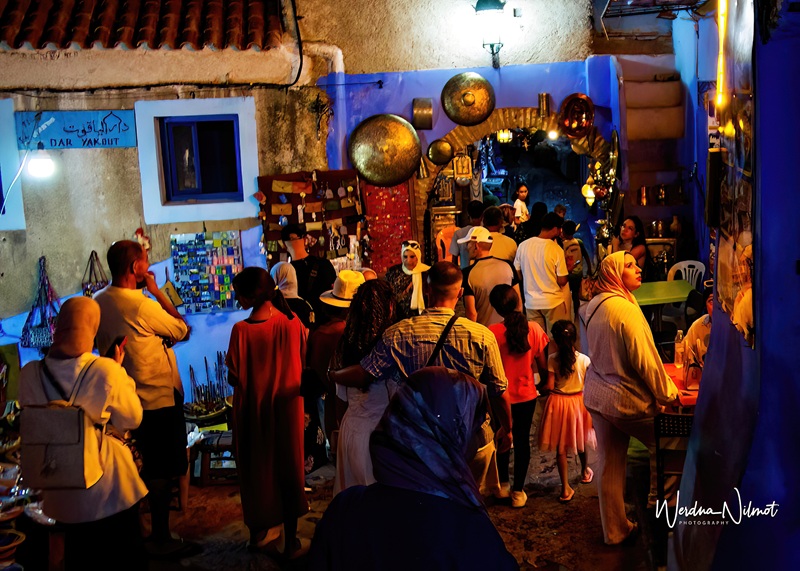
Chefchaouen’s medina is over 500 years old and was initially built as a fortress designed to protect against Portuguese invasions. Over time, it transformed into a vibrant hub influenced by Andalusian, Moorish, and Jewish cultures. The iconic blue, representing the sky and heaven, is believed to have been introduced by the Jewish community.

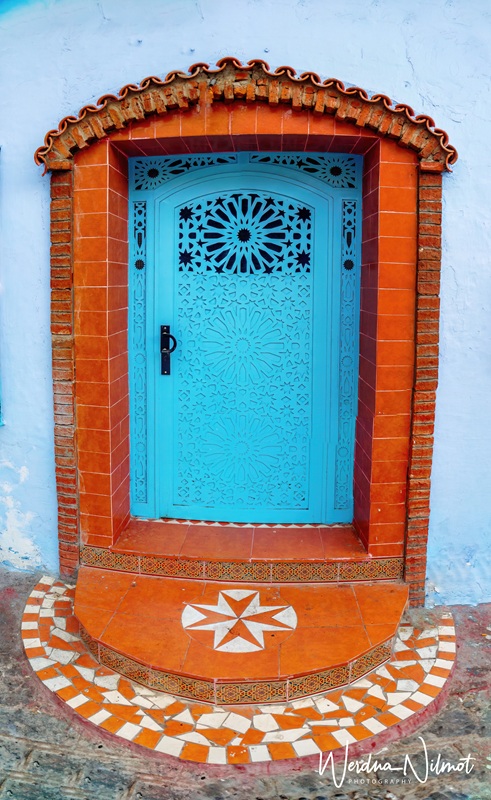
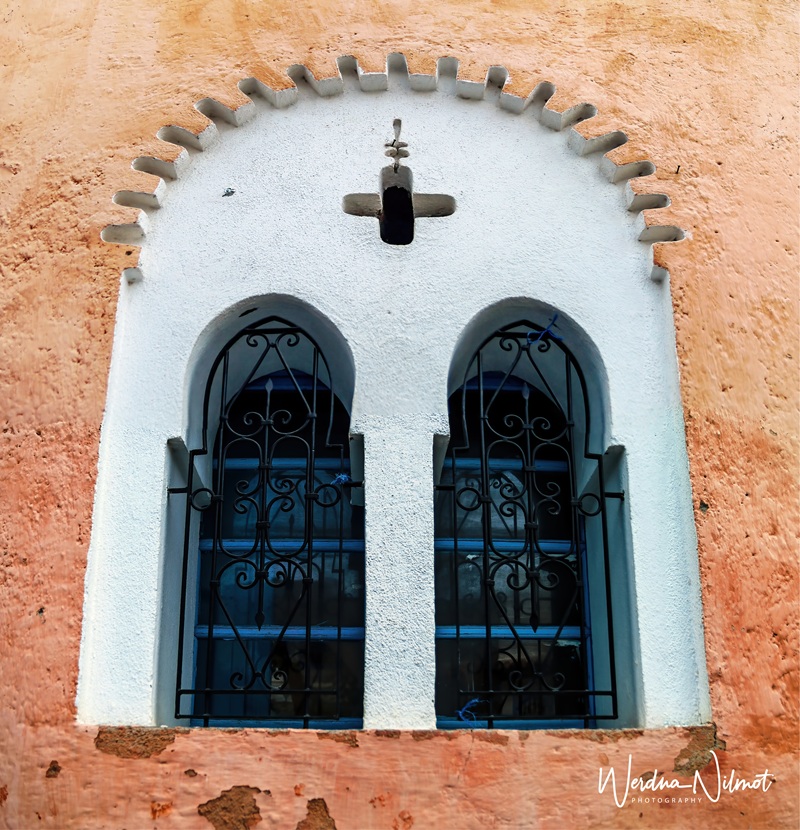
Art is visible everywhere in the medina:
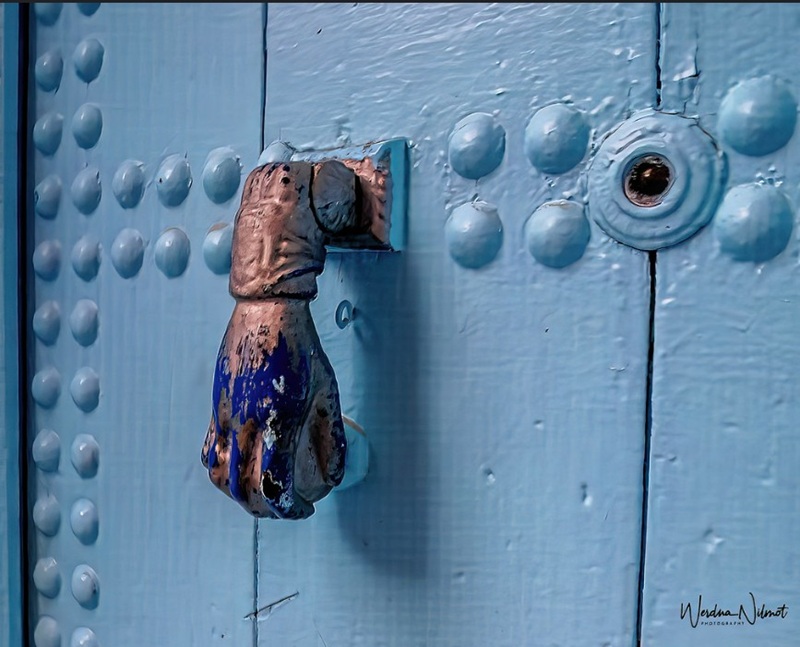
Doors:

Windows:
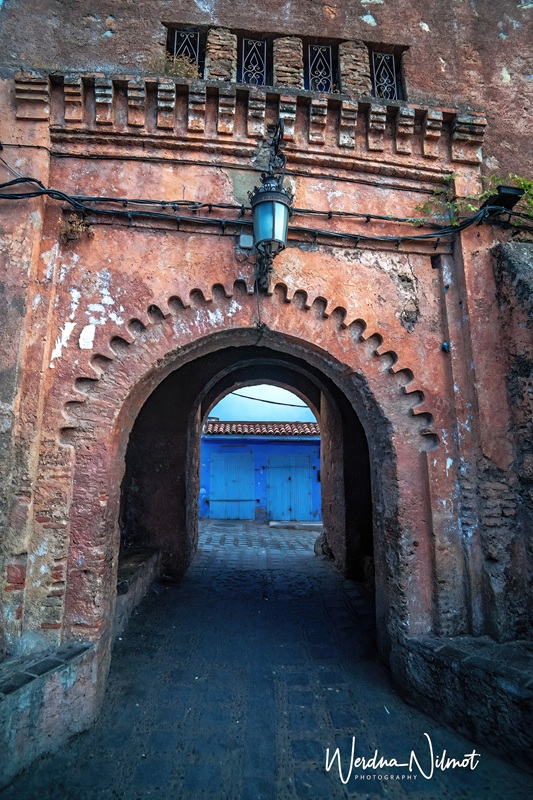
Gates: (click on arrow to view photo set)
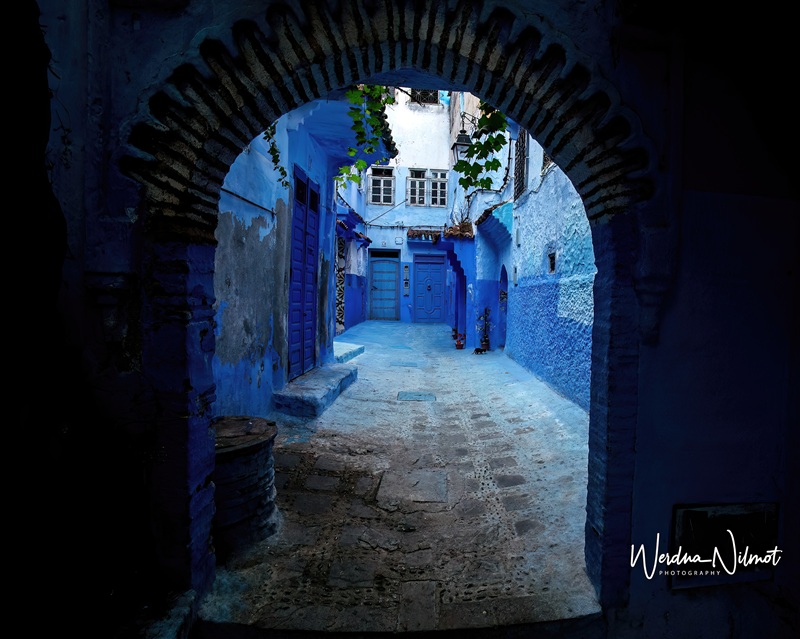
Sidewalks:
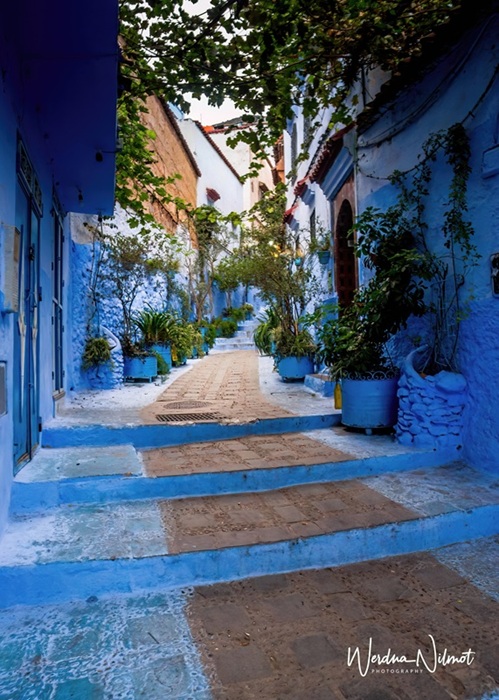
Steps: (click on arrow to view photo set)
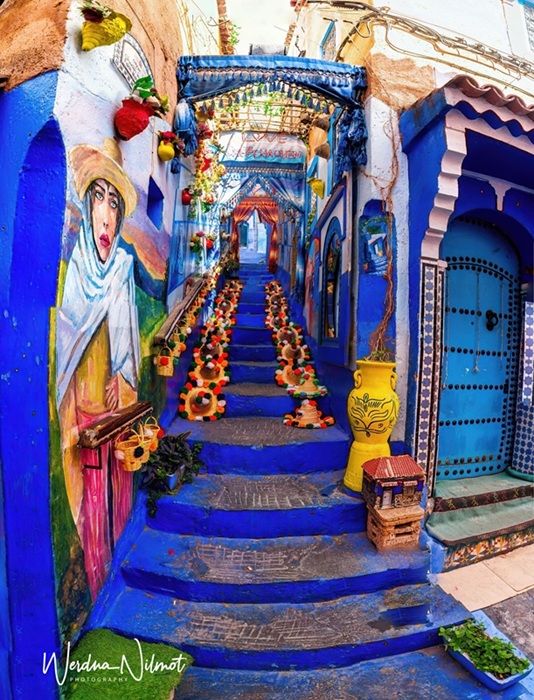
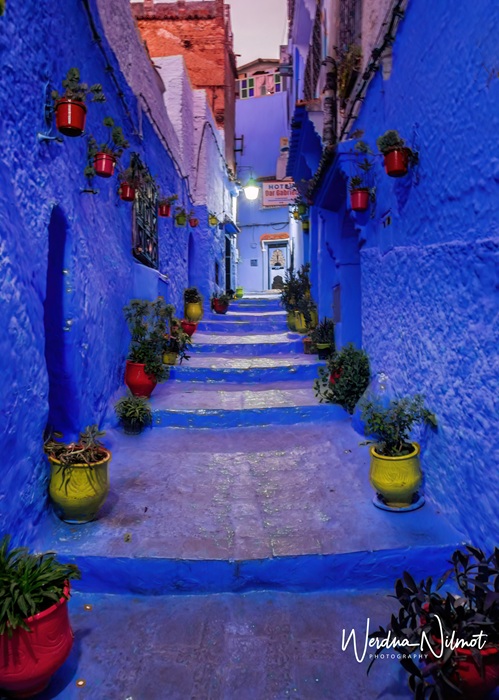
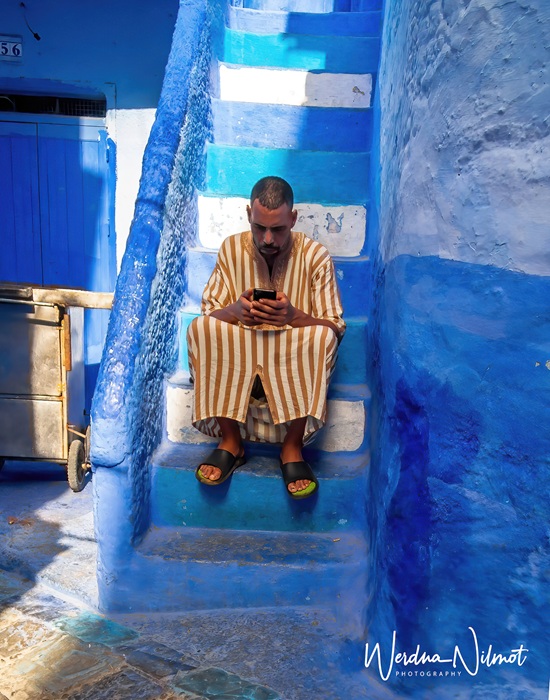
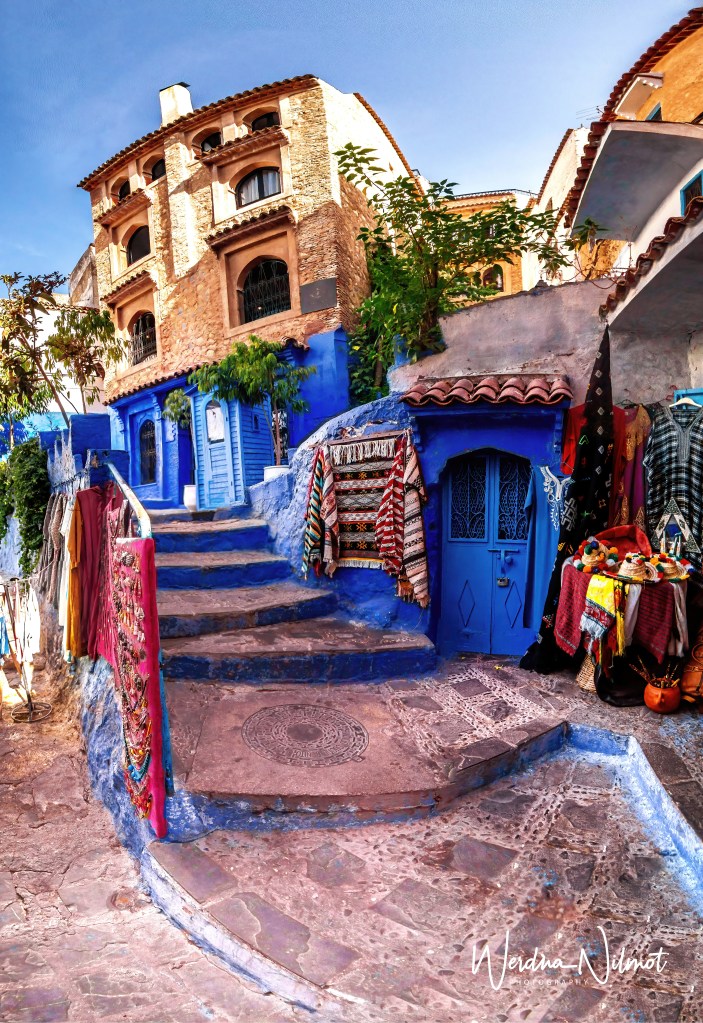
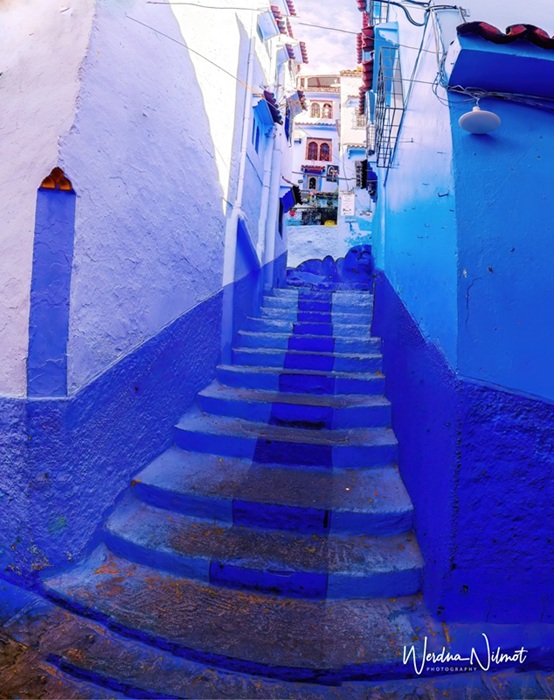
Buildings: (click on photos to enlarge)
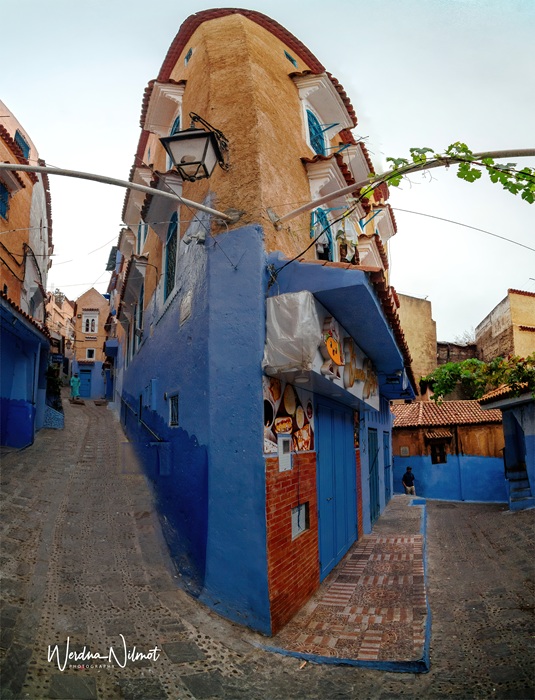
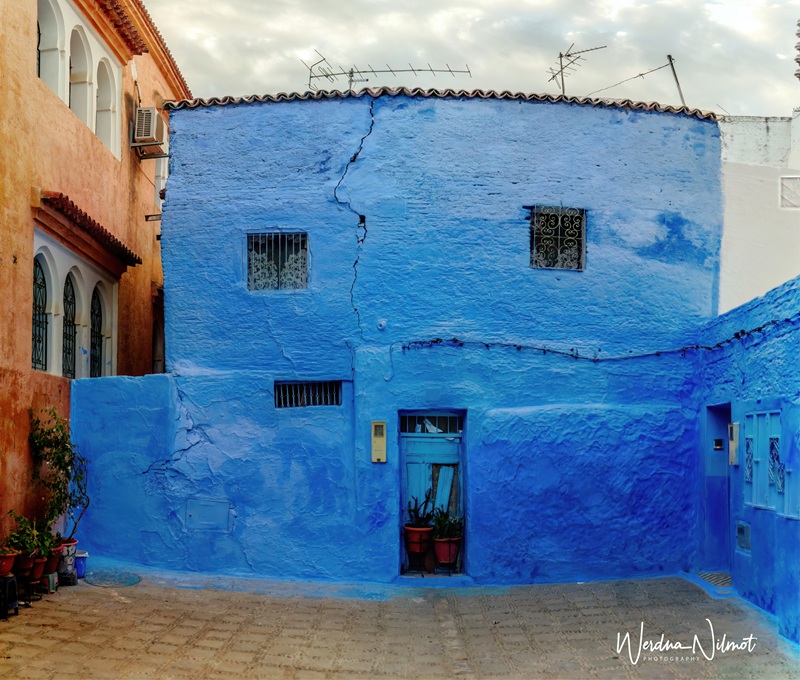
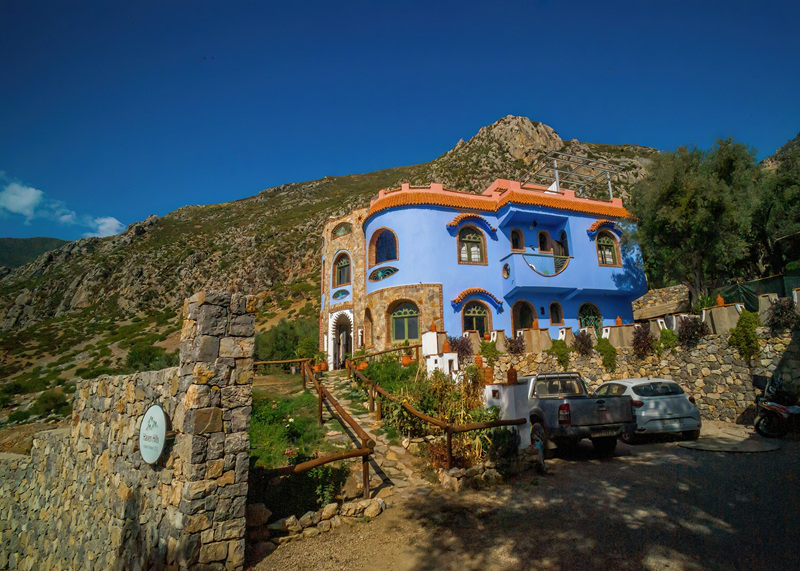
Murals: (click on arrow to view photo set)


Pavement: (click on arrow to view photo set)
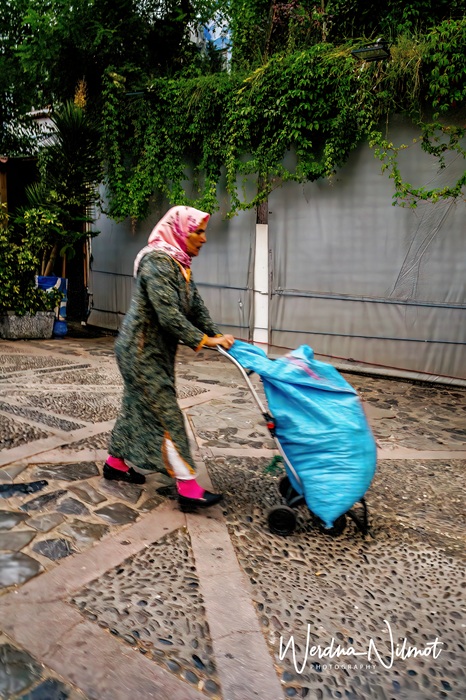
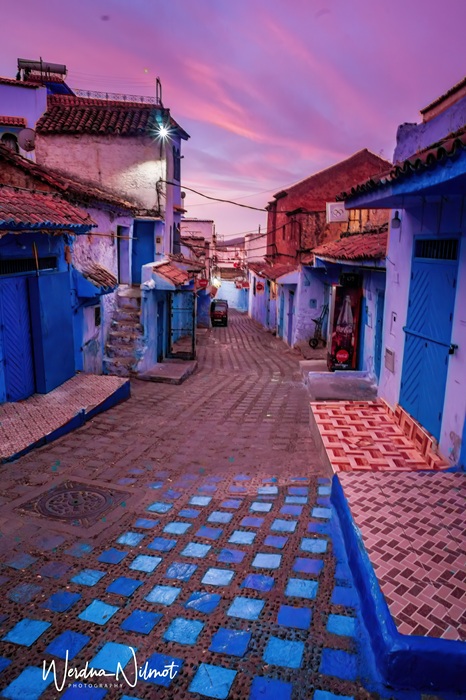
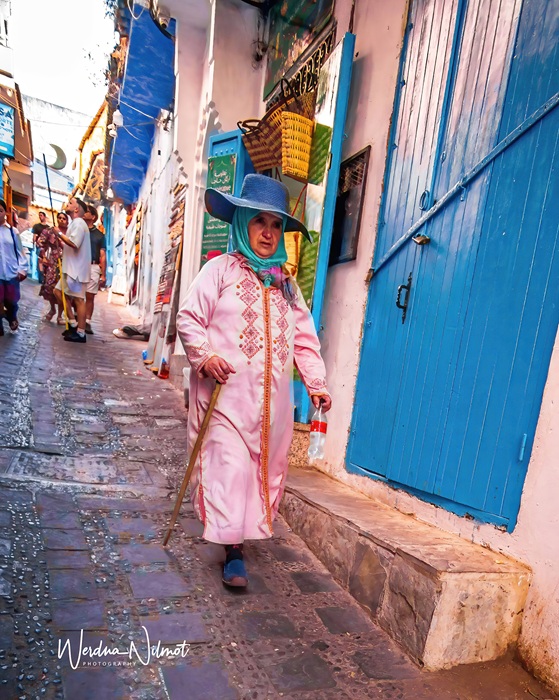
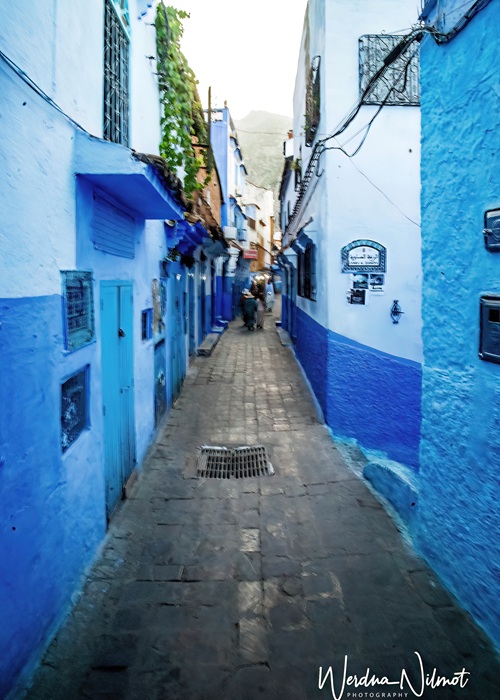
Even in the wideness or narrowness of the streets and alleys:
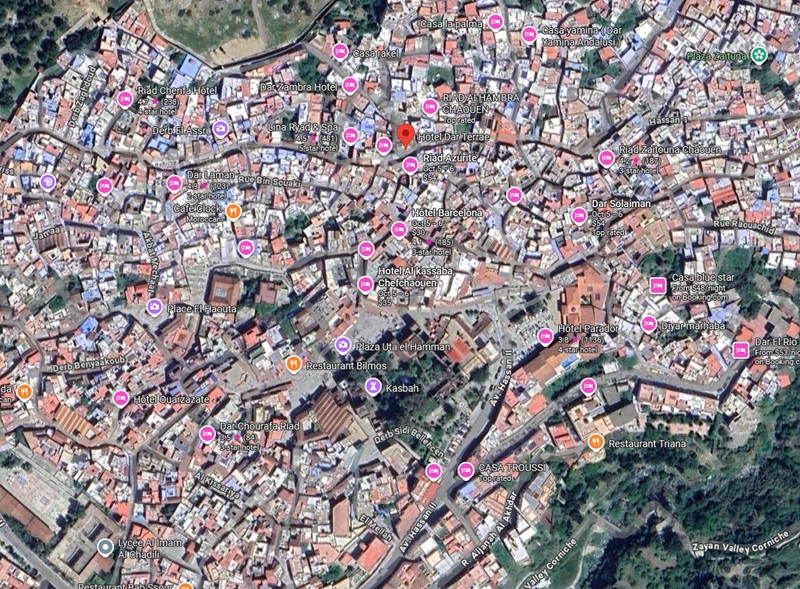
An aerial view of the medina depicts a maze-like pattern that will test anyone’s sense of direction the first few times they visit. I happily found myself lost more than once!
Lighting plays a pivotal role in shaping the appeal of Chefchaouen. Revisiting the same spot at different times of the day unveiled a new perspective each time, a testament to the city’s ever-changing beauty. (click on photos to enlarge)
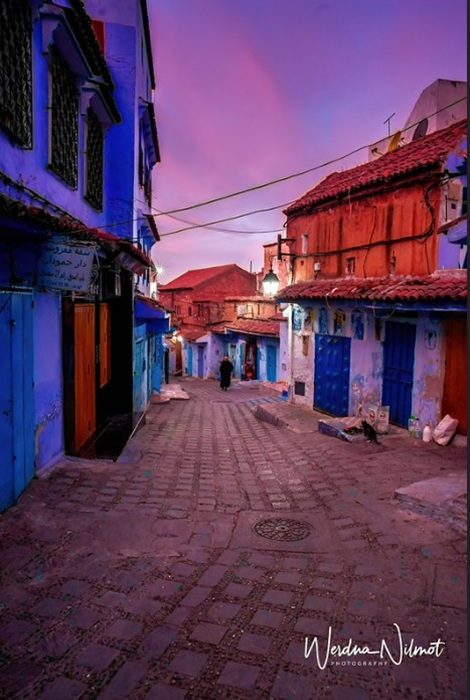
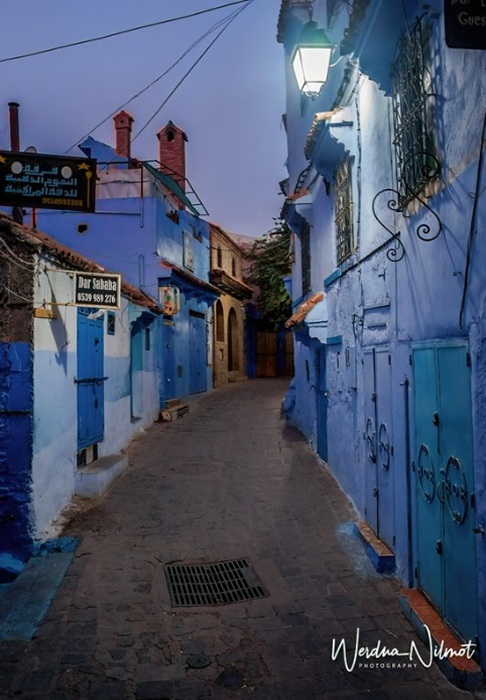
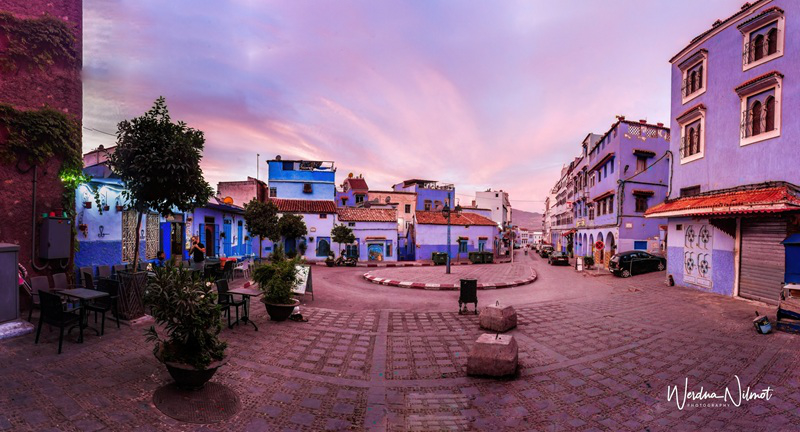
The early hours just after sunrise gave a soft, dreamlike look to the city. It was mostly deserted, waiting for the town to come alive with shopkeepers, residents, and day trippers. The city’s blue color was dominant at this time of day.

As the sun rose, the medina came alive with an explosion of colors as the shopkeepers displayed their wares and both locals and day trippers arrived. (click on arrow to view photo set)

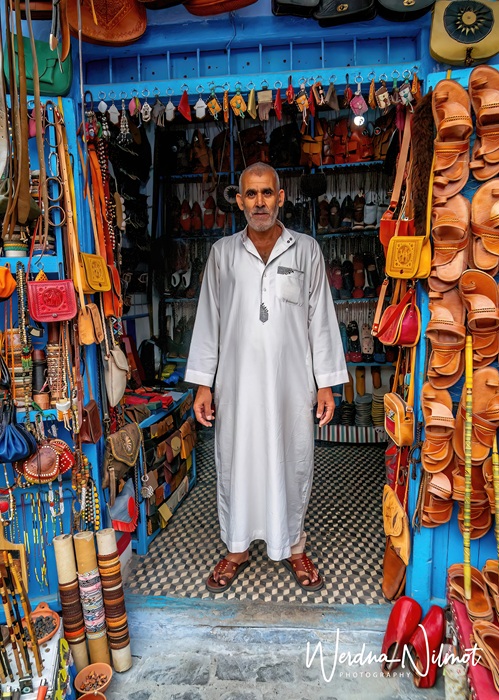
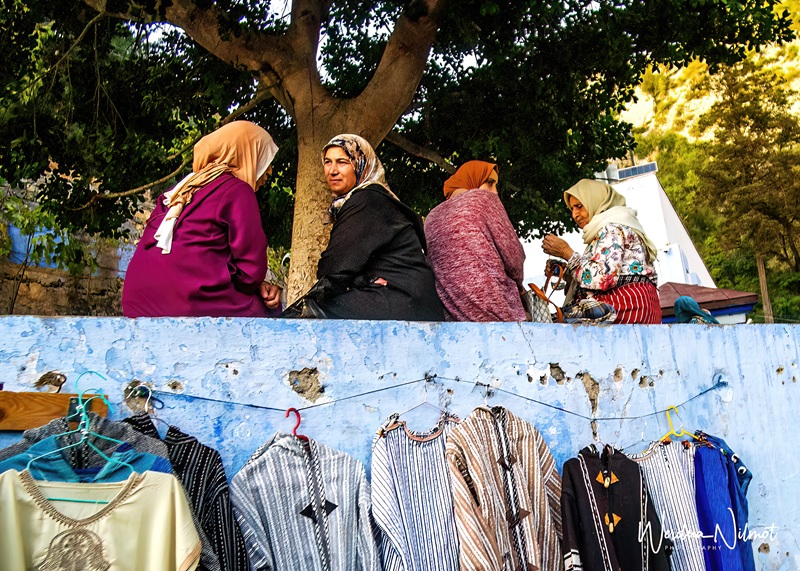
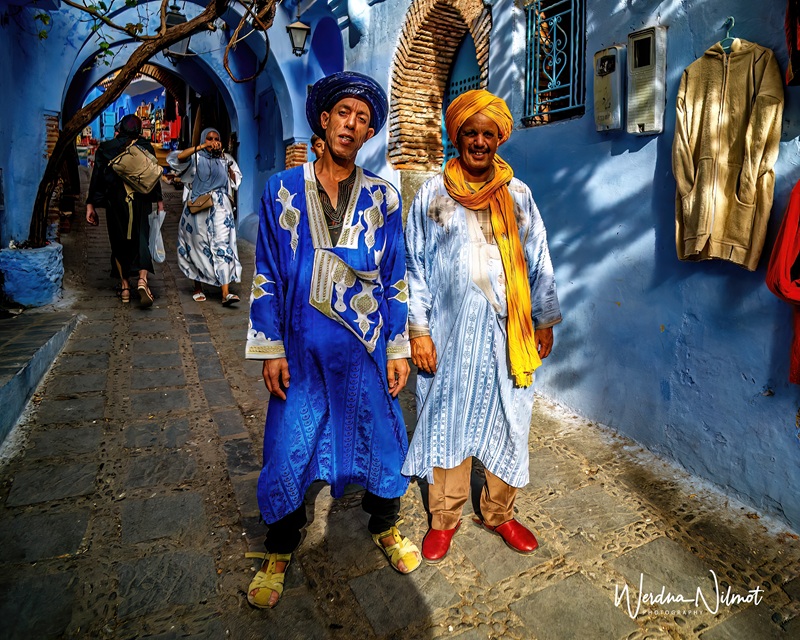
After the sun set and evening fell, streetlamps created long shadows. The signature blue almost glowed in the night. People walking in the streets and squares seem to appear from the mist and then disappear just as quickly.

Chefchaouen is situated in a valley within the Rif Mountain range. A short hike up above the city provided views that would make any landscape photographer or painter’s heart leap.
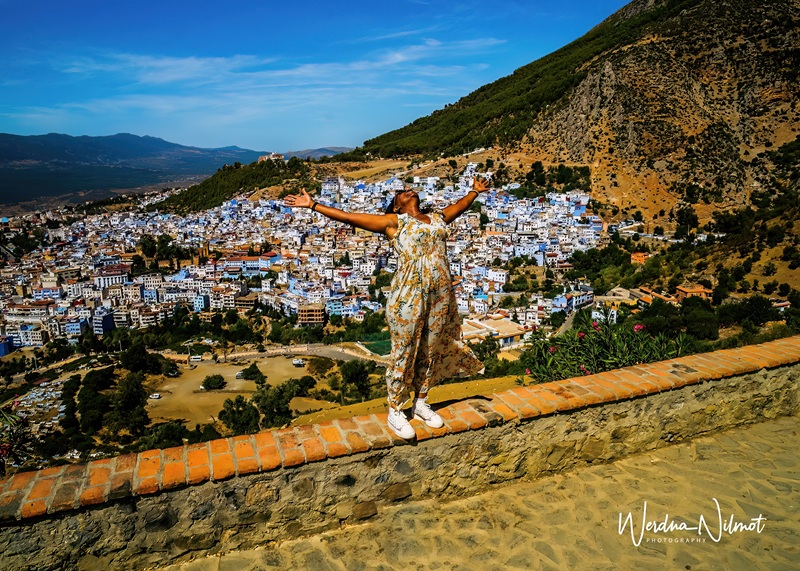
The time of day also factored into the mood of my images. Early mornings offered foggy, mystical views of the still-sleeping city. Midday sun highlighted the tableau of colors below. Sunset provided a serene blue hour color as the natural light faded and the city lights came on, one by one, revealing a nighttime jewel sparkling below. (click on arrow to view photo set)
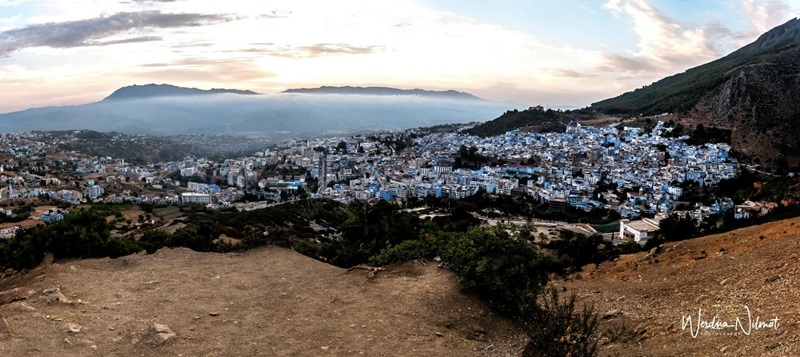
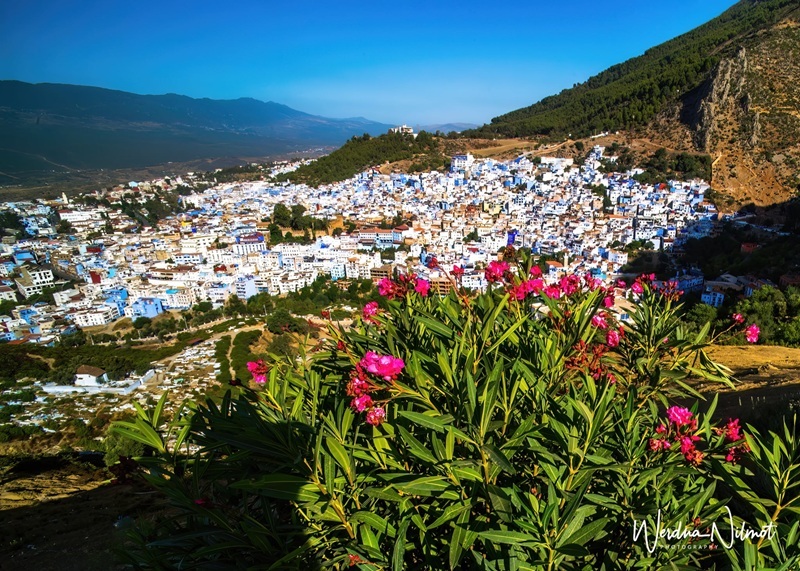

As I walked through Chefchaouen and on the mountain trails above it, I was reminded of the privilege I had to experience this beautiful, living canvas. It’s a journey that I’ll cherish forever.

“R” is for Riad
When I was researching my accommodation options in Chefchaouen, I was drawn to the unique charm of a riad. A riad, or traditional Moroccan home, is different from a typical hotel as it is built around an interior garden or courtyard.
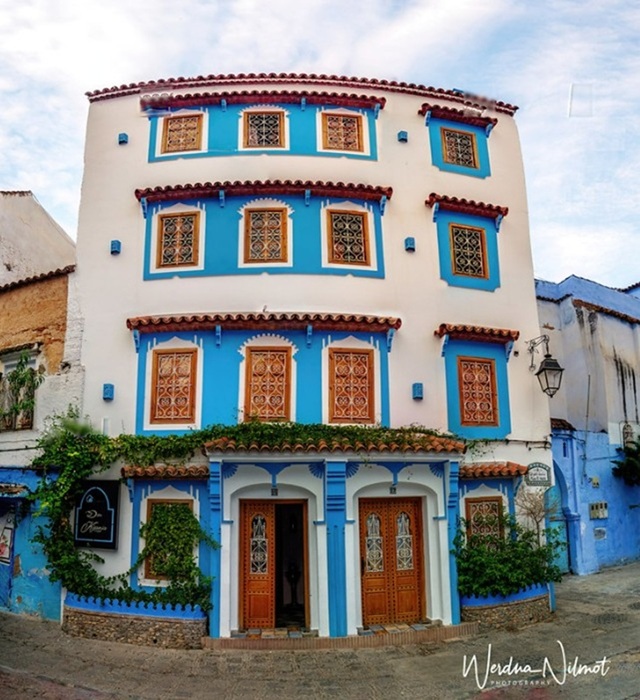
In fact, the word “riad” stems from the Arabic word for “garden.” They are the most authentic options for travelers who want to experience the country’s culture and history and are usually located in the old medinas of most Moroccan cities.
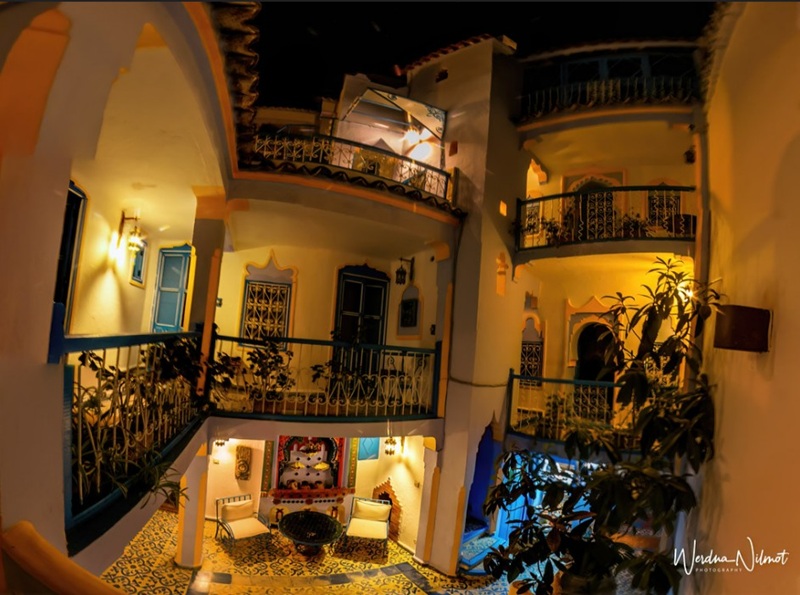
Originally, these homes were commissioned and inhabited by the affluent, often accommodating several generations of the same family. The Hôtel Dar Terrae was no exception, being home to a large extended family.
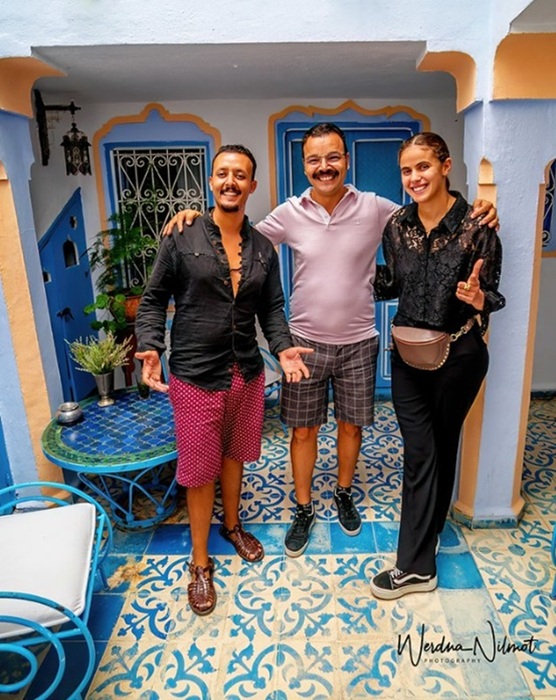
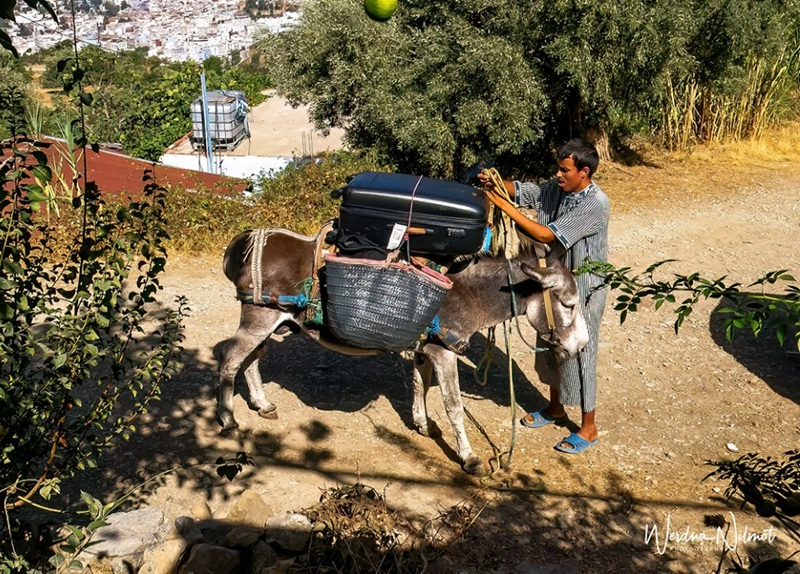
I was pleasantly surprised by the exceptional personal service I received: a staff member greeted me at the taxi drop-off outside the medina and carried my luggage uphill to the hotel and into my room, making me feel well cared for. (click on photos to enlarge)
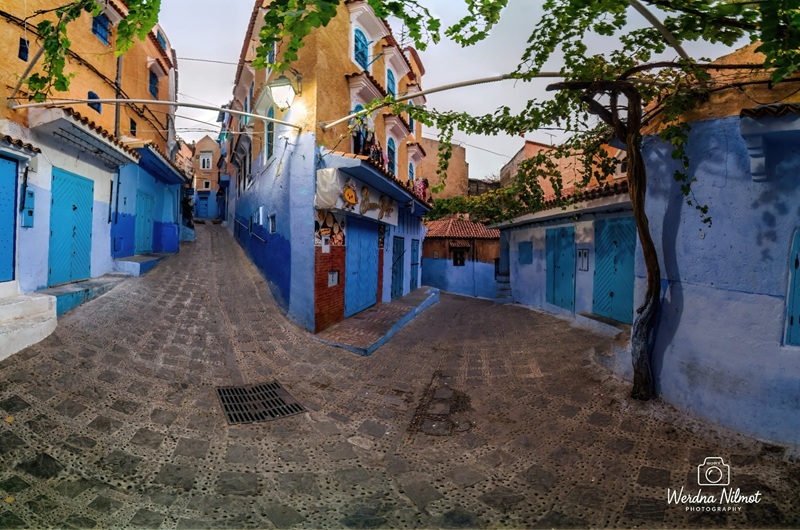
To make the most of the limited space available in Morocco’s crowded medinas, riads are typically narrow and tall, with at least two stories overlooking the central courtyard. These stories have open balconies, allowing residents to enjoy the fresh air and sunlight streaming in from the open roof.
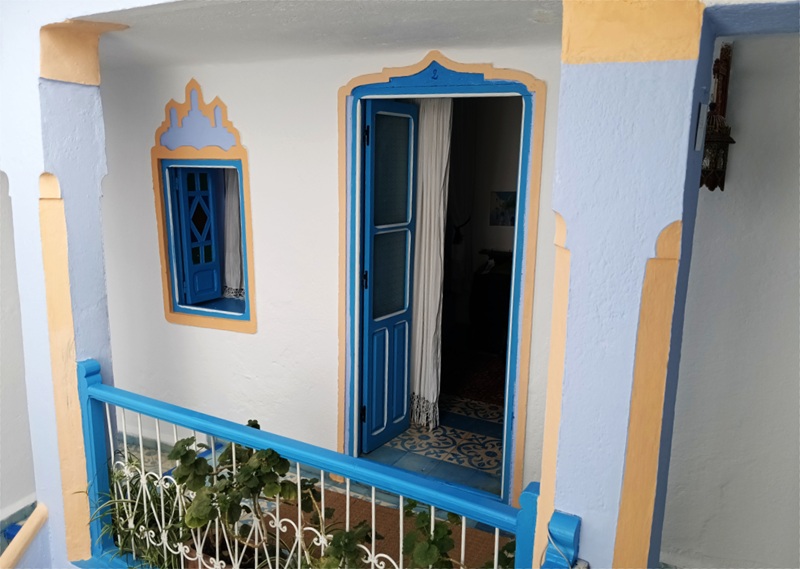
The rooms were small, lacking a lot of storage space, but my not-quite-queen bed was comfortable enough, and the shower had plenty of hot water. (click on arrow to view photo set)

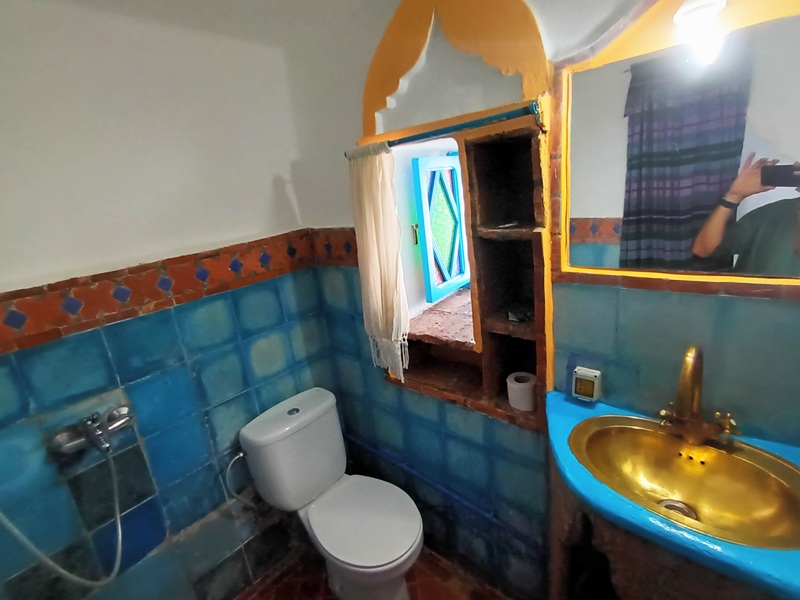
While the open space did allow for a fair amount of ambient noise, the riad was a secure and convenient place to stay. More importantly, it offered great value for the money – approximately $30 per night, with breakfast included.
The Adhan al-Fajr (dawn call to prayer):
Allahu akbar: (God is the greatest) Ashhadu anna la ilaha ill Allah: (I testify that there is no god but God) Ashhadu anna Muhammadan rasul Allah: (I testify that Muhammad is the Prophet of God) Hayya alas salah: (Come to prayer) Hayya alal falah: (Come to success) Assalatu khayrum minan naum: (Prayer is better than sleep) Allahu akbar: (God is the greatest) La ilaha illa Allah: (There is no god but God)
“O” is for Oranges
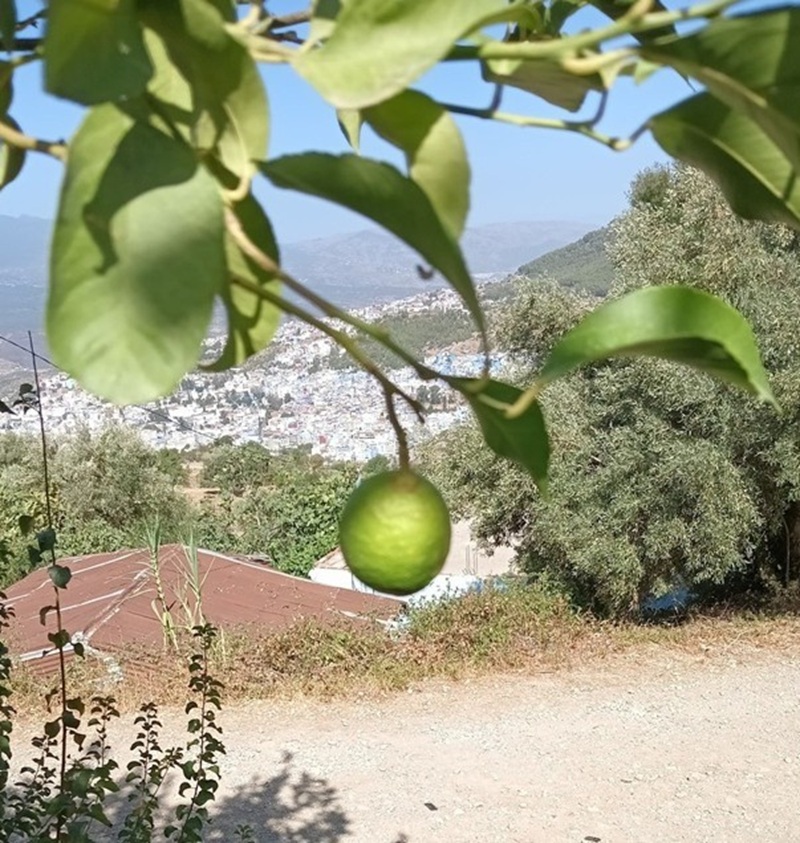
Morocco is one of the world’s leading producers of oranges, with 40% of the crop exported to the USA. The region around Chefchaouen is renowned for its citrus production, as the warm climate and fertile soil make it an ideal location for cultivating high-quality fruits, such as oranges. They are hand-picked, so only the ripest and best are selected.
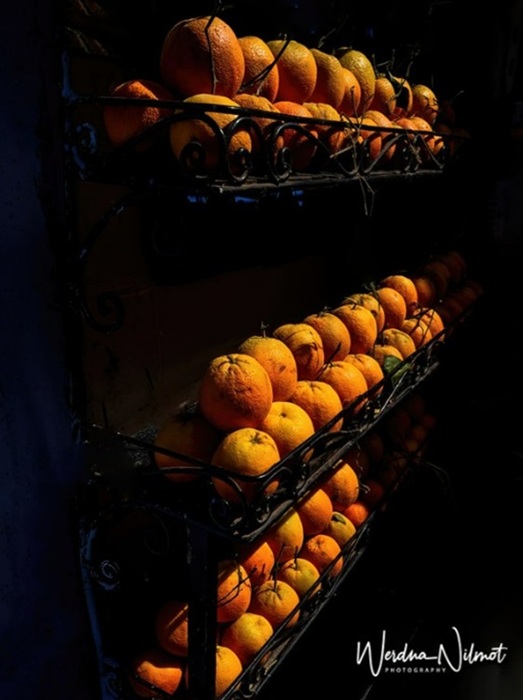
Considering Chefchaouen’s warm weather and steep hills, a glass of cool, fresh-squeezed OJ was just what I needed on a hot, sunny day.
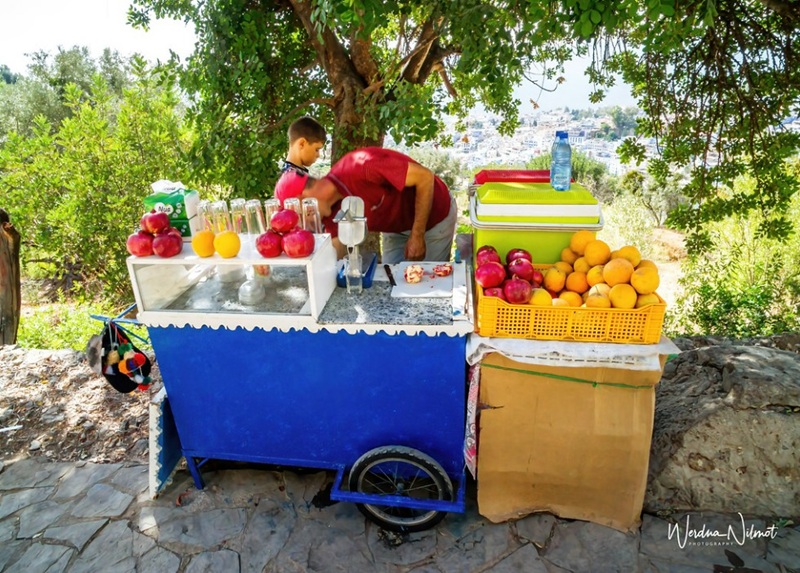
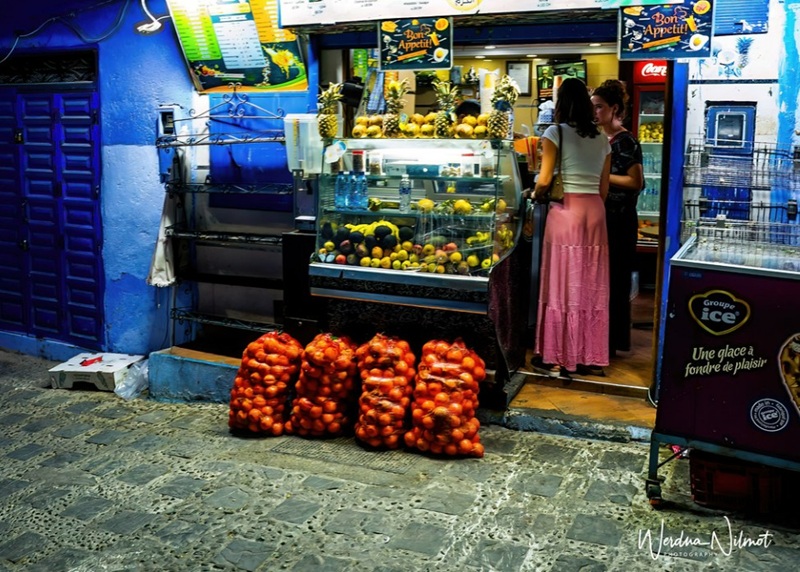
There were plenty of stands scattered about the city where I could quench my thirst, offering up to 24 different combinations of fruits. I drank my share of plain OJ or mixed with pomegranate or mashed avocado. The latter turned my drink into a creamy, out-of-this-world milkshake concoction.

Oranges play an essential role in expressing the unique charm of Chefchauoen – adding a splash of bright color against the blue background.
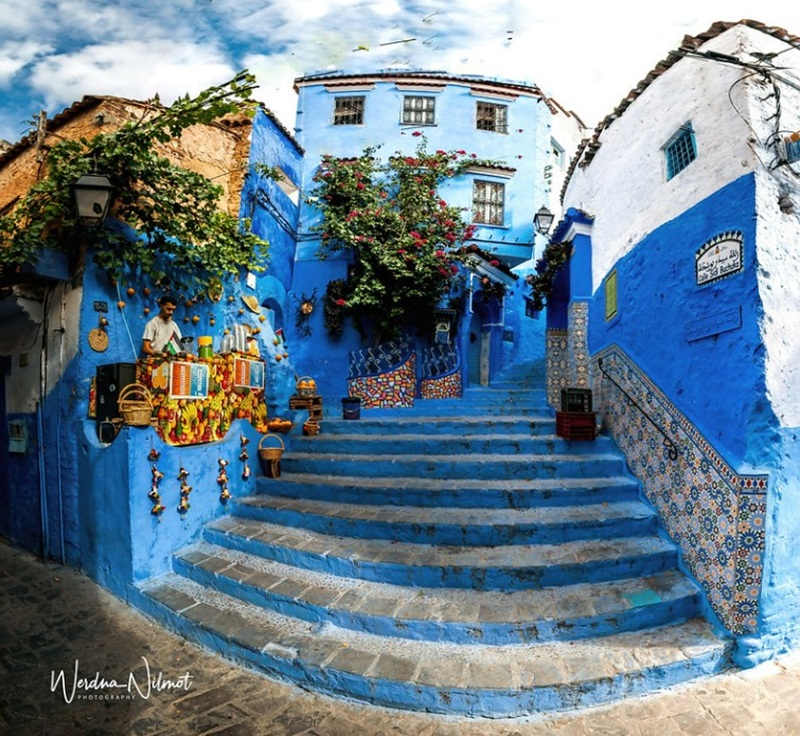
But oranges aren’t just for drinking. Their cultivation is deeply embedded in the local fabric – enhancing traditional dishes or adding sweetness to desserts.
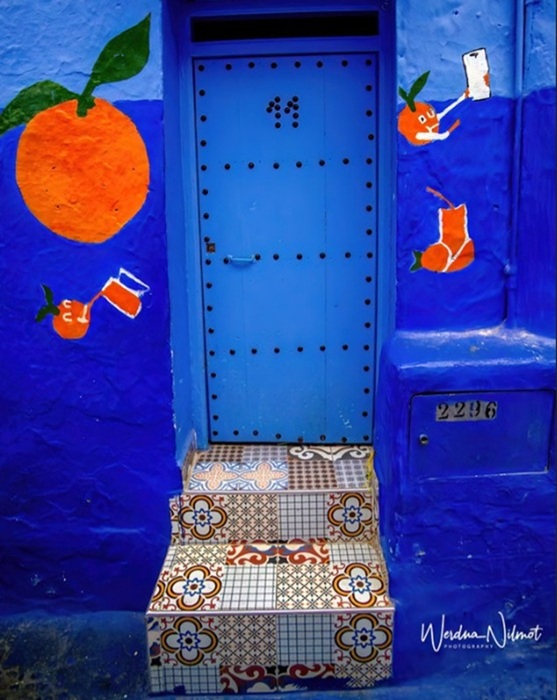
Walking around the city and its surrounding hillsides, I saw citrus trees nestled against ancient buildings and landmarks. This timeless blend of natural beauty and cultural heritage underscored the importance of citrus as both a culinary treasure and a symbol of Moroccan identity, leaving me inspired.
“C” is for Cuisine
Think “Moroccan cooking” and you’re immediately transported to a world of exotic spices and distinct flavors. With its long history of colonization, Morocco draws from a fusion of international cuisines, including Arab, French, Spanish, and Mediterranean. My meals in Chefchaouen were a feast for the senses, capturing the essence of Moroccan heritage with traditional dishes like tagine, couscous, and harira soup. And what better way to experience a culture than through its cooking?

During my visit, I avoided the touristy spots near Plaza Uta El Hammam because they tend to be crowded, overpriced, and serve average food. I was, however, open to dining in busy local places, as long as the prices were reasonable, the food was excellent, and they were relatively free of the day trippers.

These restaurants stood out:
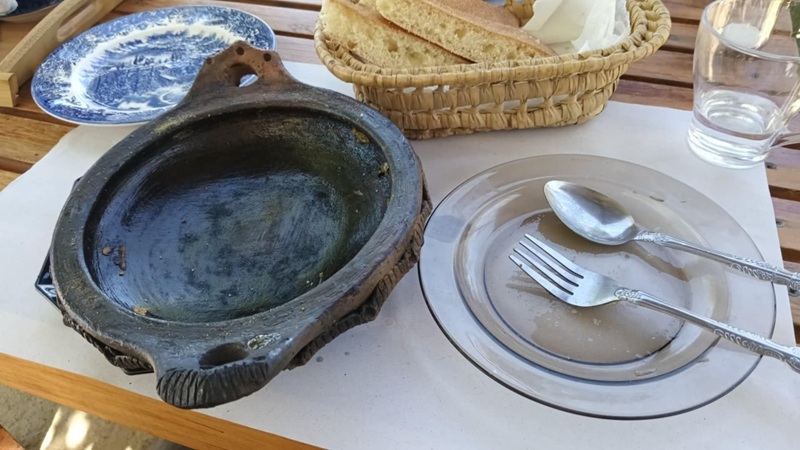
**Restaurant Jbaria** offered a fantastic tagine, along with complimentary appetizers, in a warm and inviting setting. Tagine is a traditional Moroccan dish that refers to both the dish itself and the clay pot in which it’s cooked. It combines vegetables, meat, or seafood along with spices, which are then slowly steamed together and served with either couscous or bread. (click on arrow to view photo set)
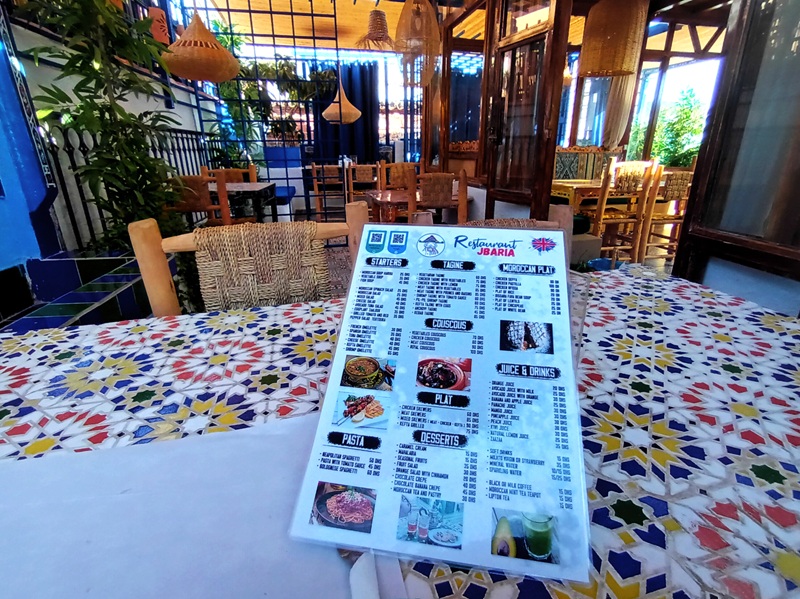

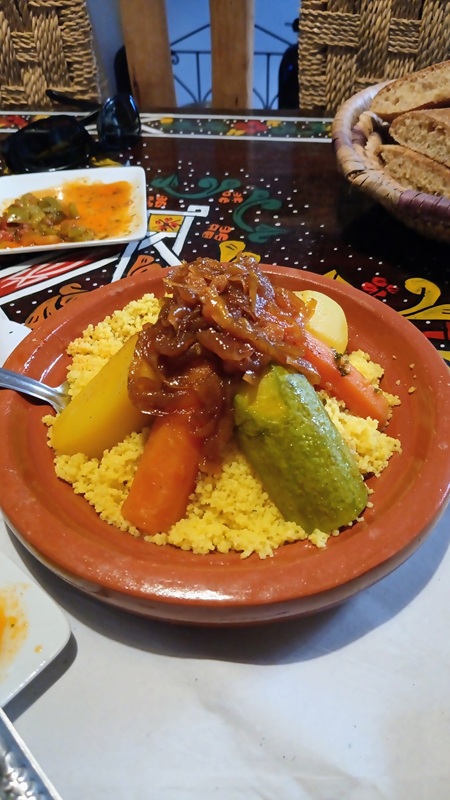

**Restaurant Baladi** provided a simple atmosphere with affordable prices, generous portions, and outstanding local cuisine. (click on photos to enlarge)
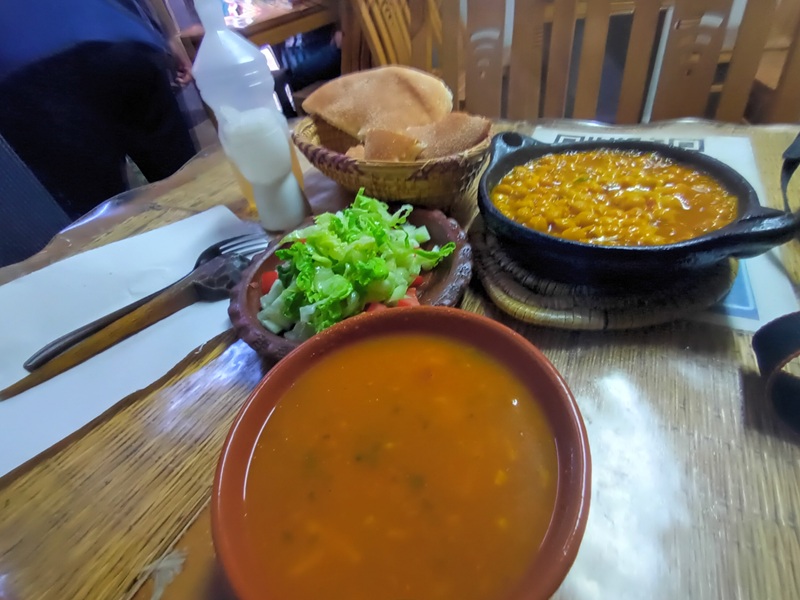
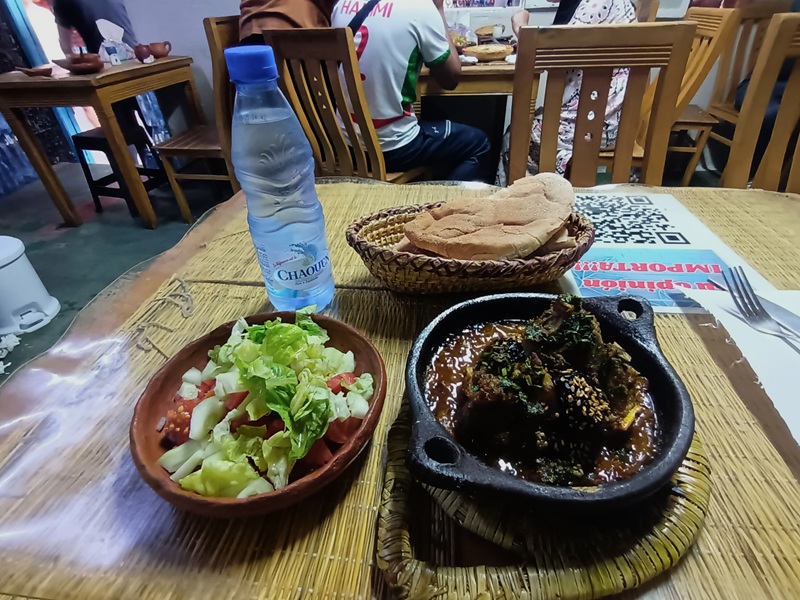
**Café Panorama Loubar**, located on a mountainside above Chefchaouen, served the best tagine I tried. It also featured stunning views (especially at sunset), friendly service from the owner, Abdul, and reasonable prices. However, meals were cooked to order so there was a bit of a wait. While waiting, I enjoyed excellent mint tea and delicious cookies. (click on arrow to view photo set)


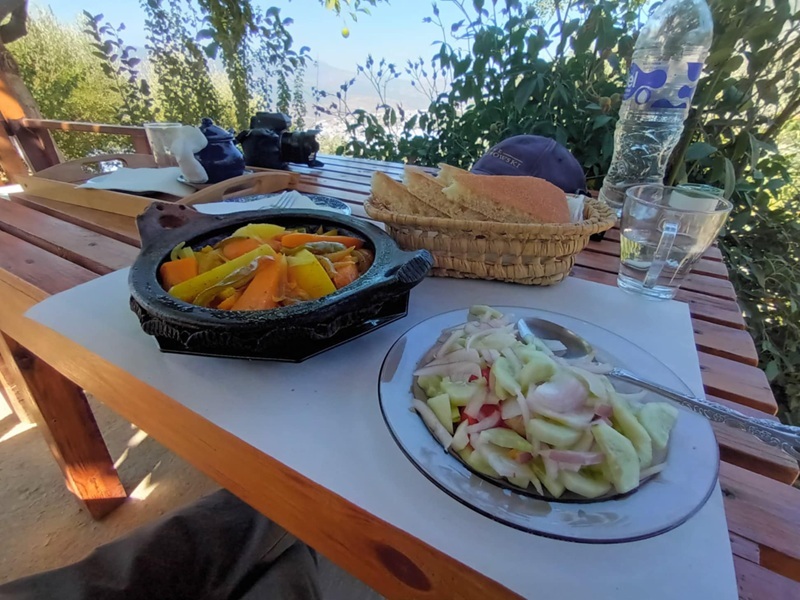
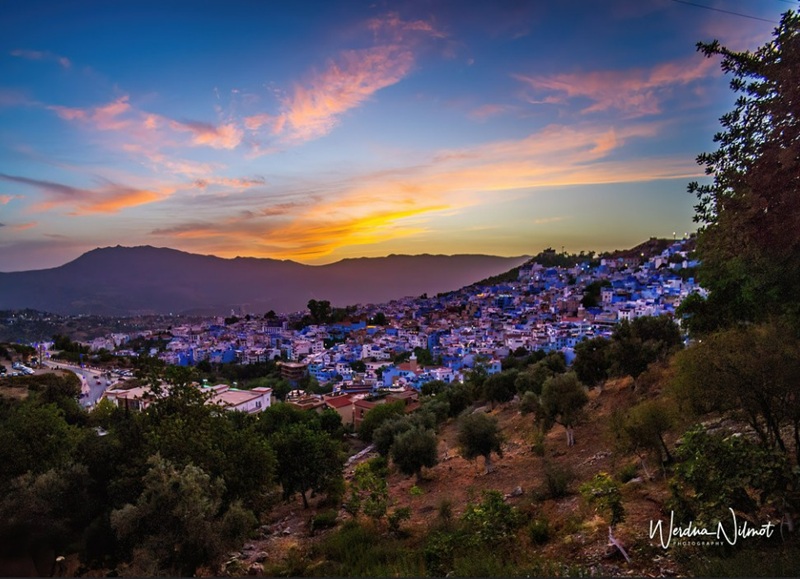
There was a small café near Bab Souk, which opened at 7 AM—early for Morocco—offering good coffee, friendly service, and affordable, hearty breakfasts. (click on arrow to view photo set)
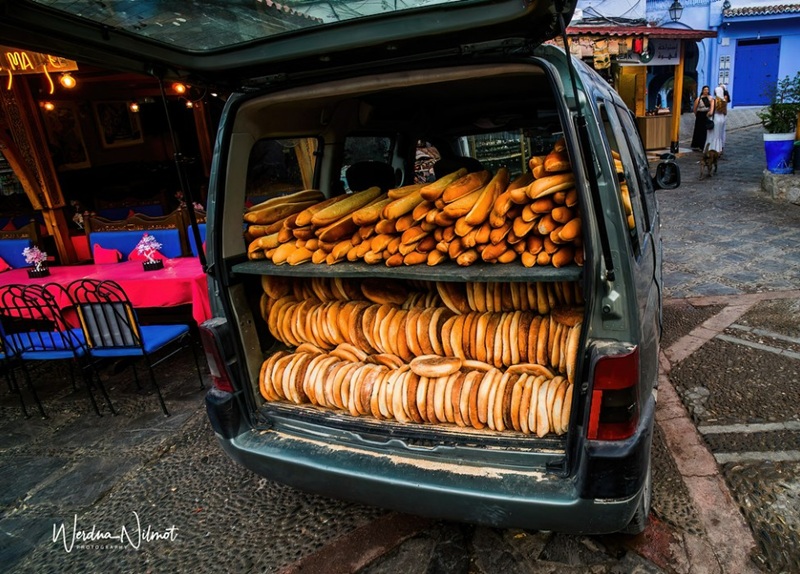
Chefchaouen is also home to numerous takeout spots, stands, and carts offering a diverse range of food and drinks at low, street-food prices. (click on photos to enlarge)

A special note about mint tea: it is intended to be savored, allowing time to enjoy the presentation along with the flavor, and is a perfect way to take a break when exploring Chefchaouen’s bustling streets.
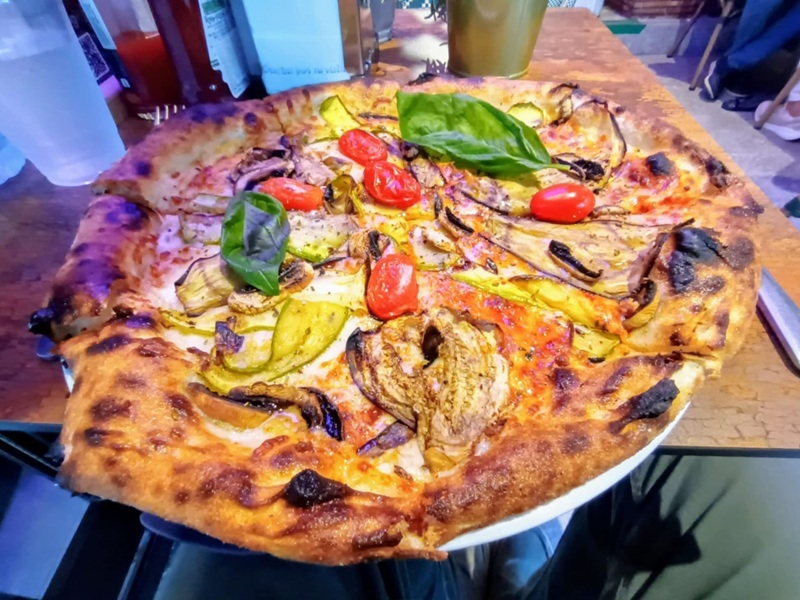
After sampling traditional fare for several days, on my last night in Morocco I dined at a contemporary pizza parlor in Tangier. The vegetarian pizza was exceptionally well-prepared, featuring a delicate, flavorful crust topped with fresh vegetables and finished with basil leaves.
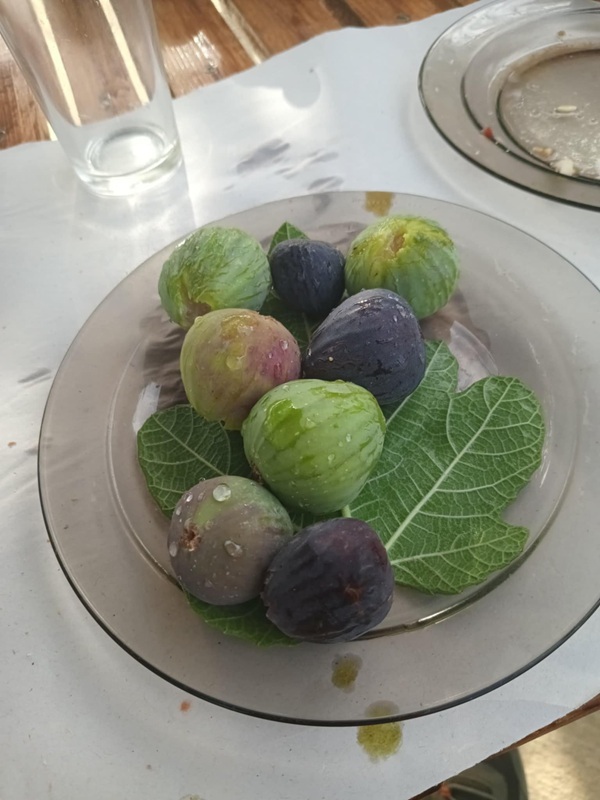
In conclusion, Chefchaouen cuisine isn’t just about flavor — it is rooted in centuries of tradition and hospitality where every dish tells a story. (click on arrow to view photo set)


Merci beaucoup. À bientôt … (Thank you and see you soon)
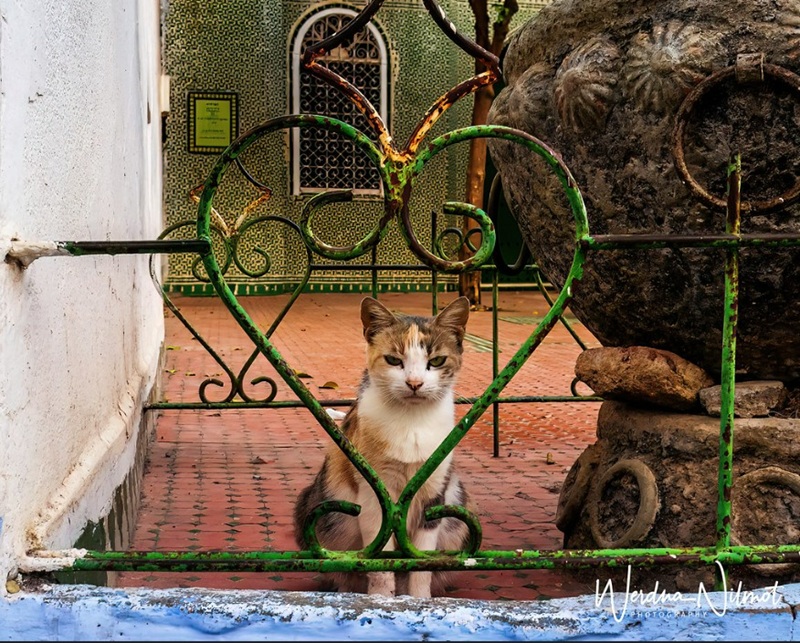
My eight days in Chefchaouen were a sensory delight: the sight of a friendly street cat striking a perfect pose in a metal heart, the feel of her soft fur as she wrapped around my ankles,
The aroma, sound, and flavor of a sizzling bowl of bissara soup,
And the silent echoes of the generations who had walked these same alleyways in the centuries before me.

Before I left, I shared with JET my hope of returning with a portfolio of about 200 excellent photos. In the end, I came home with almost that exact amount. But the personal connection I felt with Chefchaouen was so strong that I could have chosen any single theme and easily captured 200 images of cats or people, even door knockers! This visit left me longing for more, and I’m already planning my return trip.
To view all of my photos from my Chefchaoen visit, hover on the image to arrow through the set or double-click to open a new tab in Flickr:

 On The Road with Tall Guy & JET