
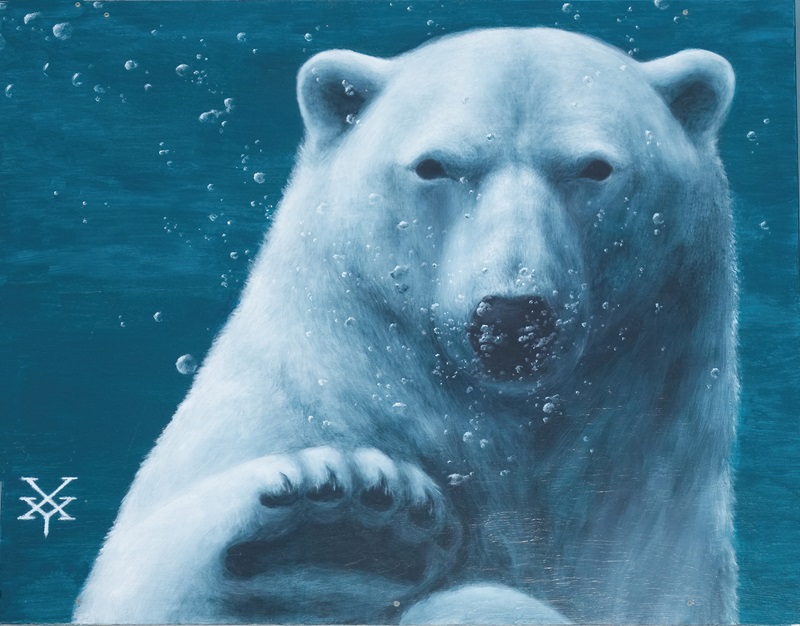
My fascination with polar bears began decades ago at Lincoln Park Zoo in Chicago. I was watching at the underwater viewing window when a bear swam by. I placed my hand on the thick glass, and he put his massive paw against mine. Mere inches separated me from this mighty creature, and I knew then that someday I would see these magnificent animals in the wild.
The years passed and other adventures took priority over polar bears. But as I grew older, I felt an increasing sense of urgency that if I did not make the trip soon, I would lose whatever opportunity I might have. After thorough research, I settled on the Lords of the Arctic learning vacation at the Churchill Northern Studies Centre in Churchill, Manitoba.
Day One: Arrival & Orientation
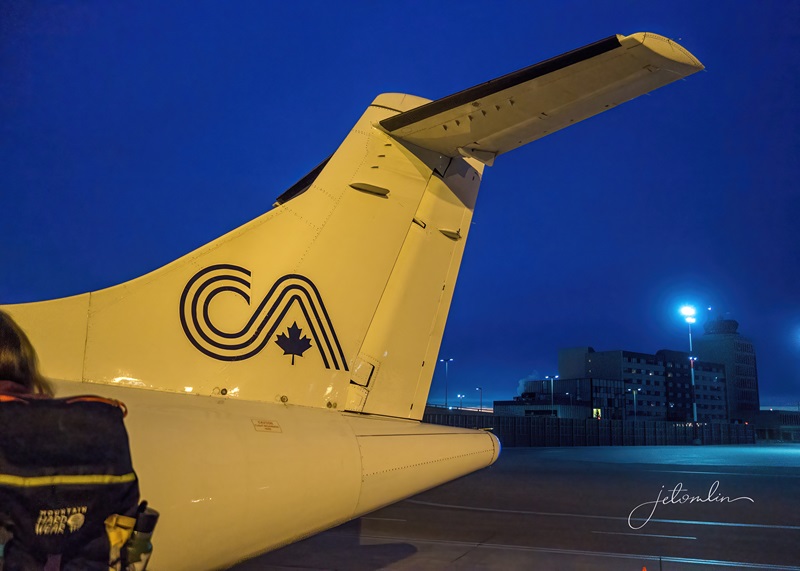
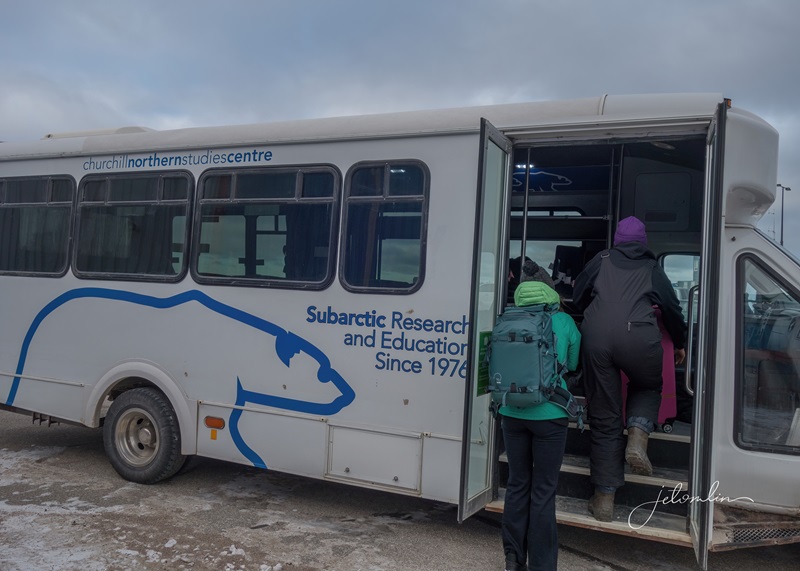
Faith is at the airport to meet us, and we are efficiently loaded onto the CNSC bus. We stop in town to pick up a few more folks and are on our way to the Centre, located about fourteen miles from Churchill. The landscape is covered with a light dusting of snow, and the road winds its way along Hudson Bay, looking very cold and gray this morning. I scan both sides of the tundra, looking for signs of wildlife, but at 50 mph it is challenging to spy anything.
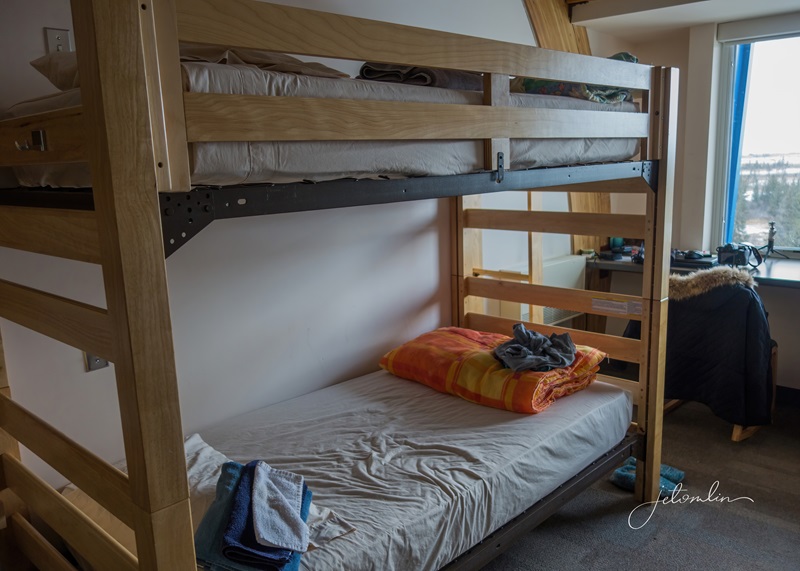
We gather in one of the many meeting rooms for our Welcome orientation and room assignments. This week we are a small group: just eighteen of us have traveled from across Canada, the US, and the UK. I am delighted to find that we are only two in a room built to accommodate four.
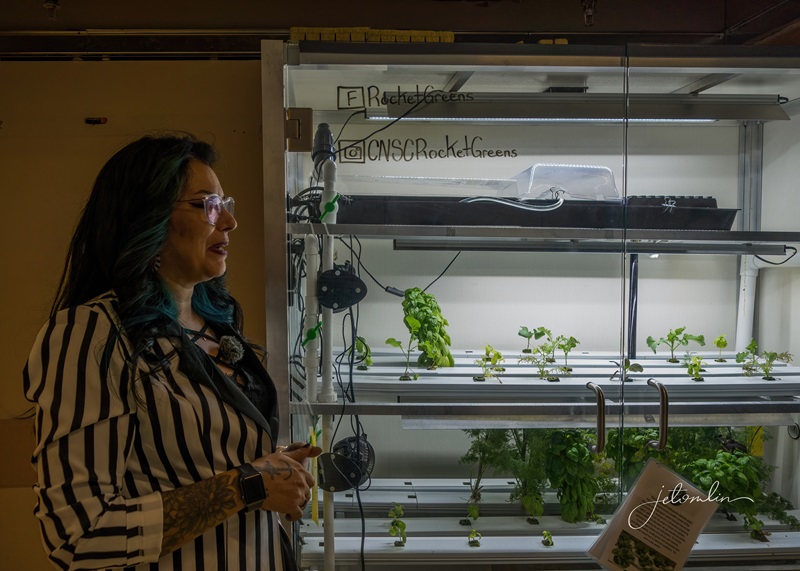
After a quick lunch, Ashley gives us a tour of the building. The CNSC is an independent non-profit that conducts multiple in-house and outside research projects. One of their projects is Rocket Greens, where they grow leafy green vegetables and herbs for much of the town of Churchill, including some of the hotels.
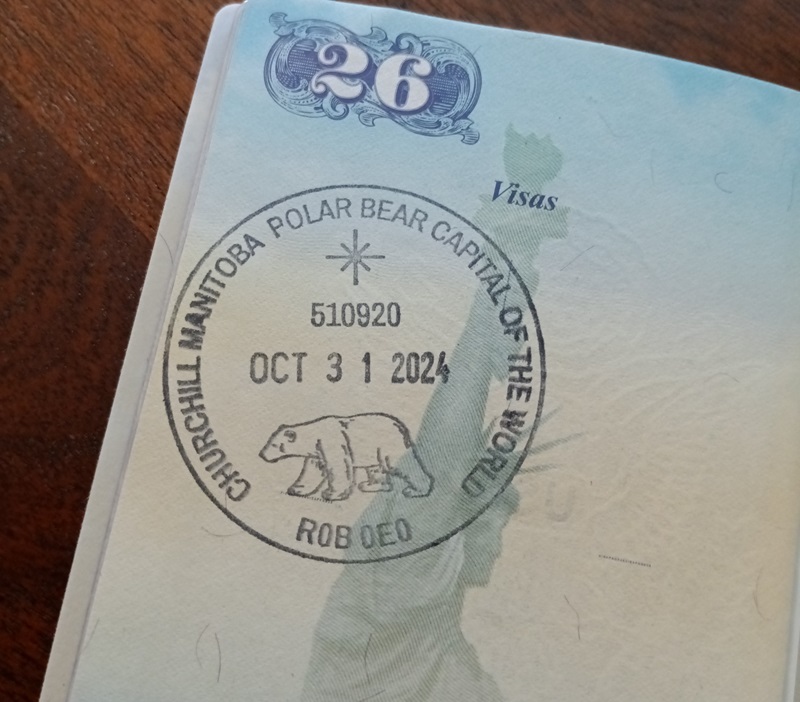
Once the building tour has concluded, we board the bus for a supply run in town. I do not need anything, but I do not want to pass up the chance to see wildlife on the tundra. After we board, Faith has a surprise: there will be a stop at the post office to stamp our passports!
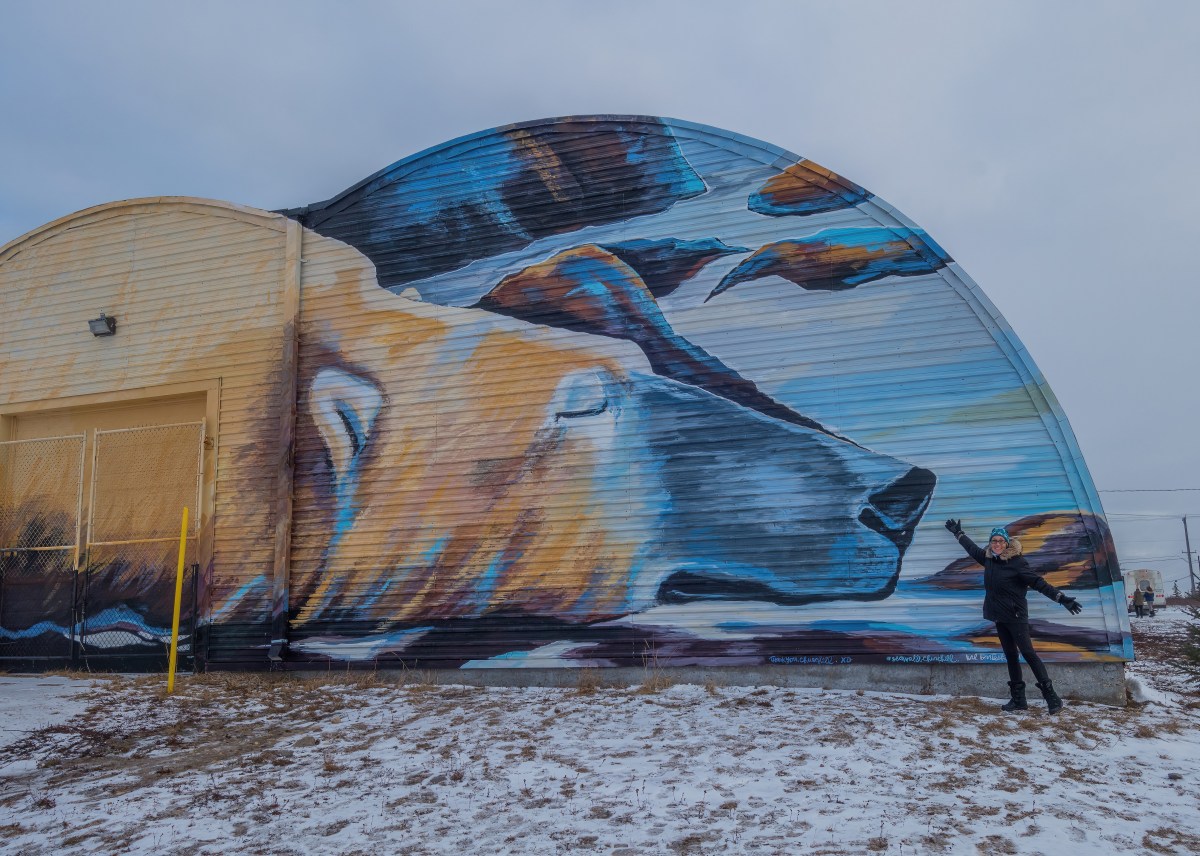
As we drive around the small town of Churchill, I see multiple murals – the result of the “Sea Walls” art project in 2017. After we return to the Centre, we watch an hour-long documentary about how this beautiful project came to be: “Know I’m Here.” You can watch the full video on Vimeo at the link below:
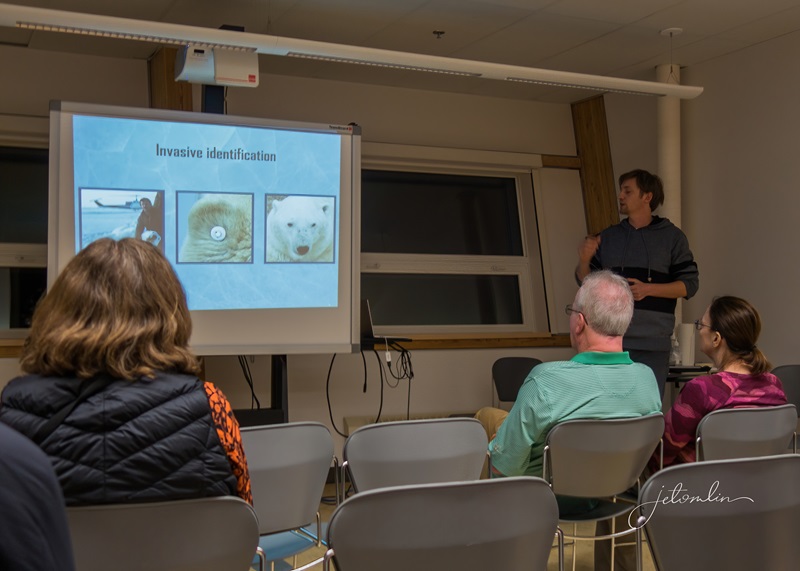
With no time to catch our breath, we move from the A/V room to supper and the evening lectures. The first is by a visiting scientist, Sjoerd Vos. He explains his “Whiskers Project”- a way to ID individual polar bears by the pattern of their whiskers, enabling scientists to track changes in the bears over time. We can participate in his research by providing photos – and he gives us the specs of exactly what he needs.
Next, head scientist and our group leader, Doug Clark, presents “Polar Bears 101” – a comprehensive overview of the state of polar bears in the Hudson Bay area. Diminishing sea ice (due to climate change) has lowered the reproductive rate: little ones have a much harder time surviving due to the shortened hunting season for the moms. But if they can reach adulthood, they will survive. This is good news, as I once feared that polar bears might go extinct in my lifetime.

Doug wraps up his lecture a little after 8pm. We retire to our rooms, and my roommate, Michele, and I talk until almost 10pm. She is from outside of Calgary and is traveling this week with her two grown sons.
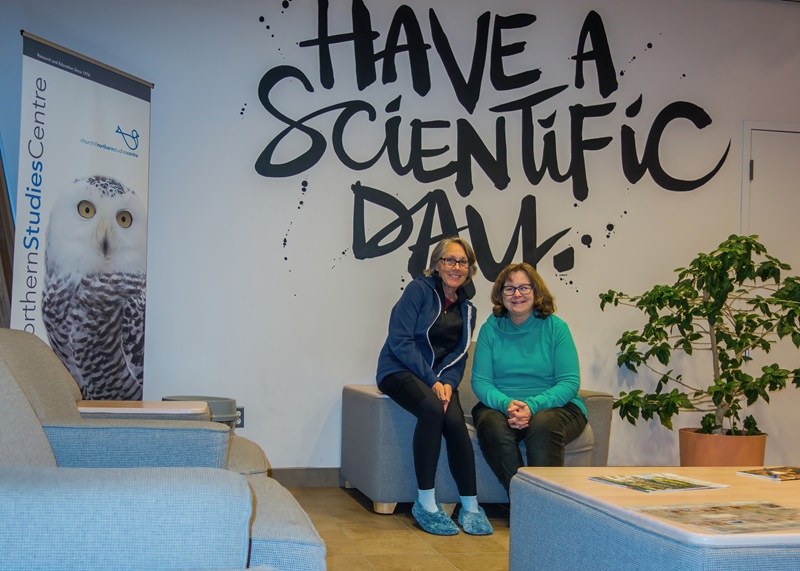
Day Two: A Very Beary Day
Today, we board a tundra buggy at 8am for an all-day drive through the Churchill Wildlife Management Area. The first buggy (Buggy One) was a modified garbage truck built by a local hunter who simply wanted a place to sleep while out on the tundra. A PBS crew asked to tag along to get closer to polar bears, and so an industry was born.
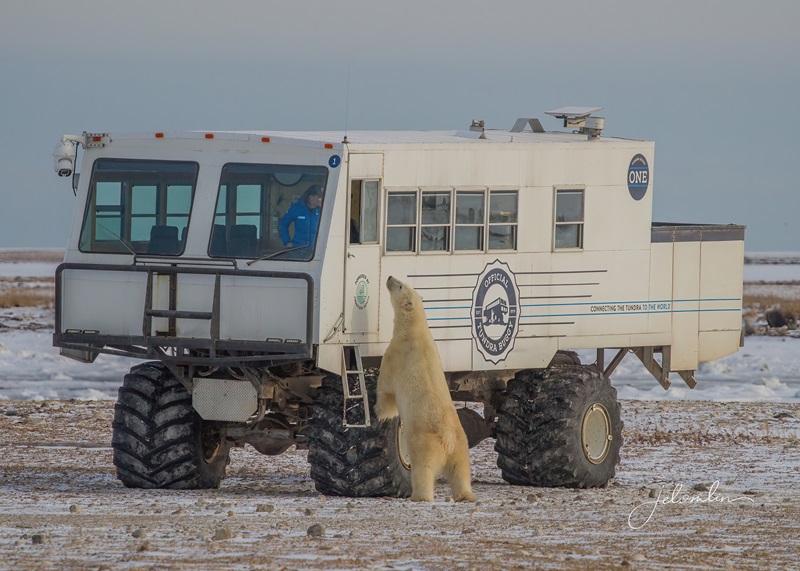
Currently there are around 15 buggies – not all in working order, nor all for tours. They are modified school buses that sit perched on giant tires with windows over ten feet from the ground. Each buggy is equipped with an RV-style toilet and a back viewing deck.
Our driver is Max Burke, a second-generation buggy driver who drove his first buggy at the age of five. We love his passion for the bears and other wildlife. He is a wealth of information about the land, the history of this area, and the culture of the community.

The terrain is rough – “pothole” does not even begin to describe the huge bumps and deep crevasses the buggy traverses as we lumber along. But we are all bright-eyed with anticipation for what this day will bring.

We spot our first polar bear within minutes: a single male slowly walking across the ice. At the same location, we spy a mother and two cubs, far in the distance. It is more than I ever dreamed of – four bears within the first hour! I am filled with emotion, and I fight back tears of joy.
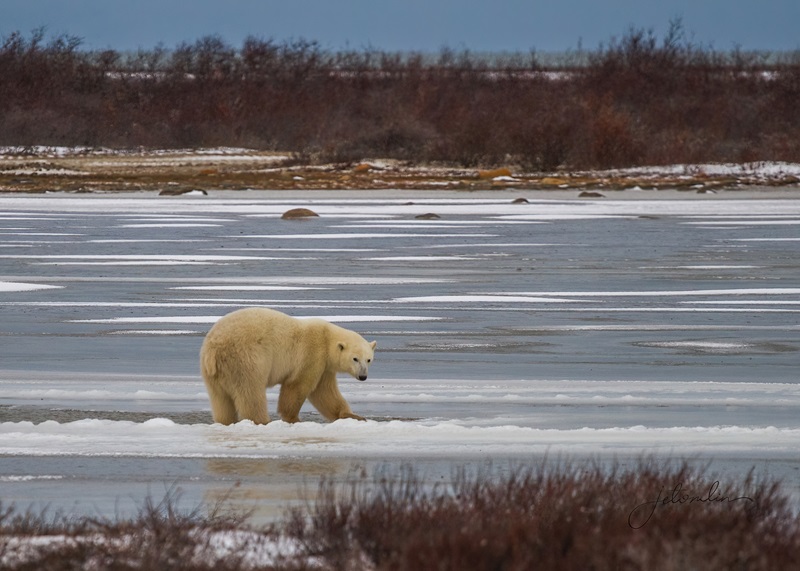
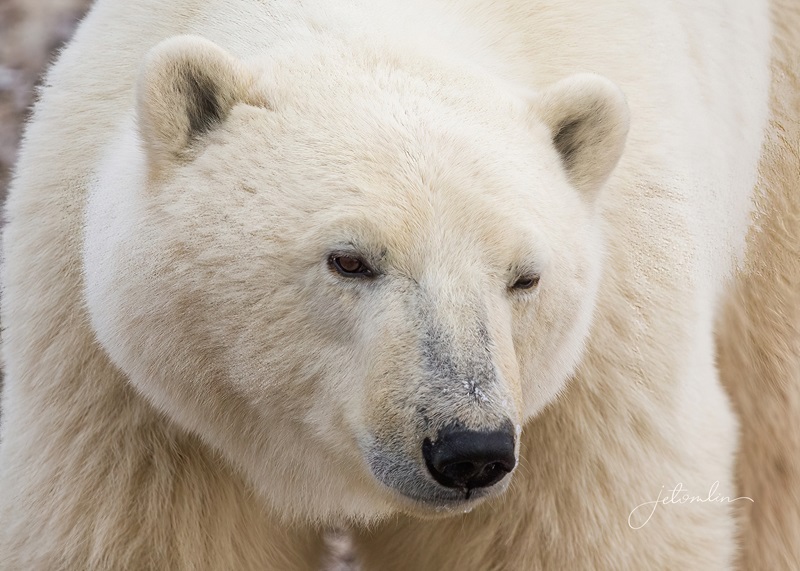
And then things get crazy: Max barely restarts the buggy at each stop before we spy another bear. We scurry from one side to the other, from the big front windows to the back viewing deck, taking shot after shot. It is impossible to convey the size of these animals: massive, huge, enormous, colossal all seem inadequate. They move their powerful bodies without a sound, gracefully walking along the tundra and ice.
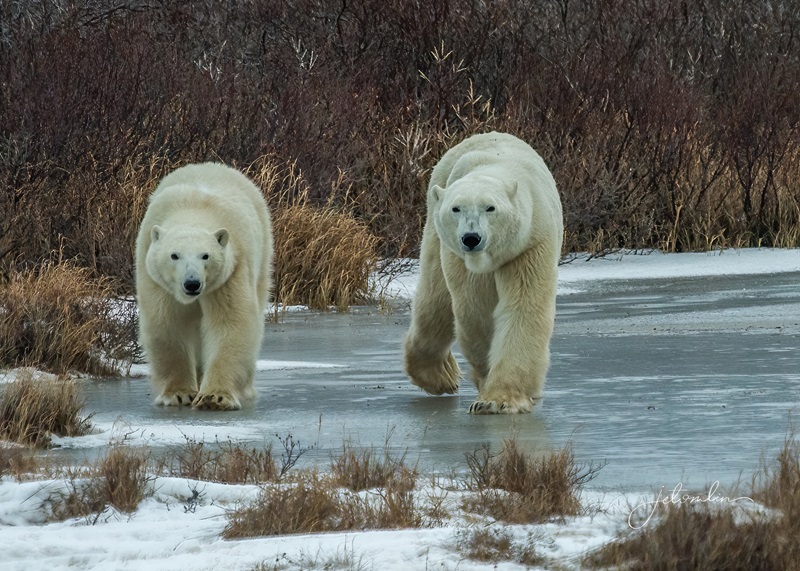
A mother and year-old cub stroll towards the buggy stopped ahead of us. We watch as they sit below the back viewing deck, giving those folks the photo opp of a lifetime.
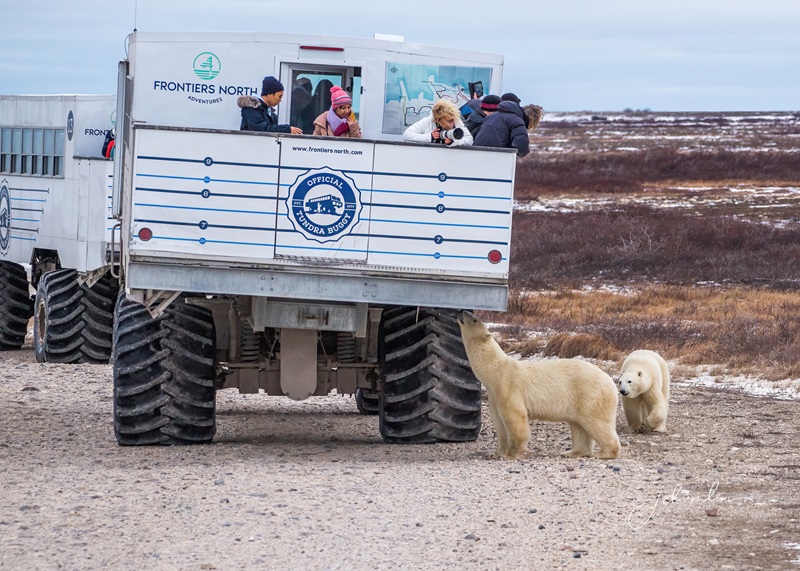
And then, much to our surprise and delight, she turns towards us! She brings her son to our buggy for the same opportunity – even going as far as to walk underneath the back viewing deck to look up at us through the grated metal floor. We are beyond thrilled.
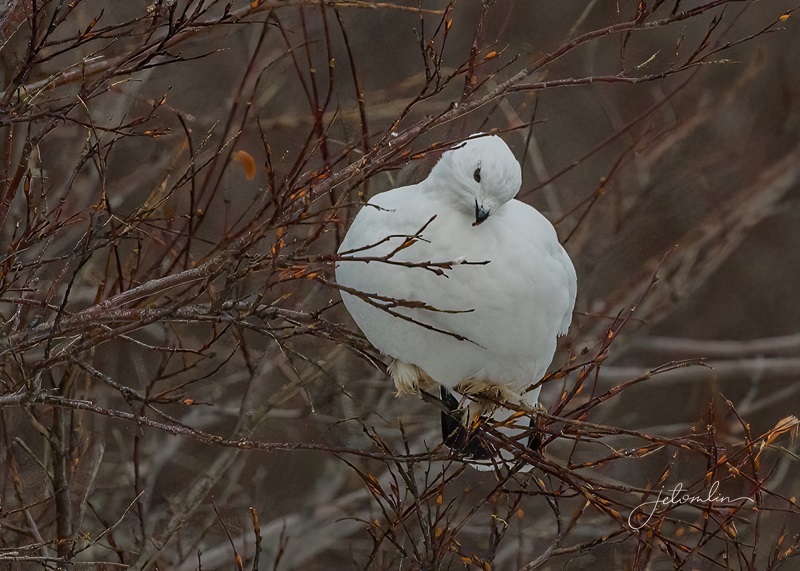
At one of our stops, a flock of two dozen ptarmigans fly across the road and land in the willows directly beside us. A polar bear to the right of us, ptarmigans to the left: where do we point our cameras?!?
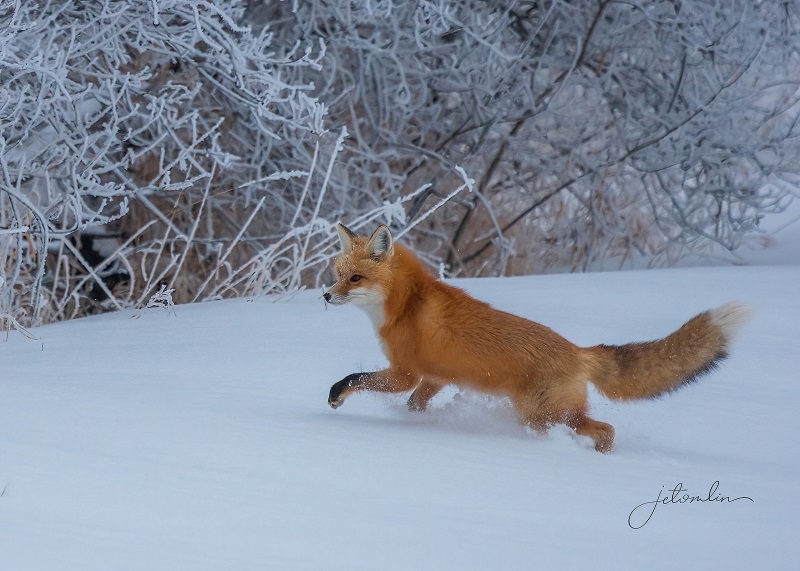
Later, we spy a white-rumped sandpiper, looking like an out-of-place Florida shorebird. Snow buntings fly back and forth across the road. And when it is too dark to photograph, a cross fox runs ahead of us. By the time Max turns towards home, our count for the day is twenty-five unique bears. He says it is the most bears in one day he has ever seen in his life – using words like “sick” and “insane.” Later, Doug tells me that it is the most bears he has seen in a single day in over three years of Lords of the Arctic learning vacations. It was indeed epic!
We return to the Centre in time for dinner and Doug’s evening lecture. He briefly overviews tomorrow’s activities and then talks about his remote-camera project. His team has set up remote cameras in four locations throughout the area, monitoring polar bear activity without human interference. Their findings closely parallel what scientists have found using more traditional tag and collar methods. This means legitimate scientific data can be gathered with non-invasive techniques, which is better for the bears and safer for the communities that live in the sub-Arctic.
It has been a wonderful day. Our adrenaline ran nonstop for the nine hours we were on the buggy, and everyone is exhausted. Lights out comes early, and I sleep soundly.
Day Three: Churchill Captures A Piece of My Heart
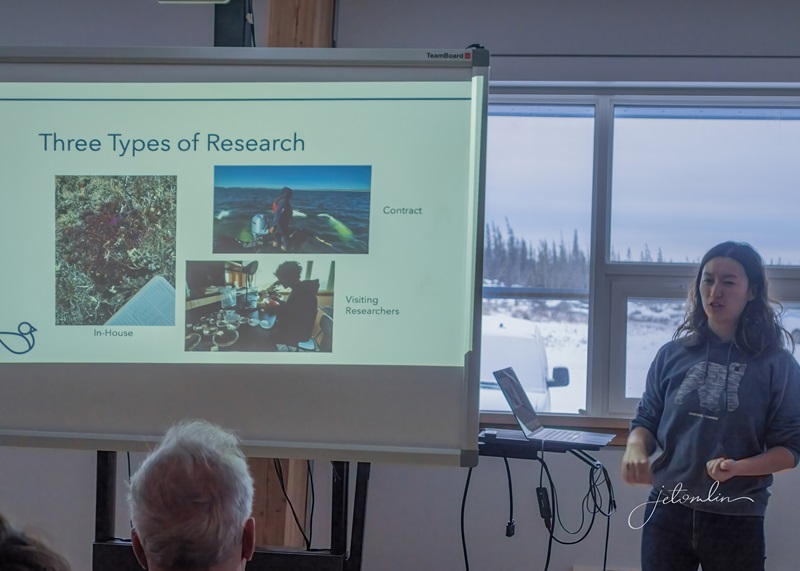
Another busy day begins with a lecture by Lara Grevstad, the CNSC Research Coordinator. She explains that this area is comprised of three unique bio-habitats, which draw scientists and researchers from all over the world. Part of the Centre’s mission is to supply accommodations, lab space, and supplies such as microscopes and other equipment for visiting scientists. However, the CNSC also conducts its own research projects and assists with outside contract work.
After Lara’s talk we are assigned our helicopter time and given a safety briefing. I wait about an hour for my turn, but the time passes quickly, and soon I am up in the air, in the front seat next to our pilot, Jennifer.

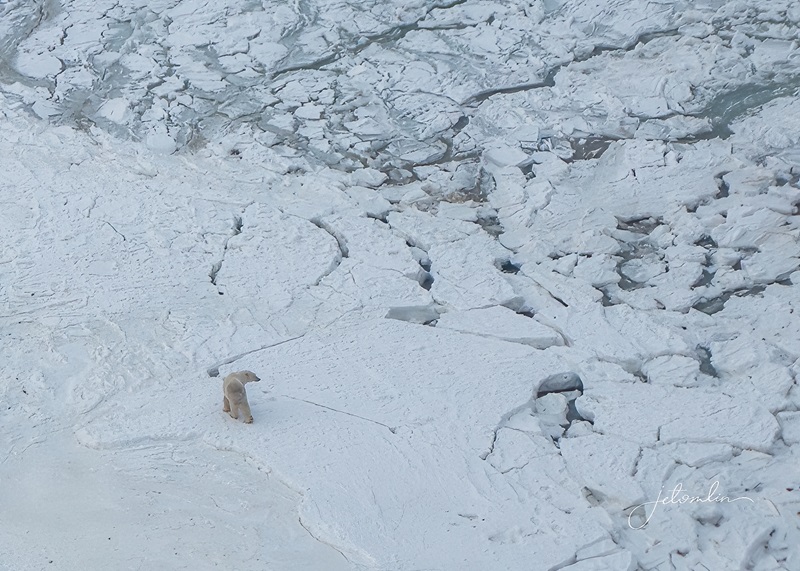
I tell her we saw 25 bears on our buggy tour yesterday and she replies she just saw 22 on her last flight. I scan the ground below me, looking for puffy yellow dots against the white ice and snow. Before long, we begin to count. There is one, there is another, and there are nine lying along that ridge! We lose count around 20.
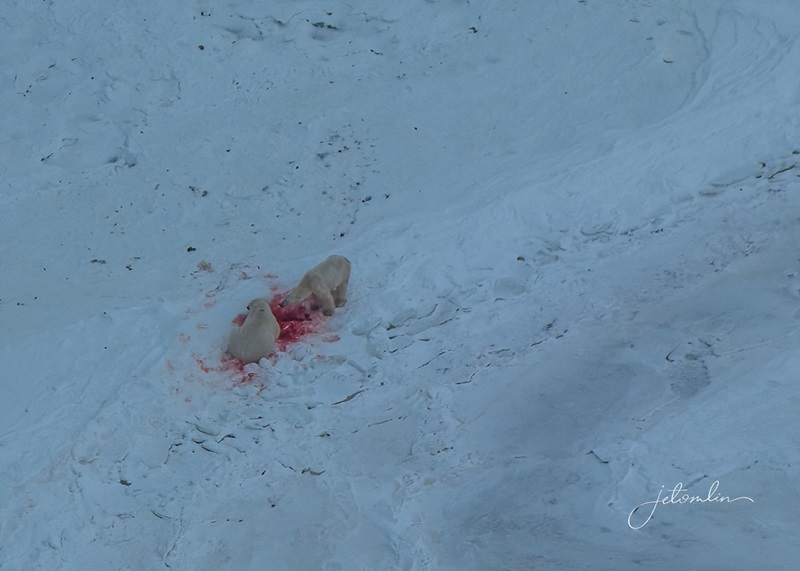
We see a big red splotch in the snow and a bear walking towards it. Jennifer tells us it is a seal kill. Minutes later, we see another big splotch with two bears actively feeding. And then a third, this time with one bear. It is a National Geographic moment, and I am relieved we are too high up to see much gore.
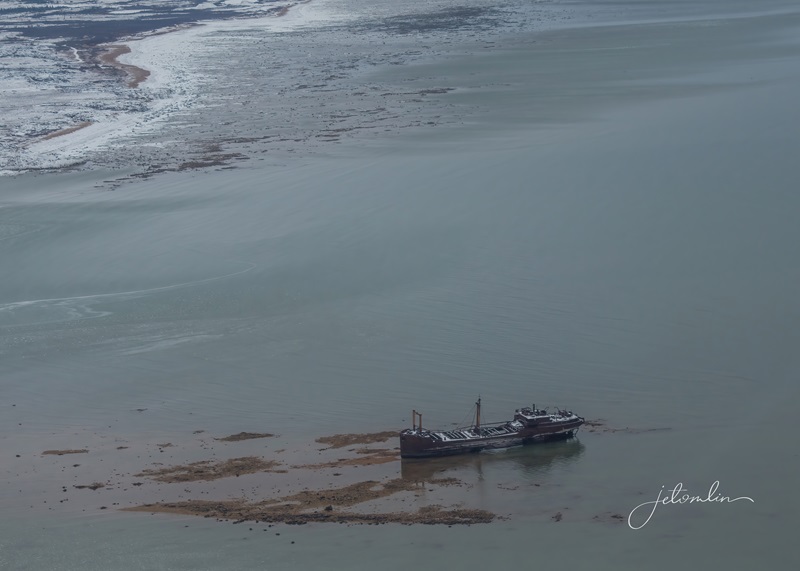
As we head back to the Centre Jennifer asks if we would like to see the Ithaca. Yes! We reply. The Ithaca is an abandoned cargo ship that sits in Hudson Bay, rusted and forlorn. On a fateful day in 1959, loaded with electrical generators and plywood, its rudder broke in an 80-mile-an-hour gale, and it ran aground. The company paid local townspeople to help offload the cargo, then permitted them to salvage whatever they could from the wreck.
To view all the photos from my helicopter ride click here:

After a quick lunch, we are out the door again. First, we take a driving tour of the rocket launch site that sits abandoned on CNSC property. The site was built in 1957 to study the effects of the aurora on long-distance communications. It was used sporadically after that but was largely deserted by 1985.

Next, we are on our way to Wapusk Adventures for an afternoon of dog sledding. On our drive, we spy three foxes – too far away for my little RX100 camera, but still a thrill. Once at Wapusk, we gather in the warm building for an introduction by “Big Dog” Dave Daley and his team of 43 dogs.

He passionately talks about his family of dogs and Indigenous-based tourism. In 2004, he founded the Hudson Bay Quest, a qualifier for the Iditarod. He explains that today we will be running the “Idita-mile,” and we are given fur hats and mittens to wear while on the sleds. I choose a pair of beaver mittens Dave has worn on over 1500 miles of dog races.
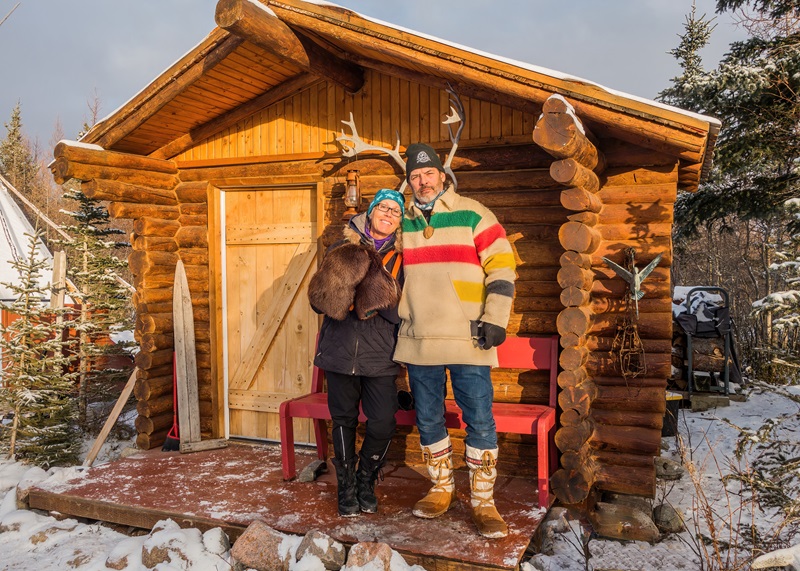
Liz sits in the front of the sled while I am in the back, standing position. I am also responsible for stepping on the brake pad, a thick plastic sheet with studs pointing down into the snow. Emma, our driver, tells me to jump off the runners and onto the pad when instructed to do so. And then we are off!

What fun it is, and the mile flies by all too quickly.
Back at the Centre, it is time for a quick supper, and then a few of us board the bus for another trip into town.
There is a local artist’s market at the Complex, and we are eager to go shopping. I stop at a booth selling Hudson Bay sea glass. Sandra Cook is at a nearby table. She is the mother of Max, our tundra buggy driver from Friday, and I am happy to chat with her about our extraordinary day. I purchase three greeting cards.
As soon as we return to the Center, we join Doug in the classroom for this evening’s lecture. Tonight, he tells us the story of The Three Bears. In addition to polar bears, the Hudson Bay area is home to black bears and an increasing population of grizzlies. All three species have been captured on his remote cameras. It is a fascinating talk, and we sit spellbound, hanging on to every word.

Somewhere between the helicopter ride and the dog sledding, my paradigm shifted today. I have fallen in love with this unique corner of the planet, and I share my enthusiasm with the vendors at the market. Their eyes glow with pride for their hometown.
Day Four: Back on the Buggy
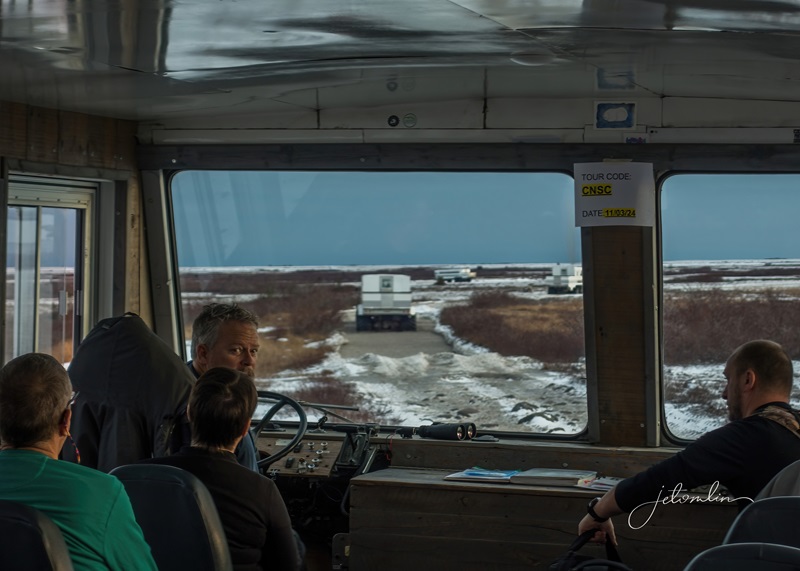
We are up early for another full day on the tundra buggy. This morning Captain Sean is our guide. He is a good driver, and we see four bears within short order. But unlike all our close encounters on Friday, most of these sightings are quite far away, and it is difficult to capture good photos.
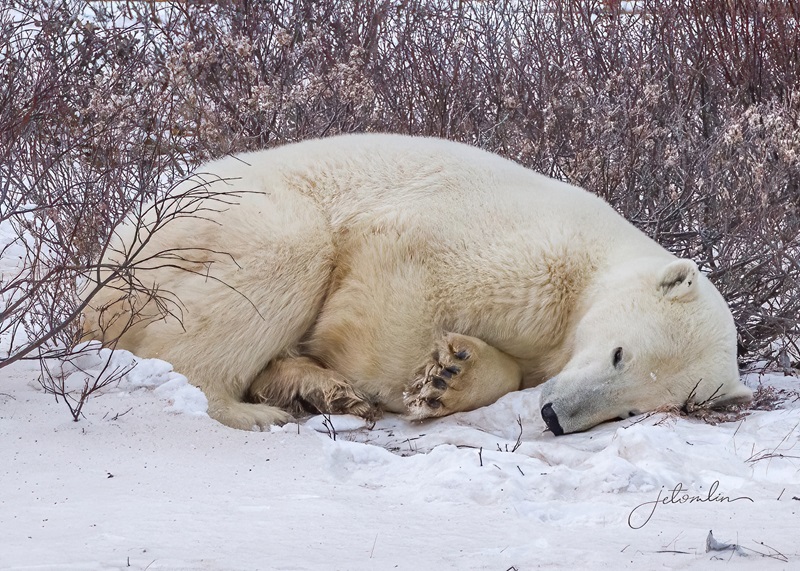
We come upon a group of three bears sleeping on the rocks along the shoreline. What was predicted to be an overcast day with freezing rain has turned into blue sky and sunshine. The lighting is beautiful, and we linger, hoping for some movement. Just as Sean starts the engine, one of the bears wakes up and gives us a few “centerfold-worthy” poses.
Sean suggests we head towards the Tundra Buggy Lodge – a string of buggies that host guests out on the tundra for multiple nights. We have barely started in that direction when he makes a sharp turn and races the opposite way. He has spotted two sparing males!

We stay for over an hour, watching as the two bears tumble around, then stand to box, then nap. We lose count of the number of times they repeat this behavior. The only sound is the clicking of cameras.
After most of the action is over, a buggy full of students pulls up. The bears lift their heads, and as if to agree to one more performance, they stagger to their feet and spar once again.
While watching the boxers, we are also keeping an eye on a bear coming towards us from far off in the distance. A tiny moving dot eventually takes the shape of one of the largest and most beautiful bears we have seen yet.

But wait! Another bear is hiding behind the giant tires of Buggy #12. Four bears!
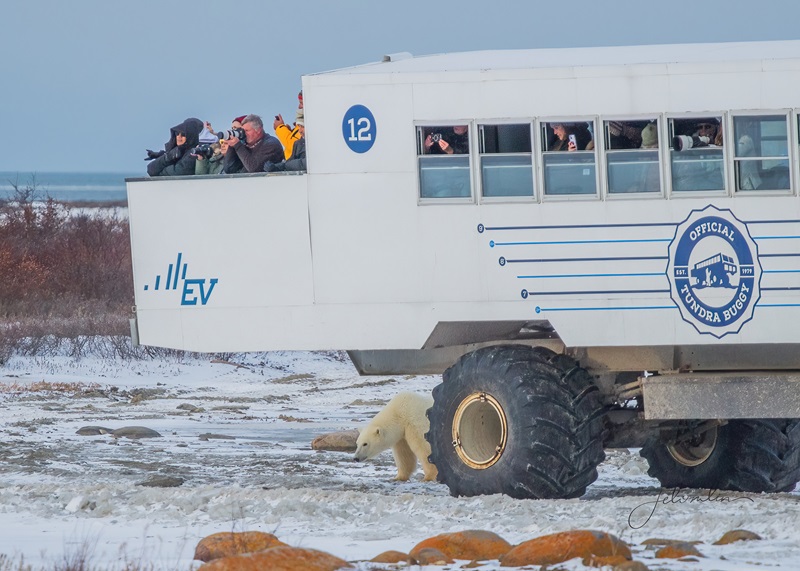
Big Boy lies on the ice, eyeing the two boxers now resting on a ridge across the road. He moves towards them. In slow motion, we watch as the two smaller bears get up to flank him. What is going to happen?? Will we witness a three-way fight?!? After some sniffing and circling, Big Boy ambles away and the two lie back down. The drama is over. I do not know whether to be relieved or disappointed.
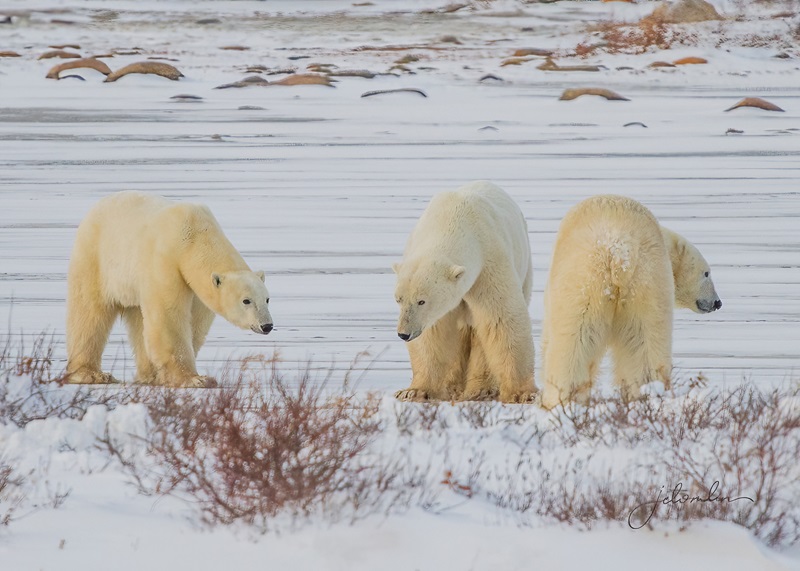
In addition to the buggies used for tours, there is a maintenance vehicle and “Honey Buggy,” the sanitation truck for the lodges that stay out on the tundra. “Honey” is racing across the ice near where Big Boy has chosen to lie. He is startled and runs fast across the ice and into the willows. Doug estimates Big Boy at 20 years old and around 1000 pounds. This is unusual behavior for a bear of this age and size. By now, he should be accustomed to vehicles. A possible explanation is that he has recently arrived in this area from further south and is not yet used to humans.
Captain Sean turns towards the buggy dock and home. After a slow start, we were given 19 unique bear sightings, some quite close, in the most beautiful light we could have hoped for. But the tundra has one more surprise for us. With the dock in sight, we see a sub-adult lurking around the edges of the property. Jim, the bear guard, is on high alert as the bear approaches. He fires off a few warning crackers, and the bear runs off. We are instructed to board the bus without delay.
To see all my photos from our two days on the tundra buggy click here:

After dinner, Doug talks about the politics of bear management. A 1973 international agreement between the five sub-Arctic countries home to polar bears established strict guidelines—a remarkable collaboration that has lasted for decades. However, as global warming increases and governments change, combined with more Indigenous awareness and input, polar bear management has become increasingly complicated.

Each night, we check the forecast and the sky overhead. It has been overcast all week, and tonight is no different. It is not likely we will see Lady Aurora dance this week. I try not to be disappointed as I came for polar bears and have been given more sightings than I could have imagined. But I continue to hope …
Day Five: Pink & Green Icing on the Cake
Today is our last full day and the “On-the-Town” tour. We load the bus early to photograph the many murals we have seen around Churchill. Bear safety is taken very seriously, and all week, we have been instructed to move quickly from bus to building and never venture outside except on the Centre’s second-story observation deck. Whenever we return after dark, Faith does a slow loop around the parking lot, scanning for bears before letting us off the bus and straight into the building.
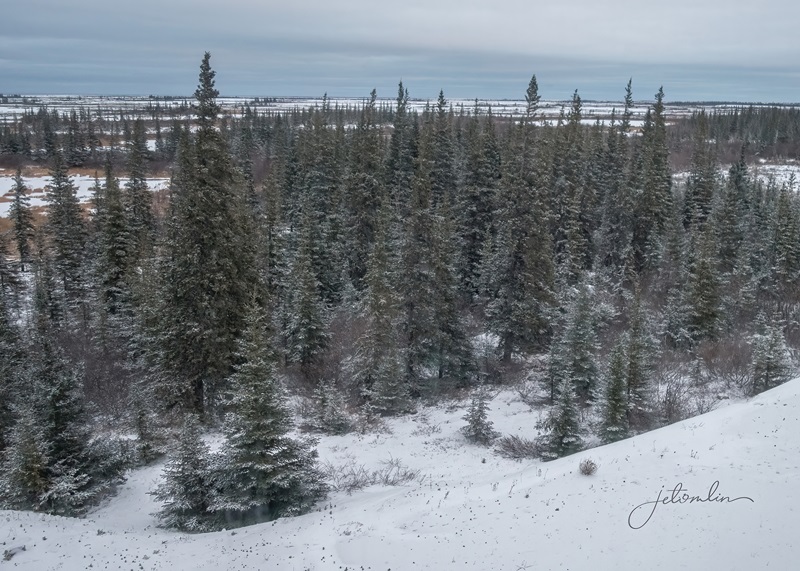
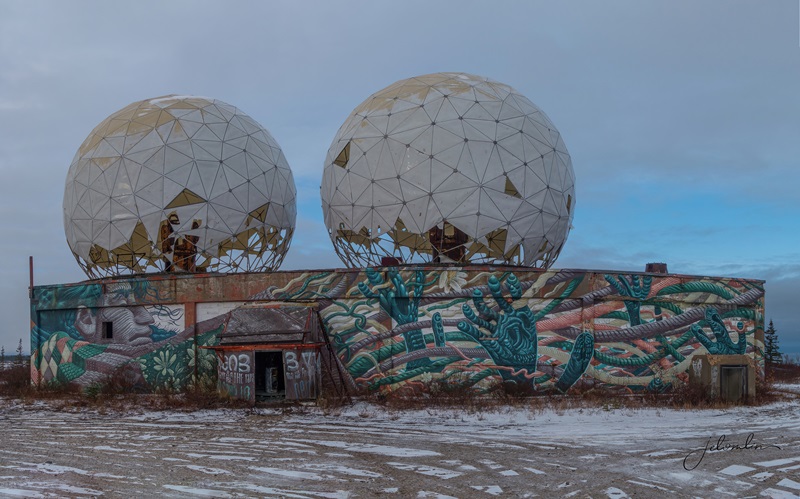
Our first stop is the Churchill WMA sign, followed by the “Golf Balls,” an abandoned radar station once part of the rocket program. Doug feels uneasy, and rightly so. A bear is moving towards us from the tree line. Our photo opportunity is cut short, and we see firsthand why bear safety is so important.
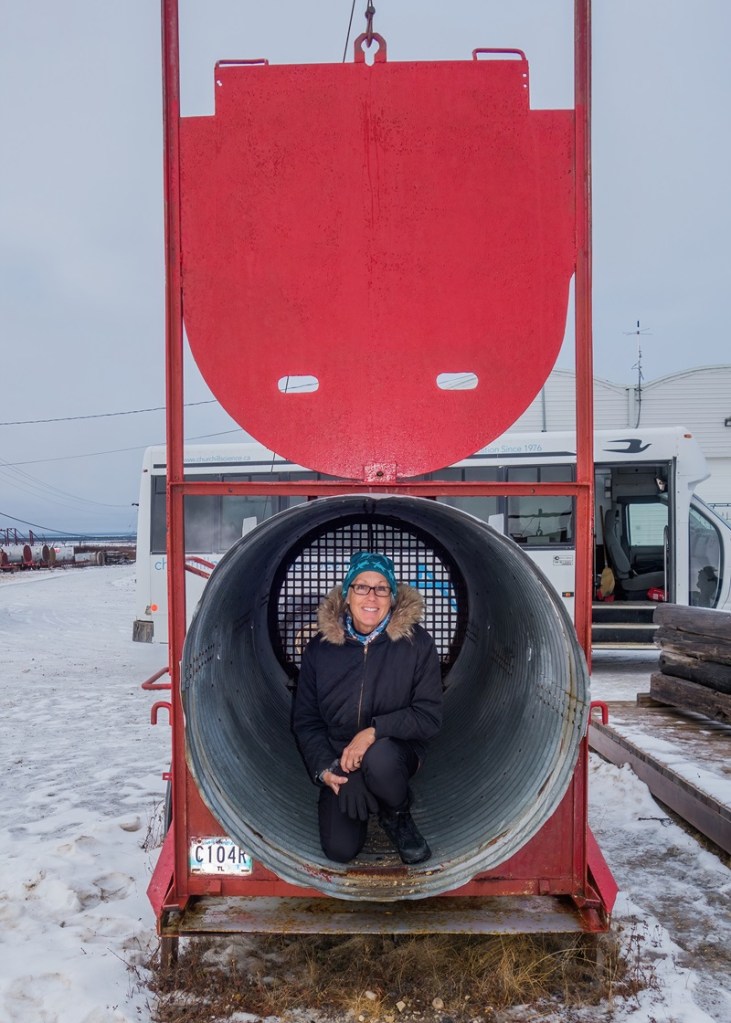
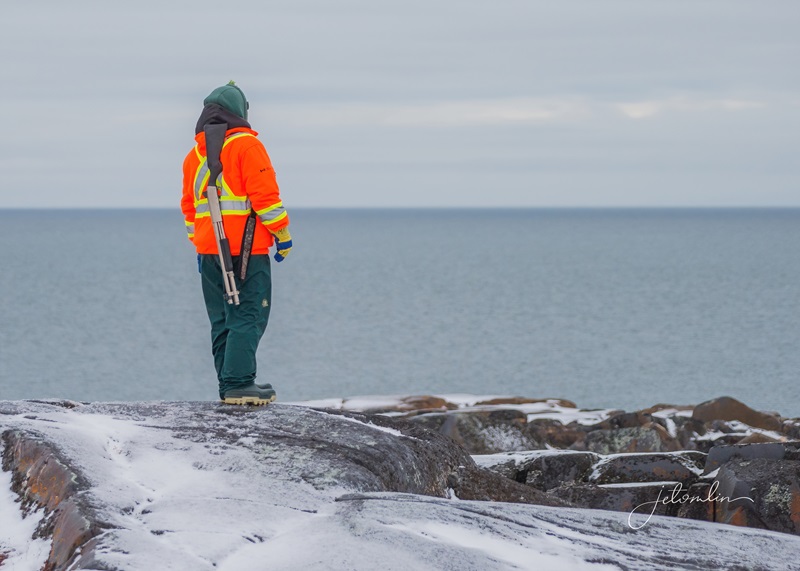
Next is the polar bear jail. The town of Churchill has created a program to protect its citizens, visitors, and the bears. Armed guards regularly patrol the roads and try to haze any bear that wanders into town. If that doesn’t work, the bear is captured and taken to a holding facility, where it is kept until the ice freezes enough to release it far from the community.
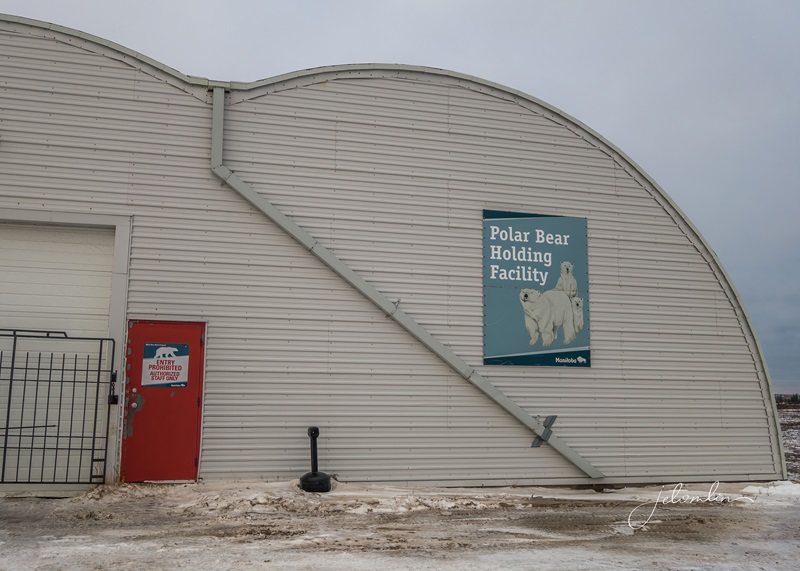
We have fun taking photos of each other inside the bear trap.
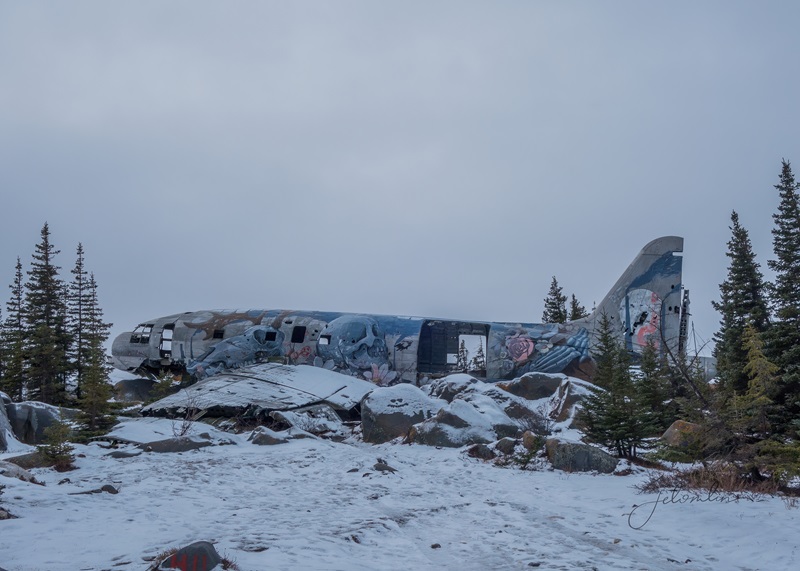
Our next stop is Miss Piggy, an old plane wreck. We are not fully unloaded when another bear is spotted approaching us. Although he appears far away, we have learned that polar bears can run up to 30mph. We quickly pile back into the bus and make our way to town.
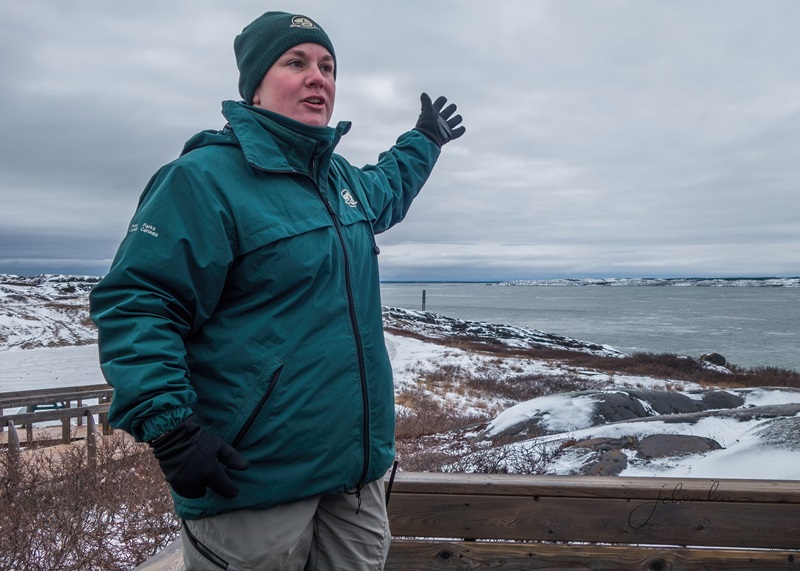
After a brief stop at the Complex, we drive to Cape Merry, the fur-trading post for the Hudson Bay Company and a national historic site. Our guide, Fia, gives us a fascinating tour,
While armed guards stand vigilant.
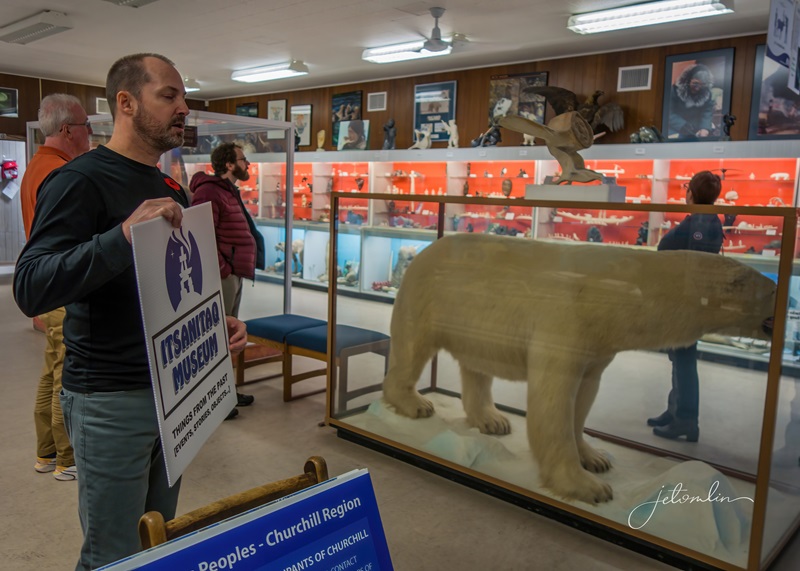
We continue with our mural tour and stop for lunch at the Tundra Inn. After lunch, we visit the Itsanitaq Museum, home to a beautiful collection of Indigenous art.
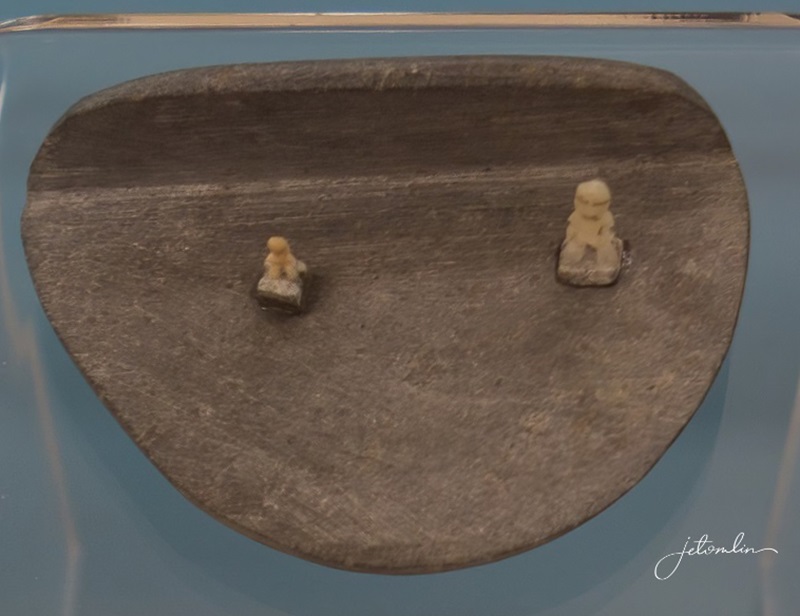
One of the most fascinating pieces is a set of miniatures carved from human teeth!
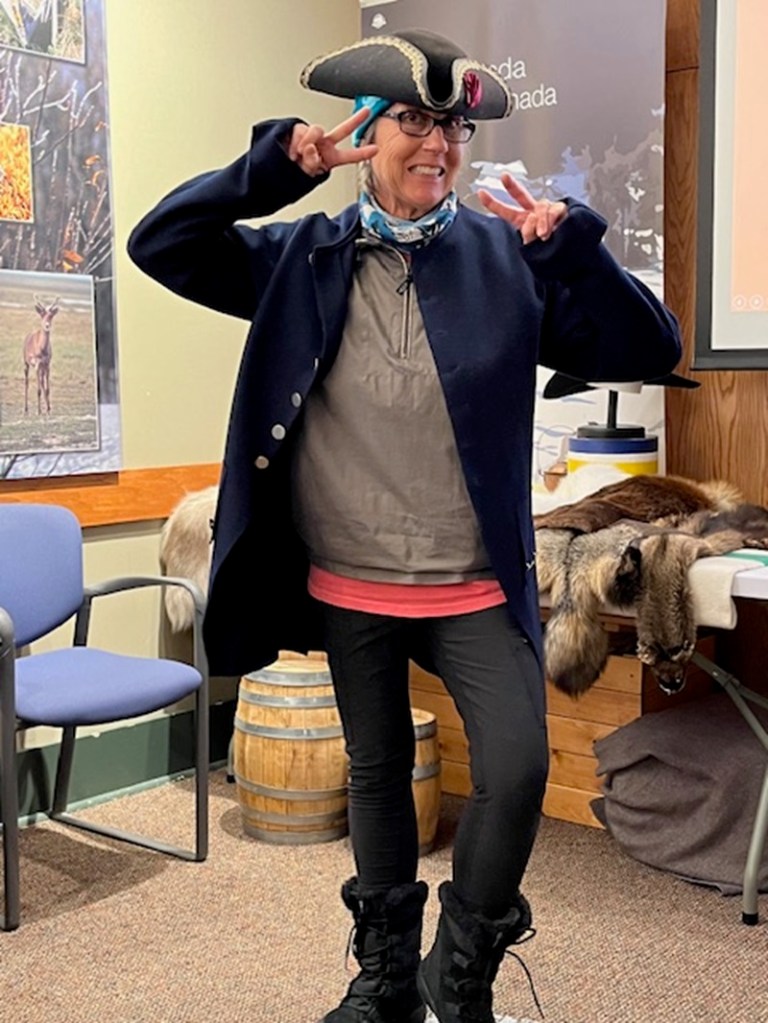
We head to the Churchill Visitors Center for a presentation on York Factory, a Hudson Bay Company fur trading post on the southwestern shore of Hudson Bay. Our guide, Eric, is entertaining, and the time passes quickly.
To see all my photos from our Around the Town tour, dog sledding, and the rocket launch site, click here:

We have about 45 minutes to shop on our own before heading back to the Centre for dinner. Our evening presentation is by Georgina Berg – a Cree survivor of the trek from York Factory. It is a fascinating but heartbreaking story. She talks about taking only what they could fit in a small canoe, leaving behind their dogs, their sleds, and most of their belongings. Because her father was Scottish, they were not given Treaty land and were forced to move to Churchill with almost nothing. The Indigenous children were sent to boarding schools and were not permitted to travel home during the school year. She talks about the darkness in her cousins and the challenges they still face today.

She concludes by saying it is not good to end an evening on such a sad note and invites us to participate in a smudging ceremony. One at a time, she stands in front of us as we lift the smoke up over our heads, our eyes, ears, mouth, hearts, and bodies to remove negativity and replace it with good thoughts. It is a sacred moment.
Back in the classroom, Ashley and Doug present each of us with a Certificate of Completion and we toast our wonderful week.
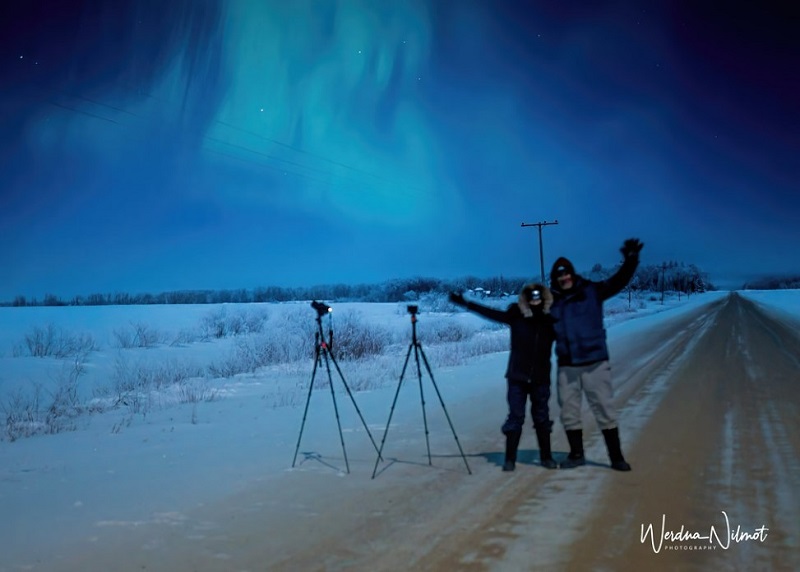
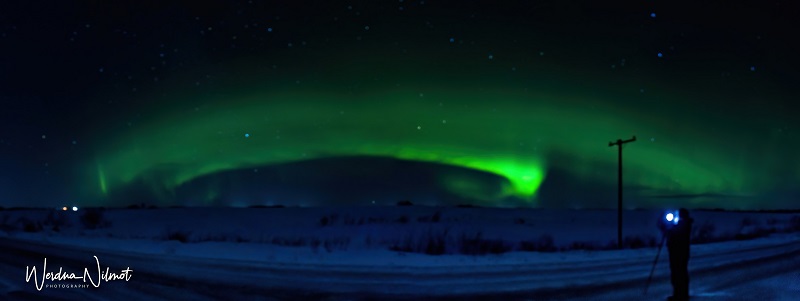
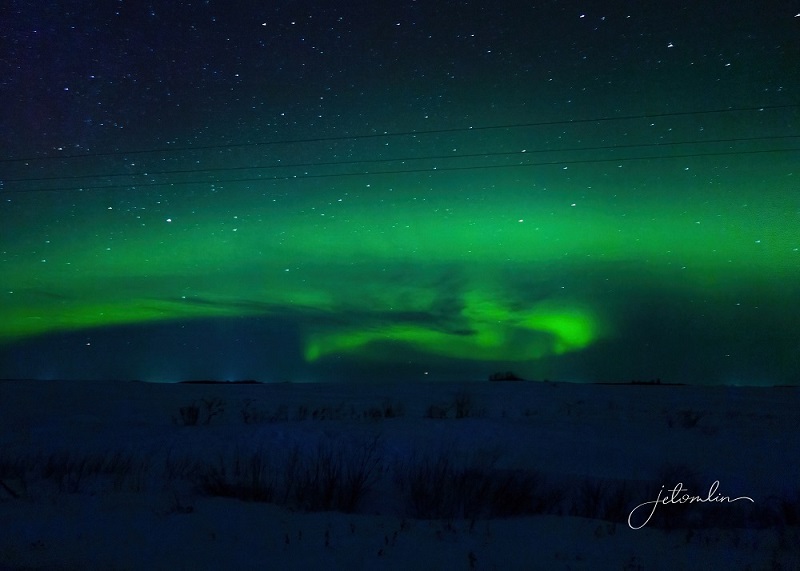
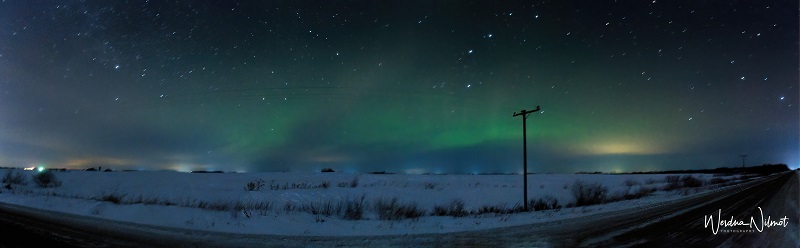
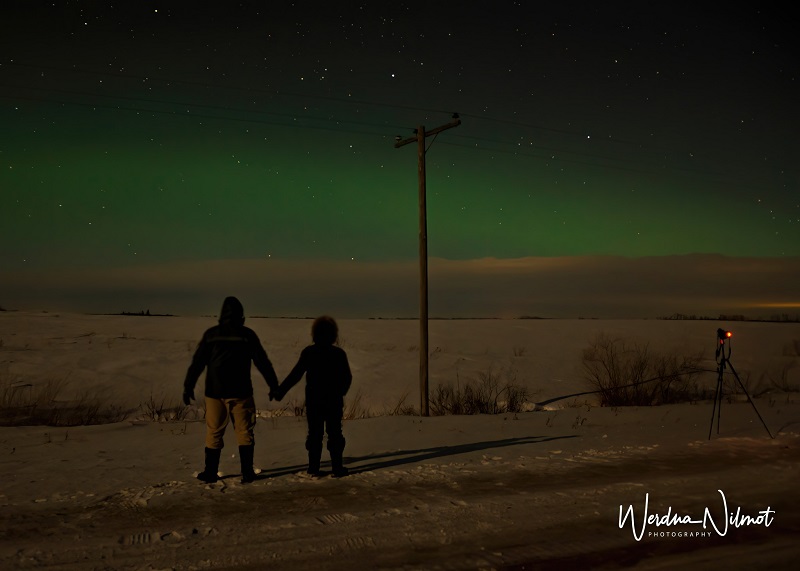
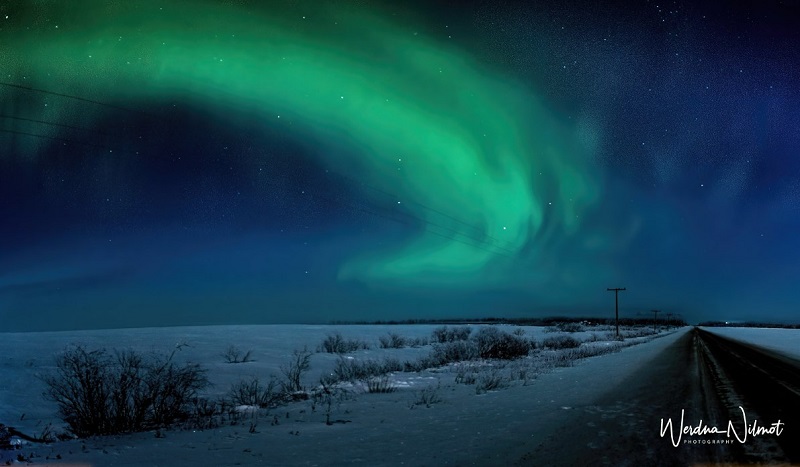
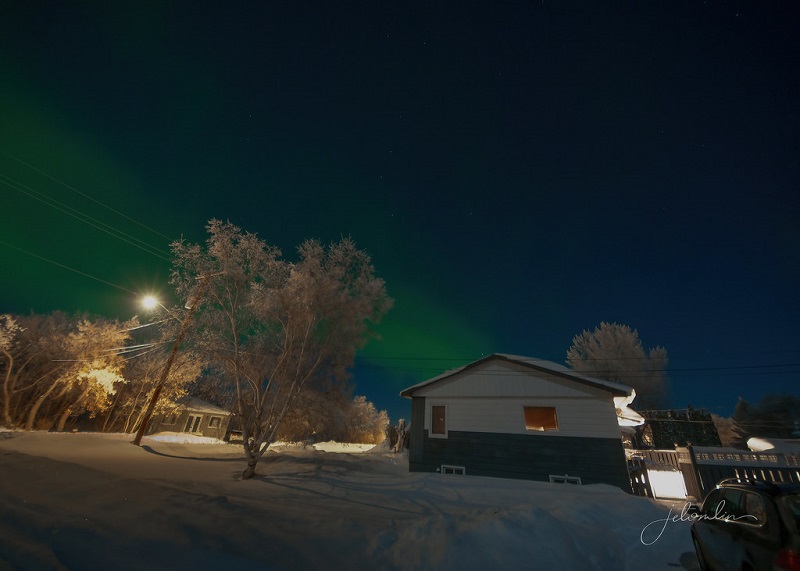
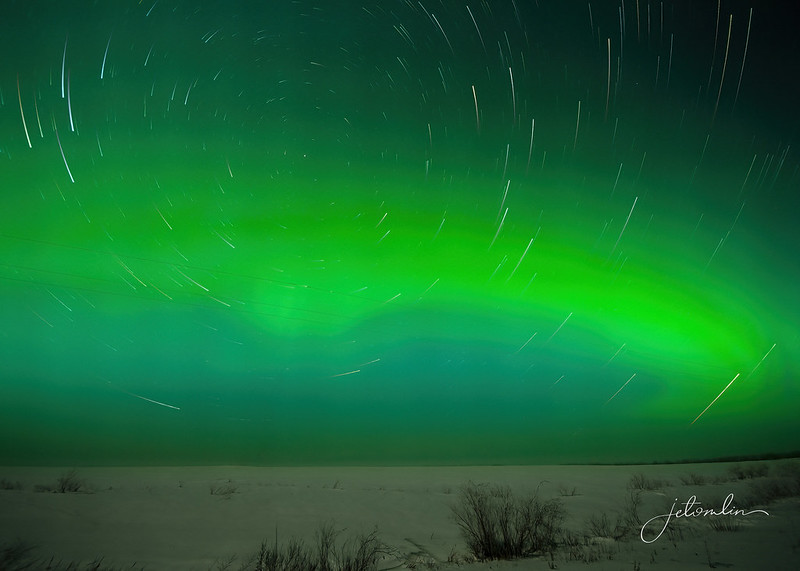
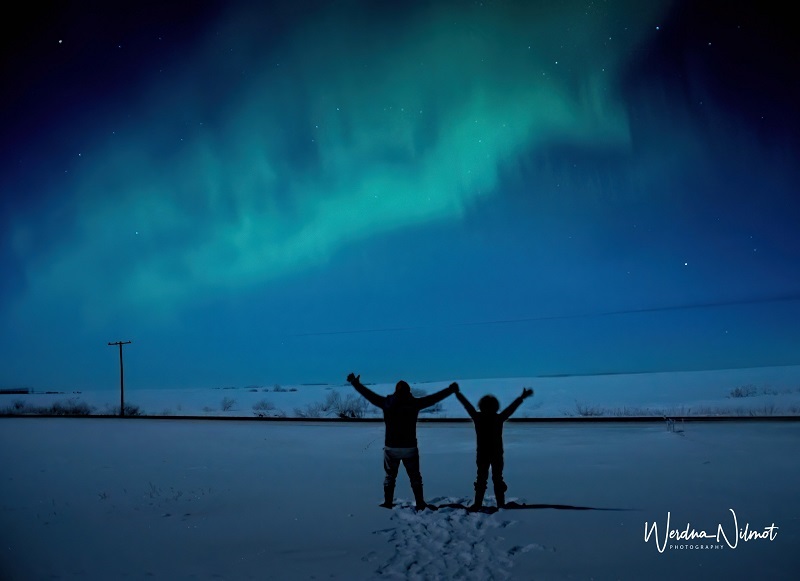
Around midnight, the skies clear, and Lady Aurora comes out to dance. We crowd onto the viewing deck, oohing and aahing as the sky turns brilliant shades of green, pink, and red. Everyone is awake, including the high school students we have shared the building and meals with this week. What a joy it is to feel the enthusiasm of these kids experiencing the magic along with us. I could not have asked for a better end to our week.
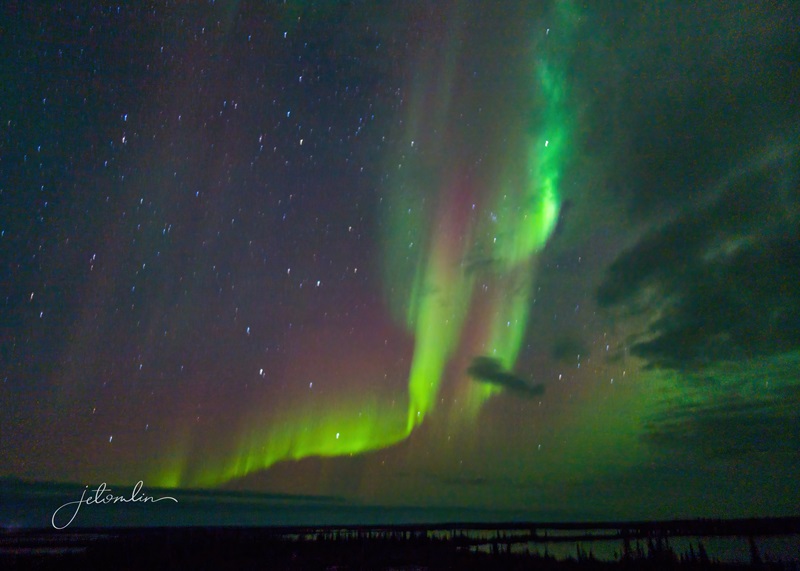
To see all my photos from that magical night:

Day Six: Homeward Bound
We awake to snow. Our time in Churchill is over and it’s almost easy to say goodbye with the weather so blustery. We head to the airport and, from there, go our separate ways. This trip has exceeded all my expectations; I came for the polar bears and am going home with 67 unique sightings. I had hoped for northern lights, and the Lady obliged.
A Few Final Thoughts
I cannot say enough good about the CNSC. The individual cost of the activities packed into our five days was worth far more than the tuition they charged. Add to that the educational lectures, the Lords of the Arctic learning vacation is the best value of any Churchill polar bear package you can find. The dorm rooms, although basic, are clean and comfortable and the meals kept us fueled for our activity-filled days. The staff is professional and friendly. They did their best to accommodate every special request we threw at them: the post office for a passport stamp, the visit to the local artist’s market, and (my request) fresh bear tracks where I could safely take a “bare hand/bear paw” photo.
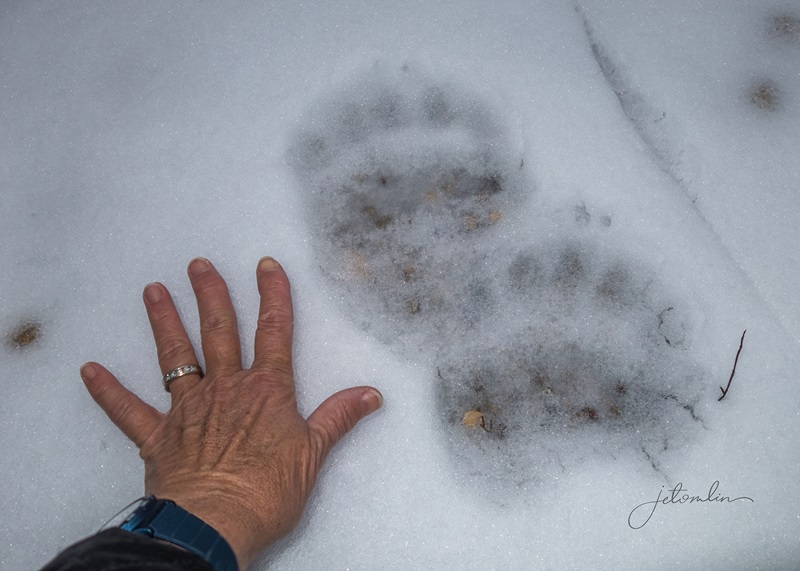
On my final leg home, the short flight from Atlanta to Pensacola, I sat next to a gentleman who was fascinated with my week in Churchill. I found myself confidently discussing diminishing sea ice, declining reproductive rates, and the global politics of polar bear management. Along with the fun and beautiful photo opportunities, I learned a lot!
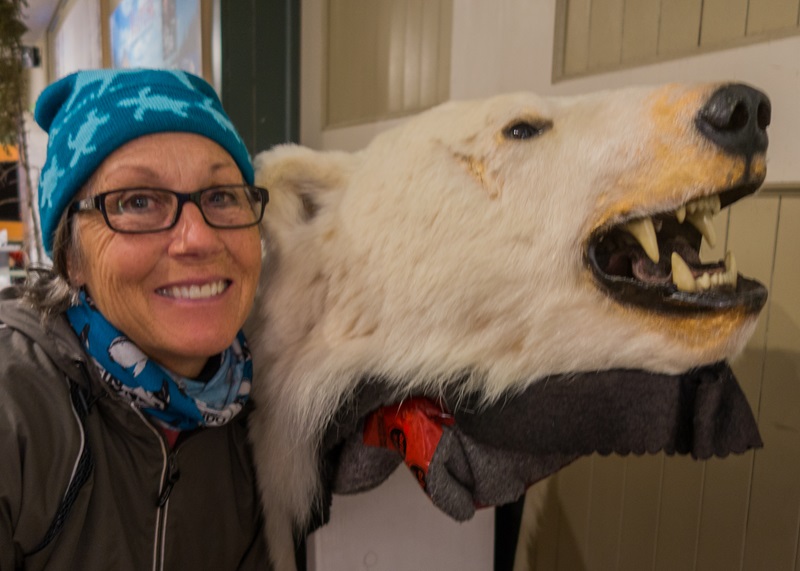
It was truly the trip of a lifetime, made even more special by the great group of people with whom I shared the week.
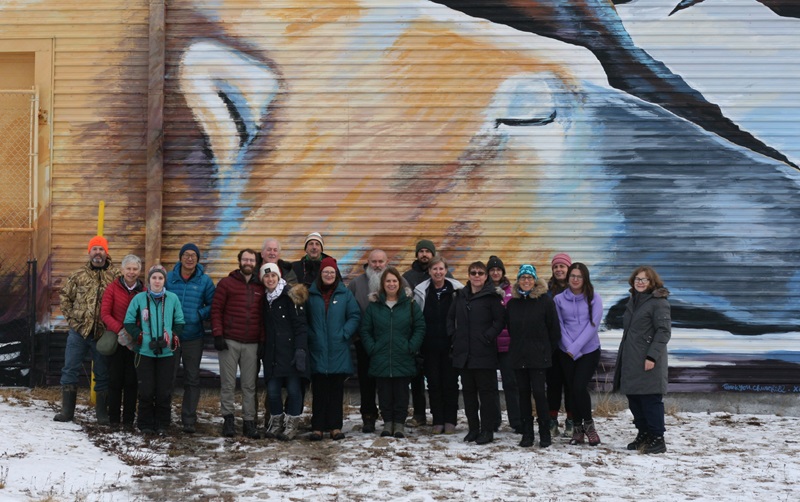
“If you think adventure is dangerous, try routine, it’s lethal” ~ Paul Coelho
To view all of my photos from Churchill, see the Flickr link below:

















 On The Road with Tall Guy & JET