
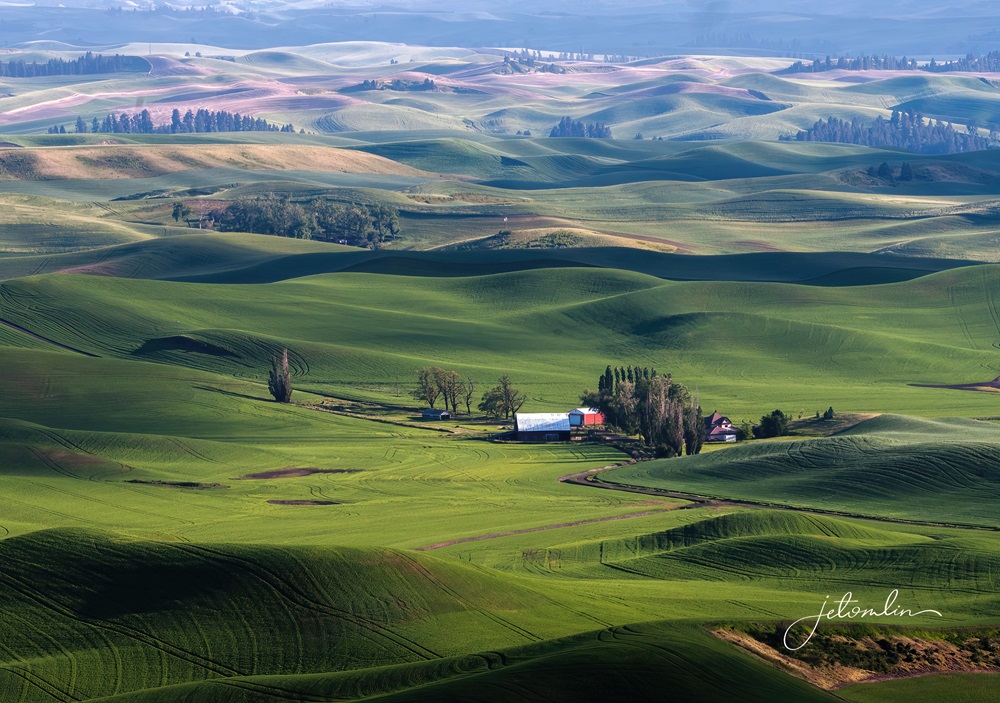
The Palouse covers about 3,000 square miles in Southeast Washington, Oregon, and Northern Idaho. The hills are massive piles of wind-blown, silty loess created during the last Ice Age when continental glaciers pulverized rock into fine powder.
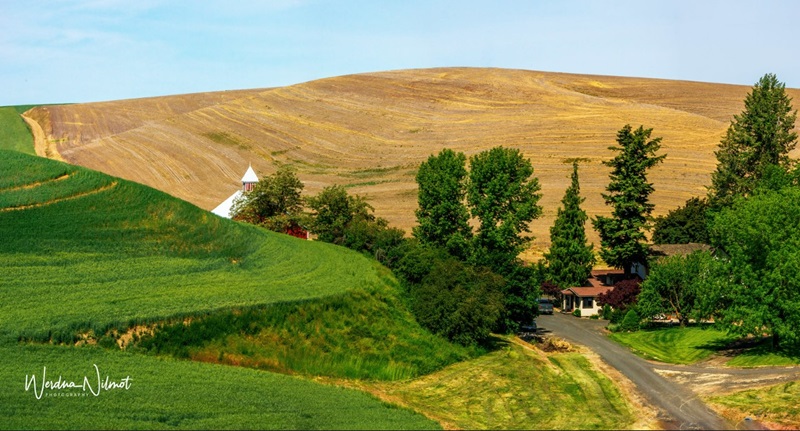
This fertile, silty loess makes the Palouse a productive farming region – growing as much as 25% of the nation’s lentils as well as wheat, canola, and other crops.
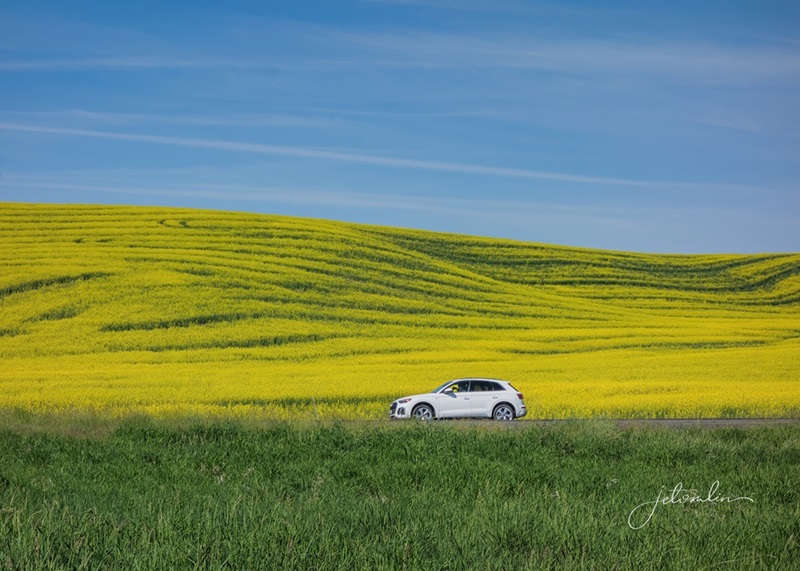
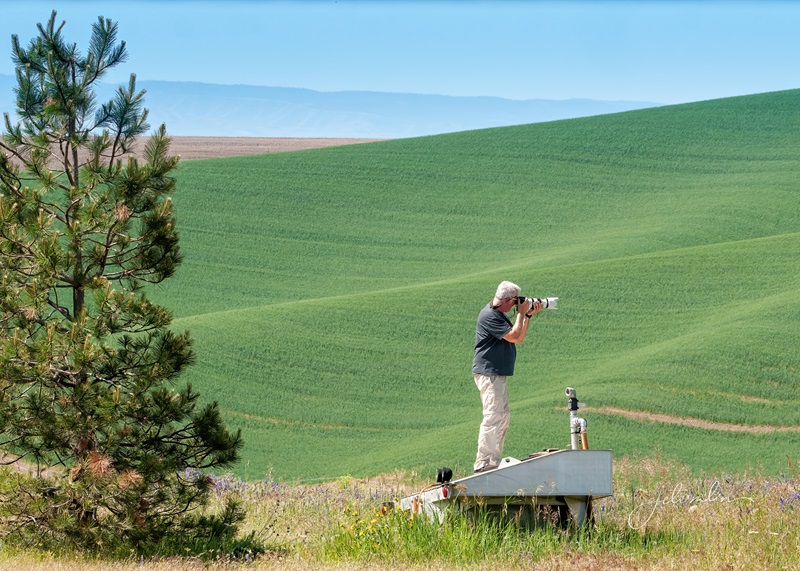
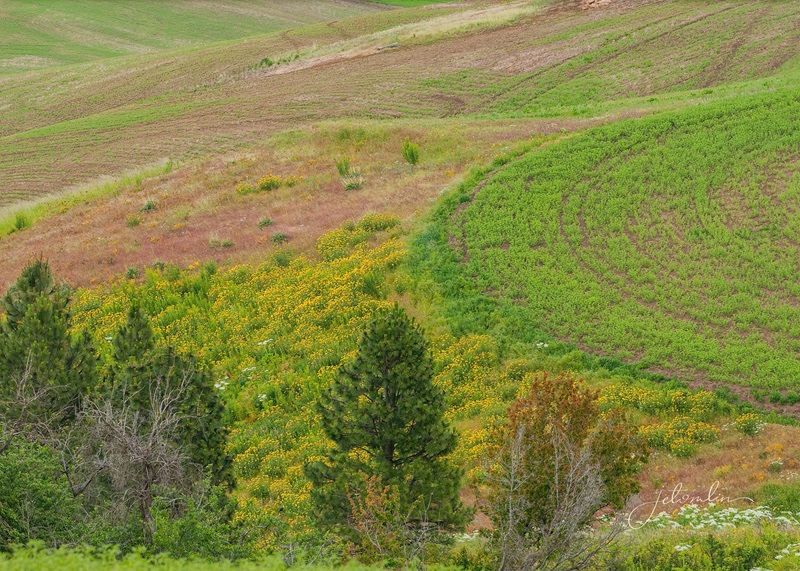
And – it’s a landscape photographer’s paradise. The rolling hills burst into a kaleidoscope of vivid greens and yellows in the spring and turn into a golden wonderland by harvest in late summer.
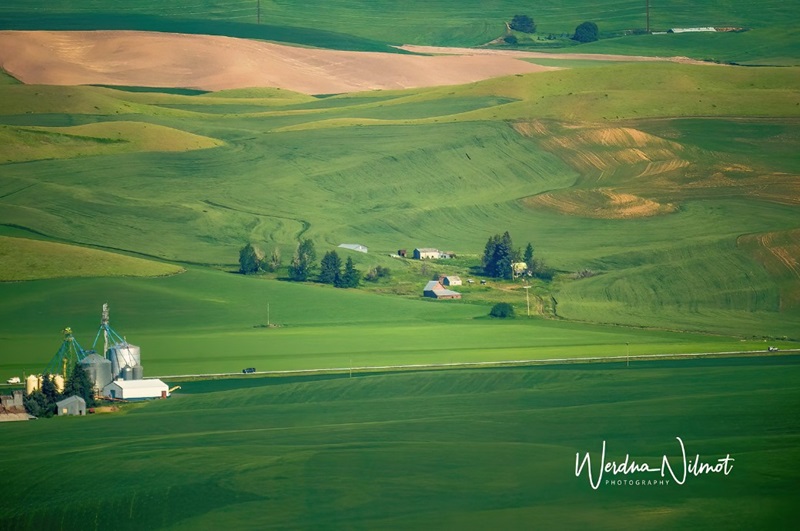
Photographers flock here for the landscapes with the colors, shapes, and textures of the endless rolling terrain.
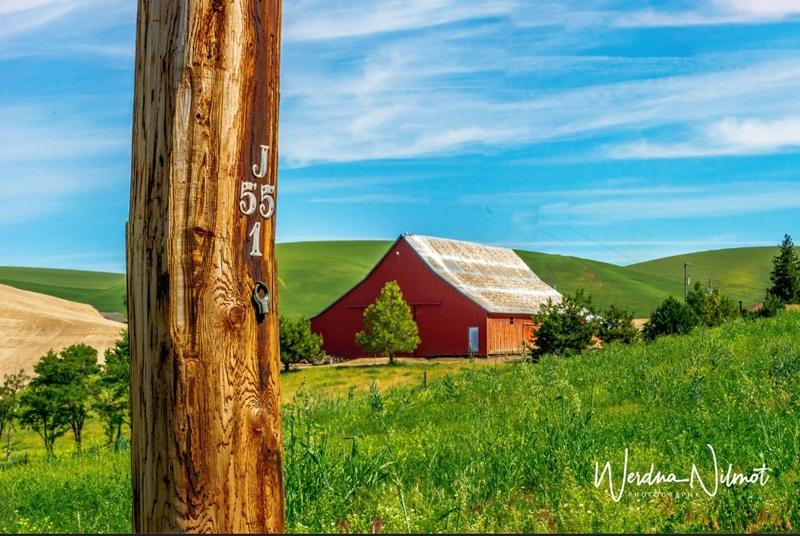
Old barns and farmhouses, weathered by time, stand in perfect harmony with the rolling hills, creating striking compositions or adding a splash of bright color to the landscape.

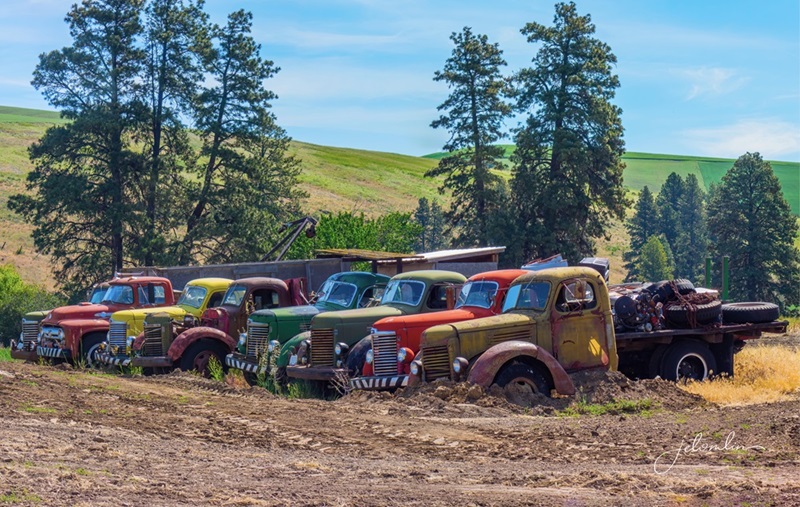
Plenty of farm equipment is around, too, making excellent foreground subjects.

And wildlife! The Palouse is home to a variety of species, including elk, deer, wild turkeys, and many birds.
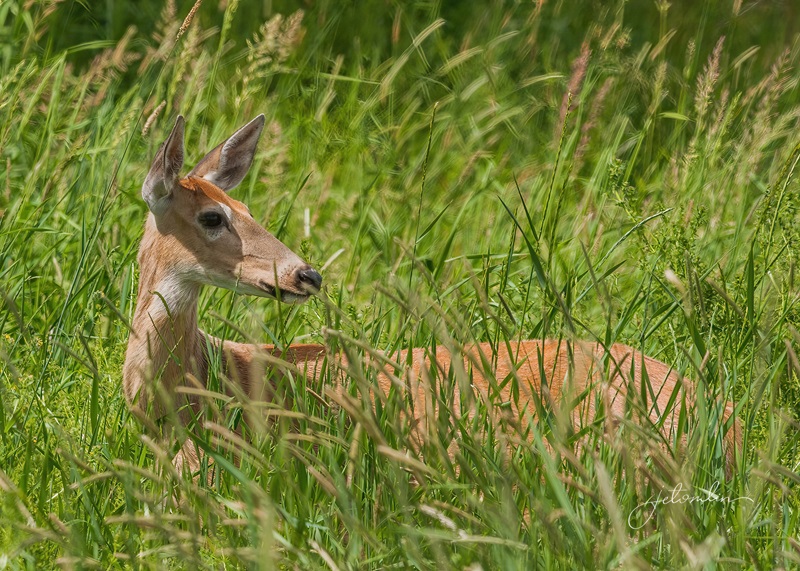
Although this leg of our trip was not about wildlife, I couldn’t help but snap a pic when the opportunity presented itself. You can see my photos here:

TG has always dreamed of spending a few days in the Palouse to capture the stunning landscapes. Our route north to British Colombia took us through this picturesque area, so we stopped for five nights at the Skywood Bed & Breakfast outside Mica, Washington.
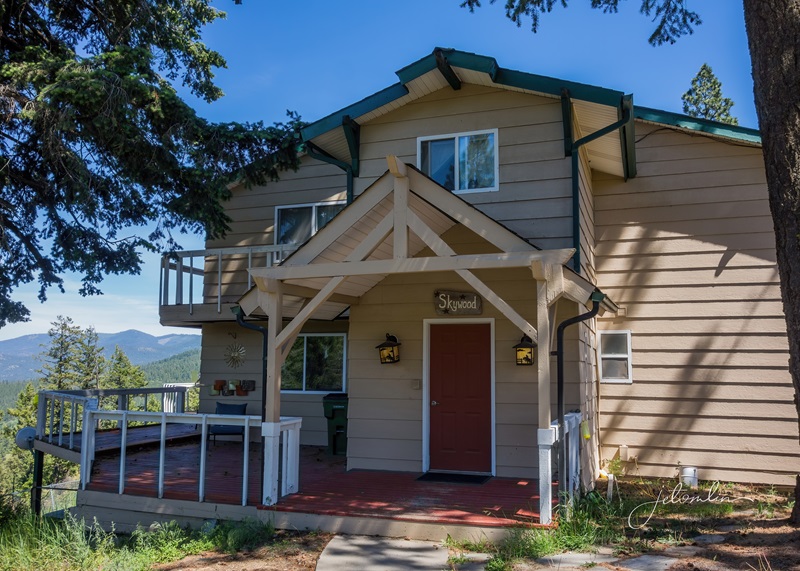
It was perfect for us: a private downstairs suite with a beautiful view of the valley below. The only sounds were birds chirping and the occasional clucks of wild turkeys.

You can find Rick & Gail’s listing here:
Mini Apartment – Houses for Rent in Mica, Washington, United States – Airbnb
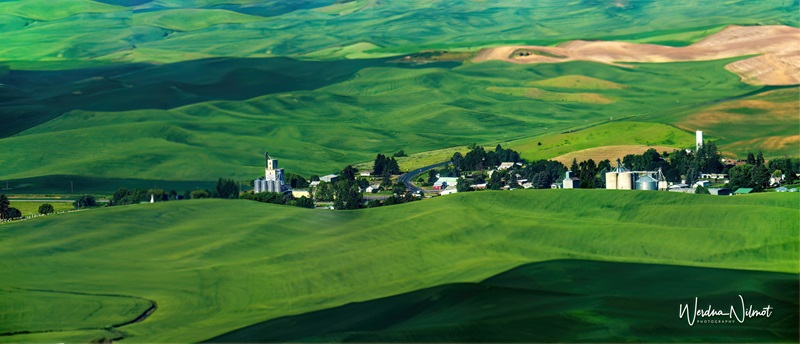
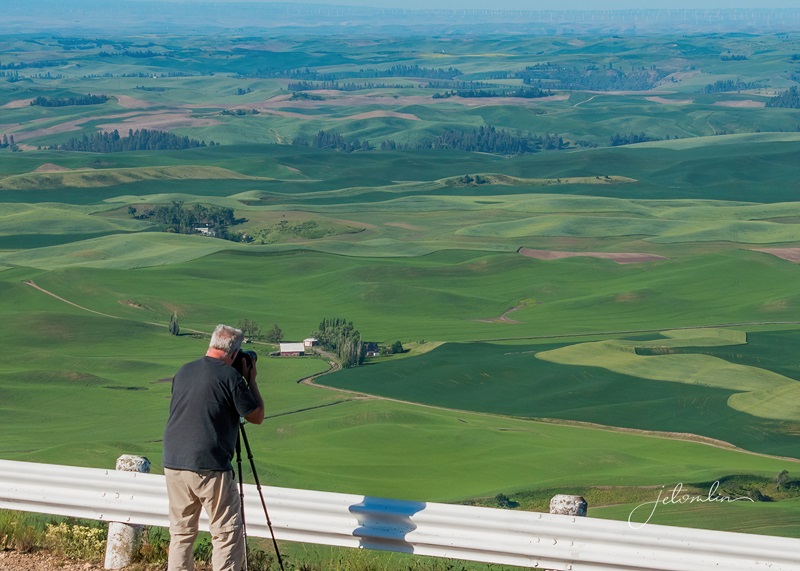
We started our first morning at Steptoe Butte State Park, a thimble-shaped 3,612-foot quartzite butte with a 360-degree view of the surrounding hills.

This is a popular spot for photographers and nature lovers alike, providing many of the “iconic Palouse” landscape photos you’ll see.
The narrow road to the top, which winds around and around like a perfectly peeled orange, has no guard rails and had me breathing into a paper bag.
Once at the top, you are rewarded with a panoramic view that, on clear days, stretches for 200 miles in all directions. While TG busied himself with panos,
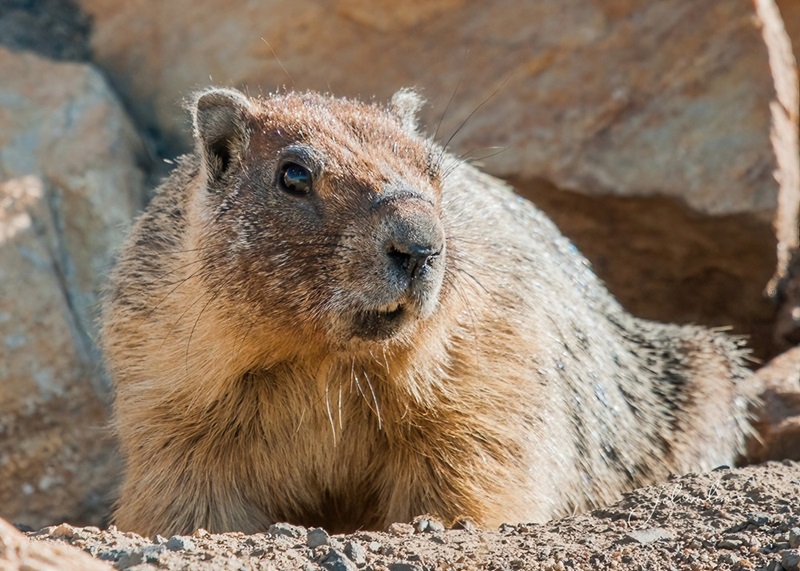
I scouted the area for wildlife. Much to my surprise and delight, I spied a yellow-bellied marmot – a critter we had seen but did not photograph in Yellowstone.
TG had mapped out a route of photo-worthy subjects for the remainder of our day. On our way, we stopped for a row of old trucks lining the side of a farm,
Beautiful old barns,
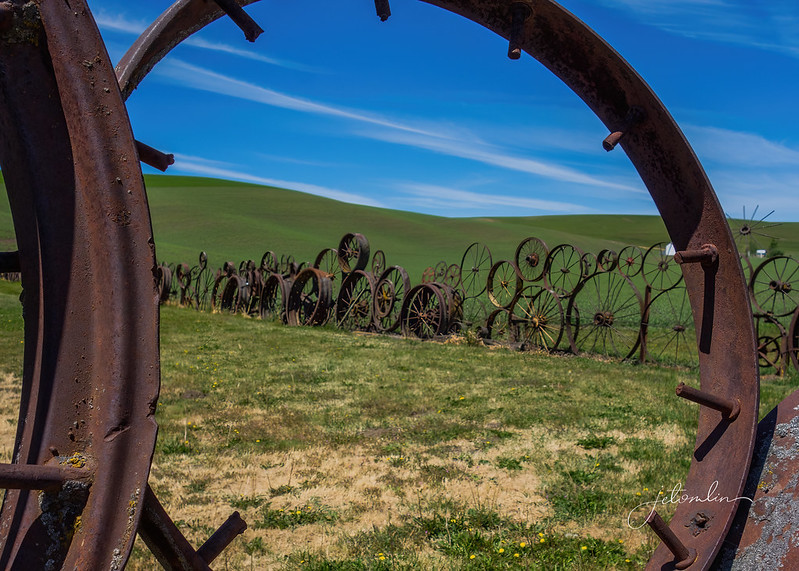
And the Artisans at Dahmen Barn, an artist’s colony with a most unusual fence! This unique attraction features a collection of local artisans’ work, including pottery, woodwork, and paintings. We bought a “Greetings from the Palouse” notecard and then spent the rest of our visit outside, photographing the fence.
The following day, we left Skywood before dawn. Sunrise in the Pacific Northwest comes before 5:00 am – and gets light even earlier. We wanted to shoot from Steptoe Butte while the morning sun created contrasting shadows on the rolling, green hills.
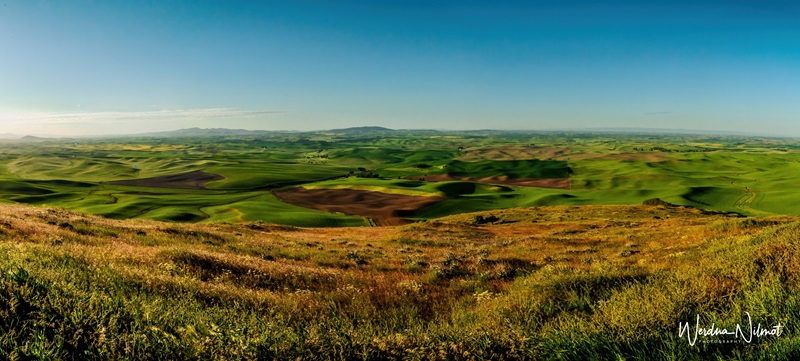
Our second visit to Steptoe Butte was challenging. We arrived at 6:00 am, greeted by the beautiful early morning light. However, the wind, forecasted to be 15mph, was stronger than expected at 25-30mph. It made standing at the top of the butte difficult and setting up a tripod next to impossible.
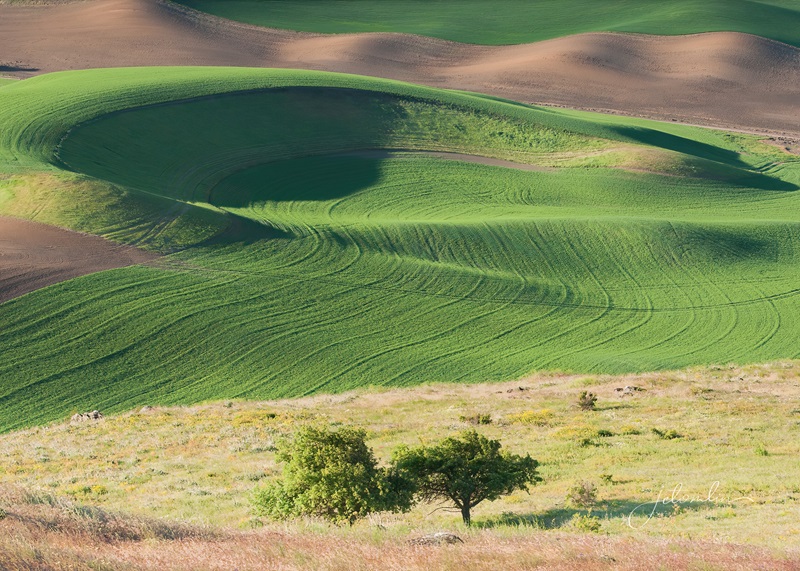
So, we continued to explore the countryside—it was hard not to stop at every weathered old barn and breathtaking landscape! But with such an early start, we were relaxing at home by noon.

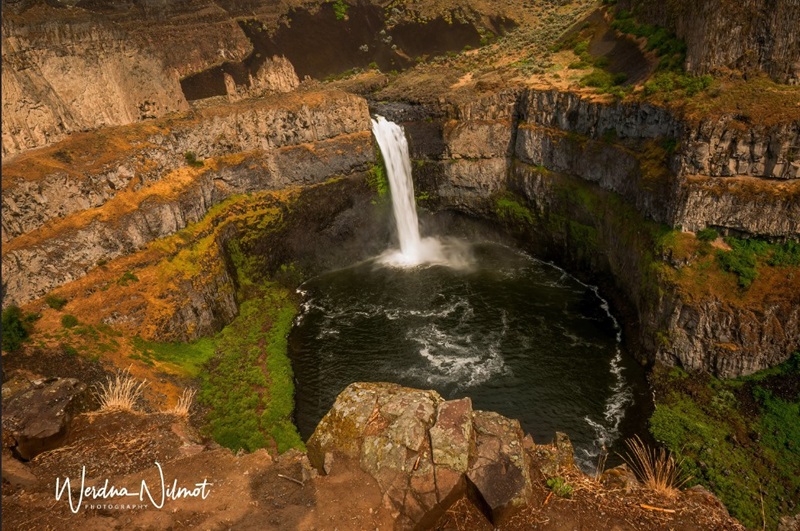
Day Three began with rain, but we were determined to drive to Palouse Falls, a majestic waterfall about a two-hour drive from Skywood, with another stop at Steptoe Butte on our way. Palouse Falls is known for its breathtaking beauty, with cascading waters surrounded by rugged cliffs.
As we drove south, the rain decreased, and the lush green hills became even lusher and greener. It was drizzly when we got to Steptoe, and too windy at the top to take photos. But we stopped on our way back down – we could not resist photographing the valley’s dramatic clouds, their dark shadows contrasting with the vivid colors of the landscape.
We decided to head home for a few hours and try the Falls in the afternoon. I usually write these blogs in my head as the day progresses – putting my thoughts to paper in the evening. But that afternoon left me in awe, struggling to find the right words to describe our experience.

It was overcast when we left Skywood, and not too long into our drive, the rain began in earnest. I hoped it would stop—and it did for a mile or two—before picking up again. In the rain, we drove past the buildings and towns we had photographed from high atop Steptoe Butte.
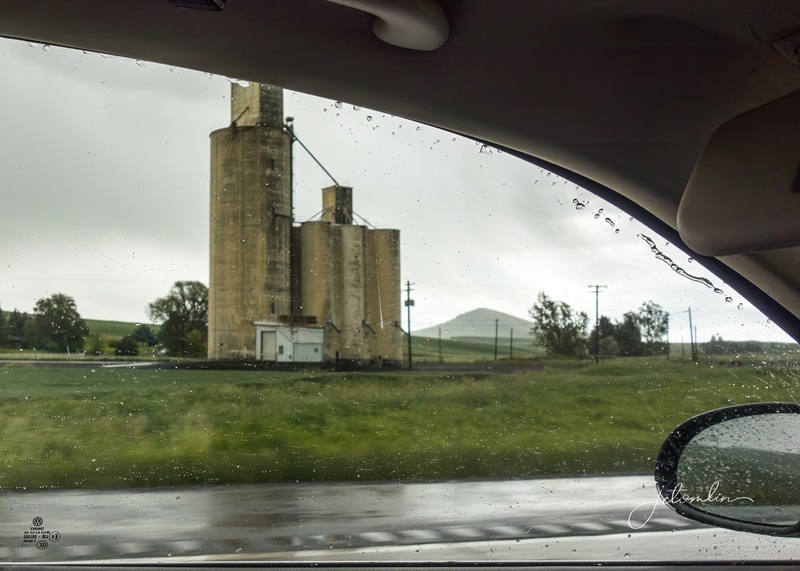
At the Palouse Falls turn-off we still had another nine miles on a steep, twisting road – and I continued to hope – and the rain continued to pummel the car. Despite the challenging weather conditions, we pressed on, determined to see the beauty of the Falls firsthand.
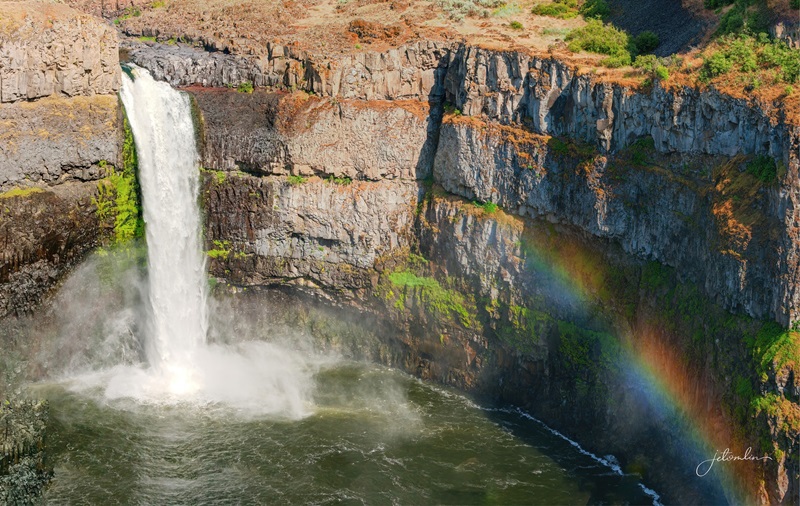
Arriving at the parking lot, we exchanged a look that said, “Here goes nothing.” Much to our surprise, the rain stopped — just in time for our visit! As we hurriedly grabbed our cameras and made our way to the overlook, the sun broke through the clouds, lighting the afternoon. And just when we thought it couldn’t get any more magical, a rainbow appeared on the canyon wall, adding a final touch of beauty.
Curious about our presence, a yellow-bellied marmot poked its head above the rocks. It was the first of many, as we soon spotted a half dozen or more marmots scurrying around the rock ledges.
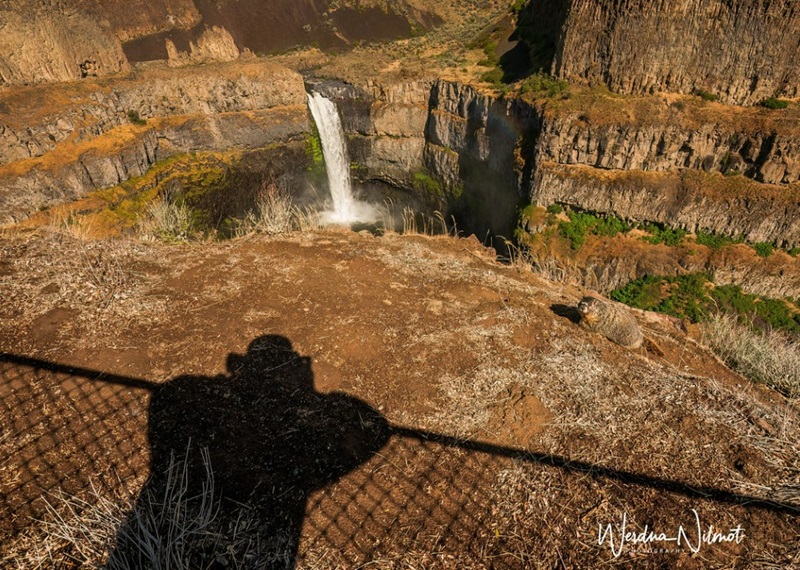
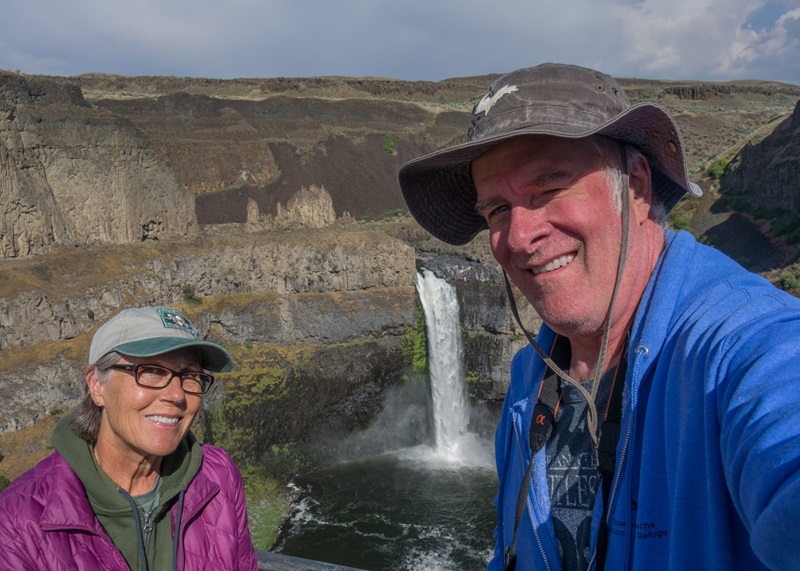
We spent far more time at the Falls than we had initially planned.
As we made our way back north, the sun cast beautiful, long shadows on the loess hills, turning them into a patchwork of light and dark.
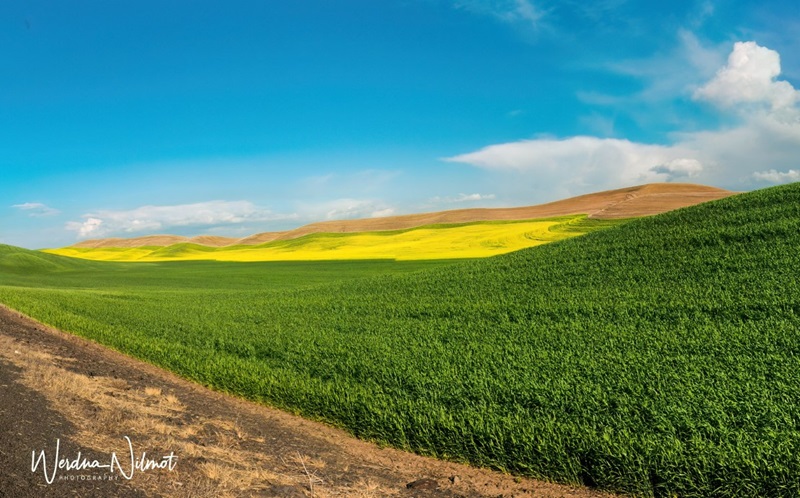
So, we decided to swing by Steptoe Butte once more to take advantage of the afternoon light.
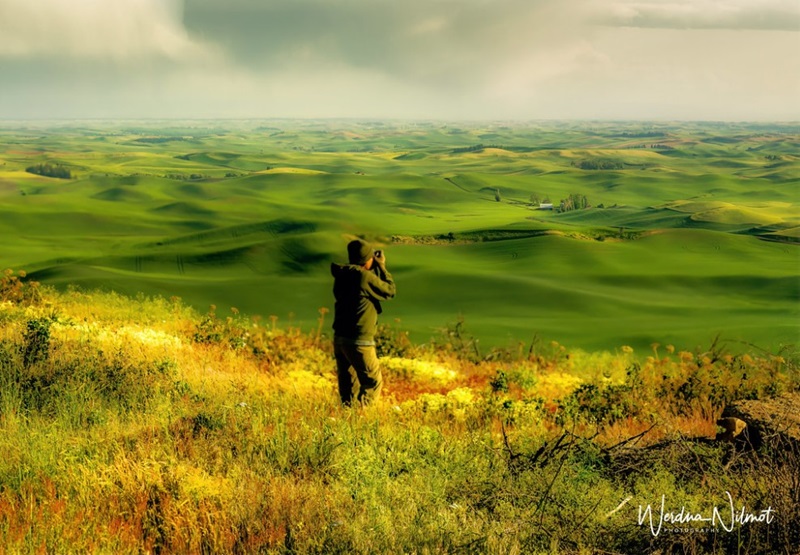
The view was beyond expectation, with the vibrant green hills stretching as far as the eye could see.
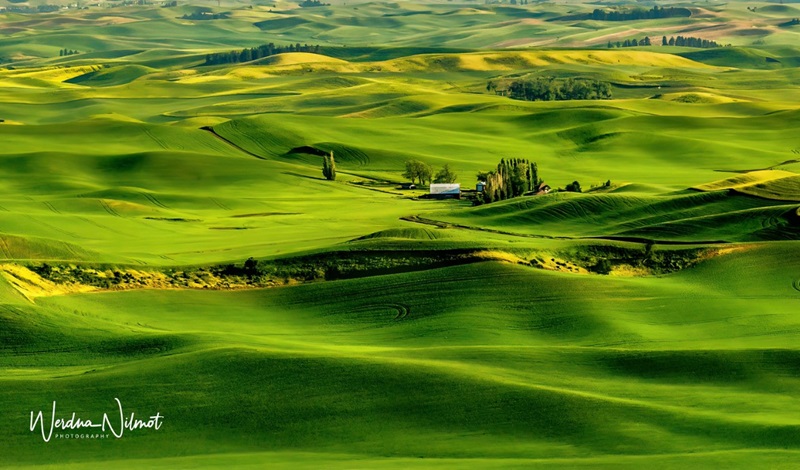
We spent our last morning driving the Scenic Byway and, that afternoon, got ready for our next road trip stop.
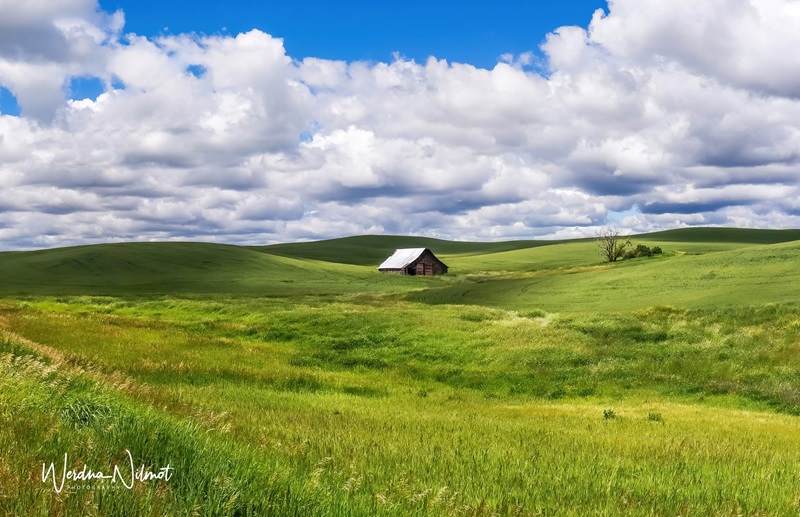
The Palouse presents a learning curve for photographers: initially, the rolling hills are so breathtakingly beautiful that you’re unsure where to focus your lens. However, with each drive, we became more familiar with the roads and the best vantage points. Reviewing our photos each evening guided us on what worked and what didn’t.

And while our first visit to the Falls was a thrill, we know a second visit would undoubtedly yield even better results.
We hope to return someday in the late summer, when the fields are ready for harvest. Just imagine the sight of giant combines kicking up vast clouds of golden dust as they roll along! It must surely be a sight to see!

They call the Palouse one of the “Seven Wonders of Washington,” and it is not hard to see why. It is a place of unparalleled beauty, and everyone should experience this area at least once in their lifetime.
To see our photos from the Palouse, click below:
TG (the Landscape Sensei):

JET:

Coming Next: Yes We Canada!

 On The Road with Tall Guy & JET